Celebrating over 1 Million Downloads and 50,000 Free CEUs on the Sound Bites® Podcast | NEW: Get 1 years’ worth of CEUs with the new 15-CEU Podcast Course
Disclosure: This episode was not sponsored. I received a complimentary copy of Jill’s book “Kids Thrive at Every Size”.
Can Kids Really Be Healthy at Any Size?
Many parents feel enormous pressure to raise fit, slender children. According to the CDC, approximately 1 in 5 U.S. children and adolescents aged 2-19 have obesity, and approximately 4.1% were classified as underweight (in 2017-2018). As overweight and obesity rates are increasing, so are weight bias and stigma, especially regarding kids and teens. The “health at every size” movement and “anti-diet” approaches are becoming more popular – but can children really be healthy at any size? Is adopting healthy lifestyle behaviors truly an effective solution?
Healthy doesn’t have a size. Shame is a barrier to health and health behaviors.” – Jill Castle
Tune into this episode to learn about:
what people get wrong about children with overweight or obesity
the key to helping kids with larger or smaller sized bodies
how to get beyond the basic advice and utilize practical strategies
the 8 pillars of wellness
the “learner, striver, thriver” concept
what a family manifesto is and why it is important
how to build intrinsic motivation
fostering a healthy relationship with food
addressing fears of your child overeating or undereating
the spectrum of appetite traits in children
minimally nutritious food and food shaming
cultivating a “safe media diet”
how this book is different from other child health and weight-focused books
important takeaways and resources for the public and health professionals
A focus on lifestyle behaviors can promote physical health while also enhancing emotional wellbeing, protecting kids from bias, stigma and shame.” – Jill Castle
Jill Castle, MS, RDN
Jill Castle is the author of the book, Kids Thrive at Every Size (Workman, 2024) and one of the nation’s premier childhood nutrition experts. Known for her ability to blend current research, practical application, and common sense, Jill believes that children can thrive at every size. With her paradigm-shifting, whole-child approach, she inspires parents, healthcare professionals, and organizations that serve children and families to think differently about young people’s health and wellbeing.
A sought-after speaker, advisor, and media contributor, Jill has inspired a range of audiences with her up-to-date, practical insights on childhood nutrition. She serves as an expert reviewer for Parents.com, has been featured as a guest expert in CNN, The Washington Post, The New York Times, Forbes, Newsweek, Time, and many other outlets, and has consulted with schools and organizations including Oatly, Brainiac, Once Upon a Farm, and Melissa & Doug.
Jill is the founder and CEO of The Nourished Child®, a nutrition education website and podcast for parents. She is the author of books including Eat Like a Champion, Try New Food, The Smart Mom’s Guide to Starting Solids, The Smart Mom’s Guide to Healthy Snacking, and co-author of Fearless Feeding.
Jill is the mother of four adult-ish children and lives in Massachusetts with her husband.
Children of larger size (or smaller) often experience weight stigma and bullying which increases stress, anxiety, and sometimes even depression.” – Jill Castle
Resources
Some links may be affiliate links. As an Amazon Associate, I earn from qualifying purchases.
Welcome to Sound Bites, hosted by registered dietitian nutritionist, Melissa Joy Dobbins. Let’s delve into the science, the psychology, and the strategies behind good food and nutrition.
Melissa Joy (00:23):
Hello and welcome to the Sound Bites Podcast. Today’s episode is about if and how kids can be healthy at any size. It’s about fostering healthy children, how to nourish your child regardless of the size of their body, and encourage, instill, and support healthy habits for a lifetime.
My guest today is Jill Castle. Jill is a pediatric dietitian with deep expertise and experience in childhood nutrition. She is the founder and CEO of The Nourished Child, a website and a podcast for parents.
In addition to speaking and consulting, Jill has authored several books and her newest one is hot off the presses,Kids Thrive at Every Size: How to Nourish Your Big, Small, or In-Between Child for a Lifetime of Health and Happiness. Welcome to the show, Jill.
Jill Castle (01:16):
Thanks for having me back, Melissa, it’s great to be here.
Melissa Joy (01:19):
Always great to have you on. This episode is not sponsored; however, I did receive a complimentary copy of your book, thank you so much. It’s an amazing book. We were just talking before the recording. I don’t even know if I have the words to explain how wonderful this is, but I’m going to do my best to try.
We have been colleagues and friends for many years. You’ve been on the podcast several times, but I just had to bring you back on the show to talk about this awesome new book. But before we dive into all of that, please share with our listeners who perhaps may not be familiar with you, a little bit about your background and the work that you do.
Jill Castle (01:58):
Well, thank you. I have been a pediatric dietitian for, I think 33 years now. And I am a traditionally trained pediatric dietitian, which means I did my internship at Mass General Hospital in Boston, and I had a pediatric specific rotation. At the end of that internship, they offered me a job in the pediatric wards.
So, I worked there for the first three or four years of my career and then went over to Children’s Hospital Boston and was a nutrition support dietitian on the bone marrow transplant floor and the cardiac intensive care unit and I also filled in on some of the other floors.
But my original background is as a clinical pediatric dietitian. So, a long history or a deep history of taking care of children who were sick and hospitalized.
After that, I proceeded to have four children in five years, and I semi-retired from my clinical practice and raised my kids. I was a stay-at-home mom for nine years. And then I went back into my nutrition practice as a private practitioner and I opened a private practice in Nashville where we were living at the time it was in person and was strictly pediatric private practice.
So, I took care of families with children with eating disorders, children who were in larger bodies and having their health compromised. As a result of that, I took care of athletes, kids with food allergies, picky eaters, you name it.
I cared for lots of children with different concerns and ever since then, that was back in 2008, I have sort of evolved over the years in the practice that I do. I wrote my first book, co-authored my first book, Fearless Feeding as a result of starting a blog and matching up with Maryann Jacobsen and both of us wanting to write a book that was a comprehensive guide for pediatric nutrition from birth through adolescence.
And from there, I wrote another book, Kids Thrive at Every Size is my sixth book. I’ve had a website that I’ve managed for a long time called The Nourished Child, I’ve had a podcast like you, Melissa, since 2016.
I do quite a bit of speaking and training for other healthcare providers, I do consulting with companies that are interested in making good food for children and I help them navigate all of that. So, I do wear a lot of different hats today.
My son and I were talking last night, yesterday was my birthday and he took me out for dinner because my rest of my family is not around. And he said, “Mom, did you ever think you were going to be a writer?” I said, “I would have never predicted it. Never.”
It wasn’t like in high school and college, I mean, I cringed when I had to write something. And now, I write just about every day, whether it’s a book or an article or emails. I love to write and I think it really boils down to my love for communication, whether it’s writing or speaking. I have a lot going on in my head and I like to get it out in the world. So, that’s a little bit about me.
Melissa Joy (05:23):
Well, you do have a lot going on in your head and I’m so glad that you found all of these outlets to get it out in the world because we need you and we need this book, your sixth book, that’s amazing. Like I said before, we’ve been friends for a long time and I’m often like, “When does Jill sleep? Oh, my goodness.” What prompted you to write this book?
Jill Castle (05:42):
I think I knew that I wanted to write a book that was going to help parents who were raising children in larger bodies. That was my first motivation. The book was really a guide for helping parents raise healthy kids on the inside, despite what their body might be doing on the outside. That was the first inspiration.
And as I started to write it, I was like, “I just really believe that habits are the way to go.” I mean, 30 years plus in the field of pediatric nutrition, I’ve never put children on low calorie diets for weight loss. It just doesn’t work. It sets them up for emotional distress and higher risk for other things like dysfunctional eating and eating disorders and a poor relationship with food.
So, I knew I wanted to navigate and help parents with a book that was going to really lay out these lifestyle behaviors that we know has really good research behind them, but putting it together in a comprehensive resource that was going to sort of give them the roadmap or MapQuest on how to navigate these different behaviors.
But when I contacted my agent, she was like, “Well, hey, what about kids on the smaller size? Because they’re facing the same kind of bias and discrimination. They have the same stressors.” And I was like, “This is brilliant. This is true.”
So, Kids Thrive at Every Size is partly behavior, lifestyle behavior, here’s how to cultivate these healthy habits, but it’s also a here’s how to navigate the world when your child doesn’t fit into the ideal size that everybody is telling you they should be because there are very few children that fit into that ideal size.
And we could talk a little bit more about this fallacy behind what you look like dictates what your health is, because that’s not a true thing either. So, I really wanted to create a practical book to help parents and at the end of the day, when you step back and look at what’s out there, there is no book out there that tells parents how to create all these habits for their kids.
Melissa Joy (07:59):
Right, right. We were talking again before the show and you’re getting some amazing reviews on Amazon, is it?
Jill Castle (08:04):
Mm-hmm (affirmative).
Melissa Joy (08:05):
Amazing. Not just little comments, but paragraphs from people and even just saying habits and we’re going to talk about the eight pillars. It addresses screen time, it addresses diet, it addresses exercise, but that stuff is all basic. It is out there.
But what you covered in this book, it’s not a nutrition book, it’s not a diet book for sure. There’s so much psychology in it addressing some really complex issues in a very clear way but it’s not in a basic way. I’m loving the book and I’m looking forward to diving deep into some of this psychology.
But to your point, the first thing was the larger size bodies and I’m so glad your agent remembered the people in smaller bodies too, because they may not be as common, but it’s again, still important and in your title too, even like somewhere in between their size as well.
So, it’s something for everybody and it’s the same sort of concept as far as the stigma and the world that we live in that we’re going to get into. So, maybe we’ve kind of addressed this already, but who needs this book and why do they need it? And then let’s top line these eight pillars of wellness that you chose.
Jill Castle (09:15):
I wrote this book for parents of 3 to 13-year-old children. I selected that decade because I really do believe that at that age, children pretty much follow the leader. You can set all of these up fairly easily, all of these pillars of wellness.
Let me also say that I think healthcare providers need this book too because we need the latest research. We need to be able to communicate with our clientele compelling reasons to start these behaviors.
And so, I have included that every pillar, and I’ll get into each of the pillars, but each pillar has the research behind why this pillar helps your child be physically healthy, but also emotionally well. And after that, the pillars go into the real obstacles parents will face as they’re trying to cultivate each pillar. So, these are going to be the barriers that you’re going to have to overcome.
Then the third section of each pillar is how to set it up. We already know it’s a good behavior to establish and to cultivate. We already know what’s going to get in our way. So, now how do you step by step, set up all of these pillars of wellness?
So, for healthcare providers, we’re busy. We don’t always have access to the compelling reasons why children should be physically active or why they should be getting a good night’s sleep and we don’t always, we know the obstacles, but sometimes we don’t know the obstacles.
And the obstacles can be very personal from family to family. So, from healthcare providers, we can’t be everything to everyone and it’s a great resource to recommend to families. Like if you can’t address all of these issues, it’s a wonderful resource to recommend.
Melissa Joy (11:05):
Yes. And I think that emotionally healthy aspect that you mentioned, that’s what’s missing a lot of the times. So, this is completely woven into everything that you have in the book. So, let’s top line the eight pillars.
Jill Castle (11:19):
The first pillar of wellness is family culture. And that’s all about building a strong, supportive, inclusive family culture, no matter your child’s size. And some listeners might think, “Well, why aren’t all family cultures positive?”
They’re not. There are families that tease their children for their size or have their own beliefs and biases about size and shape and health. And so, if you are raising any child of any size, I think it’s very important to look at your family culture. Does it support your child? Are you helping your child grow up not only to be physically healthy, but emotionally well?
And so, we get into being a role model and we get into identifying what your family beliefs and values are and how do you embody your family culture and convey that to your child so that your child knows who they are as they’re growing up in the world. So, family culture is the first one.
The second one is sleep. That’s a pillar of wellness. It most definitely helps children grow and it helps them also sort their emotions and supports their psychological wellbeing. The third pillar is movement.
And again, I get into the research behind physical activity and basically any kind of movement is beneficial for children, but there are a lot of obstacles to setting that up as a daily behavior.
After movement, the next pillar is feeding. And that is the interaction between the parent and child around food. What are the attitudes? What are the actions that parents are taking as they feed their children meals and snacks.
After that, the next pillar of wellness is eating. So, how do we set up healthy eating habits in children from an early age? The next pillar is food. How do we make food nutritious, delicious, and enjoyable?
And so, I tackle the balance of food and how are we fitting sweets and treats and more palatable foods in there? And how are we talking about food? Are we talking about food in binary terms, healthy or unhealthy.
And I really do dive into how food shaming can really disturb the relationship that children are building with their bodies and with food. After food, screens is a pillar and then the last pillar is self-love.
And that is really the probably call to action at the end of the book. Like at the end of the day, we want to be raising children who love who they are. So, they take care of their bodies and they take care of their wellbeing. So, that’s sort of a synopsis of it.
Melissa Joy (14:30):
Wonderful. Very good. Yes. And when I first read through some of this, I was like, “Oh, feeding, eating and food are three different things,” and that was a huge aha for me just to see how you explained that.
I do want to talk more about how shame is a barrier to health and health behaviors, that’s something that I learned from you. And the question that I posed at the top of the interview, if and how kids can be healthy at every size.
And I know we’ve done a lot of interviews and you’ve gotten some pushback on, but really Jill, really can kids be healthy at every size? So, maybe we should just address that right off the bat. What do you say when you get some kind of pushback on that?
Jill Castle (15:11):
Well, I believe kids can be healthy at every size. I believe health is an unconscious bias we all have. Like you may identify health differently from how I identify health, but for the purposes of this book, I identify health as functionality. Is the body functioning?
And we can’t tell by looking at a child on the outside whether they’re healthy or not, we need to see what the organs are doing. What is the blood pressure, is the cholesterol and the lipids and the blood and good state.
And so, I believe that with habits, daily habits that are health-promoting, yes, kids can be healthy. Might they be larger or smaller too? Yeah, they might be. But on the inside, can their bodies function well? Can they do what they want to do in the world? Can they achieve the goals they want to achieve? I believe they can.
Melissa Joy (16:12):
Yes. And by kind of starting there and addressing that, and I don’t want to say putting it aside, but getting past that, then we can really talk about the healthy behaviors. Because as we said earlier, shame is a barrier to health and healthier behaviors.
We know that trying to fit those kids into a box and just saying, “Well, this is what’s good for you, just do this,” we know that doesn’t work. So, in order to have the real conversation to get to the healthy habits, I don’t think we can get there without going through that piece.
Jill Castle (16:49):
And because a lot of that piece is so societally ingrained as a bias. The bias is if you have a larger body, you must be unhealthy, that’s just an automatic belief that people have and it’s wrong. There’s also a belief that if you are mid-sized or trim, that you are healthy and that’s not necessarily true either.
I know plenty of people who are in “mid-sized” bodies who struggle with health conditions. And so, if you can take the size piece out and focus on health, like true functional health, then we can start to dismantle this harmful bias that leads to stigma and unmotivation or lack of motivation around doing things that should be enjoyable.
Like moving your body can be a very enjoyable thing, getting a good night’s sleep can be very beneficial to your mental wellbeing. Moderating screen time can be enjoyable when you’re engaging with it, but it allows you to do other things in the world and in life that are also enjoyable.
Melissa Joy (18:09):
So, not just a bunch of rules, but again, that psychology behind it and setting yourself up for success and setting your child and your family up for success. You mentioned pillar one is a family culture, and I noticed on page 47, you have this family manifesto example, and I’ll just read a little bit of it and then have you kind of speak to that.
It starts off:
“In our house, we (and then there’s a bullet), believe all bodies are good bodies, appreciate everything our bodies can do. Understand that differences are what make people unique and interesting. Respect everyone, no matter their age, gender, color, creed, or size.”
And it goes on and on, but this is, I think one example of how you talk about family culture or you talk about any of these pillars, but then you have some really tangible is the word I’m looking for, because it’s beyond practical. Like that just doesn’t do it justice. It’s very tangible examples that provide clarity for people. So, I’d love for you to kind of talk to that a little bit.
Jill Castle (19:16):
I guess for me, as a practitioner, as a registered dietitian, it’s always been my goal. I love to educate, I love the research, I love to take the research and make it practical. And I think that throughout this book, I know that for parents to be successful, they need to have their questions answered and they also need to be challenged to go a little bit further than what they might be getting from social media, for example.
So, the family manifesto is a real good example of, okay, you’ve learned about what a good positive family culture is, you understand what you’re going to be faced with from the greater world in terms of barriers that you’ll have to overcome. So, let’s get you started. Let’s get you started.
Like what do you stand for as a family? What is important to you as a family, as parents of children that you’re raising in this world? What really matters? And I challenge parents to think about what really matters to them and show them how they can make it concrete with that family manifesto.
Melissa Joy (20:34):
I really like how it encourages that conversation within the family and trying to get everybody sort of on the same page. Then you’ve got that foundation and that strength then to go out into the world and deal with all of the other things that come your way, but you’ve got that foundation.
Throughout the book, it’s just a very easy to kind of flip through. There’s call outs that you call truth bombs, there’s little sections that have takeaways and then there’s something that I find really cool that we’ll talk about in a minute.
That’s just a section that talks about being a learner, a striver and a thriver, more to come on that in a minute. But tell us a little bit about why you decided to lay it out in this way and it just makes it more consumable, I guess. It just makes it easier to really glean the information that you’re sharing.
Jill Castle (21:24):
So, I feel like when I write books, I’ve evolved over time, and I feel like I’m at that place where I can talk about all this research and the obstacles and the how tos, but at the end of the day, parents are busy and they really just want to open up and find the chart and say, “Oh yeah, I’m on track or, oh, that’s what she said about that. This is the nut of what’s really important to remember about this chapter.”
And so, that’s what the truth bombs, the wise advice, the tables and also the book is packed with information and the publisher is not going to let me write a 700-page book. So, using tables and call outs really allows me to get even more information tucked into the book and make it really user friendly.
Some of the other interviews I’ve done, people have commented that it really is organized in a way that you don’t have to read it from page 1 to page 360, you could go right to the pillar that is the most painful right now for your family.
Maybe it’s sleep, maybe it’s screen time and you could just go right there and get everything you need to address that behavior that your child’s demonstrating. So, I think that the layout and these features just make it easier for readers to access the key information that really can be transformative for them.
Melissa Joy (22:54):
Wonderful. So, I want to share some examples of this learner, thriver, which I love is goes back to Kids Thrive at Every Size. There’s probably one in each chapter, but I was looking at the physical activity one and the food one.
So, just to try to give our listeners a visual picture across the top, you’ve got these columns, learner, striver, thriver, and on the side, you have three different sections. One is preparing your environment for success, one is harnessing motivation, and the other one is natural opportunities to move more.
So, as you go, for example, harness motivation, I’m going to read some of this. So, the harness motivation section, if you are a learner, this is what it might look like. The parent decides what activities the child participates in.
The child may be forced to be active, shamed into moving. The parent is frustrated, the child isn’t more motivated to move, you’re in the learning phase.
A striver might look like this. Parent discusses child’s interests with them coordinating a plan together. Parent understands how to positively motivate the child but may get frustrated when they don’t see progress. Parent highlights fun and effort, child shows internal satisfaction and enjoyment when physically active.
Then the thriver might look like this family empowers child to make decisions about activities, but also has a weekly schedule for a variety of activities. Parent respects and supports their child’s daily movement, they embrace, feel, which is an acronym, child S to go outside.
I just love how this kind of just brings it more to life. It’s not, are you being active, are you not? These are the barriers we struggle with and we’re just kind of not getting anywhere, it just really brings in that mental piece to it.
Jill Castle (24:53):
I think what I tried to do is meet parents where they’re at and really give them a clear idea of where they’re at. So, it’s sort of a self-assessment, this chart and every pillar has a learner striver, thriver chart.
And the idea behind it is that as a parent reading through all of these qualifiers, they can say, “Oh, I’m a learner, or I’m doing great, I’m a thriver.” So, at the end of every chapter, it’s like, “If you’re a learner, this is what you need to focus on. If you’re a striver, you’re leveling up, you’re doing great, but here’s the next step to level up. And if you’re a thriver, you’ve nailed that pillar. You don’t need to spend a lot of time on that pillar.”
But you do want to keep it in mind because as your child ages and grows those pillars and how you’re doing in there in that pillar and how your child’s doing in those pillars can change. But it really is to meet the reader where they’re at and show them what they need to do next to keep on the path of cultivating these lifestyle, healthful behaviors for their child.
Melissa Joy (26:10):
Yes. And I really like some of the takeaways too. I think there’s three takeaways for each pillar and again, I want to read some of the takeaways from the movement chapter. Where you live and whether you move regularly are strong influences on whether or not your child is physically active.
Opportunities for movement outside of the home, particularly in schools, have been declining for decades and building internal motivation will keep your child moving but pushing them to be active by using rewards or punishment can deter their enjoyment and interfere with building a daily habit.
Again, it just kind of goes more into like people have good intentions and they make these efforts, but these takeaways here kind of provide some reassurance or just like the facts like, look, these opportunities to move and the world that we live in have been decreasing. So, let’s be clear about that barrier.
And it’s not your fault, it does make it a little bit harder for you to achieve this goal and just kind of right sizes that problem, okay, this is what we’re dealing with. And then I really love the stuff about internal motivation because I know it can be frustrating. I know this for myself as a parent, like I want my kids to be active, but I know that I can’t do that for them.
And when my daughter was younger, my husband would say, “Oh, just go walk on the treadmill.” I’m like, “She’s 9 or 10. I don’t think that’s going to be fun for her.” Maybe for some 9 or 10-year-old girls or whatever. But yeah, I think it just kind of addresses some of what’s going on in our heads and behind the scenes too.
Jill Castle (27:54):
And interestingly, I’m thinking also about, so in the physical or in the movement pillar, I do talk about intrinsic motivation, but it’s not just for movement. If you read that pillar, you’ll be able to apply how to cultivate intrinsic motivation for eating habits, for sleep, for screen use, it applies to all the pillars, but I put it in the physical movement chapter.
Melissa Joy (28:21):
I know in previous conversations with you, in previous podcasts, and I followed up with you just as a parent with my own children, some of the philosophies you share about when the kitchen’s open versus closed and the family style eating and we talked about that plenty in previous podcasts and of course, I will link to those episodes in my show notes at soundbitesrd.com.
In your book you have this chapter on the relationship with food, we’re going to talk more about our relationship with food for sure. And one of the truth bombs is you can’t be both controlling and trusting as the parent. They are opposites.
So, trust that your child has the capacity to choose and eat foods in the right amounts for them. This is the most efficient road to a healthy relationship with food. Being too controlling increases the risk of an unhealthy relationship with food. And so, I think that speaks to this thing on page 110 about I’m afraid my child will overeat or not eat at all.
Because as you said earlier, two or three-year-olds, we are kind of controlling a big part of what they’re eating. And as we transition into the child growing older, sometimes as a parent it’s not very clear how much am I supposed to be managing this?
Jill Castle (29:42):
Right. And I think in that little call out box where I talk about, I’m afraid my child will overeat or not eat at all, I think that has to do, if I recall with family style meals where you put food in the center of the table, and everybody passes around and takes what they want and the quantities that they want.
And if you’re raising a child with a larger body, one of the worries with that approach to nutrition, to feeding is that your child will eat everything that’s in front of them and they will overdo it. And on the opposite side of the side spectrum is the child who’s a picky eater or a small, a lighter eater.
And the fear for many parents there is that if I don’t control or plate their food or tell them what to eat, they’re not going to eat anything at all. And I try to come at that with the higher goal of we’re trying to teach children to be autonomous with their eating.
We’re trying to support children in knowing what their bodies need and also helping them enjoy the food that they’re eating. And so, this feeding dynamic of this push and pull, I’m going to control what you eat versus I’m going to push you to eat.
Is this trap we get into as parents, particularly as we’re raising children on either end of the size spectrum. And so, what I try to do in this chapter is really make the case for, it doesn’t matter what your child’s size is, we’re cultivating a healthy relationship with food for all children at every size.
Melissa Joy (31:28):
Yes. And that’s a good point. This is for children at every size. We talked about the larger and the smaller, but all those in between as well.
And I think if we can remind ourselves like what you said, the goal is that healthy relationship with food and the things that we’re doing with good intentions and maybe it doesn’t even have to do with your child’s body size, but you’re thinking, “Well, if they just eat one food, they’re not getting the variety of foods so they’re not getting the variety of nutrients, so they’re not going to get the nutrients they need.”
But also, ultimately in your book, you talk about self-regulation is the goal. So, I think it’s a bit of a dance, but I think addressing … because people may not even think that that’s an issue. They may not be connecting those dots.
That if I am the one pushing my underweight child to eat more, that that could have negative ramifications now and later. And if I’m trying to make sure that whatever size, child I have is getting all the right nutrients, they’re not learning on their own.
Jill Castle (32:30):
And that, I think I also talk in that chapter about helicopter parenting, which is a little bit of a, not as controlling, but still is a form of controlling feeding. And listen, it’s not easy to do this. And if you’re a parent out there who is thinking in very binary terms about food, it’s either healthy and my child needs to only eat healthy food or it’s that’s unhealthy and I have to stay away from all of that stuff, this chapter will be a good one to read.
Because it really sort of turns these binary ways of thinking about food and feeding our children on its head. Every pillar has a goal in mind and as you said, with feeding, we’re building a healthy relationship with food and we’re building self-regulation. So, that is the ultimate goal. We want kids to grow up to be able to self-regulate their eating.
And part of the influence over of that is how we are interacting or how we are feeding our children. There’s a lot of ways to develop self-regulation with eating, which I really dive into in the eating pillar but it’s this all-encompassing approach and every pillar is really sort of dovetailed and tied into every other pillar.
It’s a whole comprehensive approach around food, around movement, other habits. They all dovetail, they all rely on each other.
So, the goal is ultimately that you cultivate all eight pillars. You cultivate all these habits, but each one, each habit is going to be harder or easier for parents based on their own experiences as children, based on their own parenting skills, based on their philosophies, based on their biases.
And it really, I think in this book, I try to really challenge parents to think about all of these things for themselves. So, that if they’re getting hung up on certain areas, it’s not really necessarily about the child, it’s about them.
And really helping them unpack some of these things so they can take a closer look at themselves and even use the book to improve their own relationship with food, their own eating behaviors, their own physical activity tendencies. There’s just a whole lot of juiciness in there for the whole family.
Melissa Joy (35:08):
Yes. Yes. The pillars are very interconnected. And I love what you just said because I know for me as a parent when I’m getting stuck somewhere or really hung up on something and then I do figure out, “Oh, this is my issue,” then I can take a step back and lighten up a bit and try to separate my issue from what I’m wanting my child to do or wanting them to experience, I guess is the way to say it.
Let’s talk about food shaming a little bit. You have a chapter called minimally nutritious foods and food shaming. And this makes me think how food, certain foods, the food industry gets blamed a lot for obesity and poor diets and everything. And so, I would love to dive into this and talk about how do we manage this? How do we approach this? How do we think about this differently?
Jill Castle (36:08):
So, I guess I first want to just say it is very easy to point the finger at food, but I would just warn all the listeners out there that if you’re stuck on food, you’re just at the tip of the iceberg and you need to go a little deeper.
It’s not just about food, it’s about eating, it’s about feeding, it’s about all these pillars. If you really want to raise a healthy, happy child, you need to be hitting all these pillars.
Now food is sort of the obvious player in the room, and I really tried to take this pillar and shape it a little bit differently than I have in my other books. I think because where we are right now in our culture is, as you mentioned, a lot of food shaming, a lot of binary attitudes about food.
And while we as adults may have those beliefs, they don’t really serve our children very well because children are learning about food and they should be exploring all kinds of food. And yes, they can learn that some foods are less nutritious than other foods.
But if you notice, and you probably do Melissa, because you’re a registered dietitian too, I take the healthy out of the descriptors for food and I take the unhealthy out of the descriptors of food and I really lean on a nutrient lens, nutritious food, and I recategorized foods in this pillar to highly nutritious, decently nutritious and minimally nutritious.
And so, highly and decently nutritious foods are going to be … the whole foods are going to fall under the highly nutritious, foods from the MyPlate guideline, fresh fruits and vegetables, frozen fruits and vegetables, whole grains, protein sources, dairy foods, decently nutritious foods may be boxed and packaged.
They may be processed; they may be ultra processed but I am looking at food through a nutrient lens because there are individuals in our country who do not have the resources to buy “fresh food” from Whole Foods or the farmer’s market.
And packaged and processed foods can be nutritious for children. And I really wanted to make that point in this chapter because there’s a lot of sentiment out there that a box of cereal is bad for children.
Well, no, it’s not. There are a lot of nutrients in that cereal and you might get hung up on some of the other hot media topics out there in terms of pesticides or GMOs or what have you. Again, I ask readers in this book to think about this through the lens of a child.
And a child wants food that tastes good, that looks good, that they don’t feel bad about eating, and it’s on us as parents to cultivate the education that’s appropriate for their age and the attitudes about food that are inclusive and non-shaming because people are eating a wide variety of foods out there for a wide variety of reasons.
Minimally nutritious foods are going to be things like sweets and treats, they don’t have a lot of nutrients, they provide a lot of enjoyment. And so, I go into how do you balance all of those foods together on a day-to-day basis, week to week basis in your children’s diets.
And it’s common sense. Most of what we feed our kids, most of what we want them to eat are going to be highly and decently nutritious foods. We’re not wiping out minimally nutritious foods because they provide a lot of enjoyment.
But we do need to have a plan for them. We need to have a strategy for them. And I lay out a number of different strategies for helping families fit those foods in, but not let them take over the diet.
Melissa Joy (40:07):
Yes. And so, I want to read the section on that, minimally nutritious foods and food shaming for the learner, striver, thriver, just to build on what you’re saying. The learner, sweets and treats are a significant part of the diet. Family uses “good” food and “bad” food language, potentially setting up food shaming and guilt.
The striver, sweets and treats tend to get out of control when outside the home, but there’s a plan for eating them at home. Family realizes food shaming is harmful to child and to others, minimizes polarizing, talk about food and eating.
The thriver, a balance of all foods exists in the home, understands the nuance around food, security, culture and choices allows flexibility with all foods, including minimally nutritious foods, doesn’t polarize food.
So, that again, I just think is very helpful way to frame up the conversation and to just address some of those nuances. We also hear a lot about screen time and you have a section on that in the book, but really you incorporate media and you talk about a safe media diet.
So, I think this is really fitting and would love for you to address this because obviously, my podcast, a lot of times we talk about where are you getting your information, what are the sources, how can you be a better critical thinker and I think that this touches on this.
Jill Castle (41:34):
So, there’s a big question mark right now around how much screen time is good for children. In that chapter, I try to talk about there are positives about screen time, education, for one is a positive. Kids learn a lot online, schools use digital products to teach, but there’s a lot that can be harmful to children.
Number one, a lot of screen time takes children away from being physically active, encourages mindless eating. There are things that, it’s not just the actual sitting and watching media that can be harmful. It’s like these other consequences.
Melissa Joy (42:15):
It goes hand in hand.
Jill Castle (42:17):
Exactly. Exactly. But yeah, as you mentioned, kids are getting a lot of … they’re bombarded, honestly, they are bombarded by social media these days. And if children are on social media, parents out there should be on there with them.
They should be their friends, they should be looking and reading and seeing everything their children are seeing so they can have conversations about this. But there is also I teach families how to teach their children to fact check the information that they’re seeing online.
And so, there’s real practical guidance in there from limiting screen time and how to do that to keeping your kids safe online, updating all your software regularly, making passwords not about your child’s name or date of birth or where they live.
So, really practical stuff like that. But also helping parents help their children become scrutinous users of media and really giving them the skills to question what they see and hear in the media.
Melissa Joy (43:27):
Excellent. Thank you. As we’re wrapping up, I would love to hear some parting takeaways, but first I wanted to ask you, in addition to some of the things that we’ve already touched on, in your opinion, what do you think people get wrong about children with overweight or obesity?
Jill Castle (43:44):
I think people really focus on the size, and I’m asking people to not focus on the size and focus on children’s qualities, their characteristics, their potential. Of course, we want all children to be healthy, we all want children to be healthy. I’ve outlined a clear path to raise a healthy child.
But we need to also remember that children are also growing in their mental wellbeing and there’s a lot we can do to support that. And I don’t think that we’ve spent enough time talking about how to support the whole child, their physical health and their emotional wellbeing at the same time and in equal parts.
When we don’t pay attention to emotional wellbeing, we do things like weigh children out in the hallway. We say things like negative things about children and their size without consideration to how these things land, how they imprint on a child’s sense of self and how children take those messages and make them part of who they are.
We’ve got to stop doing that. We have got to start paying attention to the emotional impact that our behaviors, especially as healthcare providers, incur on our children and that’s where I think we’ve really gotten off track.
We’ve gotten so focused on physical health that we’ve forgotten about the emotional wellbeing, and that’s been a big mistake. And I hope that for parents and even healthcare providers who are reading this book, that we can shift that, we have the power to shift that paradigm and really hone in on both.
I don’t think we throw away physical health and I don’t think that we continue to ignore emotional wellbeing. And I think the path of habits, lifestyle habits, healthful behaviors, is really the path forward. It’s the way forward. It’s the way that we can get out of this polarizing conversation about health versus mental wellbeing. It doesn’t have to be one or the other, it should be both.
Melissa Joy (46:01):
Very, very well said. Thank you so much for this book, for coming on the show, for all of the amazing work that you do. Let’s share how people can connect with you, find the book, follow you on social media, and anything else that you wanted to share as we’re wrapping up.
Jill Castle (46:19):
Sure. I have a website called The Nourished Child, and that’s where I have free articles, that’s where I have a podcast and I also have paid classes and guidebooks over there, jillcastle.com is my website for more of my professional services, like my private practice or my speaking engagements and consulting.
So, you can go there if you are interested in any of those. On Instagram, I’m @The.Nourished.Child and @i.am.pedird and Facebook, I’m at The Nourished Child.
Melissa Joy (46:56):
Excellent. And I’ll have all of those links in my show notes at soundbitesrd.com for sure. And I’m sure they can find out about the book on your website, but where else is it?
Jill Castle (47:07):
Yeah, well, it’s wherever books are sold, Amazon, local bookstores, Big Box. I saw that it’s in Target and Walmart, so it seems like it’s everywhere. Exactly. And either one of my websites has a page about Kids Thrive at Every Size, so you can find out more. And on those pages, there are links to the different book outlets where you can purchase the book.
Melissa Joy (47:28):
Excellent. Well, thank you again, Jill. I oftentimes ask my guests, is there anything else you’re working on that you’d like to share with us, you’re more than welcome to chime in with anything. But yeah, I think you’ve got your work cut out with you getting the word out about this book, but I hear it’s going well, and I’m just thrilled for you.
Jill Castle (47:48):
Thank you. Thank you. I’ll be at AAP, the American Academy of Pediatrics meeting, handing out free copies of the book and signing them, so-
Melissa Joy (47:55):
That’s exciting.
Jill Castle (47:57):
If you’re a pediatrician listening, please stop by Dr. Yum booth, that’s where I’ll be, or the by heart booth.
Melissa Joy (48:04):
And when is that?
Jill Castle (48:05):
That is at the end of September, the last week of September. And then I’ll be at the Food & Nutrition Conference & Expo talking about teen nutrition, and I’ll be doing a book giveaway at the Orgain booth as well, so, stop by if you’re there and say hi.
Melissa Joy (48:22):
Excellent. Yeah, I forgot that you were doing the AAP meeting and I’m just so excited about that because pediatricians need this book and they just need to have copies that they just give to families.
Because they’ve got their own challenges in trying to discuss so many related aspects of children’s health, but also not trying to play dietitian, I guess is what I’m saying. They have a lot of challenges. So, I think this is an excellent resource for families, healthcare professionals, everybody. So, thanks again, Jill.
Jill Castle (48:58):
Thanks Melissa. It’s always such a pleasure to talk with you.
Melissa Joy (49:01):
And for everybody listening, as always, enjoy your food with health in mind, until next time.
[Music Playing]
Voiceover (49:09):
For more information, visit soundbitesrd.com. This podcast does not provide medical advice, it is for informational purposes only. Please see a registered dietitian for individualized advice. Music by Dave Burke, produced by JAG in Detroit Podcasts, copyright Sound Bites, Inc. All rights reserved.
LISTEN, LEARN AND EARN
Listen to select Sound Bites Podcasts and earn free CEU credits approved by the Commission on Dietetic Registration (CDR) for registered dietitian nutritionists and dietetic technicians, registered. Get started!
Get Melissa’s Sound Science Toolkit here!
Partnerships:
Sound Bites is partnering with the Association of Diabetes Care and Education Specialists (formerly the American Association of Diabetes Educators)! Stay tuned for updates on the podcast, blog and newsletter!
Sound Bites is partnering with the International Food Information Council! Stay tuned for updates on the podcast, blog and newsletter!
Sign up for my monthly newsletter and episode eblasts so you never miss an update!
Listen on Stitcher (Android)
Install the Stitcher App
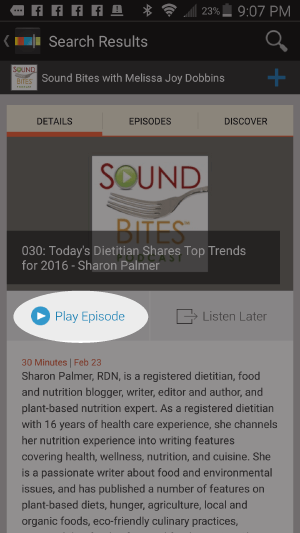
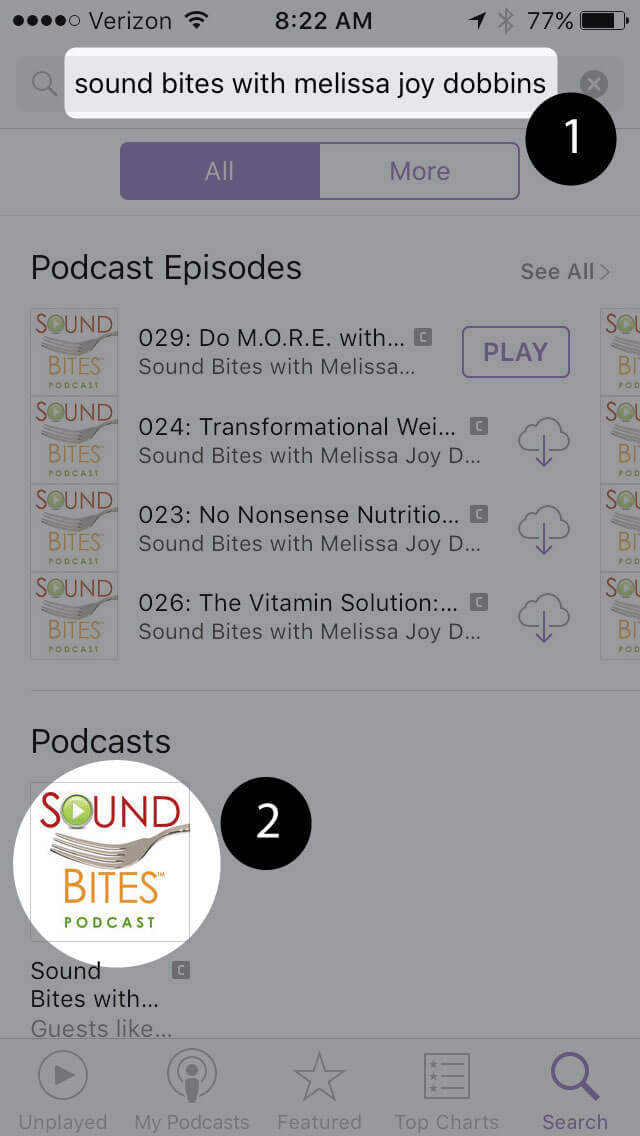
1. Search for “sound bites with melissa joy dobbins” 2. Choose Play Current Episode or Add to Playlist
Choose “Play Episode”
Subscribe & Review on iPhone
Open the “Podcast” app on your iPhone
Search for “Sound bites with melissa joy dobbins”
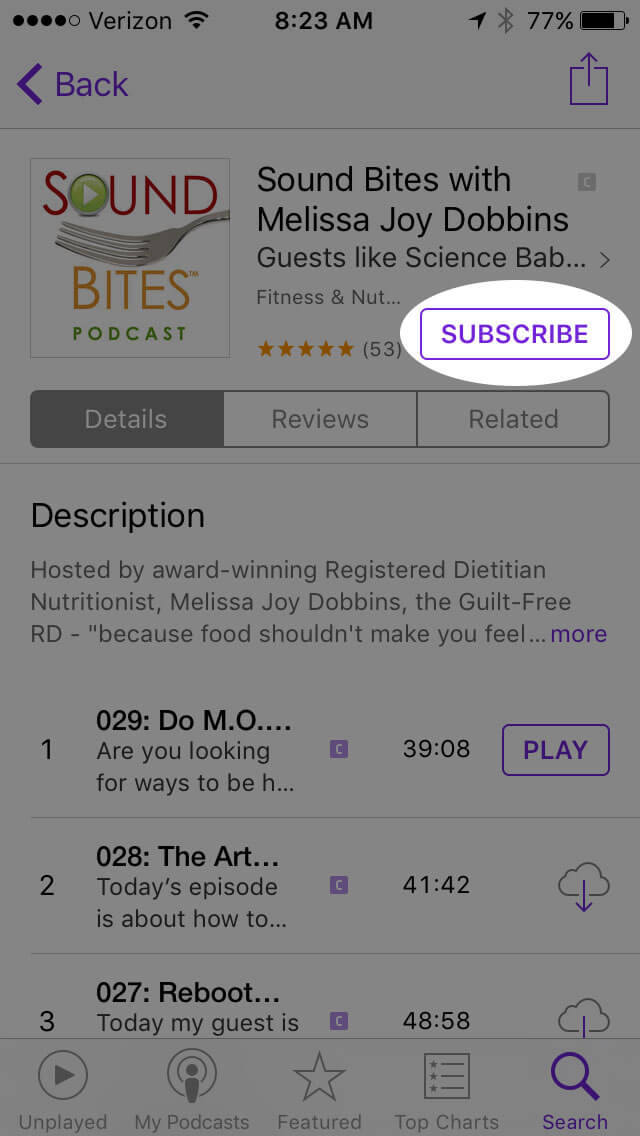
Open the podcast and click “Subscribe” and your done!
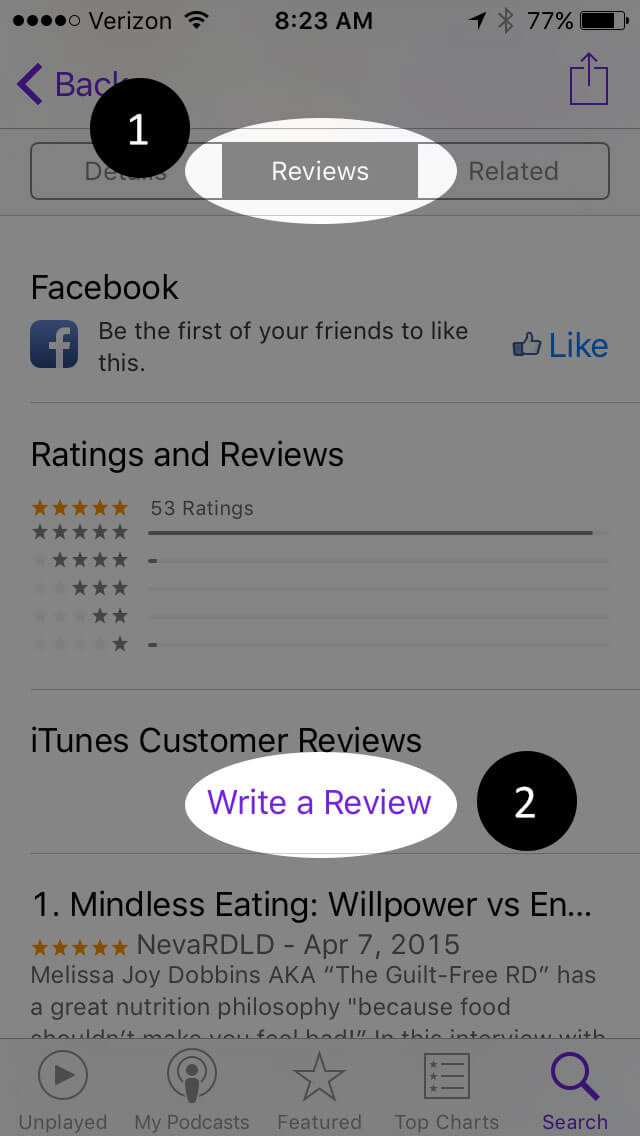
Write a Review
Click “Reviews”, then “Write a Review”.
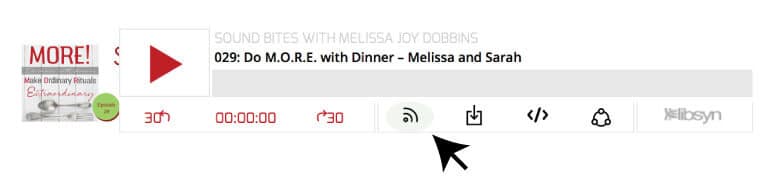
Subscribe via RSS Feed
Navigate to any podcast player . Click on the RSS feed icon.
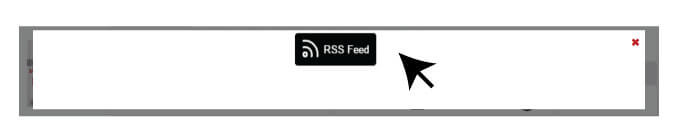
Click on the RSS feed icon.
Click on RSS Feed
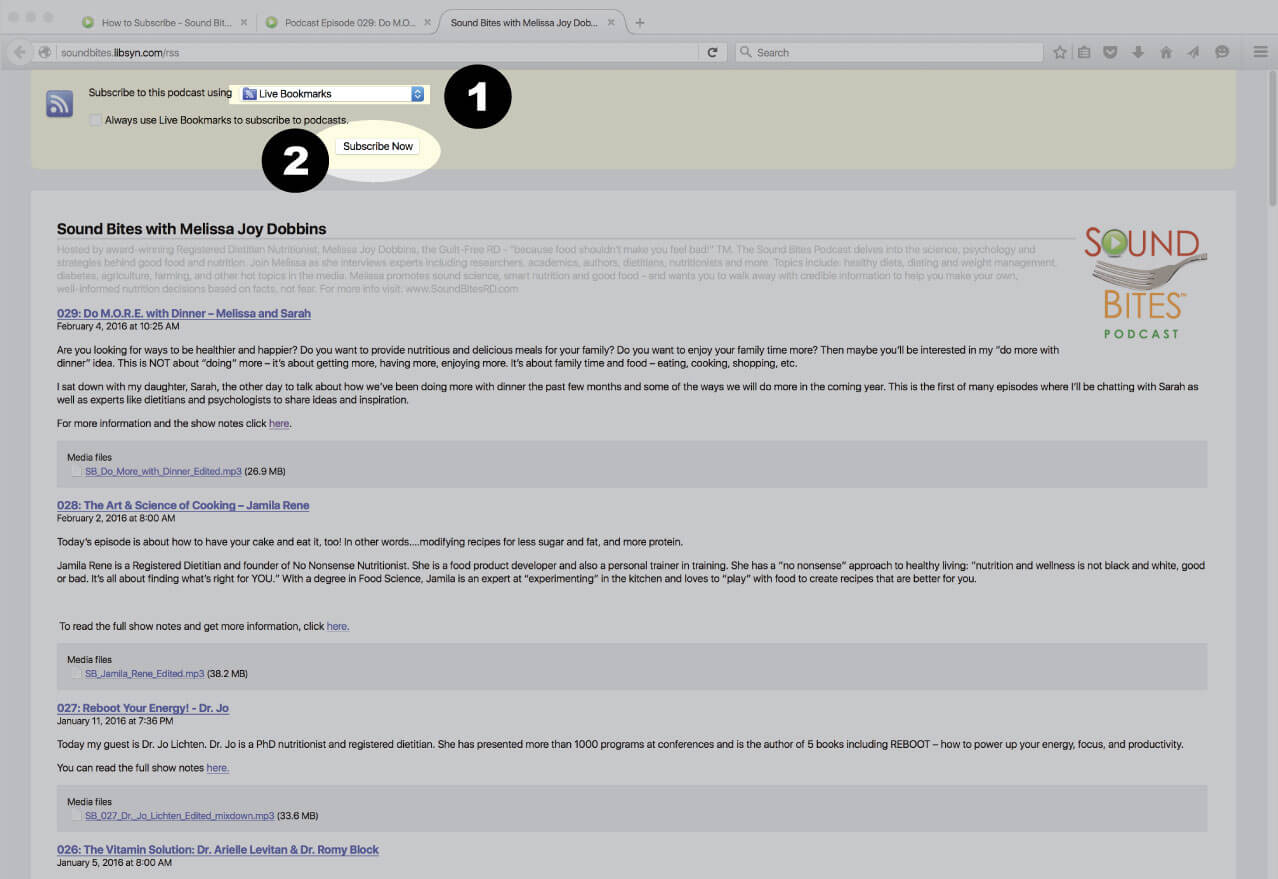
Choose which application you would like to use to receive the RSS feed
Click “Subscribe Now”
Confirm settings and subscribe.
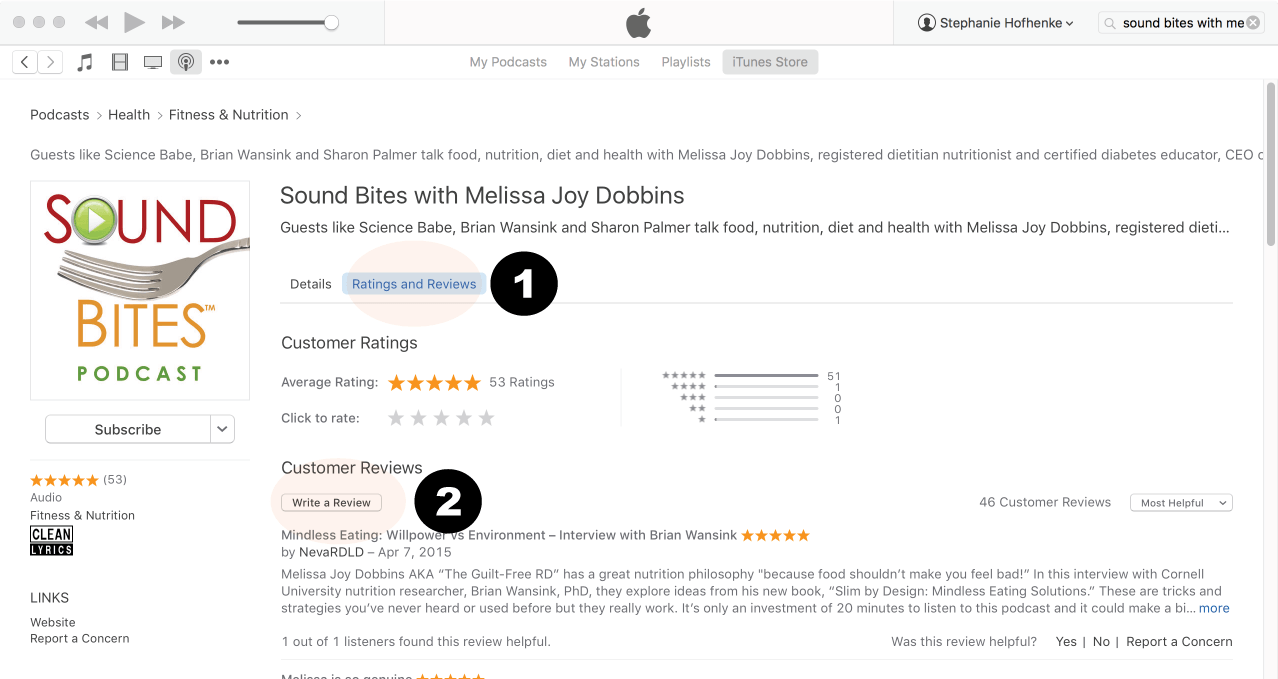
How to Review in iTunes
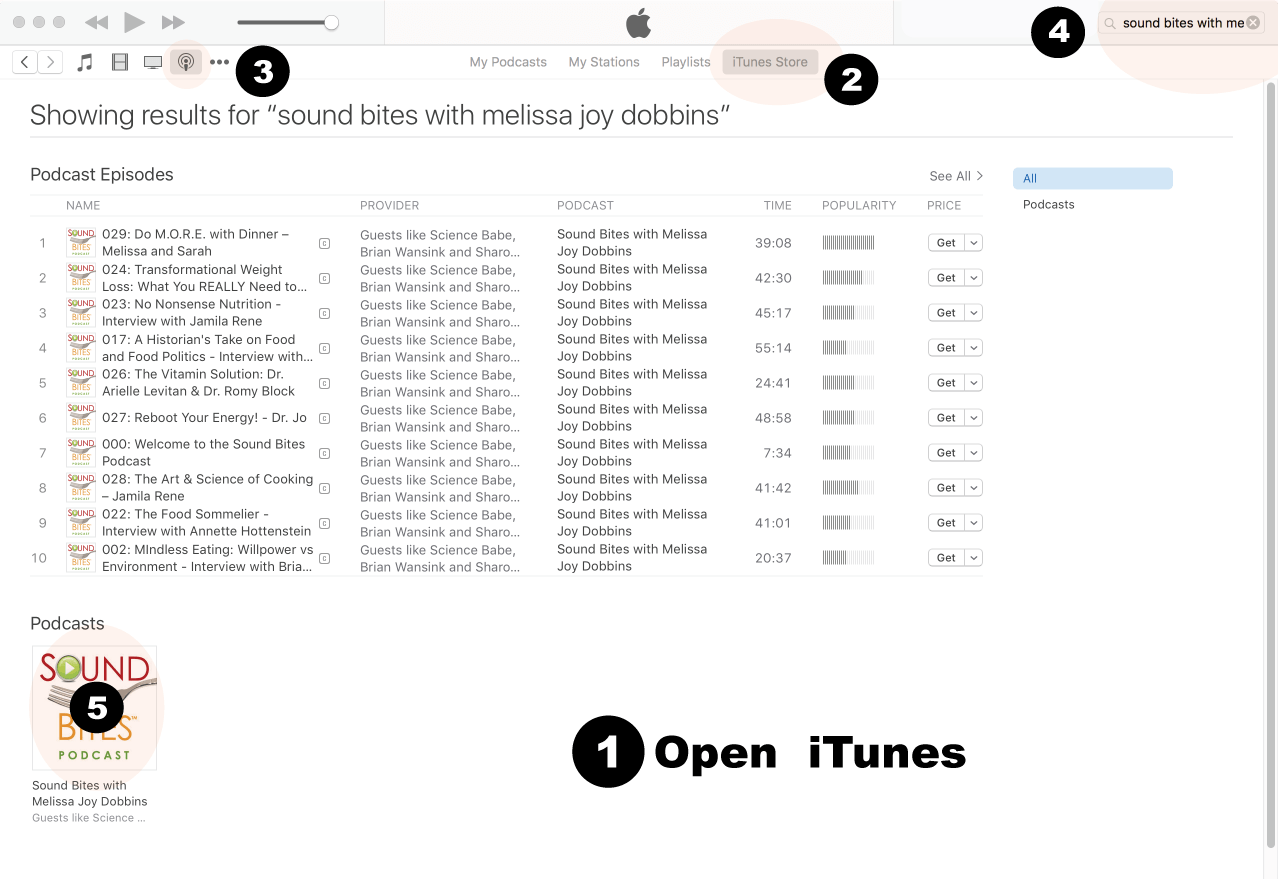
Open iTunes desktop application
Click iTunes Store
Click on Podcasts
Search for “Sound bites with Melissa Joy Dobbins”
Click on podcast image
Search for Sound Bites podcast in iTunes
Click Ratings & Reivews
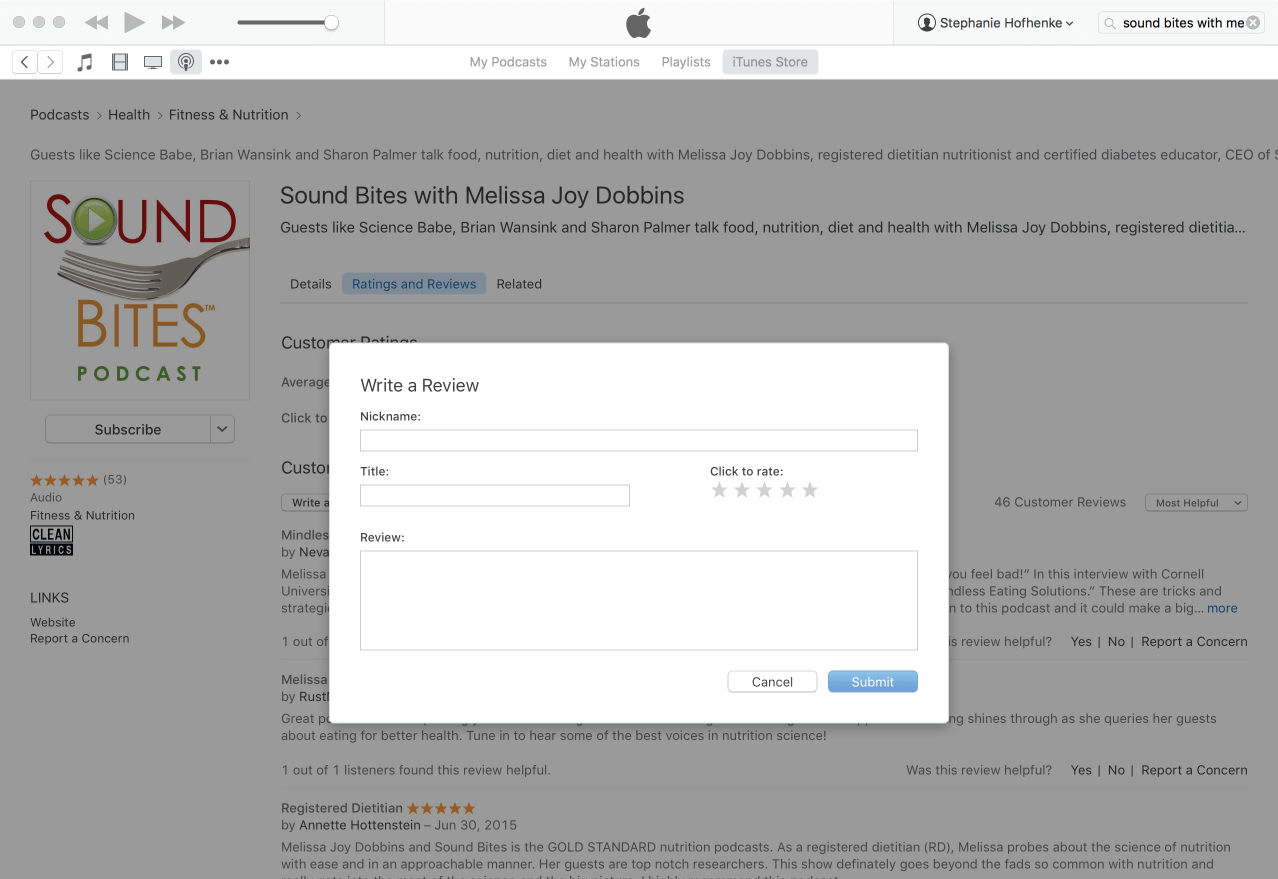
Click Write a Review
View reviews and write your own review.
Write your review…. Thank you!
Write your review!
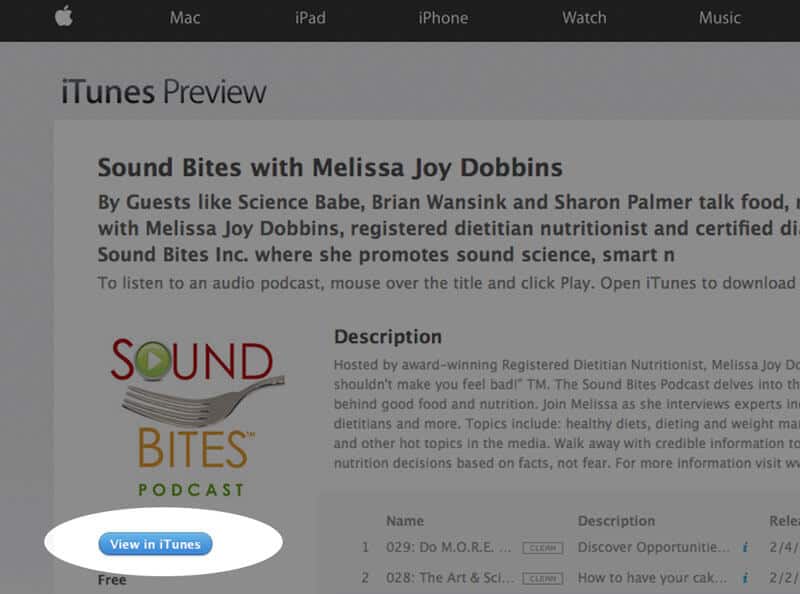
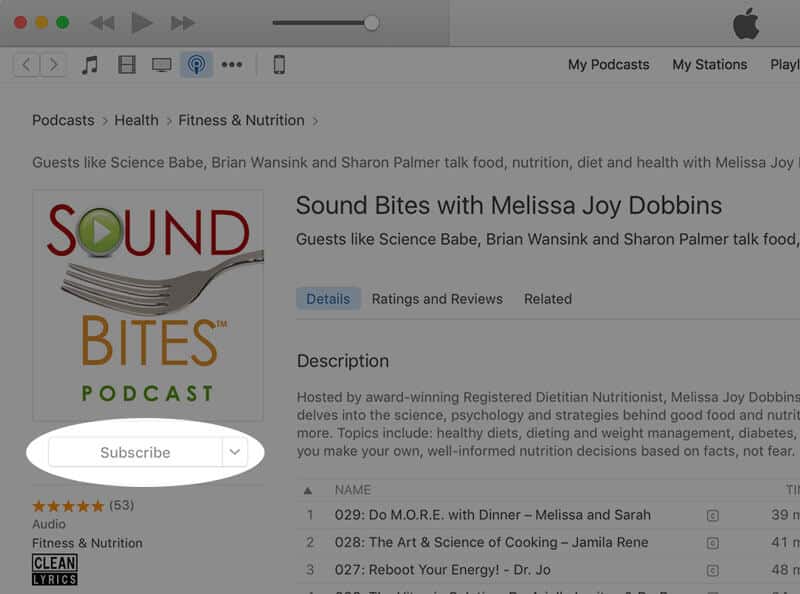
How to subscribe via iTunes
Click here to view the Sound Bites Podcastin iTunes, then click the blue “View in iTunes” button. This will open your iTunes application directly to Sound Bites Podcast. Click the “Subscribe” button, and your done!




 Jill Castle is the author of the book, Kids Thrive at Every Size (Workman, 2024) and one of the nation’s premier childhood nutrition experts. Known for her ability to blend current research, practical application, and common sense, Jill believes that children can thrive at every size. With her paradigm-shifting, whole-child approach, she inspires parents, healthcare professionals, and organizations that serve children and families to think differently about young people’s health and wellbeing.