Celebrating over 1 Million Downloads and 50,000 Free CEUs on the Sound Bites® Podcast | NEW: Get 1 years’ worth of CEUs with the new 15-CEU Podcast Course
Disclosure: This episode is not sponsored, however both the host (Melissa Joy Dobbins) and the guest (Dr. Stanford) are compensated members of an advisory board for Gelesis.
Obesity, Pre-Obesity, Health Disparities and the Importance of Early Treatment
Researchers are learning more about the etiology of obesity and investigating different treatment strategies. Early treatment is crucial, but there are many barriers to this including acknowledging obesity as a disease, health disparities, and access to treatment.”
An unmet medical need exists in obesity and pre-obesity (overweight). While 80% of healthcare professionals recognize obesity as a “disease” only 65% of patients with obesity recognize its seriousness and only 38% of people with obesity reported discussing a weight loss plan with their healthcare provider within the past six months. Likewise, clinicians report a reluctancy to initiate conversations about weight management due to lack of time during visits and other health issues to address.1
The truth is this: if weight bias in healthcare, health disparities and access to treatment are addressed there are many credible treatment options available that can help the more than 70% of U.S. adults with overweight and obesity.2
Tune in to this episode to learn about:
Why obesity is a “disease” and how both healthcare professionals and patients need to recognize this in order to maximize treatment
Pre-obesity and why language matters in conversations around overweight and obesity
Why healthcare providers may be reluctant to initiate conversations about weight with their patients
Weight stigma and bias among healthcare professionals and patients themselves
Health disparities in overweight and obesity
The importance of early treatment, treatment options, and access to these options
What patients and healthcare professionals can do to decrease stigma and improve treatment of overweight and obesity
We need to think about the language we use when we are talking about obesity. We need to refer to people in a respectful way – for example instead of ‘an obese person’ we can say ‘a person with obesity’ – because the word ‘obese’ is a label and ‘obesity’ is a disease.”
1 Kaplan LM, Golden A, Jinnett K, Kolotkin RL, Kyle TK, Look M, Nadglowski J, O’Neil PM, Parry T, Tomaszewski KJ, Stevenin B, Lilleøre SK, Dhurandhar NV. Perceptions of Barriers to Effective Obesity Care: Results from the National ACTION Study. Obesity (Silver Spring). 2018 Jan;26(1):61-69. doi: 10.1002/oby.22054. Epub 2017 Oct 31. PMID: 29086529.
2 Ward ZJ, Bleich SN, Cradock AL, Barrett JL, Giles CM, Flax C, Long MW, Gortmaker SL. Projected U.S. State-Level Prevalence of Adult Obesity and Severe Obesity. N Engl J Med. 2019 Dec 19;381(25):2440-2450. doi: 10.1056/NEJMsa1909301. PMID: 31851800.
Dr. Stanford practices and teaches at Massachusetts General Hospital (MGH)/ Harvard Medical School (HMS) as one of the first fellowship-trained obesity medicine physicians in the world. Dr. Stanford received her BS and MPH from Emory University as a MLK Scholar, her MD from the Medical College of Georgia School of Medicine as a Stoney Scholar, her MPA from the Harvard Kennedy School of Government as a Zuckerman Fellow in the Harvard Center for Public Leadership, and her executive MBA as a merit-based scholarship recipient from the Quantic School of Business and Technology. She completed her Obesity Medicine & Nutrition Fellowship at MGH/HMS after completing her internal medicine and pediatrics residency at the University of South Carolina. She has served as a health communications fellow at the Centers for Disease Control and Prevention and as a behavioral sciences intern at the American Cancer Society. Upon completion of her MPH, she received the Gold Congressional Award, the highest honor that Congress bestows upon America’s youth. Dr. Stanford has completed a medicine and media internship at the Discovery Channel.
Dr. Stanford is the recipient of numerous prestigious awards including:
American Medical Association (AMA) Foundation Leadership Award in 2005
AMA Paul Ambrose Award for national leadership among resident physicians in 2009
Joseph E. Johnson Leadership Award by The American College of Physicians (ACP) in 2013
AMA Inspirational Physician Award in 2015
Young Leadership Award by the Massachusetts ACP in 2015
HMS Amos Diversity Award and Massachusetts Medical Society (MMS) Award for Women’s Health in 2017
Suffolk District Community Clinician of the Year in 2019
Reducing Health Disparities Award for MMS in 2019
The Obesity Society Clinician of the Year in 2020
MMS Grant Rodkey Award for her dedication to medical students in 2021
AMA Edmond and Rima Cabbabe Dedication to the Profession Award in 2021
Emory Rollins School of Public Health Distinguished Alumni Award in 2021
Resources:
Some links may be affiliate links. As an Amazon Associate, I earn from qualifying purchases.
Plenity is designed to help people feel fuller with smaller portions so they can eat less and lose weight. It is FDA-cleared to aid in weight management in adults with excess weight or obesity, Body Mass Index (BMI) of 25 to 40 kg/m², when used in conjunction with diet and exercise. It is taken orally as three capsules with 16 oz. of water twice a day, 20 minutes before lunch and dinner. If a dose is missed it can be taken with the meal or immediately following the meal. Plenity is not a drug, non-systemic, and not habit forming. It instead uses a novel biomimetic approach inspired by the composition and mechanical properties of vegetables.
Listen to select Sound Bites Podcasts and earn free CEU credits approved by the Commission on Dietetic Registration (CDR) for registered dietitian nutritionists and dietetic technicians, registered. Get started!
Get Melissa’s Sound Science Toolkit here!
Partnerships:
Sound Bites is partnering with the Association of Diabetes Care and Education Specialists (formerly the American Association of Diabetes Educators)! Stay tuned for updates on the podcast, blog and newsletter!
Sound Bites is partnering with the International Food Information Council! Stay tuned for updates on the podcast, blog and newsletter!
Sign up for my monthly newsletter and episode eblasts so you never miss an update!
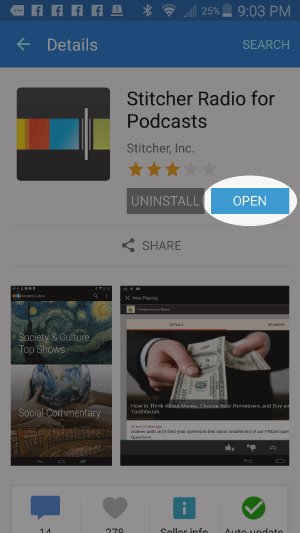
Listen on Stitcher (Android)
Install the Stitcher App
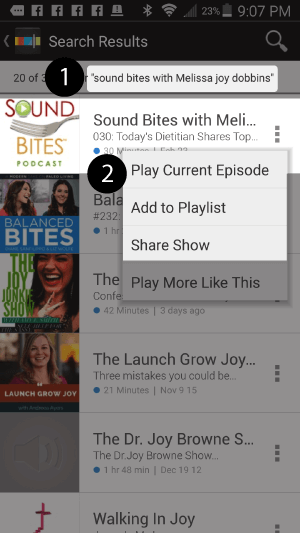
1. Search for “sound bites with melissa joy dobbins” 2. Choose Play Current Episode or Add to Playlist
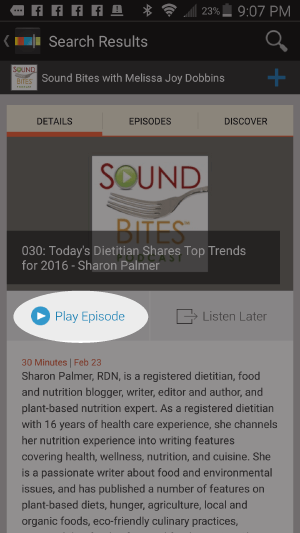
Choose “Play Episode”
Subscribe & Review on iPhone
Open the “Podcast” app on your iPhone
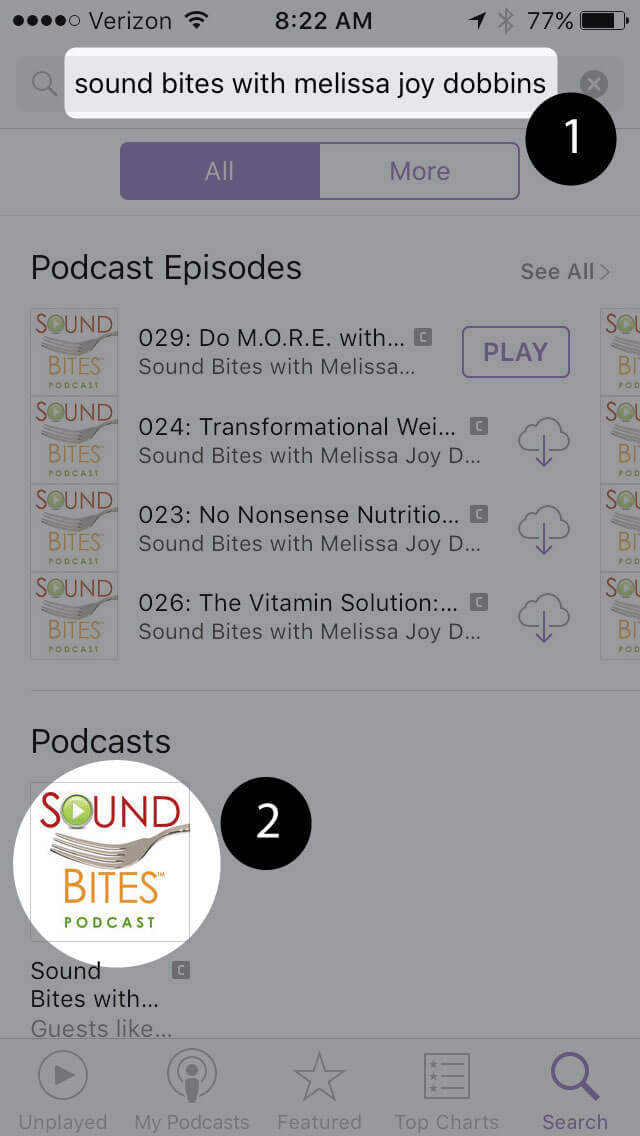
Search for “Sound bites with melissa joy dobbins”
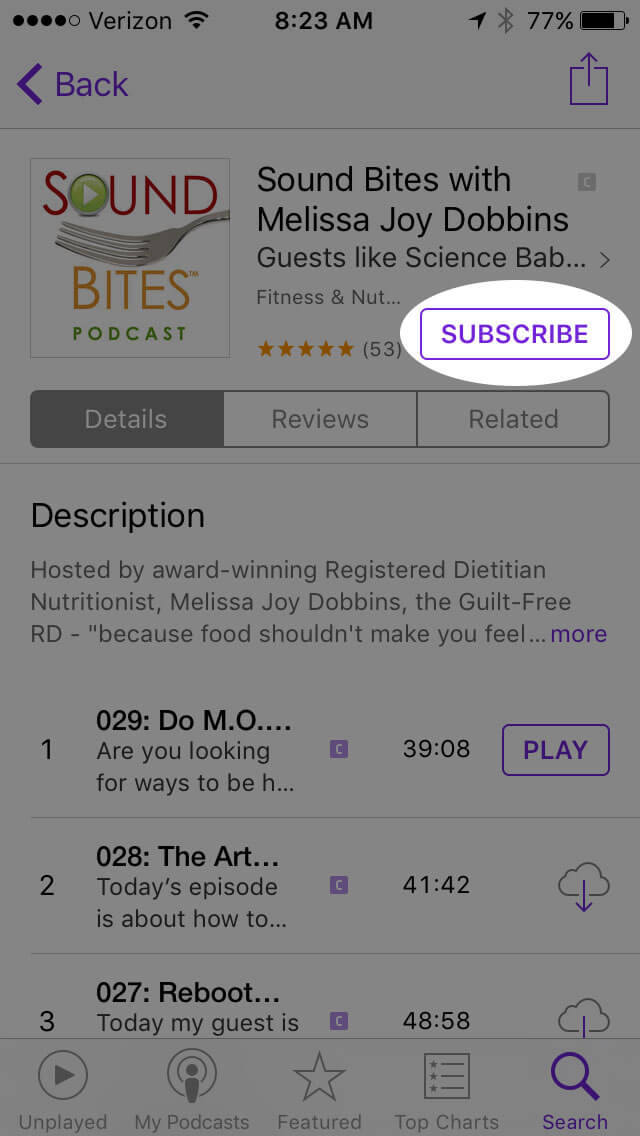
Open the podcast and click “Subscribe” and your done!
Write a Review
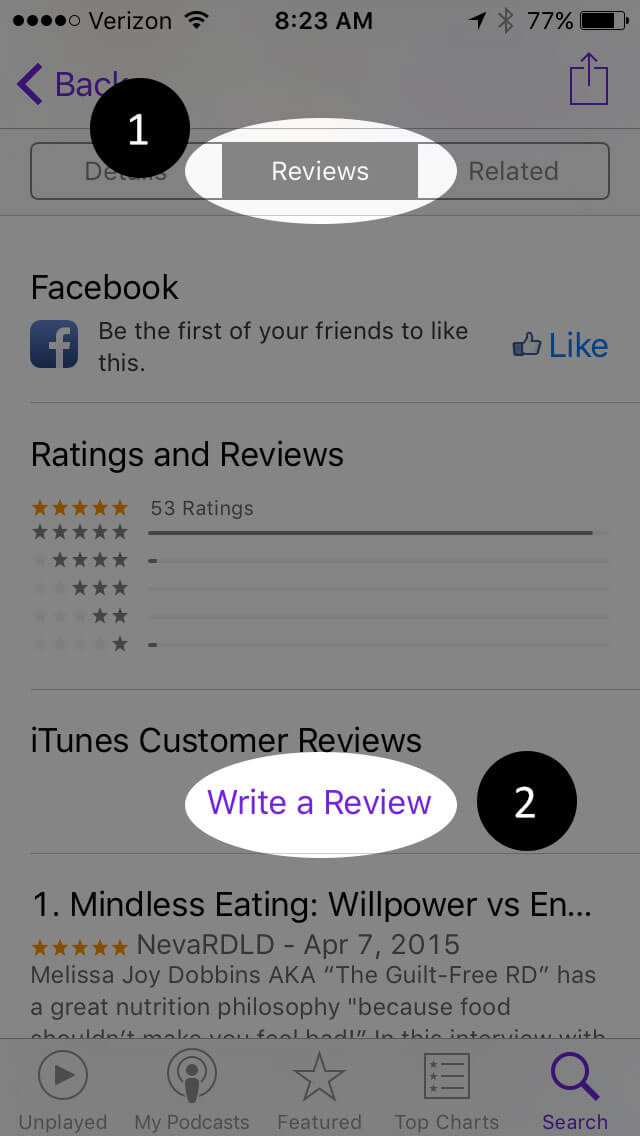
Click “Reviews”, then “Write a Review”.
Subscribe via RSS Feed
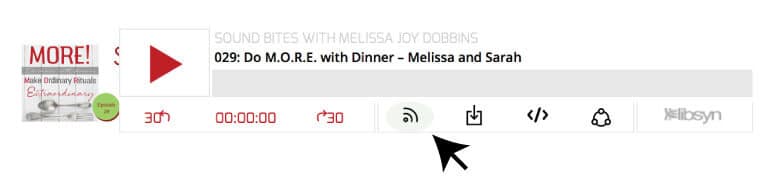
Navigate to any podcast player . Click on the RSS feed icon.
Click on the RSS feed icon.
Click on RSS Feed
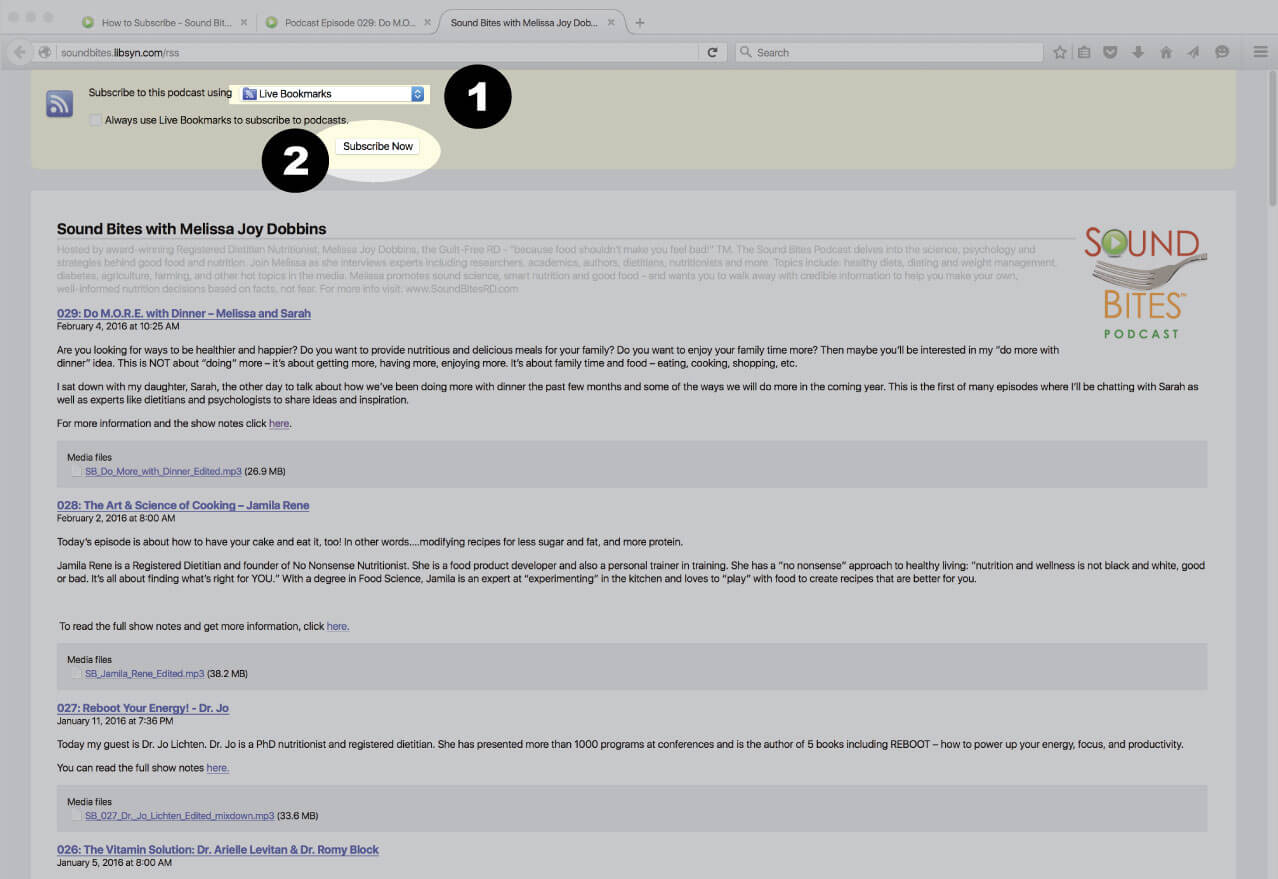
Choose which application you would like to use to receive the RSS feed
Click “Subscribe Now”
Confirm settings and subscribe.
How to Review in iTunes
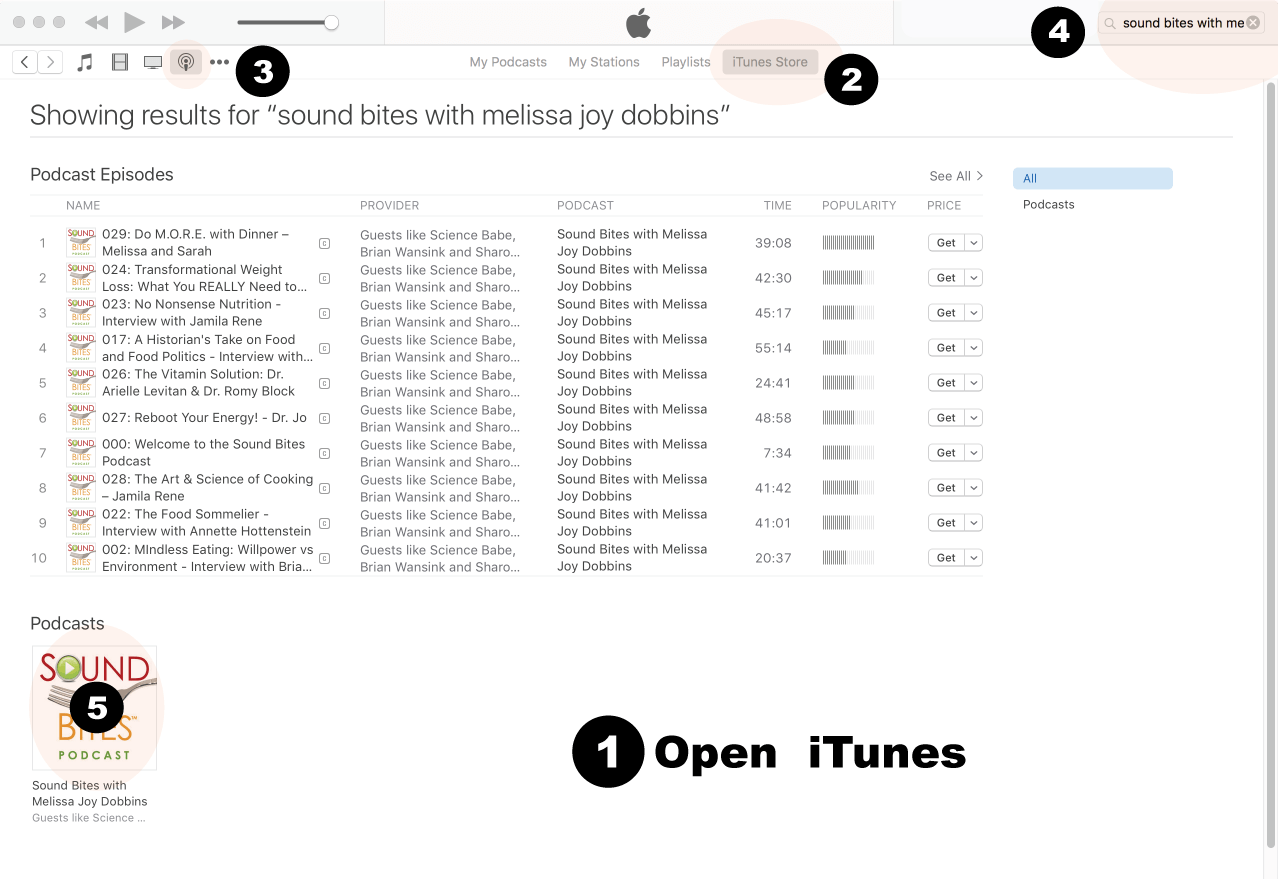
Open iTunes desktop application
Click iTunes Store
Click on Podcasts
Search for “Sound bites with Melissa Joy Dobbins”
Click on podcast image
Search for Sound Bites podcast in iTunes
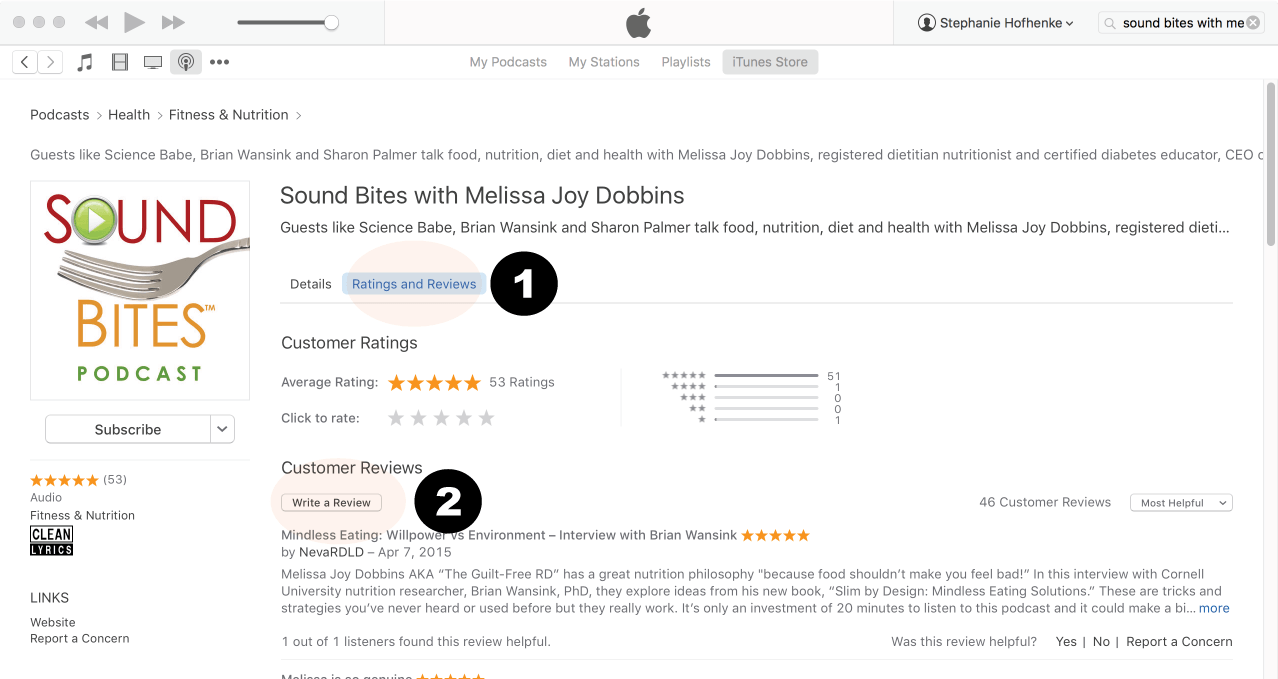
Click Ratings & Reivews
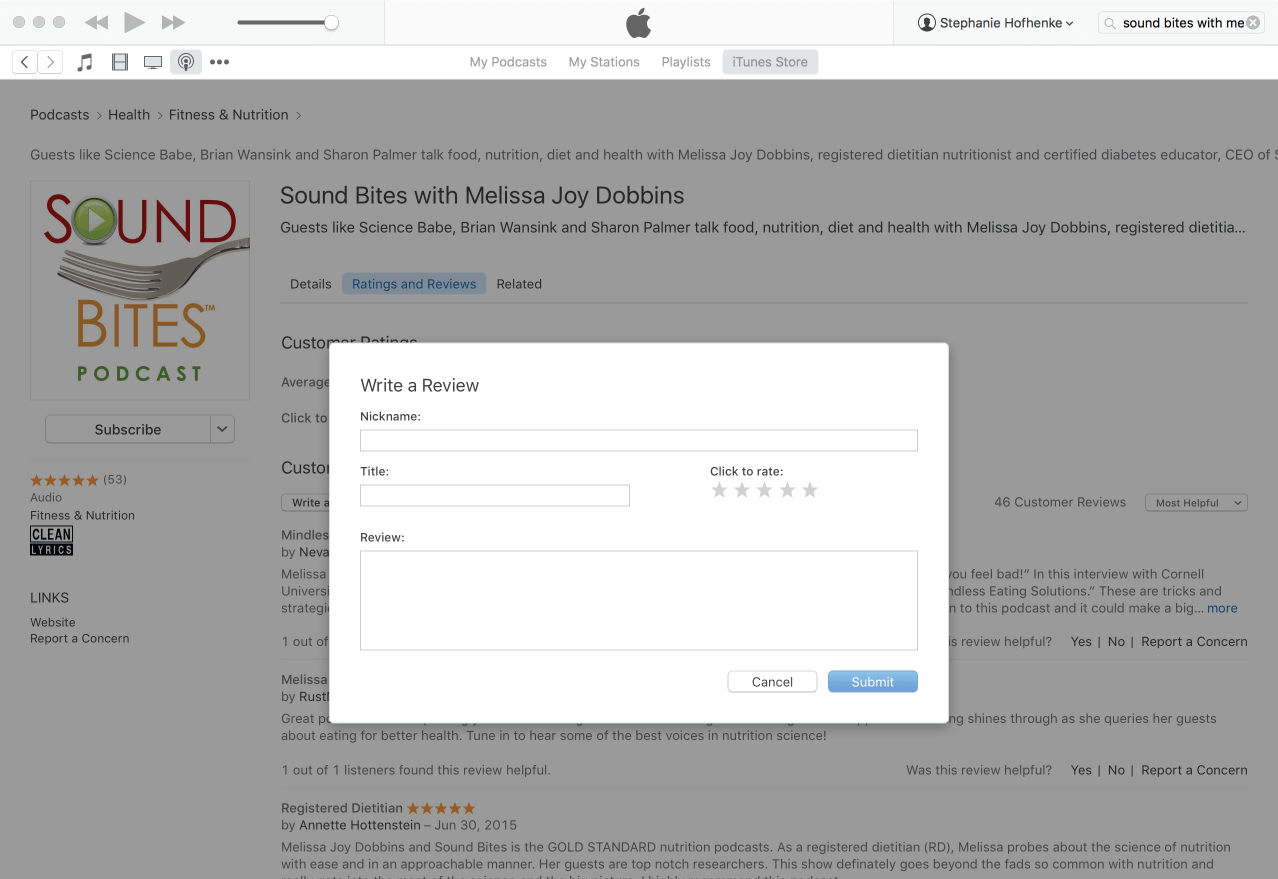
Click Write a Review
View reviews and write your own review.
Write your review…. Thank you!
Write your review!
How to subscribe via iTunes
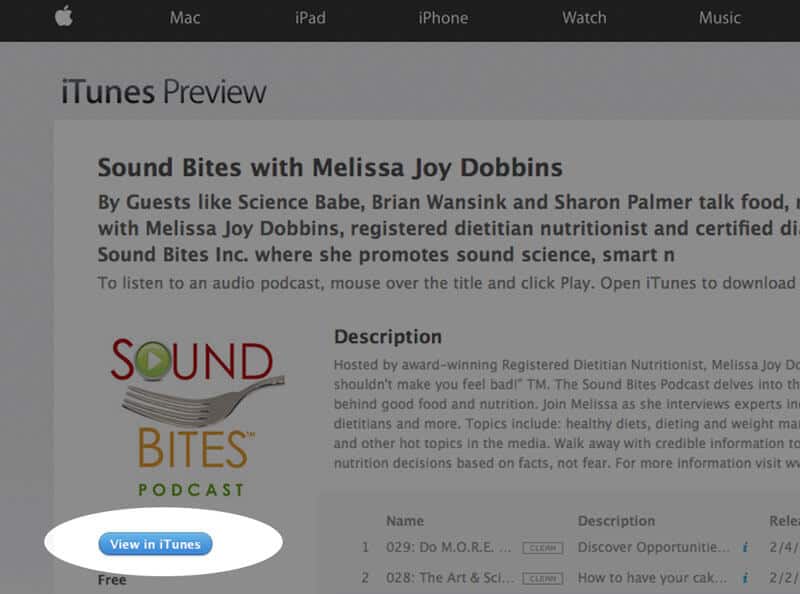
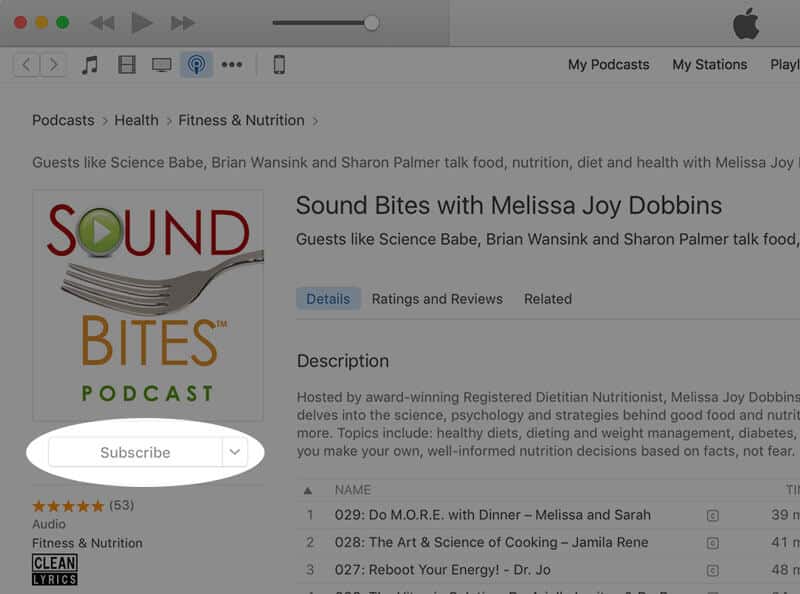
Click here to view the Sound Bites Podcastin iTunes, then click the blue “View in iTunes” button. This will open your iTunes application directly to Sound Bites Podcast. Click the “Subscribe” button, and your done!