Celebrating over 1 Million Downloads and 50,000 Free CEUs on the Sound Bites® Podcast | NEW: Get 1 years’ worth of CEUs with the new 15-CEU Podcast Course
Eating Behaviors in Adolescence and Young Adulthood – A Time of Transition
During adolescence the physical, cognitive, social, emotional and developmental changes happening are the background for whatever else is going on in the teenager’s life, including their eating habits and behaviors. From skipping meals, to snacking to disordered eating, teens are often experimenting, seeking independence and taking risks. How can parents and caregivers best support their child and set them up for success during this time of growth, development and transition?
Tune into this episode to learn about:
The developmental stage of adolescence and how that impacts food choices and eating behaviors
Why and how eating habits change during this time
Why it’s important to maintain food routines and expectations
Real life examples and stories about our own children and clients
Tips for breakfast, lunch, snack time and other challenges
Sources of food shaming and other negative influences
Resources for parents, caregivers and health professionals
Jill Castle MS, RDN
Jill Castle is one of the nation’s premier childhood nutrition experts. Known as a paradigm shifter who blends current research, practical application and common sense, Jill inspires audiences to think differently about feeding kids. A sought-after speaker, advisor, and media contributor, Jill has inspired audiences from the TEDx stage as well as a range of medical, government and parent audiences. Jill serves as an expert reviewer for Parents.com, and has been featured as a guest expert in CNN, The Washington Post, The New York Times, Forbes, Newsweek, Time, and many other outlets. She helps startups and companies in the kid food space as an advisor and consultant.
Jill is the founder and CEO of The Nourished Child®, a parent nutrition education website and interviews experts on her popular podcast, The Nourished Child®. She is the author of the forthcoming book Size Wise (Workman 2024), as well as the books, Eat Like a Champion, Try New Food, The Smart Mom’s Guide to Starting Solids, The Smart Mom’s Guide to Healthy Snacking, and co-author of Fearless Feeding.
Welcome to Sound Bites hosted by registered dietitian nutritionist Melissa Joy Dobbins. Let’s delve into the science, the psychology and the strategies behind good food and nutrition.
Melissa 00:22
Hello, and welcome to the Sound Bites podcast. Today’s episode is about navigating the murky waters and the bumpy terrain of adolescent nutrition and eating behaviors, specifically high school and college ages. And how parents or caregivers can best support their children and adolescents during this time of growth, development and transition to healthy independence. My guest today is my good friend Jill Castle. She’s a pediatric Dietitian with deep expertise and experience in childhood nutrition. She is the founder and CEO of the nourished child, a website and podcast for parents. In addition to speaking and consulting, Jill is working on her next book called Size Wise. Welcome to the show, Jill.
Jill 01:13
Thanks, Melissa. It’s great to be here.
Melissa 01:16
So glad to have you back on and so welcome back. I can’t believe how long it’s been. You were on the show way back in episode 50, in 2016. And we talked about family mealtime matters. It’s a timeless episode. So I do encourage people to check that out because you dropped some really major nutrition truth bombs, like how to serve your family, family style. Which was a game changer for me. And I think you launched your Nourished Child podcast shortly after that.
Jill 01:49
I think so which kind of blows my mind because you were an unknown mentor to me during that time, because you were doing your own podcast. And the other thing that blows my mind is, has it really been seven years?
Melissa 02:03
Yeah.
Jill 02:04
Holy cow.
Melissa 02:05
Yeah, so my podcast just turned eight years old in April. And I can’t believe it’s been that long. I’m like in the 230s as far as episodes, and offering free continuing education for dietitians, and diet techs and diabetes educators. Which I should mention, we are going to submit this episode to the Commission on Dietetic Registration for one free CEU for dietitians, diet techs, and diabetes educators. So if you’re listening, and that is of interest to you, stay tuned for that. As always, you can check my free CEU page at soundbytesrd.com/freeceus to see what episodes are currently available. So I’m really excited to have you on the podcast again, finally. We’ve seen each other at conferences, and we’ve caught up and you just do amazing work. I don’t know when you sleep. I tell you this all the time. I just can’t keep up with you. But I love all the stuff you’re doing. And I’m just so excited to share some of it on the podcast today. For those who are not familiar with you, and maybe didn’t catch your episode on family mealtime matters, let’s talk a little bit about your background. Share with us a little bit about your background. There’s so much to share, but whatever you think is important for our listeners to know. And maybe how you got into this niche of childhood nutrition. And all the cool stuff you’re doing right now, including your new book, and some of your old books or past books I should say.
Jill 03:31
Past books, yes. So I’m a pediatric dietitian. And that basically means that I specialize with a focus on children – babies, toddlers, children and teens. I was sort of traditionally trained during my internship where I had a focused time spent in the pediatric wards. And then I was hired as a clinical dietitian, working with children. So I spent four years at Mass General Hospital working on the pediatric floors there. And then I went over to Children’s Hospital Boston and was a nutrition support dietitian there. Which basically means children could not eat, they were not on tube feedings they were on intravenous TPN. So I had a lot of experience in sort of the chronically ill population of Pediatrics. And I often joke when I’m out speaking about the fact that the hardest questions I would get asked when I was in the hospital was “how do I get my picky eater to eat?” And for me working with chronically critically ill children, eating was really not the primary focus there was nourishing these kids but we weren’t focused on the everyday feeding. And so when I had my own children, I have four of them and I semi-retired to stay at home for nine years and take care of them. I quickly learned that the day in and day out of feeding kids was not as easy as you know, writing a prescription for TPN. It was a little more challenging.
I went back to work after my youngest went into kindergarten, and I opened my private practice, we were living in Nashville, then. And I chose to be true to my training and stay with pediatrics. So I did not take care of adults, I really never have taken care of adults. And I worked in private practice really up until the pandemic hit. And I decided it was a good inflection point to retire that piece of my business. But in the time I was working in private practice, I started a blog and I was speaking and I got a book deal, co-authored my first book, Fearless Feeding with Mary Ann Jacobson. And that has been a book that has been a good resource for parents on nutrition and feeding and child development. But it’s also been a really good resource for professionals who want a basic book on pediatric nutrition. Then I started to just write books. And I’m working on my sixth one now, which is called Size Wise. It’s a habit book for parents of children who are 3 to 13. With a side dish of how do we navigate our world today that’s so focused on a norm of appearance and a norm of eating when we truly have a variety of sizes, and a variety of cultures and family priorities.
So that book I would say, I’m hoping it will be a welcomed prevention tool for parents to just sort of navigate the basic daily healthy habits we should all be teaching our children no matter what we’re dealing with. You know, chronic illness, differently sized bodies. Every child needs good healthy habits like sleep and activity and things like that. And then also, I decided to launch a website for parents, really focusing in on nutrition education, and that’s thenourishchild.com. And I keep populating that with free articles, and the podcast lives there. And I have some classes and workshops and guidebooks for parents that they can purchase there too.
Melissa 07:27
Excellent, thank you. That book sounds very interesting. I can’t wait to check it out. I’ve got a ton of questions for you. But I know that we can’t have this discussion without touching on the unique differences from child to child, and also social media and all of these influences. So really looking forward to hearing your perspective. And for the listeners, I still will either talk with Jill in person or email her and say, “I’m having a little trouble with snack time and fueling my children properly and that whole family style serving like how do you do this? Or how do you do that?” So even though I’m a mom, too. I’m a dietitian and a mom, but I still have questions. So it’s always enlightening. Maybe a great place to start and I’m glad that you had mentioned that you’re a mother of four, because I would love for you to share some stories and experiences throughout our conversation. And I will probably do the same. I love talking about my kids and try to choose things that they have approved for me to share with the world. You know how that is. But maybe a great place to start is to talk about some perspective, misperceptions or facts about adolescent nutrition. Is there anything that you feel is common, myths, or some statistics or any insights that you think would be good to share to set the stage?
Jill 08:54
Yeah, we think a lot about the different changes that are happening during the adolescent phase. We have physical changes, we have cognitive changes, social, emotional, and developmental changes. And that’s sort of the background that’s happening no matter what else is going on with our teenagers. When we look at teen nutrition, we know globally, there was a recent study that came out just a couple of months ago that 20% of kids and teenagers have disordered eating. That’s a sort of eye opening piece of research. It’s current, it’s looking at 16 different countries, I think over 63,000 kids and teens.
That’s something that has professionals and parents sort of perking their ears up and widening their eyes a little bit. We also know that a third of girls who are at what is considered a healthy body weight, diet. And so again, when you put that together with the disordered eating and the dieting, that can be concerning. And then on the flip side, we have research that tells us that 40% of the calories that kids and teens are consuming are coming from added sugar, and fats. Again, the recommendation is around 10%. And so when we put these things together, it’s no wonder that parents get concerned, worried about their teenagers, and also feel, perhaps, a sense of futility. Because a lot of parents will say to me, “Is this something I can even change now? I mean, it’s a teenager, the habits are set, aren’t they set, Jill?” And I’ll say, yeah, in a lot of ways they are set. But that doesn’t mean that you can’t, as a parent, support your child and do what you know is best for the whole family and have some expectations of your teenager, which I think we’ll probably talk about those things a little bit later.
Melissa 11:08
Okay, great. As you’re talking, I’m just reliving some moments with my children where you’re just trying to do the right thing. And sometimes you just need some reassurance or some advice, and some ideas. It’s just like I said, murky waters and bumpy terrain sometimes.
Jill 11:25
Yeah, just anecdotally, I remember my oldest daughter, when she was in seventh grade and she and I went out for lunch, and I sort of had it in my head, “I am not going to tell her, she’s old enough, I’m not going to tell her what to order, and I’m not going to make suggestions. I need to stop doing that and so when we go out, she’s going to be in charge.” And I remember the time we went out for lunch, and she ordered all by herself, like on her own, a Greek salad with a pita pocket. And I was like, “Okay, I’m doing something right here we are on the right path.” And that by no means was she ordering that every single time she went out. But there was a glimmer of hope that all of these things we’ve worked on over the years or just really the modeling of balanced eating that was healthy and indulgent, quite honestly. But that there was a nice balance and flexibility there that she had learned that. So it was a glimmer of hope that that little seed that was planted along the way was starting to sprout.
Melissa 12:34
How exciting. Yeah, I had something similar with my daughter recently. She graduated college last May. And she’s working in her first job teaching and living on her own. And she started cooking through a meal delivery service type thing. A friend gave her a month of that. And she is cooking. And last time she came home, she showed me some of the recipes. And what’s really cool about it. Is she can take that recipe and go to the store and buy the ingredients. So if she liked one of them or whatever, she doesn’t have to get it from the meal delivery service, she can make it on her own. So just really excited about that. It’s neat to see those developments.
Jill 13:12
For sure.
Melissa 13:12
So as I mentioned earlier, and we know this, every child is different. But we can’t have this conversation without talking about some of the things that they share in common during this transition, and this time of change. What are some of the things that we’re seeing with this developmentally? And obviously, it’s this time of trying to become independent, and all of the stuff that goes along with that. What are you seeing with this age group with regard to that, that can help parents and caregivers maybe sort of get some perspective or like kind of know, I know, with younger children we talk about, my role is to provide healthy foods, and the child’s role is to choose from that and so on. But is there anything like that, for this age group?
Jill 13:55
Yeah, there are a couple of things going on in the teen years. Number one, it’s a big growth spurt that’s happening. And we know that whenever there’s a big growth spurt, appetite follows. And it’s sort of a rule of thumb, if you think about way back when you had a baby. In that first year of life there’s a rapid phase of growth, and you feel like your cluster feeding and you’re feeding every two hours, and it’s just nonstop. That’s because the appetite experiences an uptick when there’s a growth spurt. The same thing is happening during the adolescent years. The other thing that is happening physically is puberty. So we have a lot of hormonal shifts. Bodies are changing tremendously. And so that all sort of plays into what’s going on. But then there are also cognitive changes that are happening. Children who are very black and white thinkers during the school age years turn into more flexible and logical thinkers.
So their brains are maturing, they’re able to see bigger pictures and nuance. Whereas a younger child really is unable to see that. We also know that executive functioning is becoming sharpened. And while some children will be challenged with executive functioning, normally what is happening through the progression of childhood through adolescence, those skills are becoming honed. And so we see that teenagers have the ability to be less impulsive, they have the ability to inhibit their behavior, they have the ability to use working memory, oh, I learned about, fruits and vegetables in class and now I’m going to go to my local farm because I know that’s better for the environment. They are able to put that information together a little bit better. We also know though, that the other cognitive thing that’s happening is the brain starts to prune itself. And so all along through childhood and into adolescence, there’s just this accumulation of neurons and neural pathways, and there’s just this big tangled mess of information pathways. What happens during adolescence is that the brain starts to sort of de-emphasize those pathways that aren’t being used, and prune them away, emphasizing the pathways that are used day in and day out, and really honing those.
That’s why teenagers tend to forget things. They go out to the movies, and they forget their money. It’s like, you’re going to the movies, how could you forget your money? And so there’s a lot of stuff going on in the brain during adolescence, too. And then we have social emotional things that are happening. So we know that, as you mentioned, teenagers want to be independent, and they want autonomy. Interestingly, toddlers want that too. So for parents, a lot of times I will say, remember how your child was when they were a toddler, they want you and then they don’t want you and there’s push and there’s pull, and there’s let me do it. And a lot of “no”. We see that, it expresses itself in a different way during the teen years. But it is a very similar thing. They want autonomy, and they want independence. They also are risk takers. They want to take risks, and they value risk over reward. And so sometimes we can’t entice them to do things by using rewards, because they actually like the thrill of taking the risk.
Jill 15:16
Wow, you’re blowing my mind, I understand my daughter so much better now.
Jill 17:49
Yes. And then just lastly, you know, the question of who am I? That’s the question teenagers are trying to answer. Who am I? And that’s why you will see, you know, teenagers possibly dressing differently, really taking a radical shift from the way they’ve dressed their whole lives, for example. Or experimenting with different diets or becoming vegetarian for a while, and then figuring out that they don’t want to do that anymore. And they want to go back to the way they were eating beforehand. It’s this constant pursuit of who am I? Am, I good the way I am? and sort of testing the waters and trying on different things. Whether it will be eating patterns, clothing, style, political views, all of these things are sort of very normal for teenagers.
Melissa 18:42
Great, thank you. So during that time, and all of these changes, I can appreciate some of the maybe hiccups that we’re seeing with regard to food. Certainly I saw like with my daughter, she would skip breakfast or other meals. And to me as a dietitian, that kind of freaked me out a little bit because I shared a little bit on this podcast in the past, but I had some eating issues, being a dancer growing up a ballerina. And I was like, “Oh my God, she’s skipping meals. Does that mean she has an eating disorder ?” And realizing, “Oh, this is my stuff, I need to chillax a little bit” Every year like they go from middle school to junior high to high school, the cafeteria evolves into an opportunity to make some good choices and some junk food choices or whatever. And it was never lost on me that there’s a reason for that because they need to start exploring and trying things and having some responsibility and accountability. But with some specific food related behaviors here, skipping meals, junk food, snacking, we could talk about snacking. What can parents do when they see these changes? When do you freak out, when do you not freak out? See it for what it is and also support some healthy habits in the meantime.
Jill 20:08
Yeah. So one of the things that you mentioned, great one, skipping breakfast, a big one. Lunch, do I bring, do I buy? Or do I just skip it all together? Not drinking enough fluid. That’s another one. Just becoming dehydrated is something that I’ve observed in my own kids and also in other teenagers. Too much snacking. I think one of the things for parents to remember and I experienced this feeling myself. And I also saw it with my clients when I was in private practice, my adolescent parents, this feeling of, “Oh, my kid’s old, now, theyre a teenager, they can do all this stuff. I don’t have to do this anymore. Like, wow, what a relief.” And the minute we start going down that track, it seems like teenagers their eating habits start to go down the tube also. They really do need us to still be following the plan, whatever the plan is in your family, following the structure.
Like we get up, we eat breakfast, well we have to support our teens and help make sure that breakfast is available for them. Whether it be just pulling the box of cereal out with a gallon of milk and putting it on the counter with a bowl and a spoon, and it’s right there. So they don’t have to think, they don’t have to do anything, but pour the bowl of cereal and sit down and eat. Or it might be, I used to do this with my kids, I used to get up and make little egg, ham cheese sandwiches on an English muffin and wrap them in tin foil. This wasn’t very environmentally sustainable. But I had the to go coffee cups because my teenagers wanted a cup of coffee in the morning. And I would make them coffee with milk and have their little sandwich to go. It was like, you don’t have to go through the drive thru. Eat this on the way in. So some people might say, “Oh, Jill, you are being too enabling.” I didn’t see it that way. I thought for me is important that my children have breakfast. Whether they eat it at this hour of the morning, which was 6:30 or 6:45. Or they save it and they eat it in their transition between their eight o’clock and their nine o’clock class. It was important for me that they had something nourishing to eat for the day. And so that’s just one way I managed that.
Skipping lunch.I remember I skipped lunch when I was in high school. Or if I had money I bought and you probably remember this, my school used to do these homemade yeast rolls. Big huge yeast roll with a pad of butter, and I would spend $1. And that would be my lunch. So kids today are doing the same thing. They’re buying a bag of chips and that’s lunch. And I remember with my own children, I packed their lunch for many years. And when they went into high school, they had the cute little lunch boxes the whole bit. We lived in Fort Wayne at one point and my neighbor was Vera Bradley, and they had Vera Bradley lunchboxes. And I made them leftovers. We had all kinds of sandwiches. I really worked on variety. And then they hit high school and they’re like, “Mom, nobody brings a lunch box. We’re not bringing a lunch box.” And it was a really tough time because I was like, I can’t afford to have you buy lunch every day. Nor do I want you to buy lunch every day. And this is not a knock on school nutrition at all because I’m a big advocate of school nutrition and I know that many schools work very hard to create nutritious, balanced meals. I wanted to create those for my children. And I was budget conscious. So my kids said, we will only take a paper bag. And I’m like what can you do with a paper bag lunch? You can’t really send anything that’s going to spoil. There were a lot of peanut butter and banana sandwiches, a lot of peanut butter and jelly.
Melissa 24:16
Which you can’t do anymore.
Jill 24:17
I know. Well in high school you can. At our high school you could. But I figured out how to take an ice pack and wrap it in tin foil and then put it in a snack bag so it wouldn’t sweat all over and leak through the paper bag. You figure out ways to support your teenager and give them a say in what they want in their lunch. I think that’s a big thing. Look at the menu, look at what’s being offered at school and help make decisions if that help is accepted. I think the other thing is the snacking. That’s a big pain point for a lot of parents. That’s why I wrote the Smart Moms Guide to Healthy Snacking. Because it’s such a pain point for parents of school age and teenagers. Again, I think when it comes to teenagers, they don’t put a lot of thought into their food, if they come home from school, and you have something ready to go, and you know it’s something that’s nutritious, nourishing, and they like it, they’ll eat it. They’re not super motivated to make a snack for themselves. All four of my children participated in athletics after school. And often it was a bowl of cereal with milk, and fruit. Because I knew I could hit all the macronutrients, protein, fat, and carbohydrate.
I knew I could make sure especially for my teenage girls, I have three daughters, they could get a great source of iron and zinc and calcium and vitamin D, just from cereal and milk. And these are nutrients that are critical during this time where that growth spurt is happening, and especially for girls where they’re menstruating. And they have an ongoing monthly source of iron loss. And if they’re athletes also, iron breaks down during those athletic endeavors. And so to me, it was really like what kind of nourishing nutritious snack that’s going to keep them full and satiated during practice. Fuel them for it, but also keep them fueled during it. Oftentimes, it was cereal with milk. Sometimes it was a baked potato with cottage cheese on top, or melted shredded cheese and salsa. We had all kinds of ideas that were not snacky snacky types of foods, but really sustaining foods particularly for sports.
Melissa 26:51
Yeah, I’m glad you mentioned cereal, because I had that in my notes. Because just looking back, I grew up on cereal. And it certainly was one of the healthiest if not the healthiest and/or nutrient rich foods that got me through college. And we definitely want to talk at least a little bit about college age, because there’s some special things going on there. But so many of the things that you’re saying, my son now in high school, he’s a freshman in high school. And the first week, the amount of money that he spent on lunch, we were like, wait, what are you ordering? And it was primarily healthy, oh, I’ve got the burrito bowl or whatever. But there was a cookie every day and there was a naked juice every day. And we’re like, well, you can bring your own cookie, or have that at home. And those bottled juices are so expensive. Is there something we can negotiate? So it sounds like from listening to you, that just kind of having a conversation with them and seeing how open they are to, I don’t necessarily say negotiate, but in a lighter way not like hardcore negotiate, right?
Jill 27:57
Yeah, exactly. And actually, negotiation is one of the key tenants of building autonomy in children. And so negotiation is fine. When you do it, I think you said light negotiation. When you’re negotiating with a teenager or with a child, it doesn’t mean that you’re abdicating your role as the parent, you can still have expectations and guidelines. And I think that that’s a real key message here for teenagers, there are still expectations and guidelines. Just because they’re teenagers doesn’t mean that they are going to be independent, making all the decisions, taking up space and being autonomous all the time. They still need guide rails. And I think as parents, it’s important to say, I don’t even know what the price of high school lunch is anymore because my kids have been out for quite a while.
But you might say you have a budget for lunch. This is what it is, we think this is reasonable. This will cover your main entree, kids have to manage their resources. And I think that as parents, we can really help them and if it’s money, we can help them budget and talk about what’s really important in terms of what they are eating at lunchtime, what is important to them to eat at lunchtime. If that Naked Juice is like the number one important thing, then how do you budget that but also allow enough for an entree and how do you say, “Okay, I get it.” But we have to have an entree, we have to have something that’s going to nourish your body for the rest of the day, on board also. So what’s that going to be? That’s the kind of negotiation where you’re giving a little bit you’re not completely caving, you are setting some guidelines so that your child can get the nutrition that they need as well.
Melissa 29:48
What do you say with regard to snacking? Like is it okay to have chips and candy and things in the home? I will tell you prior to the pandemic, we always had ice cream in the freezer, that’s the non-negotiable for my family like I could take it or leave it. But we just typically didn’t have chips, we always had at least leftover Halloween candy or something along those lines. But it was in the cupboard out of sight, that sort of thing. But since the pandemic, we regularly have those things available, and luckily, my son overall he chooses the healthier foods. But he does have that sweet tooth. And I know you and I talked before the podcast a little bit about trying to set up like, is the kitchen open? Is the kitchen closed? And like how to navigate some of those indulgent foods that you don’t want to necessarily be off limits? How do you balance that? What are some recommendations?
Jill 30:42
Yeah, it’s so tricky, especially as teens get older, and when they have a driver’s license, or a friend with a car, and they’re really kind of doing their thing. I think it’s very challenging to put limits around sweets and treats like that. Like I mentioned before, I don’t think sweets and treats should be off limits. I think there should be a balance, there’s a lot of research around food restriction, which tends to be around sweets and treats. When we start to control them too much it actually drives children to desire them and seek them out and oftentimes overeat them when they have an opportunity to. And so being a little loose with sweets, I think is a fine way to go. I think it’s very hard in the adolescent years when they’re independent and managing themselves.
Backing into the school age years, really helping children understand what foods make them feel good in their bodies, what makes them feel alert and energized and sweets can do those things too. However, sweets are sort of more of an enjoyable food that can be had with other foods. There’s no black and white answer to this question. I guess I’m sort of circling around here. But it is tricky. And it’s really hard for families, I really appreciate how difficult it can be for families to navigate this because it’s a very nuanced thing. So you may have a child who you can say, kitchen is closed, we’re not having any sweets today, we’ll have sweets with dessert, whatever. There are children who are like, “Okay, mom, no problem, I get it.” But you also may have a child who is like, “Well, that stinks. When she’s not looking, I’m going in the pantry and I’m going to take it and I’ll go into my closet and I’ll eat it there. She’ll never know.”
Melissa 32:54
Until she finds the wrappers.
Jill 32:56
Until she finds the wrappers. It’s so nuanced. And then layered on top of that, you’ve got a hungry teen who is growing. And we know that sweets and treats tend to be carbohydrate rich, which is an energy fix, right there off the bat makes you feel good right away. And then we have under that children who have less impulse control, and less inhibition. And so you really have to know your child. I get frustrated, and probably have been guilty of doing this in my younger years as a dietitian and saying, “Well, this is the best practice and this is how you do it.” I had this 90-10 rule 90% of what kids eat are nourishing foods, 10% sweets and treats. Well, sweets and treats 10% is the goal from the World Health Organization and from USDA. But is that a realistic number for families who are as we talked at the top of the show, whose children are consuming 40% of their calories from sweets and treats?
That’s not really realistic to go to 10. And so I think the message is really, you know your child best, you know their abilities, and you know your communication and negotiation patterns with your child. And if it’s a problem and disturbing, then yes, have a conversation, and have a negotiation. Figure it out. Kids are so smart. Teenagers are so bright, and can come up with solutions to managing this in the home. And also recognize that teenagers are going to do what they’re going to do. They’re going to do what they’re going to do and the more we try to control them, the more they’re going to do the things we don’t really want them to do. And so eating tons of snacks at night, eating a bunch of sweets and treats, sometimes you have to just let the chips fall and identify the natural consequences to your child or your teen and say, “Yeah, you have a headache, because you haven’t really had any food since last night’s dinner and it’s four o’clock after school. I understand why you have a headache. You could be dehydrated, if you didn’t have anything but a bag of chips at school. Yeah, this is what it feels like when you only have a bag of chips at school.” And so embracing those natural consequences and making the connection so that your child or your teenager can be like, “Oh, well, I can make different decisions next time. Let’s experiment. Let’s see what does work for my body.”
Melissa 35:40
Yeah, as I’m listening to you I’m just reassured that as long as you can try to have a conversation with your child, and some children are more open to that than others and different approaches. I often reflect back and think, gosh, it’s a different day and time now, but nobody had these conversations with me, when I was restricting, when I was dancing, or when my body was changing so much freshman year of high school. And I was in theater and stuff, and people would bring in junk food and cookies and things like that. And I was hungry all the time. And nobody said, “Hey, what’s going on here? Let’s talk about this.” And then on the flip side, some people would say harmful things. I’ve mentioned this on the show before. I had a friend at the Dance Academy, I would always have a nice glass of milk with dinner. And she was like, you’d lose more weight if you didn’t drink that milk. And I was just never so confused in my entire life. And to this day, I just enjoy my glass of milk with dinner and think this is one of the best things I’m doing for my body today. Especially with the recent diagnosis of osteopenia, which is another episode altogether.
But yeah, so I wanted to circle back to, besides just having this conversation, and keeping the lines of communication open, and helping your child connect those dots and to experiment and to make different choices, and try something else. You brought up like sugars and added sugars. And it’s something I would love to talk a little bit more with you about, because I know there’s a lot of shaming that goes on. A lot of mom shaming, and a lot of food shaming. I’ve talked about it on the podcast before. My pediatrician, I love her. But she gets off on a tangent with flavored milks and flavored yogurt. And I’m like, oh, for the love of God that’s not the problem here. And then low income families. There’s research that shows and I’m sure you’ve seen this, if a family can’t afford ballet lessons, or baseball, sometimes they’ll give their children candy. Because they can’t afford some of these bigger ticket items.
Can you address the shaming a little bit? Because I know that moms feel that so deeply. Even in my neighborhood, I didn’t feel shame but I guess I felt a little judgment. When the kids were younger, we were supposed to bring fresh fruit and vegetable snacks. And I’m like, “Oh, I’m going to send a fruit cup.” Like, why can’t I send a fruit cup or some apple sauce or something? Seriously, there’s nothing wrong with this form of the produce, if you will. So I would just love to hear your thoughts on that.
Jill 38:16
I think there is a lot of parent shaming, it’s entered into the pediatric space, and I’ve been watching it. There’s just a lot of this is best practice, this is what you should do. And, again, I probably have participated in that over the years too. And I hate that that has happened. But that’s where sort of nutrition advice has come from, this is how you do it. And if you don’t do it this way, then you’re getting it wrong. The same with parenting. And in terms of food, there is food shaming around cultural foods, for example. When you look at our guidelines on what a balanced plate looks like, do all the foods and the food categories represent a variety of different cultural foods? I don’t know. I think it’s hard. And so when families have foods that they enjoy eating that don’t appear on the Healthy Eating guidelines, it’s natural to feel shame about that. Because the norm has been established that to be a healthy eater you eat these foods in this balance. I think food shaming, body shaming, parent shaming, it comes from sort of these norms we’ve set up in society, and it’s becoming more and more challenging, especially around food because access to fresh fruits and vegetables is challenging for a lot of families in America.
I think it’s unfortunate that as a health professional, we feel that we can say this is what you should do without acknowledging, if it’s even possible for a family. Like your example of your pediatrician shaming sugary foods, or any health care provider shaming sugary foods, I think there’s a deeper story there that we have to get to. And it’s almost never about the food. It’s almost never about the food. And yet we make it about the food. We make judgments on a child’s size, we assume they’re eating a certain way based on their size, either not enough or too much, or too much of the wrong foods. We make all these assumptions, we make assumptions about our, let’s say, diabetic patients, for example. We assume they can get high fiber foods and fresh fruits and vegetables, and they might not be able to afford that. Or they might not even be able to have access to it. And so when we make these assumptions, this is where the shame comes from.
Melissa 41:03
Yeah, absolutely.
Jill 41:05
Shame is counterproductive to anything.
Melissa 41:07
Absolutely. Isn’t there a quote by Brene Brown or something about shame? Something about shining the light on the shame or something I don’t know, I’ll have to look it up and put it in the show notes.
Jill 41:18
I do think you have to call it out, though. And when I was actively writing this book a lot of shame research went into the book, because if you’re raising a child, who happens to be growing up in a differently sized body, differently sized meaning not the norm that society says is healthy, for example, slim, fit, trim. That’s really hard as a parent. There’s a lot of shame that goes with that. Whenever you’re not fitting in to the norm it breeds a lot of shame. And that can trickle down to children and how they feel about themselves. And if you don’t feel good about yourself, because of whatever out in the world has told you you’re not good, or you’re not acceptable, that’s demotivating. It really does sort of interfere with enjoying what you eat, enjoying life and being the best you can be by any measure. Physical, cognitive, social, emotional, all of that stuff.
Melissa 42:19
It’s very destructive. Well, before we wrap up, because I know you have a plane to catch, I would love to hear about the college age kid. Because I’m just thinking out loud with my experience in college and my daughter’s experience, like hopefully, if they’ve graduated up through the Junior High, High School ranks with that cafeteria setting, like the dorm cafeteria should be on par with they’ve kind of come into their own. They’re making their choices. But then there’s also food insecurity issues in the college setting. And they’re really on their own even more. Obviously, they’re living away from home, usually in a dorm setting. So can you share any major nuggets that we should think about with that transition into college and beyond?
Jill 43:09
Yeah, so I think it’s really important. Well, I’ve always said, by the time your child flies the nest, you want them to be able to cook for themselves, feed themselves, meal plan, work within their resources, and their budget. All of these things need to be talked about before your child goes to college. Whether they are on the meal plan ticket at school, or if they have an allotment of a budget for food, if they’re living in an apartment or something. All of these things need to be conversed, and if you can role play them even better. So teaching your child how to put together a quick meal. Imagine your child living in a dorm, or living in an apartment and imagining what they might cook for dinner. Actually play that out with your teenager. If you were living in an apartment, what would you make for dinner? Let’s talk about what you could make, maybe you write down five little meals that they could purchase or prepare. And the ingredients that goes with that. Basic meal planning. What would be your protein source? Could you fit fruits and vegetables in there? Are there any starches or whole grains that you would add? Just sort of think through it. And I know even myself, I didn’t role play like you’re living in an apartment, what would you make?
But my kids did a lot of cooking in their teen years. I gave them a lot of freedom to do that. And I think that that played out well for them in college. In terms of food insecurity I’m not the expert on that to be talking about that. But I do remember myself eating a sleeve of Saltines for dinner many nights in my freshman year, mostly because it was affordable, and accessible. And especially during finals week, when you don’t feel like you have any time to go to the dining hall. Even having the conversation with your teenager, what can you pick up at the dining hall and bring back to your room? A lot of the rooms have a refrigerator. I know my son who’s in college right now, we’ve talked about, what could you grab at the dining hall? Containers of cereal, they have ready to eat ramen noodles, they have ready to eat mac and cheese, add hot water. There are things that you can look at what the cafeteria offers, and encourage your college student to stockpile some of that up in their room when they don’t feel like they want to get down to the cafeteria.
Melissa 45:52
Yeah, those are some great ideas. And I’m sure that the offerings are much more like on the go type opportunities or options than when I was in school. I always joke, I lost the freshman 15 because I couldn’t get to the cafeteria. It was pretty bad. And then like I said, when I was living on my own, and my apartments and things like that, well, I worked at a pizza place. So that helped a lot.
Jill 46:18
What’s funny, all three of my daughters live in an apartment situation. And they all cook, they all shop, they cook, and they’ve gotten creative. And I’d love to take all the credit for that. But I think it’s not because I’m this great cook. I’ve always said I’m not the recipe developer dietitian type of person. I am a fast and furious type of like, what can we put together? It tastes yummy. My kids, however, had a lot of freedom, especially in the teen years. They had a lot of freedom in the kitchen to be creative, and to cook for themselves. And I think that paid off.
Melissa 46:53
Absolutely. For sure. Yeah, I love that. And when I was a younger mom, I had to kind of remind myself, sometimes I’m like, we got to get this done fast and not make a big mess or whatever. And I’m like, that’s not the goal here. The goal is to let them have some fun, make a mess and take some time. And so that was a helpful transition that I made. Just maybe touch just real quickly on all of these social media influences as far as like, again, it’s probably going to come back to just having a conversation with your child. I’ve benefited greatly from the advice of others to say like, just don’t even allow devices in the rooms at night so that they can sleep because sleep is so important. And I’ve talked with other friends who are struggling with this. And I’m like, if it’s just not even in their room, do you know how many arguments you’re going to avoid? Because I think this is part of your book as well. They have all these social media influences and body size, and it can be so harmful.
Jill 47:49
Yeah. I remember when my daughter, my oldest was in sixth grade, she asked for a Facebook that was the new social media platform. And we said no, it was so devastating to her. And we were so mean, and everybody else’s parents had it and blah, blah, blah. Well, the recommendations are to not give children access to social media until eighth grade. Those are sort of the recommendations that are current right now. And that was by instinct, the limit we gave to her, she couldn’t have it till eighth grade. And it’s funny, she’s now 26. And she will say, I actually wish I would have gotten it later. Because you just are comparing yourself to everybody. And my daughter now Gracie will be like, people don’t realize that these 13 year olds and 14 year olds are looking at girls who are 22 or 23, who have had injections and Botox and perfect makeup, perfect bodies and Photoshop.
Melissa 48:51
And filters.
Jill 48:52
They’re looking at that as the standard. So yeah, it makes you feel pretty inadequate. In terms of children and teens who are on social media, if you have children and teens on social media, you should be on their accounts and friends with them so you can see everything that’s going on. Or as much as you are able to see. Definitely limit screens in the bedroom, it’s recommended that no screens are in the bedroom, that you have a charging station outside of even your adult bedroom. That there’s a neutral place where everything can be charged. I know some parents may say, my child has a desktop. Can you relocate that? Or can that be a laptop, which can also be closed and removed from the bedroom at night? Yeah, sleep is immensely important. And that’s one of the big prohibits of good sleep as you mentioned.
Melissa 49:42
I’ve heard that even if your child is not on the device, the fact that it’s in their room could be interrupting their sleep because they might be sort of drawn and thinking about it.
Jill 49:53
Yeah. Also teach your child how to fact check and you can do that actually really young. You can start in the toddler years, and you just kind of up the ante as you go, but by the time they’re teenagers, they really should be able to lateral read , double check, go to the source, is it an expert? Is it biased?
Melissa 50:13
Critical thinking.
Jill 50:14
Yeah, critical thinking. And then as a parent, the societal norms are so deeply embedded. And I do believe that to help our kids, we have to sort of step outside of what society says is healthy, and is the norm and really question that ourselves on behalf of our children and look at our own attitudes and beliefs. Are those helpful to our kids? Are we participating, supporting and perpetuating some of these false normatives? Like, healthy is thin, that’s BS. Healthy isn’t always thin. Healthy is bigger. You can be healthy, regardless of your size. And so really actively vocally challenging some of these norms, we’re just literally being spoon fed, and our kids are too. We have to start doing that if we want our kids to be sort of protected from all of these influences that aren’t necessarily good for them.
Melissa 51:17
Excellent. Thank you. And just quickly, I had a very similar situation with my daughter, not letting her do social media. And when she went off to college, I asked her, “Okay, how bad was that? How mean was I?” And she said, “Actually, Mom, it’s a really good thing that I wasn’t.” And now she gets to teach eighth graders about social media. And she comes back to me and tells me all about it. Oh, my gosh. Well, thank you so much for coming on the podcast.
Jill 51:44
My pleasure.
Melissa 51:45
Where can people find out more about you, your information, your books, tell everybody about your website and social media?
Jill 51:54
The website for parents is thenourishchild.com. And on Instagram, I am the.nourished.child and Facebook too. If you’re a professional listening to this, I do some mentoring for dietitians in business. You can find that information over on jillcastle.com.
Melissa 52:14
Okay, great. And the book comes out?
Jill 52:17
Early 2024.
Melissa 52:19
Okay, so we will be anxiously awaiting that. And you have a ton of great resources on your site. So I really encourage parents and health professionals to go over and check those out because you just have so much awesome stuff. And of course, I’ll have links and resources and everything that we touched on today in my show notes at soundbitesrd.com. So thanks again.
Jill 52:38
You are so welcome.
Melissa 52:40
I hope I get to see you in person again soon.
Jill 52:42
Thanks, Melissa.
Melissa 52:43
All right for everybody listening as always, enjoy your food, with health in mind. Till next time.
VO 52:50
For more information, visit soundbitesrd.com. Music by Dave Birk, produced by JAG in Detroit Podcasts.
LISTEN, LEARN AND EARN
Listen to select Sound Bites Podcasts and earn free CEU credits approved by the Commission on Dietetic Registration (CDR) for registered dietitian nutritionists and dietetic technicians, registered. Get started!
Get Melissa’s Sound Science Toolkit here!
Partnerships:
Sound Bites is partnering with the Association of Diabetes Care and Education Specialists (formerly the American Association of Diabetes Educators)! Stay tuned for updates on the podcast, blog and newsletter!
Sound Bites is partnering with the International Food Information Council! Stay tuned for updates on the podcast, blog and newsletter!
Sign up for my monthly newsletter and episode eblasts so you never miss an update!
Listen on Stitcher (Android)
Install the Stitcher App
1. Search for “sound bites with melissa joy dobbins” 2. Choose Play Current Episode or Add to Playlist
Choose “Play Episode”
Subscribe & Review on iPhone
Open the “Podcast” app on your iPhone
Search for “Sound bites with melissa joy dobbins”
Open the podcast and click “Subscribe” and your done!
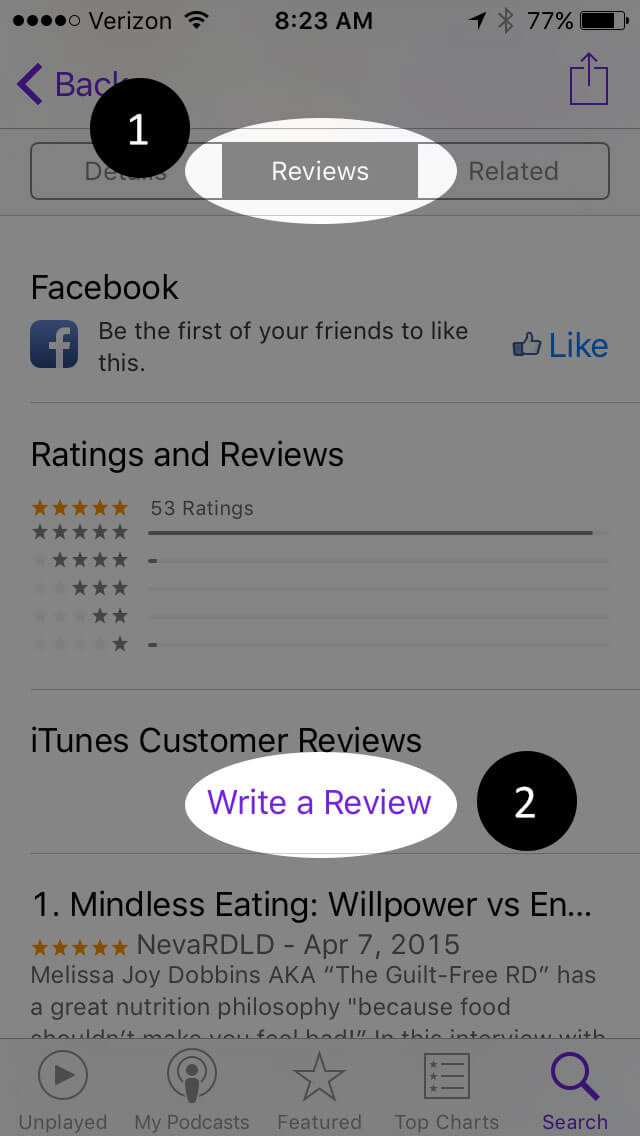
Write a Review
Click “Reviews”, then “Write a Review”.
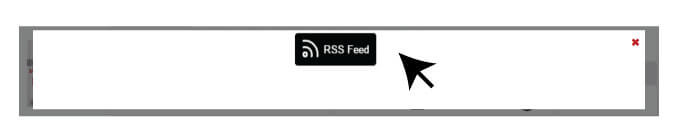
Subscribe via RSS Feed
Navigate to any podcast player . Click on the RSS feed icon.
Click on the RSS feed icon.
Click on RSS Feed
Choose which application you would like to use to receive the RSS feed
Click “Subscribe Now”
Confirm settings and subscribe.
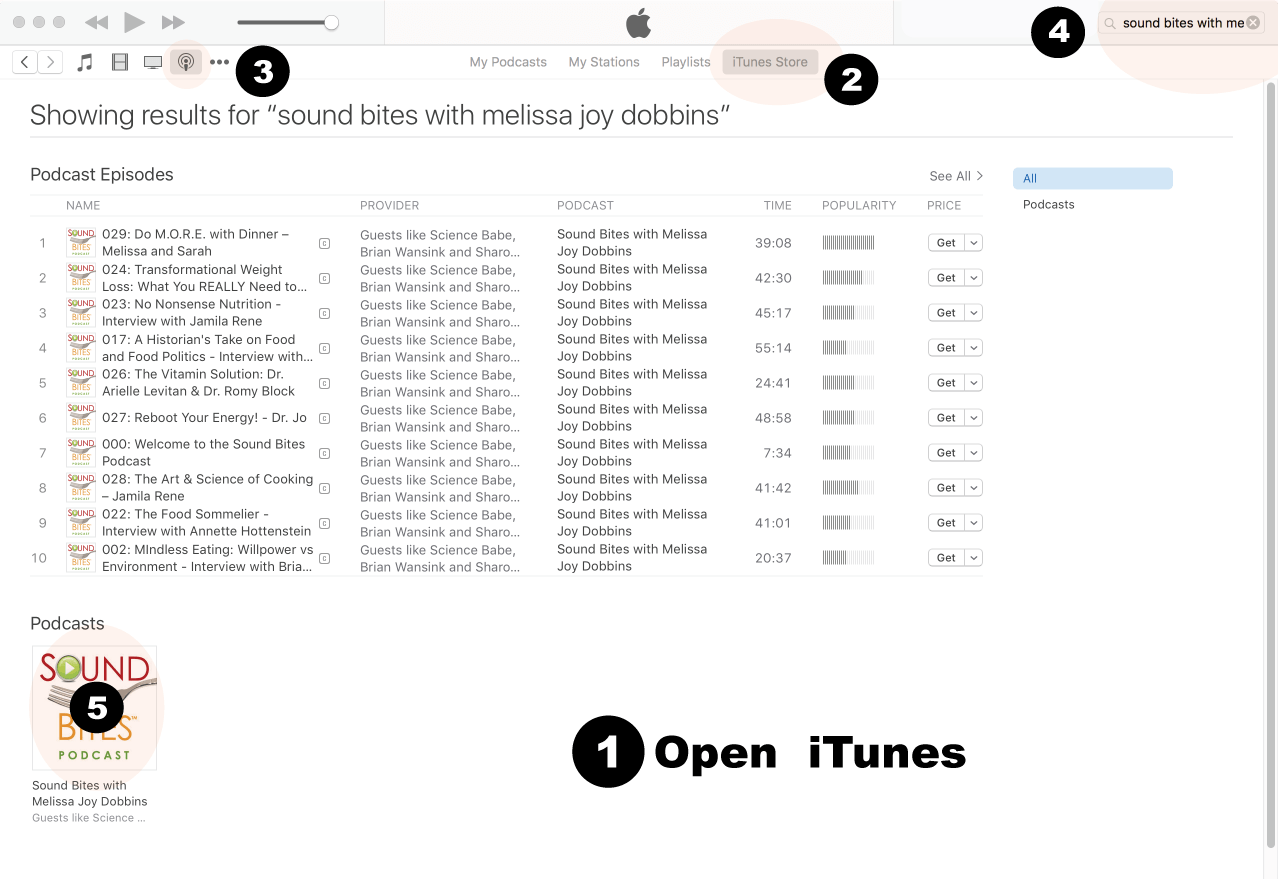
How to Review in iTunes
Open iTunes desktop application
Click iTunes Store
Click on Podcasts
Search for “Sound bites with Melissa Joy Dobbins”
Click on podcast image
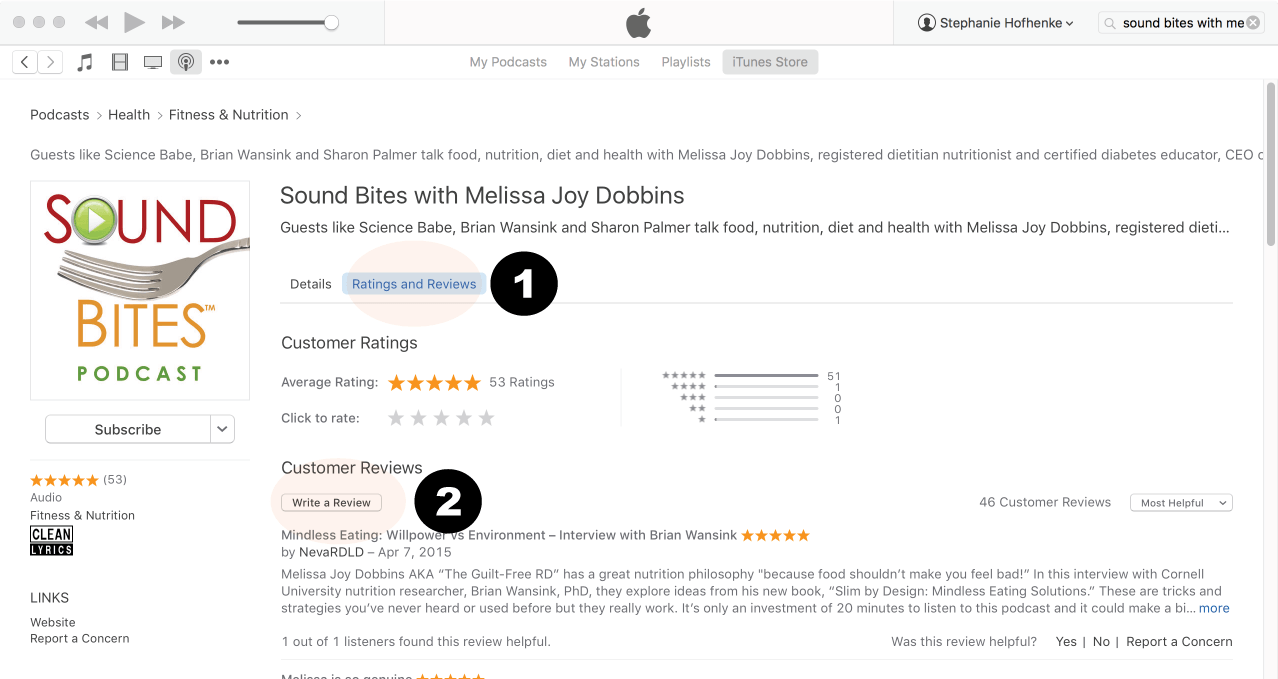
Search for Sound Bites podcast in iTunes
Click Ratings & Reivews
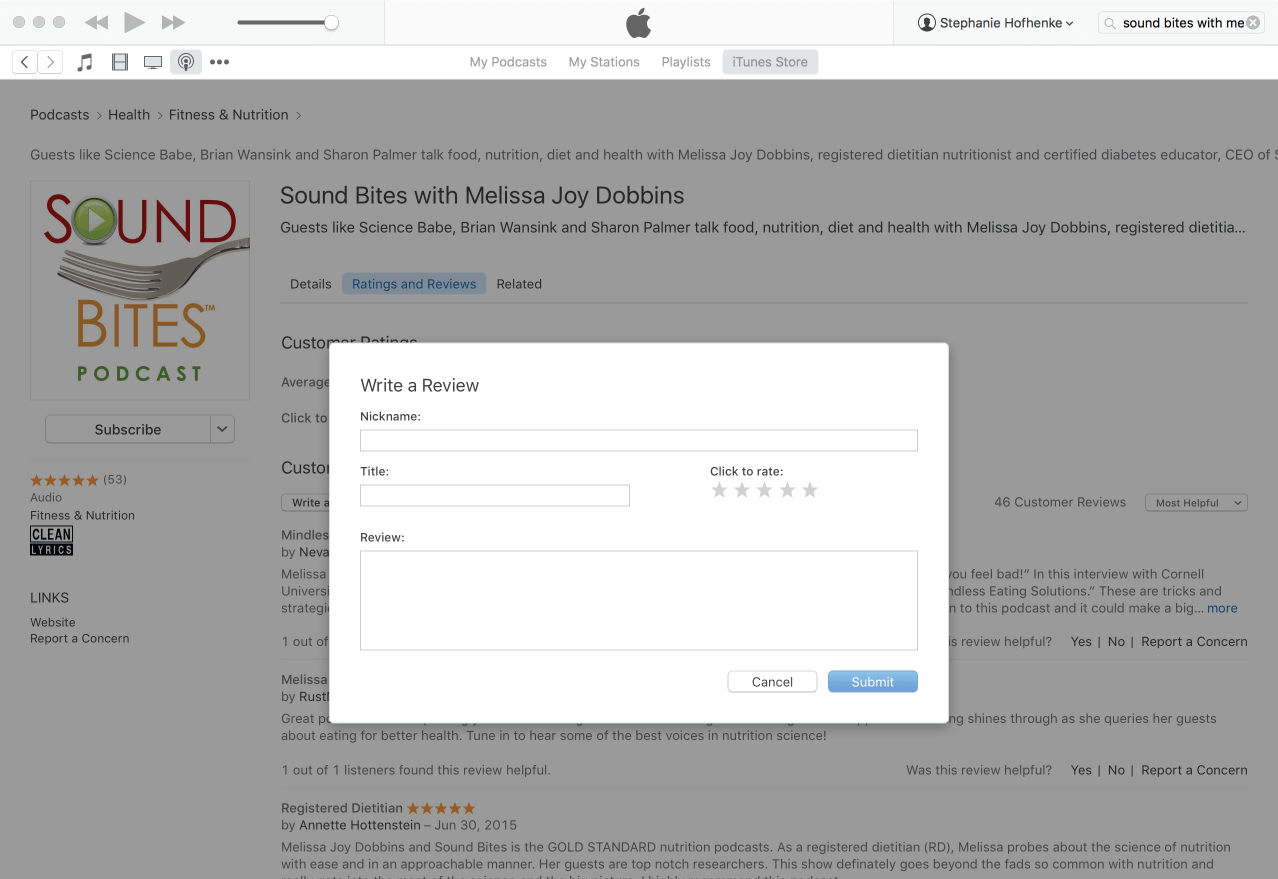
Click Write a Review
View reviews and write your own review.
Write your review…. Thank you!
Write your review!
How to subscribe via iTunes
Click here to view the Sound Bites Podcastin iTunes, then click the blue “View in iTunes” button. This will open your iTunes application directly to Sound Bites Podcast. Click the “Subscribe” button, and your done!