Celebrating over 1 Million Downloads and 65,000 Free CEUs on the Sound Bites® Podcast | NEW: Get 1 years’ worth of CEUs with the new 15-CEU Podcast Course
Mastering Weight Loss Maintenance with Metabolic Flexibility & Mindstate
Many individuals are turning to GLP-1 medications for weight loss, but what happens when they stop? In this episode, we delve into the complexities of maintaining weight loss once these medications are discontinued. Dr. Holly Wyatt, an expert in obesity medicine, shares her insights on why understanding metabolic flexibility is crucial for long-term weight management. This episode will empower you with actionable strategies to redefine success in weight loss and maintain a healthy lifestyle.
Tune in to this episode to learn about:
understanding weight loss vs. maintenance
metabolic flexibility vs. adaptation
insights from the National Weight Control Registry
the connection between behavior and biology
challenges of discontinuing GLP-1 medications
the book: Losing the Weight Loss Meds
biological changes after stopping GLP-1s
food noise and its impact on weight management
the role of exercise in weight loss maintenance
behavior change strategies for sustainable weight management
mindstate shifts and their impact on weight maintenance
identifying weight gain profiles
planning for weight loss maintenance
Holly Wyatt, MD
Dr. Holly Wyatt is a physician, obesity medicine expert, and Professor of Nutrition Sciences at UAB whose work focuses on weight loss, metabolism, GLP-1 medications, and long-term weight maintenance. She is co-author of State of Slim and Losing the Weight Loss Meds, co-host of the podcast Weight Loss and…, and is known for translating complex obesity science into practical, real-world strategies people can actually use.
Begin with the end in mind. Weight loss is not the end game. Weight loss maintenance is where the real game begins.” – Dr. Holly Wyatt
Resources
Some links may be affiliate links. As an Amazon Associate, I earn from qualifying purchases.
Welcome to Sound Bites, hosted by registered dietitian nutritionist, Melissa Joy Dobbins. Let’s delve into the science, the psychology, and the strategies behind good food and nutrition.
Melissa Joy Dobbins (00:53):
Hello, and welcome to the Sound Bites Podcast. Today’s topic is about losing the weight loss meds, which may not be what you think it is, but what it takes to keep the weight off.
We’re going to get into the nuances of if, how, and why some people stop taking GLP-1s (without any judgment here, no judgment zone), and what happens in the body when somebody goes off the medication, and why understanding that is so important.
We’ll discuss metabolic flexibility, which may be a term you haven’t heard before, and why that is so important when it comes to weight loss and keeping the weight off.
This episode is not sponsored. Do me a favor and click the follow button or subscribe button wherever you are listening or watching this podcast.
We’re trying to do a video podcast today, so we’ll see if that works out. That’ll be on YouTube as well. But anyway, if you follow, subscribe, that’s the best way to support my show and to get notified of any new episodes.
My guest today is Dr. Holly Wyatt. Dr. Holly Wyatt is a physician, obesity medicine expert, and professor of nutrition sciences at the University of Alabama at Birmingham, or UAB. She’s internationally recognized for her work in weight loss and long-term weight loss maintenance.
She’s the co-author of the books State of Slim and Losing the Weight Loss Meds, and she’s the co-host of the podcast Weight Loss And … with Dr. Jim Hill.
Welcome to the show, Dr. Wyatt.
Dr. Holly Wyatt (02:29):
Thank you. It’s great to be here. I’m excited about this topic. This is one of my favorites.
Melissa Joy Dobbins (02:35):
Well, yeah, this is your life’s work, I think. Can I call you Holly?
Dr. Holly Wyatt (2:39 – 2:40)
Absolutely.
Melissa Joy Dobbins (02:40):
Okay, awesome. So, we had the pleasure of meeting in person recently, and I have met your partner in crime, Dr. Jim Hill, several times. In fact, he’s been on the podcast three times, and I’ll probably recap some of those towards the end because they’re all weight loss and weight loss maintenance related.
So, I’m in the 300s for the number of episodes now, but his first time on the show was back in episode 24.
Dr. Holly Wyatt (03:06):
Okay.
Melissa Joy Dobbins (03:07):
Yeah, and I knew him even before I launched the podcast. So, I’m just thrilled to finally meet you and talk with you because I’ve heard so much about you from Dr. Jim Hill. But before we dive into the topic, please share with our listeners some more about your background and what led you to working in this space and dedicating so much of your career to weight loss maintenance.
Dr. Holly Wyatt (03:33):
Sure. I’m an endocrinologist by training, so I’m an MD. That’s a little bit different than Jim, who’s a PhD. It’s really been nice I think having an MD and a PhD collaborate on things has really been helpful over the years. So. I’m trained in endocrinology and hormones, body weight regulation falls kind of under endocrinology.
Why did I get in this field? I was thinking about that this morning, and I think it really comes to the fact that I’ve struggled with my weight my whole life. And in high school, I knew that something was different. That’s all I knew. I knew what I had to do to stay at a certain weight was different than my friends.
I saw them eating pizza and cookies, and I just couldn’t do that. I’m from Texas, and Texas football is big, and I wanted to dance on the field. That was one of the things, being a high kick line on the field, that was one of the things I wanted to do.
Back when I was in high school (this is going to date me a little bit), we weighed in, and if you weighed over a certain amount, you could not dance on the field. You were too fat, basically, too heavy to dance on the field. It would never work now, but that was what we did.
So, what I had to do to be allowed to dance on the field versus what I saw my peers, my friends, was very different, and so it got me really thinking, why is my body different than their body? And I just carried that all the way through, and then when I decided I wanted to be a doctor, and I said, wow, I could actually study that, it kind of put two things together, being a doctor and something I love to think about, and something that was very personal.
So, that’s why I’ve really been in this field, is because it’s a personal part of what I’ve experienced, and I think about it from that standpoint, and it’s really led me to be able to put two things that I love together.
Melissa Joy Dobbins (05:21):
Wow, I didn’t know that story. I remember weighing in in high school, too. I don’t know if there were any consequences resulting in your situation, but certainly my regular listeners know, but I don’t know if you know, I went to a performing arts high school for ballet, so all the things there was one of the high schools that I went to.
Being an endocrinologist, and I think you know this, I’m a certified diabetes educator for almost 30 years now, boy, your time has really come into focus now with these GLP-1s. I think most people know now they’ve been used for 20 years-ish, a couple of decades in diabetes, and now they’re the weight loss medication of choice, I would say.
And the book, I’ve got it right here, I purchased it (sorry, I just hit my mic) Losing the Weight Loss Meds. We’re going to talk about this. I mentioned this to you, but you could see how many pages I have dog-eared because I was like, “Oh, this is interesting. Oh, this is an important point.”
So, there’s so much to get into here, but I remember having dinner with Dr. Jim Hill and his wife, it was a little over two years ago. I was speaking at the Alabama Annual Conference for Dietetics in Montgomery, and he came over with his wife from Birmingham to have dinner with me, and he told me about this idea with this book with you. And what year did you guys launch your podcast?
Dr. Holly Wyatt (06:49):
So, we’ve been doing this for a little bit over two years on the podcast.
Melissa Joy Dobbins (06:53):
I think you had already launched the podcast when I had dinner with him, I’m pretty sure. And I was just like, oh, my gosh, this is perfect timing for a book on, okay, you’ve lost the weight, how do you keep it off, which is what you and Jim have been talking about for years, but it’s all in the spotlight now, and I’m just so excited because it’s such an important topic, and it’s a completely different thing from losing weight.
So, I’ve talked with Jim on the podcast about that, but we’re going to get into that today and this metabolic flexibility and basically, just like if and when people come off for whatever reason, how do we redefine success and what does success look like?
Dr. Holly Wyatt (07:37):
Yeah, what do you do?
Melissa Joy Dobbins (07:38):
Exactly.
Dr. Holly Wyatt (07:39):
What do you do?
Melissa Joy Dobbins (07:40):
What do you do? How do you do it? And this is the definite roadmap for that. But you have a fun fact that I would like you to share, and I think this is a good place to share it. You did some TV-related work.
Dr. Holly Wyatt (07:55):
I was the medical doctor, the on-air or on-camera medical doctor for season four and season five of Extreme Weight Loss on ABC. So, this isn’t the biggest loser. I know a lot of people, they think it was a different show.
This was a show where we took one person over a whole year and showed their transformation, both in terms of their weight. Obviously, that’s what a lot of people wanted to see, the body state transformation, but also their life state transformation and what was going on in their mind.
And it wasn’t a competition between people, no one got voted off the island or voted off the show. No one had to do crazy things like sit in a room with all their favorite foods for some of the crazy things that have happened. This was really about people changing their life and losing a large amount of weight, that was what the TV show was about, but the transformation that happens that goes along with it.
Melissa Joy Dobbins (08:52):
I’m glad you clarified because The Biggest Loser, very different type of show. And what did you learn during that process? What did you see that added to what you already knew as an endocrinologist and somebody who had struggled with weight their whole life?
Dr. Holly Wyatt (09:12):
I think it highlighted — I mean, I already knew this, but you got to experience it. And when you experience it with people, it lands differently, but that it’s more than weight loss. And we know that, but to really see it. It’s not just about losing the weight, it’s about how you’re going to live your life, how you’re going to change your mindset, what your identity’s going to change, your relationships change.
So, it’s about losing the weight and the behaviors that are required for that to happen. But it’s so much bigger than that. And the people who have been successful at keeping the weight off longer periods of time, even on that show, are the ones that really made these big life transformations.
And then it was also about looking at success in multiple ways, not just looking at success on the scale. And I really think a lot of the people that were in Extreme Weight Loss or on the show have done that. I still follow some of them and they’ve made big life changes. And to me, you can’t separate the two.
And this transformation process (I know that’s a word that we use too much, transformation. It really has lost its meaning almost because we throw it out there so easily), it is this process that’s forever. It’s evolving, it’s not one and done. Even though a show is a beginning and an end, yeah, it’s never over.
Melissa Joy Dobbins (10:31):
The first interview that I did with Dr. Jim Hill, I don’t remember the full title, but it’s about transformational weight loss. And I really do hope people scroll back and listen to some of those, and I’ll put the links in my show notes at soundbitesrd.com because each interview that I did with Jim really got into some really different concepts that are so important when we’re thinking about weight loss and weight loss maintenance.
One of the ones that I learned that I still talk about frequently is just like what you do to lose weight is different than what you do to keep the weight off. I mean, obviously there’s some similarities, but the difference between the impact of diet or diet being like what you’re doing calorie-wise or whatever versus the impact of exercise.
So, we’re going to get into some of that today. I’m really excited because behavior change is so important, and we talk about that a lot. But I feel like definitely in the book, and with your background, you and Jim together too, the behavior strategies are born out of what’s happening physiologically.
So, you’re connecting those two things together, and I feel like that’s really at the heart of what you’re doing and what you’re talking about.
Dr. Holly Wyatt (11:52):
I am so glad you said that because we tend to be one or the other, and for a long time, we talked about behavior, and then the GLP-1 brought up the metabolism, the physiology, the biology part, which is critical, and in a way sometimes now, the behavior is like, oh, the behavior doesn’t matter. And I’m like, no, you can’t separate the two. Biology impacts behavior for sure.
We see that. We change the biology with the GLP-1 medications, and the behavior of eating, which is a behavior, changes. But also, the behaviors, what you eat, when you eat, how much you move — behaviors impact biology. It goes both ways.
And so, I hope as a field we’re going to stop separating the two: oh, I work in metabolism, and Holly, you work in behavior, or vice versa. And I think we can really move the field forward when we start really thinking of them as not two separate things but working together, just like you said.
Melissa Joy Dobbins (12:49):
Yeah, no, it’s really exciting. And even though I’ve been a certified diabetes educator for so long, and granted I’m not working directly with a lot of patients right now, just a trickle of patients here and there with this concierge program that I’ve been involved with.
But one of the reasons I loved being a diabetes educator is that I got kind of burnt out on weight loss. But with diabetes, I could work with somebody, they can make a small change and see a huge difference in their blood sugar and be super empowered to be motivated to continue, so it was fulfilling.
But then on the other side of the coin, I had to learn all the pathophysiology, and there’s like all the medications, and now there’s the technology. So, it was this perfect storm of like, I’m stimulated mentally but also fulfilled emotionally.
But even with all of that, these GLP-1s are bringing up questions, so many questions for me. The more I learn about them, whether it’s the physiology side, how they work, or the food noise and the emotional side, it just brings more and more questions.
But before we talk a little bit more about the GLP-1s, I really want our listeners to understand, explain why it is, why losing the weight and keeping the weight off are two different things, and why we need to understand that from a physiological standpoint and behavioral.
Dr. Holly Wyatt (14:14):
Yeah, I kind of go back. We used to think about weight management, weight loss as an acute process. I don’t know if you remember, this was when I was starting my career, I’m pretty old. And we thought 12 weeks or six, once you got the weight off, it was done.
We then moved as a field and understood it was a chronic condition, that you needed long-term treatment.
Melissa Joy Dobbins (14:34):
Kind of just recently, I don’t know (laughs).
Dr. Holly Wyatt (14:35):
Well, we were getting there. I think George Blackburn played a lot … there was definitely some papers that showed no, once the weight off, it’s not over. We need to think of it like our chronic diseases, that type of framework. So, we moved.
But the next stage, and this is where Jim and I have been talking about this for a very long time, and this really came out of the National Weight Control Registry and some of the other research that we’ve done, it’s chronic, it’s forever, in terms of the treatment, it’s management. But what you do to lose weight is separate and different than what you do to maintain. So, they’re part of one long continuum, but they’re separate.
And for the longest time, we kind of think about it as being one thing. Whatever you do to lose weight, be ready to do it for the rest of your life. How many times have you heard that? Whatever changes you make to lose it, be ready to do it forever.
And that’s not the best way, I believe, to think about it. And I think the data supports this. Because when you’re in weight loss, you need to be in a negative energy balance. And what that means is you need to be eating less calories than you’re burning.
And that is true no matter what. If you’re losing weight, if you’re burning body fat (so I should say losing body fat, maybe not water, but if you’re losing body fat on the scale), then you are in a negative energy balance and you are consuming less energy than you’re burning. Now, you may be doing it a whole bunch of different ways, the mechanism or the strategy you’re using is very, very different.
Now, think about this, after you lose weight, you’re now at a lower body weight, now, it shifts completely from a physiological standpoint. It’s not about being in that negative energy balance, it’s about being in balance at your lower body weight, meaning how many calories coming in matching what you’re burning, and it’s adjusting a little bit.
So, you eat a little bit more because we don’t eat exactly the same thing every day and we don’t move exactly the same amount every day. But the whole idea is to have your body be in balance, not in a negative energy balance, which is what produces weight loss, but being in balance.
And I think it makes sense that the strategies you use to be in a negative energy balance for weight loss are different than the strategies you would use to stay in balance at a lower body weight forever. Think about weight loss is a finite period of time. You can’t lose weight forever, but weight loss maintenance, now we’re talking about years, long time being in balance.
So, it would make sense, yes, you need treatment chronically, but weight loss is different than weight loss maintenance and how you approach it and the strategies you use shift. And recognizing that I think is an important concept for people to have and for scientists to have, and for clinicians to understand that you move somebody from weight loss to weight loss maintenance and what you tell them, how you support them, the strategies that work also change.
Melissa Joy Dobbins (17:26):
Yes, and one of the things that I learned from Dr. Jim Hill is (and you can speak to this) one of the reasons we haven’t talked so much about weight loss maintenance until now is because people kept waiting to get to their goal weight. Well, I’m not going to worry about weight loss maintenance because I’m not at my goal weight yet.
Dr. Holly Wyatt (17:45):
They never wanted to talk about weight loss maintenance with me. I’d be like, “Let’s talk about weight loss maintenance.” They’d say, like, “I have 10 more pounds or 20 more pounds.” I’m not ready.
Melissa Joy Dobbins (17:55):
And with the new GLP-1s, people are getting to their goal weights for the first time maybe. I don’t want to say ever because we’ve had bariatric surgery and a whole spectrum of weight loss meds over the years in different types of people.
But I would like you to talk a little bit about the weight control registry for people who aren’t familiar with that because I know that you have … we have learned collectively so much about weight loss maintenance from these successful weight loss maintenancers. How do you say that?
Dr. Holly Wyatt (18:31):
I think it’s key for people to realize we have been studying weight loss maintenance. We do have a lot of science about it, even if people weren’t really ready to do it because we haven’t had the tools and providing people with enough weight loss that they were ready.
But the National Weight Control Registry is a group of over 10,000 individuals that we’ve studied over a long period of time that not only have lost the weight but have been successful at maintaining it for different amounts of time. And so, it allowed us to look at the difference between weight loss and weight loss maintenance, the strategies people use to lose weight, the strategies they use for weight loss maintenance.
And I’m sure Jim told this story, but when him and Rena Wing, first decided to do the registry, it was about finding the best way to lose weight. They didn’t anticipate that we would understand from the National Weight Control Registry the difference between weight loss and weight loss maintenance.
They were like, “Let’s study the people who are successful and see what they did to lose the weight.” And they found out they did a lot of things. There wasn’t one way they lost weight, but then it started coming out, there’s some similarities in how they keep it off, even if there’s a lot of differences in how they lost it.
And it really became a registry to study weight loss maintenance and where I cut my teeth on doing some of the science and asking some of the questions that got me thinking and I think got Jim Hill thinking about the difference between the two. And then what are the strategies and skills and things necessary to keep weight off long-term?
Melissa Joy Dobbins (19:59):
Excellent, thank you. I didn’t know that or I didn’t remember that. That’s interesting. Okay, so we know that the GLP-1 medications are a game changer. We’re seeing significant results or success in the amounts of weight lost and in the awareness of and management of food noise. I mean, the whole conversation around obesity and overweight has significantly changed, which I mean, clearly, it’s the biggest thing that’s happened in my career as a dietitian for over 30 years.
But tell us from your vantage point why these medications are such a game changer, how they, as in your words, reset the scoreboard. We have sort of a game analogy in your book, Losing the Weight Loss Meds. But yeah, so tell us from your vantage point why they’re such a game changer.
Dr. Holly Wyatt (20:51):
I agree with you. I think in this field, we’re going to have before the new generation GLP-1s. We’ve had GLP-1s for a long time, but this new generation of GLP-1s before and after, that’s how big I think this is.
And the biggest reason is they’re producing weight loss anywhere from, I’ll say 15%, but some of these new ones going up into the 20%s and even one of the ones that hadn’t come out yet, but we’re looking at like maybe 28% weight loss.
So, we are in the range now of bariatric surgery, more people are able to achieve a weight loss that changes everything. So, for the first time, they’re like, okay, I’m ready to think about what’s next. And we’ve never been in that position.
And that’s what I mean by game changers. For the first time, people are saying, okay, I’ve lost enough weight, how am I going to maintain it? Am I going to stay on the drug? Am I not going to stay on the drugs? What am I going to do?
And one of the reasons Jim and I wrote this book is we don’t want to just replay what’s happened in the past when we’ve had weight loss, even though it hadn’t been this great, followed by regain, loss followed by regain, that yo-yo.
And we want to say, okay, we’re in this new time period where people are losing enough weight, where they’re excited about maintenance. What are we going to do to maintain? And that to me, why it’s a game changer, because it’s changed the conversation. And also, what you said, it made people realize there is a biology to this, there’s a physiology to this. It’s not just willpower.
We’ve been saying that for years, but now a lot of people are experiencing it and going, okay, I get it. It’s personal, it’s an experience now. I understand what you’ve been saying. It’s not just about my willpower, it’s about behavior, but it’s really also about that physiology that drives behavior.
Melissa Joy Dobbins (22:41):
Yeah, and I’m reflecting back on what I said earlier that I got kind of burnt out on weight loss, which I say that a lot, but I guess I should explain. It was so hard to try to help people and not see them get results. That’s what I mean when I say I got burnt out on weight loss.
So, even from a dietitian standpoint, it’s just exciting to be able to move beyond some of those — it’s just the willpower and all the stigma and everything, which we weren’t doing as dietitians, but we were seeing our patients dealing with that and trying to budge the calorie balance and all of that. So, we’ve learned a lot from these long-term weight loss maintainers and this exciting change in the conversation because of GLP-1s.
I’ve talked a lot on the podcast about the different reasons that people might go off of a GLP-1, whether they want to or don’t want to, or don’t intend to ever stay on long-term, don’t know that they’re kind of intended for long-term, but there’s just different reasons, access, symptoms, side effects (I should say more like nausea), things that just make it hard for people to stay on them.
So, we don’t really need to get too much into that, but if there was anything you wanted to say about that, I would think that now would be a good time for you to kind of just say, you know.
Dr. Holly Wyatt (24:05):
Yeah, I always want people to realize the medications are designed to be chronic medications, meaning long-term medications, just like our diabetes medications, our high blood pressure medications, and so they’ve been designed and studied to be long-term. And I think that’s important for people to realize.
What I also think is important is I find a lot of people who don’t want to stay on them long-term for all the reasons you said, and sometimes it’s financial, sometimes it’s how they feel, sometimes they’re just like I don’t want to take a medication for the rest of my life. I lost weight so I could get off all my medications, and now you’re telling me I’ve got to be on this medication my whole life.
I’m going to explain to them that that’s okay. There’s no reason, there’s nothing wrong with being on a medication for the rest of your life. But I also want to say, okay, if they want to try or if they need to go off the medication, what could we do? How could we help them succeed? That’s really why this book was written.
Sometimes people come out and say, “You and Jim are against the medications.” And I’m like, “No, we’re not. And we’re not against being on them long-term if that’s what you decide you want to do and works best for you, support you 110%,” but we’re seeing a lot of people who say, ‘That’s not what I want. I at least want to give it a try, or I at least want to see what happens.” And so, if you’re one of those people, I want to give you the best chance possible.
And I know if you don’t have any strategy, if no one has tried to step in and help you, if you’re just trying to do it on your own, unfortunately, you think you know what you need, but it doesn’t usually work out that way.
The data would show most people regain the weight if they don’t have some type of plan or some type of strategy. If they just stop the med and don’t do something specific, the majority of people will regain the weight.
So, that’s a message I hope the listener’s listening to. You can stay on them, but if you don’t want to, then have a plan, have a strategy, be aware of what usually happens if you don’t do something, but the possibility that you could if you do make some changes.
Melissa Joy Dobbins (26:12):
Yeah, thank you. I appreciate you explaining all of that. And I interviewed a dietitian, Anna Reisdorf, on the podcast who’s been on and off the GLP-1s for I think three years now. And she even, as a dietitian, the first time I think that she went off, she gained the weight back. She didn’t really have a plan. So, yeah, it’s like you said, the data show that that’s most likely you’re going to regain if you don’t have a plan.
Dr. Holly Wyatt (26:37):
I’m not going to bet on you in Vegas, that’s what I always say. It’s not that you couldn’t, but it’s not the thing I’m going to bet on.
Melissa Joy Dobbins (26:43):
Right, exactly. And your book, I don’t know, can we talk about how … I talk about this a lot on the show. People who write the book don’t usually write the title, can we talk about that a little bit?
Dr. Holly Wyatt (26:56):
Well, I think we had different titles. I liked Losing the Weight Loss Meds. One thing I pushed back on was initially they had the injector broken. And I was like, “No, that’s too strong.” And I know they’re like, “Oh, but that’ll get people to read the book.” I’m like, yes, but I’m not against the meds. Obviously, Losing the Weight Loss Meds, there’s a little play on words there that makes it interesting.
But the fact is it’s about people who want to try to go off the meds. It’s also a book for even if you’re not on the meds and you’re ready to move into weight loss maintenance, it works for you too, it’s just now there’s so many people on the meds that it was a specific time that we wanted to put this book out for them.
Melissa Joy Dobbins (27:44):
Yeah, like I said, prime time. There’s a lot of information about pathophysiology and what’s going on inside the body, and we’re going to talk about this metabolic flexibility. But it is essentially a behavior change support guide. But again, tied directly to what’s happening in the body when you lose weight and tying that to like … and we’re going to get into some of those specifics.
Dr. Holly Wyatt (28:12):
This is how I think of it — I’m replacing what the medication is doing. You’re going to go off of it or maybe decrease the amount of it. You’re going to decrease its impact, and I want to put some behaviors that can replace that part of the medication. That’s how I thought about it when we wrote the book.
Melissa Joy Dobbins (28:29):
Okay, great. So, let’s talk a little bit about what happens when people stop taking GLP-1s. What’s happening biologically in the body? And how is that tied to … I mean, we know when we lose weight, the body is fighting against this. Just survival mode, all of the stuff that we know just from evolution. But what’s happening in the body that is making it challenging to avoid weight regain, let alone weight loss and maintenance?
Dr. Holly Wyatt (29:01):
So, I like how you said this. There’s two things really going on, and when you stop the medication, then that appetite control goes away. So, you’ve had the GLP-1 sitting on the receptors that impact how much you eat, sitting on receptors that impact the emptying of your gut or your stomach, doing a lot of things that make you feel full with less food or make you not think about food.
There’s GLP-1 receptors basically all over the body, doing a lot of things. But the overall result is decrease in appetite, decrease in food intake. You take the medication away, that’s going to go back up. That appetite’s going to resurge, come back. And if you then start eating more food and more calories, you regain the weight. So, that’s one thing that’s very specific to the medication that you have to deal with. What am I going to do? How am I going to deal with this appetite coming back?
The other things that are important are related to losing weight, what you’re talking about the body fighting back. When you lose weight, there are some changes that happen to your metabolism, there’s changes that happen to some of your hormones, and the body does want you to stop losing weight.
If you lost weight forever, you would die. So, it makes sense the body would say, “Whoa, wait a minute, let’s get a little efficient here, let’s actually turn up some things to make you eat more and go seek out some food. Let’s not spend as much energy during the day. Let’s become more efficient.” And so, some adaptation might occur and so you’ve got to deal with that.
Also, once you lose weight, you’re at this lower body weight, it just doesn’t take as much energy to keep you alive. At 200 pounds, it was a certain amount of energy just to keep your kidneys going and your muscles alive and your body alive.
And then when you moved your 200-pound body around, it took a certain amount of energy to walk up some stairs or to walk a mile to the grocery store. At 150, it doesn’t take as much energy to walk up the same flight of stairs or the same mile to the grocery store. So, energy expenditure decreases as you lose weight for many reasons.
Physiology starts to say, “Hey, I don’t want you losing any more weight.” And I also believe that the mind can come into here when you’re in this, that we’ve got to work on that too. So, yes, we’ve got to number one deal with this appetite issue, but we also have to deal with the metabolic issue that happens when you lose weight.
Melissa Joy Dobbins (31:34):
Excellent. And we are going to talk about, you have this term, mind state. I don’t think I’ve seen that before. I don’t know if you created that or if that’s a word (laughs).
Dr. Holly Wyatt (31:42):
We did create it. Sometimes you get to do that when you write a book, you can create your own word.
Melissa Joy Dobbins (31:47):
I love plan words, I love creating new words, this is perfect. Did mind state go all the way back to state of slim?
Dr. Holly Wyatt (31:55):
We learned a lot about mind state with state of slim. We did not use that word in the book, so that’s evolved. But our experiences with state of slim very much informed this word.
Melissa Joy Dobbins (32:07):
Okay, good. Before we get into mind state, we were talking about appetite and hunger. I’ve talked about food noise a lot on the podcast, but let’s talk a little bit about the return of food noise. I think you were saying the GLP-1 receptors, is this like in the brain where we’re having the food noise, where the GLP-1-
Dr. Holly Wyatt (32:27):
Probably, but I mean, I don’t know that we know for sure. We know there’s GLP-1 receptors in the brain for sure. There’s a new validated questionnaire, I’m sure you’ve talked about that.
Melissa Joy Dobbins (32:38):
I haven’t. No, please.
Dr. Holly Wyatt (32:40):
There’s a validated questionnaire out there for scientists to use to really start to measure this because it’s something we haven’t reported necessarily in the past. Food noise has always been there, but I think it’s this many people being on the GLP-1 and saying, I think differently about food. The voice in my head about food has changed that made scientists come back and say, okay, how do we measure that? And come up with this validated instrument.
Dr. Gary Foster, Michelle Cardel, Corby Martin are the doctors (and colleagues) that have come together to make this new — I think it’s a five-question interview or questionnaire about food noise, which I think can help us in the field to look at how it changes over time, does it predict who loses the most weight or maybe it doesn’t predict. I mean, lots of things we can use to understand food noise better.
Melissa Joy Dobbins (33:32):
Excellent. Yeah, no, I didn’t know about that. Dr. Gary Foster has been on the podcast a long time ago. You had mentioned that and I was like, “I don’t know about this,” but I say this all the time.
It’s one of the things I’m just so excited about, is that food noise has a term. We’re talking about it and even people who … or maybe especially people who are judgy about other people’s weight might start realizing that that is a thing and maybe there’s more to it than they think.
So, let’s talk about the metabolic flexibility and maybe the difference between metabolic adaptation and flexibility or inflexibility, maybe starting with what metabolic adaptation is.
Dr. Holly Wyatt (34:17):
So, I think of adaptation as being what changes when you lose weight. What we just talked about, the pressures that try to push you back to gain some of the weight. So, your body kind of adapts and perhaps your resting metabolic rate not only decreases because you’re smaller, maybe decreases even a little bit more as efficiency almost.
Becomes more efficient and adapts, and that tends to push you back towards your old body weight or to regain weight. We’ve talked about metabolic adaptation for many, many, many years. That’s how I started out, measuring resting metabolic rate in people who had lost weight, and trying to understand metabolic adaptation.
To me, the more exciting thing and where the field has really grown is to turn that into something called metabolic flexibility, which is a little bit different. Metabolic flexibility isn’t about adaptation, but it’s about how your body responds to certain conditions. Is it flexible enough to adjust?
So, think about it. We talked about weight loss and we talked about weight loss maintenance, and weight loss maintenance, we talked about the fact that it needed to balance; how much you’re eating and how much you’re expending needed to balance and adjust and be in what we call homeostasis over a long period of time so you don’t regain the weight.
Metabolic flexibility is the concept that when you eat a little bit more or you consume a little bit more fat, so either the macronutrient composition of your diet changes more fat or more carbs or more calories, that your body naturally adjusts to burn it and not store it.
That it’s flexible enough to kind of adjust, and we believe that some people’s metabolisms are naturally more flexible than others. We also think that when you move into a very low energy expenditure, so a sedentary environment where you’re not moving very much, you tend to become inflexible.
Everybody maybe becomes more inflexible, but there’s always a difference between people. Some people are probably more flexible, just like real flexibility, born more flexible than others, but there’s also things you can do to increase your flexibility.
And so, the idea that you want to be as flexible as possible, have as much metabolic flexibility as possible when you move into weight loss maintenance. So, when you go out and you have a piece of birthday cake, because come on, we’re going to have a piece of birthday cake.
The body is set up, the physiology, your metabolism is set up to adjust to it, not to store it all, but to burn more of it. And the intake and expenditure are matching and moving. And if you think about it, it’s never perfect.
How does your body know exactly how many calories you’re eating and burn exactly that same amount? And even if it was off a little bit, you would gain weight and we know people that don’t gain weight. The body is designed to do this, to keep us in homeostasis.
We want to set up people who are going into weight loss maintenance, we want to set the metabolism up so that it can do that. It is geared to do that instead of being inflexible, where when you eat something that is maybe higher in calories or fat than you’re used to, your body’s like, oh, my gosh, just store this, I can’t burn it.
Melissa Joy Dobbins (37:29):
Yes. So, there’s a whole chapter on this. And I want to mention, loving your podcast, and there was an episode with Dr. Rudy Leibel. Is that how you say his name?
Dr. Holly Wyatt (37:38):
Yes.
Melissa Joy Dobbins (37:39):
That I’m going to link in the show notes, because I was like, I’ve listened to it multiple times where there’s a lot of conversation about metabolic flexibility.
Dr. Holly Wyatt (37:49):
And adaptation, yeah.
Melissa Joy Dobbins (37:51):
And why the body does the things it’s doing. And I wrote down some very interesting points that he said, but I would love for people to listen to that episode as well. And like I said, there’s an entire chapter in your book on this.
And if I had to kind of boil it down to the basics, it sounds like what you’re trying to do is … or how you achieve this is by decreasing your body fat and being active. I mean, I don’t want to oversimplify it, but I was surprised and encouraged to hear that we can modify or improve our metabolism at all or more than we think we can. So, that’s kind of your message there.
Speaker (38:39):
Exactly. I think about regular flexibility, how you can touch your toes and do that. There’s certain amount of genetic, you’re born. Some people are born more flexible, but then you can do some stretches and do some things to change your flexibility, and I think it’s the same thing with metabolic flexibility.
You can do things to what I like to say, optimize your metabolism. It may not be as flexible as someone else, but within your range, make your metabolism the best that it can be. And I think for a lot of people, it’s pretty good. You can make your metabolism pretty good, but you’ve got to be aware of that.
You’ve got to understand that that piece is playing a role, not as important in weight loss. You can have an inflexible metabolism and weight loss, and it doesn’t matter. Becomes important in weight loss maintenance.
Think about it, weight loss, you’re in a negative energy balance. Flexibility, not very important. Being in a negative energy balance, important. But weight loss maintenance, that’s going to change. And that flexibility comes out as an important thing.
Exercise, moving your body more, we think helps with that, is a big player in creating metabolic flexibility. There could be other things. I think, and we need more data in this: sleep may be having its effect that way, meal timing might be having some effect on that. Good evidence for the physical activity part.
But I also believe there probably are other factors that may impact our metabolism and make it more flexible. So, it may not just be one or two things, it may be several behaviors that create this flexible metabolism.
Melissa Joy Dobbins (40:14):
That makes sense. And I think it fits with weight, overweight, obesity. It’s not just one thing, it’s a lot of things, but it’s very validating to hear that … I mean, we kind of joke like, oh, I just look at a piece of cake and it goes straight to my waist or something, or somebody can eat the whole cake and there’s a little bit to that (laughs).
Dr. Holly Wyatt (40:35):
Yeah. And you can do something about it. To tell somebody about this and then say you just have this metabolism, sucks to be you, sorry. No, no, that’s not true, and that’s why I think it’s an important message.
Melissa Joy Dobbins (40:50):
Very empowering. Correct me if I’m wrong, and maybe I wrote these down wrong, but some of the things that Rudy said in your podcast was the yo-yo dieting doesn’t necessarily damage your metabolism.
Dr. Holly Wyatt (41:02):
Yeah, so this is argued, but I agree with Rudy on this. I don’t think there’s good data to show in humans that that necessarily damages your metabolism. I agree with him on this, although some people might disagree. If you look in some of the animal studies, I don’t know, but …
Melissa Joy Dobbins (41:20):
Not that we’re encouraging yo-yo dieting.
Dr. Holly Wyatt (41:22):
No, no.
Melissa Joy Dobbins (41:23):
And certainly, I believe the other takeaway was it could have more harm psychologically, the yo-yo dieting.
Dr. Holly Wyatt (41:30):
Right. So, thinking about it that way, that might be a different way to think about it, sure.
Melissa Joy Dobbins (41:35):
Yeah. And I don’t know, I like the conversation you guys had, maybe challenged some just things that we hear all the time that maybe aren’t necessarily true. And one of the other things, and this is sort of just like squirrel in this part of the conversation, but I was like I wrote this down.
Rudy thinks in the future, and I’m wondering what your thoughts too, is how we have medications for weight loss, maybe there will be new types of medications for maintaining the weight loss.
Dr. Holly Wyatt (42:04):
Already being tested, already in the pharmaceutical world. Do we use certain meds to produce weight loss? Are certain meds really good at getting us in a negative energy balance, meaning clamping our intake so that we aren’t eating very much and burning fat? Maybe certain medications would be better tolerated and produce that energy balance and be best for weight loss maintenance.
So, the concept of weight loss being different than weight loss maintenance may play itself out in the pharmaceutical world too.
Melissa Joy Dobbins (42:36):
Absolutely fascinating. So, your book addresses so many great questions about how GLP-1s work, the science of metabolism, what research shows regarding weight loss, regain, all of that. But like I said, it’s really a book about behavior change and how to prepare and set yourself up for success.
By using the knowledge of these challenges regarding weight regain that we touched on, and obviously, we can’t cover everything in the book, but if you had to give an overview of what people can find about the behavior change aspect, and maybe I’m going to ask you a little bit about mind state and some of these weight regain profiles.
But again, like helping people transition off of the medications in a more successful and sustainable way. Like if you just kind of had to say, in general, the behavior change part of the book focuses on?
Dr. Holly Wyatt (43:30):
So, three areas, three key areas, we focus on the appetite coming back. So, we want to deal with that. We want to deal with metabolic inflexibility; we want to make your metabolism more flexible, and then we want to deal with what we’re calling a suboptimal mind state. We want to make your mind state strong and better able to be what you need it to be in the weight loss maintenance phase.
So, we use food as medicine, replacing the medication. So, really thinking about what you’re eating, the timing of your eating, the composition of what you’re eating. Based on science to help make the appetite when it comes back, not come back as high.
It’s going to come back some, the medications, my gosh, they clamp that intake really low for some people. And I would say mine was too low sometimes. We’re not sure we’re getting everything we need because there is no drive to eat. You just don’t even think about food.
People said to me for the first time, I don’t have to log my food because I don’t think about food. And I’m like, you know what, I think you need to log your food because you’re not getting enough food and nutrients. So, I don’t know, it’s gotten rid of the logging problem that people don’t want to log their food.
But the appetite is going to come back. But can we with what you’re eating, how you’re eating — not a diet, not a diet, more strategies around how you eat to not let it go up as high as it was, to keep it under control a little bit, to keep it down a little bit. And then we add strategies where we use physical activity as medicine to create that metabolic flexibility.
So, that now when you do eat a little bit more, because you will off the medicine, what is your metabolism doing? Is it matching? Are you not as likely to regain when you eat more? And then the third pillar is that mind state.
And so, we also are working on it. And to me, this is one of the big differences. People don’t really give the mind as much credit. To me, it’s one of the most important pieces of long-term success. But what are we doing to get your mind ready to optimize it, to strengthen it?
Not with willpower, this is not about willpower. But to make it, the mind state, the best it can be to support you long-term to keep the weight off. So, I say mind is medicine. So, food is medicine, physical activity is medicine and the mind is medicine to replace the GLP-1 drugs, not to get the weight off, but to be able to maintain the weight that you did get off with the drug.
Melissa Joy Dobbins (45:58):
Okay, great. Yeah, and with mind state, I know when we were talking before, you said you wanted to ask me if I’ve ever had any major mind state shifts. So, I think maybe now is a good time to talk about that. Because like you said, it’s not about willpower at all.
So, I thought about something related to exercise and two things related to food. So, years ago, I was like, oh my gosh, I’m going to exercise for stress management, not because I need to burn calories or lose weight. And that was super empowering.
And then years later, I was like I’m going to exercise for fun, not even stress management. So, it was like an evolution over time. And then I thought, well, okay, let’s be honest, some of the exercise I do is not fun.
I did a 5k with a friend the other day and I was mostly walking because I realized I don’t think I’ve done any running since I did a sprint triathlon in 2014. And so, I started running and I was like, okay, we’re walking this one (laughs), and I was hurting for maybe five days.
Okay, so some things that I do or push myself isn’t necessarily fun, but it’s something that’s for me. So, my shift was going from a chore to something for me or like me time, or something that I have to do to something that I really want to do or that I’m giving myself something. So, that’s my exercise shift.
And my listeners know, I mean, that means I’ve gone from, well, I did do this running midlife experiment thing in my early 40s. But well, I was going through perimenopause to that, but I gained weight when I was running.
And I could have a whole other episode with you or pick your brain on this. Like the type of exercise that you do may or may not be right for your body and your metabolism and your physiology or whatever, but that aside.
Dr. Holly Wyatt (48:01):
Well, lots of things going on it sounds like that we’re moving the weight pathways, the metabolism, menopause, I mean, lots of things. And that’s what’s hard about weight is there’s so many different things that can impact it.
And sometimes, you were like, “Oh, I’m really concentrating on the exercise” so the change in weight, you wanted to apply everything about the exercise, that that was the cause of the weight gain, when in reality, it was probably that and several other things. That’s what makes it so complex and hard to understand sometimes.
Melissa Joy Dobbins (48:31):
And I think like listening to your body, like I mean, I always hated running. I did ballet, I still do ballet. I do karate, those are the fun things for me. And part of that whole mind shift was when I started running, it was because I needed something to just carve out some time for me that wasn’t work, that wasn’t family, that honestly, that people couldn’t criticize that I was like being selfish or they could only say, “Wow, good for you. Go run.” Yeah, yeah (laughs). It’s crazy. But that’s how I did it.
And the longer runs that I did, I would get hungry. And I’m not a sports dietitian so I didn’t refuel properly. I mean, I wouldn’t say over eight but it was such a different physiological experience than ballet or strength training that just seemed to fit better for my body and all of that.
But yeah, that’s why it was a midlife experiment and doing a lot of things there, and I think just trying different things on. That’s what I tell people, try different things on.
Dr. Holly Wyatt (49:30):
Your mind state shift is really interesting. It’s one that we see a lot. You kind of shifted from I have to do this for some reason. Be that weight, be that stress, whatever. I have to versus I get to. It just feels different.
I get to do this. Why do you get to do it? What would excite you about getting to do it versus having to do it? Just feels different. And that impacts the exercise. It impacts what happens, which impacts the goal. So, that’s a perfect example of a mind state shift and how it can have an impact on the long term, which is weight loss maintenance long term.
Melissa Joy Dobbins (50:11):
And the biggest thing, the biggest difference was I do it much more frequently and much more regularly because I get to, and I would say — maybe this is weird, but I’ve even taken it to, oh, I’m doing this and nobody’s going to get in my way sort of a thing. It’s been very interesting in my brain, like how I think about those types of things.
And then just quickly, the food related things are very similar, like cooking dinner for your family. It can be a chore, like I have to stop working or doing … I don’t have time to exercise because I have to cook dinner, all of those things.
I switched my mindset to say this is something that I’m doing for myself and my family that’s good for us. Even if I’m making something indulgent, it’s going to be better for us than if we’re going out to eat.
So, again, going from this is a chore or something I have to do that makes me sort of rebel a little bit, to this is really good for me and my family, and this is important and I’m carving out this time, and it’s not taking time away from other things that … well, it is taking time away, but in a positive way.
Dr. Holly Wyatt (51:18):
What I also hear in there is something we talk about in the book and that we discovered through State of Slim is an identity uncovering. I don’t believe your identity … I think it’s a realigning with something that’s important to you at your core level, your identity, who you are.
And so, it’s not now about something else, it’s about who you are and what is important to you. And that’s different for all different people. That’s why one, everybody can’t do the exact same thing you do, it won’t work for them.
But this alignment with your identity, and I hate to use the word new identity because I think it’s the identity that’s all there. It’s just kind of, you align with it, you uncover it, it happens, it becomes — is part of the work, this identity. Who am I? Who am I?
And that feels good. When you align with your identity, it does not feel bad, it feels good. I talk about it like putting on that pair of jeans that fits you just right. It feels right, it feels good. That’s what you want to discover to be successful in weight loss maintenance.
Melissa Joy Dobbins (52:25):
Inside your brain, yes, yeah. And then it’s super sustainable because it aligns with your identity and it’s like this discovery process. And I know, I remember Jim Hill saying things like asking yourself why until you cry, which sounds weird, but we get into that in one of the episodes with him. But yeah, really uncovering and discovering those values and connecting the dots and aligning that. And so, yeah, it’s not simple and it’s not a quick fix, but it-
Dr. Holly Wyatt (052:53):
It’s not the first layer, it’s going a little deeper, a lot deeper maybe.
Melissa Joy Dobbins (52:58):
Yeah, the whole identity thing, for sure. Well, thank you for indulging me and for asking the question to begin with and reflecting on that. I appreciate that.
Let’s talk about the different types of weight gain profiles that people should be aware of. And I really like this, and there’s three different, I believe, and people can sort of see themselves in some of these different things. And again, it goes in depth in the book, but if you just kind of want to give us a top line.
Dr. Holly Wyatt (53:25):
So, we created three profiles just to get people some idea, do you tend to see yourself in one of these profiles? Now, people probably are a mixture, but there may be one that’s more dominant than the other. So, this isn’t oh my gosh, you have to be one and you’re not the other. This is more just to kind of get you thinking in this area.
And the three profiles, if you feel that you’re more one of these profiles than the others, it gives you a direction to go when you stop the medication and you’re replacing it with behaviors. Which of the behaviors in the book (because you can’t do them all) should you target that would have the biggest bang for the buck for you?
If you see yourself in one of these profiles, here are the behaviors that might matter the most for you. So, that’s why we did it, to kind of give you some idea where to go.
Melissa Joy Dobbins (54:10):
So important. So important.
Dr. Holly Wyatt (54:13):
So, the first one is the nonstop food seeker. This is someone who’s probably had that food noise their whole life. They’re constantly thinking about food. They finish one meal and it’s already like planning for the next meal. The appetite has really driven a lot of their whole life. And a lot of times, they have struggled to lose weight because that appetite is so strong. So, we have some questions and a profile kind of around that.
The second one is the sedentary sitter. This is someone who doesn’t move very much. Maybe they have a job that requires them to sit for long periods of time, and they really have this inflexible metabolism.
And so, to recognize that and think I really need to work on that, that might be something that I want to prioritize is important. Sometimes the sedentary sitters have been very successful at losing weight in the past because the appetite may not be driving it as much.
They can go on a short-term diet, which I use as energy restriction for a short period of time, lose the body fat. But when they move into weight loss maintenance, they’re still not flexible. They have not dealt with that issue, so they regain the weight. So, a lot of times I see them successful at weight loss, but regain rapidly a yo-yo type phenomenon.
And then the third I call setback cyclers. And you can imagine this is about the mind. Yes, they’re doing good. They may lose the weight, they may even be maintaining it for some period of time, and then life happens. Curveball happens, someone gets sick, they lose their job or maybe they just retire. It doesn’t have to necessarily even be a bad thing.
Life throws them something different and to deal with that, everything kind of goes up in the wind. They lose their behaviors and what they were doing and life throws them off balance and they regain the weight, and then they come back.
And they always say, “Well, when I’m through with this, when this is over, then I’ll be back on my game.” But unfortunately, life, as I say, is a series of curveballs, there rarely is a time where life is pitching straight over the plate, at least for me. It’s constant curveballs.
So, this group really needs to work with their mind state. How are they going to deal with the curveballs? Are they going to go back to eating food to deal with them? Sometimes they’re emotional eaters and when emotions are high, they go back to food, or have they learned some other strategies? Or just some of the mind state shifts you talked about.
Have they started to think about these behaviors that they’re doing differently? Are they just doing it for their weight? That rarely works. Are they doing it for something bigger? For their identity? For another reason? Because they get to. So, having some of that, doing some of that work that allows that to shift is really important for a setback cycler.
Melissa Joy Dobbins (57:11):
Yeah, interesting. And just listening to you, people can not only see themselves in this, but go, “Oh yeah, maybe that’s why it was easier for me to lose, but not easier for me to keep it off.” Or just kind of, I just feel like the more you learn about, oh, what’s worked for me and what hasn’t worked for me.
And like you said, okay, based on that, maybe I need to prioritize this and don’t worry so much about those things. I mean, that’s what I feel like as a dietitian, I was always helping people. Like you can’t do all the things. So, what is most important for you to focus on? And don’t worry so much about X, Y, Z.
Dr. Holly Wyatt (57:44):
Got to have a place to start. And so, we wanted that. We were like, okay, there’s a lot in this book because there has to be. People want a really simple solution. Unfortunately, there is not a simple solution, and I would give it to you if there was, and we got to stop thinking of it that way.
But we also need to say, okay, how do you prioritize? How do we start matching people to what would work best for them? That precision health that we talk about. I know some people say, “But I see myself in all three.” I’m like, “Okay, which one is the biggest?” And let’s start there.
Melissa Joy Dobbins (58:15):
Yeah, absolutely. Definitely. I’m sure there’s some overlap. I’m sure I’ve talked about this before on the podcast, and I’m sure you talk about this all the time as well. But the best time to start — well, there’s no bad time to start working on these behaviors.
But ideally, if you can take the time while you are on a medication, when things are all sort of calm in your mind and your physiology to start thinking about some of these behaviors and trying to get some of these in place, that would be great. You might have more success if you start before you go off the meds.
Dr. Holly Wyatt (58:49):
I like that. I always say begin with the end in mind while you’re on the medications. If you think you’re not going to continue them long term, which continuing them long term is an option — but if you think you’re going to want to stop them for some reason, then let’s start planning a little bit while you’re getting to your goal weight or while you’re seeing how much weight you can lose. When you start to plateau, then are you ready?
Then I think it’s time you have to go through a transition period between weight loss and weight loss maintenance, which is really what the book was written. I think initially it may have been called The Transition Diet, but I didn’t like the word diet, so I fixed that. But it really is that transition.
But you’re right. It can happen while you’re still on the meds, if you’re tapering the meds, or thinking ahead so you don’t just … you can plan. I would say, begin with the end in mind. Where do we need to be? Let’s start making some strategy and some plans for that.
Melissa Joy Dobbins (59:43):
Excellent. So, whether you’re staying on the meds, going off the meds, not even ever been on the meds, this book is for you.
If our listeners remember one thing from this conversation today, what would you want it to be? Keeping in mind, we’ve got the general public listening and dietitians and other healthcare professionals.
Dr. Holly Wyatt (60:01):
The medications are wonderful, we love the medications. If you’re going to go off of them, have a plan. That’s to me the best thing because I just don’t want people to be set up to regain all the weight they lost.
I mean, we are in this pivotal point I think in our healthcare and just in our society where we can really do something about this obesity epidemic. We can really move the needle. We have not been able to do that.
We can do that with these new GLP-1 medications. They are that powerful. But if we don’t have a plan for what do you do if you stop the meds, and we know people are going to stop the meds, then we’re just setting ourselves up for this massive rigging after this massive weight loss.
And we don’t want that to happen. So, that’s my big message. Have a plan and recognize what’s going to happen, be strategic about it.
Melissa Joy Dobbins (60:54):
Excellent. I think that was the hardest to see working with patients with weight management, is they just get so discouraged when they lose the weight and regain it, and the level of empowerment just goes down and down and down, and then they’re just not empowered to even try.
And I’m just excited that this is changing everything and just excited for you and Jim and the work you guys are doing, and I want people to tune into your podcast. You have a great website too. What kind of resources do you have on the website? I know there’s information about the podcast and the books, but what else is there?
Dr. Holly Wyatt (61:32):
So, we do have a website, weightwisdom.com. I will tell you we’re going to be changing, deciding Jim and I are always creating a new stuff. So, we created the book and now we want to create a platform which is going to be where we put everything, all these resources, all these different things, books, podcasts and programs.
So, we’re going to be developing, I think it’s going to be called Holly and Hill. And that has yet to happen, so right now weightwisdom.com is where we have things. The book is a great resource, and then Weight Loss And …, the podcast is another place to get more information from us.
Melissa Joy Dobbins (62:15):
Well thank you. Yeah, I was going to ask what you guys are working on, so that’s perfect. I don’t know when you sleep, but (laughs) thank you so much for coming on the show and sharing all of this terribly important information, and doing all the incredible work that you guys are doing, and it was so nice talking with you Holly.
Dr. Holly Wyatt (62:36):
Thank you for having me. This was easy. This is talking about what I love, and you do such a great job on this podcast, I was really excited to be invited to be a part of it.
Melissa Joy Dobbins (62:45):
Thank you, of course, absolutely. Thank you so much Holly, I really appreciate it. It’s been so wonderful talking with you, and I will have all the links you mentioned in my show notes at soundbitesrd.com including the three episodes with Dr. Jim Hill, episode 24, 79, and 266.
And for everybody listening, please if you like this episode, share it with a friend, help me spread the word about the podcast and the amazing guests like Dr. Holly Wyatt, and as always enjoy your food with health in mind. Until next time.
[Music Playing]
Voiceover (63:16):
For more information, visit soundbitesrd.com. This podcast does not provide medical advice, it is for informational purpose only. Please see a registered dietitian for individualized advice.
Music by Dave Birk, produced by Jag in Detroit Podcasts. Copyright, Sound Bites Inc. All rights reserved.
LISTEN, LEARN AND EARN
Listen to select Sound Bites Podcasts and earn free CEU credits approved by the Commission on Dietetic Registration (CDR) for registered dietitian nutritionists and dietetic technicians, registered. Get started!
Get Melissa’s Sound Science Toolkit here!
Partnerships:
Sound Bites is partnering with the Association of Diabetes Care and Education Specialists (formerly the American Association of Diabetes Educators)! Stay tuned for updates on the podcast, blog and newsletter!
Sound Bites is partnering with the International Food Information Council! Stay tuned for updates on the podcast, blog and newsletter!
Sign up for my monthly newsletter and episode eblasts so you never miss an update!
Listen on Stitcher (Android)
Install the Stitcher App
1. Search for “sound bites with melissa joy dobbins” 2. Choose Play Current Episode or Add to Playlist
Choose “Play Episode”
Subscribe & Review on iPhone
Open the “Podcast” app on your iPhone
Search for “Sound bites with melissa joy dobbins”
Open the podcast and click “Subscribe” and your done!
Write a Review
Click “Reviews”, then “Write a Review”.
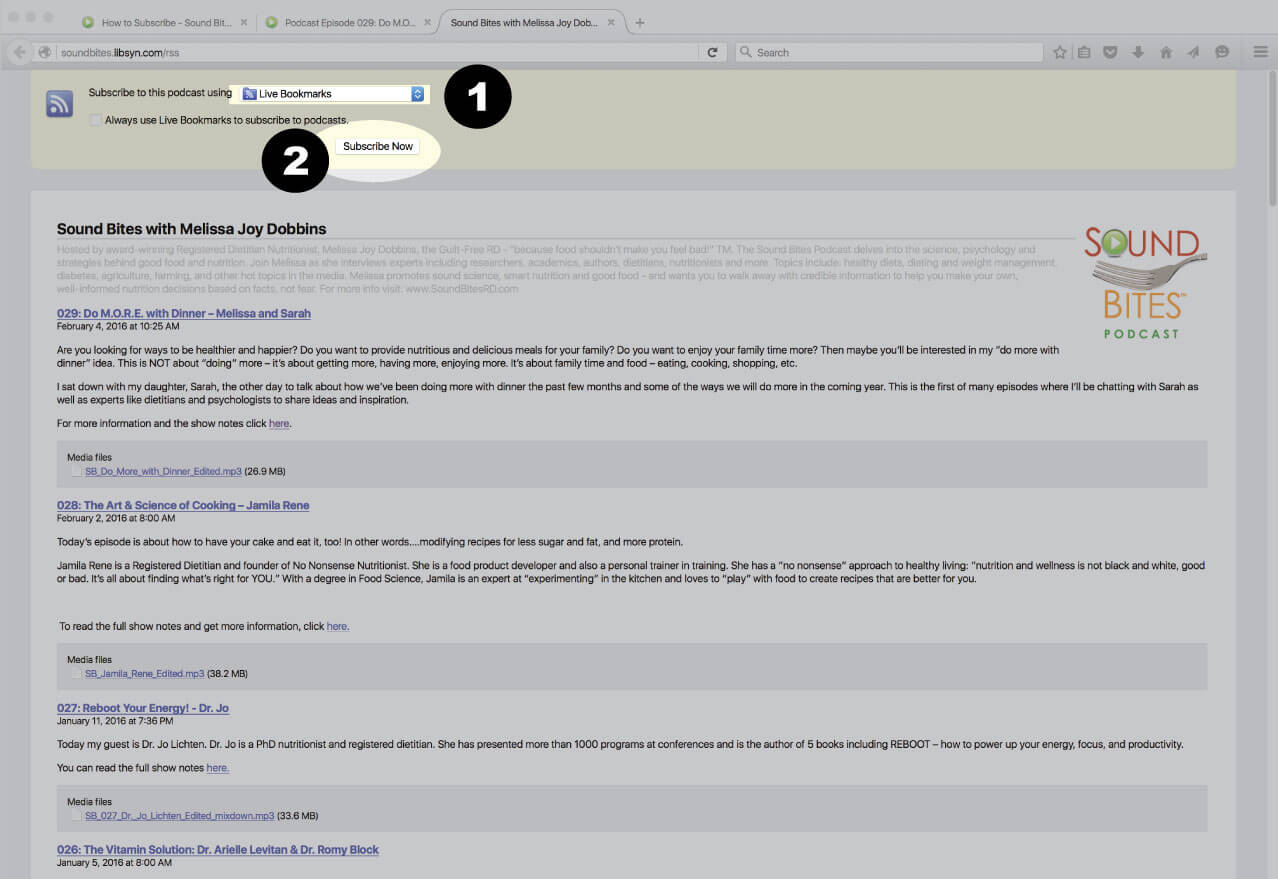
Subscribe via RSS Feed
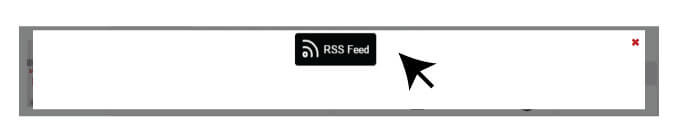
Navigate to any podcast player . Click on the RSS feed icon.
Click on the RSS feed icon.
Click on RSS Feed
Choose which application you would like to use to receive the RSS feed
Click “Subscribe Now”
Confirm settings and subscribe.
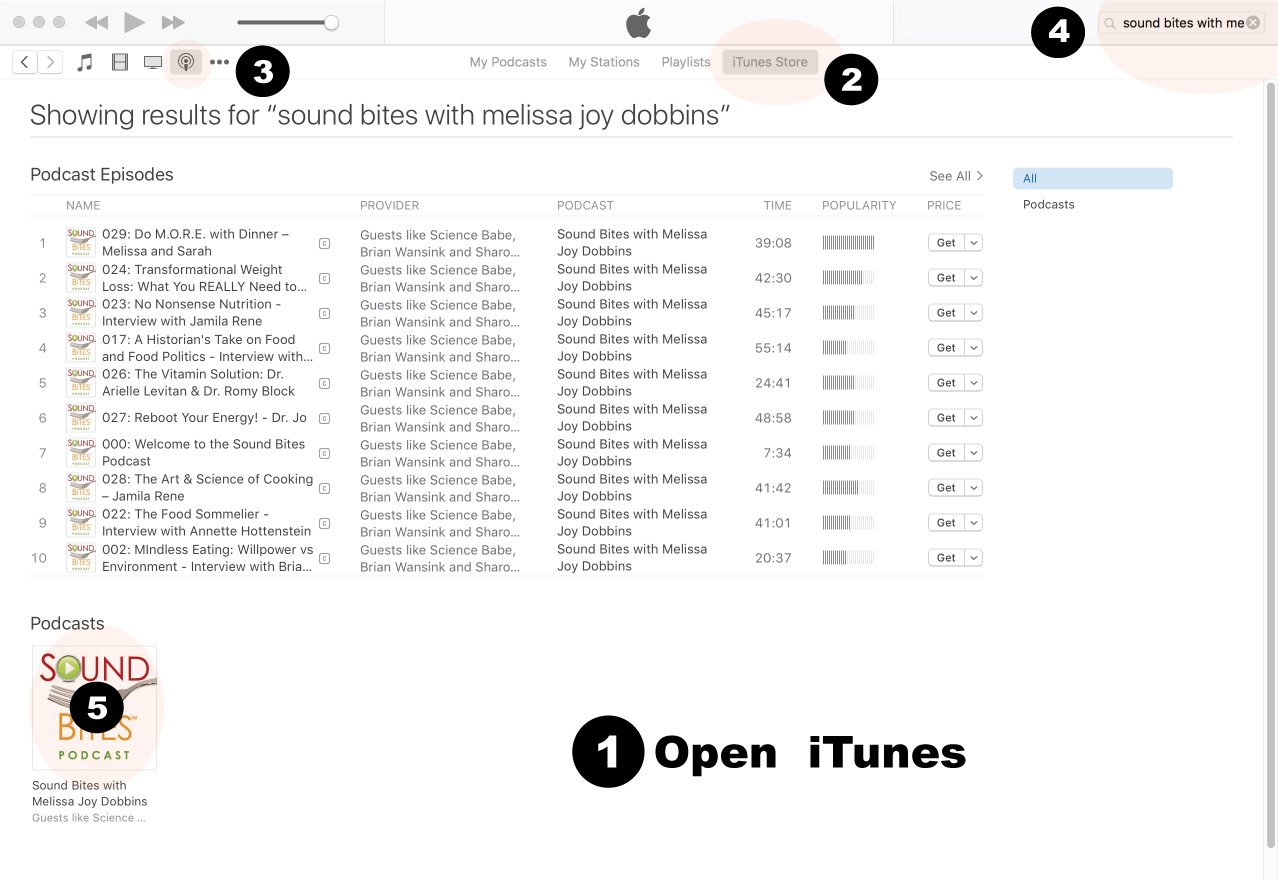
How to Review in iTunes
Open iTunes desktop application
Click iTunes Store
Click on Podcasts
Search for “Sound bites with Melissa Joy Dobbins”
Click on podcast image
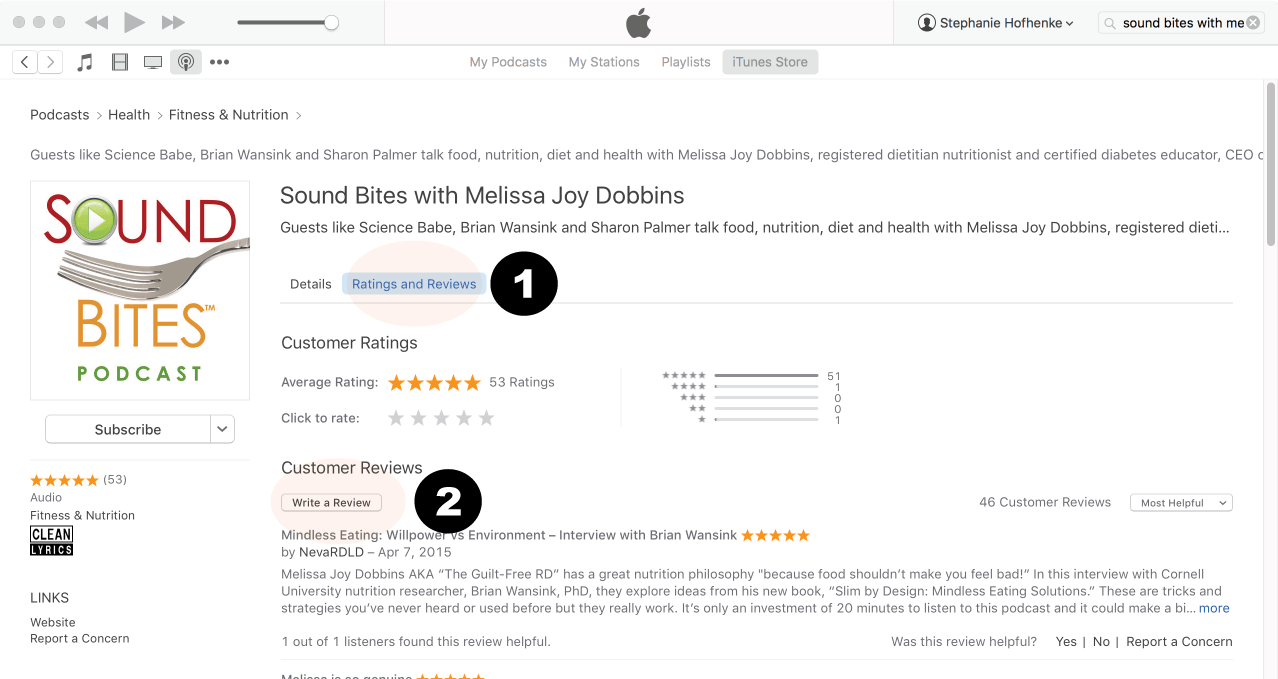
Search for Sound Bites podcast in iTunes
Click Ratings & Reivews
Click Write a Review
View reviews and write your own review.
Write your review…. Thank you!
Write your review!
How to subscribe via iTunes
Click here to view the Sound Bites Podcastin iTunes, then click the blue “View in iTunes” button. This will open your iTunes application directly to Sound Bites Podcast. Click the “Subscribe” button, and your done!




 Dr. Holly Wyatt is a physician, obesity medicine expert, and Professor of Nutrition Sciences at UAB whose work focuses on weight loss, metabolism, GLP-1 medications, and long-term weight maintenance. She is co-author of State of Slim and Losing the Weight Loss Meds, co-host of the podcast Weight Loss and…, and is known for translating complex obesity science into practical, real-world strategies people can actually use.























Good discussion.
Thanks, Andrea!