Celebrating over 1 Million Downloads and 50,000 Free CEUs on the Sound Bites® Podcast | NEW: Get 1 years’ worth of CEUs with the new 15-CEU Podcast Course
The Importance of Trust and Connection in Science Messaging
We’re surrounded by headlines, health advice and hot takes that can make it feel like science changes every week. Public health recommendations can seem confusing, and social media often turns nuanced science into click-worthy certainty. So how do we make sense of it all? How do we separate evolving evidence from exaggerated headlines, skepticism from cynicism, and facts from fear? Today we’re diving into the world of public health, trust, and science communication with an expert who helps us understand not just what we hear about health and nutrition—but how we should think about it.
Tune in to this episode to learn about:
public health and science communication
the origins and evolution of Unbiased Science
trust and the Deficit Model in public health
nuance in science communication
understanding the attraction of conspiracy theories
the shift from paternalism to empathy
crisis communications: running into the burning building
embracing the challenges of public health
navigating misinformation in science communication
the importance of science communication as a discipline
building trust in science communication
pre-bunking vs. debunking
resources for health professionals and the public
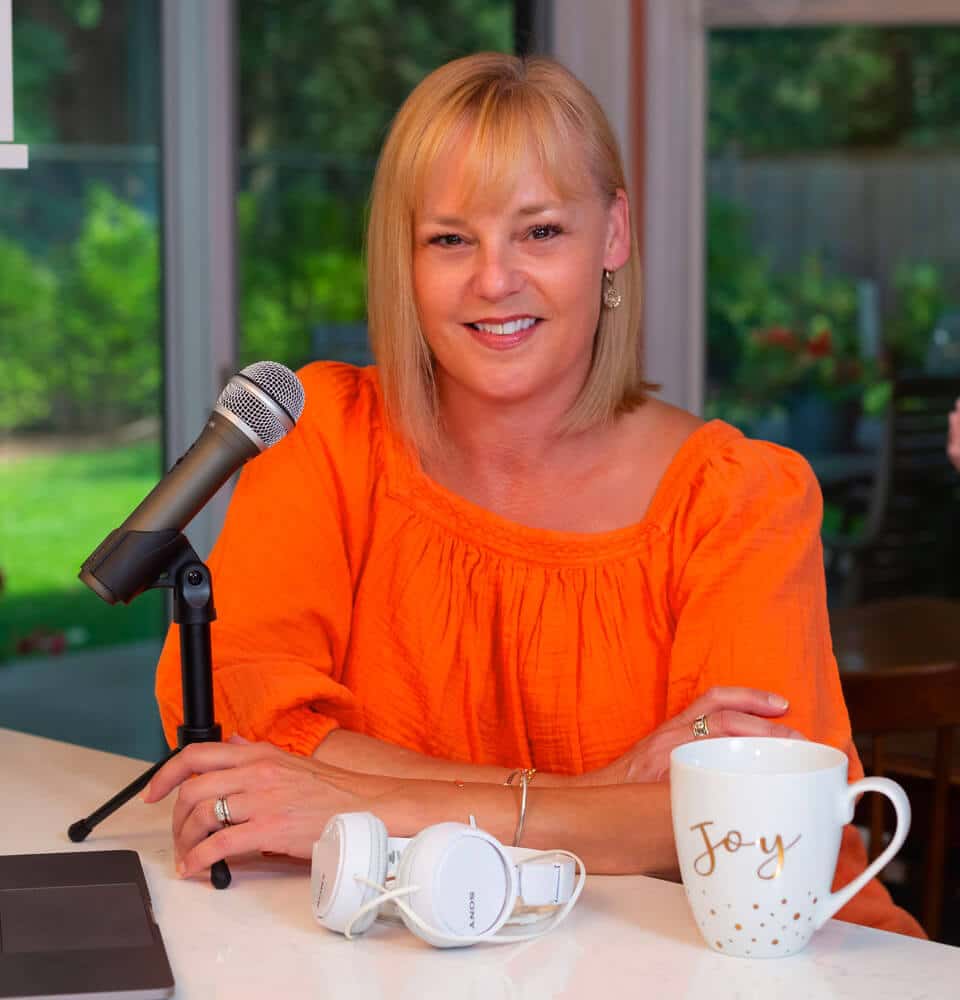
Jessica Steier, DrPH, PMP
Dr. Jessica Steier is the founder and CEO of Unbiased Science, a public health scientist and science communicator known for translating complex science with rigor and empathy. Through Unbiased Science, she reaches a community of over 800,000 followers across platforms and more than 10 million people each month, using everything from infographics and video to podcasting and long-form writing to make rigorous science accessible. Her approach is grounded in meeting people where they are, what she calls “connection before correction.” Holding a Doctorate in Public Health (DrPH), Jess began her career in research and health policy before building Unbiased Science into one of the field’s most trusted independent voices. She was named one of the 10 Most Empowering Women Leaders of 2024 by Executives Cover.
I encourage ‘connection before correction’. People don’t change their minds because you’ve out-argued them. They change when they feel heard first.” – Dr. Jess Steier
Resources
Some links may be affiliate links. As an Amazon Associate, I earn from qualifying purchases.
The thing that I say all the time is connection before correction, and that’s based on this really great NPR article from 2024. But it’s all about if you just dump information on people, it won’t land if they don’t first trust you to give them that information. So, that missing piece, I think, is trust.
[Music Playing]
Voiceover (00:24):
Welcome to Sound Bites, hosted by registered dietitian nutritionist, Melissa Joy Dobbins. Let’s delve into the science, the psychology, and the strategies behind good food and nutrition.
Melissa Joy (00:47):
Hello, and welcome to the Sound Bites Podcast. Today’s episode is about the world of public health, trust, and science communication; the gaps between research, headlines, and human behavior. We’re talking with an expert who helps us understand not just what we hear about health and nutrition, but how we should think about it.
This episode is not sponsored.
Do me a favor and click the follow button wherever you are listening to this podcast or watching it because today’s episode should be a video episode as well. So, if you’re watching that on YouTube, click the follow or subscribe button there as well. It’s just a great way to support my show and make sure you get notified about all the episodes.
My guest today is Dr. Jessica Steier. Dr. Jess Steier is a public health scientist, science communicator, and the founder of Unbiased Science, a health literacy platform known for translating complex science with empathy and rigor.
Welcome to the show, Dr. Steier.
Dr. Jess Steier (01:49):
Thank you so much for having me, Melissa, I’m excited.
Melissa Joy (01:52):
I’m excited, too. Can I call you Jess?
Dr. Jess Steier (01:54):
Please.
Melissa Joy (01:54):
Okay. For our listeners, I had the distinct pleasure of meeting you in person a little over a year ago at a conference, and of course, I had already been following Unbiased Science for a while. I don’t remember how I initially found you, but it’s a huge platform.
So, for the few listeners maybe here who haven’t heard of you, I’m so excited to introduce you and your platform to them. But before we jump into our conversation, I would love for you to share with our listeners more about your background and the work that you do, and about Unbiased Science.
Dr. Jess Steier (02:29):
Sure. So, my background is actually in evaluation science, so using data to evaluate health programs and policies. And then early in 2020, people started connecting the dots between, oh, this person has a degree in public health, there’s a public health emergency, so people started asking questions about COVID.
So, really, Unbiased Science was originally launched to give people evidence-based information about COVID, later COVID vaccines, and now it has evolved into really public health science communication more broadly.
I love my team. I have this amazing team. First, I should shout them out. We’re a multidisciplinary team, it’s not just me — we have clinicians, we have other scientists, immunologists. I mean, you name it, we have it, and they’re all amazing.
And we push out content in a variety of different ways. So, we have a podcast, we do video content, a Substack, long-form content, infographics. And so really, it’s just all about meeting people where they are. We understand people learn in different ways.
And you mentioned this, but it’s definitely worth reiterating that our guiding principle is to communicate with empathy and with humanity. And I always say, this is a non-nutrition related anecdote, but the mom who chooses not to vaccinate her child thinks she’s making the right decision for her child, we’re all just doing the best with the information that we have.
Melissa Joy (03:56):
Yes, and that’s very applicable to nutrition as well. Absolutely. I mean, they’re so hand-in-hand. I love your Substack, every time I read it, I’m like, “Oh my God, this is so good.”
Dr. Jess Steier (04:08):
I love you.
Melissa Joy (04:09):
Oh, no, it’s so true. It’s so true. I mean, we’re going to talk about, I think, three different ones in particular, but there was one that you wrote recently that was even a little bit more personal. I can’t remember specifically, but you were just like, “I’m really struggling with where things are in the world right now,” and it’s what I needed to hear at the time. And I just am so excited to hopefully have our listeners follow you.
But I was thinking, when I met you in person, I was like, would love to have you on the podcast. So, it’s taken a while to kind of circle back and make this happen. But I was thinking public health is so in the spotlight ever since COVID, it’s just everywhere. And I often think as dietitians, we really are public health experts. I mean, maybe we don’t go into that field specifically, but I feel like that’s the basis of our training.
I even worked for WIC when I was in grad school, community nutrition, and certainly, there’s clinical and there’s culinary and there’s all different aspects, but I do feel like the foundation of nutrition and dietetics is public health.
So, I just feel like everything that you talk about in your world does have a direct relationship with the nutrition world. And you talked about this in one of your recent Substacks about you were asked by somebody, did the old way ever work? Where public health is now, did the old way ever work?
And you really did a nice job of kind of explaining kind of how things used to be and how things used to work and the evolution and changes that have taken place, and I just found it really interesting. So, I think maybe that’s a great place to start.
Dr. Jess Steier (05:56):
Yeah, totally. So, I think just backing up for one second, I want to share a finding from the Edelman Trust Barometer. I don’t know if folks are familiar with that. But basically, it’s a survey that helps gauge who people trust, where they get their information.
And so, they asked a question, it was, who do you trust to get … I forget the exact phrasing, but who do you trust to give you accurate information about science and technology? It was something like that. And what blew me away is that, yes, scientists was number one, but it was tied for number one with peers, someone like me.
And so, that just, to me, is very emblematic of where we are right now. I think we’re in this death of expertise moment where I think COVID changed a lot of things, I think people no longer want the canned responses, they want the courtesy, the respect of the nuance and the detail. Throw in the fact that we’re dealing with social media algorithms that are complicating everything.
So, how did we use to communicate in public health? I would say we followed the deficit model, which was very much about if we just give people information, that will be enough to move them, to impact their beliefs, their behaviors. I don’t think that that works now. So, the thing that I say all the time is connection before correction. And that’s based on this really great NPR article from 2024.
But it’s all about if you just dump information on people, it won’t land if they don’t first trust you to give them that information. So, that missing piece, I think, is trust. And so, that’s why I don’t think that the deficit model worked or works. I think that the world was a very different place even pre-2020. And like I said, I think that things are very different now. And the questions that I get from people, it blows my mind.
People who have no background in health or science or research are asking really advanced questions. It feels like the bar has been raised, and then on top of all of that, we’re dealing with (we all know), there’s a trust crisis right now. And there’s a whole lot of backlash against the scientific and medical establishment and a lot of mistrust of scientists.
And so, what we’re doing in tandem with giving information is trying to rebuild that trust. And the last thing I’ll say, I’m sorry, I’m rambling, is that I often … yes, I’m a public health scientist. I have training in things like epidemiology, biostats, preventive medicine, all that, but I’m also a mother, I’m also a daughter and a human being who wants the best for myself and for my family and for everyone, if I’m being honest.
And so, it’s not only throwing my doctorate in people’s faces, it’s a combination of, yes, I have this knowledge, I know how to critically appraise the best available evidence, but you can trust me because I’m going through this too. I’m seeing the same information you are and making the same decisions.
Melissa Joy (09:16):
Yeah, no, absolutely. And I have talked about this erosion of trust. I think you know Dr. Charlie Arnott. He was on the podcast a little while ago talking about his consumer insights and the different personalities. I can’t remember what he calls them.
But it’s a very heterogeneous group that we’re speaking to in the public, which I also talk about a lot when I talk with dietitians and other health professionals about science communications. It’s like if we’re sitting down across the table with one person, patient, client and it’s very natural to tailor everything and personalize everything to them. It gets a little wonky when we start trying to spread it out to the masses because one size does not fit all and all of that stuff.
Dr. Jess Steier (10:01):
Could not agree more. I’ll just say briefly, I mean, that’s a huge thing. So, I don’t know if Charlie calls them personas, but I kind of put people into these different personas and it’s like what is their main issue? Is it mistrust of pharma or industry? Is it natural minded? Natural is better? Like what is really driving them? And based on that persona, I think it impacts the way that we deliver information and the way it’s received.
Melissa Joy (10:31):
Yeah, absolutely. I love learning about all of that, so I might ask you a question a little bit about conspiracy theories. But I but I love the concept of connection before correction, and I know we’re probably going to talk a little bit more about that.
But you brought up something that I’ve been talking a lot about more lately in my circles. I’m excited to hear you say that people are wanting the nuance and the detail. You have a phrase about uncertainty isn’t a weakness in science, it’s how science works.
So, I want to talk about that a little bit because what I see from nutrition, and again, is very paralleled with just public health in general is people want black and white … we think they want black and white answers when we say, well, it depends on this or it’s not black and white, and here’s kind of what we know.
And people start getting a little nervous or we see those flip floppy headlines. People say they don’t even know what they’re talking about. I do feel like if we can communicate that there is nuance and that’s normal, then maybe people will get used to that.
Dr. Jess Steier (11:41):
Could not agree more. We need to keep hammering that home. It’s tricky, though, isn’t it? Because we’re up against wellness influencers and folks who really know how to work that social media algorithm, and the nuance isn’t sexy.
It isn’t sexy to say, “Well, your risk of cancer, it’s a variety, a multivariable model. There are multiple different things, and your odds will increase.” Like it’s too much, like people want to know, “Tell me if this is good, tell me if this is bad.”
And influencers serve that up on a silver platter. And people like that because it gives them a sense of control over their health. If I eat this or if I don’t eat this, I will live longer, I will avoid cancer, I will … fill in the fill in the blanks. So, it’s tricky.
But I would say to stay true to our health and science background, we need to lean into the nuance. And I would argue that people appreciate the nuance. I think they feel like they’re being (I think I said this before) like led into the discussion. We’re not talking down to them, we’re talking to them on their level.
There are some people who don’t agree with that approach, feel that really we should not succumb to this death of expertise, and we do have the training, and we should lead with that. But again, it’s like is it principle on principle that you’re going to do that? And do you just want to sound really smart, or do you actually want to try to connect with someone and give them information.
Melissa Joy (13:16):
And see them feel empowered to change behavior.
Dr. Jess Steier (13:19):
Totally, totally.
Melissa Joy (13:21):
I always say we’re not in the business of just making people smarter about nutrition, we’re in the business of helping them make meaningful changes that improve their quality of life.
Dr. Jess Steier (13:31):
Without question. That’s really beautifully said. And then just one other thing, I’m sorry, if I’m too long-winded, just let me know.
Melissa Joy (13:38):
You’re fine.
Dr. Jess Steier (13:39):
But you mentioned something about … I always say uncertainty isn’t a weakness in science, it’s how science works. So, people don’t like hearing, “Well, we’re not entirely sure.” But I would argue that is actually something that we should get used to saying.
First of all, people need to understand that this is a strength of the scientific process that it’s not designed to give us definitive answers, we’re always collecting new information. I do tell people there are some things like we’re never going to want to do a 180 on … I’m making-
Melissa Joy (14:15):
Bone health or something.
Dr. Jess Steier (14:16):
Broccoli or whatever it is, some topic. It’s like we’re at this point in 2026, we have enough. Like we’re in a very different place than we were a hundred years ago, 50 years ago, and I think we’re unlikely to do total flip flops. It’s that we’re like fine tuning our understanding of things.
But sorry, last thing is that I think during COVID, we lost people’s trust because we said things with certainty, like the masking or the stay-at-home measures or all that stuff, and we didn’t tell people that we don’t fully know, this is our best guess right now. We’re still figuring it out.
Melissa Joy (14:55):
Agree. Yeah, yeah, definitely (laughs) lot has changed with regard to that. So, you mentioned some personas, and I just have this burning question and maybe you have some insight that can help me. What types of persona or what types of situations are prime for people to believe conspiracy theories?
Dr. Jess Steier (15:20):
Oh, yeah, that’s a tricky subset. And I think is it Charlie? He uses the phrase the “movable middle.” I don’t know that conspiratorial thinkers are movable and it pains me to say that because I want to reach everyone. What makes them prime to that? I’d say this just general distrust of any institution. This feeling like we’re driven by money, by profit, we don’t care-
Melissa Joy (15:50):
We’re being duped.
Dr. Jess Steier (15:51):
Exactly, we’re being duped, we’re being lied to, they’re hiding things from us. So, those people, it’s so difficult because it’s like we have to strip down to the studs, the trust and it’s like we’re rebuilding, and that takes a huge amount of effort, and I often don’t think it’s possible.
Melissa Joy (16:11):
Okay, thank you. Yeah, because I’m sure you know you can think of any food related documentary and 99% of them are not credible. I mean, that’s my statistic. I haven’t done any formal research on that, but I mean, it’s just like it’s a trend. Oh, there’s a food documentary, it’s like, wait, okay, wait, no, no, no. It’s crazy. Very compelling.
Thank you for that and talk as much as you want because we are all ears, and that’s why you’re here. So, is there anything more you wanted to say about what used to work or maybe even back then, what didn’t quite work about this deficit model? Because I think some of it we kind of assumed was working. But maybe this new normal has exposed a weak link in that whole process that we’re really listening to people.
Dr. Jess Steier (17:10):
More, I would say, I guess, is that I mentioned deficit model. I think also two other things maybe I would add. We were very paternalistic. I think we already touched on that. But even just the way we delivered information was very like ivory tower, very academic, didactic, that’s not flying anymore, especially when the majority of people are getting their information from influencers who are certainly not delivering in that way.
And then the other thing I’d say is that I can’t remember if I wrote about it in that piece, but I’ve talked about this thing called disenfranchised grief just worth maybe mentioning briefly. So, I learned about this phrase from this really great documentary called I’m Still Here, Love. And it followed — sorry, all roads are leading back to COVID right now, but it’s just how I learned about this.
So, it was a documentary that followed three families of people who lost someone to COVID and they were not vaccinated. And listening to the families talk about how they felt totally dismissed by the public health community, how it seemed like their loved ones weren’t worth grieving over because they were not vaccinated.
And so, I think we have to remind ourselves that it’s like we’re here to reach all the people, not just the people who listen to what we say. And we have to understand that people are, again, products of their information ecosystems and their cultures and all those things. And so, it’s just I think we were a little bit, what’s the word I’m looking for? Not holier than thou or judgmental-
Melissa Joy (18:49):
Judgy.
Dr. Jess Steier (18:50):
Judgy, right, in the way that we delivered information, and once again, I don’t think that that works in today’s world.
Melissa Joy (18:58):
Yes, I do remember reading that in one of your posts, and it is very powerful. And we talk about this in my field, too, like don’t lead with we are the nutrition expert, like blah, blah, blah. You really need to connect with somebody first, and I think there was always an element of that, but now it’s like job number one.
It’s finding that common ground, connecting with them, letting them know that they’re being heard, and again, getting rid of the judgment, even if … I think it comes from a place of, yeah, we’re trying to help people.
Dr. Jess Steier (19:39):
You’re reminding me that we had a post that Unbiased Science did years ago that I’m now mortified over, and we deleted. Actually, we had it on merch, like we had it on a T-shirt, it was your, “Anecdote is not evidence.” And oh, my goodness, like all that does is rally the troops, the already science-minded folks. What that also does is completely shut down the people who need to hear us the most.
And I think you just alluded to it, that people’s lived experiences, that matters. We know that that’s not generalizable and that there are things that maybe there are other factors that they weren’t considering. So, instead of saying something like that, that’s so dismissive of a person’s experience, maybe … so I’ll say I soften that to an anecdote is a data point basically.
It’s still important. It’s still very important. But we can’t say that what happened to you was due to this specific thing, or that it would be the case for other people. So, not invalidating their experience.
Melissa Joy (20:51):
Yeah, exactly. Yeah, that really being heard, feeling validated, because as you say, you want to open the doors of communication, not slam them shut. And it’s like we might feel however we might feel as people who want to help people.
But then we have to take a step back and realize, okay, that’s not helpful. You’re coming from a place of wanting to help and it’s coming from a good place, but that’s not helpful. And so, what is, and just approaching it differently, and seeing those results.
You made so many great points in your keynote to the NYU graduating students, and it was so inspiring. And I’ll link to that Substack and the video, which I watched because I would love for people to read the whole thing and to watch the video.
But so much of it resonated with me. So, I would love for you to share kind of some of those points that you shared about running into the burning building, which is a crisis communications phrase. We used to say don’t run into the burning building. I don’t know if you know that.
Dr. Jess Steier (21:59):
Well, yeah, but these days (laughs)-
Melissa Joy (22:01):
You have to. We’ve done a 180 on that in crisis communications, we literally used to say, “Don’t do that. Stay out of there and divert and whatever.” Now, we do say you have to go into the burning building. Yeah, I don’t know if you knew that.
Dr. Jess Steier (22:16):
I did not know that. I did not know that.
Melissa Joy (22:19):
So, it’s a different world for sure, and also, maybe again, what we thought worked before didn’t work as well as we thought it did. So, I would love for you to share some of those takeaways from your keynote.
Dr. Jess Steier (22:32):
You’re so, so sweet, thank you. And that was just the experience of a lifetime. That was so wild.
Melissa Joy (22:36):
That was so exciting. You looked amazing, by the way.
Dr. Jess Steier (22:38):
Thank you. If you knew how nervous I was going into that, I really can’t explain it to you. I did not think I was physically going to be able to do it. But anyway, I did it so that’s what matters.
[Laughter]
But on this point of running into the burning building, I was sharing with the students. So, these were public health students and I think it’s incredible — when I sat where they were sitting (and I said this in the speech), the world looked totally different. It was 2008 or 2010, I don’t remember when I got my MPH. But I had a completely different vision of what public health would be than what it is today.
And these students, they chose public health after seeing a global pandemic, after seeing everything that’s going on now with trust and polarization, and politicization of science and all these other wild things that we’re trying to navigate, and they chose the field and I give them so much credit because I don’t know if I would have done this.
I’d like to think I would have done the same but my goodness, there are so many challenges now. So, that was the first thing, I give them so much credit. I think I said a few other things that I probably already said, so I don’t want to be too redundant. But I asked them to try to remember what got them into this field.
I think that really holding on to your North Star, I always say, what is your origin story? I think that’s really important because it is really disorienting right now, and it could be difficult to continue to do this work with all the things that we’re facing.
So, holding on to what it is that drove you and got you into the field, trying not to get discouraged and realizing that, yeah, things are bad, but that’s why this is more important than ever. So, trying to end on an optimistic note (laughs). Yes, there’s a burning building, but we need you to put out the fire. So, there’s really such an important role.
Melissa Joy (24:33):
Absolutely, yes. And whenever I talk to groups of dietitians and I say, “Why did you go into this field to help people?” Same thing that you’re saying, only I just say it in a different way, is, okay, if you dug a little deeper, what does helping people look like for you? And each person in the room would have a little bit of a different story.
And when you do sit and think about that and really get some clarity on that, not only does it help you get through the day and keep moving forward and keep doing the good work, but it does also influence how you do it, it influences how you communicate, and I think that makes you a stronger communicator.
You’ve mentioned influencers a couple of times, and I’m always thinking, even before social media, there was traditional media, which is a big part of my background. And I used to say I have a hate-hate relationship with the media (laughs), and I like to blame them because of their headlines.
And then I learned more about, oh, there’s other places in the whole dissemination of science where things can break down, starting at the press release itself and things like that. How do you advise people to know whether a headline is worth paying attention to, or if it’s just noise?
Dr. Jess Steier (25:51):
That is a great question, and I don’t have a formula for it. Sometimes it is just this gut feeling that this is gaining traction and worth addressing. I’ll give you a specific example, maybe that’ll help. And I think underscores how we so desperately need more dietitians. And I think the work you’re doing is incredible, and you need to help us sort out the information for misinformation.
But anyway, so I don’t know if you saw the headlines about Driscoll’s strawberries.
Melissa Joy (26:21):
I saw your post and I shared it, but I didn’t see the original headline.
Dr. Jess Steier (26:24):
Oh, my goodness, influencers ran wild. There was a momfluencer, this person who has a blog, and had a lab test two cartons of strawberries, just two. And anyway, I won’t get into the whole thing, but it was an organic and a conventional, and they were testing for pesticides. Yes, there were pesticides because yes, we use pesticides in order to have a food supply-
Melissa Joy (26:50):
Even in organic.
Dr. Jess Steier (26:51):
Even organic, absolutely. But the headlines ran with our strawberries are covered in pesticides and giving us cancer, and all these other things somehow linking to PFAS. It was this wild, non-scientific thing, but it got so much traction.
And I had to decide at first, I was like, do I even want to give this air? Do I even want to repeat this myth? Because you don’t want to elevate the myth. But I can’t tell you, and maybe this is very specific to my social media things, so tell me if this is too specific. But it was just the number of questions that I was getting.
We were getting hundreds if not thousands of messages from parents who were like, “I have Driscoll’s in my fridge, do I need to toss them? I’m poisoning my children.” And so, at that point, it was like, okay, we need to address this.
But on that note, I would say not everything is worth addressing. I think more importantly, where I think a lot of us need to sort of shift our thinking, is pre-bunking versus debunking, because the misinformation shares so … there are patterns.
There are so many themes, and certainly, we could talk more about that. But I think if you help people recognize those patterns, then it doesn’t matter what specific thing they’re hearing. It can apply across so many different myths and misconceptions. So, I think that’s really important.
Melissa Joy (28:16)
Yeah, yeah. I’ve never thought of it as pre-bunking, but we talk a lot about yeah, critical thinking and like you said, you can’t put out every single fire. So, how do you arm people with some knowledge and maybe perspective to know how to take all of these things kind of flying their way? And I’ve shared some resources before, but I’ll put some in the show notes at soundbitesrd.com for people.
I actually have an entire sound science toolkit that has information about understanding science and research in the literature, translating it, critical thinking, hazard versus risk, all of these things. And I created it for dietitians, but really, anybody can access it. Any lay general public person, any health professional.
All you have to do is sign up with your email and it’s just a digital thing. It’s just a bunch of squares and this is a book, this is a video, this is an article, whatever. I’m sure some of the links are broken and need to be fixed, but I’m always adding stuff to that.
In fact, I have on my list to add the Unbiased Science stuff. And it’s not specific to like strawberries or milk or anything, there’s nothing specific in there. It’s all just in general like, okay, how do you apply this to other things?
Dr. Jess Steier (29:36):
That’s amazing.
Melissa Joy (29:39):
I mean, I came up with that a long time ago, and I wanted to give people tools and be able to also update it-
Dr. Jess Steier (29:46):
I want to share it.
Melissa Joy (29:48):
Yeah. I got to go in and fix a few things. No, but I want to get into one more of your Substack posts that … well, let’s see some of your recent podcasts topics, I wrote those down as well, because you talk about a variety: melatonin, peptides, microplastics, menopause.
Yeah, and I know that you also are in the same circles as Dr. Kevin Klatt, who’s been on the podcast, and Jessica Knurick, and all of those folks. So, just again, thank you for all of that. But one of the other Substacks that I wanted to get into is something about science communication. It’s about purity tests and pennies.
I talk about this a lot on the podcast, and of course, in my communications trainings for dietitians. What are the challenges you’re seeing in science communication? You had three really important points and takeaways.
Dr. Jess Steier (30:49):
I don’t know that I’ll be able to recall what those three exact ones were, but I’d say, first of all, a huge issue is that some people treat science communication as this afterthought. It’s just like we always like a line item in a grant proposal. It’s just something you do, but it’s not its own thing. It’s not considered its own discipline.
And this is such a pet peeve of mine because just throwing some information on a slide or in a one-pager or a PDF, that’s not science communication. You’re sharing science, and that’s great, but that’s not science communications.
Because science communication entails really thinking through how will this message land? Will people receive it well? Anticipating pushback, anticipating questions. So, it’s a science and an art, and I don’t think we’re treating it as such.
There’s also this purity culture that it’s like we should not be paid or compensated for this work. Excuse me? I mean, I don’t know, do you not work for money, people? It’s so confusing. What are you getting paid with? What are you paying your mortgage with?
Like people will wear it as a badge of honor in SciComm. They’re like, “Oh, I didn’t get paid a penny to write this or to say this.” I mean, should we be bragging about that? Maybe you should be paid for that.
And then the last thing was about how we evaluate impact and this is tricky. And I am speaking about social media now. Obviously, there are different modalities, but a lot of times, it’ll be like, well, how many likes or how many likes did a post get?
That is the perfectly wrong way, in my opinion, to measure impact, because if you’re trying to reach the skeptics or the folks who have questions or the movable middle, they’re folks who are maybe less likely to hit like or share. They’re less likely to share it to their page because one would assume maybe the community that they come from shares certain beliefs, and they’d be more hesitant to share those things.
So, I don’t have answers right now, but I think that simply boiling things down into social media metrics, we’re missing something. We’re missing that magic, that trust building, which takes time and is not necessarily easy to measure.
Melissa Joy (33:10):
Yeah, no, no, you hit the three. It’s not treated as a discipline, not measuring success. I want to talk a little bit more about the funding or the conflict of interest because I mean, that’s a big thing in my field.
A couple of years ago at our national conference, I actually spoke about the new FTC guidelines for disclosure. And there’s been kind of a bit of a mess with certain journalists “targeting dietitians” and I’m like, h, dear Lord, yeah, we don’t go into this field to be rich, let’s just say that.
You’ll notice I said towards the beginning of this episode, this episode is not sponsored. I used to only say it’s sponsored when it’s sponsored and just not say anything when it wasn’t. But then I have people saying, “Well, was this sponsored or not?” So, now I just say, whether it’s during the audio or in the show notes, it’s sponsored, it’s not sponsored, just to be clear.
And I remember before you had to do hashtag ad and sponsored and all of that stuff, I was a supermarket dietitian working with brands and I would do a TV segment. I’d have Barilla pasta — well, I just named a pot of a product. Oh, well, Bertolli olive oil, whatever.
Like really just nutrient rich foods, in my opinion, nothing scandalous, I guess I would say. But then things change. And my hope was going into that transition that the dust would sort of settle, that it was just sort of like a kind of a matter of fact, it is sponsored, it’s not sponsored, here’s the conflict of interest, blah, blah, blah.
But really, there’s still sort of like this stigma that, well, if you’re being paid, then you’re going to say whatever. And as many times as myself and my colleagues will say, “I only work with brands that align with my values and blah, blah, blah,” it’s still kind of criticized. And there goes back to the trust issue. And I have this whole thing with transparency in the food system and everything, and I’m like I think people just want more information.
But is that really helping? I don’t know, maybe, like the transparent … maybe we’re just not on the other side of that transition yet. But I know you had said some things about whether you’ve worked with companies and that sort of thing. I would love for you to share how that’s worked or not worked for you.
Dr. Jess Steier (35:27)
Yeah, so I guess, as a science communicator, the way that we’re structured now (and I say we meaning the science communication ecosystem, especially on social media) is you get paid to do specific campaigns.
And then to your point, the second you see paid partnership, it’s like okay, people tune it out, you must be biased, they must hand you a script. I want to just tell you that the posts where I’m doing a paid partnership, first of all, no one’s handing me a script. I always have scientific and editorial control. I would never work with a brand or a company whose values I don’t align with as you said. But I’m also making sure that every single thing I’m saying is sourced and backed up.
So, to give an example, we recently did a post on microplastics. And it was funded by the American Cleaning Council, or I might be butchering that but it’s something like that. And it doesn’t matter how many times I say this, they did not tell us what to say. It was people are concerned about microplastics, they were in particular, they wanted us to look at the data on microplastics in dishwasher pods.
We collaborated with toxicologists, chemists, clinical folks, I put my data science hat on — we poured over the studies and the data, and we presented what I think ultimately, it was a very balanced piece that overall, yeah, we want to move towards fewer microplastics, but also, we just don’t know fully what it is doing clinically to our health.
We’re getting a lot better at measuring these things, so yeah, if we look for them, we’re going to find them. But we don’t need to spiral and panic like the post the influencers would have you believe. But yeah, I got dragged by a bunch of academics who felt that I was bought out or something like that. I’m thinking, “Are you kidding me? I’m just trying to do this work, and also survive and make a living, and I do it with integrity.”
Melissa Joy (37:35):
Exactly, exactly. I commiserate with you. And I don’t know, I did have one person complain. I did a brain health episode, and it was sponsored by Wild Blueberries and the Egg Board. And they were complaining about … I’m like, “Oh, if you don’t like blueberries and eggs, don’t listen to the next episode.”
[Laughter]
I’m not going to say who it is, but no, no, no, anyway, yeah, can we just be reasonable about all of these things?
Dr. Jess Steier (38:07):
Be reasonable. I will say, though, last thought, and then I’ll shut up, is that there are some people and I would say influencers, like I have turned down hundreds of thousands of dollars from wellness companies who have tried to hand me a script or to promote or push a specific detox or cleanse, or whatever it might be. It is damn hard to turn down that type of money, but I do because that would completely compromise my integrity.
But this is all to say that there is a reason. I do see why people are distrusting, because I do think there are bad actors who are driven by profit and don’t have that integrity. So, I think that’s why it’s so important to find those sources of information that you trust and you feel comfortable with so that when you do see a post or whatever is sponsored, you know that it is still being delivered accurately.
Melissa Joy (39:06):
Yeah, and it is confusing. And these influencers can say whatever they want, so they can be very compelling, and for some reason, the fact that they’re clearly being paid or clearly selling something gets a pass.
And that was one of the points in my presentation in our annual conference about, okay, dietitians, the Federal Trade Commission, we are held to a higher standard. And that means if you get a hand slap, and the next time you mess up, it’s a $50,000 fine.
It’s not a good day when Joe Schmo, tech bro (or not tech bro, gym bro, I’m confusing those two) they just get a pass. So, it’s frustrating, but that’s the reality of it and I just have a funny example. Back when I used to work for the Dairy Council, I used to bring in the speakers, physicians, researchers, farmers, all kinds of people to help professional conferences.
And when the questions were about hormones and cow’s milk, the speaker would try to answer and then I would step in and I would say, “Well, there’s been all this research and blah, blah, blah, and this and that, and it’s safe.” And they would say, “Well, of course, you would say that, you work for the Dairy Council.”
And I said, “Well, you know what, 10 years before I worked for the Dairy Council, that’s what I did my master’s research on (laughs). Maybe that’s why I worked for the Dairy Council (laughs).” So, I was like kind of did my research on that. I mean, literally, that was my research project. I didn’t do my own research.
Dr. Jess Steier (40:37):
Shouldn’t we be applauding when industry does bring in actual experts. Like there’s a reason you gravitated toward that you had the expertise, you had the passion for it, and I think we want that, anyway, that’s wild (laughs).
Melissa Joy (40:51):
Yeah, it’s kind of funny. I was always like, well, but yeah, to your point, again, it all comes back to trust. As we’re wrapping up, I would love to hear what you’re feeling hopeful about or what opportunities you’re seeing for science communications.
Dr. Jess Steier (41:09):
I think a lot of people are stepping up. I see a lot of folks, dietitians, I see doctors and nurses and physician assistants and other scientists who are maybe not necessarily drawn to communication in general or never thought that they’d be doing this, but I think they’re really rising to the occasion, and they’re meeting this moment.
And they’re seeing like we are losing this battle right now, and there is so much bad information out there. So, I’m very, very happy to see that science communication is booming right now.
Melissa Joy (41:47):
Excellent.
Dr. Jess Steier (41:48):
Now, we just need to figure out how to make it an actual discipline, how to allow people to get paid and how to properly measure impact (laughs).
Melissa Joy (41:58):
And one other thing that you were saying about that, I was at a conference recently, and Dr. Kevin Klatt was on a panel. And he was making a very strong point about how science communication is kind of an afterthought in academia, and it really needs to be more of a thing (chuckles). A legit piece in the process. And again, you can’t just share information. It’s got to be strategic. It’s got to be meaningful and actionable and really resonate with people.
Do you have any other specific tips for our listeners? Any takeaways? Keeping in mind that my audience is a mixture of dietitians and health professionals, and the general public.
Dr. Jess Steier (42:44):
I do. And I don’t know if these are too specific, but I do have a list of things. So, first of all, if you’re scrolling on your feed, and you see a post or a nutrition headline, before you react to it, you want to ask three questions: one, are they citing data that is actually from studies in humans? Because if we’re only talking about what happened in a rat or a petri dish, that does not mean it translates to humans.
And also, how many people? Do we have this one teeny tiny study? A lot of times we’ll see folks exaggerate in headlines. Also, you want to be skeptical of anything, or any single food framed as either all good or all bad or a miracle or a poison. And of course, we know that things like dose and context and overall pattern always matter more than just one ingredient.
As far as the dietitians, and those folks who are listening, I would reemphasize that when you want to try to get someone to really hear you, remember that you don’t want to just jump into correcting them or making them defensive.
And oftentimes, it could help by leading with a question. So, instead of telling them something, you’re asking them, what is your concern? Or what are you curious about? What are you worrying about? And in that way, you’ve started again, this peer-to-peer dialogue versus setting yourself up as talking down to them.
And then the last thing is what I sort of just alluded to a couple of minutes ago, which is that figure out who your trustworthy sources are. Some people might not like my style or the way that I communicate, but maybe there are other folks like Kevin or obviously you and others who do resonate with you, find your people.
And yeah, I think that would just build up that base for yourself so you have a group of folks who you feel comfortable listening to.
Melissa Joy (44:39):
Excellent. Thank you. Yes, I’m glad you made the point about asking questions. Because I think just if people can remember that, to start with a question and being curious, that builds a lot of bridges and builds a lot of trust.
And really, it’s kind of like I don’t know if you would call it motivational interviewing, but it really helps you be able to address what the real concern is, because we might be making an assumption that, oh, whether there’s pesticides and produce and like, oh, they’re worried about this or they’re worried about that, but it might be something completely different.
And so, then you can help them with that real concern, not whack a mole at different things that they’re not even on their radar.
Dr. Jess Steier (45:23):
Right. Totally agree.
Melissa Joy (45:24):
Very good, very good. Well, where can people connect with, you follow you? I’ll put all the links in my show notes. But if you wanted to share some of the URLs, and then the different social handles, that would be great.
Dr. Jess Steier (45:37):
Thank you so much. You could basically just throw up a bat signal. No, I am on all the social media platforms, and our handle is at @unbiasedscipod because we started as a podcast. We have a weekly podcast that airs every Wednesday.
We’re on, as I said, Instagram, Facebook, Blue Sky, Threads, TikTok, YouTube, all the different places. And then we also have a Substack, which I love, that’s where I do my storytelling and really tell my stories in my voice, and that’s on Substack. It’s the unbiasedscipod.substack.com which is a mouthful.
And then the last thing is that on our website, so we actually have a for profit, and we also have a nonprofit. If you go to unbiasedscience.com or unbiasedscience.org, we have some things like virtual escape rooms and conversation guides, and other cool resources for folks.
Melissa Joy (46:39):
Yeah, tell me about the virtual escape room.
Dr. Jess Steier (46:41):
Yeah, so the virtual escape room, this is pretty vaccine specific, but we’re hoping to do this for other things, including food and nutrition. We’re helping to train folks like MDs, clinicians, navigate conversations with vaccine skeptics.
And it’s not just about communicating the science, it’s about how do you engage with a person who thinks that natural infection is better than vaccine induced immunity, or who thinks that you can’t trust anything that comes out of pharma?
And so, it’s less about the science and more about the communication strategy. So, it puts people in these scenarios where they’re actually interfacing with these different personas, and then you escape the room by successfully navigating the conversation.
Melissa Joy (47:24):
That’s so creative. That sounds so fun. And you are everywhere. And you said, if somebody goes to the websites, you can find all the socials there anyway, or just google Unbiased Science and they’ll find you.
Well, thank you so much for coming on the show. And thank you, thank you, thank you for the work that you and your team do, I so value it. And I’m just excited to, like I said, introduce you to my listeners who may not be aware of you.
Dr. Jess Steier (47:51):
Ditto. I think you’re amazing. Thank you for the work that you’re doing and definitely do share a link to that resource, I want to blast it out (laughs).
Melissa Joy (47:57):
I will. Thank you so much. I appreciate that so much. And for everybody listening, as always, if you liked this episode, share it with a friend. Tell a friend about it. Tell a colleague. And if you’re a dietitian and you’re looking for free continuing education, go to my website, soundbitesrd.com and check out my free CEU activities. But most importantly, as always, enjoy your food with health in mind. Until next time.
[Music Playing]
Voiceover (48:24):
For more information, visit soundbitesrd.com. This podcast does not provide medical advice. It is for informational purposes only. Please see a registered dietitian for individualized advice. Music by Dave Birk, produced by JAG in Detroit Podcasts. Copyright, Sound Bites, Inc. All rights reserved.
LISTEN, LEARN AND EARN
Listen to select Sound Bites Podcasts and earn free CEU credits approved by the Commission on Dietetic Registration (CDR) for registered dietitian nutritionists and dietetic technicians, registered. Get started!
Get Melissa’s Sound Science Toolkit here!
Partnerships:
Sound Bites is partnering with the Association of Diabetes Care and Education Specialists (formerly the American Association of Diabetes Educators)! Stay tuned for updates on the podcast, blog and newsletter!
Sound Bites is partnering with the International Food Information Council! Stay tuned for updates on the podcast, blog and newsletter!
Sign up for my monthly newsletter and episode eblasts so you never miss an update!
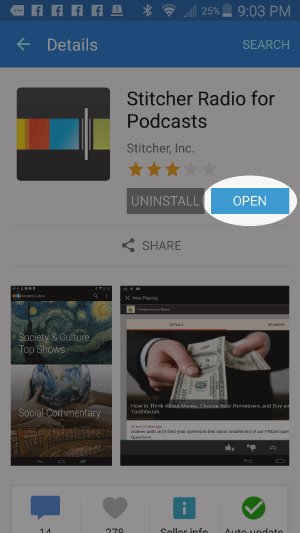
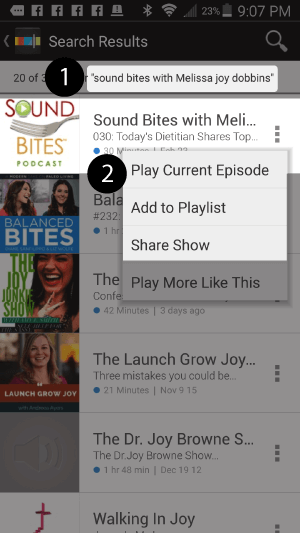
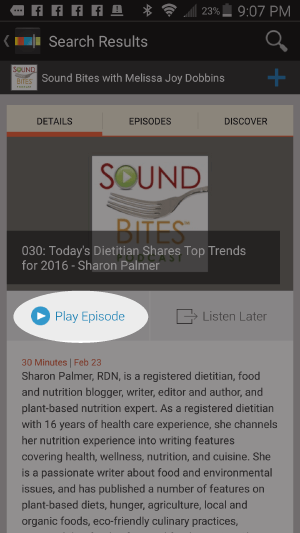
Listen on Stitcher (Android)
Install the Stitcher App
1. Search for “sound bites with melissa joy dobbins” 2. Choose Play Current Episode or Add to Playlist
Choose “Play Episode”
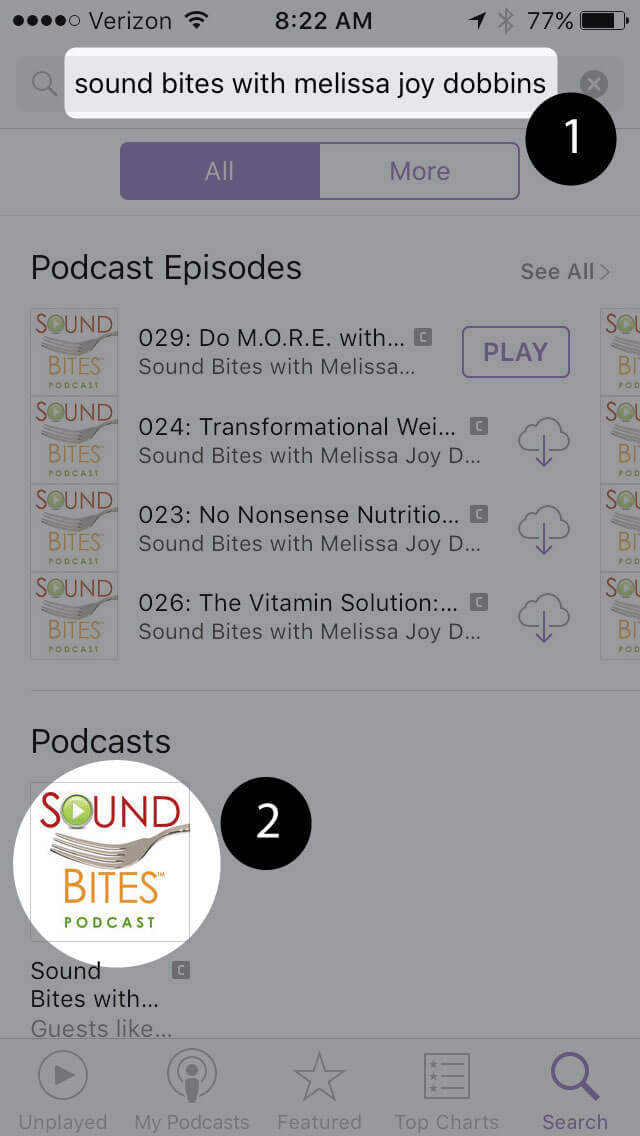
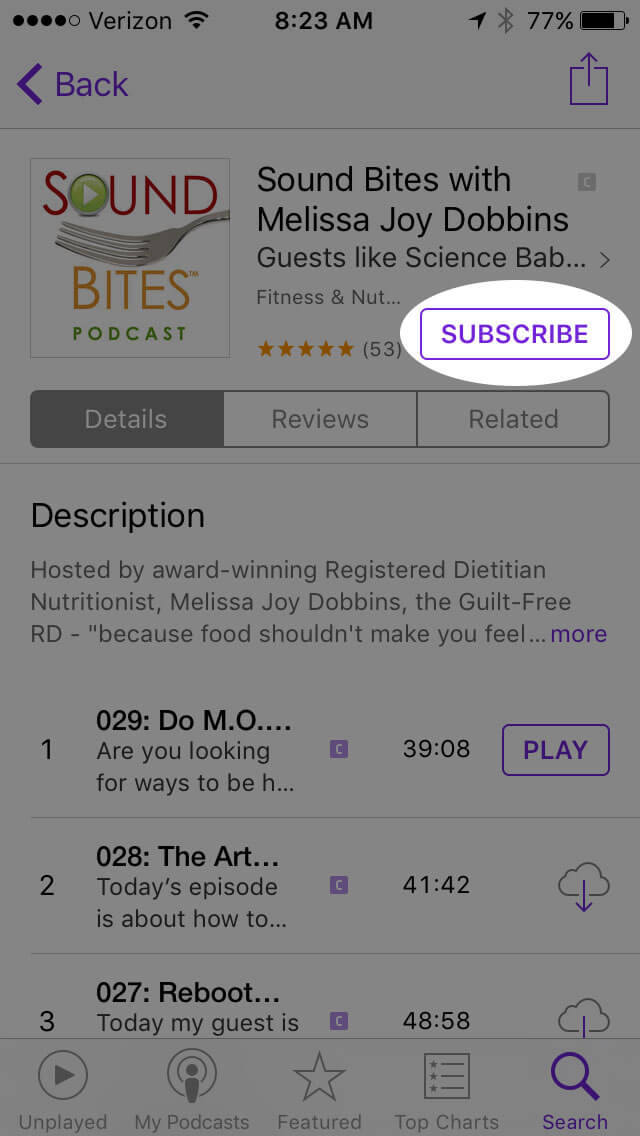
Subscribe & Review on iPhone
Open the “Podcast” app on your iPhone
Search for “Sound bites with melissa joy dobbins”
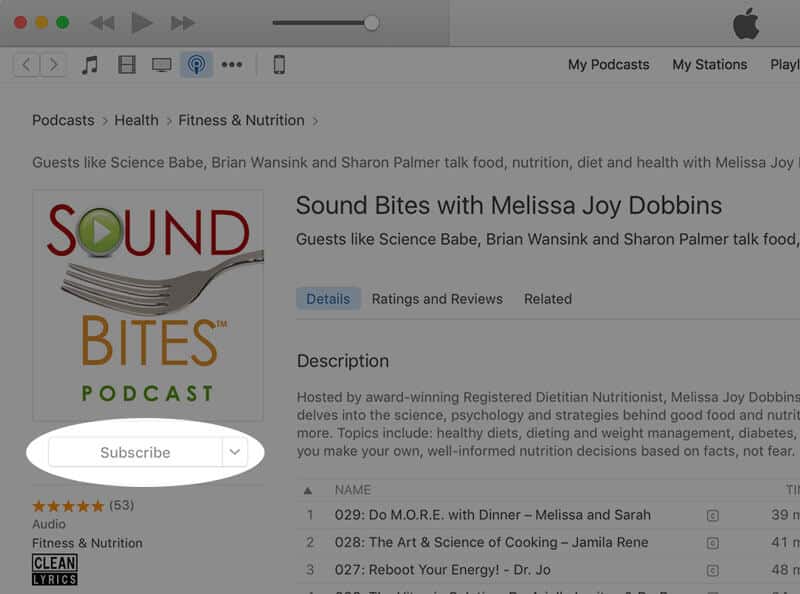
Open the podcast and click “Subscribe” and your done!
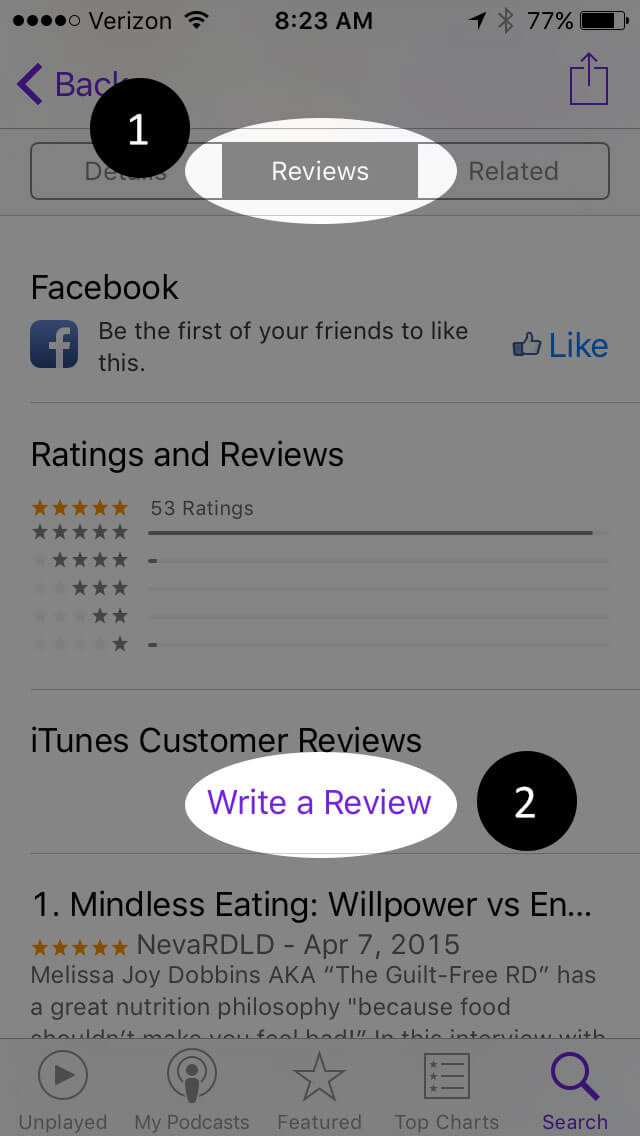
Write a Review
Click “Reviews”, then “Write a Review”.
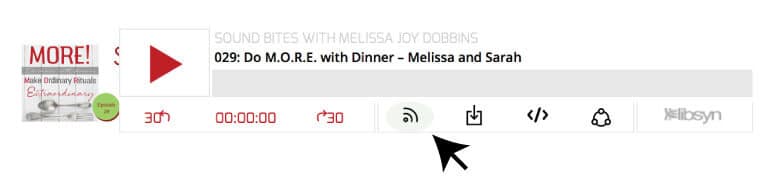
Subscribe via RSS Feed
Navigate to any podcast player . Click on the RSS feed icon.
Click on the RSS feed icon.
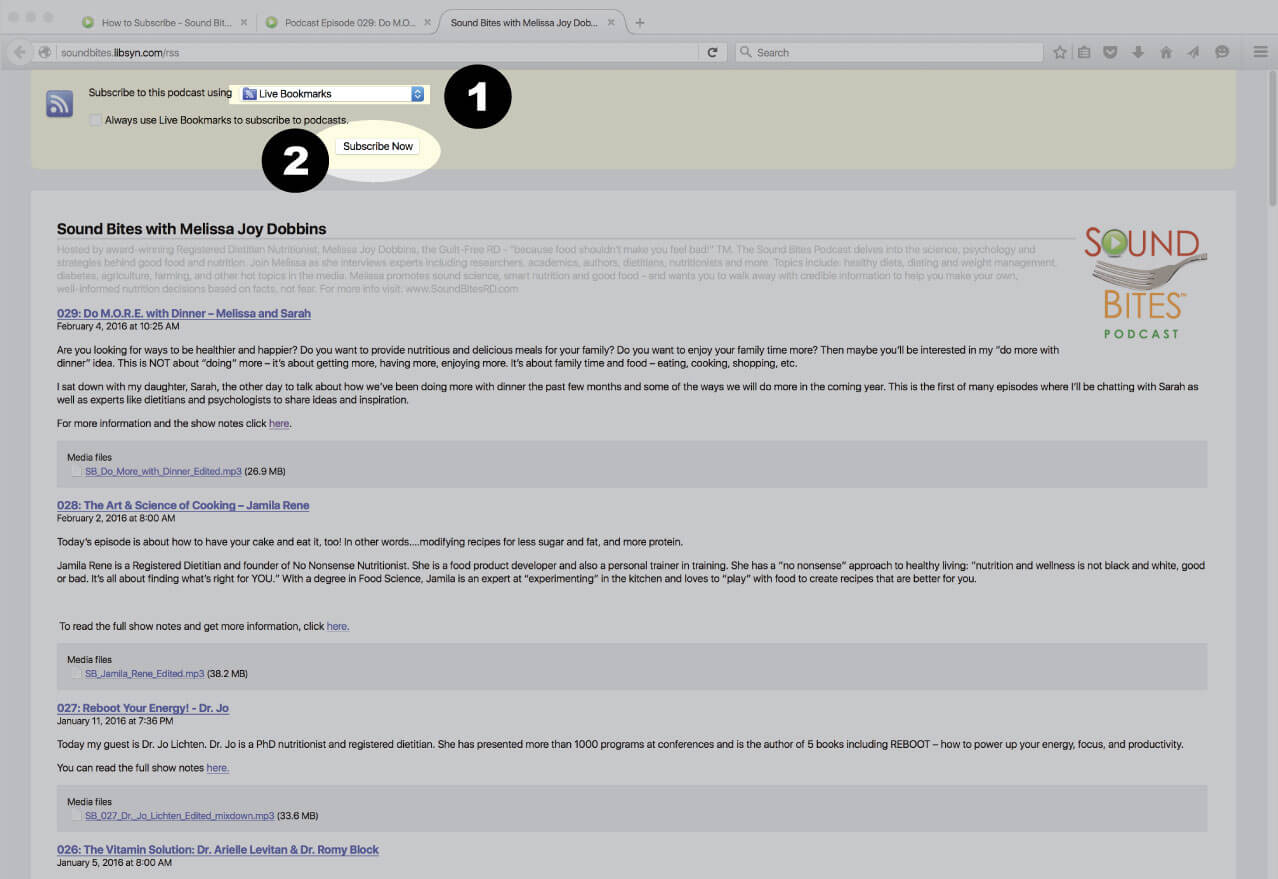
Click on RSS Feed
Choose which application you would like to use to receive the RSS feed
Click “Subscribe Now”
Confirm settings and subscribe.
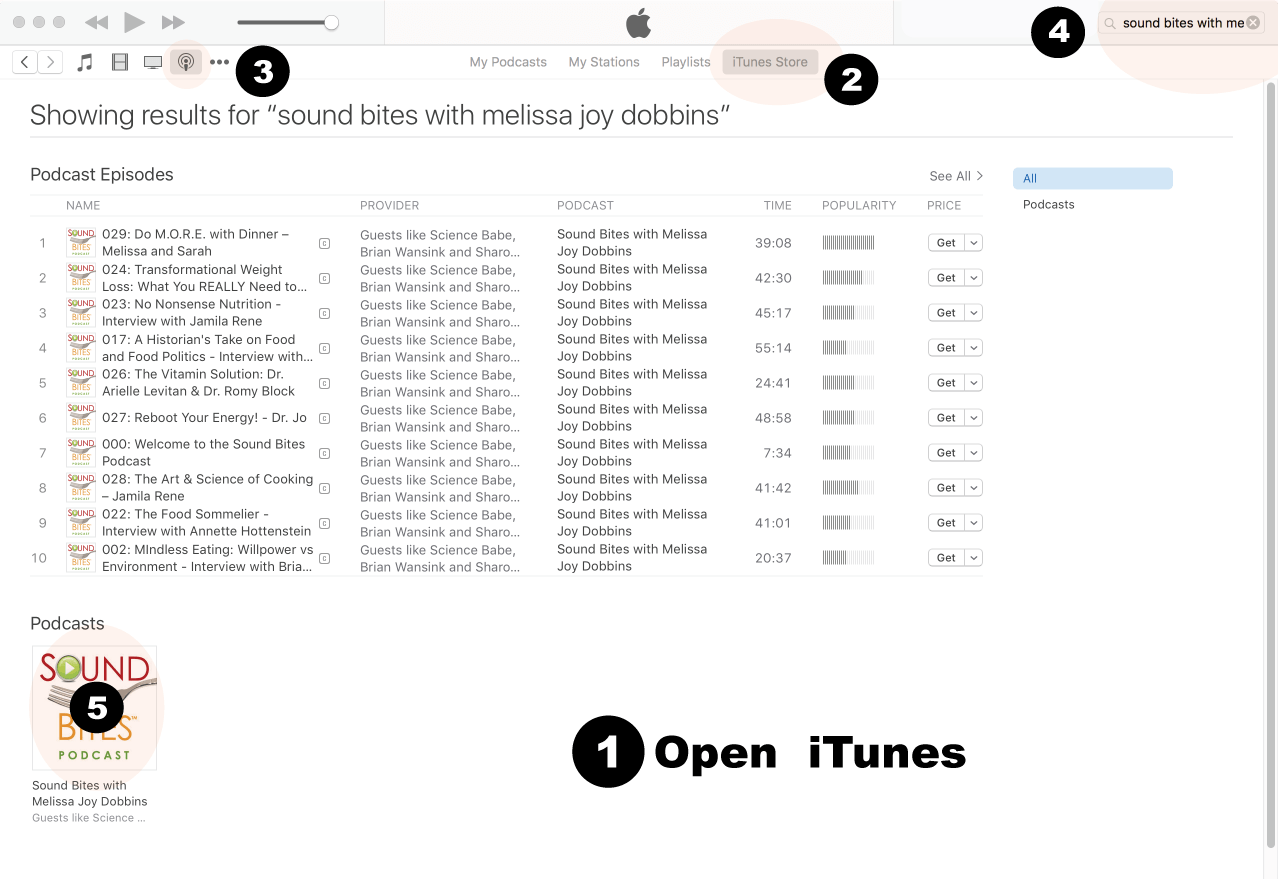
How to Review in iTunes
Open iTunes desktop application
Click iTunes Store
Click on Podcasts
Search for “Sound bites with Melissa Joy Dobbins”
Click on podcast image
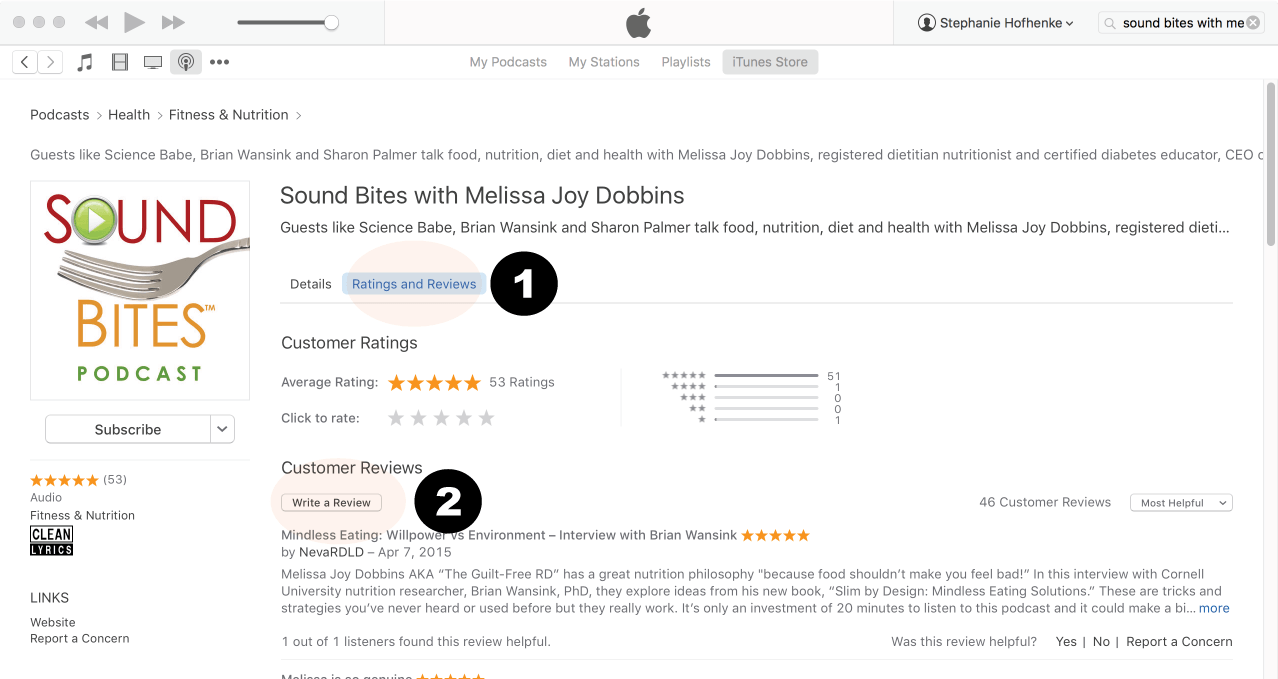
Search for Sound Bites podcast in iTunes
Click Ratings & Reivews
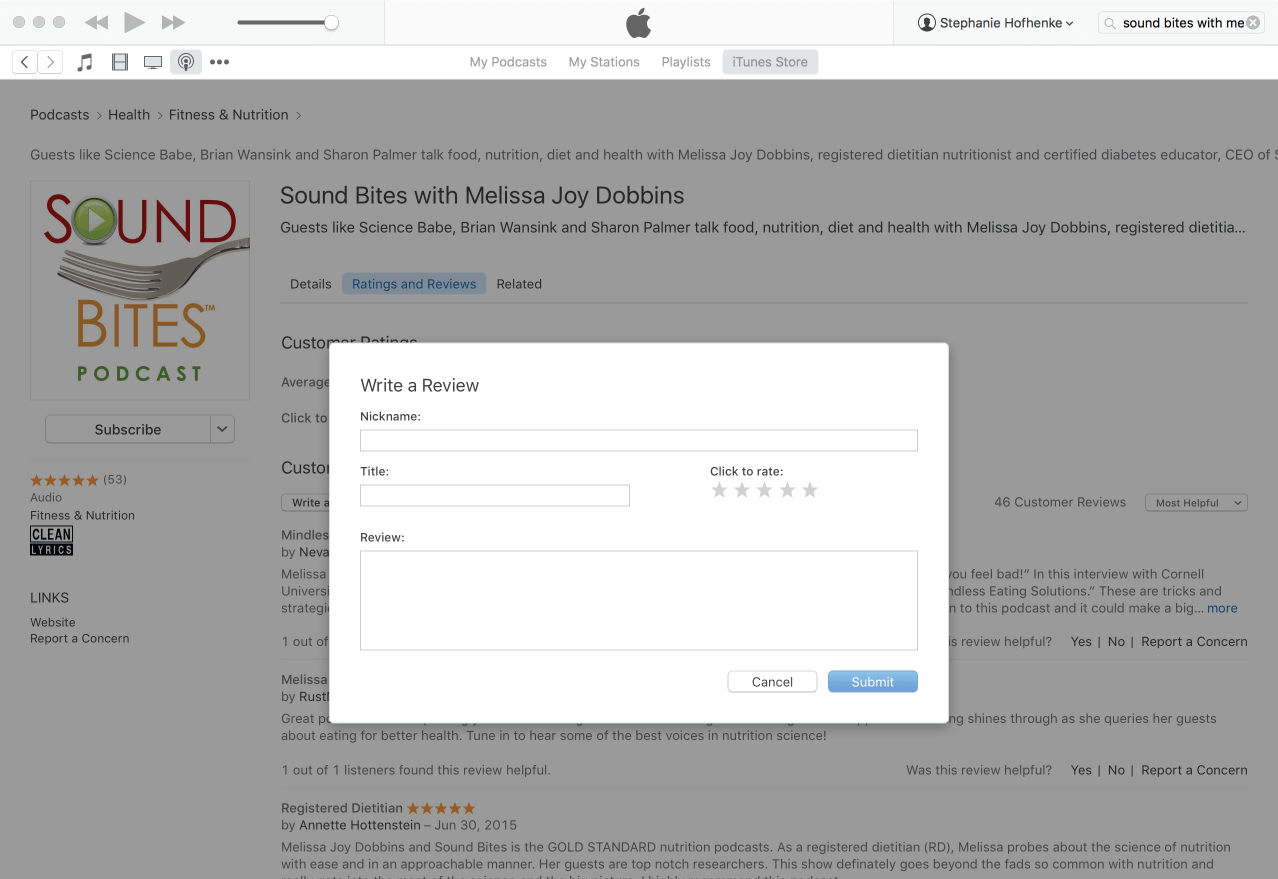
Click Write a Review
View reviews and write your own review.
Write your review…. Thank you!
Write your review!
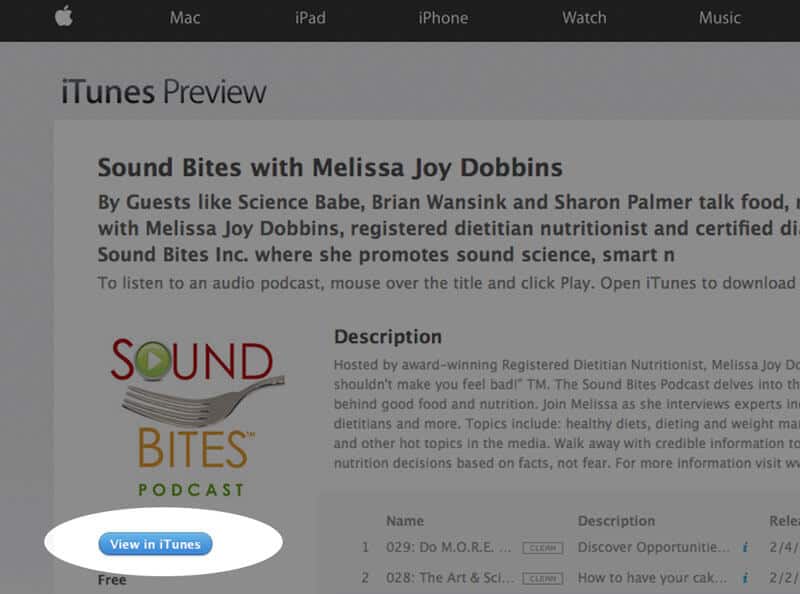
How to subscribe via iTunes
Click here to view the Sound Bites Podcastin iTunes, then click the blue “View in iTunes” button. This will open your iTunes application directly to Sound Bites Podcast. Click the “Subscribe” button, and your done!




 Dr. Jessica Steier is the founder and CEO of Unbiased Science, a public health scientist and science communicator known for translating complex science with rigor and empathy. Through Unbiased Science, she reaches a community of over 800,000 followers across platforms and more than 10 million people each month, using everything from infographics and video to podcasting and long-form writing to make rigorous science accessible. Her approach is grounded in meeting people where they are, what she calls “connection before correction.” Holding a Doctorate in Public Health (DrPH), Jess began her career in research and health policy before building Unbiased Science into one of the field’s most trusted independent voices. She was named one of the 10 Most Empowering Women Leaders of 2024 by Executives Cover.