Celebrating over 1 Million Downloads and 50,000 Free CEUs on the Sound Bites® Podcast | NEW: Get 1 years’ worth of CEUs with the new 15-CEU Podcast Course
How & Why Consumers are Prioritizing Protein on their Plates
Food ethnographer Lucy Woods has spent the last several years diving deep into the evolving landscape of protein consumption. Lucy’s expertise lies in uncovering the “why” behind the ways people eat, with a specific focus on protein – from red meat and poultry to plant-based options and protein-packed snacks. Her recent research revealed that 61% of Americans increased their protein intake in 2024, compared to just 48% in 2019. She’s been on the ground, listening to consumers share their motivations, from wellness and fitness goals to convenience and indulgence.
Tune into this episode to learn about:
new ethnographic research on protein consumption trends
shifts in identifying as flexitarian, omnivore or carnivore
3 key trends identified in this research
different motivations for eating protein
why people are including and/or increasing protein intake
the types of protein people are seeking
which types of protein rank highest for flavor, nutrition, convenience
what people look for on protein food labels
social micro cultures and their impact on protein trends
snacking insights and product innovations
how consumers are navigating higher grocery prices
how to access the full report
Lucy Woods
Lucy Woods is a seasoned marketing research professional with over 15 years of experience translating consumer insights into strategic growth. She holds a Master’s in Marketing and a Bachelor’s in Anthropology, and has led research initiatives for iconic brands including McDonald’s, YUM!, Nature Valley, and Cheerios. Lucy began her career as a Field Ethnographer and went on to hold key roles at General Mills before joining Cargill, where she now leads insights for the Protein North America foodservice division.
Resources
Some links may be affiliate links. As an Amazon Associate, I earn from qualifying purchases.
Welcome to Sound Bites, hosted by registered dietitian nutritionist, Melissa Joy Dobbins. Let’s delve into the science, the psychology, and the strategies behind good food and nutrition.
Melissa Joy (00:22):
I’ve been getting a lot of questions from listeners about the continuing education credits that dietitians can get for some of my podcast episodes. So, I wanted to clarify that I do offer free CEUs for some episodes, but not all the episodes.
I have about three years’ worth of free continuing education credits, as well as some very low cost CEUs and a package on sale for one full year’s worth of CEUs, if you want the convenience of taking just one quiz and getting one certificate for all 15 credits. This is a fun and easy way to get your credits. So, be sure to check it out and you can get all the details on my website at soundbitesrd.com/freeceus.
Hello and welcome to the Sound Bites Podcast. Today’s episode is about protein, one of my favorite topics. We’re going to talk about everything from why people are eating protein and are they really eating more protein?
Also, how their motivations for including protein in the diet are evolving. And we’re also going to talk about how the food industry is responding to the demand for protein-rich foods and what the future of protein is shaping up to look like.
This episode is not sponsored. My guest today is Lucy Woods. Lucy is a food ethnographer who has spent the last several years diving deep into the topic of protein. Her expertise lies in uncovering the why behind the ways people eat, with a specific focus on protein from red meat and poultry to plant-based options and protein packed snacks.
Lucy is a seasoned marketing research professional with over 15 years of experience translating consumer insights into strategic growth, and currently leads consumer insights for Cargill Protein, North America’s food service division.
She holds a master’s degree in marketing and a bachelor’s degree in anthropology and has led research initiatives for iconic brands, including McDonald’s, Nature Valley and Cheerios. Welcome to the show, Lucy.
Lucy Woods (02:32):
Thanks Melissa. Happy to be here.
Melissa Joy (02:34):
Please share with our listeners a little bit more about your background and the work that you do and explain what a food ethnographer is. I have had one food ethnographer on the show in the last 10 years prior to you, and I find your work fascinating. So, I would really like for our listeners to get a good understanding of what that is.
Lucy Woods (02:52):
Yeah, I’m glad you asked. Everybody asks, actually, what do I do exactly? It’s kind of funny. I call myself an applied anthropologist, like you mentioned I studied anthropology in undergrad. I was really leading with my heart at that phase of my life.
And then I led with my head a little bit more and I got a master’s in marketing. And the reason why I did all of this is because I’ve always been a very curious person. Even as a kid, I would stare at people, watch people, talk to anyone, ask them all the questions. My husband’s always like, “Stop interviewing people.”
But my passion is people’s passions. Everyone’s so interesting and I want to know what life is like for them and how they make their decisions.
I feel so fortunate I’ve been able to find this intersection of anthropology and business in the business world. So, once I got my master’s in marketing, luckily, I was friends with this girl who worked at an ad agency because I didn’t know what I was going to do. Just like my dad said, “Lucy, you don’t study anthropology. You’re never going to get a job.”
(Laughter)
And so, I had to be curious and go and interview people on how can I get a job with a degree in anthropology. And so, my roommate in grad school was like, “Did you know that they hire PhD anthropologists at businesses at big ones like Polaris and Whirlpool, Proctor & Gamble, General Mills, Cargill.” And I had no idea.
That’s where I kind of started. And then I went out and I did informational interviews. My first job out of grad school was I was a field ethnographer, and I stood in Walgreens and Walmart and Targets. And I watched people interact with my client’s products.
Like how do they shop for pizza? How do they buy vitamins? Do they take the time and read labels, or do they just grab and go, or do they shop and not buy anything? I was just there to use a computer and log their behavior. But I’m a talker.
So, I would always go up to people and say, “Why didn’t you buy anything today? You spent three minutes looking at products.” They were like, “Who are you? Why are you talking to me?”
And then, with my quantitative data, that’s what I was in charge of, I’d send it in, but I’d always write a paper on, this is why the quantitative data is saying that. So, I quickly moved into doing the ethnographic work of research and I started going into people’s homes and going shopping with them to talk to them about why do you buy that type of bread? Why do you buy that type of pizza?
Anything, that washing machine on that motorcycle, that cigarette brand, anything people buy, any decision they make, I spend hours with people talking to them to understand why they make the decisions that they make. Then I share those learnings with businesses so they can make decisions off of it.
Melissa Joy (05:44):
Very, very interesting. Okay, very cool. So, you shared your most recent research with me and it’s been pulled together into a report titled The Protein Profile, the 2025 Primer for Protein Trends and Tips. It’s a little hard to say (laughs). I will link to this full report in my show notes at soundbitesrd.com.
Now this report details out information regarding consumer preferences, cultural dynamics, and innovation in the protein space. It’s very interesting. So, we’re going to kind of dive into these three key trends.
And throughout this I would just like for you to, where it makes sense to kind of tell us a little bit more about, well here’s what our data found. But what was that process like in interviewing these people and in some of the curious or surprising things that that people have shared.
I guess I have one quick question, before we get into all that is, how many people were interviewed for this, and do you go into their homes or what’s the typical interview like?
Lucy Woods (06:53):
Well, I just want to back up just a little bit and tell you about the beginning, the real beginning of this learning journey. It started in 2020, which is when I joined Cargill, and I joined on the alternative protein business.
So, think plant-based burgers and hot dogs and … because that was a growing business at the time. So, we were investing resources in it, and we didn’t understand it. We didn’t understand consumers’ attitudes and usage towards this category. And it was showing up in retail, grocery stores and restaurants and food service.
So, we wanted to understand it. That’s when we first started doing ethnographic work on protein in general. It wasn’t just about meat at that time, but it was about the nutrient of protein in American’s lives. And we started out as a traditional learning journey, talking to consumers.
In 2020 we did go into people’s homes, and we went shopping with them. We spent time in their homes. How does it fit in your fridge, in your freezer? Really trying to understand who is the consumer that buys plant-based meat.
We named them the flexitarian. These consumers, they flex based off of the day part, the day of the week, what’s available to them. And at that point, I was doing interviews called The Rise of the Flexitarian. Who are they? Why are they eating plant-based meat? What do their grocery carts look like? Where do they go shopping?
So, we did ethnographic work with — it’s typically Melissa, when we do one-on-one interviews with consumers, they’re about one hour long. And we do it with about 35 people. The people we interview are what we call the target consumer. So, this one, it was the flexitarian, if they purchase and eat plant-based meat, let’s say at that time a biweekly or weekly basis.
And then we were interested on how big is this group of people in America who identify as flexitarians? So, we fielded a large quantitative survey, and that means a survey. We emailed it out; we had 2000 people complete it in the United States and another 1000 in Canada. And we asked Americans; how do you identify? Are you a carnivore, an omnivore, a flexitarian, poultry only, vegan, vegetarian? And they selected one of those options.
So, we did that I think in 2019. And for that flexitarian group, it was 7% of the U.S. population said, I’m a flexitarian. Some of my meals will not have meat in it. I’m actively trying to reduce meat in my diet.
We’re like, “Great, let’s lean into this business opportunity. Let’s provide these products to restaurants and to grocery stores to meet consumers’ needs and demand for plant-based meat.” And then in 2020, we fielded that survey again, again, 2000 consumers in the United States and in Canada.
But this time that group grew, it went from 7% in 2019 up to 10% of Americans said, “I’m a flexitarian.” And it’s reducing those groups that identify as carnivore and omnivore we’re getting smaller. And so, we’re like, “Wow, we need to invest more resources. It is our job as Cargill is to feed the world in sustainable ways. And we want to provide protein, the core nutrient in whichever way is needed to the world.”
But a few years passed, so it was 2024, I moved over into the core protein business focusing more on food service, but also just core protein meats. So, steaks, poultry, globally, burgers, et cetera. And it had been a while.
We were feeling a shift, I’m not sure if you were feeling it, but we’re like, consumers are shifting their needs. The plant-based meat category was going down, inflation was rising, social media is running rampant, impacting consumers choices.
We felt like it was time to go back out, talk with consumers on what’s the role of protein in consumers’ lives now? This time we did virtual interviews across the United States, and we didn’t do it with just flexitarians this time. This time we did it with a variety of Americans.
So, different ages, different regions, different ethnicities. Generations was a big deal for us. And we talked to them, we had them do fun activities like lay out everything in your kitchen, your pantry, your deep freezer, your fridge that has protein in it.
And so, we got to see what everyone had on their counter. Tell me about it, put it in order from best source of protein to worst, from most convenient to least convenient, from best value to worst value from most delicious to least delicious. And we then had one-hour interviews with all of them.
How has your approach to protein changed over the past five years? Why has it changed? What’s influencing those changes? Then we went deep on the core kind of product attributes of protein, like I just mentioned with taste, nutrients, value and convenience.
And then we refielded that survey, the one I just mentioned again with 2000 consumers in the U.S., 1000 in Canada. And sure enough, we saw this massive push back into those buckets of, “I identify as a carnivore, I identify as an omnivore,” the number increasing of, “I believe that getting meat in my diet is an important part of my diet. I am trying to get more protein in my diet.”
So, it had shifted just like we had kind of thought that it had. I probably went into too much detail, Melissa, on the approach to the research, but that was how we learned about these trends.
Melissa Joy (13:06):
No, I’m glad that you did because the ethnography aspect, I talk about consumer insights all the time on the podcast, and this is different from traditional consumer insights. I mean, it’s much more in depth.
So, yeah, no, I’m glad you shared all of that and as you were saying, did we feel the shift? I mean I have … being as protein is one of my favorite topics and I do talk about it a lot on the podcast. I have seen, it seemed like the plant-based options were kind of exploding and people were trying new things and then it did seem like they were kind of moving away from that.
So, it kind of sounds like that’s what you found, because I know we’re going to dig deeper into these three key trends. What are those three key trends? And then we’ll kind of take a deeper dive with my follow-up questions.
Lucy Woods (13:54):
Yeah. So, the three trends that we identified, and then I do want to mention that to uncover these trends on an annual basis, we also do internal interviews. So, lots of Cargill team members, we interview all of them who kind of focus on different areas of our very large business.
To understand what are they seeing in the consumer and on the business side when it comes to trends with protein. So, that’s just one to mention. That’s another thing.
So, the three trend buckets is, number one is consumers are eating more protein and they’re eating it more often. That’s the premise of the protein profile for this year. That was the big, whoa, look at how many more people are seeking to add protein to their diet. Whoa.
The next was the real influence of social media. We all saw it coming. We’ve been talking it, watching it and engaging with it for a very long time. But this was the first year that we actually saw show up in our data how influential social media is on consumer’s approach to food and health and wellness and food and beverage. And that influence is kind of forming these little micro cultures in the consumer landscape.
So, you might see like the carnivore diet that Joe Rogan mentions. GLP-1 users is a microculture or keto style eating. Those little microcultures were popping up through social media.
And the next of course, we couldn’t write a trend report without mentioning value and how inflation and consumer’s wallets is impacting how they’re buying and eating protein. So, those were the three buckets, more protein, impact of social media and value.
Melissa Joy (15:42):
Excellent. So that answers the first question. Are people eating more protein? Yes, they are. Do we know how much they’re eating? And can you quantify that, and can we talk about why they’re eating it? And we alluded to their motivations evolving.
Lucy Woods (15:58):
Yeah, luckily at the same time that we released our protein profile the power of meat research was also released at the same time, which publishes retail data. And when you compare meat sales in 2024 to 2019, it increased 6%, which is a large number because it’s a very large base. Most Americans eat meat on a daily basis.
So, in that large base to increase at 6% was a huge number. So, that is quantified beef volume. They sold more beef compared to pre COVID. Then on my end, the consumer end, when I ask them and I try not to lead consumers, I want to know the truth. I’m a truth seeker. I don’t want to lead them. So, I don’t ask them outright, are you eating more protein? (Laughs).
Melissa Joy (16:53):
Right, right. That’s a really important point. How you ask the question is really important, so I’m glad you’re explaining this.
Lucy Woods (17:00):
Yeah. I wanted to set it in their food, in how they approach food and beverage in general. So, we asked them, when it comes to food and beverage, which of these nutrients are you actively trying to add to your diet? Or are you actively trying to decrease in your diet or nothing? You’re not doing anything.
Protein was the number one nutrient, and the list was protein, fiber, iron, calories, carbs, fats, salt and sugar. So, the big buckets of nutrients. Protein was the number one nutrient that consumers are trying to get more in their diet. 61% of Americans are trying to get more protein in their diet. That’s 13% more compared to 2019.
Melissa Joy (17:45):
That’s a lot. Just a quick side note, because I know we’re all about focusing on protein, but was the number two on fiber maybe?
Lucy Woods (17:53):
Yes, it was.
Melissa Joy (17:54):
Okay. Good. (Laughs) Yeah. That’s all we need to talk about fiber, and we can move back on to protein. I’m so happy to hear that (laughs).
Lucy Woods (18:01):
Yep. I was glad to see that too. Which fiber also increased five points compared to 2019. So, a lot of people ask me after I tell them 61% are trying to get more protein. A common follow up question is, how much protein are they trying to get? And they don’t know.
It’s a very intuitive approach to how much protein each individual is trying to get in their diet. Each one kind of has a feeling that if they get enough or if they don’t get enough. I heard some consumer say, “I want a fist full of protein on each diet.”
She’ll actually make a fist and hold it up to her plate. Like, do I have an A protein on my plate? This other man, he identified as a carnivore who’s following the carnivore diet. He wanted a steak at breakfast and a steak at lunch. Can you believe that? It’s a lot of steak.
So, there was no set number or grams, some of them had grams. The soup or fitness fueler people, they had grams. But it was kind of across the board. It’s very intuitive. And the reason why, that’s the truth seeking and why, why do they want more protein is it’s really like this magical nutrient for consumers.
And sometimes I like to display it in a bar chart, but it’s not a bar chart for consumers. It’s a net, it’s a web, it’s a map of, it’s so many benefits the protein gives to them. When they eat protein, it gives them energy. We all know consumers are tired. I’m tired, I don’t know about you, but it gives them energy to get through their day, to get through their task to get to the next meal.
I love this one. The second benefit is it’s delicious. I mean I think beef is delicious. So, that’s another reason why they like it. It fills them up, keeps them full, that helps them with their weight management helps them if they can stay on track with how many calories they’re eating and make it to the next meal, they feel empowered and better about themself.
I heard, especially the younger consumers start bringing up even more outward benefits. My hair is stronger and longer, my skin is clearer and shinier. My nails are thicker and softer. That was new.
Another new thing that I heard pop up was emotional benefits of protein. And again, coming from the younger consumers, and I love that generation, the Gen Z because they’re really leaning in to mental wellness.
And having it be normalized to talk about that and how it’s healthy. And I love that it’s being normalized, and people are talking about it. So, they started talking about, “When I eat in enough protein, I feel full. I become the best version of myself throughout the day. And when that happens, I’m happy. Protein helps make me be happier. Because it helps do all those other things.”
I thought that was fascinating. So, yeah, those are some of the main reasons. It’s this magical nutrient, filling them up, giving them energy, rebuilding muscle and helping them be the best version of themselves every day.
Melissa Joy (21:16):
Very interesting. Okay. And what are the sources of protein that people are most commonly choosing? I saw something in the report ranking, there’s top choices for nutrition and then there’s top choices for taste. And that was really interesting too.
Lucy Woods (21:31):
Yeah. So, we asked for each of the proteins and the ones in the research, we were all inclusive of types of protein. We did animal protein of course. So, chicken, beef, pork, fish, turkey, venison even. Because we want to keep a pulse on that. Younger consumers we’re bringing up venison, venison and bison.
We included deli meats. Cheese, eggs, milk, yogurt, alternatives, beans, peanut butter, ancient grains, protein bars, protein powder, collagen kept coming up. So, just so you know, this was all inclusive of any source of protein that consumers could get their hands on. And we had them rank each of those proteins.
First thing we asked was, which of all of these proteins that you ate in the past three months is your favorite? Beef was the number one favorite. 25% of consumers said “Beef’s my favorite.” Chicken was followed by that. Eggs was followed by that. Those were the top three beef, chicken, eggs. And then there was kind of a tail of all the other ones.
But again, we wanted to understand why. So, we asked them to rank beef. “Why was beef your favorite?” “It’s the most delicious of all the proteins,” but it’s not as healthy as some of the other proteins. And it’s really not that convenient when you think about if you freeze it, you have to thaw and then you have to cook it, put it on the grill, it’s kind of inconvenient. It’s not super easy and quick to eat.
For chicken, why would chicken be your favorite protein? Because It’s delicious and it’s nutritious. So, it’s kind of scoring on being healthy and tasting really good, but again, really not that convenient, right up there with beef. They’re not that convenient to prepare.
Eggs was a really interesting protein. It’s like the holy trifecta of proteins. It’s delicious, it’s healthy and it’s super easy to make. So, those were how each of those top proteins kind of ranked.
Melissa Joy (23:31):
Very cool. So, when it comes to proteins that come in a package, what are people looking for? On food labels
Lucy Woods (23:40):
When shopping in the center of the store, the first thing that consumers look for, especially when it came to protein, is expiration dates. How long is it going to last? Because that’s directly tied to their dollar.
The next is, especially if it’s manufactured, is what ingredients are in it. So, the ingredient list, then they look at the nutrition fact panel, protein, calories, fiber. And then what type of protein is in it. That was the fourth thing that consumers look for.
Interesting that younger consumers popped a little bit more seeking less ingredients and even allergies with younger consumers with the rise of shellfish allergies and peanuts for younger consumers. So, they’re also looking for allergies. But yeah, expiration dates and ingredient list were the top two things they’re looking for.
Melissa Joy (24:31):
When you say type of protein, what do you mean, if it’s animal or plant-based?
Lucy Woods (24:36):
Yeah, exactly. Especially with plant-based meat consumers, the ones that actively eat it on a regular basis are looking for soy. But there’s different types of proteins that you can use in plant-based meat. And consumers are very in tune with it and avoid and look for certain types of protein.
Melissa Joy (24:54):
I see. Got you.
Lucy Woods (24:55):
But when it comes to the nutrition facts, that’s the third thing that they look for. And when they’re looking at those nutrition facts on the back, they’re looking for the amount of protein that’s in it. It’s very motivating for consumers.
Melissa Joy (25:09):
Yeah. So, they’re looking at grams or percent daily value, maybe even.
Lucy Woods (25:13):
Yep. Especially grams. Grams is very motivating. Have you by any chance noticed how the center of store, the most surprising categories, have started calling out grams of protein on their packages? You’ll see it in the candy aisle.
Melissa Joy (25:31):
(Laughs) okay.
Lucy Woods (25:32):
It’s so surprising.
Melissa Joy (25:33):
I’ve not noticed that. There was a meme or was it a reel? I think it was a reel that I sent to my friend the other day. Do pancakes really need protein? Stop putting protein in everything. And it was kind of like, well, we’re trying to get more protein and it’s ubiquitous. It makes it a little easier. I guess.
Lucy Woods (25:50):
It’s so interesting. I was just doing social listening on breakfast for consumers to understand pain points and kind of breakfast hacks that they’re doing. And we uncovered that many consumers are adding cottage cheese to their pancakes to change the texture but also increase the amount of protein in them.
Melissa Joy (26:08):
Yeah. And breakfast is that meal that isn’t traditionally, typically higher in protein. And yeah. So, I think a higher protein pancake is awesome (laughs).
Lucy Woods (26:19):
Yeah.
Melissa Joy (26:20):
When it comes to snacking, were there any surprising findings there? Because I know you have a ton of data and we can’t dig into all of it, but what did you see when it came to this protein packed snacks or snacks on the go?
Lucy Woods (26:32):
Yeah, I think there were two things that really stuck out to me with snacking and protein. And one is the younger consumers’ Chomps started coming up all over the place on the landscape when we talk to consumers, that’s the newish beef jerky that you can find in grocery stores. Then alternative jerky too.
So, for them it’s alternative protein like ostrich jerky or venison jerky, bison jerky. So, that’s kind of a way for them to get more variety of protein in their diet. But it doesn’t have to be through a core meal like breakfast, lunch, or dinner. They can get it into their diet through snacking.
And they felt like it was protein and it’s better than other snack alternatives that they could find. Like a packaged food of some sort. The other interesting thing with snacking protein just has to be good enough. The amount of protein, the type of protein, it’s not as important as snacking as it is the core meals, the core meals there has to be the size of my fist.
It has to be a steak; I need these many grams. They’re a little bit more stringent on the protein at the core meals. At snacking, it just has to be good enough. Even their protein shake, they’re like, “Snack is a great time for a protein shake because I’m getting just a little bit more protein in my diet that day.”
Melissa Joy (27:54):
Makes sense. When it comes to social media, we’ve talked about that aspect a little bit, but getting more into the social subcultures and the influence of social media. I’d like to hear a little bit more; I have talked about this a little bit on the podcast before. I have a related episode on Gen Z insights.
I agree. Gen Z is a really interesting demographic. There was a MyFitnessPal TikTok study among Gen Zs and it found that TikTok was the number one search engine over Google for half of Gen Zs. And then also just the catch and PR.
There’s another episode that looked at Gen Zs and that they cook differently from their parents. They like experimenting in the kitchen, making new dishes and trying new types of cuisine. And I see some of that reflected in your report as well. So, what can you tell us about the social influence in the Gen Z in what they’re looking for?
Lucy Woods (28:51):
Yeah, I do love Gen Z. They’re changing so much. They’re so funny too. Aren’t they funny? They just make me laugh. Right now, they’re doing recession indicator, that’s their number one hashtag right now. Like low rise jeans, recession indicator, grown out roots in your hair, recession indicator and they’re so funny.
Melissa Joy (29:12):
That is funny.
Lucy Woods (29:13):
A couple of things with Gen Z and before we go to the social media with Gen Z, what came out of our surveys with Gen Z is I think it’s a life stage. Because they’re young still. They don’t have the cooking skills that much. They’re not as confident in the kitchen. They don’t quite know how to buy or cook a steak or prepare a burger or they don’t have the resources if it’s money in their pocket or the skill on how to cook in the kitchen.
So, convenience came through our research loud and clear on being the number one barrier with Gen Z with protein. Well actually price was the number one barrier, but for Gen Z they over index with, “I just don’t know how to cook it.”
Some of them don’t know how to buy it. They go into the grocery store; they don’t know the difference between the state cuts. They don’t know even there’s different claims with ground beef these days and it overwhelms them, and it intimidates them.
Melissa Joy (30:10):
Yeah. It’s a lot (laughs).
Lucy Woods (30:12):
It is a lot. So, where I see businesses meeting that need of the younger generation is those kind of ready made meals. Aldi has some really good one. Those ready-made heat and eat meals where it’s high in protein, clean ingredients, small ingredient lists and those global cuisines, those mashup cuisines that you were just referencing really serving that population that doesn’t know how to cook or doesn’t have the time, et cetera.
But yeah, social media with Gen Z, it’s so influential and I think going back to that PR release that you were referencing, where they are eating differently than their parents. Even though they were raised by their parents in their parents’ house, they have this endless resource to education and influence of social media of the world.
Not just their peers at their school, but the whole world is influencing this generation. Probably a lot of hours of day unfortunately. But they’re waking up to new things like, “Hey mom and dad, I don’t want to eat packaged food anymore. I want to learn how to cook. I want less ingredients. I want real food. I want food that’s from the earth, raised on the earth.”
We hear this generation is actually influencing their parents. There’s more influencing going up than down in those households. All because of social media.
Melissa Joy (31:41):
Yeah. I think TikTok is one of the number one places where they’re getting recipes.
Lucy Woods (31:45):
Yes, exactly. They’re learning about new cultural cuisines, where it comes from. They prefer authentic cuisines. They’re learning how to cook those recipes, learning about new spices and ways of cooking.
It’s been fun when it comes to innovation in the food industry. They’re really adding a lot of fun and fuel to the things you see on menus and the food that you’re finding in grocery stores. I’m grateful for them doing this because the food’s delicious. A lot of influence from Latin America, Asian cuisines, those are kind of the top two cuisines.
Do you want to hear something interesting about that generation though that I just kind of woke up to?
Melissa Joy (32:29):
Of course.
Lucy Woods (32:30):
I can’t remember which report I was reading. I could follow up on it. One third of American Gen Z either is an immigrant or at least one of their parents is an immigrant. I thought that was so interesting. Because I hadn’t connected all those dots yet.
I had just been reading how Gen Z prefers Latin American, Mexican and Asian cuisines over the traditional Italian cuisine. But it hadn’t occurred to me that it’s not that they’re being exploratory and try new cuisines, it’s that this is their cultural cuisine.
Melissa Joy (33:07):
Yep. Their traditional heritage.
Lucy Woods (33:09):
This is their comfort food. Yes.
Melissa Joy (33:10):
Yeah, no, that’s a good point. What were you seeing? I mean, we can’t talk about food these days without talking about rising grocery prices in the economy and it’s no secret that some protein foods are more expensive than other foods that go into our grocery cart.
But they pack a lot of nutrition for their, bang for your buck so to speak. So, what kind of insights can you share? What are people saying? How do they navigate higher prices and how is that impacting their purchasing decisions?
Lucy Woods (33:43):
Yeah. Well, what we’re seeing in grocery stores is they’re changing where they shop. They are going to more locations to find the better deals. They are going to club more often, more value retailers like Aldi, club like Costco where they can buy in bulk and then portion out for themselves and freeze it.
So, they’re changing where they shop. They’re also changing what they buy. So, I mentioned buying in bulk, but also shifting from whole muscle, which is steak to ground beef, which is more affordable or from beef into chicken, which is more affordable.
So, they’re shifting where they buy and what they buy to fit into their household budgets. But we’re also seeing some consumers buy smaller portions. So, we call it like the bar bell effect, where they’re going to buy more for value, but some of them just have to buy less to fit the weekly grocery bill.
Melissa Joy (34:43):
Interesting.
Lucy Woods (34:44):
And then on the food service side, when it comes to value, it’s been interesting. It’s consumers have to make choices to manage their household spend. And a very easy lever to pull is to not eat out from restaurants as often, but they still want to reward themselves. They still want that delicious steak dinner or the delicious bigger, more premium burger.
So, we’ve been seeing this recreating the restaurant experience at home where steak sales have actually been doing really well. So, instead of going out to a restaurant, we’re seeing consumers create this moment at home and enjoying it.
We see these younger consumers learning how to cook steak with some funny appliances. Like we saw this one girl use a Ninja countertop because she didn’t know how to cook steak. She was too intimidated. So, she bought a countertop Ninja, put the steak on the Ninja, you put this thermometer in the steak, and it tells you when it’s done to the level that she likes. I thought that was interesting.
Melissa Joy (35:51):
I don’t know what a Ninja is. It kind of sounds maybe like a George Foreman Grill (laughs).
Lucy Woods (35:57):
I think it started out with a blender. I think the first appliance Ninja; I think it’s a brand. But I could be wrong. But this was her work around that she couldn’t eat out as much, so she was starting to do steaks at home and parents are putting the kids to bed early and turning off the TV and he likes New York strip, and she likes filet.
So, they each get their own cut, and they cook it their way and they’re having these romantic nights at home and actually enjoying it. They’re enjoying the comradery and connection of creating a meal with someone else and having it prepared the way that they like. It’s a silver lining to high inflation, isn’t it? Where we change our behavior and then we learn, “Oh we actually like this.”
Melissa Joy (36:39):
Yeah. And I think some of that started during COVID when we couldn’t go to restaurants and we still wanted to have some indulgent experiences, so to speak. And the other thing is, from a dietitian standpoint, when people are cooking at home, even when they’re making something indulgent, it’s still going to be healthier usually when you’re making it at home.
Just from the standpoint of it’s probably going to be lower in fat, lower in sodium overall than a restaurant made meal. So, there’s always that.
When it comes to plant-based proteins, we kind of talked kind of across the continuum here, but you had some interesting insights that social media is kind of … even though people seem to be moving away from some of the plant-based options and going back to meat, but social media has really given plant-based diets a boost. So, do you want to speak to that?
Lucy Woods (37:27):
It’s true. And that’s kind of under that social media in our trend report about the rise of subcultures where you can find like-minded people and they share tips and tricks on make it this way or eat this way or try this recipe and reinforcing the benefits of the decisions that you’re making.
So, I could see how it’s really influencing and teaching people how to live a plant-based life or even just be a flexitarian, maybe it’s meatless Mondays, something like that. I was on the plant-based business when it boomed and then it kind of stalled and kind plateaued to the level of where it is now, where we see it hanging on right now where it’s at.
But what I found when I went out and talked to consumers on why did you buy plant-based meat or be a flexitarian, but you’re not anymore. A lot of the reasons that people bought plant-based meat was because it was healthier.
That was the number one reason. “I’m going to reduce the amount of run meat I eat and I’m going to eat more plant-based meat because it’s healthier.” And then they were buying these products and they were reading the ingredients and eating it, feeling the way it felt when they ate it.
And they’re like, “I actually don’t know if it’s healthier.” Sodium is kind of high, it has a lot of ingredients that I can’t read. And it kind of pushed them into researching more on how can I achieve a healthy lifestyle by eating real whole food.
That’s almost the premise of the food and beverage trends on real food. I hear consumers say, “If it’s from the earth or was raised on the earth, then it can be in my diet.” That’s kind of what they’re striving to be is the whole food. And plant-based it was still a little bit too manufactured once consumers started reading the label.
Melissa Joy (39:15):
Yeah. I find that interesting as a dietitian and I’ve been watching those trends or what people say and definitely the plant-based alternatives had that health halo. And it’s funny because, but then it’d be like, “Oh, but look at that long ingredients list and there’s words I can’t pronounce.”
And I’m like, “Okay, that’s not bad. A food can be healthy regardless of the length of the ingredients list.” Contrary to popular belief. And also some of those words, we’ve seen in the news, certain words are hard to pronounce, but they’re actually just a vitamin and that’s alright.
But it is interesting to see how people kind of gravitate towards one and then the other, and I’m glad that they’re trying to use more critical thinking skills and that just because it’s plant based doesn’t necessarily mean it’s healthier, but it might have different nutrients than animal and it will have different nutrients than animal-based foods.
And there’s room for all of those in the diet and to that flexitarian term that you brought up earlier as well, I think that it’s healthy for people to be able to flex their diets in that way.
Lucy Woods (40:23):
Yeah. And we’re not backing away from that category of plant-based meat. We still believe that there’s a place for it in the global diet. We know that it’s not just the rise of meat, but it’s the rise of protein that consumers are looking for in their diets globally.
There is a place for plant-based meat and Cargill is still fully invested in that category as well globally to understand how can we improve the ingredient list or make it so consumers understand it so it tastes a little bit better and eats a little bit better and more importantly is a little bit more affordable.
Melissa Joy (41:01):
Yeah, and I was encouraged your comment earlier that people are looking at the expiration dates because when we are looking at rising food prices, I was a supermarket dietitian 20 years ago and my favorite topic was eating healthy on a budget.
What could be more important when you’re going shopping? Well, from a dietitian standpoint, I mean obviously taste is always king. Taste is always number one. But when you’re trying to stretch those food dollars, one of the biggest ways that you can do that is to make sure you’re not wasting food and you’re paying attention to the expiration dates.
And also, best buy versus okay, maybe the quality is best buy this date, but that doesn’t mean you need to throw that can of beans out because it’s past that best buy date. It’s still safe, all of those things.
Our conversation has kind of naturally transitioned into what the future of protein looks like, but I would love for you to speak to that a little bit more. And you mentioned GLP-1 earlier and I think a lot of people aren’t really kind of making the connection with, wait, what does food have to do with GLP-1s other than people are using these medications for weight loss and so they’re eating less. So, I like to kind of connect the dots on that as well.
Lucy Woods (42:10):
Yeah. We’ve been focusing on GLP-1s of interest. We have some headwinds and some tailwinds with how it is changing consumer’s approach to food and beverage with A, they’re eating less, it reduces their diet so they’re just eating less food, period.
But their doctor says prioritize protein when possible. And I guess they crave protein. I don’t know if I misunderstood that, but they actually crave more protein. So, we have some tailwinds with the preference for protein for the GLP-1 diets.
What’s next for us with protein? Where we’re really focusing is chicken. Chicken’s a big deal. Consumers, I mean if you’ve seen the chicken sandwich wars that are happening globally and I focus on food service, but chicken is important even when it comes to value. And it’s delicious and nutritious, like we mentioned, like consumers told us.
And you can have so much fun with it. You can have fun with the crispiness; you can have fun with the sauce that you dip it in, with the rubs that you put on it. From a culinary perspective, it is a very fun protein vehicle. So, we’re paying attention to chicken.
Melissa Joy (43:23):
That’s great.
Lucy Woods (43:24):
I think I mentioned Gen Z, just paying attention to Gen Z. Where are they now? Where are they going? They’re at such an interesting phase of their life transitioning into adults, moving out of their parents’ house, going to college, getting a job, getting married.
I like to ground my business teams on the reality of Gen Z. They have hangovers. They go out and have 3:00 AM Taco Bell cravings. They have breakups on a regular basis, but they’re going to career fairs and they’re getting married, they’re buying their first house.
Some of them are getting their driver’s license. It’s such a wide range of who Gen Z is. But they are a really fun generation to be paying attention to.
Melissa Joy (44:12):
And I did notice you also had a lot of information regarding Boomers in this report too. I think, sometimes we are like, “Oh my gosh, all we talk about is Gen Z,” but it’s very clear in your report that Boomers have some money to spend and they’re spending it differently.
So, like I said, I’ll link to the report in my show notes at soundbitesrd.com and people can take a deeper dive on all of that. But yeah, I just wanted to kind of mention that it’s not all about the Gen Z, but they are very interesting and fun.
Lucy Woods (44:38):
I know, I think the Boomers are really interesting and fun too, because they’re going through a life stage as well. I mean, their appetites are getting smaller.
And a interesting thing with that generation is they kind of had an awakening during COVID where they were like — everybody was saying they’re high risk during COVID and they’re like, “I am, I’m high risk.”
And they’re like, “I’m not going to live for tomorrow anymore. I’m going to live for today. I’m going to spend my nest egg. I’m going to go out and eat.” A lot of them are settling down into their house, not moving, and they’re young at heart, they’re on their e-bikes, they’re traveling to new places, trying new restaurants, ordering what they’ve never tried before from the menu.
And they have nest eggs to spend and they’re spending it. So, like I said, I focus a lot on food service. So, I like to remind my businesses that this generation also feels ignored. Well, they’re the generation with disposable income right now. They don’t like QR codes for the menu. They can’t read small thought.
Melissa Joy (45:40):
I’m Gen X and I don’t like QR codes for menus (laughs).
Lucy Woods (45:44):
Yeah, they are avoiding high sodium. They like smaller portions. So, they have different needs. They have money, but they feel kind of ignored.
Melissa Joy (45:53):
Yeah. That’s interesting. So, as we’re wrapping up, what’s the bottom-line takeaway that you would like to share? Or just some parting words of wisdom if you had to wrap this up in a bow, where are we at now with protein and where are we going? Anything that you’d like to share.
Lucy Woods (46:10):
I think just in summary of everything that we said is consumers are actively trying to get more protein in their diet. It helps them be the best version of themselves on a daily basis. And a lot of this is coming from influence and exposure to social media, teaching consumers about health and wellness and food and diet, but they also have the tension of value and shrinking discretionary spending.
So, they’re changing their behaviors. While they’re prioritizing protein and eating healthier, they still have to manage their spend by shopping in different places, creating different meals at home.
Melissa Joy (46:53):
Very good. Well, it just all sounds like great news to me. People are eating protein for a variety of reasons and eating more of it, and health seems to be a big focus. Variety seems to be a big aspect of this, and they’re learning to prepare it, this different flavors and cuisines.
It just all sounds really like great news to me from a dietician standpoint. Thank you for sharing all of this interesting information. I do have a lot of related protein episodes for everybody listening. I’ll link to those in the show notes as well. If you want to just take a deep dive on all the protein episodes that I’ve done. But Lucy, thank you again for sharing all of this interesting information.
Lucy Woods (47:36):
Yeah. Thanks for having me.
Melissa Joy (47:37):
And for everybody listening, as always, enjoy your food with health in mind. Until next time.
[Music Playing]
Voiceover (47:45):
For more information, visit soundbitesrd.com. This podcast does not provide medical advice. It is for informational purposes only. Please see a registered dietician for individualized advice. Music by Dave Birk, produced by JAG in Detroit podcasts, copyright Sound Bites, Inc. All rights reserved.
LISTEN, LEARN AND EARN
Listen to select Sound Bites Podcasts and earn free CEU credits approved by the Commission on Dietetic Registration (CDR) for registered dietitian nutritionists and dietetic technicians, registered. Get started!
Get Melissa’s Sound Science Toolkit here!
Partnerships:
Sound Bites is partnering with the Association of Diabetes Care and Education Specialists (formerly the American Association of Diabetes Educators)! Stay tuned for updates on the podcast, blog and newsletter!
Sound Bites is partnering with the International Food Information Council! Stay tuned for updates on the podcast, blog and newsletter!
Sign up for my monthly newsletter and episode eblasts so you never miss an update!
Listen on Stitcher (Android)
Install the Stitcher App
1. Search for “sound bites with melissa joy dobbins” 2. Choose Play Current Episode or Add to Playlist
Choose “Play Episode”
Subscribe & Review on iPhone
Open the “Podcast” app on your iPhone
Search for “Sound bites with melissa joy dobbins”
Open the podcast and click “Subscribe” and your done!
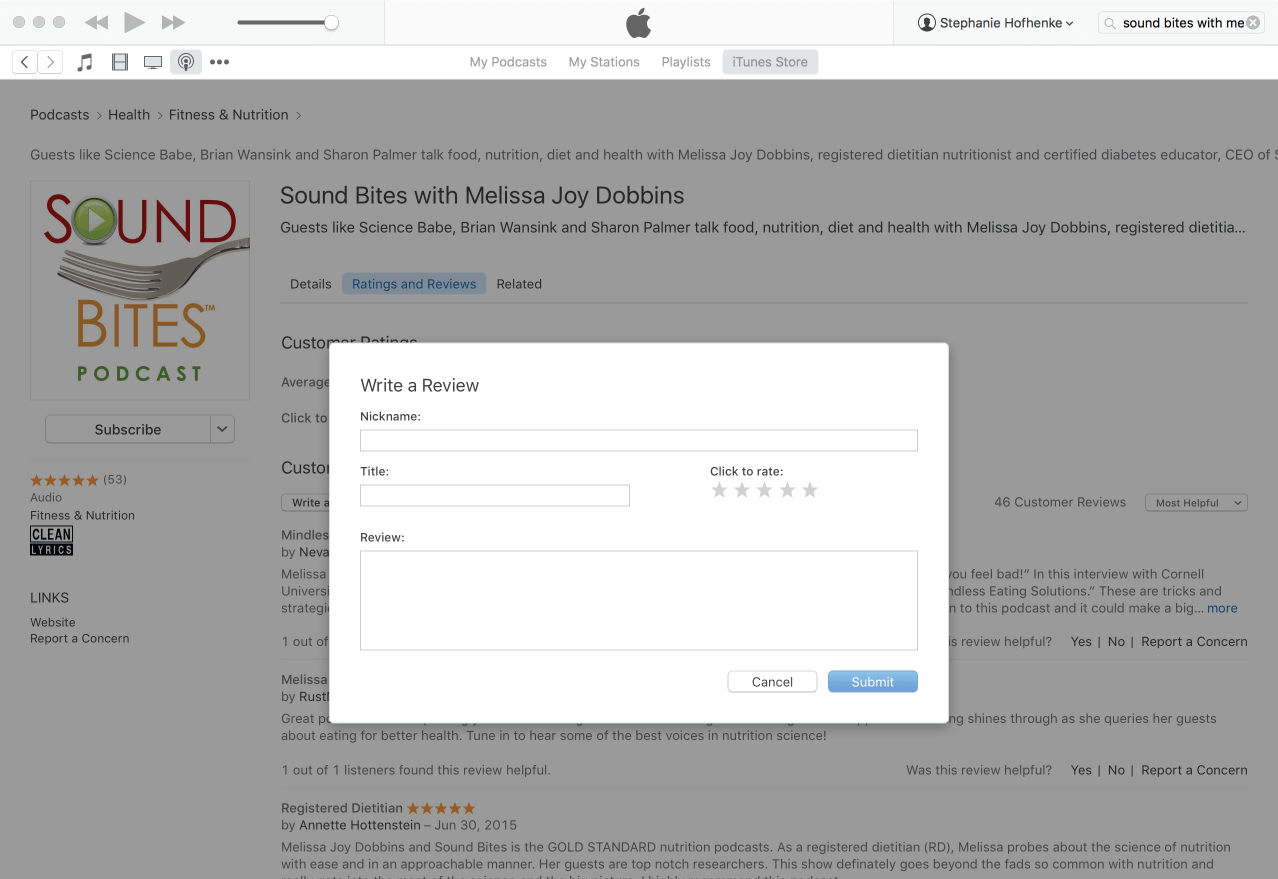
Write a Review
Click “Reviews”, then “Write a Review”.
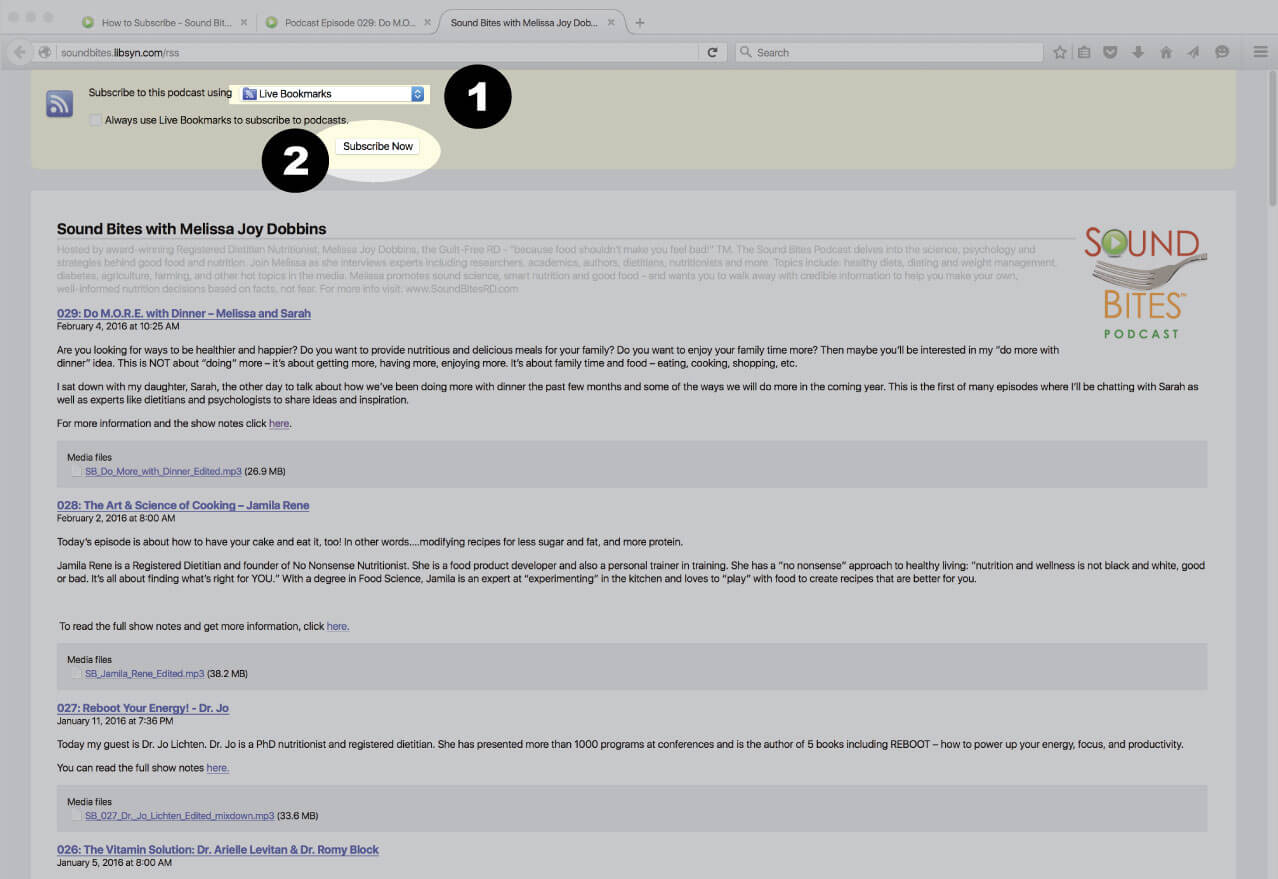
Subscribe via RSS Feed
Navigate to any podcast player . Click on the RSS feed icon.
Click on the RSS feed icon.
Click on RSS Feed
Choose which application you would like to use to receive the RSS feed
Click “Subscribe Now”
Confirm settings and subscribe.
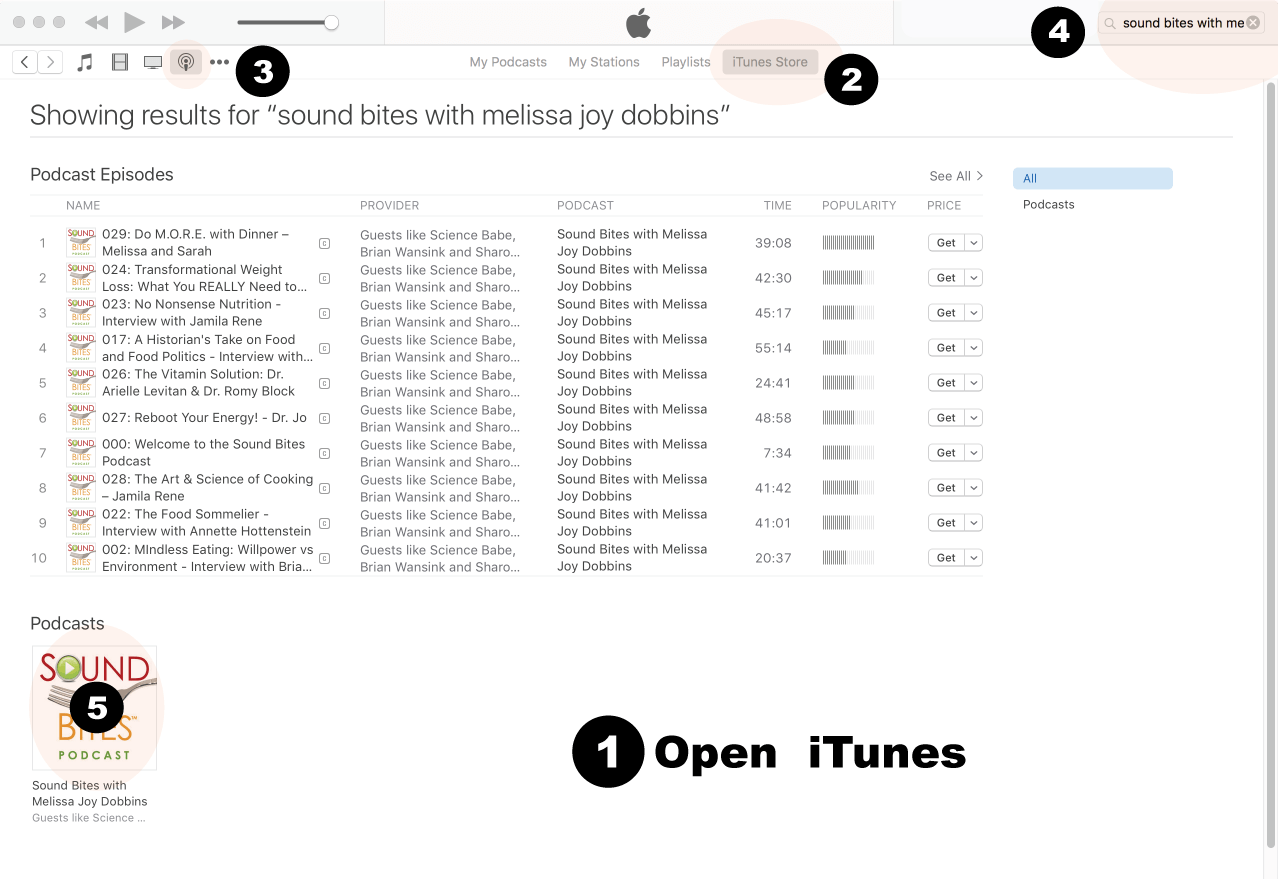
How to Review in iTunes
Open iTunes desktop application
Click iTunes Store
Click on Podcasts
Search for “Sound bites with Melissa Joy Dobbins”
Click on podcast image
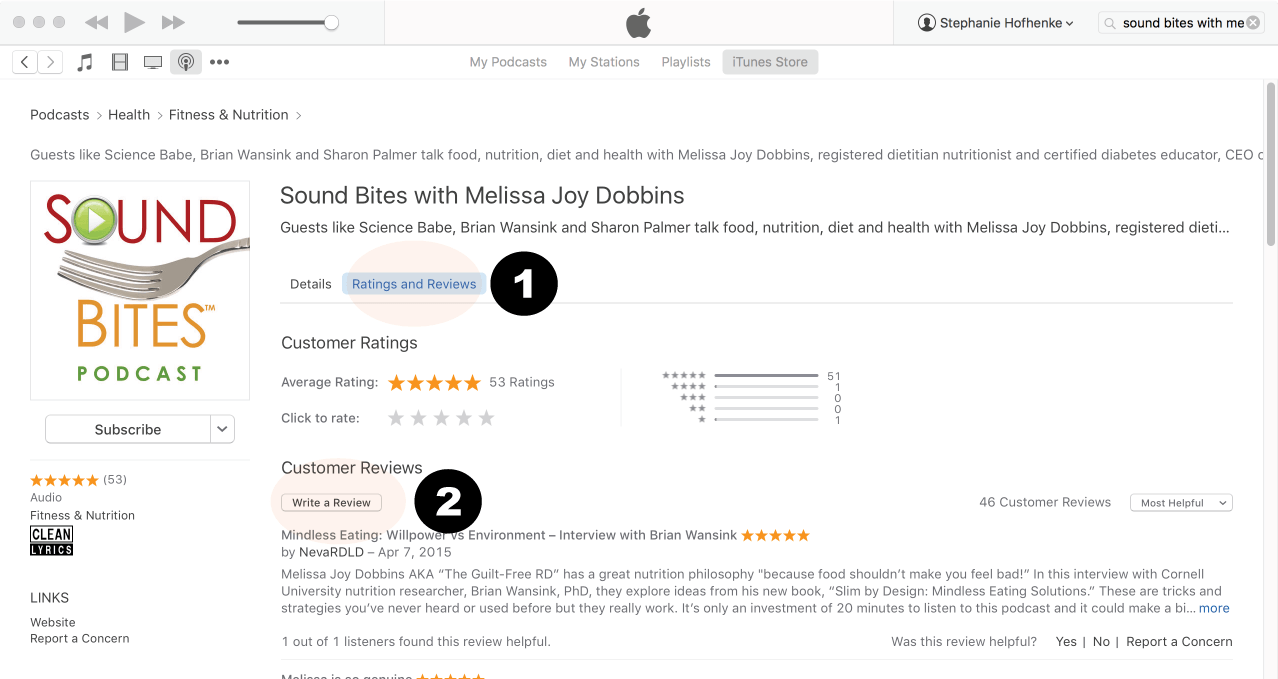
Search for Sound Bites podcast in iTunes
Click Ratings & Reivews
Click Write a Review
View reviews and write your own review.
Write your review…. Thank you!
Write your review!
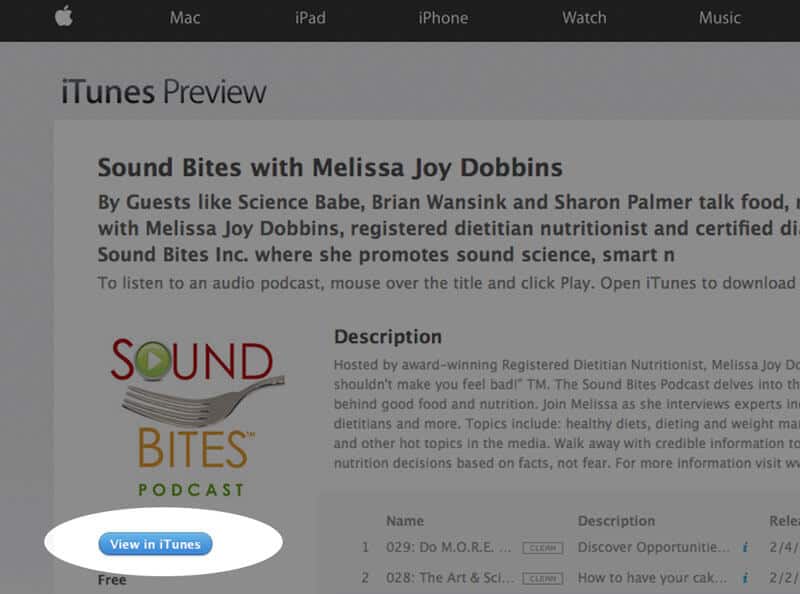
How to subscribe via iTunes
Click here to view the Sound Bites Podcastin iTunes, then click the blue “View in iTunes” button. This will open your iTunes application directly to Sound Bites Podcast. Click the “Subscribe” button, and your done!




 Lucy Woods is a seasoned marketing research professional with over 15 years of experience translating consumer insights into strategic growth. She holds a Master’s in Marketing and a Bachelor’s in Anthropology, and has led research initiatives for iconic brands including McDonald’s, YUM!, Nature Valley, and Cheerios. Lucy began her career as a Field Ethnographer and went on to hold key roles at General Mills before joining Cargill, where she now leads insights for the Protein North America foodservice division.