Celebrating over 1 Million Downloads and 50,000 Free CEUs on the Sound Bites® Podcast | NEW: Get 1 years’ worth of CEUs with the new 15-CEU Podcast Course
Federal Nutrition Assistance Programs: Evidence of Impact, Policy Shifts & The Path Forward
Federal nutrition programs impact the lives of tens of millions of Americans each year, yet they are often misunderstood, politicized, or reduced to headlines without context. This episode unpacks what federal nutrition assistance programs actually do, why they matter for public health and equity, and how recent policy shifts – including major changes to SNAP and the release of the new Dietary Guidelines for Americans – are reshaping the nutrition safety net.
This conversation cuts through myths and confusion to explore how nutrition policy plays out in real life, for real people. We dig into the science, the policy decisions, and the downstream health implications, along with what health professionals and the public can do moving forward.
Tune in to this episode to learn about:
An overview of federal nutrition assistance programs and who they serve
Why nearly 1 in 4 Americans rely on these programs each year
The evolution from “food insecurity” to the broader concept of “nutrition security”
How and why the nutrition safety net expanded under the previous administration
The steepest rollback of nutrition assistance in decades during the first year of the current administration
Why lack of high-quality, timely data makes evaluating nutrition policy impacts so difficult
A deep dive into SNAP, the largest federal nutrition assistance program
Common myths about SNAP—and what the evidence actually shows
Who uses SNAP, what benefits can be used for, and how rare fraud really is
How H.R.1 changes SNAP and what those cuts could mean for health and wellbeing
Why choice matters in food assistance—and how SNAP differs from WIC
The elimination of SNAP-Ed and why nutrition education matters
The Thrifty Food Plan and how it determines benefit levels
The role of school meals, including how many children rely on them and why they are critical
A brief look at WIC and SUN Bucks
How the newly released Dietary Guidelines for Americans shape federal nutrition programs
Why the DGAs are the foundation for school meals and other programs
Key takeaways from the new guidelines
What comes next: the public health implications of current policy changes
Practical calls to action for registered dietitians, nutrition professionals, and the general public
Resources for health professionals and the public
Sara Bleich, PhD
Dr. Sara Bleich is the inaugural Vice Provost for Special Projects at Harvard University, Professor of Public Health Policy at the Harvard T.H. Chan School of Public Health, and a faculty member at the Harvard Kennedy School of Government. With more than 190 peer-reviewed publications, she is a policy expert and researcher who specializes in diet-related diseases, food insecurity, and racial inequality. Prior to this, Dr. Bleich served in the Biden Administration as the Director of Nutrition Security and Health Equity at the U.S. Department of Agriculture’s (USDA) Food and Nutrition Service and as the Senior Advisor for COVID-19 in the Office of the Secretary at USDA. As a White House Fellow during the Obama Administration, she worked at USDA as a Senior Policy Adviser for Food, Nutrition and Consumer Services and on First Lady Michelle Obama’s Let’s Move! initiative. Dr. Bleich was elected to the National Academy of Medicine in 2023 and the American Academy of Arts and Sciences in 2025. She holds a B.A. in psychology from Columbia University and a PhD in health policy from Harvard University.
Federal nutrition assistance programs help real people, in the real world, in real ways.” – Dr. Sara Bleich
Resources
Some links may be affiliate links. As an Amazon Associate, I earn from qualifying purchases.
Welcome to Sound Bites, hosted by registered dietitian nutritionist, Melissa Joy Dobbins. Let’s delve into the science, the psychology, and the strategies behind good food and nutrition.
Melissa Joy (00:56):
Hello, and welcome to the Sound Bites Podcast. Today’s episode is about federal nutrition assistance programs. We will address the confusion and myths around these programs, specific details about how they work, and why they work, as well as many of the big changes going on with these programs currently, including how the new Dietary Guidelines for Americans might impact them.
This episode is not sponsored.
By the way, do me a quick favor and click follow on any podcast app that you’re listening to or if you’re watching this, this should be a video episode as well today. That’s the best way that you can support the show and always get notified of new episodes.
My guest today is Sara Bleich. Sara is Professor of Public Health Policy at the Harvard T.H. Chan School of Public Health, and a faculty member at the Harvard Kennedy School of Government. She is a policy expert and researcher who specializes in diet-related diseases, food insecurity, and racial inequality, and she has more than 190 peer-reviewed publications to her credit.
Welcome to the show, Sara.
Sara Bleich (02:03):
Thank you for having me.
Melissa Joy (02:05):
Please share a little bit more about your background with our listeners, especially related to today’s topic, and if you have any disclosures to note.
Sara Bleich (02:13):
Absolutely. So, I had spent roughly two decades doing food nutrition policy research in academic settings, but I’ve had the opportunity to do two tours of duty in the federal government, both times at the US Department of Agriculture, first with the Obama administration and then with the Biden administration.
But the thing that really draws me to the federal nutrition assistance programs, which I’ve spent a lot of time studying and working on as an academic and as a policy person, is that I’m a personal connection to those programs.
So, growing up, my family received food stamps for a period, now, it’s obviously called SNAP. My brother, my twin sister and I were also on the school meals program, and then as a family, we also received WIC for a period.
Melissa Joy (02:57):
Wonderful. And I guess I should have referred to as Dr. Bleich because you have a PhD. Tell us a little bit about what your PhD is in.
Sara Bleich (03:05):
My PhD is in health policy, and I had a particular focus on political analysis.
Melissa Joy (03:10):
Wonderful. So, I had the pleasure of seeing you present at a virtual conference recently, and I am just so excited to share your knowledge with my listeners. I too was on food stamps when I was little, and I’m pretty sure that WIC came out later than when my mom and my family would’ve been able to receive it. So, it’s also a topic that’s near and dear to my heart.
And as dietitians, I think a lot of us are very supportive of these nutrition assistance programs. But I still think even health professionals sometimes don’t really understand all the nuances of these programs.
And I learned so much from your presentation, and my audience is a mixture of health professionals, dietitians, and the general public, but let’s just dive into maybe starting off with just an overview of the federal nutrition assistance programs that exist.
Sara Bleich (04:09):
It’s a great question and it’s a good one because it’s such a big, broad space. So, of the federal nutrition assistance programs, they’re actually a suite of 16 of them, all of which are administered by the US Department of Agriculture.
And together, those 16 programs serve one and four Americans over the course of a year. So, very, very broad reached. The largest of the programs is SNAP (the Supplemental Nutrition Assistance Program), and that serves over 41 million Americans each month.
And then two other large ones are school meals, which serves about 30 million kids each day, and then the special supplemental nutrition program for Women, Infant and Children or WIC, which serves about 6.7 million participants each month, including about 41% of all US infants.
And so, what these programs aim to do, if you look at them collectively, is they’re trying to provide children and income eligible people with access to safe, nutritious and equitable food along with nutrition education and other resources to encourage healthy eating.
And if you look at the entirety of USDA, these 16 programs represent about 70% of the total USDA budget.
Melissa Joy (05:19):
Is there anything that you want to address about the state of these programs right now to kind of get us started on some of the big changes going on?
Sara Bleich (05:28):
Yeah, so one of the most significant things that has happened is the changes through something called H.R.1 or the Big Beautiful Bill Act, which I think you guys have recently talked about. And so, that touches many, many parts of the safety net, but within the nutrition programs, the federal nutrition assistance programs, SNAP is being impacted the most.
And so, what it’s doing is it’s making major structural shifts to the SNAP program, and there are four really big ones that you should have on your radar. And the way you should think about all these changes together is that they are going to mean that millions of people lose all or most of their benefits through the SNAP program.
And so, going through the list of those four things, the first is that the law reduces SNAP spending by about $186 billion through 2034. That is a 20% cut, and the largest in reduction in the history of the program.
It also requires that something called the Thrifty Food Plan, which is the thing that determines the size of the SNAP benefit, it determines that that be held cost neutral. What that means in practice is it keeps SNAP from staying paced with food costs and updated dietary guidelines. So, that’s the first thing.
The second thing is that H.R.1 imposes stricter time limits, and these have already gone into place. So, beginning November 1st, 2025, they’re expanded time limits which require adults to work at least 80 hours per month or they face a three-month time limit within every three years.
So, these will newly apply to adults between the ages of 55 to 64 who don’t have dependents, parents of children ages 14 or older, and then groups that were previously exempt. So, veterans, people experiencing homelessness, youth aging out of foster care. But if you think about this practically, so what does it actually mean if you’re subject to these time limits?
So, if you’re a single mom with a 15-year-old child and you’re working part-time so you can take care of your child and you don’t meet the work requirement, you will lose eligibility. And that would mean that your monthly food assistance from SNAP would go from $546 a month to $298 per month.
The third big thing that’s happening through H.R.1 is that costs are shifting over to states. So, beginning in fiscal year 2027, states have to pay 75% of administrative costs. Previously, it’s been a 50/50 split between the state and the federal government.
And then starting in fiscal year ‘28, for the very first time, states will have to pay a share of benefits, and that will range from 5% to 15% based on the payment error rate of the state. That’s referring to by how much does the state under or overpay SNAP participants with their benefit. And so, what that means is that states that have these higher error rates could face hundreds of millions of dollars in unplanned costs.
So, if you take for example, North Carolina and FY ‘24, their error rate was 10%. The state received $2.9 billion in annual SNAP benefits. Based on the shifting of cost to states, that would translate into North Carolina owing about $440 million. So, we’re talking about very big impacts on states.
And then the final thing, which is going to be really relevant to many of you that are listening, is that H.R.1 eliminated funding for SNAP education, which is the nation’s largest federal nutrition education program and supports, as you well know, it supports the SNAP eligible households to learn how to eat well on a limited budget.
Melissa Joy (09:05):
Yes, major changes. And that’s a lot of numbers. We are going to address some really common widespread myths about SNAP because I think even in my circles sometimes, I feel like I’m defending some of these, and I think it’s really important to clear those up, and we’re going to also address school meals.
But just before we move any further, I do think it’s important to address how prevalent is food insecurity? In other words, how important are these programs?
Sara Bleich (09:40):
Food insecurity is incredibly important. So, food insecurity is defined as a household level economic or social condition of limited or uncertain access to adequate food.
So, basically, means you can’t get food all the times that you need. And if you have food insecurity, it’s associated with all sorts of things that are not good for you, like heart disease, obesity, type 2 diabetes, hypertension. It can even increase the risk of birth defects of cognitive problems, and even mental illness.
So, the latest data that we have on the prevalence of food insecurity in the country was released in January 2025, and that tells us about food insecurity in 2023. And what it found is that 18 million households or 13.5% experienced food insecurity, which is higher than the prior year.
Now, the report also breaks down various groups, and it found that 14.1 million children live in food insecure households, and that black and Hispanic households have about double the rate of food insecurity compared to white households.
And then a final thing with respect to geography that the report teaches us, is that households in the South, so Arkansas, Kentucky, Louisiana — they report having the highest rates of food insecurity.
Melissa Joy (10:56):
And I know people are pretty familiar with the term food insecurity, but there’s another term, “nutrition security.” So, if you could address that and explain that as well.
Sara Bleich (11:05):
So, nutrition security is a relatively new concept, at least with respect to the federal government using it. And so, for decades, USDA has used this term food insecurity and has tracked that for households. As one of the things that changed in the Biden Administration, USDA had a very strong interest in prioritizing nutrition security alongside food insecurity.
And what nutrition security means is consistent and equitable access to health, safe, affordable foods that are essential to optimal health and wellbeing. And the easiest way to think about it is nutrition security is sort of saying, “We want all the food that you have in your fridge to not just be available, but to also be healthy and good for long-term wellbeing.”
And why is it so important that we additionally widen the aperture to focus on nutrition security? Well, we know that diet related conditions are a leading cause of both death and disability in the US. We know that poor nutrition, when you sort of put health aside, poor nutrition is associated with things like decreased academic achievement, increased financial stress, and it’s expensive to have suboptimal eating. It costs the economy over a trillion dollars each year.
Melissa Joy (12:18):
Yes. Thank you for touching on that. Let’s get into some of the widespread myths about SNAP. I have a whole list here, but what do you think the biggest myths are? Because we can’t address all of them today with everything that we want to talk about, but what do you think needs to be addressed most that you’re hearing?
Sara Bleich (12:38):
What I often hear in terms of common misconceptions about SNAP are that the program is only for families, that recipients don’t work, that the program is full of fraud, and that benefits are unlimited or awarded in very lavish amounts. So, what’s the reality?
The reality is that SNAP is available to a wide range of individuals who have low income, most people who can work and receive SNAP benefits do work. And that’s true not just in SNAP, but across other means tested programs. Fraud in SNAP is very rare, and in fact, it’s low relative to other federal safety net programs.
And then finally, the benefits for SNAP are intended by design to be supplemental, and to help meet basic needs. In fact, one analysis found that SNAP benefits do not cover the cost of a modest meal in 99% of US counties.
And so, when you put aside the myths and what the realities are, it’s also important to look at what do we actually know about how effective SNAP is? We know from mountains of evidence over several decades that SNAP helps to stabilize the economy, it helps to lift families out of poverty, it helps to reduce food insecurity and improve health and wellbeing.
It also helps to reduce healthcare costs since SNAP participants typically spend about $1,400 less per year on their health than similar participants who were not in SNAP.
Melissa Joy (14:06):
Okay, thank you. Yes, and I said I have a list here, and so I’m going to just add on to what you’re saying. Most (and you can correct me if any of this is wrong) SNAP recipients are employed in low-wage jobs, their children or seniors or have disabilities preventing work, only a small portion are not expected to work.
And you mentioned the rate of fraud, it’s very, very low, and I have here that it’s far lower than tax evasion. So that’s another thing. And you’ve explained some of the economics as well. And to me, I’m always thinking like, we want not just well-fed, but well-nourished people so that we can have the children are learning and they’re growing into productive adults and have a productive society.
Are there any other myths or benefits that you wanted to address before I move on to my next question?
Sara Bleich (15:04):
Yeah, I think it’s important for listeners to understand a little bit how SNAP is designed and why that design has allowed it to be so effective, particularly in moments where the country is in a crisis.
So, the program is designed to be countercyclical. And so, what that means is that when the economy is doing poorly, SNAP is designed to grow in size in terms of participation, and when the economy is doing well, then participation begins to shrink.
And so, if you look at some of the major shocks that we’ve had to the United States in the past 15 years or so, one is the Great Recession, another is COVID. And in both those instances, we saw the size of the SNAP program change significantly.
And if you look at the Great Recession as a specific example, in 2012, more than 46 million people received SNAP benefits. That is a 76% increase in participation over the beginning of the recession, which was in 2007. That is what the program was designed to do. It was at a high watermark of 46 million people. Now, it has come back down to about 41 million people, and that’s very, very intentional.
The other thing I’ll just say is SNAP is available to house/homes that have low income and who meet the eligibility criteria. And the income threshold is important to understand. So, for a family of four, based on the 2026 federal poverty guidelines, we’re talking about $27,320 annually or less. So, these are families which don’t have a huge amount of resources, which makes the SNAP benefits so important to their daily wellbeing.
Melissa Joy (16:42):
Yes, absolutely. And I definitely want to talk a little bit more about SNAP Ed being eliminated. But before that, I hear a lot of people say, “Well, what people spend their snap dollars on, it’s not that nutritious.” And maybe this ties into the whole SNAP Ed conversation, and they shouldn’t be able to just buy whatever.
But it’s not WIC, (Women, Infants, and Children) there’s different rules. I have some thoughts on that but I would love to hear your expert insight on how do we address those concerns that people have about how SNAP dollars are being spent.
Sara Bleich (17:17):
So, let’s first just take one step back and think about how you’re able to spend SNAP benefits. So, for the roughly 41 million people that receive benefits each month, those are loaded onto basically an EBT card, which looks like a debit card.
You can use that card at roughly 250,000 authorized retailers around the country. And when you use that card at those stores, you can purchase almost anything in the store except for hot prepared food, things like toilet paper, and alcohol. So, pretty much the entire store is open to you as a consumer.
And so, if you then do a study and you say, “What do SNAP purchases look like relative to people that are not on SNAP?” What you generally find is that as a country, we tend to follow not great diets. And so, you’ll see baskets that don’t look great whether or not someone participates in SNAP.
One benefit that people in SNAP have is that they, until recently, had access to SNAP education, which helps you think in very concrete ways, how do I afford healthy food on a limited budget? But as I mentioned, the dollars for that program, SNAP Education, are being bottomed out as part of the One Big Beautiful Bill Act.
Now, there’s a lot of things that can happen to help push people in SNAP towards purchasing healthy foods. There were a number of steps that were taken in the Biden administration. So, just to give you an example, the access to online retailers, the ability to use SNAP benefits with online retailers increased considerably in terms of the number of retailers and the number of states where that was possible.
And what that means is that if you live in a part of the country where the stores around you don’t have a lot of great options when it comes to say fresh produce or other healthy things, then online becomes a very good option for you and your family.
But there are a number of things that can help support people making healthy choices but it has been since the origin of the program, really important that individuals who receive SNAP be able to do so with dignity. There certainly have been debates about whether or not it makes sense to restrict the benefits.
But so far, the decision has been apart from the recent pilots around restricting soda and candy or sugary beverages and candy in certain places around the country, generally, the feeling has been not to be paternalistic with the benefits, to allow people to spend the money in ways that make sense for their family.
So, the other part of your question was around, well, how does this relate to the WIC program? So, the WIC program is very different in that it is really a public health program. In fact, it is probably the strongest public health program run by the federal government, and is designed to create packages of food for people based on their clinical profile.
So, if I’m a lactating mom or a non-lactating mom or a child under five or an infant, the packages are designed to meet my nutritional needs. And it’s a much smaller program. It’s serving not quite 7 million individuals, whereas SNAP is much bigger. So, each one of the 16 programs that make up the suite, each of them is really designed to meet a different need, and SNAP is really our frontline defense against hunger for the entire country.
Melissa Joy (20:25):
Yes, thank you. And SNAP Ed also was designed to help people know how to cook properly or not even just properly, just know how to cook, have some cooking skills. And that’s really important when it comes to preparing healthy meals at home, and there’s just a lot wrapped up with that. Yes, and there’s a lot of social science out there about the dignity aspect that you said.
And I think I said this on the last episode or a recent episode, there’s a study that talked about parents who cannot afford ballet lessons and baseball sometimes resort to giving their children a candy bar or some sort of a treat, and that should be okay. So, thank you for helping me address that.
You mentioned the Thrifty Food Plan, can you say more about that because I’m still not quite sure I understand it and I’m a dietitian (laughs)?
Sara Bleich (21:24):
So, the best way to think about it is it’s basically a calculator. It’s a calculator which says what are the inputs that are used to design the size of the SNAP benefit? One of the things that happened during the Biden administration is that the Thrifty Fluid Plan, which is updated or reevaluated on a regular cadence, it was reevaluated and it wasn’t held cost neutral.
And as a result, as they were doing the analysis at USDA and considering the price of different baskets of food, the overall size of the SNAP program increased by 21% or $36 per person per month. Because basically, the Thrifty Food Plan is looking at what is the cost of an inexpensive diet over time.
And so, when you take all the factors into consideration, that is determining, in the case of SNAP, the size of the benefit. So, it serves a really important function, and it’s worth underscoring (and I’ve said this once) that as a result of H.R.1, the One Big Beautiful Bill Act, the future updates to the Thrifty Food Plan have to be held cost neutral.
And so, what that means is immediately, it’s going to be hard for SNAP to keep pace with food costs, and then the ability to update around the dietary guidelines, it also means that over time, the value of the SNAP benefit potentially goes down as food continues to increase and increase in price.
Melissa Joy (22:41):
Yes. Before I transition to school meals, you shared some numbers in the presentation that I saw, and that I would love for you to share with our listeners here. Everybody knows cost of food has gone up, but can you put some numbers to that, like since COVID where we are now. I don’t remember the specific numbers that you shared.
Sara Bleich (23:02):
So, the cost of food has gone up by 30%. And if you just think about when you go to the grocery store, and I think about this all the time, I’m like, “How can meat be so expensive? How can a bag of pretzels be so expensive?” And if you are on a limited food budget, you are being forced to make trade-offs based on how much food baskets have gone up over the past three years or so.
I also just want to underscore before we turn to the dietary guidelines, that these changes that are happening through H.R.1 are really going to be significant for the families that you serve or for anyone who is going to be falling off or losing benefits through the SNAP program.
And so, what does that mean practically? It means that food insecurity is going to go up, it means that the already wide disparities in food insecurity that we know exists, for example, by race, by geography, those are going to go up.
But it’s also important to understand, we’ve talked a little bit about that there’s this overall suite of nutrition assistance programs, and as a result of there being multiple programs for which many families qualify for more than one, if a family loses their SNAP benefits, that can also disrupt their access to other programs in the federal nutrition safety net, such as school meals, such as the newest nutrition assistance program known as SUN Bucks, and that’s money for children who are eligible to buy food during the summer months.
It can also disrupt access to WIC or Head Start, and that’s because children in SNAP households are automatically qualifying or they can use a streamlined application process for enrollment. And then the other thing that’s really worth underscoring in terms of just the collateral effects is H.R.1 also makes significant cuts to Medicaid.
So, it’s a trillion dollars over the next 10 years, and that’s expected to increase the number of uninsured Americans by about 10 million over the next decade. Now, most SNAP participants are also enrolled in Medicaid, so if you’re losing your health insurance, that can also trigger the loss of your SNAP benefits for many of the same folks.
And then one thing that’s going to make it very hard for us as nutrition community, as a policy community, to understand what effects this H.R.1 having over time is that USDA has discontinued the household food security report.
And so, after the version that just came out a month or so ago, we are not going to have a window into how the country is doing when it comes to food insecurity. And what that may mean is that policymakers may instead start to rely on other metrics like program costs or error reads, and that could justify future cuts, future cuts in the future.
So, I would say that the loss of this really important annual data is quite challenging because it makes it very hard then to tell the story of impact and to understand where do you need to really lean in to try to help different groups that are struggling with food insecurity.
Melissa Joy (26:00):
I’m glad you brought that up. How many years have we been collecting this data?
Sara Bleich (26:04):
It’s about 25 years. It’s a very long time.
Melissa Joy (26:07):
And that informs the actions or policies that are recommended and this ripple effect is significant.
Sara Bleich (26:17):
That’s absolutely right, and it made it possible to see pretty clearly when all the different COVID relief packages were being put into place during the Biden administration, it made it pretty easy to see, okay, this is how those programs were able to make a difference because you can look at them against where your food insecurity rates are at.
Melissa Joy (26:35):
Let’s address school meals. How many children participate in this? I think you mentioned, but please repeat that, and the importance of school meals.
Sara Bleich (26:45):
Yeah, 30 million each day. So, it’s a lot of kiddos. And one of the reasons why school meals are so important is that for children — not just children that have low income, but for children in general, it is the healthiest meal that most children receive on a typical day. And so, one thing we’ve seen is that there have been efforts around the country to offer healthy meals for all school children in a given state.
So, I live in Massachusetts and healthy school meals are offered for all children here. It’s also been passed in California and a number of other states. There is an effort in the last administration to try to do this federally, but that hasn’t happened yet.
But bottom line is that the program is serving millions of children every day, that it’s providing them with healthy meals, and those meals are aligned with the dietary guidelines. And one of the things that happened in the last administration is that the school meals standards were strengthened and for example, sugar for the first time was included in those new guidelines.
Melissa Joy (27:41):
Yes. And well, you were going to help us detail out or detail it out for us some of these changes and I just wanted to add, for some children, many children, it’s not only the healthiest meal, which school meals get so criticized about not being healthy, it’s so misunderstood. We can clear some of that up.
But for some children, many children, it’s not only the healthiest meal, it may be their only meal for the day. We know the statistics and the data on well-nourished brain and learning, so that’s undebatable.
So, the new dietary guidelines came out January 7th, they are the cornerstone and foundation for federal nutrition assistance programs. Not so much SNAP, maybe you can address that, but definitely school meals. So, talk to me about some of the specific changes and how this might impact or will impact school meals.
Sara Bleich (28:38):
And before I get there, let me just take a step back for listeners and just underscore some of the big significant process changes that happen with this edition, which is the 10th edition, and why that matters a lot for the recommendations.
So, typically, the way the dietary guidelines work is they are done every five years jointly by the US Department of Agriculture and then Health and Human Services. And then over that five-year period, there is a scientific report that’s created by the Dietary Guidelines Advisory Committee, and then basically, the leadership at USD and HHS take that scientific report and they translate it into practical guidance.
And that has been the process that’s been followed over many, many cycles and over time, the National Academy of Sciences, Engineering and Medicine has made the process even stronger. What’s different in this cycle is that the recommendations, which we’ll talk about in a second, they largely disregard the 2025 scientific report of the Dietary Guidelines Advisory Committee.
And instead, they draw on a separate document, which was released alongside the new dietary guidelines for ‘25-2030 and it’s called the Scientific Foundation for the Dietary Guidelines. And so, as a result that there’s now this new document that’s being used, some of the recommendations in this latest 10th edition are grounded in science and some are not.
So, what are the ones that are grounded in science? Well, this will not come as a surprise to all of you: eat more fruits and vegetables, avoid or sharply limit added sugars, limit highly processed foods such as chips and cookies. So, all of that is science-based.
But there are several recommendations in there that lack a clear scientific foundation. So, this includes a call for a near doubling of protein intake, and that is a recommendation that’s been around for decades, a second is a softening of alcohol guided.
So, you probably recall that for a very long time, it’s been one drink per day for women and two drinks for men, and now it says, “Less alcohol for better overall health.” And then the third, which is the most controversial is encouraging greater consumption of animal source foods and full fat dairy. So, think beef and whole milk.
And this one’s controversial because it runs counter to decades of evidence that links saturated fat intake to increase risk of heart disease, and research that associates red meat consumption with higher risks of things like colon cancer, heart disease, diabetes, and then the environmental harm with creating all that red meat.
Now, one thing it’s important to understand is that the new guidelines, they retain the prior recommendation, which is to limit saturated fat to no more than 10% of daily calories. But this is hard to follow given this heavy emphasis on animal products.
So, a single meal with a small steak, a pad of butter and a glass of milk could easily exceed the 10% threshold, and the guidelines are encouraging protein consumption at every single meal. Now, let me just say one more thing, which makes this new set of guidelines challenging, and that’s the food pyramid that came out at the same time, and that’s really the consumer translation of the DGAs.
So, for the past 15 years, as you all well know, MyPlate has served as the tool to translate the complex scientific recommendations into very simple, actionable visual guides for everyday eating. It’s been tested, it’s used by thousands of registered dietitian nutritionists, community partners, strategic partners. It’s a very widely used tool.
The new food pyramid which just came out, and it’s intended to replace MyPlate, it hasn’t been consumer tested, and it introduces conflicting signals. So, it basically, if you’ve probably seen it, it inverts the original pyramid.
It emphasizes animal protein over plant-based protein, and it does this by putting beef and whole fat dairy right at the top, which implies eat most, and then greens are at this narrow bottom, which implies eat least.
I would say that the visual also does a poor job of balancing the promotion of animal protein and full fat dairy with that recommendation to limit saturated fats no longer 10% per day. And so, that’s likely going to lead to confusion among consumers about what actually is a healthy diet.
And then finally, I just want to sort of pull us back to where we started, which is what are the implications for population health as we think about nutrition assistance programs? So, the dietary guidelines inform the Thrifty Food Plan, which we’ve talked about. They are central to the food packages and the nutrition education provided in WIC. School meals have to align with the dietary guidelines.
And then several other federal nutrition assistance programs like the Child and Adult Care Feeding Program, they also rely on food packages that reflect the dietary guidelines. And then if you move outside of USDA, what you find is that the Department of Defense uses the dietary guidelines to shape which food it purchases for its service members, and also for its nutrition education efforts.
So, any weakening of the scientific basis of the dietary guidelines, it really risks compromising the nutritional quality of foods and education that are provided through all these different federal programs and of course, that could potentially have harmful consequences for the populations that rely on them.
Melissa Joy (33:59):
Yes. And for my listeners if you scroll back probably just one episode depending on when this releases, I talk a lot about the new DGAs and the upside-down pyramid, but thank you for sharing all of that.
Kind of tying into how school meals get criticized and yet they’re the healthiest meal that many children will get that day and the standards were strengthened in the last administration, what are some takeaways, specifically how this might impact school nutrition?
Because I think a lot of people who are just kind of looking at the surface are saying, “Well, kids will get less processed food and they’ll get more whole foods.” I mean, I know that school budgets are not large but can you speak to that?
Sara Bleich (34:49):
Well, first off, the devil’s in the details because there’s going to have to be a whole process for updating the school meal standards to make them consistent with the dietary guidelines. And that took several years to do the final rule, and there was an implementation timeline for schools to then make the changes.
And so, it’s unclear to me how quickly schools would be expected to make changes, but the more you compress the timeline for implementation, the more likely it is that it’s harder for schools to comply, it takes additional resources.
So, at this point, it’s unclear how those changes are going to be implemented in practice. But a very significant one certainly is around whole milk dairy which is something that has been pulled out of schools as of now. The guidelines also when it comes to sugar, they are very strict and say no added sugar under the age of 10.
And so, as a mom, as someone who’s trained in public health and really believes strongly about the evidence around the harmful impacts of sugar, it’s just not that realistic necessarily to have an entire diet for children under 10 that has zero added sugar. So, I think this goes into some of the challenging parts of implementing these dietary guidelines in practical, actionable ways.
Melissa Joy (35:59):
And something that you, I believe alluded to that I’ve heard articulated as well is, like you said, the devil’s in the details but some of these details are vague. So, I think that that could impact how schools implement the guidelines if it’s not clear and spelled out as well.
Sara Bleich (36:18):
Yeah, that’s right. And what schools would be relying on is they’d be relying on guidance from the Food Nutrition Service, which is an agency within USDA that administers the school meals program. It would provide guidance that would be implemented by the schools. And so, there’s going to need to be a lot of clarity there to help schools take the right steps forward.
Melissa Joy (36:37):
Okay, thank you. So, where do we go from here? How do we move forward? I know whether the listeners are dietitians or just the general public, people want to do something, people want to know what do I do for myself and my family? Is there something I can do for my community? Please give us some takeaways, some call to action.
Sara Bleich (37:01):
I love this question and I’m glad that there’s so many of you that are probably listening that have backgrounds in health or nutrition because your role is going to be really important because consumer confusion is high, particularly as we think about both all the changes that are happening to SNAP through H.R.1, and the way that the new dietary guidelines have been conceptualized with the new food pyramid, it’s just confusing.
And so, if we think specifically about the guidelines, here’s what you should say if people are asking you; you want to really focus in on what are the evidence-based aspects of the latest guidelines. So, that includes focusing on whole foods while limiting sodium, saturated fat, added sugars and highly processed foods.
And ask the questions, if you come across questions that get pretty weedy, I would really turn to registered dietitian nutritionists and really encourage them to work with you or encourage other practitioners to approach them because they are going to have the expertise that’s needed to basically translate what’s in the recommendations in ways that are evidence-based and protect the public’s health.
Melissa Joy (38:06):
Thank you. Always love the shout out for the dietitians (laughs). In wrapping up, before we find out where people can find out more information and connect with you, we’ve got some resources that I’ll explain that I’m putting in the show notes at soundbitesrd.com. What gives you hope in this moment? What is spurring you forward?
Sara Bleich (38:24):
I’m the first person to say that this is a very challenging moment particularly because I have like you do, a personal connection with many of the programs that we’re talking about. But here’s what does help me jump out of bed in the morning and keep me hopeful for the future.
There is an army of people: policymakers, advocates, researchers, health professionals like yourselves and many others that are doing everything they can in this moment to provide clarity to the public about all the many changes that are happening through H.R.1 and through the dietary guidelines to really proactively help keep all eligible people enrolled in nutrition assistance programs, given the various limits that we talked about.
And then to really push for administrative changes at the state level. That’s going to make it easy for folks to stay on these programs because the biggest time that people roll off the programs is when it’s time for recertification, and there are practical steps that states can take to make that process smoother.
And then the last thing I’ll say, is that one of the ways that you change policy is that you document harm and you document impacts. So, there are lots of efforts right now to really understand what are the effects of the changes that are rolling out through H.R.1, and we can begin to look at what are the effects of the new dietary guidelines and build up this arsenal of information so when there’s an opportunity for a new way of thinking about things, a new type of policy, we will be poised with the right information.
Now, I want to underscore that while this moment does give me hope, I just want to really foot stomp on the point that this is just an incredibly difficult moment for families who have low income. But it does mean that there are a lot of people out there, including me, I’m sure, including many of you who are listening, that are fighting for those families, and I would just encourage you to keep doing that.
Melissa Joy (40:16):
Yes, thank you so much, Sara. Thank you for all the work that you do, and for coming on the show and talking about all of this really important information. I know you’re on LinkedIn and I’ll have the link in my show notes, but are there any other links or resources that you’d like to share?
Sara Bleich (40:33):
I’m a standing contributor at JAMA Health Forum, and every few months have an article come out that typically focuses on nutrition policy, and so, you can keep an eye out for those articles from me.
Melissa Joy (40:43):
Great. And I’ll put a link to that as well, and any other things that we’ve discussed, like the social science article that I talked about in the show notes at soundbitesrd.com. Sara, thank you again. I can’t thank you enough.
Sara Bleich (40:57):
Thank you so much for having me.
Melissa Joy (40:59):
And for everybody listening, as always, enjoy your food with health in mind, until next time.
[Music Playing]
Voiceover (41:05):
For more information, visit soundbitesrd.com. This podcast does not provide medical advice, it is for informational purposes only. Please see a registered dietitian for individualized advice.
Music by Dave Birk, produced by JAG in Detroit Podcasts. Copyright, Sound Bites, Inc. All rights reserved.
LISTEN, LEARN AND EARN
Listen to select Sound Bites Podcasts and earn free CEU credits approved by the Commission on Dietetic Registration (CDR) for registered dietitian nutritionists and dietetic technicians, registered. Get started!
Get Melissa’s Sound Science Toolkit here!
Partnerships:
Sound Bites is partnering with the Association of Diabetes Care and Education Specialists (formerly the American Association of Diabetes Educators)! Stay tuned for updates on the podcast, blog and newsletter!
Sound Bites is partnering with the International Food Information Council! Stay tuned for updates on the podcast, blog and newsletter!
One of the most articulate and detailed description of the SNAP program and the consequences of the Big Ugly Bill. I hope this will be a wake up call for all who think there is nothing we can do..
Sign up for my monthly newsletter and episode eblasts so you never miss an update!
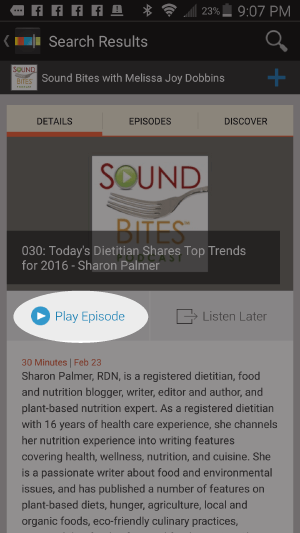
Listen on Stitcher (Android)
Install the Stitcher App
1. Search for “sound bites with melissa joy dobbins” 2. Choose Play Current Episode or Add to Playlist
Choose “Play Episode”
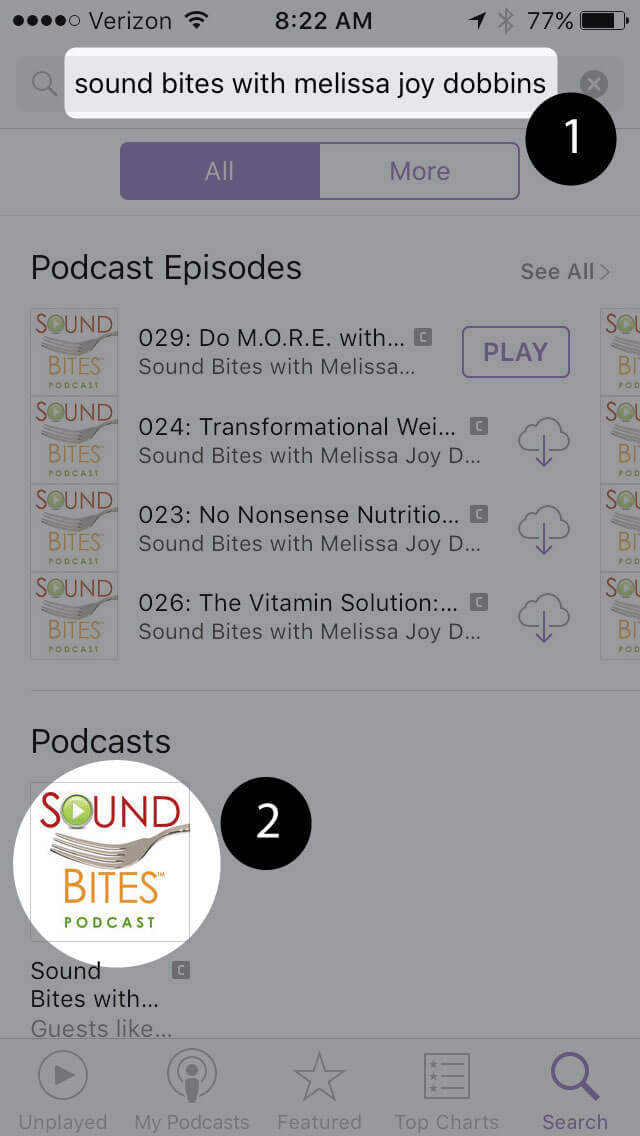
Subscribe & Review on iPhone
Open the “Podcast” app on your iPhone
Search for “Sound bites with melissa joy dobbins”
Open the podcast and click “Subscribe” and your done!
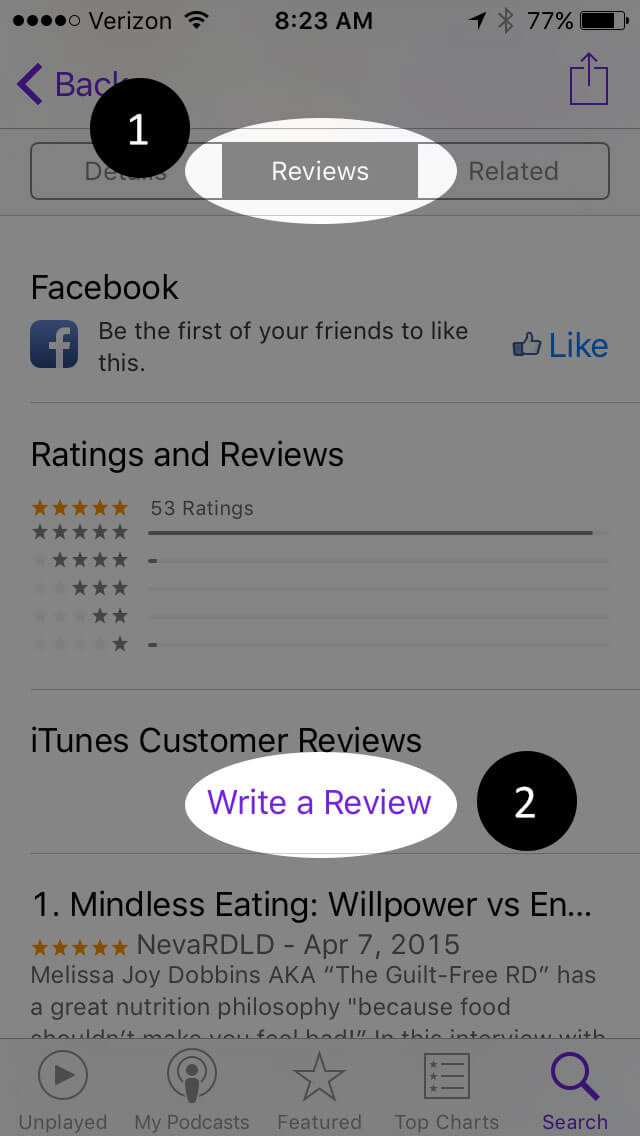
Write a Review
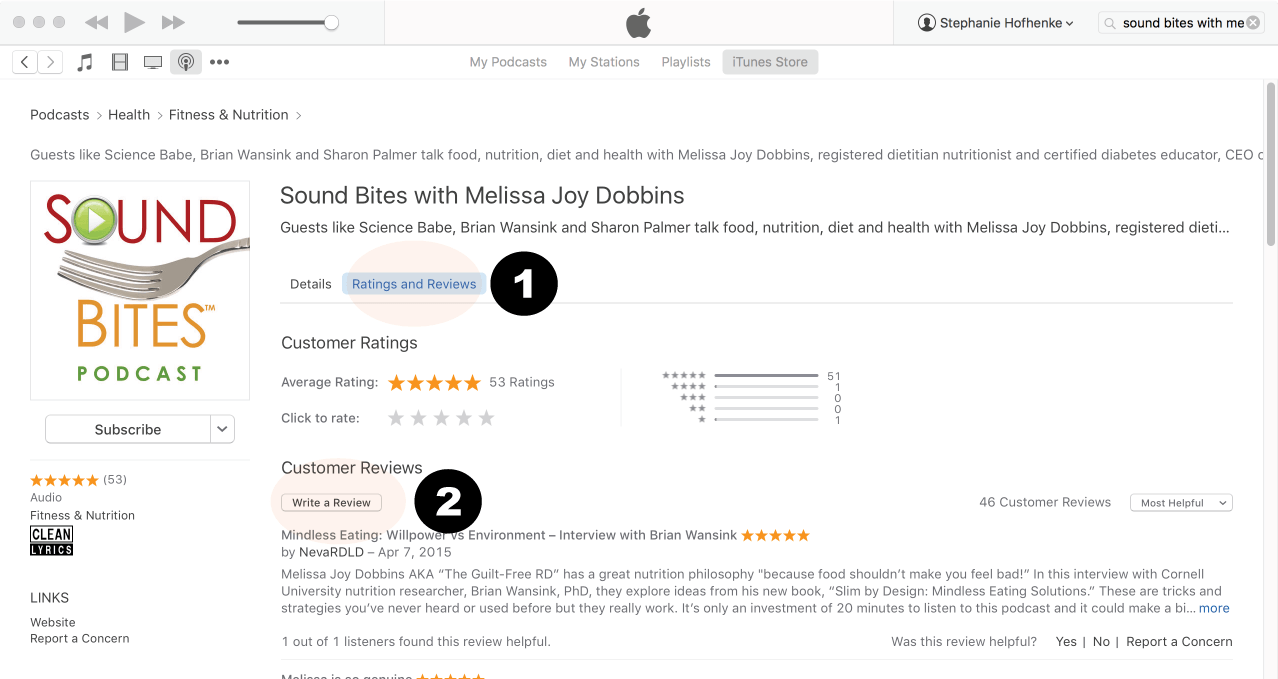
Click “Reviews”, then “Write a Review”.
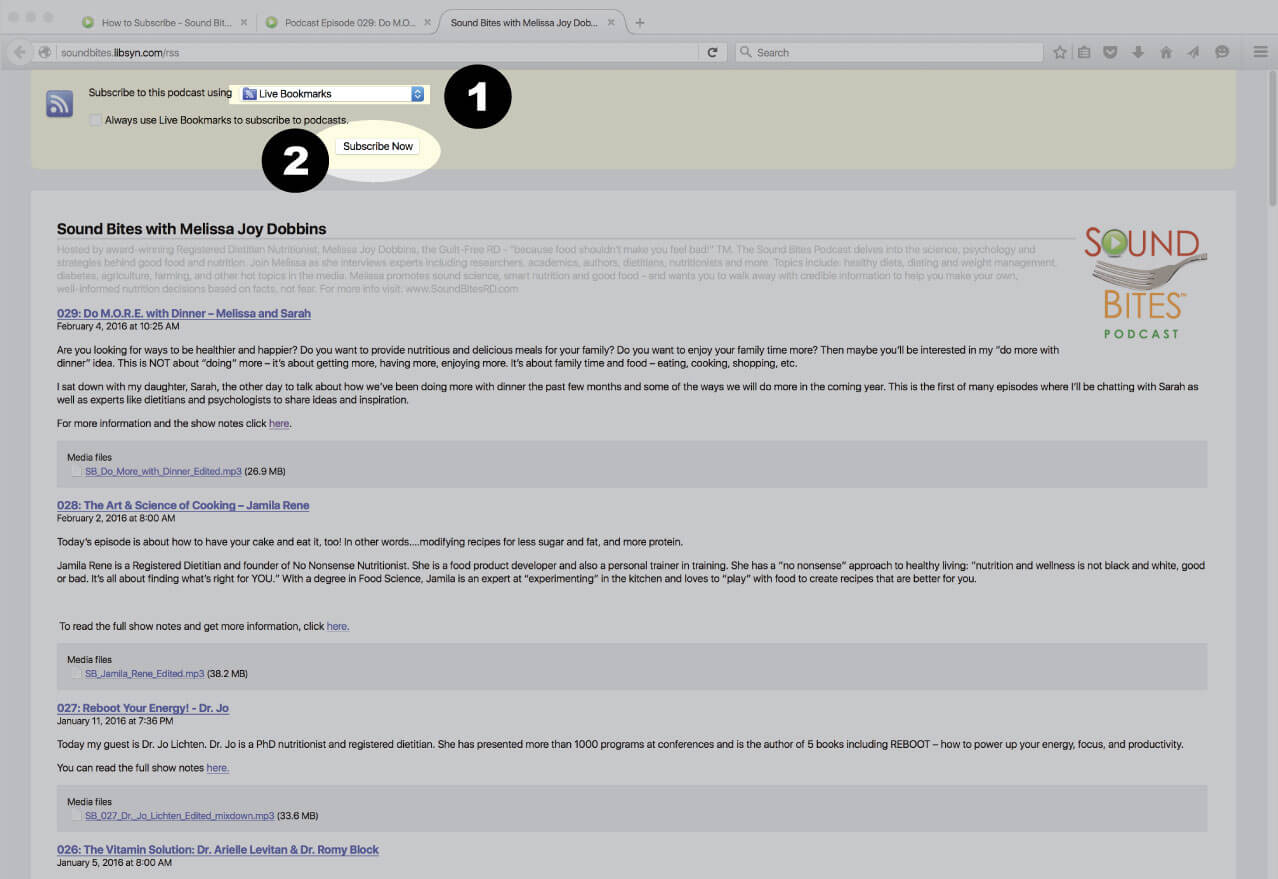
Subscribe via RSS Feed
Navigate to any podcast player . Click on the RSS feed icon.
Click on the RSS feed icon.
Click on RSS Feed
Choose which application you would like to use to receive the RSS feed
Click “Subscribe Now”
Confirm settings and subscribe.
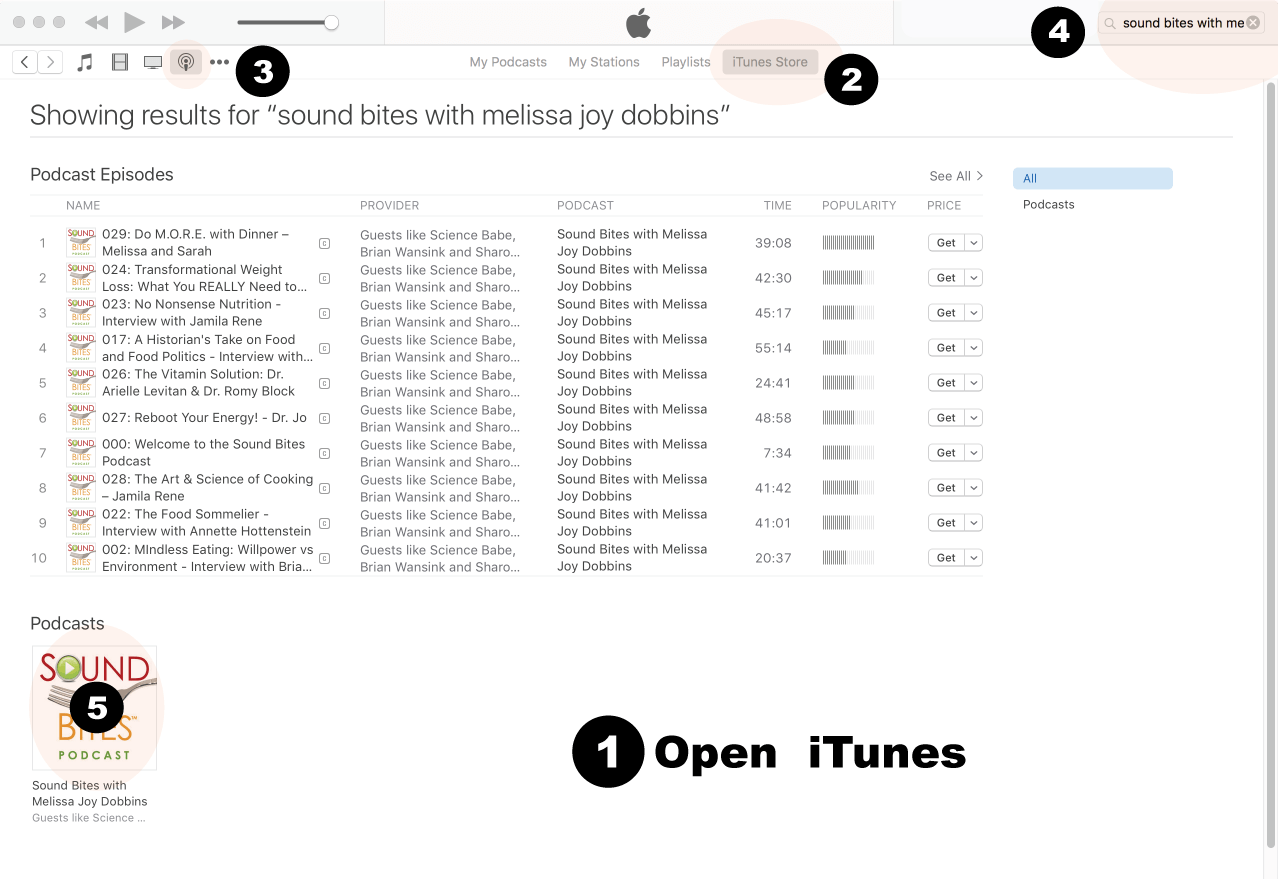
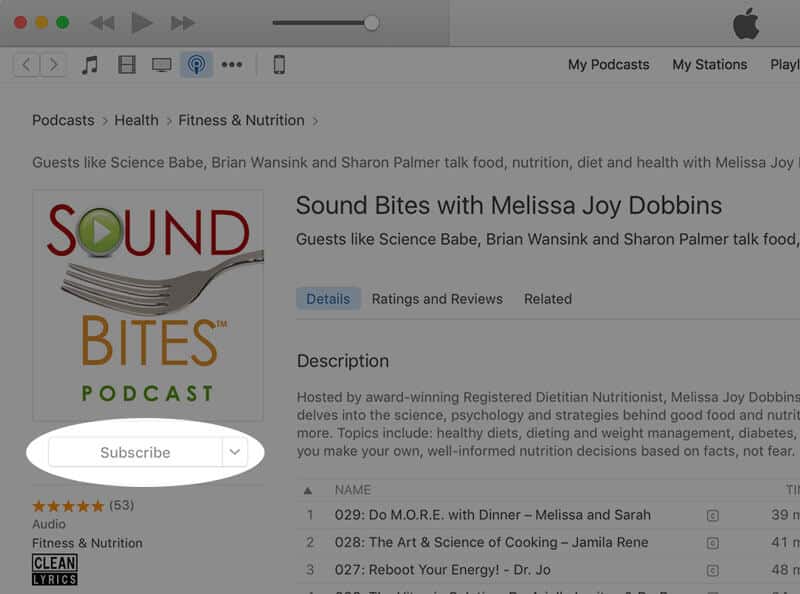
How to Review in iTunes
Open iTunes desktop application
Click iTunes Store
Click on Podcasts
Search for “Sound bites with Melissa Joy Dobbins”
Click on podcast image
Search for Sound Bites podcast in iTunes
Click Ratings & Reivews
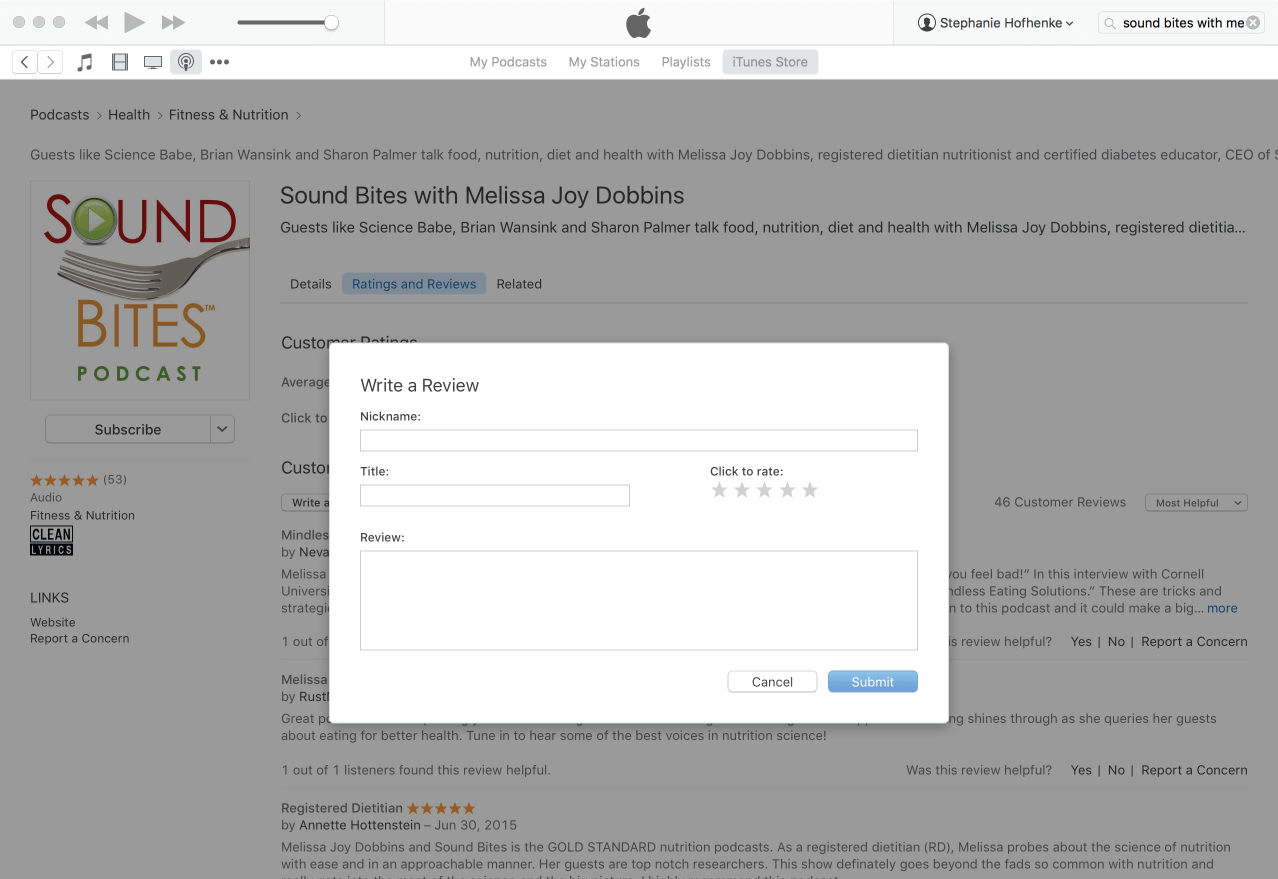
Click Write a Review
View reviews and write your own review.
Write your review…. Thank you!
Write your review!
How to subscribe via iTunes
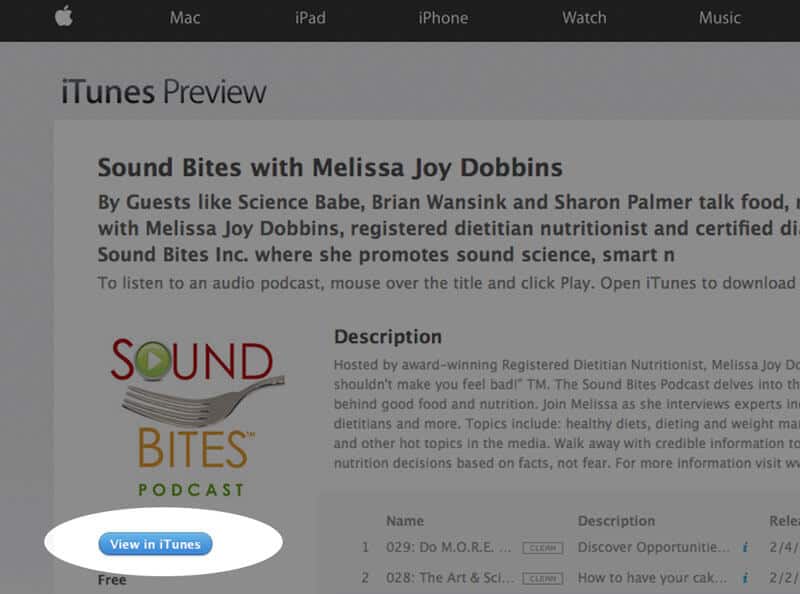
Click here to view the Sound Bites Podcastin iTunes, then click the blue “View in iTunes” button. This will open your iTunes application directly to Sound Bites Podcast. Click the “Subscribe” button, and your done!




 Dr. Sara Bleich is the inaugural Vice Provost for Special Projects at Harvard University, Professor of Public Health Policy at the Harvard T.H. Chan School of Public Health, and a faculty member at the Harvard Kennedy School of Government. With more than 190 peer-reviewed publications, she is a policy expert and researcher who specializes in diet-related diseases, food insecurity, and racial inequality. Prior to this, Dr. Bleich served in the Biden Administration as the Director of Nutrition Security and Health Equity at the U.S. Department of Agriculture’s (USDA) Food and Nutrition Service and as the Senior Advisor for COVID-19 in the Office of the Secretary at USDA. As a White House Fellow during the Obama Administration, she worked at USDA as a Senior Policy Adviser for Food, Nutrition and Consumer Services and on First Lady Michelle Obama’s Let’s Move! initiative. Dr. Bleich was elected to the National Academy of Medicine in 2023 and the American Academy of Arts and Sciences in 2025. She holds a B.A. in psychology from Columbia University and a PhD in health policy from Harvard University.













One of the most articulate and detailed description of the SNAP program and the consequences of the Big Ugly Bill. I hope this will be a wake up call for all who think there is nothing we can do..
Thank you, Rosemary!