Celebrating over 1 Million Downloads and 50,000 Free CEUs on the Sound Bites® Podcast | NEW: Get 1 years’ worth of CEUs with the new 15-CEU Podcast Course
This episode offers the opportunity to earn 3.0 free CEU credits as part of a 3-part series. Simply enjoy the 3 podcasts, complete the quiz and reflection, and download your CEU certificate. Get started here.
This 3-part series is sponsored by Danone North America. This series has been submitted to the Commission on Dietetic Registration for 3 hours of continuing professional education credits for RDNs, NDTRs and CDCESs.
Part 1 of 3: The Flexitarian Diet is a Lifestyle, Not a “Diet”
A flexible approach towards eating can open up a world of good for you and your family.” – Amanda Blechman
The average American diet is low in vegetables, fruits, and dairy, and high in saturated fat, sodium, and added sugars, which is a significant public health issue.1,2,3 Switching to a flexitarian eating pattern, which contains both plant-based and animal-based foods in a balanced approach, can help encourage a healthy lifestyle, and with possible benefits to the planet, too.4
This 3-part podcast series discusses the benefits of flexitarian eating and its intersection with promoting a healthier relationship with food and planetary health through sustainable zero waste cooking efforts.Tune into this first episode in the series to learn about:
how the flexitarian concept was born
the prevalence of flexitarianism
the components of flexitarian eating
the health and nutrition advantages of adopting a flexitarian eating pattern
tips to become more flexitarian including meal examples
how animal protein foods fit into this eating style
common misconceptions about the flexitarian ‘diet’
how to shop and plan for flexitarian eating on a budget
flexitarian protein swaps
A flexitarian lifestyle is for anyone who wants the health benefits of plant-based eating without strict rules. The flexibility allows the plan to bend & flex to your changing lifestyle and preferences.” – DJ Blatner
Dawn Jackson “DJ” Blatner RDN, CSSD
Dawn Jackson “DJ” Blatner is a registered dietitian nutritionist and certified specialist in sports dietetics. She also has a Certificate of Training in Integrative and Functional Nutrition. She is the author of two books: The Flexitarian Diet, ranked a top plant-based diet by US News & World Report, and her second book, The Superfood Swap.
She is a trusted expert appearing regularly in local and national media outlets such as The Today Show and Good Morning America. She won the primetime reality TV show on ABC called, My Diet Is Better Than Yours. Dawn worked as the head dietitian for the Chicago Cubs for 10 years, hosted an Emmy-nominated TV show in Chicago for 3 seasons, and won the 2021 Media Excellence Award from the Academy of Nutrition & Dietetics.
She owns a nutrition consulting & communications business with a focus on real food & more fun. She lives in Chicago and has a healthy obsession with jumping rope. You can find her online at djblatner.com and on Instagram @djblatner.
Amanda Blechman, RDN, CDN
Amanda is a registered dietitian nutritionist and Director of Health & Scientific Affairs at Danone North America. Since joining Danone North America in January 2013, Amanda has led a broad array of activities in several evolving nutrition spaces including flexitarian eating patterns, pediatric nutrition and organic dairy. In her role, she supports leading yogurt brands including Oikos, Light + Fit, and Two Good, pediatric brands including Happy Family Organics and Aptamil, and more. She’s a regular media contributor, providing expert commentary and credible nutrition content to journalists. As a mom of two young children, Amanda loves to combine her passions of food and family in her work. She is also a creative cook and recipe developer, and in her free time she enjoys sharing helpful tips on social media to make family meals less daunting for parents and caregivers. Visit her Instagram @amandablechman.
REFERENCES:1. Krebs-Smith SM, Guenther PM, Subar AF, Kirkpatrick SI, Dodd KW. Americans do not meet federal dietary recommendations. J Nutr. 2010;140:1832–38. 2. U.S. Department of Agriculture and U.S. Department of Health and Human Services. Dietary Guidelines for Americans, 2020-2025. 9th Edition. December 2020. Available at DietaryGuidelines.gov. 3. Dietary Guidelines Advisory Committee. 2020. Scientific Report of the 2020 Dietary Guidelines Advisory Committee: Advisory Report to the Secretary of Agriculture and the Secretary of Health and Human Services. U.S. Department of Agriculture, Agricultural Research Service, Washington, DC. 4. Intergovernmental Panel on Climate Change. (2019). Special Report on Climate Change, Desertification, Land Degradation, Sustainable Land Management, Food Security, and Greenhouse gas fluxes in Terrestrial Ecosystems. [online] Available at: https://www.ipcc.ch/report/srccl/ [Accessed 3 Oct. 2019].
Voice-over: Welcome to Sound Bites, hosted by registered dietitian nutritionist Melissa Joy Dobbins. Let’s delve into the science, the psychology, and the strategies behind good food and nutrition.
[music]
[00:00:00] Melissa: Hello and welcome to the Soundbites podcast. This is the first episode of a three part series on Flexitarian Eating and how it intersects with food freedom or a healthier relationship with food and planetary health through zero waste cooking efforts. Throughout this series, I will be interviewing several distinguished registered dietitians, and I want to thank Danone North America for their support and sponsorship of this three part series.
We are submitting this series to the commission on dietetic registration for three hours of continuing education credit for registered dietitian nutritionists, dietetic technicians, registered and certified diabetes care and education specialists. For more information and resources, you can visit my website@soundbitesrd.com or danone referral pad.com.
So in today’s episode, we will be discussing the how and why of Flexitarian Eating, which will outline the components of Flexitarian Eating, explain the health and nutrition advantages of adopting a Flexitarian eating pattern. And summarize some tips to become more flexitarian, including some meal examples.
I have two expert guests today. My first guest is Amanda Blechman. She’s a registered dietitian and the Director of Health and Scientific Affairs with today’s sponsor, Danone North America. And my second guest is Dawn Jackson Blatner, or DJ Blatner. She’s a registered dietitian nutritionist, and a nationally recognized flexitarian expert and author of The Flexitarian Diet and the Superfood Swap.
Amanda and DJ, welcome to the show. Ah,
[00:01:45] DJ: thank you. How exciting. Thank
[00:01:47] Amanda: you so much. I’m so excited to be here.
[00:01:50] DJ: Yes,
[00:01:50] Melissa: I am really looking forward to this conversation and this whole series. I haven’t talked about Flexitarian on the podcast yet. Dawn has not been on the podcast yet. And for our listeners, Dawn and I have known each other a long time, so I’m gonna use Dawn and DJ interchangeably.
I’m gonna use those. Please do. That’s please do. Okay. So as always, I like to find out about my guests and share that out with my listeners. So I would love to hear more about both of your backgrounds and work experience. So let’s start with you, Amanda. Can you tell us more about your background and your role at Danone North America?
Yes,
[00:02:27] DJ: I would
[00:02:27] Amanda: love to. So I am Amanda b Blechman as you introduced me. I am a registered dietitian and I actually started my career as a clinical dietitian and worked with a variety of patients in a hospital setting, but most recently was the neonatal critical care unit, which was something that just really.
Touched me and was so important to me. And then I transitioned to a role at Danone North America almost 10 years ago. And it flew. So as a dietitian, I think I’ve been so lucky to see all different ways that nutrition expertise can impact people for good. And I’m really proud to be part of a company whose mission is bringing health through food to as many people as possible.
We are one of the largest certified B corporations and we’re really part of a growing movement that strives to use business as a force of good, which means we’re committed to making a positive impact on the planet and people. We’re not just here to make a profit. It has to have a dual purpose of doing good. We do this in a variety of ways, but we are very supportive of flexible eating.
Supporting a variety of eating patterns that are good for health and also environmental priorities. And the flexitarian diet is one way that we really see we can have a big impact on things. So we are so happy that we get to partner with experts like DJ. She literally wrote the book on Flexitarian diets.
So who better than to talk about flexitarian and flexible eating with? We know that it’s a lifestyle that focuses on incorporating a lot of plant-based foods, but it still allows the flexibility to incorporate animal foods that are nutrient rich. So we are really excited to be here to talk about that today.
[00:04:10] Melissa: Excellent. Thank you so much. So I just wanted to clarify because a lot of our listeners may not be familiar with a B corporation, but the B corporation, that’s where you are talking about this commitment to making this positive impact on the planet and
[00:04:25] DJ: people.
[00:04:25] Amanda: Yep. That’s exactly it. So we are here to do good for people and
[00:04:29] DJ: for the planet.
Okay,
[00:04:30] Melissa: great. Thank you. And while we’re on the subject of your role at Danone, I think it would be really interesting to hear from you about the importance of a dietitian working with the food industry and companies like Danone. Can you speak
[00:04:44] DJ: to that?.
[00:04:45] Amanda: Yes. I love that question and I do get asked a lot. What do you do?
Which is many things. But really I think that overall it’s just so important to make sure that we’re represented in the food industry. Dietitians are the gatekeepers of nutrition advice. And healthy lifestyles as it relates to food. And if we’re not represented in the food industry, then you know there’s no one who will necessarily know within the companies, like what are some of the latest and greatest in nutrition trends and nutrition research.
We wanna make sure that we’re sticking really close to evidence based nutrition practices. And so I think it’s really important and we take our role here so seriously to make sure that Danone’s mission is aligned with what’s actually really healthful and important for
[00:05:36] DJ: people to eat.
[00:05:38] Melissa: Excellent. Thank you. Yes. So important to have that seat at the table. Thank you for the work that you do. Oh,
[00:05:43] DJ: thank you for acknowledging it .
[00:05:46] Melissa: So DJ in addition to authoring two books you are a regular media contributor. You were the head dietitian for a very awesome professional baseball team for 10 years.
You won the Media Excellence Award from the Academy of Nutrition and Dietetics, and we go way back. I’ve known you for a long time, but I’m curious if you could share your story about why you wrote the book, The Flexitarian Diet. Oh my gosh.
[00:06:11] DJ: It’s great to be on your show. I love that we’re talking about Flexitarian eating because, Okay, here’s how it started for me. I was a vegetarian for health benefits and then I’d be at a baseball game and eat hot dog.
And then on Thanksgiving, I’d eat some Turkey, and then my grandparents would make like a pork roast and they would make it with love. And I was like, Oh my gosh, I know I’m a vegetarian, but I wanna eat. Love baked pork roast. And so I was doing all of these things, calling myself a vegetarian. I just thought, Hey, I’m a bad vegetarian.
I’m a lazy vegetarian. I’m not doing this right. And so I sort of always thought that in the back of my head, And then it was 2003. I saw the word flexitarian for the very first time, and it came across my desk as the American Dialect Society. It selected Flexitarian as the most useful word in the English language that year.
I was like, what? I was like, wait – flexitarian – I immediately started feeling like a weight lift off of my shoulders and I got super excited, lit up. I was like, Oh my gosh. I’m not a lazy, bad vegetarian. I’m actually a flexible vegetarian. I’m a flexible vegetarian. I’m a flexitarian, and so I was super excited.
Cuz guess what? Calling yourself a flexible vegetarian. Really gives you better self-esteem than just thinking you’re a lazy, bad vegetarian. So for a couple years I would always scan bookshelves and online to see Oh, I’d love somebody to write a book about this because that’s what I am.
And it was just one morning, like about 2:00 AM I woke up in the middle of the night and I was like, Oh. I think I’m supposed to write this book. And so I put together a book proposal of about two paragraphs. I sent it to an agent, cold and quickly got a, an agreement in place. And then that was like 2000, I don’t know, six ish.
And I worked on the book for a long time and it finally got published in 2009. So it’s been around a long time. But my baby is nominated Best Diet by US News and World Report. And it has been for the past 10 plus years. And I think it’s really stood the test of time because really thinking about the word flexible means it’s a lifestyle.
It’s not some sort of strict diet, and it’s that flexibility that makes people be able to follow it in their real lives. So that’s why I’m so pumped always to talk about this. It’s a feel good way to eat.
[00:08:39] Melissa: Absolutely. Yeah. I’m excited just talking to you about this just hearing you talk. This is awesome.
Amanda, what about you with your experience or reaction, I guess to the vegetarian flexitarian?
[00:08:53] Amanda: Yeah, it’s actually so interesting to hear your experience DJ cuz I had a very similar situation. I was a very strict vegetarian for so many years, so much so that it became part of my identity and when I started becoming a little more curious about eating things like fish or trying a bite of someone else’s chicken when I was out to dinner, I felt like if I wasn’t a vegetarian, if I was eating these things, I wasn’t a vegetarian. And if I wasn’t a vegetarian, who was I? What was I? And it just, it really was so tied up in my identity and I think we’ll get to talk about that a little bit more in some of our future conversations about the way we have an emotional relationship with food.
But once I realized that I could be flexible, it just was such an emotional burden lifted and I just really embraced the flexibility of being able to enjoy food that I wanted when I wanted to. And that’s again why I love partnering with you so much, DJ, cuz you are just such a wealth of knowledge in this amazing vegetarian space.
[00:09:51] Melissa: Absolutely. And we always talk about how food is personal, but it’s really interesting to hear you both really illustrate how it’s part of our identity and there’s so much wrapped up with that. But the flexibility aspect, it just makes everything doable and realistic, and that’s all we want for anybody who’s trying to make healthier habits.
So, DJ, let’s talk a little bit more about. Who a Flexitarian eating pattern is for. Yes, I have a guess, but I’m not gonna it’s
[00:10:23] DJ: very clear to me, , this is really for somebody who says, Hey, you know what? I’d like to be more plant-based, but I do not want the strict rules that come along with maybe the vegetarian or vegan types of lifestyles that are more well known as their plant-based sort of foundation.
And so, yeah, you wanna be plant based with that flexibility. That’s who it’s for. And at the end of the day when I really think about like, why is anyone trying to change what they eat? Why? Why do people care? What they put in their mouth is they want a better quality of life. They wanna feel good.
And so if you’re on some sort of strict diet that makes you miserable, it really actually defeats the whole point of this. And so we’ve talked about it, the word flexible, but it flexes and bends to not only your food personality today or your lifestyle today. I’ve been a different type of flexitarian for the past 15 plus years, depending on the year, depending on the month, depending on the season.
I can really shape this to be who I am at that moment. And not sort of put myself put baby in the corner, pigeonhole myself kind
[00:11:27] Melissa: of thing. Really excellent. Okay, so let’s talk a little bit more in depth then about what the Flexitarian Eating pattern entails.
[00:11:35] DJ: Yeah, so you know, it’s two words flexible plus vegetarian.
And a lot of times, like even in research now, you’ll see the word flexitarian pop up. In PubMed, but you’ll also see words like semi vegetarian. So that’s really another sort of synonym to this. It’s semi vegetarian and research shows of course, that when you are eating more plants, you’re gonna get health benefits.
But research is now becoming more and more clear that you don’t have to be super strict. You don’t have to give up meat that you enjoy. You don’t have to give up nutritious dairy foods. You don’t have to do such extremes to get these health benefits.
[00:12:13] Melissa: Yeah, absolutely. So I know that Flexitarian’s becoming more popular, but how common is it?
Do you know what percentage of the population is flexitarian?
[00:12:23] DJ: Oh my gosh. Okay. So there’s all sorts of polls that go on, and there was a poll that I really, I was like, this is exactly right, that they say about one in three people are actually a flexitarian, but they may not know it, so they may not be walking down the street claiming like I’m a flexitarian, right? But they actually eat in this semi vegetarian way, so it’s probably about a third of us are flexitarian. So that’s a lot of people. Yeah, I
[00:12:49] Melissa: think I’m one and I didn’t know it. So , yes, that’s a
[00:12:52] DJ: very common,
[00:12:53] Melissa: That’s a very common thing. I wanna be one. No, I am.
Okay. So we know it’s flexible. It’s an easier way of approaching including more plants in your diet. So let’s talk about what specific foods that you should eat, or, I’m not gonna say should What foods do you do eat? And are there foods to avoid? On the Flexitarian diet.
[00:13:13] DJ: Okay, so this is where I really think people are like, aha, I get it.
It really is a very just balanced eating plan because let me give you the list of what I tell people to enjoy in their regular routine. And you’ll see it’s what as registered dietitians, nutritionists we say all of the time. So it’s plant-based protein, so encouraging all of those.
Black beans, Soybean. Soybean foods like tofu and Tempeh, pinto beans, garbanzo beans, lentils, white beans. You know all of those plant proteins. Love beans. Exactly. You did a cheer. I love that. Yes. We’ve got whole grains and potatoes, so you know, talking about white potatoes, sweet potatoes, brown rice, quinoa, oats, all those things, vegetables, fruit.
Dairy or the plant-based alternative. So this is milk and keifer and yogurt and cheese, eggs are included in the plan. And then healthy fats like olive oil, nuts, avocados, fish, I mean, these are all foods that you know, without even the label ‘Flexitarian’ is just in a balanced, nutritious eating style.
These are foods you find, and the only things that really are encouraged to eat less of are the poultry and meat, and that’s just simply because we need to make room for some of those plant proteins. It’s not cutting them out, it’s simply cutting down to shift. To give us a little more of that wiggle room for all those beans and lentils and things in our plan.
And then it’s the usual suspects that we always say. And you always read about decreasing like processed meats like bacon and lunchmeat and sausages, refined grains so that you have some room to have at least 50% of your grains coming from whole grains and then high sugar foods like sodas and desserts.
So in a nutshell of all these things, it’s this is a balanced plan with a subtle shift to encourage more of those plant foods.
[00:15:05] Melissa: Excellent. Yeah, I mean, you’re talking about nutrient rich foods and it makes so much sense. We wanna add stuff to our diet, but we need to make that shift .
It’s good to add nutrient rich foods, but we wanna make sure we’re not just adding calories and extra stuff too. So that makes a lot of sense. And I love
[00:15:26] Amanda: What you said a couple minutes ago about not being the same kind of flexitarian at all points of your life. I’ve been feeling for the past couple weeks.
I’m a bit of a different flexitarian than I was a couple weeks ago. And that’s what’s so important here, is that there’s so many iterations that exist for so many people. And there’s so many reasons why people would choose or not choose the foods that they are consuming. And I think. Having the variety available is really important.
So people know that they can choose and that’s also very aligned with what we’re trying to do at Danone North America having a really robust offering of yogurt and dairy products. But also, like you mentioned, a ton of plant-based alternatives, whether they’re based in soy, nuts, oats lots of different options for people who may even want to enjoy both. And that’s okay.
[00:16:15] DJ: That’s great. Oh my gosh. I have to just say that’s exactly the both like it it’s so much in nutrition. It’s like you can have this or this and it’s no, you can open your fridge and you can have both living enjoy together. That really is what it’s about you, you don’t have to choose it it can be both.
[00:16:35] Melissa: I agree. And I actually heard a statistic. I don’t remember the specific number, but the concept was if you go into somebody’s fridge or their house, Chances are you are going to see both dairy milk and plant-based milk. It’s so true. And it’s oh my gosh, epiphany. Wow. Okay. Imagine that. And then I also love that you are talking, both of you are talking about know, I’m a different flexitarian than I was a few weeks ago.
what season or whatever. And again, that just circles back and brings it back to the lifestyle aspect because. Change from season to season, year to year, what’s going on in your life, how busy you are with work, family, that sort of a thing, and what your tastes are and new foods that come along that you wanna try.
So I, I just love that. So just to clarify before we move on, Can we talk a little bit more about flexitarian and the sense of, well, I mean, what’s the difference between a flexitarian and just an omnivore?
[00:17:33] DJ: Oh my gosh. I gotta tell you, I wrote the book. I did the series of interviews all over, I mean, all national outlets everywhere.
I’m doing interviews. The very first question, and I think I’m ready by the way. I prepped myself and you do know how to prep and I know how to prep. And the very first question I got talking about the Flexitarian diet was the question of. How is this different than an omnivore who I was like, Oh my gosh, what a great question.
And I’m totally unprepared to answer this. So these days I mean, I figured out an answer on the spot , and it really is the intention of a flexitarian is to wake up in the morning and eat more plant based. Right? It, that’s the intention. And an omnivore wakes up and eats everything. So it really is the intention of a flexitarian is to be more plant based.
And so that, that’s the answer there. But I gotta tell you that one, when I first heard it I was shocked. ,
[00:18:28] Melissa: you’re like deer the headlights.
[00:18:29] DJ: It’s a good question though, and I like it because it goes back to what we say is that aren’t you just suggesting a whole bunch of healthy foods and it’s Absolutely true . But the intention is can you eat more plants that you know, as a flexitarian in making that shift Yeah. Within what works for you.
[00:18:46] Melissa: Yep, exactly. Very individualized. Yes. So, DJ, what do you think you’ve seen? What do you think somebody would find as the biggest difference from a typical American diet.
[00:18:58] DJ: Yeah. So say say you’re trying to be on that more like healthy US pattern type of diet. You’re really already seeking all these nutrient rich foods. The real big difference, which isn’t that big. It’s just a subtle swap from getting some of your animal proteins into more plant based choices. And of course encouraging more plants of all types like vegetables and whole grains. But it really is pretty subtle . It’s not as shocking as you as one would think
[00:19:28] Melissa: But those plant
[00:19:29] DJ: proteins.
[00:19:29] Amanda: Yeah. Yeah. And I think this is where soy can actually play a really important role, especially as you’re shifting towards more plant-based protein options and trying to make sure that people are getting the right mix and the right amounts of all of the essential amino acids.
It’s not always so well known that soy is actually, on its own, the highest quality plant based protein source because it has all those essential amino acids, It doesn’t need to be mixed with anything else to get to that complete protein. It’s a really easy choice to add because that’s another thing, right? Flexitarians supposed to be easy to follow, easy to choose.
And I think that’s super important to think about. Dairy’s another one. , depending on how strict of a plant based diet you are on dairy may or may not be included. But it is a super high quality protein source. And it’s a nutrient rich food. It also has a lower carbon footprint than a lot of the other animal
[00:20:21] DJ: based proteins.
[00:20:22] Melissa: Okay. Thank you. So DJ, in your experience, I know you’ve seen a lot of people experimenting with the Flexitarian diet or thinking about it and wanting to Dip their toe in the water or transition to that. So what are some of the most common misconceptions or myths that you’ve seen out there about the flexitarian diet?
[00:20:43] DJ: Well, the first one, I’ll tell you, I know it’s called the Flexitarian diet. So people have a myth that it is a diet, but that is myth. It is misconception is actually a lifestyle. And when I was publishing the book, I had it as a flexitarian lifestyle and they were like, No, no one’s gonna buy that. Yeah, we’re gonna change it to the word diet, but please know, like the heartbeat of all of these words and this philosophy is meant to be a lifestyle.
So when I put together in my own mind what does that mean? People throw around that word like all the time. Yeah. So what does it mean? And so for me, Foods are not labeled as good or bad. There’s nothing off limits. The food choices that you’re making are hunger and fullness based.
We’re not weighing and measuring our food. We’re making sure that we are focusing on feeling good, and it’s not just scale outcomes that is the basis of everything. We’ve said this, All of us have said this is we are focused on adding nourishing foods, not restriction of foods like boom.
That is what a lifestyle’s all about. Factors in health but also enjoyment. I mean joy is a nutrient like that is legit. Oh, I love it. I mean it is. And my middle name, right? Yeah. And your middle name. I I was thinking about changing my middle name to your middle name cuz I love Oh my God.
And at the end of the day, there’s just no strict rules here, right? So I get to have social life. I get to dine out, I get to travel, and I do not have a diet holding me
[00:22:09] Melissa: back. That you’re going on and off and just trying to stick to when you’re doing all those things.
[00:22:13] DJ: Yeah. Yes. So first myth is truly think about this not as a diet, but as a lifestyle.
[00:22:19] Melissa: Yeah. And I think too, as dietitians, I think we think the word diet is basically just what people eat. We see diet a little different than the general public, I think, but still. Great point. Thank you for expounding on. It’s not diet, it’s lifestyle and what that really means.
[00:22:37] DJ: Yes. And then keeping on this trend of misperceptions is that you hear plant based and people think, I only eat plants.
And it’s flexitarian is high in plants. Sure. But there’s plenty of room for other animal foods that you enjoy, like meat and poultry and fish as well as milk and yogurt and cheese and eggs. These are things that depending even on a vegetarian pattern you might be including, but for sure in a flexitarian pattern, you are flexing in and out of these foods regularly.
I definitely will get, the minute you start talking about plant-based, people are like, Oh my gosh. There’s no way you get enough protein eating on flexitarian or a plant-based of any sort of diet. But that is definitely a myth because there’s so many plant based protein foods. So you can, with just a little planning, make sure that your meals and snacks have
protein foods and we’re talking like beans and lentils and nuts and seeds. And there’s hundreds of things you can do with them. And then because you’re a Arian yogurt, milk cheese and eggs are included. Also the meat, poultry and fish that you like. So there’s plenty of protein foods.
No one has to worry about that. That’s a misperception for sure. I have had several people say, Oh my gosh, how do you ever get full eating like that, . And I was like, Wait a second. Fiber, you definitely get full eating this way because not only can you get protein foods that fill you up which we just talked about, but also many of these plant-based protein foods are very fiber rich.
So that fiber’s another very filling nutrient. And then a final myth that I definitely talk about even with any healthy eating is that, oh, it’s so expensive to eat that way. And I say definite myth because you don’t need to buy specialty foods that are like labeled plant based even though they’re out there.
You don’t need to do that. You can keep it simple and buy all the natural types of a bag of beans is very inexpensive with high nutrition. So you don’t have to worry about specialty foods on a plan like this.
[00:24:35] Melissa: Absolutely. Great points. Thanks for sharing those.
Interesting. I’m sure you get asked a lot. How often should, and I don’t like that word should, but I keep saying it. How often do Flexitarians eat meat or animal products?
[00:24:50] DJ: Oh, this one makes me cry because everybody wants me to put a number. I’m like, Do you understand? I wrote this with the word flexible because I do not wanna put numbers on this, but listen, I get pushed and I needed to come up with some sort of concept here.
So I I always start out by saying, Remember, this is mostly plants not only plants that flexitarians definitely eat dairy, like cheese and yogurt and keifer and milk. They definitely eat eggs and fish and poultry and meat. And the real main goal here is just to take a little bit of that meat and poultry so that you have some room for the beans, lentils, and nuts and seeds.
So in terms of levels, In terms of actual numbers, please. This is a loose guide. But I usually will say a beginner Flexitarian actually just meets the U S D A dietary guidelines for Americans. It’s about 26 ounces of meat and poultry per week. Okay. So, I’m not even suggesting that a Flexitarian isn’t a typical striver of just good general healthy nutrition.
Just meeting that instead of exceeding it is is huge. And then I’ll say, Okay, hey, a next level is maybe you’re decreasing that a little bit to increase more plant proteins at about 18 ounces of meat poultry a week. And then an expert is about nine ounces of meat poultry a week, because that means you’re decreasing that a little bit so that you’re increasing more plant proteins.
But I gotta tell you, There is no way that I am always an expert Flexitarian, even though I wrote the book, there’s no way I would want anyone to always be an expert. Some weeks I’m a beginner, some weeks I’m advanced. We’ve talked about this idea of you’re different all the time. So although those levels sort of act like, Oh, I wanna move up and always be this expert, eh, forget it.
It’s like I did those levels just to give you some direction. But more than anything. Being flexible with them, obviously .
[00:26:34] Melissa: Okay. No, I love that.
[00:26:35] DJ: That’s great.
[00:26:36] Amanda: Yeah, totally. And I think it’s so important. That’s such a good point too, because people are looking to go more plant based. Not everyone’s starting from the same place, right?
And so this is so easy to meet you where you are. And then like you mentioned, you don’t have to do the same thing every day. You can kind of flex back and forth between the different levels.
[00:26:53] Melissa: I love it. I love that flex back and forth between the levels. I like that too. So we have talked about these animal foods like cheese, yogurt, keifer, milk, eggs, and fish are
included in the Flexitarian Diet lifestyle. But let’s talk a little bit more about why these may be important to include.
[00:27:12] DJ: When I was sitting to write the Flexitarian diet I had all these questions to ask myself too. It’s well, why would this be in here? Should it be in here? Why does this make sense?
And so really reflecting on I am about eating for feeling good and getting nutrients so our body can be happy and healthy. Putting them in the Flexitarian diet was all about the nutrition they offer. So let’s just take yogurt for example. Great nutrition in a small little container, and if you look at my fridge, I mean, you will see plain Greek yogurt in my fridge because I could have it for a dessert, I can make it into a dip.
It’s like super versatile. And of course it’s a high quality complete protein. And depending on which options you’re using, you can get a good source of calcium and vitamin D, which are of course, nutrients that Americans are known for not getting enough of. But you just have to always check the labels for just how much calcium or how much of vitamin D you’re getting in yogurt.
But you know, that’s one example of why yogurt would be in there. Eggs. Why would I put those in there? It’s oh. They’re also a complete high quality source of protein, and they have things like choline in there, which can help transport good fats like the DHA to our brain, and why would I put fish in here?
It’s well, I mean, it’s rich omega-3 anti-inflammatory fats and it has protein, so you know, all the foods that were put in there aren’t just like haphazard. They all are offering nutrients for happy, healthy cells.
[00:28:37] Amanda: These are such staples in my house too. I actually find that they’re so helpful across my family and they really help us incorporate more plant-based foods too, which is kind of cool, right?
Cause you can use yogurt to eat more fruit or like you said, you can use it as a dip to eat more vegetables. I have two young kids. The baby just eats everything in sight, so it’s not such a concern with him. But my picky four and a half year old. When in doubt she will always say yes to a yogurt.
And so for me it’s a huge lifesaver that I have options like that around. And then I don’t know about you guys, but for me, I’ll put an egg on top of anything, including a salad. It’s my favorite thing. I get a lot of eyebrows raised to that, but I will challenge you any day to find a yummier combination than I runny egg on a salad.
[00:29:20] Melissa: That is interesting. I hadn’t heard of that before. So good . My son’s not a picky eater, but he’s the same. You could never miss with yogurt, and I just found a new way to use plain Greek yogurt. Do tell there’s a recipe for a quick pizza crust. Ooh, my friend Jen Haugen, her book, it is so good. Okay. There’s no end to the different ways you can be.
Use that versatile ingredient, right?
[00:29:45] Amanda: If you like that, I have another great recipe for you. It’s a yogurt flatbread that I once discovered deep in my internet search of what else can I do with yogurt? And it’s so fast and easy that every time I make like a sort of a Mediterranean meal with a chopped salad and maybe some chicken or fish or my husband’s like “But you’re gonna make the bread too, right?” You have to make the yogurt bread, which is why you always have to have a tub of the yogurt
in your fridge.
[00:30:11] Melissa: You always have to have it on hand. Absolutely. Yeah. No I’d love to try that out. It sounds like it might be kind of similar. So easy. Well, that’s great.
So let’s talk about the health benefits associated with the Flexitarian lifestyle. I know they’re there. What are they? Let’s dig into that.
[00:30:27] DJ: Yes. So when I was writing the book, and it’s been around a long time when I was writing it and would type into PubMed, Flexitarian, it wasn’t there.
The word didn’t exist. It really has been something that has evolved over the past 10 plus years. It always knew flexitarian eating patterns tended to be higher in fiber, vitamins, minerals, phytochemicals than. Eating styles because of all the plants, right? So plants are bringing that all to the table.
But in then 2017 in the journal Frontiers of Nutrition, I see the word flexitarian popping into PubMed and into research, and there was a research review of 25 different studies that said, Hey, you know what? Actually the word flexitarian, flexitarian eating patterns may be associated with weight management.
And then also metabolic health markers such as healthy blood sugar, blood pressure, cholesterol. And so it’s then very validating to me. It’s like you knew all of these extra nutrients were coming to the table with all of these plans. But now when you actually look at these research studies you’re seeing this.
And then very recently in the American Journal of Clinical Nutrition, this was study that I just was like, you know when you’re like jumping up and down and you’re like, Oh my gosh, this is amazing. In this study, 1800, so we’re talking 1,800 people were in this study and they looked at different styles of eating and what it did to our gut microbiome, which is the hottest topic ever. it’s the hottest topic ever. And what came out on top was the Flexitarian diet had the highest diversity of gut bacteria. Wow. And that was because obviously we have so much flexibility, We have so many different foods in our diet that when you compare to more restrictive diets that are cutting out foods, those had some of the worst impact on our gut microbiome. So that was a new cool study to say in addition to all these health benefits you’ve already read, really looking at the gut health of flexitarians is great. And so I, as a dietitian do a lot of work in the health benefit arena and really watching those studies. But I have definitely kept my eye out on studies about like how much it costs to eat a Flexitarian diet as a benefit and also the sustainability and the ecological impact the Flexitarian diet has. So just a couple of studies there. In, in 2021, the Lancet put out a study saying that in the US.
it’s probably about 14% less expensive to eat a flexitarian diet than a usual diet. And they just basically put in all bunch of data of commodity pricing and came up with that estimate. And then in nutrients in 2019 the eating pattern of flexitarian versus vegan versus vegetarian versus meat oriented we’re sort of all estimated on the impacts they have in the environment.
And Flexitarian came out good in terms of less impact than a very protein and very heavy meat based diet using all sorts of markers like greenhouse gases and water and land nitrogen and phosphorus use. So those are things that I have my eye on, but health benefits are really what I talk about the absolute most.
Followed by social benefits. To me, this is my favorite, is because when you’re eating like this, you have freedom to enjoy the dining out, traveling. You can do all the socializing you need. And I think that is a major benefit when it comes to eating plans. Totally. I’m all about minimizing the pressure, right?
[00:34:06] Amanda: I mean, who’s not stressed these days? And I actually think that, For me, it’s so helpful when I’m grocery shopping and planning my meals for the week, it really helps take the pressure off for me, because we don’t have these restrictive food rules, I can really focus on what’s fresh, what’s in season, what’s on sale, and what is my four year old nagging for what it really all can fit in and I don’t have to stress about, okay we’re only gonna have this at a meal.
Because we’re offering these flexible foods to our kids, I feel really good about modeling that really healthy, balanced food relationship for them. Cause I know it’s setting them up on a really positive eating path moving forward.
[00:34:45] DJ: Great. Great stuff. And I just, I love highlighting the variety and how that is impacting the gut microbiome in a positive way.
[00:34:52] Melissa: That’s really interesting. Now, DJ, you mentioned one of the health benefits being weight management. A lot of people change their eating habits with the goal of weight. So can you talk a little bit more about the Flexitarian diet, lifestyle, , and not just diet on can people lose weight on this?
[00:35:09] DJ: So the answer is yes. Although weight loss wasn’t the main focus of this plan it is a side effect of eating more plant-based foods. And so when you look at it, flexitarians tend to weigh less than non plant based eaters. And when I was looking through research about really what does that mean?
In 2020, there was a review study that said, you know what? Weight loss is really a reflection of more fiber, more polyunsaturated fat, more plant proteins, and generally just eating less energy, less calories, less saturated fat and less animal proteins. So it is true the flexitarians weigh less than non plant based eaters, but it’s more of a natural occurrence because of these nutrient rich foods coming into play.
[00:35:54] Melissa: Great. Well then that fits for the non diet approach too. If you just naturally lose weight by making some of these changes, And that sounds healthy. We’ve been talking about all the positives of a flexitarian diet, but are there any risks associated with the diet, such as nutrient deficiencies?
Might somebody need to consider vitamin mineral supplementation?
[00:36:16] DJ: Oh, great question. Okay. So flexitarians really don’t tend to have any nutrient deficiencies because no food groups are actually eliminated. So I really have less to say about this than maybe somebody you know was talking about a strict diet.
But I can tell you that the number one thing is that people do worry about getting enough protein, which you do not have to worry about, cuz a flexitarian gets a protein mix, is what I call it, a protein mix, because they’re not only getting animal sources like dairy and eggs and meat and poultry and fish, but they’re also getting more plant-based sources, right?
Beans and lentils and nuts and seeds. So once you really make sure people understand that they’re getting enough protein, there are four categories that, when you’re talking about plant-based eating, I like to make sure that people think about and that’s The first area is iron and zinc. So making sure that you’re including natural sources of iron and zinc and you’re eating like beans and lentils and nuts and seeds.
Calcium and vitamin D. So making sure, again, you’re looking at what foods am I eating to bring that to the table. Milk and fortified plant beverages and broccoli and kale and almonds and certain types of mushrooms. B12, which is in all the animal foods that flexitarians already eat, but you know, are you doing milk and fortified plant beverages and even fortified nutritional yeast?
And then do you have omega three fatty acids? And so that could be walnuts or flex seeds, flexed oil, chia seeds, and for flexitarians who eat fish. So those are the areas that for general plant-based eaters they have to pay attention to. Flexitarains have less of an issue, but still always important to just make sure you’re meeting your marks.
[00:37:50] Melissa: Thanks. That’s very helpful. So it pretty much sounds like a no brainer for anybody looking to go more plant based, but are there some tips that you can share for me, transitioning into the Flexitarian diet? Yes, so that’s,
[00:38:03] DJ: it is okay, sounds good. What do I do? And so the first thing I say is Listen, you don’t even have to worry that much about anything, but just look at your plate.
I call it like visual wisdom where you. Looking at your plate and does it have a little bit of meat and poultry on there? Does it have a little bit of grains? Are there vegetables and healthy fats that are taking over half of your plate? Very similar to the dietary guidelines that we are always saying.
That’s a good first step to just eating more plants as a flexitarian. Then I say, Okay, how about you start reinventing some of your old favorites? So I do that with clients by saying for every one ounce of meat, maybe put in a fourth of a cup of cooked beans or lentils. So it could be a hundred percent of a swap.
Somebody goes, Okay, instead of the beef tacos that I always serve my family, I’m gonna go lentil tacos one night. Or it could be more of like a 50 50 baby. Where it’s So popular, like the blended burgers of the world, where it’s like you’ll do half lentils and half beef or chicken.
So that is sort of reinventing your old favorites by asking in, adding in, inviting in some of these plant proteins is great. And then my final real tip, this is the one, this is, I say this is it. This is the greatest tip to be more flexitarian. It’s just trying one new plant-based recipe each week.
Cuz at the end of the year you’re gonna have 50 plus recipes in your repertoire. Something you’re gonna love. Some, maybe not so much, but the ones you love will maintain themselves in your regular rotation. So you just naturally are having more plant-based meals. By just having that one goal of trying one each week.
[00:39:36] Melissa: Great tips. Well, yeah, you said it, it sounds easy, but are there any common mistakes or pitfalls of somebody trying to, to transition into this lifestyle that, that you could highlight so that we can kind of be on the lookout as we’re making our own transition.
[00:39:53] DJ: So when Flexitarian is ranked, it’s oftentimes in the very, very top of the list is easy to follow.
And so I love to see that because I mean, if something’s easy to follow, you’re more likely to do it. But yeah, there are. Take. So the few that I usually mention is people will be like, Yes, I’m being more plant based. I’m being more flexitarian. I’m just gonna cut out meat. And they forget to replace it with all those plant proteins and the dairy and the eggs.
It’s it’s not about cutting it out. People if you’re gonna decrease it a little, make sure you’re adding in those. Plant proteins and dairy and eggs. I also see a mistake where there’s just not enough protein variety. People pick their one favorite protein and they just keep eating it over and over.
But that protein mix are you getting a wide variety of different animal and plant proteins is a huge thing to look at. Too many beige carbs like the white pastas, white rice and white bread of the world they can fit. But make sure there’s enough room for the whole grains to be at least 50% of your grains.
Shockingly, another mistake that I see a flexitarian not having enough vegetables in color in their diet is like you really double check I say a cart check or a plate check. Do I have a lot of colorful fruits vegetables in my cart before I check out? Do I have them on my plate.
And then finally this is a big a big issue. I feel like when people wanna change their diet, they forget to have enough fun and creativity, that they love it. If you wanna stick to something long term, you have to be enjoying it. So those are in summary, the gist of what I see when it comes to mistakes.
Not horrible ones, but enough to just pay attention.
[00:41:25] Amanda: DJ, that is the best tip. I love that. I think every diet or eating style should have fun on the checklist of what’s included. I mean, food is meant to be enjoyed and I agree with you. It’s so much harder to stick with it if you don’t love it. And even if you’re not someone who loves to experiment in the kitchen, I think a lot of what you just talked about is so easy.
Tiny, small changes. So really fun to get into some of those easy cooking
experiments.
[00:41:48] Melissa: Yeah. Make sure fun is on the menu, right? Well. DJ, your energy is contagious. And your expertise, I mean, like you said you literally wrote the book. It’s very much appreciated. And Amanda it’s clear that Danone North America’s portfolio, can really easily support the flexitarian diet and lifestyle.
I’d love to hear about any final thoughts words of wisdom as we’re wrapping up from both of you.
[00:42:16] DJ: Oh, yeah. I I can give you a final thought. I said it already, but I feel like I just wanna give it a little highlight that really, if you want to be more flexitarian, it could be as simple as just trying one new plant-based recipe each week, and I think making it less intimidating and so you can just jump in and do that.
Is a very smart way to be and taking this flexible approach. I mean, bottom line is we’ve said it over and over. It’s great freedom to not feel like you have to live in some sort of strict rule system. And I am giving you a three day flexitarian sample plan just in case somebody’s I still don’t really get it.
Could you help me? What would an actual day or a few days look like? I’m giving you a three day flexitarian sample plan to put in your show notes. And then also I’m giving you a little swap chart that I use for if some days you wanna chicken stir fry, some days you can have an edamame stir fry and you could switch back and forth.
And so I have a chart of some of those swaps too that you can put in your show notes just to sort of clarify and bring this all home with actual examples. Awesome. Thank you.
[00:43:22] Amanda: Thank you. And DJ, it’s been so much fun talking to you. It’s always so fun talking to you about all this Flexitarian stuff.
And Melissa, we’re so happy to have this opportunity to be on the podcast with both of you. We talked about so much of it, Right? I love that we really hit on how Flexitarian can support any lifestyle. And me as a dietitian, but also it’s at Danone North America. We feel like so promising, right?
That the Flexitarian lifestyle and I guess way of life can really have so many benefits, right? First, it’s a really easy way to incorporate plant-based foods without all the pressure of diet rules. And we’ve talked about that so much today. And because of that, it can really promote this idea of food freedom because as DJ mentioned, As we’ve talked about over and over, it’s about adding in.
It’s not about restricting things or labeling them as bad. And finally, also, I think we’ll get to talk about this too. It can really help minimize kitchen waste because you’re able to really use whatever you have on hand. There’s nothing cut out. It’s just there and ready for you to throw into whatever dish.
So again, I feel so lucky to be here with you guys to have this conversation and thank you so much for giving us this opportunity.
[00:44:35] Melissa: My pleasure. Yeah. I am really looking forward to the next couple of episodes where we get to talk more about food freedom and food waste. It’s gonna be really interesting.
I think I’m gonna learn a lot that I can use every day as well. And we’ve talked about some of these resources, including this protein swap that you just mentioned. DJ obviously going to share more information about your book in the show notes as well. I’m sure there’s some recipes in there that people can try.
We’re gonna share whatever we can from that. And I’m sure you’ve probably got some stuff on your website as well. But all of those links will be in the show notes at soundbitesrd.com. And I just thank you both for everybody listening. We’re really excited about these next two episodes, and I mentioned the next one will be Food Freedom, but that’s gonna be with Chelsey Amer The Fighting Food Waste One will be with Roseanne Rust.
And Amanda, thanks again to Danone North America for making this series possible and we’re just thrilled that you’ll both be back too. We’re not saying goodbye to you. You guys are coming back too on these next two episodes, so it’s gonna be a really fun, lively conversation with the four and five of us for the next couple of episodes.
But I’m really looking forward to it. And remember everybody listening, if you are looking for continuing education, this three part education series is being submitted for continuing education. And you can listen on any podcast app or online at soundbitesrd.com. So thank you both again, and for everybody listening as always, enjoy your food with health in mind and flexitarianism till next time.
Voice-over: For more information, visit soundbitesrd.com. Music by Dave Burke, produced by JAG in Detroit podcasts.
[music]
LISTEN, LEARN AND EARN
Listen to select Sound Bites Podcasts and earn free CEU credits approved by the Commission on Dietetic Registration (CDR) for registered dietitian nutritionists and dietetic technicians, registered. Get started!
Get Melissa’s Sound Science Toolkit here!
Partnerships:
Sound Bites is partnering with the Association of Diabetes Care and Education Specialists (formerly the American Association of Diabetes Educators)! Stay tuned for updates on the podcast, blog and newsletter!
Sound Bites is partnering with the International Food Information Council! Stay tuned for updates on the podcast, blog and newsletter!
Sign up for my monthly newsletter and episode eblasts so you never miss an update!
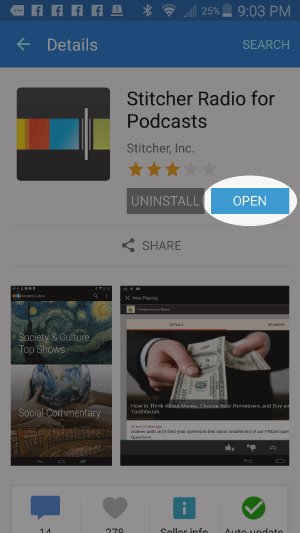
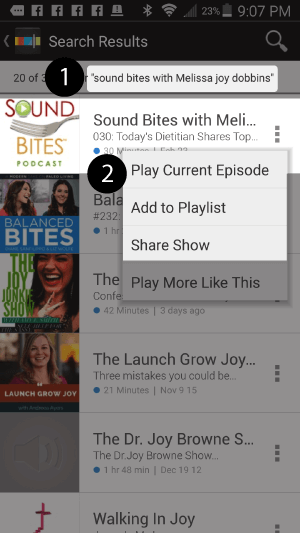
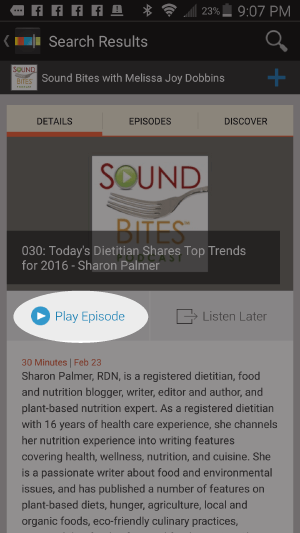
Listen on Stitcher (Android)
Install the Stitcher App
1. Search for “sound bites with melissa joy dobbins” 2. Choose Play Current Episode or Add to Playlist
Choose “Play Episode”
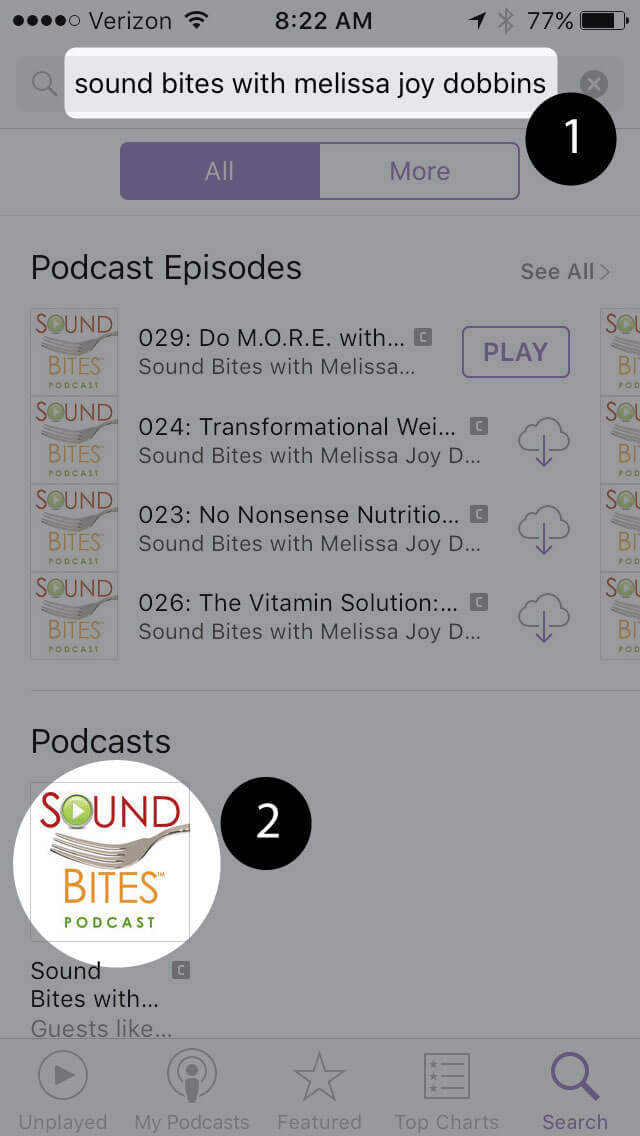
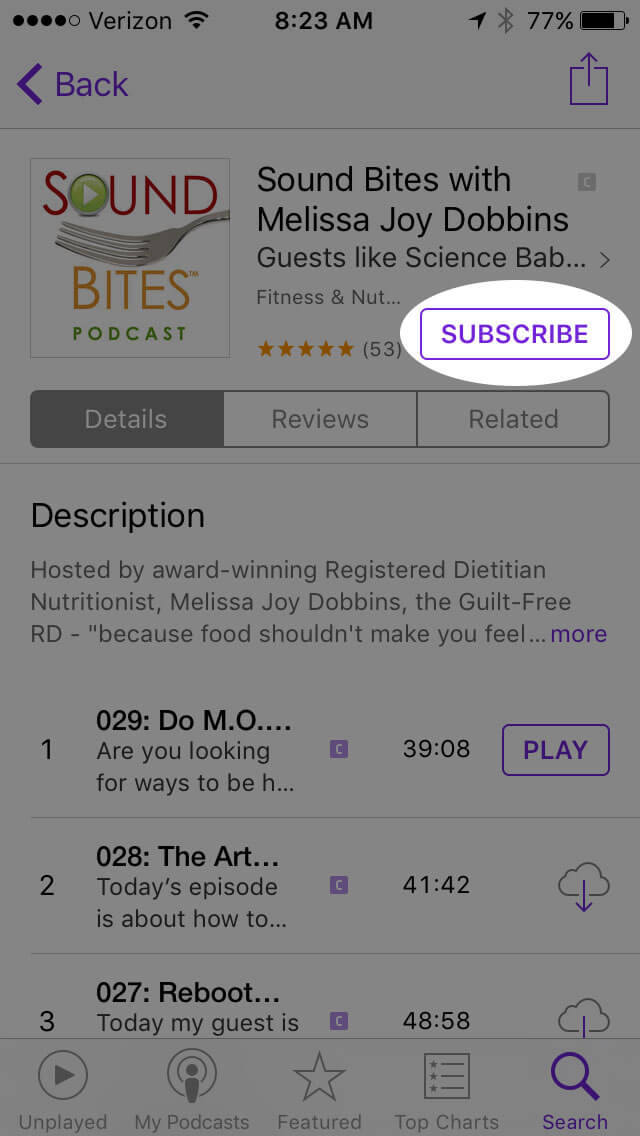
Subscribe & Review on iPhone
Open the “Podcast” app on your iPhone
Search for “Sound bites with melissa joy dobbins”
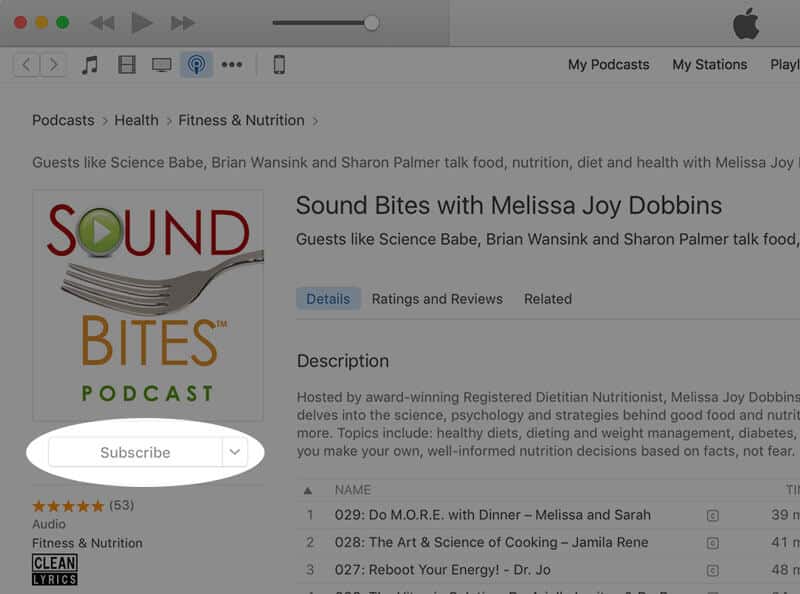
Open the podcast and click “Subscribe” and your done!
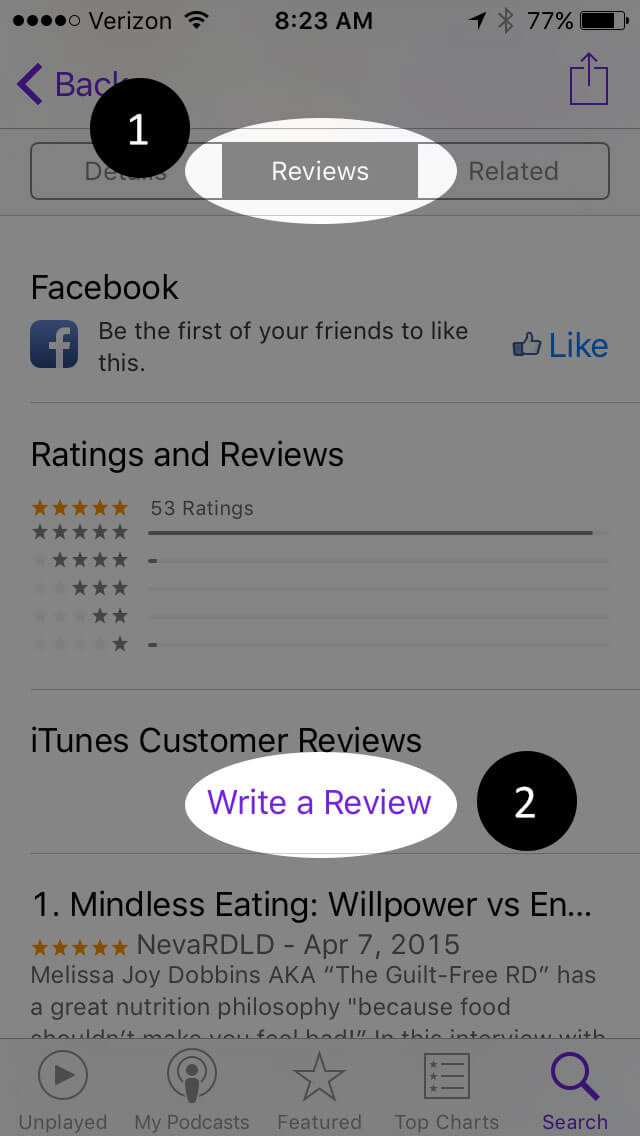
Write a Review
Click “Reviews”, then “Write a Review”.
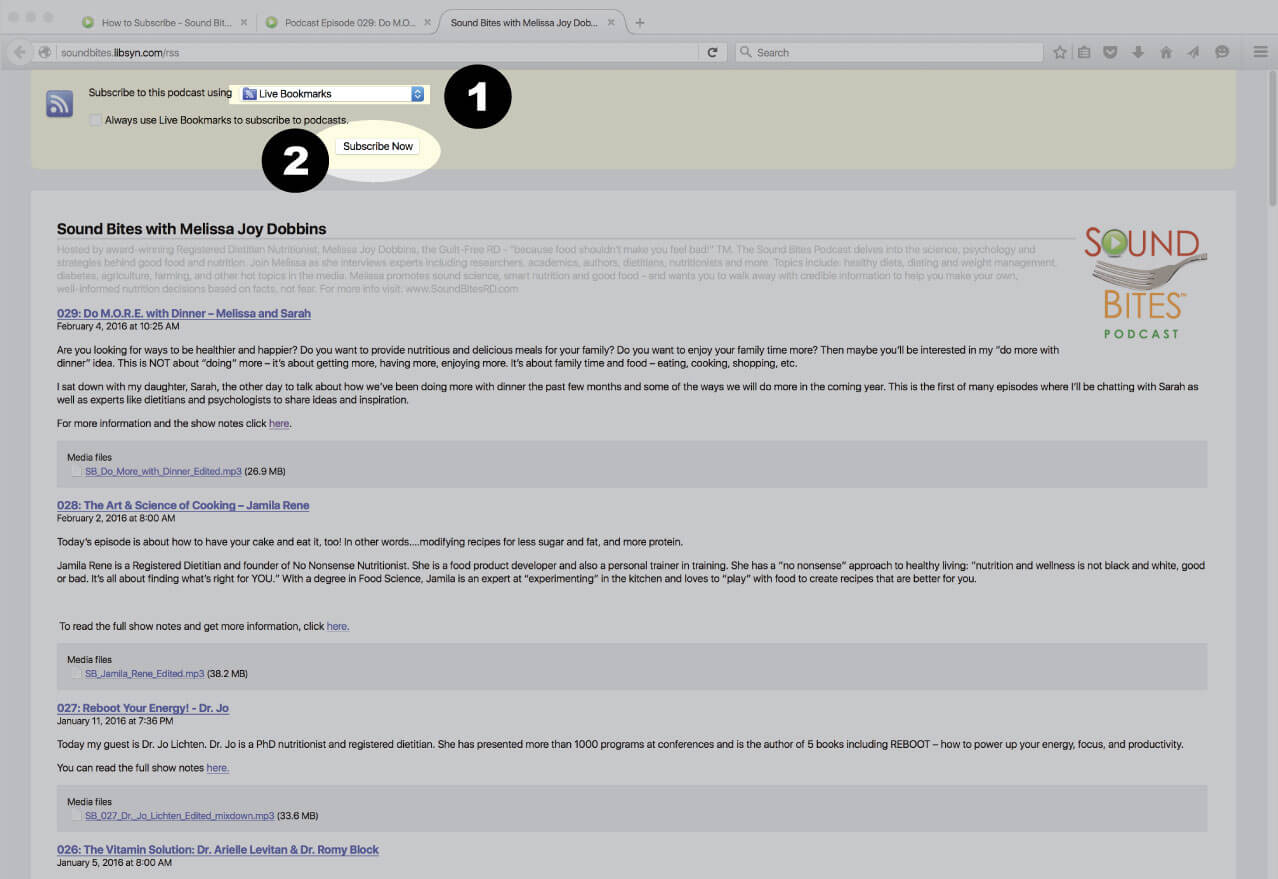
Subscribe via RSS Feed
Navigate to any podcast player . Click on the RSS feed icon.
Click on the RSS feed icon.
Click on RSS Feed
Choose which application you would like to use to receive the RSS feed
Click “Subscribe Now”
Confirm settings and subscribe.
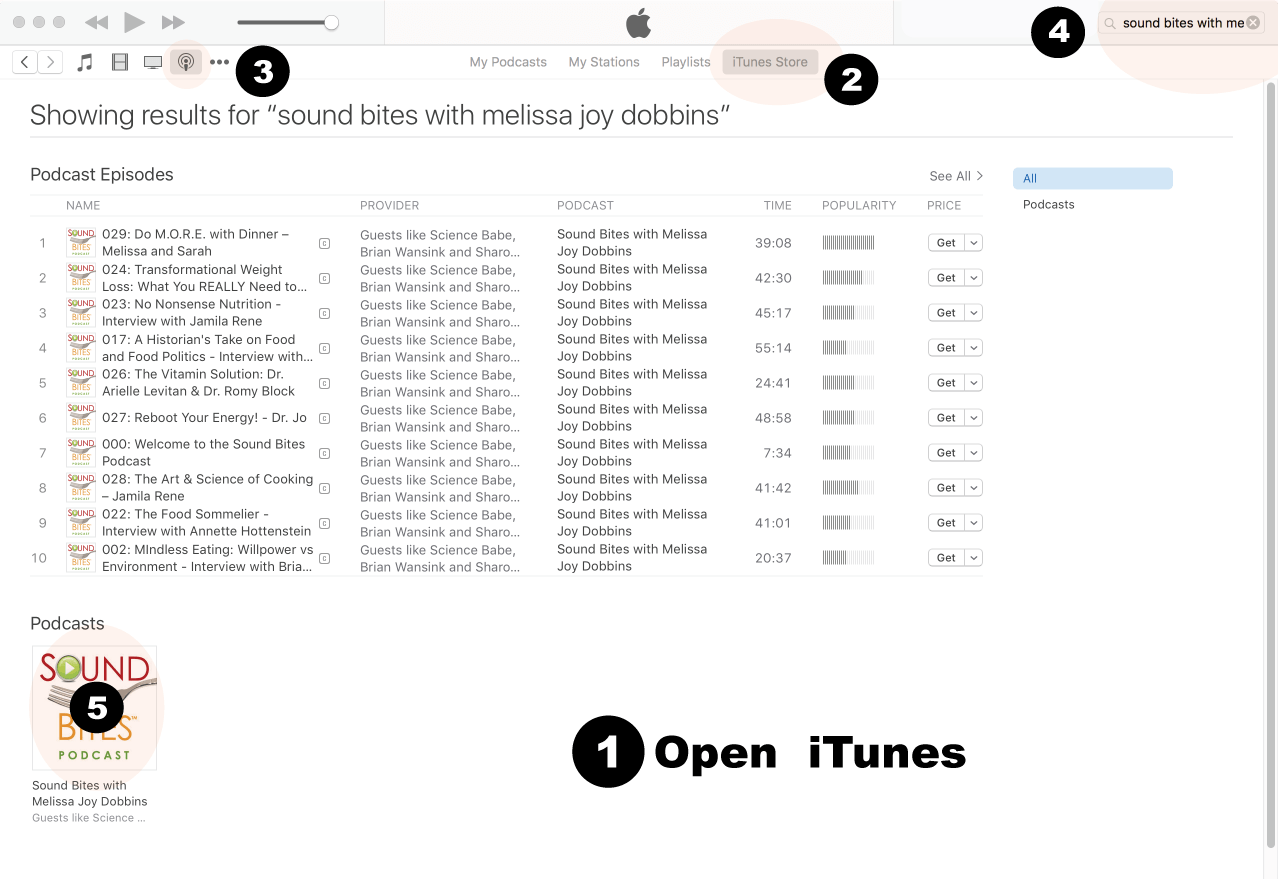
How to Review in iTunes
Open iTunes desktop application
Click iTunes Store
Click on Podcasts
Search for “Sound bites with Melissa Joy Dobbins”
Click on podcast image
Search for Sound Bites podcast in iTunes
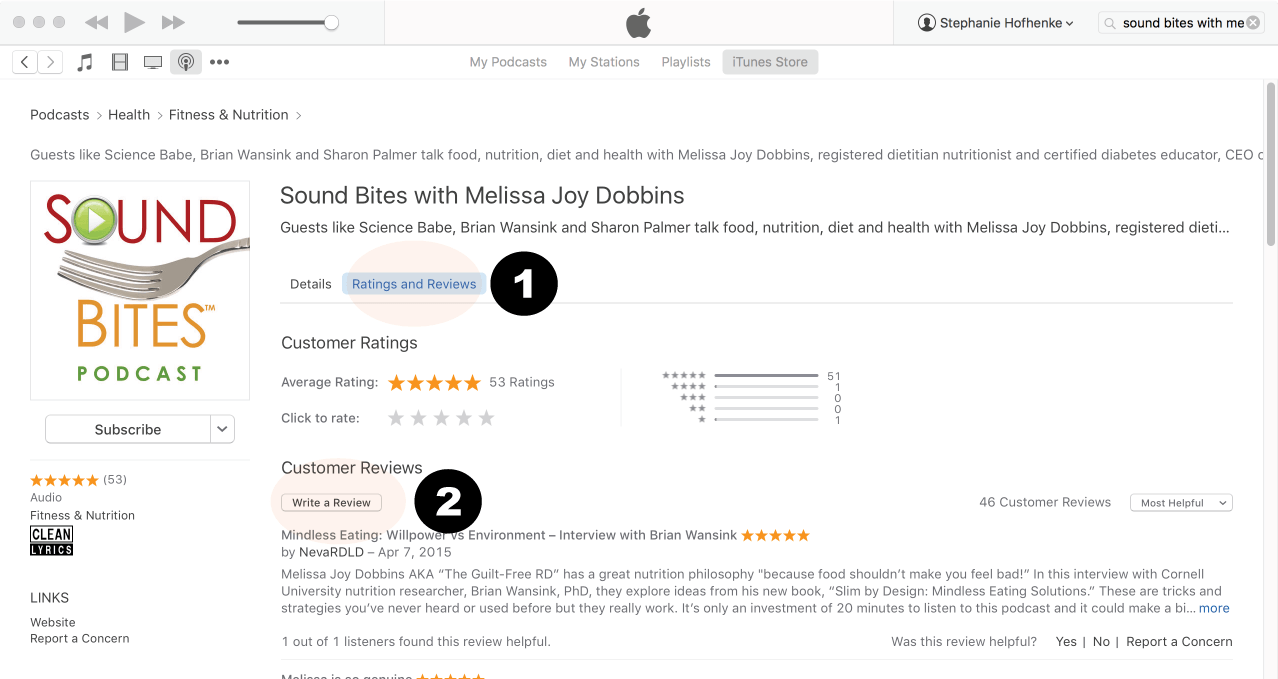
Click Ratings & Reivews
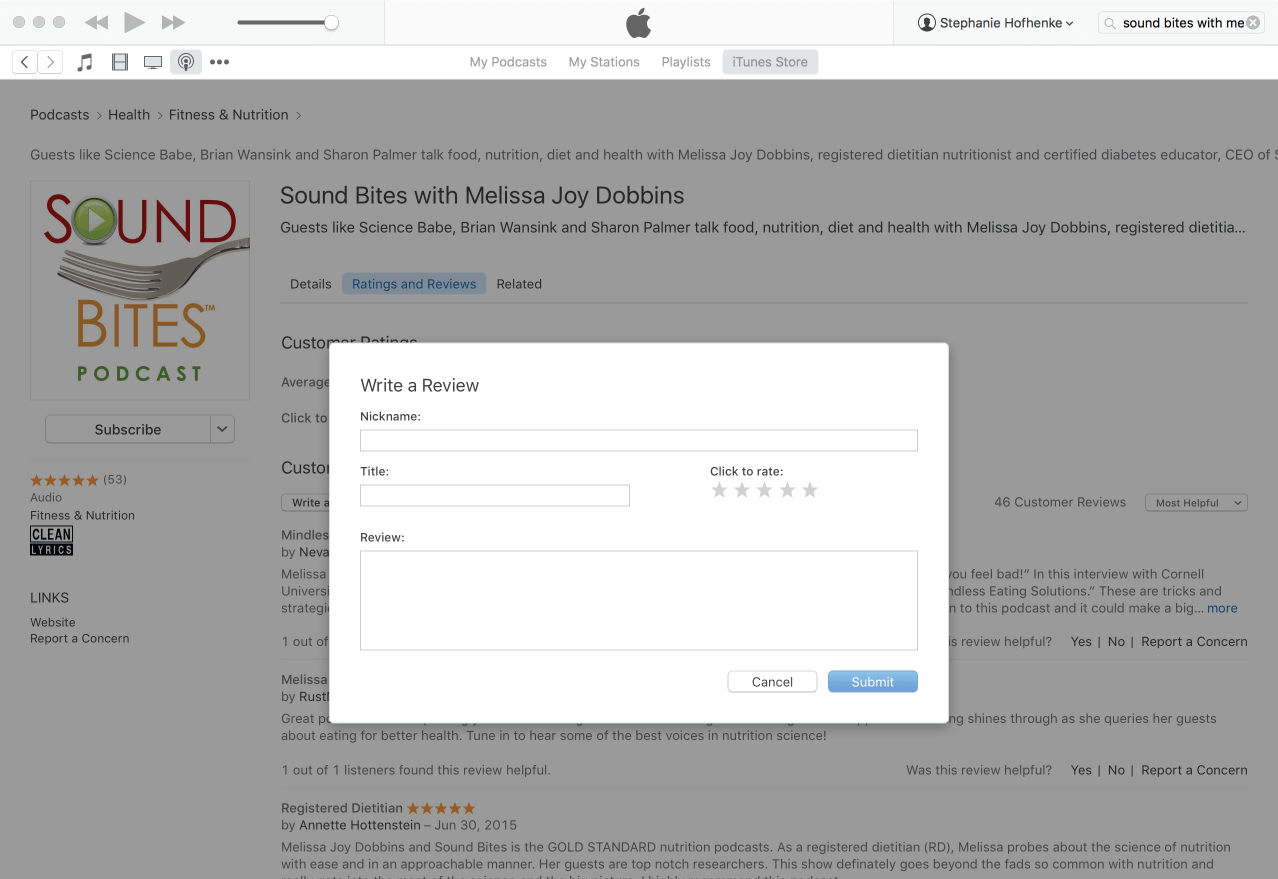
Click Write a Review
View reviews and write your own review.
Write your review…. Thank you!
Write your review!
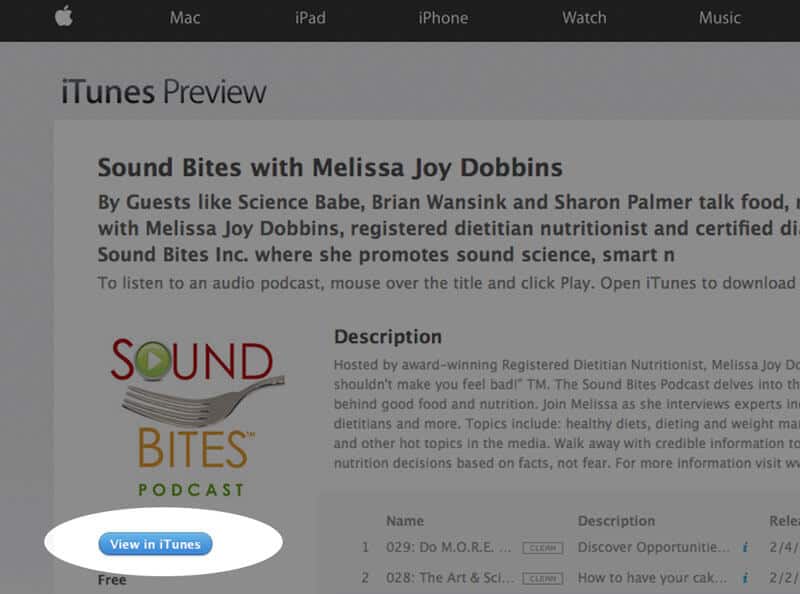
How to subscribe via iTunes
Click here to view the Sound Bites Podcastin iTunes, then click the blue “View in iTunes” button. This will open your iTunes application directly to Sound Bites Podcast. Click the “Subscribe” button, and your done!















Love this- i have been using 3 lentil recipes for my lunch for years.
Thanks Dawn! Sounds yummy.
Melissa
It was great insight into the flexitarianism. Actually Indian foods for some of us are flexitarian unless we make them omnivorous