Celebrating over 1 Million Downloads and 50,000 Free CEUs on the Sound Bites® Podcast | NEW: Get 1 years’ worth of CEUs with the new 15-CEU Podcast Course
Click here to earn 1.0 FREE CEU for listening to this podcast episode! Extra Virgin Olive Oil: Why EVOO is Best & How to Use It – Dr. Mary Flynn & Leandro Ravetti awards 1.0 CPEUs in accordance with the Commission on Dietetic Registration’s CPEU Prior Approval Program. Disclosure: Commercial support has been provided by Cobram Estate. Mary Flynn, PhD, RD received an honorarium for her time to participate in the podcast interview.
The Gold Standard: Extra Virgin Olive Oil for Optimal Health
This podcast episode discusses the nutritional differences between extra virgin olive oil (EVOO) and other grades of olive oil and how those differences impact health outcomes. Listeners will learn how olives are harvested, how EVOO is made, and what the science says about EVOO and the Mediterranean Diet. Questions such as what to look for on the label, if smoke point is something to consider when cooking and how much to consume per day are answered. Whether you’re looking to debunk common myths, understand the latest research, or get practical tips for recommending healthy fats, this episode delivers evidence-based insights and real-world tips that will transform your approach to dietary oils.
Tune in to this episode to learn about:
The important differences between extra virgin and other olive oil
Specific polyphenols (or “biophenols”) unique to EVOO
what to look for when choosing the highest quality EVOO
the research on the Mediterranean Diet and EVOO
chronic disease risk factors that may be improved with olive oil
the new DGA recommendations related to olive oil and other fats
if smoke point is something to worry about or not
how to store olive oil to maximize health attributes
the minimum daily amount of olive oil recommended to realize health benefits and how long it takes to see results
practical and delicious ways to incorporate EVOO into your daily diet
resources for health professionals and the public
Mary M. Flynn, PhD, RD, LDN
Dr. Mary Flynn is a research dietitian at The Miriam Hospital and Associate Professor of Medicine at Brown University. She has studied the health benefits of extra virgin olive oil since 1998 and developed a plant-based, olive oil diet tested in cancer patients, those with metabolic syndrome, and food pantry clients. Dr. Flynn is also the co-author of Low-Fat Lies, High-Fat Frauds and the Healthiest Diet in the World and The Pink Ribbon Diet.
There is no other food or medicine that will improve the range of chronic disease risk factors that have been shown to occur with daily use of extra virgin olive oil.” – Dr. Mary Flynn
Leandro Ravetti, Agricultural Engineer
Leandro Ravetti is the Joint-CEO of Cobram Estate and one of the world’s leading experts in olive growing and olive oil production. Originally from Argentina, he has worked internationally in Italy, Spain, and Australia, developing the Oliv.iQ® system and helping set the Australian Standard for Olive Oil. Leandro has received multiple awards recognizing his lifetime contributions to the olive industry. He is an olive oil sommelier and has led one of the largest virtual EVOO tastings ever!
Knowing as much as I do about fats and oils chemistry, there is no other oil I use with my family than high quality extra virgin olive oil.” – Leandro Ravetti
Resources
Some links may be affiliate links. As an Amazon Associate, I earn from qualifying purchases.
Olive Wellness Institute: A science repository on the nutrition, health and wellness benefits of olives and olive products, which is subject to extensive peer review.
Speakers: Melissa Joy, Leandro Ravetti, & Mary Flynn
Leandro Ravetti (00:00):
When it comes down to scientifically proven health benefits, there’s no other food that comes even close to extra virgin olive oil to the prevention and the management of chronic disease. When you look at the resources available and the amount of scientific evidence behind this product, it is truly amazing.
Mary Flynn (00:16):
There’s no other food or medicine. We don’t have anything that dense with olive oil.
[Music Playing]
Voiceover (00:21):
Welcome to Sound Bites, hosted by registered dietitian nutritionist, Melissa Joy Dobbins. Let’s delve into the science, the psychology, and the strategies behind good food and nutrition.
Melissa Joy (00:43):
Hello, and welcome to the Sound Bites Podcast. Today’s episode is about the science behind extra virgin olive oil, the health benefits, the myths and tips for using it in our daily lives in our own kitchens. This episode is sponsored. Commercial support has been provided by Cobram Estate.
By the way, do me a quick favor and click the follow button wherever you’re listening to this podcast. That’s a great way to support the show and get notified about new episodes.
My guests today are Dr. Mary Flynn and Leandro Ravetti. Mary Flynn is a research dietitian at the Miriam Hospital and Associate Professor of Medicine at Brown University. She has studied the health benefits of extra virgin olive oil since 1998 and developed a plant-based olive oil diet tested in cancer patients, those with metabolic syndrome, and food pantry clients.
Dr. Flynn is also the co-author of Low-Fat Lies: High Fat Frauds & the Healthiest Diet in the World and The Pink Ribbon Diet.
Leondro Ravetti is the joint CEO of Cobram Estate and one of the world’s leading experts in olive growing and olive oil production. Originally from Argentina, he has worked internationally in Italy, Spain, and Australia, developing the olive IQ system, and helping set the Australian standard for olive oil.
Leandro has received multiple awards recognizing his lifetime contributions to the olive industry. He’s an olive oil sommelier, which we will find out more about, and has led one of the largest virtual EVOO tastings ever.
Mary and Leandro, welcome to the podcast.
Mary Flynn (02:24):
Thank you.
Leandro Ravetti (02:25):
Thank you.
Melissa Joy (02:25):
I would like each of you to just share a little bit more about your backgrounds related to the work that you do related to today’s topic, and of course, any disclosures to note. Mary, let’s start with you.
Mary Flynn (02:36):
Sure. So, I became interested in olive oil when reading the Seven Countries Study back in the 80s. And at that time, the United States was heading towards a low-fat diet, which they did in fact adopt. And I remember it stuck in my head that why would this countries that use a lot of fat, use olive oil, why were they healthier.
And it led me to start to read more about olive oil, but there really wasn’t much from the standpoint of individual studies until the late 90s or probably 2000 is when they really started appearing that they looked at risk factors that olive oil can improve.
Prior to that, there was information out of Greece and Spain both showing that women raised on diets enriched in olive oil, it did not seem to give breast cancer. So, I thought that was really interesting because the early 90s, that was the main focus of the breast cancer research. A lot of studies looking at low-fat diets thinking that they’d be good, whatever.
So, when I wrote the book Low-Fat Lies, it was the editor that said, “If you don’t like low-fat diets, what do you like?” So, I said The Mediterranean Diet. And she said, “Oh, it’s a high-grade diet.” And I said, “Yes, but it’s shown to be related to health.”
So, I started doing pilot work in that area and I put together this plant-based olive oil diet and just showed that people, not only did they lose weight with it, they kept saying, “Oh, I’m not hungry.” “This is so inexpensive.” So, it led to the future studies that I did.
I’ve taught in the undergrad at Brown since the late 90s and I always incorporated olive oil in the curriculum. In the beginning, students were kind of confused, why are you talking about this? You know, it’s not low-fat.
But then in the medical school, there’s much more interest in nutrition and I’m involved in three different clinical electives that my core focus is teaching them about olive oil and how they can use it to improve their patient’s health.
So, it’s really been an interesting career. I mean, I started out food-based in the 90s when people didn’t really know what I was talking about. Like I said, I’m going to be talking about nutrients, I’m talking about food, but now it’s very accepted. So, it’s like I feel much more comfortable when I present it to people.
Melissa Joy (04:29):
You were ahead of the curve a little bit there. And do you have any disclosures to note?
Mary Flynn (04:32):
Yes, I’m receiving an honorarium through Cobram Estate for my time today.
Melissa Joy (04:37):
And Leandro, tell us a little bit more about your background and the work you do.
Leandro Ravetti (04:41):
Yes, I was finishing my degree as an agricultural engineer back in the early 90s, almost identical time into Mary joining the industry. And it was a very interesting time for the industry back then because until the late 80s, early 90s, the olive industry, although it is one of the oldest horticultural industries in the world, it remained very traditional in its ways until then.
And Argentina was one of the first countries where, let’s call it the more modern way of doing olives in a more mechanized, continuous way, applying proper, modern horticultural technology started. So, in a sense, for me, it was an opportunity to finish my degree and start in an industry that was actually quite new from the modern point of view production.
And I started as a researcher mainly in irrigation, and then in cultural practices that will impact olive oil quality, and that’s how I got hooked into olive oil and understanding more about the quality of it. And once you do that, you absolutely fall in love with the product and with the history of it.
And then working opportunities led to the fact that I ended up in Australia about 25 years ago, joining Cobram Estate when they were just starting with the adventure of producing olive oil in Australia. And then 10 years ago, also that led to me working here in California where I moved permanently several months ago to continue the expansion.
In a sense, I’ve been following the path of the growth of the olive oil industry outside the traditional Mediterranean area, doing some work in Argentina, then Australia now in California.
Melissa Joy (06:23):
Yes. And I had the wonderful opportunity to attend the Cobram Estate Harvest Day Olive Tour back in September in California and learned so much. I got to meet Mary in person there, Leandro, you couldn’t be there, so it’s nice to meet you now.
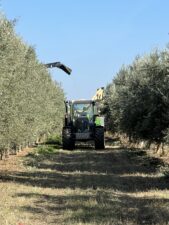
So, I may throw in some comments and thoughts about what I learned on that tour as we go through our conversation. But basically, we went to the olive grove, and we got to get up on the big harvester. It’s called something, I know it’s not a tractor, it’s called something – what’s it called Leandro?
Leandro Ravetti (06:56):
The colossus (laughs).
Melissa Joy (06:57):
The Colossus, it’s huge. And that was really cool to be up on that harvester and look down over the grove and to see the olives coming into the harvester. And then we went to see the milling process and the bottling, and then later we learned a lot on how to taste olive oil and the health benefits, and some culinary uses. So, it was a wonderful experience. I wanted to share that as we kick off our conversation.
So, let’s start off with Leandro. What exactly is extra virgin olive oil and we’ll probably call it EVOO moving forward, you know Rachael Ray back in the day. What is extra virgin olive oil and how is it different from other types of olive oil?
Leandro Ravetti (07:38):
It’s a great question. Certainly, names within the olive oil industry can be a bit confusing. I think the most important thing is to understand that when healthcare professionals talk about all the health benefits behind olive oil, they’re really talking about the health benefit behind extra virgin olive oil. I’ll go a little bit into the process of it to explain how it happens and how it leads to the different types of oil.
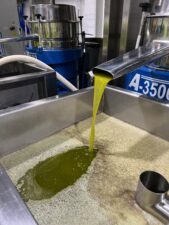
When the olives are harvested from the trees and then they’re actually smashed in the mill, and in the old days, this used to be done with big stone wheels, now it’s done in a much more efficient way with stainless steel hammer crushers. But that turns the olives into a sort of tapenade. It is almost like an olive paste.
That paste gets mixed quite gently for about half an hour, allowing the little droplets of oil to merge into a larger oily paste. But also, very importantly for a lot of the things that we’re going to be discussing today, this is the moment where the oil that was naturally present in the cells of the flesh of the olives get infused with phytonutrients that are naturally present in the olives.
Then that paste is simply put through a centrifuge, the oil comes on one end and then the rest of the pulp on the other end. So, it is truly the juice of the olive. So, in general terms, the oil that is produced in that natural way without using heat, without using chemicals, they’re called, in general, “virgin oils,” and within those virgin oils, are different grades.
Extra virgin olive oil is the highest grade, the highest quality. When the fruit is healthy, is picked at the right time, milled quickly, produces extra virgin olive oil. If an olive fruit had any problems, such as a plant disease, or was picked from the ground, or not milled quickly, it ends up producing a lower quality product that is called virgin oil, very rarely you will see it on supermarket shelves.
And then you go to the worst quality, which traditionally in the industry is called, “lampante oil,” because in the old days, that used to be burned in the lamps. They are also referred to as crude oil. This is a really low-quality, fermented oil, and that oil needs to be refined or needs to be treated with chemicals to be suitable for human consumption. That leads to another group of different type of olive oils.
So, summarizing, extra virgin olive oil, is the highest quality, natural fresh juice of the olive. All the rest of the virgin olive oils that are not of the highest quality end up being refined. They end up being filtered, treated with chemicals to neutralize the high acidity levels, then they get deodorized with steam. So, they get exposed to high temperatures and chemicals, and that refined olive oil typically is sold on the supermarket shelves as olive oil.
So, when you see something that says, “olive oil” or “light olive oil” or “extra light olive oil,” what it means is that it is refined olive oil. That’s a summary, a wide range of different grades of olive oils you can find. Again, extra virgin olive oil is the only one that brings all the health benefits that we’re going to be discussing today.
Melissa Joy (10:36):
That makes perfect sense, I’m following. And we may talk more about what to look for – well I know we’re going to talk about that towards the end more about what to look for so that we have some practical tips for people.
What else did you want to say about harvesting or production? I know that we saw different colored olives, we talked about the colossus, the harvester and the processing time, like you said, when it’s processed quickly, it’s fresher. And, do you want to anything about the work that Cobram Estate does with dietitians?
Leandro Ravetti (11:06):
I think that my career in a sense, when I was describing the timing that I was involved in the industry saw a very important change in the olive industry globally. The olive industry traditionally and still is largely in the Mediterranean, a very fragmented industry where you have millions of small growers that end up bringing the fruit to a co-op and then sells that oil to a trading company.
So, that fragmentation of the industry and that lack of mechanization in many ways sometimes limits the ability to produce a really high-quality product. Because we are talking about a fresh juice, the faster that you can pick the fruit at the right time, and then mill it, convert it into oil that then is stored properly in the stainless steel tanks with nitrogen and temperature control, et cetera – the more that you can lock in all the health benefits that will be associated with extra virgin olive oil.
And that ability to mill at the right time quickly, it’s a lot easier when you are a large vertically integrated company because you control every step of the chain; from growing the oil to harvesting it to taking it to the mill, milling it, et cetera.
And that was a big transformation for the industry to have a company of our kind with full vertical integration, which was not common at all. More common, is for very small-scale types of production, that are unable to produce oil for the retail sector. So, that was a big change. That was sort of one of the big differences (for Cobram Estate) that ended up being a great benefit for consumers because they have access to really high-quality oils at everyday prices.
And Mary will obviously, be talking a lot about it because one of the main advantages of extra virgin olive oil when it comes down into the world of fats and oils is the health benefits. We as a company, since the very beginning, have invested heavily in education of the consumers, and education of healthcare professionals.
And we have always had dietitians employed throughout the organization – we have a dietitian as a member of our board, and linked to that, we launched many years ago, a healthcare professional educational program. We believe that the more that healthcare professionals and consumers understand the health benefits of olive oil, the better it will be for everybody. It’s an amazing product.
Mary Flynn (13:22):
So, can I just throw in Leandro, I don’t know if you mentioned how they’re grown in rows because I think that’s interesting. When I talk about it to people instead of growing on big trees as they are in Europe, at Cobram, you grow the olives in rows so that you’re able to harvest them more quickly, and it’s a really good way to grow them.
Leandro Ravetti (13:38):
And that is part of the modern way of growing olives. Growing the olives as a hedge allows us to do a continuous mechanical harvesting of the fruit – it is a critical factor to be able to pick the fruit at the right time and deliver it to the mill quickly.
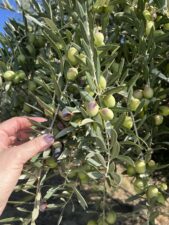
I think you mentioned earlier the different colors. Every variety starts green and will end up going black as it ripens. From a quality and health perspective, the best olive oils are produced earlier in the season when the fruit is still green or just changing color. Having said that, for the traditional olive picking, when you’ve got big trees and have to do it (harvest) by hand, picking green olives is very complicated, and very difficult.
So, normally, there was a natural tendency in the industry to let the fruit ripen too much and even letting it drop and picking it from the ground, and that was linked to all of the issues in producing a product that was not high quality or as healthy. Harvesting earlier in the season produces higher quality oil.
Melissa Joy (14:34):
That’s so interesting. This is why I love learning about agriculture. Thank you for sharing all of that. Before we jump into talking about some of the health benefits, I would like you to talk about the importance of your company being in California in the United States versus prior to that, all the olive oil we would get was from outside of the country, right?
Leandro Ravetti (14:56):
Usually, I get asked the question, “which country produces the best olive oil?” And the best way of answering that is the country where you live. It’s because extra virgin olive oil is a fresh product. It’s difficult for consumers to understand that a pantry staple can actually be fresh and that freshness matters. So, like any other fresh product, local is fresher, and we’re going to see why fresher is also better for your health.
And we obviously, started our journey in Australia where we managed to grow consumption of extra virgin olive oil in the country significantly from a relatively low base of under one liter per capita to now over two liters per capita with more than 50% of that being sourced in Australia and domestically produced.
And when we saw the opportunity to expand the company rather than us trying to export Australian oil into the US, we thought that the best thing to do was to grow it locally. So, for American consumers to have access to American oil. And the American statistics today are very similar to that of Australia 20 years ago.
Consumption of around one liter per capita with less than 5% of that consumption being produced locally. So, we saw those opportunities and that’s one of the main reasons why we are here and very pleased to do so because California in particular, offers great environmental conditions to grow olives and to produce really high-quality extra virgin olive oil.
Melissa Joy (16:24):
Wonderful. Okay so Mary, you know if you stop anybody on the street and ask them is olive oil healthy? They’re going to say yes. But you are going to enlighten us on the nuances and the research, and the things that maybe we know it’s healthy, but we’re going to learn a lot more probably about why.
So, I know there’s been a ton of research on the Mediterranean Diet, but what do we know about extra virgin olive oil and the Mediterranean Diet?
Mary Flynn (16:51):
So, it’s a critical part of the Mediterranean Diet. When I teach it to my students, I’ll say if you’re looking at a study that has a title with something about the Mediterranean Diet, immediately go to the methods and see how they’re describing it, because if they are not including extra virgin olive oil, you’re not going to see the health benefits you’d expect.Especially if they use the monounsaturated fat to saturated fat ratio or the med diet score.
My general rule of thumb is if the study comes from a Mediterranean country, you’re probably going to see at least some benefits. But if it’s not, it’s a study done in the US, or say in England, you don’t see the benefits because they’re using olive oil, and not using extra virgin olive oil.
And as a matter of fact, in the United States up until 2005, the main source of monounsaturated fat in the U.S. diet was beef and then seed oils. Now, it’s seed oils and beef again. Even now, when you say “olive oil,” you have to make sure it’s extra virgin because you will not see the same health benefits if its not extra virgin olive oil.
Melissa Joy (17:45):
Yeah, and I’ll be honest, I did not know that. And you also mentioned something that I don’t think a lot of people know; wait, monounsaturated fats in beef (laughs)? I know this but a lot of people don’t know this.
Mary Flynn (17:56):
Yes, so when I went into research and started teaching, I always explain that we have the luxury of spending a lot of time looking into things. I know that most people think of beef as being saturated fat, and it does have some, but most cuts have a little bit more monounsaturated fat as compared to saturated, which is interesting. Which is probably a good thing historically because otherwise olive oil wouldn’t be associated with monounsaturated fat.
So, that’s when in the 90s, early 90s, I really started focusing on food as opposed to nutrients. Instead, I started focusing on food sources of the nutrients. It just makes such a big difference in what health outcomes you have.
Melissa Joy (18:33):
Yeah, and I mean obviously throughout this whole conversation, if I say something wrong, please correct me. But I think just reminding people, when we’re looking at different fats and oils and even something like beef, there’s a mix of types of fats in there.
So, even something like extra virgin olive oil, it’s not a hundred percent monounsaturated fat, it’s one of the highest percentages of monounsaturated fat of all the oils, but it’s a mixture. So, that explains some of that.
But tell me more about what is it in the EVOO that makes it healthy? I mean we know monounsaturated fats, but there’s more to that story.
Mary Flynn (19:12):
Sure. So, the US still gives olive oil (all olive oil and other vegetable oils) a health claim due to its monounsaturated fat content. And it’s nice that it’s high in monounsaturated fat because then it doesn’t readily oxidize in our bodies. So, that’s a good thing, but it’s not where the health benefits come from.
Because if you look at studies that compare extra virgin olive oil (or labeled as extra virgin), a lot of times, they have the phenols listed, so the phenols content of the extra virgin olive oil is what gives it the health benefits.
So, there are a number of health benefits found in extra virgin olive oil but most studies show that if you compare within a study one level of phenols versus a higher level of phenols, you see stronger (health) benefits as you go up in phenols.
In the studies that compare refined olive oil to extra virgin olive oil, you do not see the health benefits with the refined olive oil, you only see the benefits with extra virgin olive oil. All of these studies are done in Europe and usually compare a refined oil to a medium and then a high (phenol) extra virgin olive oil, but the findings are very consistent.
So when you read them, it has to be the phenol content and Leandro probably can speak more to this, but it doesn’t have to be that high (the phenol content). You start to see changes in HDL at 150 total phenols, but the more you go over 300, 400, you really start to see additional benefits.
Leandro Ravetti (20:31):
I think that’s an important point. The way we see it, it is the extra virgin olive oil that provides the free fatty acids, and from my point of view, it is a great matrix to deliver a biologically active phytonutrient like the biophenols. There are a few other antioxidants as well, alpha tocopherol, squalane.
They plant sterols present also play a different role than fundamentally what Mary was saying; when you looked at the total quantity in comparison with other foods, the antioxidants levels seem low.
Like if you compare the antioxidants in extra virgin olive oil against a cup of green tea for example or a bunch of strawberries, and why they work so well … one of the critical things that we need to remember is the majority of the antioxidants in all of those other foods are water-soluble.
The antioxidants in olive oil are fat-soluble, and what they are trying to protect in our bodies, are largely fat tissue; in the brain, the cholesterol in the blood. So, they have very effective substances when it comes down to protecting fat from oxidation.
Melissa Joy (21:35):
Fascinating. Mary, I know you have a study that was published in Nutrients in 2023, you may have already sort of alluded to that, but is there anything you wanted to say? Of course, I’ll link that in the show notes at soundbitesrd.com, but do you want to tell us a little bit more about this study?
Mary Flynn (21:50):
So, the reason I did that study was as I said, starting in year 2000, you start to see more studies looking at specific risk factors that olive oil can improve. And so, the initial ones wrote a lot on blood pressure, those are the ones that came out, some on lipid levels.
So, what I wanted to do was to review the literature and find the studies that have to say extra virgin olive oil in the methods, then I look at the ones that compare it to other oils, seed oils, and then to low fat diets and refined olive oil.
So, those were the variables I had, and I was surprised there weren’t more, but there were enough to make some good decisions on that. And what it showed was that extra virgin olive oil is superior for lowering blood pressure; higher phenols are possibly needed to lower diastolic, but certainly systolic improved with extra virgin olive oil. It will lower blood glucose and insulin.
There’s a study out of Ireland from 2000, which is interesting where they show that extra virgin olive oil compared to sunflower oil will improve insulin sensitivity, which is really cool. It shows that transport is better, it will raise HDL. That’s one of the things I used to get from cardiologists early on. Like oh my patients have higher HDL because they’re on olive oil, not necessarily from it. You know, you give so many lectures in the hospital, I think it sort of seeped in.
But I think an interesting thing we do, as you probably know, as your listeners probably know also, there is no medicine that will raise HDL. Everything we do for HDL will lower triglycerides, lowering the VLDL. So, you have it catabolized to make more HDL. But olive oil on its own will independently raise HDL.
What’s interesting is if someone has a high HDL, like there’s some studies out of Europe, men that have like a 47, 48 close to 50 (which is fine for male), the HDL does not necessarily change in total value, but the HDL works better, improves the function of the HDL, which is really interesting man, it’s very cool.
It will lower LDL. We probably all know LDL is not that diet sensitive, but more importantly, it will certainly decrease the oxidation of LDL. And oxidizing LDLs, it will improve endothelial function. So, in the paper that I wrote, it was all clinical values.
So, what I was trying to say to dietitians, say to doctors, if you get your patients to use extra virgin olive oil, these are the changes you’d expect in a clinical setting. You’re not going to have to go into research lab.
And then it’s also related to better body weight. There are certainly studies out of Spain showing that people who use olive oils have better body weight. And that’s how I got interested years ago in using it for weight loss protocols, which was really effective in losing weight. It gets into calories, everyone says, “Oh it has so many calories,” but you know, it just is something very unique about extra virgin olive oil.
So, the other thing I wanted to say after reading so many studies over time, was “what’s the minimum amount of olive oil you need in a day to see risk factors improved, and in how short of a time to see results?”
I was doing these studies in the 80s in a metabolic kitchen, and the physicians were interested in knowing how quickly they can you see lipoproteins change, and remember, this was before the statins (drugs).
What I found was with 30 milliliters a day as the baseline, which is about two tablespoons, and in three weeks, you will start to see improvement. Some of the factors improve slightly more with time, but I sometimes I wonder if it’s the reduction in (body) weight that’s adding to that. But certainly, in three weeks, it’s great because you don’t have to tell people to use extra virgin olive oil every day for a year to see the benefit. Three weeks, it’s a very short period of time to see results.
Leandro Ravetti (25:13):
And the interesting thing Mary, is that those two, three tablespoons per day is the actual consumption of extra virgin olive oil in the Mediterranean. When you look at a per capita basis, 10 to 14 liters per capita per year, that’s about two to three tablespoons a day, which is regretfully in America now is less than 10% of that. So, we’re a long way from getting to that recommended intake.
Melissa Joy (25:34):
Thank you. Mary, the new dietary guidelines just came out and olive oil is recommended, thankfully (laughs). What are your thoughts about the healthy fat messaging and the new guidelines? Just briefly, we don’t need to go down the rabbit hole.
Mary Flynn (25:49):
Before I even read the full report, I did notice that olive oil was mentioned, however, unfortunately, in combination with the recommendation to consume olive oil, it also says to, “use oils with essential fatty acids like olive oil.” As dietitians, we know that essential fatty acids are omega-3 and omega-6, which are not a significant source in olive oil. That is essentially wrong information, so I hope it doesn’t create too much confusion.
I have mixed feelings about the newest dietary guidelines because I wonder who put them together? As you know, the federal government releases new guidelines since 1980 and every five years, they revise and release a new set of guidelines. There are some versions that are better than others. These are not ones that we’re going to remember fondly.
Melissa Joy (26:25):
A lot of mixed feelings. I did an episode on this recently, so I’ll have my listeners scroll back to that one. There’s already a lot of confusion about food and especially fats and what is “healthy fat,”so thank you for weighing in on that.
We started talking about polyphenols or phenolic compounds or biophenols as you recommend that is the more accurate terminology. I’m curious to learn more about biophenols and what is unique about the ones found in EVOO. Can you elaborate for us?
Leandro Ravetti (26:47):
I think there’s confusion around the lingo, especially if you’re not a chemist or biochemist, understanding the difference between polyphenols and biophenols is nuanced. The most important point I want to make today is that all of this knowledge we’re discussing today is very recent scientific discovery or research-based health and nutrition evidence.
In the 60s, the consensus was that olive oil was bad for you. And then it was the 80s and 90s to say, “Well, no, we got this wrong,” and this is because of fat composition (good and bad fats) and then now, we’re saying “Oh, sorry, we got this wrong again,” it’s all the plant nutrients that are naturally in extra virgin olive oil and that is why it is healthy for you.
A big part of the confusion relates to the biophenols or phenolic compounds that we’re learning more about in the last decade. So, even the terms we are using today are quite recent. In the beginning, the term “polyphenols” was introduced because we are talking about substances that have a phenol group, and in extra virgin olive oil, there are many compounds with them, so the word “poly” was used to express “many.” There are more than twenty different biophenols in extra virgin olive oil.
So, really, it’s a wide range and different variety of antioxidants. The chemist and the biochemists corrected this terminology because “polyphenols” should only be used to describe compounds that had more than one phenol group in its structure. This gave rise to new terminology that strives to be more accurate. The word “biophenol” started to be used because these are substances, ie. phenolic compounds that have biological activity, thus the word is a combination those two words, resulting in the term, “biophenol.”
While it is a generic term, the most important thing to understand is that we’re talking about these amazing and very powerful substances for health. What’s even more interesting (and a fun fact), is that the olives themselves, only contain one or two of the biophenols, mainly oleuropein and ligstroside.
However, the broader range of 20 plus phenolic compounds or biophenols present in extra virgin olive oil present themselves during the malaxation process, or the early stages of mechanically crushing the olives to make extra virgin olive oil. It is a result of enzymes naturally present in the olive fruit with the right combination of temperature and time during that creates a biological pathway of generating this wide range of antioxidants that obviously our bodies enjoy very much rather than having one type …
Like in most other things when it comes down to nutrition, diversity, it’s very well-enjoyed by our bodies and this is the case. And it’s interesting because there’s a very fine balance. If you do not mix or do you not malax the paste long enough, you don’t quite get the diversity (of biophenols). And if you do it for too long or at too high temperatures, you have a detrimental impact.
So, it’s a very narrow range where you get the maximum amount of both quantity and diversity of antioxidants in extra virgin olive oil.
Melissa Joy (29:17):
Excellent. And is that or how is that related to that peppery taste that we get with the tasting?
Leandro Ravetti (29:25):
It’s quite interesting because both pepperiness or pungency as we call it, which is sort of described as that tingling sensation on the back of our throat or bitterness, which really feels a bit more of a drying sensation on the side of our tongue or even more of a chilly feeling overall in our mouth, they’re all sensations driven by these biophenolic substances. They all have different impact in the way that we perceive them.
There’s a couple of them that are absolutely unique to extra virgin olive oil. I mean, we’ve got some generic ones like hydroxytyrosol that sort of end up being one of the final pathways of the most phenols around.
But there’s some others that are very unique to extra virgin olive oil, especially those that are coming from the oleuropein. One of them for example oleacein or oleocanthal. Oleocanthal has created a ‘society of oleocanthal’ around the world for this amazing biophenol that is a natural anti-inflammatory with a very similar action to ibuprofen.
In fact, one of the reasons it was discovered is because someone was doing some olive oil testing, they said it hits the back of my throat very much in the same way that the ibuprofen feels, and obviously, the receptor that we have here was actually detecting it in a very similar way.
Melissa Joy (30:34):
Well, that’s really interesting. So, biophenol versus polyphenols or even antioxidants, that is really interesting information. Mary, do all culinary oils contain polyphenols or biophenols?
Mary Flynn (30:48):
No, they don’t. There are possibly some in the virgin avocado oil but I’m not sure if anyone’s saying that there’s health benefits per se. Extra virgin olive oil is a very unique food. I think part of it is that it is an old food (traditionally speaking), and the phytonutrients are (naturally) present in the plant to protect it.
And like Leandro said, you make more (biophenols) when you take the fruit and crush it. But that happens all the time like with grapes that give us wine. But with such an old food, it has an interesting range of biophenols that have health benefits that are not in any other food.
Melissa Joy (31:24):
Very interesting.
Leandro Ravetti (31:25):
And I think when it comes down to that complexity of biophenols, I still really think that we still don’t know … there’s another area that we are just starting to scratch the surface which is the interaction of those biophenols with other antioxidants from other foods, particularly vegetables.
In the cooking process, what we’re seeing is a recombination (of antioxidants). Extra virgin olive oil brings 20 plus biophenols to the table. But then when combined with anything from broccoli to (chuckles) carrots or whatever (vegetables), especially when you are cooking them in extra virgin olive oil, that combination creates a whole range of even more antioxidants and effects.
There’s a lot of work that has been done mainly around tomatoes and the combination with extra virgin oil. An example is “sofrito,” that mix of tomatoes, herbs and olive oil that is the basis of a lot ofMediterranean dishes – it ends up being (actually) a gem. So, my Nana probably knew a fair bit about medicine by doing that.
Melissa Joy (32:23):
Yes. And we’re going to talk about cooking, but going back to the peppery taste or the tingling sensation in the throat – do we need to make sure our evoo has that – indicating it has a high level of biophenols or is any evoo – like a milder flavor evoo sufficient?
Leandro Ravetti (32:31):
The easiest comparison for the general audition would be red wines. In general terms, we talk about tannins and the importance of tannins and how they interact. And obviously, you’ve got wines with a wide range of tannins from really big reds to very light pinot noir type of things.
And in the case of extra virgin olive oils, even the milder extra virgin olive oils still, if they’re fresh, can deliver enough antioxidants in three tablespoons, so you can still get the amount of antioxidants that you need.
It becomes then a question of style. You got extra virgin olive oils with significantly high levels of antioxidants that deliver a lot more peppery, bitter oils which go fantastically well with certain foods, particularly strong flavored foods, bitter salads and so on. And then there are milder oils that go a lot better with foods that are not as flavorful, mild tasting foods such as fish, seafood or in baking, as some of the fat to replace in a recipe.
I think one of the other aspects that normally doesn’t get mentioned enough about extra virgin olive oil and the Mediterranean Diet —is that extra virgin olive oil makes vegetable taste so much better (laughs). And because they taste better, we end up eating more of them in a much more fulfilling meal. So, extra virgin olive oil not only delivers a lot of healthiness on its own, but help us to have an overall better diet as well and is much more enjoyable because of that we are likely to stick to it for longer.
And from that point of view, I would say definitely pick and choose the style of oil that suits your cooking that you like the most. The most important thing would be that you make extra virgin olive oil the main source of fat in your diet.
Melissa Joy (34:10):
Yes, we love foods that are great vehicles for us to get other healthy foods (laughs), very good. So, talking a little bit more about cooking, there’s maybe a myth out there or a misunderstanding that maybe certain types of cooking are not appropriate with EVOO because of smoke point. Can you explain a little bit more about that?
Mary Flynn (34:33):
I heard that many times, probably up to like 10 years ago, and so I tried to find out where’s this coming from. And so, there were six studies published at that time. They all brought olive oil to a 170 centigrade temperature, and the shortest time reporting out is five hours. So, if you boil out olive oil for five hours, it’s going to break down.
That makes sense, but most of them didn’t use extra virgin olive oil, and, instead used refined olive oil. So, a couple of important points; we don’t cook at smoke points, so that’s not something that is relevant.
So, there was an interesting study done that Leandro maybe can talk more about, but what it showed was when you look at what can happen to oils when you heat them, that when they start to break down, that’s the problem. They produce these polar compounds which aren’t good in your body, there’s upper limits to whatever you’re supposed to be using.
This study clearly showed if it’s extra virgin olive oil with phenols in it, it will be very stable at the highest temperature. Another study done at UC Davis showed that it seems to be the oxygen is much more of a problem than heat.
They used olive oil at medium temperatures on the top of the stove and olive oil in the stove (at higher temperatures for roasting). The breakdown was much higher on top of the stove versus roasting (at higher temperatures), so oxygen exposure is not a good thing for the stability of the oil.
To build on Leandro’s talking about how people eat more vegetables because they taste better, that is certainly true. From a dietitian standpoint, what we can always point out is that the carotenoid components, the colorful components in vegetables are fat soluble, so they can be absorbed by chylomicrons.
If you’re using the fat in cooking (there’s a study showing this), the more fat you have present (olive oil was what they used) the more of the carotenoids you bring into the body. And so, I think it explains why the information out of Europe looking at vegetable consumption in cancer seems to be stronger and more positive than what we get.
In the United States, we looked at consumption. We believe eating more vegetables should lead to less cancers but we don’t have that evidence. So, what is it? We just don’t cook them right. You know in Europe, you don’t have a lot of plain vegetables. You might even be using butter or cream on them but certainly extra virgin olive oil is the best thing to use, so it’s really important.
Also, the glucosinolates which are in the whole cruciferous family, they are water soluble. So, if you are cooking those vegetables in water, broccoli, cabbage, cauliflower, kale; if you’re cooking those in water, you’re going to lose the cancer-fighting components.
Steaming is probably not as problematic, and to my knowledge, no one has shown until they’re brought into the body, but the studies will say they are preserved with fat. If the water’s soluble and the fat traps them, you can bring them into a body. And again, the study’s showing benefit for most of the cruciferous family are out of Europe and not in the United States.
Melissa Joy (37:18):
Great, thank you. Yeah, I have a smoke point chart in front of me and if it says the smoke point for EVOO is 400 degrees Fahrenheit, you’re saying if I want to roast veggies in the oven at 400, 425, 450, I don’t need to worry about this number.
Leandro Ravetti (37:35):
But also, I think that there’s a point that smoke point is not a good predictor of the stability of fat and the cooking conditions. So, I probably explained a little bit about how smoke points are determined.
Smoke point is actually a very basic measurement where they put oil into a small brass cap, they start hitting the cap and someone is looking at it, and when they see smoke coming up, they record at what temperature that happens. They don’t understand what the nature of that smoke is, provided that something comes up, they record it.
So, the biggest issue with this method is that virgin oils, extra virgin olive oil, virgin coconut oil, virgin avocado oil, because it’s a natural juice of the fruit, contains also small amounts of moisture, still a small amount of particle or flesh, it’s almost like a fresh squeeze orange juice versus Fanta, but that’s the comparison that I’m doing.
So, because of that, a little bit of the smoke that comes at a slightly lower temperatures than refined oils is linked to the fact that what you’re seeing is some of the moistures steaming out. Now, it’s a very different story when you’re comparing it against refined oils because when you see smoke, it’s truly the breakdown of the fat.
So, the chemists have shown that the best way of predicting the stability is what is called oxidative stability, measured on a Ranciment machine. Essentially, you put oil into a little oil torture chamber because you heat the oil up to 450 degrees for a long time, you start bubbling air into it at a set pace, and you see how long it takes for the oil to crack.
Under those conditions, what the studies have shown is that extra virgin olive oil is one of the most stable, which makes sense because the fatty acid profile being so largely skewed towards monounsaturated and saturated fat make it really stable.
And also, the presence of those antioxidants that we’re talking about, the biophenol, squalane and alpha tocopherol make it even more stable in comparison with some of the other saturated fat like for example, coconut oil that don’t have those natural antioxidants that will protect it during that process. So, as a combination, not only that you can cook with extra virgin olive oil, but all the evidence is showing that you should cook with extra virgin olive oil.
Melissa Joy (39:53):
Wonderful. That is remarkable. Thank you for explaining all of that. So, can you give us a few simple tips on what to look for when we’re buying EVOO?
Leandro Ravetti (40:03):
Well, obviously, from what we discussed so far, first thing is that it has to be extra virgin olive oil. If it’s not, you will not get all the health benefits that we discussed this time. But now, also, regretfully not all oils labeled extra virgin are of the highest quality. So, the challenge is how to choose the best oil when shopping in the store?
My advice is first, to look for the harvest date on the bottles. In the northern hemisphere here in California, harvest takes play between October and November. So, now, people shopping in stores should be looking for harvest 2025. So, oil that have been harvested and produced in October, November, December 2025.
Olives are harvested only once a year, so ideally you want to consume the oil that was produced within the last 12 months. So, it’s fresher because those antioxidants obviously decline over time, you won’t have all the health benefit. Look for a dark glass bottle, some of those antioxidants and the fat in general are susceptible to light. So, darker glass protects the oil more against light.
I would also recommend locally produced oil, again for the reasons that we discussed. An oil that was produced locally, most likely will hit the shelves quicker and will be fresher. And if you know the producer in particular, trusted producer, absolutely do that.
And finally, there’s a number of different quality seals that provide some certainty around the quality that is inside the bottles. California, in particular, through the Olive Oil Commission of California, have one of the strictest quality standards in the world.
So, any oil that actually had a seal of the Olive Oil Commission of California is a way of guaranteeing that the oil actually have made those strictest quality standards and provide more certainty to consumers at the time of buying.
Melissa Joy (41:55):
I know that storing-wise too, you want to keep it away from heat and light and all of that as well, to keep it from oxidizing, going bad quicker than it should, or than you want it to. How do we know if it’s bad or if it’s rancid?
Leandro Ravetti (42:12):
Smell and taste, trust your senses. I think that we all should do not just with extra virgin olive oil but with any fats and oils that we have in our pantry. Smell it first. If it smells stale, old, peanuts sort of thing or like wet socks or anything that is not fresh, trust your senses, it’s probably all rancid, not good for you.
So, good extra virgin olive oil should remind you of anything fresh; fresh cut grass, fresh fruits, fresh vegetables. Subtle note; if it’s something too strong, not fresh at all, fermented, it’s better just put it aside.
Most fats and oils go rancid over time. So, my advice is to buy the size of packaging of extra virgin olive oil that you would normally consume within a month. In doing so, you will always be keeping something that is fairly fresh in your pantry that is delivering all the health benefits.
Melissa Joy (43:08):
Okay, great. Mary, I know you talked about the 30 milliliters a day, or two tablespoons-ish, but is that a specific recommendation for overall health, or is there one for specific chronic conditions? Any practical recommendations for adding to our daily diets as well? I would love to hear from you.
Mary Flynn (43:28):
Sure. So, as we’ve discussed, it’s best to cook vegetables with olive oil. The 30 mls or the two tablespoon will come from the baseline where you see benefit in studies. Most studies use more than that, more like 60 mls or you know 45 mls, so more is always better. My rule of thumb is a tablespoon of extra virgin olive oil for one cup of vegetables. You’re not drizzling it. I always say to patients, “don’t drizzle it, pour it on as much as you can!”
The other thing I think that’s important for consumers to consider is to consider the price per tablespoon, because extra virgin olive oil is actually a very reasonable investment. Patients will say, “Oh, it costs more than vegetable (seed) oil and more than regular olive oil.”
And typically, what I’ll say is that you can get a really good extra virgin olive oil for less than 40 cents a tablespoon. And when you think of all the health benefits, it’s like a medicine and it makes your food taste better, and it makes the whole meal taste better. Its worth it.
The other thing is if you’re buying extra virgin olive oil and compare it to the price of olive oil, it’s usually just two or three, maybe $4 more. I’m not telling a patient to buy something like the store brand olive oil that costs $8 compared to buying something that costs like $80. The price margin between extra virgin olive oil and regular olive oil is not there. And if you’re using it every day, it will probably help improve your health. So, it’s just something to get you to eat more vegetables, and as a whole it is an inexpensive investment in your overall health.
One of the studies I did was looking at a plant-based (extra virgin) olive oil diet, and making recipes from foods found in a food pantry, and I showed patients using the recipes for three main meals a week (these are mostly moms with kids), that it significantly improved food insecurity, which I was hoping would happen.
It was really impressive how much they improved the food insecurity because they weren’t buying as much meat, poultry, seafood – those are the expensive parts of someone’s food budget. But what was interesting was I started this in 2006.
By 2009, we had 75 people and what was interesting, by changing three main meals (dinners) a week to mostly plant-based (vegetable) meals cooked in extra virgin olive oil, 48% of them lost weight and some lost in 30 pounds in six months.
It wasn’t a few pounds of weight loss. It was significant. So, what it speaks to is that a plant-based diet that includes extra virgin olive oil may mean that people are not as hungry. So, they’re not snacking as much and it costs so much less, because they’re not getting all of this extra protein. We don’t store extra protein as muscle, we store it as fat.
So, it had all these positive spinoffs. They were eating more vegetables, and they were all really happy because their kids were healthier, and they were healthier. So, it was a great success, because when it was all finished, all it was about was changing three main meals.
So, I say to my patients now, if you just start by changing a few lunches, a few dinners, you will start to lose weight. You should be using extra virgin olive oil every day, even if you don’t want to do plant-based diet every day, start just doing some of it.
Melissa Joy (46:11):
Great. And I’m very happy that you mentioned don’t just drizzle (extra virgin olive oil) it on your roasted vegetables, use a little bit more. Because, I try to not overdo it, but then if I feel like I’m putting more in there now, I’m reaping the benefits, it’s okay, it’s good.
As we’re wrapping up here, I’ve got some great resources I want to share at the end, but before we do that, I would love to hear some bottom-line takeaways and tips that you want to leave the listeners with.
Leandro Ravetti (46:39):
Mary, I’m going to say … I think one of the best statements that you’ve always done, which is that when it comes down to scientifically proven health benefits, there’s no other food that comes even close to extra virgin olive oil to the prevention and the management of chronic disease.
This is something that it’s usually, there’s not too much attention paid to it, but when you look at the resources available and the amount of scientific evidence behind this product, it is truly amazing. It is truly amazing.
Melissa Joy (47:08):
Great. Mary, did you want to add anything else?
Mary Flynn (47:10):
I second that, there’s no other food or medicine. We don’t have anything that even close to extra virgin olive oil. My reason becoming so interested in extra virgin olive oil was the studies were just so impressive and consistent. Anyone as a research dietitian, we look for consistency and you’ll see, well this study didn’t say that but this one did, but what’s difference between them?
You don’t have a study that says extra virgin olive oil has anything negative. There’s no downside to extra virgin olive oil. And again, the fact that it makes everything taste better is just a bonus. You know, we eat for taste and health now is third factor, so its taste, cost and convenience. Now, some surveys say nutrition, so you’ve got the good taste, it’s economical, and it’s definitely nutritious!
Leandro Ravetti (47:51):
It’s important to remember that not all olive oils are equal. When it comes down to health benefits, there’s no comparison to extra virgin olive oil. And even within the extra virgin olive oils, the fresher, the better, the healthier, and the tastier it is for us.
So, normally, locally produced extra virgin olive oil is great guidance, but make sure that you always taste it, and trust your senses. Extra virgin olive oil that tastes really, really good most likely it’s going to be good for you too.
Leandro Ravetti (48:17):
Wonderful. Well, there are some great resources that I want to share real quick before we say goodbye. There is the Olive Wellness Institute, it’s a great resource for dietitians to learn about EVOO, the cooking issues that we talked about, smoke point and all of that. There’s a podcast too. So, you can look for the Olive Wellness Institute. I’ll have a link to all of that in my show notes at soundbitesrd.com.
There’s also Cobram’s Healthcare Professional eNewsletter that people can sign up for, and I’ll have a link in my show notes or you can go to cobramestate.com/healthprofessionals, and the Cobram Estate dietitians are hosting a webinar and virtual EVOO sampling event in March, and they’ll also be attending key dietitian events the rest of the year.
So, look for that, and follow Cobram Estate USA on social media, they’re on Instagram and Facebook for sure. So, that’s at Cobram Estate, USA. And like I said, I’ll have all the links to the resources we discussed in my show notes at soundbitesrd.com. I’ll also put in some photos and videos from the tour that I attended.
Mary and Leandro, thank you so much for coming on the show and sharing on this very interesting and important information. I feel like everybody knows olive oil is healthy, but the specifics that you shared, I think will make all the difference in people actually being able to reap the health benefits of olive oil “EVOO”. So, thank you so much.
Mary Flynn (49:51):
Thank you, Melissa. It was fun.
Leandro Ravetti (49:52):
No, thank you very much for inviting us. It’s pretty clear that we love the product and (laughs) that we can talk a lot about it.
Melissa Joy (49:59):
I know, we can do a whole series on this. Well, thank you so much. And for everybody listening, as always, enjoy your food with health in mind and some EVOO, until next time.
[Music Playing]
Voiceover (50:12):
For more information, visit soundbitesrd.com. This podcast does not provide medical advice; it is for informational purposes only. Please see a registered dietitian for individualized advice.
Music by Dave Birk, produced by JAG in Detroit Podcasts. Copyright Sound Bites, Inc. All rights reserved.
LISTEN, LEARN AND EARN
Listen to select Sound Bites Podcasts and earn free CEU credits approved by the Commission on Dietetic Registration (CDR) for registered dietitian nutritionists and dietetic technicians, registered. Get started!
Get Melissa’s Sound Science Toolkit here!
Partnerships:
Sound Bites is partnering with the Association of Diabetes Care and Education Specialists (formerly the American Association of Diabetes Educators)! Stay tuned for updates on the podcast, blog and newsletter!
Sound Bites is partnering with the International Food Information Council! Stay tuned for updates on the podcast, blog and newsletter!
Sign up for my monthly newsletter and episode eblasts so you never miss an update!
Listen on Stitcher (Android)
Install the Stitcher App
1. Search for “sound bites with melissa joy dobbins” 2. Choose Play Current Episode or Add to Playlist
Choose “Play Episode”
Subscribe & Review on iPhone
Open the “Podcast” app on your iPhone
Search for “Sound bites with melissa joy dobbins”
Open the podcast and click “Subscribe” and your done!
Write a Review
Click “Reviews”, then “Write a Review”.
Subscribe via RSS Feed
Navigate to any podcast player . Click on the RSS feed icon.
Click on the RSS feed icon.
Click on RSS Feed
Choose which application you would like to use to receive the RSS feed
Click “Subscribe Now”
Confirm settings and subscribe.
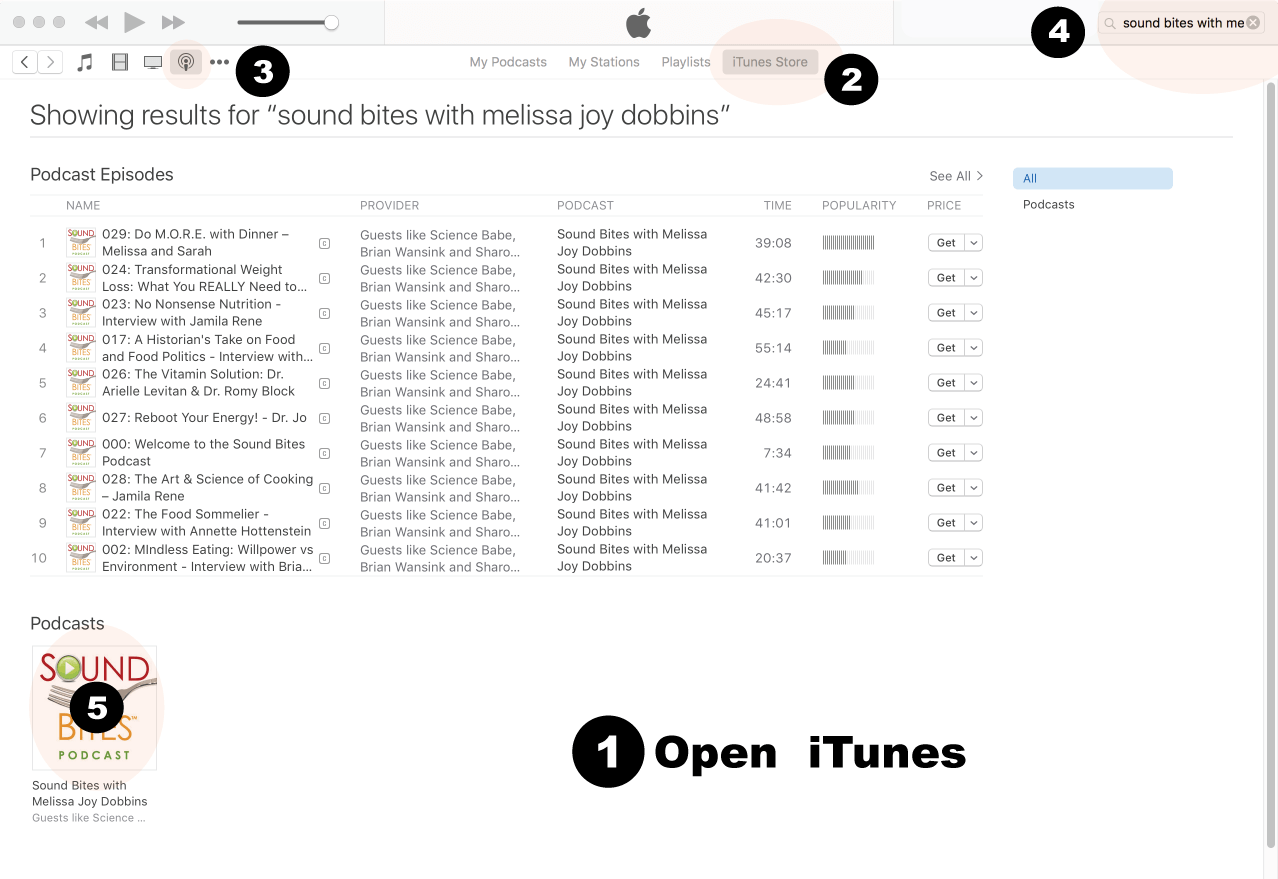
How to Review in iTunes
Open iTunes desktop application
Click iTunes Store
Click on Podcasts
Search for “Sound bites with Melissa Joy Dobbins”
Click on podcast image
Search for Sound Bites podcast in iTunes
Click Ratings & Reivews
Click Write a Review
View reviews and write your own review.
Write your review…. Thank you!
Write your review!
How to subscribe via iTunes
Click here to view the Sound Bites Podcastin iTunes, then click the blue “View in iTunes” button. This will open your iTunes application directly to Sound Bites Podcast. Click the “Subscribe” button, and your done!




 Click here to earn 1.0 FREE CEU for listening to this podcast episode!
 Dr. Mary Flynn is a research dietitian at The Miriam Hospital and Associate Professor of Medicine at Brown University. She has studied the health benefits of extra virgin olive oil since 1998 and developed a plant-based, olive oil diet tested in cancer patients, those with metabolic syndrome, and food pantry clients. Dr. Flynn is also the co-author of Low-Fat Lies, High-Fat Frauds and the Healthiest Diet in the World and The Pink Ribbon Diet.
 Leandro Ravetti is the Joint-CEO of Cobram Estate and one of the world’s leading experts in olive growing and olive oil production. Originally from Argentina, he has worked internationally in Italy, Spain, and Australia, developing the Oliv.iQ® system and helping set the Australian Standard for Olive Oil. Leandro has received multiple awards recognizing his lifetime contributions to the olive industry. He is an olive oil sommelier and has led one of the largest virtual EVOO tastings ever!






Informative podcast. Thank you.