Celebrating over 1 Million Downloads and 50,000 Free CEUs on the Sound Bites® Podcast | NEW: Get 1 years’ worth of CEUs with the new 15-CEU Podcast Course
What Does the Science Say about Alcohol & Moderation?
The health risks of heavy drinking are well-established. But what about the health risks of light to moderate drinking? More people, especially the Gen Z population, are leaning toward moderation of alcohol intake rather than going completely dry, shifting the popular “Dry January” challenge toward more of a “Damp January” trend. While the role of alcohol in health-related outcomes is complex and nuanced, a new meta-analysis of 23 major studies from 2000 to 2024 found that light-to-moderate drinking carries the same – or in some cases lower – risk of death compared to abstaining, while lifestyle factors like diet and exercise play a huge role in outcomes. Likewise, a new report published in September sheds light on alcohol and health including WHO data showing reductions in alcohol-related morbidity and mortality with many countries on track to meet targets for reducing harmful drinking.
Tune in to this episode to learn about:
the different and conflicting reports on alcohol intake and recommendations
the research on alcohol consumption and health
how moderation is defined
different drinking patterns and associated risks
combined effects of obesity and alcohol
alcohol and weight
GLP-1s and alcohol
Non-alcoholic beverages
The Damp January trend
resources for health professionals and the public
Risk varies across individuals, and people need to consider their family history, health conditions, and other risk factors in conversations with their healthcare providers – the people who are better equipped to advise on whether someone’s risk of an alcohol-related disease is higher or lower than the average person.” – Jennifer Tujague
Jennifer Tujague, MPH
As Chief Scientist and Senior Vice President of Science and Research at the International Alliance for Responsible Drinking (IARD), Jennifer Tujague oversees the world’s largest repository of peer-reviewed research on alcohol consumption and health outcomes. IARD is a not-for-profit supported by the world’s leading beer, wine, and spirits producers, working in partnership with global health organizations to reduce harmful drinking. In her role, Jennifer develops the organization’s research strategy, establishes priorities, and oversees the implementation and outputs of the Science and Policy team. She leads a team of scientists in advancing new capabilities, methodologies, and materials, and in communicating research findings related to alcohol, health, and alcohol policy to IARD’s members. In addition to guiding scientific initiatives, Jennifer contributes actively to IARD’s broader operations and organizational management.
For many people, consuming alcohol can be part of a healthy and balanced diet if they drink moderately, preferably with a meal and as part of a social occasion. Practicing moderation works, but for some people, the best choice is not to drink alcohol. And of course some groups should not drink at all such as pregnant women, underage people and when driving, operating machinery, taking certain medications, etc.” – Jennifer Tujague
Resources
Some links may be affiliate links. As an Amazon Associate, I earn from qualifying purchases.
Whenever a family member or a friend kind of asks me what I think is most important in terms of alcohol consumption and risk, if I had to give one recommendation, is to always eat where near consuming alcohol.
[Music Playing]
Voiceover (00:15):
Welcome to Sound Bites, hosted by registered dietitian nutritionist, Melissa Joy Dobbins. Let’s delve into the science, the psychology, and the strategies behind good food and nutrition.
Melissa Joy (00:36):
Hello, and welcome to the Sound Bites Podcast. Today’s episode is about alcohol and health. What does the science say, and what does it not say about risk, moderation, and public health. We’ll also discuss the damp January trend and the science of balance and moderation, and this episode is not sponsored.
By the way, before we jump into the episode, do me a quick favor and click on the follow button wherever you are listening to this episode. That is a great way to support the show and get notified about new episodes.
My guest today is Jennifer Tujague. Jennifer is the Chief Scientist at the International Alliance for Responsible Drinking or IARD, where she oversees the world’s largest repository of peer reviewed research on alcohol consumption and health outcomes.
Welcome to the show, Jennifer.
Jennifer Tujague (01:27):
Thank you, Melissa. It’s really nice to be here.
Melissa Joy (01:30):
I am really looking forward to diving into this topic with you. But first, I would love for you to share a little bit about your background and the work you do at IARD, and of course, any disclosures to note. I mean you’re employed by them, but love to hear more about your background.
Jennifer Tujague (01:45):
Well, my background is in nutritional epidemiology. I have a dual master’s degree in public health nutrition and in epidemiology and biostatistics. So, I combine that into a nutritional epidemiology program, and I started out in nutrition and food policy in California, and then somehow found my way into this remarkable world of alcohol research because as alcohol is actually a food and that was kind of how I fell into it. It’s a pretty complicated research area, and I just find it totally fascinating.
So, I’ve been with IARD and its predecessor organization for 13 years. IARD’s a nonprofit supported by the world’s largest beer, wine, and spirits producers. And they were a come together in a pretty unique way under our organization to work on reducing harmful use of alcohol.
So, we’re pretty unique in that we’re bringing together these major competitors for a really good reason and that partnership has been around for almost 30 years, and has done some pretty big things.
So, my work is specifically to lead the science and research team at IARD. I run a team of about 10 people that have backgrounds in epidemiology also, and health policy, and we’re responsible for maintaining a huge research database on all the peer reviewed literature on alcohol and health, and alcohol related policy.
And as I was reminded earlier this week by our head librarian, that’s about 250 new articles a week.
Melissa Joy (03:25):
Wow.
Jennifer Tujague (03:27):
Exactly, wow, and growing. I think it started at about a hundred, and now, we’re up to like 250. And that research database is publicly available, it’s on our website, people can just tap into it. It’s kind of a one stop shop for any peer reviewed research on that topic, alcohol consumption.
Other than that, though, it is our job and the job of the team to stay on top of what the research is saying, and to be able to distill it and communicate what the research says to non-scientists. So, our member companies and our partnership council because they need to be aware of what the research says, and since they’re not trained as scientists, it is pretty hard to understand what research says if you’re just relying solely on what the media prints, for example.
Melissa Joy (04:14):
Absolutely (laughs). And so, I’m guessing that they take that research, and that informs how they build their programs and communicate about their products?
Jennifer Tujague (04:26):
Right or helps them respond to questions. If they do get questions, it helps them think about their activities in the responsible drinking space and the initiatives and the programs that they do support. It helps them think about what they can do next in terms of what the organization and our members have spent several years really working on underage drinking, and the standards that they have put in place to try to minimize underage drinking, either through labeling, through training servers, through advertising and where, especially in the digital space protecting minors and people who are under the drinking age from seeing alcohol ads.
So, for example, working in that space to understand what’s next, what are effective tools and policies for reducing, let’s say binge drinking among adults.
Melissa Joy (05:18):
As we go through this conversation, there are so many parallels with food and diet and this already is one. I think a lot of people, dietitians and healthcare professionals included think about, oh, the marketing of food, but they don’t think about or know about some of the positive things that the food industry is doing to market healthier items or not market unhealthier items to children and all of that.
So, I’ll be putting a finer point on some of the parallels that I see as we go through this conversation. But before we go much further, I want to give you the opportunity to address why should our listeners listen to you or trust you since you’re representing the alcohol industry? Because again, I want people to tune into the rest of this episode and be critical thinkers. I want to talk about this now and not at the end of the episode. So, how do you respond to that?
Jennifer Tujague (06:12):
Absolutely. You should listen to and take in what I have to say with the knowledge that I’m someone whose job is supported by the alcohol industry. That means that you should be healthily skeptical of what I have to say, but I think that applies towards everybody.
Everyone comes from a certain perspective and potential bias, including me. I’m very aware of that potential and conflict of interest, and our team has worked very hard over the past few years to try to put in some structure, some protocols, some processes to address and minimize those potential biases.
And even just to minimize mistakes because IARD is supported by the industry, we just have no room for error, and we can’t make any mistakes because it will seem like they were intentional. So, I think we triple our efforts to make sure that things are checked and then rechecked by someone else and then rechecked again.
One of the ways that we do that is to make sure that we are taking a very comprehensive view of what the research says. So, that means taking a systematic review approach with a transparent methodology of what our inclusion criteria is, what our exclusion criteria is, and making that publicly available so that everybody can see it. I think that’s really important.
We’ve also started documenting the evidence behind everything that we say in a review. So, we have supporting documentation that has the sentence or factual information in the review tied to a direct quote from the source that it comes from, and we’re making those publicly available also.
I should just also underscore that our organization is not a consumer-facing organization. So, the materials that we produce really are meant for our team and also for our members but we’re not necessarily meant to be informing the public.
Melissa Joy (08:07):
Yeah, no, that’s a great distinction and can totally appreciate you. You’re really under the microscope and so like you said there’s really no room for error. And I even forget this myself, but I was just listening to a podcast of an article earlier today talking about the wine industry and they were talking about the conflict of interest, and the money involved with some anti-alcohol groups too.
And I was like, “Oh yeah, wow.” Just again, reminding me of the food industry and like you said, everybody comes to the table with a certain perspective and at least confirmation bias if nothing else. So, thank you for elaborating on that, I appreciate that.
So, let’s start with what does the science say about alcohol and health? There’s several different reports, there’s a slew of studies, this is what you live and breathe every day.
I’ll just preface this by saying just like food and nutrition, we hear one day in the news, we hear another thing, especially earlier in 2025, there was this Surgeon General’s Report and the Nassim Report, and then there was a commentary by cancer epidemiologist in response to the Surgeon General Report, a couple of different Lancet reports. Where should we start (laughs)?
Jennifer Tujague (09:22):
That’s a really big question. So, I guess we can start with a big picture, and then maybe move in because there isn’t a single answer to what’s the research say about alcohol and health, it’s just too big. But a short answer to that would be it depends.
It depends on what outcome you’re looking at. Because the way that alcohol might affect the liver is different than the way alcohol might affect certain heart conditions or not, or certain cancer risk. But if we back up and we kind of look at the big picture, what are we seeing? Maybe we start there.
So, that big picture I think is looking at all-cause mortality studies because that is just combined death from all causes, and that outcome is naturally weighted for what’s most prevalent.
So, in the US and globally, cardiovascular diseases are the most common cause of death, and then all cancers are second. Within those categories, alcohol has different relationships with different cardiovascular conditions and for different cancers, but what do we see at the big picture level?
So, IARD recently did a systematic review on all of the meta-analyses and large pooled cohort studies that have been conducted since the year 2000 with alcohol cause mortality as the outcome. Now, we picked studies that looked at the continuum of consumption and not just yes, no, or not just a modeled dose response. So, that was our inclusion criteria.
And what we found is across all 23 studies that met that criteria in the past 25 years, all 23 studies found no increase in risk or a reduced risk for light to moderate drinking compared to not drinking. And then usually, these studies also showed an increased risk for heavy drinking compared to not drinking.
Now, the reason why I say usually is because sometimes some of these studies, if they have a good proportion of women who are drinking, a vast proportion of women who are drinkers don’t drink at the heavy end. So, sometimes, those results are null just because the numbers are small.
So, all of these studies showed no increase at light to moderate drinking levels. Most of them showed a reduced risk. The amount differs from study to study, so I can’t say it’s exactly 10 grams a day. But for some light to moderate drinking level, there was a reduced risk from alcohol consumption.
Melissa Joy (12:05):
So, different studies define light to moderate differently, just like we see in the food and nutrition space how is this defined for this particular study.
Jennifer Tujague (12:12):
Exactly. For example, I just saw a study today that was calling moderate drinking 20 to 40 grams a day which (laughs) most people would say that’s not what I thought was moderate.
Melissa Joy (12:23):
Translates to …
Jennifer Tujague (12:26):
So, in the US, a standard drink is 14 grams of alcohol per serving. But that’s a 12-ounce 5% beer, that is a five-ounce, 12% alcohol wine, and I think it’s a one and a half, one and a half ounce of the spirits, 40% alcohol.
Melissa Joy (12:47):
It’s a glass of wine, it’s a beer, it’s a this, but it’s specifically 12 ounces of a 5% alcohol beer, five ounces of a 12% alcohol wine, and 1.5 ounces of a 40% distilled spirit. So, it’s hard to remember all those numbers, so that’s 14 grams of alcohol.
Jennifer Tujague (13:03):
And in reality, those amounts are going to differ, but this gives us an idea of where we are. But we all know that beers now can be very high or very low, and wines can be in a big range also. So, it is really important to keep an eye on what you’re-
Melissa Joy (13:19):
And there’s a whole slew of other … like I don’t want to say any name brands, but there’s other canned alcoholic beverages that are popping up everywhere and maybe we can also address at some point like a non-alcoholic options and pros and cons of that. But anyway, so as we go through this, we’ll probably keep coming back to this definition of moderation as far as dietary guidelines go, but in these studies, there were some different definitions.
Jennifer Tujague (13:43):
Yes, and that’s true. That does make it difficult to really be specific about, well what does moderation mean in terms of the exact amount of alcohol. So, we kind of have to think about it’s a range, but we know it’s somewhere on the lower end.
Melissa Joy (13:58):
Sorry, I interrupted you. You were saying what was the amounts?
Jennifer Tujague (14:03):
Oh, I was just observing that like I’ve seen somewhere like 5 to 10 grams as moderate, and I’ve also seen like 20 to 40 in different research. That’s just to illustrate that-
Melissa Joy (14:13):
It varies.
Jennifer Tujague (14:14):
Different researchers use different amounts, and it’s hard to pin that number down. And Melissa, I just want to make it really clear that I’m not saying that there are health benefits to drinking alcohol, there’s no reason that anyone should start drinking for a perceived health benefit.
We’re just talking about risk in these big studies and sometimes it’s lower overall for people who are light to moderate drinkers. But that’s complicated and it depends on a lot of things, and I just wanted to make that clear.
Melissa Joy (14:44):
Got you. So, looking at this global data on alcohol and health and this meta-analysis review that you did is … am I saying that properly? Talk to me a little bit more … and I know this is all on your website and I have a chart in front of me.
Talk to me a little bit more about some of the lower risk I’m guessing could potentially reflect some of the cardiovascular benefits that we might hear about with alcohol. Talk to me about some of that, and also some of the pros and cons or limitations or weaknesses of some of these studies other than they’re using different amounts and so that makes it a little hard to compare.
Jennifer Tujague (15:17):
Sure. So yes, all-cause mortality, the risk curve there is driven by cardiovascular diseases because as we said, it’s the number one cause of death, so it does weight the results in that way. And the largest contribution to total cardiovascular disease is ischemic heart disease and stroke. That part of the cardiovascular disease world is where we see this reduced risk associated with alcohol consumption, but that is one of the driving factors.
Diabetes is also an area where we see a reduced risk associated with moderate drinking for some drinkers. So, those two things are kind of pushing that big picture. There are other heart disease conditions like hypertension, atrial fibrillation, cardiomyopathy, et cetera, and I think hemorrhagic stroke where that is not the picture at all.
So, it’s really important to kind of (and I think we’ll talk about this at some point today) understand your own risks, what your family history is, what your history is, and have a conversation with your own health professional about the specific relationship between alcohol and your risk profile.
Melissa Joy (16:31):
Personalized advice and individualized as we say with nutrition also.
Jennifer Tujague (16:36):
Yeah, absolutely. Everybody’s different. So, yeah, it’s really important to have all of that information.
Melissa Joy (16:42):
Okay, good. So, people have heard about some of these conflicting messages in the media about the Surgeon General’s Report, which is technically not an advisory and then this commentary that I’d love to discuss briefly compared to the Nassim Report and then the Lancet kind of flip flopping.
I think in 2018, they said there’s no safe level, and I know I recall a lot of doctors and healthcare professionals glomming onto that. But then in 2022, I think they had reevaluated the literature or something changed their minds on that. So, I think that the Surgeon General’s Report is a good place to just discuss.
Jennifer Tujague (17:21):
Actually, it’s a Surgeon General’s Advisory, not a report.
Melissa Joy (17:26):
Oh, okay.
Jennifer Tujague (17:27):
So, the Surgeon General’s Reports are these very protocol driven intense things, reviews that come out. Advisories don’t have to meet that standard.
Melissa Joy (17:38):
So, I got it backwards, see (laughs), but that’s a distinction.
Jennifer Tujague (17:42):
It’s a common mistake and I’ve seen it reported as a report many times. That advisory was specific to the relationship between alcohol and cancer, so it didn’t talk about anything else. And I think that’s coming from just kind of what we’ve been seeing in the media and a lot of other places, which is a focus of the relationship between alcohol and cancer because there is an association with some cancers even at lighter drinking levels.
So, this advisory kind of brought that out, and brought it more to the public attention, and I think it was picked up all over the world and it really focused on that relationship. So, both IARC and WCRF report that alcohol’s associated with about seven different cancers.
Melissa Joy (18:31):
And those are both cancer-related organizations?
Jennifer Tujague (18:33):
Both. Yes. There are the upper airway ones, so the mouth, larynx, esophagus, pharynx, colon, breast, stomach, liver, I think I got them all. And the ones at the upper airway, first of all, they’re very, very rare, but that’s where we seem to be seeing this relationship between the lighter drinking and an increased risk.
This part is relatively new, I think, to a lot of people because historically, a lot of the research was based on heavy drinking. and we didn’t know a whole lot about the effects on lighter drinking. And I think that’s some of the new stuff that’s kind of coming to light, is the relationship at the lighter end. Those cancers are hard to study because they are so rare.
We know a whole lot more about breast cancer, and that is another cancer where there seems to be an association with lighter drinking. It is unfortunately fairly common among women, and so we do hear a lot about the effects and the increased risk related to breast cancer.
So, the advisory is focusing on that, and I think that it is driven in part by the results for breast cancer because that is so common, and in part, by colorectal cancer because for men especially, that is more common.
But the commentary that you mentioned by Dr. Giovannucci, who is a renowned cancer epidemiologist and someone who works on some of the major reports for WCRF and the evidence behind their findings.
Melissa Joy (20:08):
And that’s the world-
Jennifer Tujague (20:09):
The World Cancer Research Fund and they do these incredible systematic reviews on different lifestyle risk factors and cancer risk and they’re kind of a critical part of our knowledge base. Anyway, Dr. Giovannucci referred to the Surgeon General’s Advisory and reflected like, yes, this risk is very important, and we need to understand this relationship and people need to understand their risk.
But the advisory really neglected to get into the things that we really need to understand in that relationship. I think he mentioned tobacco diet for sure and I think and body weight.
Melissa Joy (20:50):
Yes, I actually have the abstract in front of me if this is what you’re referring to for modifying factors, merit consideration, is that it?
Jennifer Tujague (20:58):
Yeah.
Melissa Joy (20:58):
Tobacco use, drinking frequency, whether drinking is with meals or on an empty stomach and beverage type, is that-
Jennifer Tujague (21:04):
Right, exactly. Good, because those things when you look at the alcohol cancer relationship seem to modify that relationship, and are important in communicating risk to the public. I think he also called for more research in this area.
Melissa Joy (21:21):
And just highlighting all the nuances. I think one thing you had said to me when we were talking before the recording is like it’s all nuance (laughs), alcohol research, there’s so much nuance. I mean, even as I’m listening to you, cancer, different types of cancers are so different.
Jennifer Tujague (21:34):
Right, their risk factors are different, sometimes they overlap. There are some overlapping risk factors, but they are different and maybe hit people at different ages.
Melissa Joy (21:46):
Hey there, I’m taking a quick break in the episode to share some information with you and a special offer.
According to a poll by the National Sleep Foundation, 6 out of 10 adults are not getting enough sleep. We know that getting adequate amounts of sleep and getting quality sleep is so important for our health, and not getting enough can impact our mood, productivity, and even increase the risk of chronic diseases like heart disease and diabetes.
I’m lucky to be one of those people who fall asleep very quickly when I go to bed, but staying asleep is another issue. If you’re like me, you wake up in the middle of the night because you’re too hot and then you have trouble getting back to sleep. This literally happened to me so many times before I heard about Cozy Earth bamboo sheets that are temperature regulating.
And when Cozy Earth reached out to me with an offer to try these sheets, I said yes, and I’m so glad I did. I’m partnering with Cozy Earth to offer you 20% off of their bamboo sheet set. These sheets are made from 100% Visco from bamboo, and they’re incredibly soft. But most importantly, they keep me cool all night.
My husband even loves them. He said, “Oh, I like these new sheets, they don’t get hot or retain body heat.” If you want to try them yourself, you can use my code Soundbites for 20% off. It’s a risk-free purchase. You have a 100-night sleep trial. If you don’t love them, you can return them without any hassles.
Again, that code is Soundbites (one word) for 20% off of Cozy Earth’s bestselling bamboo sheet set. And that code is also good site wide. So, check out there are other products like blankets, pajamas, and other items at cozyearth.com.
I’ve been wanting to do an episode on sleep for a long-time, couple of years now. So, hopefully I’m going to make that happen in 2026. But in the meantime, I want you to know about a book by my friend and fellow dietitian, Karman Meyer called Eat to Sleep.
The book includes solutions to improve your sleep hygiene, information about foods to enjoy more of, to help support a good night’s sleep. There’s 25 healthy recipes, a good sleep checklist, and a food and sleep log for tracking changes. You can get more info and a link to the book in my show notes for this episode at soundbitesrd.com/302.
Well, let’s drill down a little bit more into, obviously we understand this like one size does not fit all, people need to consider their individual risks and health concerns. But let’s talk about, we already defined what moderation is from a dietary guideline standpoint.
And by the way, one of the most popular and widely recommended healthy dietary patterns in the dietary guidelines is the Mediterranean diet, and that includes a place for moderate alcohol consumption.
So, aside from moderation, let’s talk about different dietary or different drinking patterns like dietary patterns is what I normally say, different drinking patterns. What can you tell me about some of the different drinking patterns that you’re seeing in the literature?
Jennifer Tujague (25:02):
Sure. And the different risk relationships, I’m sure. So, when we talk about drinking patterns, one is the amount frequency of drinking, which we tend to classify as never drinking or abstaining, occasional drinking, and then maybe light, moderate and heavy drinking, but there’s also a binge drinking pattern.
So, an occasional binge drinking which is different from chronic heavy drinking, and then there are also patterns like whether or not a person is drinking while having a meal. That seems to be one of the most important patterns.
And then sometimes, people consider whether it’s a social occasion, or not a special social occasion like weddings. But just like having a meal with other people or going out with friends, whether that social aspect is part of it. So, those are the different dietary patterns that we tend to look at in alcohol research, and there are different risk relationships for all of those patterns.
I think most people are familiar with the risks related to heavy drinking, probably liver disease is the one that would come first to mind, but there’s also an effect on cardiovascular system and risk for certain cancers, as well as the risk for accidents and injuries. That would also be associated with binge drinking.
I think we’re more familiar with the heavy drinking and possibly binge drinking risks, but people may be less familiar with risks that might come from more moderate consumption. And I think that’s where we have gotten into some of the more recent research in cancer where it seems like there is an increased risk for certain cancers, but not all of them.
And then I think even more recently, the research in liver disease has been trying to tease out what’s going on with kind of the combination of alcohol and obesity, and smoking and liver disease, because liver disease rates in some places have just gone way up.
Melissa Joy (27:05):
Like the fatty liver or just all different types of liver disease?
Jennifer Tujague (27:09):
A lot of fatty liver disease, but actually all liver disease. Some of the liver disease mortality I think is cirrhosis rate, and there seem to be an increase in cirrhosis deaths during and after the pandemic, and there were several theories about that. Part of that was kind of the loss of treatment options, and being cut off from the healthcare system isolated, but that seems to still be having kind of a lingering effect on mortality rates.
But yes, more interestingly, I think we’ve been starting to see kind of this correlation between rising obesity rates in certain countries, and also rising rates of liver disease, fatty liver disease in particular. And when we kind of drill down into that part of the literature in particular, it does appear that there seems to be an association between heavier drinking and higher risk for fatty liver disease.
Melissa Joy (28:05):
And I mean it makes sense. I mean, I think we can all agree excessive heavy drinking, there’s health risks associated. But in that narrower zone with the light to moderate, it sounds like there’s a lot of different things going on there that merit the research for those nuances, especially if our guidelines are obviously if you’re not drinking, even health professionals aren’t saying start drinking for heart health benefits, nobody’s saying that.
But if we’re recommending moderation, if people are drinking, then yeah, merits taking a closer look at what are the different risks within that range. What about alcohol and diet? So, we hear, oh, if you stop drinking, you’ll lose weight. And I could say from personal experience (laughs) my weight doesn’t change whether I’m drinking or not.
And my own personal experience as a dietitian and a human being is like for me, I got to do some really extreme things to go one way or the other on my weight. But is there some research there? I mean, clearly alcohol is what dietitians would consider empty calories. Are you seeing anything in the literature on that?
Jennifer Tujague (29:07):
This is one of the more complicated parts of alcohol research I have to say because I think alcohol is not metabolized in the same way that other foods are. It has a couple of different pathways, and it’s very hard to give a straightforward answer. But what you just said about alcohol being empty calories is absolutely true. It’s nine kilo calories per gram.
Melissa Joy (29:29):
It’s seven, isn’t it?
Jennifer Tujague (29:30):
Seven, you’re right. Fat is nine, it’s seven. And your drink could be anywhere from 90 calories to 400 calories depending on what you’re having. And there seems to be some confounding with maybe heavier drinkers not eating very well or enough.
I think if you have an alcohol use disorder, there are other disorders happening maybe as well because we don’t necessarily see a perfect linear relationship between alcohol consumption and weight gain or obesity. So, that’s why I was saying this is a little more complex of an area.
Melissa Joy (30:06):
Like you mentioned alcohol consumption and weight gain or obesity, but likewise are you seeing anything with abstention and weight loss or is that not even?
Jennifer Tujague (30:13):
Well, I don’t have a great answer to that. I mean, it’s possible of course because if you stop consuming, it depends on what you started out drinking to begin with.
So, if I’m an occasional or a pretty light drinker and I’m trying to lose weight and I give up alcohol, is that going to have a measurable effect on my weight (laughs) or not? So, it really depends on how much and what you are drinking.
Melissa Joy (30:36):
And if you stop drinking but you start eating something else more like sweets or something to-
Jennifer Tujague (30:42):
Right. Like the food for-
Melissa Joy (30:44):
Those cravings
Jennifer Tujague (30:45):
Yeah. There are a lot of confounding factors.
Melissa Joy (30:48):
Anything else on that topic?
Jennifer Tujague (30:52):
I think the kind of related research to alcohol and diet is that there’s a lot of research on, as you mentioned, the Mediterranean diet, it’s one of the most researched diets in the world. But there’s also a lot of research on combined effects of healthy behaviors including a high-quality diet.
So, high quality diet, regular exercise, moderate drinking, not smoking and maintaining healthy weight — like there’s a ton of research in that area, and those healthy behaviors are mutually reinforcing. And I think it’s a really positive message to give to people about the things that they can control in their lives.
Like the combination of those factors has such a large effect on health risk and quality of life because they support each other. And I think once you are in a relationship and talking to someone about the quality of their diet, you may also want to start talking about their relationship with alcohol and how improvements in both of those can multiply really.
Melissa Joy (31:57):
No, that’s great. And I know in the research, yeah, like this commentary where you’re like, we can look at the drinking, but if that’s associated with more tobacco use, that’s a confounder, is that the right word?
Jennifer Tujague (32:09):
Yes. So, if you don’t include smoking in your analysis about that relationship, yes, it’s a known confounder, it has to be controlled for.
Melissa Joy (32:17):
Interesting. One more kind of diet related question. I mean, GLP-1s are all the rage now, and we know that they decrease food noise. And I mean, I think that’s just one of the most amazing things that I’ve seen in my career is the widespread acknowledgement.
Now, that’s a major barrier for some people to manage their weight and it’s not a willpower issue but it’s a pathophysiology. But I’ve also heard that with people taking GLP-1s that also, they’re not as interested in alcohol. Are you seeing any research on that?
Jennifer Tujague (32:49):
Yes. And I listened to your recent episode, I think your guest’s name was Gitanjali.
Melissa Joy (32:56):
Gitanjali Srivastava.
Jennifer Tujague (32:58):
Thank you.
Yeah. It was really interesting and exactly what you were saying about the noise, it seems to be the same pathway for alcohol. And so, what we are starting to see in this emerging research because it is still pretty brand new, is that for people who have an alcohol use disorder, these drugs seem to be having an effect on cravings and consumption, and measures of alcohol problems.
This is great. I mean this is a positive thing because there are very few drugs that seem to really help people with an alcohol use disorder. Again, this is still new research, a lot more research needs to be done.
Melissa Joy (33:40):
It sounds promising.
Jennifer Tujague (33:42):
It does sound really promising. What we don’t know yet is how these drugs affect people who don’t have an alcohol use disorder. And I think I’ve only seen one if not maybe two who are looking at more of a general population of drinkers and its effects, and there’s really almost nothing there. Because not only are they looking at people with alcohol use, it’s people who have an AUD plus obesity or diabetes, so comorbidities.
So, they need to start testing it on people who just have an alcohol use disorder but not obesity or diabetes, and they need to start looking at the relationship between people who are on these drugs and regular alcohol consumption, and we just don’t know, and that’s kind of a big question mark.
Melissa Joy (34:27):
Interesting, interesting. Well, let’s talk about the damp January trend. I hadn’t heard damp, we’ve all heard of dry January, and so we’re October, and I learned a new term today, come over October, which I guess is encouraging socializing with alcohol.
But I’ve done some looking into the Gen Z generation and done some podcast episodes on this, and so I know that Gen Zs are drinking less than my generation. So, let’s talk about the trend, and what’s going on there and what you’re seeing from your end.
Jennifer Tujague (34:58):
So, you just pointed out something worth noting, which is that our generation is drinking a little differently than younger generations are. And I think that’s something that we’ve been starting to note in the consumption data for a little while, so maybe starting with millennials.
Melissa Joy (35:17):
Well, let me back up because I’m pretty sure I saw on the IARD website that, I mean, overall, alcohol consumption is going down, it’s gone down. Maybe it’s down more in some places and not so much in others, but I mean overall, it’s down across the board.
Jennifer Tujague (35:31):
Right, globally, it’s down, but that’s not in every single country.
Melissa Joy (35:36):
Is it down in the US?
Jennifer Tujague (35:37):
It was down depending-
Melissa Joy (35:39):
Before COVID (laughs).
Jennifer Tujague (35:39):
Before COVID. Actually, in the US, it’s been fairly stable, things went way down during the pandemic and then since them have started to climb back up again. They still, according to IWSR, which is an industry market data, global market data firm, it still isn’t back up to the 2019 level.
And we have seen declines across most age groups, and the Gen Z appears to be leveling off. So, they seem to be kind of drinking less and it was ticking down even more, and now it seems to just have stabilized or creeping back up a little bit.
I think it’s an observation that a lot of people have been making, and it seems to be true that generation and potentially, some of the millennials have a different relationship with alcohol consumption.
And I’m sure you’ve noticed and your listeners have noticed in talking with different people over time, I think that the relationship that you have or your drinking pattern maybe that you had in your cohort, your age group evolved in your 20s and 30s, and you more or less maintained that.
And so, in the alcohol literature, there’s a cohort of people who are probably now 70s, 60s, 70s who were kind of lifelong heavier drinkers. And we’ve kind of seen them move through the trends maintaining a heavier drinking compared to other cohorts. It seems like the Gen Zers drink more moderately, and maybe even have a slightly higher proportion of people who abstain than older generations.
Melissa Joy (37:28):
I’m a wine drinker, I’m a chardonnay girl, but you’re seeing all these cocktail trends. If I go out with my girlfriends, they’re all getting these little fancy cocktails. Now, we’re finally getting some good non-alcoholic wine, NA beer’s been around for a while, and even just like other beverages, there’s just a lot of more options I think for these generations.
Jennifer Tujague (37:48):
And I think that’s part of it, don’t you? I think it’s partly, they have more available to them and great options.
Melissa Joy (37:57):
Could work for and against you. I’m just thinking as we’re talking, like I did not drink in college because I hated beer (laughs), it worked out really well for me. There was nothing else and I was like, well I’m not interested, and actually my son’s about to go off to college and I told him, I said, “You know what, you get this image that everybody is drinking. I hung around with people, I guess by just default that weren’t drinkers, nobody cared that I didn’t drink.”
I actually worked at a pizza place, and you could have free wine or beer. I guess I didn’t like wine afterwards, not while you’re working.
Jennifer Tujague (38:32):
Oh, okay.
Melissa Joy (38:33):
And no, I got my free pizza and I got my diet soda and whatever. But I don’t know, just like even back in my day, there was large swaths of people who didn’t drink.
Jennifer Tujague (38:42):
Yeah, I think attitudes have shifted a lot. And I think what’s cool about Gen Z is that they are just less likely to see things as good, bad, black, white, they just take things as they are. If you don’t feel like drinking, great, fine, no one questions it. Whereas that was just a little different a decade or two ago, three ago.
[Laughter]
Melissa Joy (39:11):
No, yeah. I think that there’s a maturity level I don’t know that I see in my children, and I was a pretty mature, serious young girl, but it all sounds very promising and very healthy. Any thoughts on the NA beers and wines and things like that from the research standpoint?
Again, kind of trying to draw a parallel with food and nutrition. I mean like, I guess we should put a finer point on this. Like damp January versus dry January could appeal to some people who could maybe moderate a little bit more instead of thinking all or nothing which can be a trigger for people certainly with food, so I can imagine with alcohol it might be the same.
Jennifer Tujague (39:46):
And the disappointment and the self-criticism that comes with like failing to-
Melissa Joy (39:52):
And the feelings of restriction and deprivation.
Jennifer Tujague (39:56):
Yeah. So, I haven’t seen research on acceptability or efficacy of damp versus dry yet. I think that’s still kind of a relatively new thing, but it totally makes sense. And I think we’ve started to see people adhering to a full month of abstinence kind of start to trickle back down again. It was going up for a while and I think it’s starting to come back down.
So, I think having the freedom to think of it more as a moderation and a mindfulness exercise and practice is a really great thing. I think these dry January or damp January presents an opportunity to reflect on your drinking. That’s hopefully something you can carry through all year.
Because we all know that binge and bust is not the way to go, and learning moderation habits, whether it’s alcohol or food or anything else is a skill and it’s something that we should bring to the rest of the year.
Melissa Joy (40:54):
And build that skill and flex that muscle. I just know in counseling my patients, some people are really fine with all or nothing: “Oh, I shouldn’t have as much of that. Well, I don’t need to have it at all.”
I’m like, “What?” Whether it’s alcohol or chocolate or whatever, I’m like, “It’s your personality, how do you think that’ll go?” And some people are just it’s so easy. But I think more people respond better to just having a little bit more balance and moderation.
Jennifer Tujague (41:21):
Yeah, that makes sense. You mentioned something about the growth of the non-alcoholic options and low alcoholic options, and that is kind of a sector within the industry that is growing. That part is really interesting, and I think it’s supply responding to demand. I think there has been a growth in interest in that category, partly because there are better options now.
Across all three sectors, wine, beer, and spirits, there’s some really wonderful options for people, so I think that’s partly it. And I think as we were saying earlier, partly, it’s like there isn’t the stigma anymore of choosing to have a low alcohol and no alcohol, or just abstaining from alcohol. So, I think that’s all great.
Melissa Joy (42:09):
And the other thing that came to mind for me is when you were talking before about the all or nothing is cutting something out completely. Like we can give up sugar for Lent or whatever. Like just doing that for the sake of doing it is one thing.
But being mindful or reflective, whether you’re cutting it out or moderating the being mindful or reflective piece is really key if you want to look at that relationship with alcohol and improve it long term versus just one month or …
Jennifer Tujague (42:38):
Absolutely. Yep.
Melissa Joy (42:40):
What’s next? What’s next for IARD? What do you see for public health? What do you recommend for our listeners who are dietitians or health professionals, or those who aren’t, and they’re just general public listeners?
Jennifer Tujague (42:52):
Well, first what’s next for us is we are going to be publishing our systematic review on alcohol liver disease early next year, yay! That was like a two-year project (laughs), it’s finally coming to fruition. Public health-wise, I think we’re exploring these combinations of potentially confounding factors like the obesity, liver disease, alcohol consumption, combined effects of smoking and those kind of things.
I think that’s where some of the research is going because like you said, it’s so nuanced and the one size fit all approach does not fit anyone. And then I think whenever a family member or a friend kind of asks me what I think is most important in terms of alcohol consumption and risk, if I had to give one recommendation, is to always eat when you’re consuming alcohol.
I think that’s one of the biggest factors that really has an effect on slowing down the rate of absorption, and it’s how quickly you absorb and process alcohol, I think that has effects on your brain, your risk to different organs. So, I think that is one of the most important things to remember.
Melissa Joy (44:04):
Oh, very good. And that gives me this image of you’re sitting around a table with friends, family, enjoying for me, would be a glass of Chardonnay with my meal and connecting with people which I can do with my non-alcoholic Chardonnay as well.
Jennifer Tujague (44:18):
Absolutely.
Melissa Joy (44:19):
Or my glass of milk (laughs) sometimes is what I do.
Where can people find more information? What is the IARD website?
I-A-R-D.org. I’ve got some other resources that I’ll put in the show notes as well for anybody who’s interested at soundbitesrd.com. More information about what is an alcohol equivalent, what does ABV mean, the alcohol by volume. Surprisingly, a lot of people aren’t familiar with that.
I have a family member who’s a physician who is like, “What’s ABV?” I’m like, okay, dear (laughs), let me tell you what this is: alcohol by volume. So, you know that’s the 12% wine or the 5% beer or the 40% distilled spirit, but there’s variations within those.
So, I have some other resources there. I do have a recent-ish episode on Sober Curious that I’ll link as well. There’s also a couple of podcasts that I’ve stumbled across the past couple of years that really take a deep dive into exploring your relationship with alcohol, and not really promoting abstention, but like moderation minimal and obviously, if you want to abstain, that’s great too.
So, I’ll make sure all of those are in the show notes at soundbitesrd.com. And for everybody listening, if you like this episode, share it with a friend, tell a friend about the podcast. And if you’re a dietitian, be sure to check out the free continuing education you can get. Go to my website at soundbitesrd.com.
Jen, thank you so much for coming on the show, I really enjoyed our conversation.
Jennifer Tujague (45:48):
Thank you, Melissa. I did too. It’s great to be here.
Melissa Joy (45:51):
Really cool the work that you’re doing and how you ended up in this space. So, for everybody listening, as always, enjoy your food with health in mind, and enjoy your alcohol with food in mind (laugh). Until next time.
[Music Playing]
Voiceover (46:05):
For more information, visit soundbitesrd.com. This podcast does not provide medical advice, it is for informational purposes only. Please see a registered dietitian for individualized advice. Music by Dave Birk, produced by JAG in Detroit Podcast. Copyright, Sound Bites, Inc. All rights reserved.
LISTEN, LEARN AND EARN
Listen to select Sound Bites Podcasts and earn free CEU credits approved by the Commission on Dietetic Registration (CDR) for registered dietitian nutritionists and dietetic technicians, registered. Get started!
Get Melissa’s Sound Science Toolkit here!
Partnerships:
Sound Bites is partnering with the Association of Diabetes Care and Education Specialists (formerly the American Association of Diabetes Educators)! Stay tuned for updates on the podcast, blog and newsletter!
Sound Bites is partnering with the International Food Information Council! Stay tuned for updates on the podcast, blog and newsletter!
Sign up for my monthly newsletter and episode eblasts so you never miss an update!
Listen on Stitcher (Android)
Install the Stitcher App
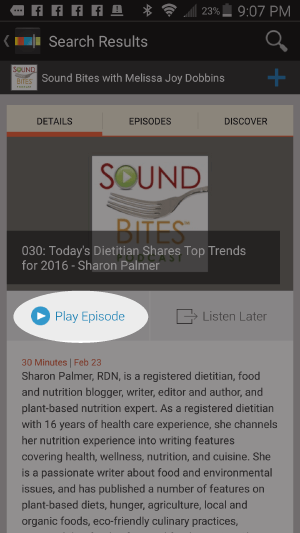
1. Search for “sound bites with melissa joy dobbins” 2. Choose Play Current Episode or Add to Playlist
Choose “Play Episode”
Subscribe & Review on iPhone
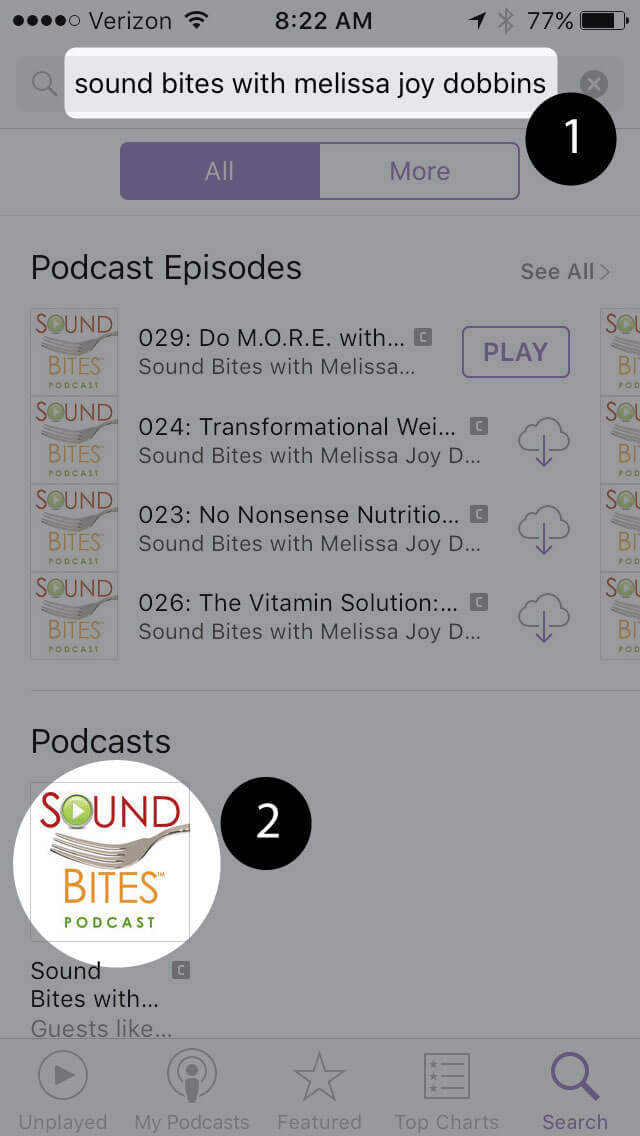
Open the “Podcast” app on your iPhone
Search for “Sound bites with melissa joy dobbins”
Open the podcast and click “Subscribe” and your done!
Write a Review
Click “Reviews”, then “Write a Review”.
Subscribe via RSS Feed
Navigate to any podcast player . Click on the RSS feed icon.
Click on the RSS feed icon.
Click on RSS Feed
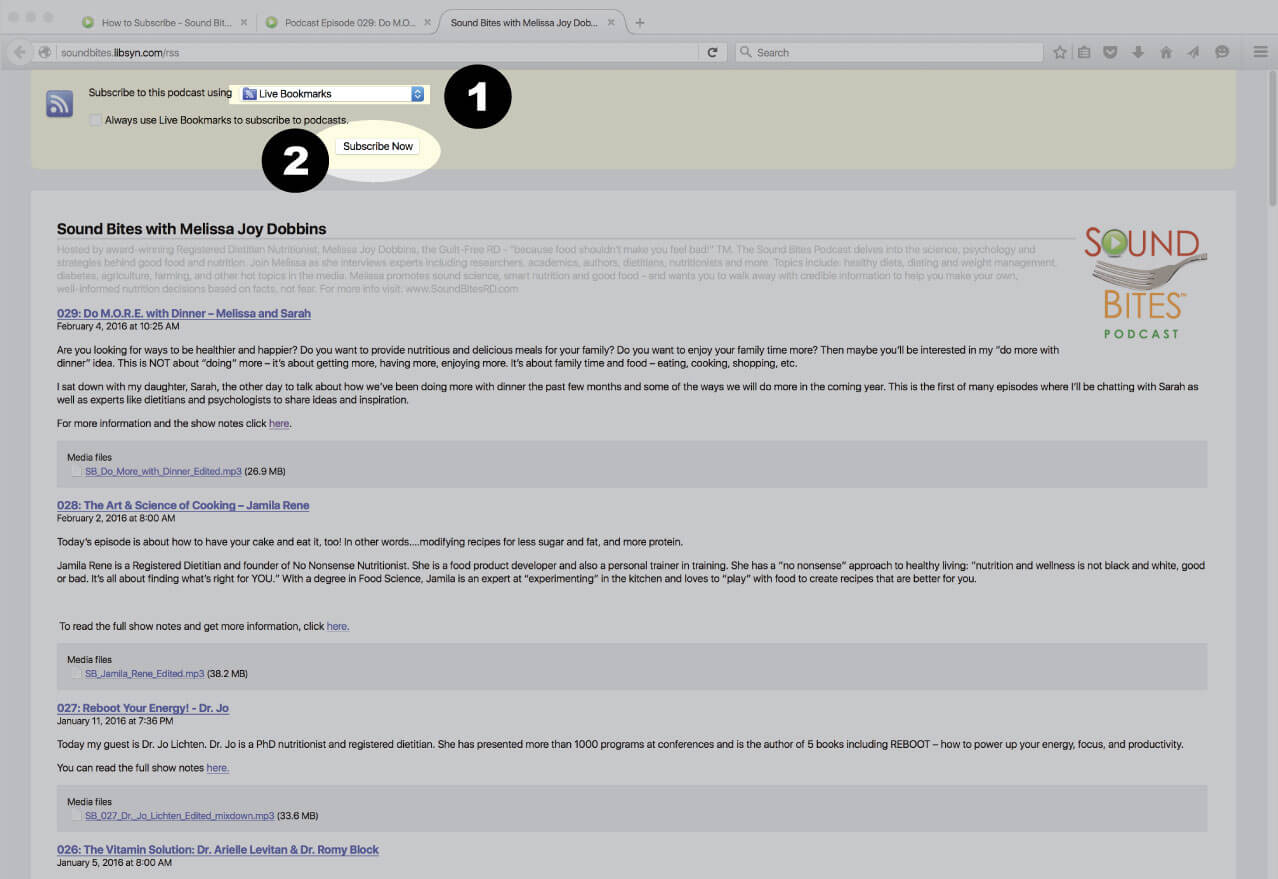
Choose which application you would like to use to receive the RSS feed
Click “Subscribe Now”
Confirm settings and subscribe.
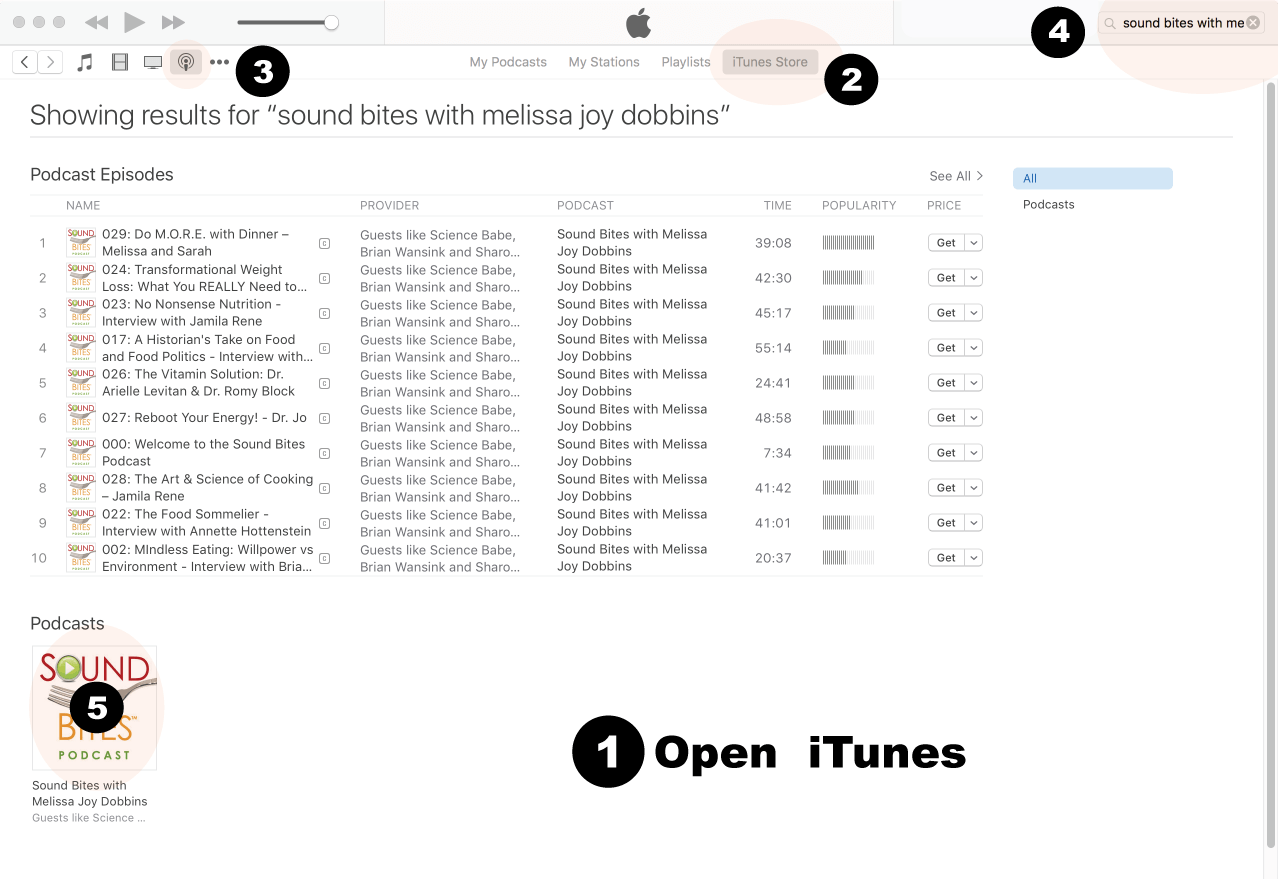
How to Review in iTunes
Open iTunes desktop application
Click iTunes Store
Click on Podcasts
Search for “Sound bites with Melissa Joy Dobbins”
Click on podcast image
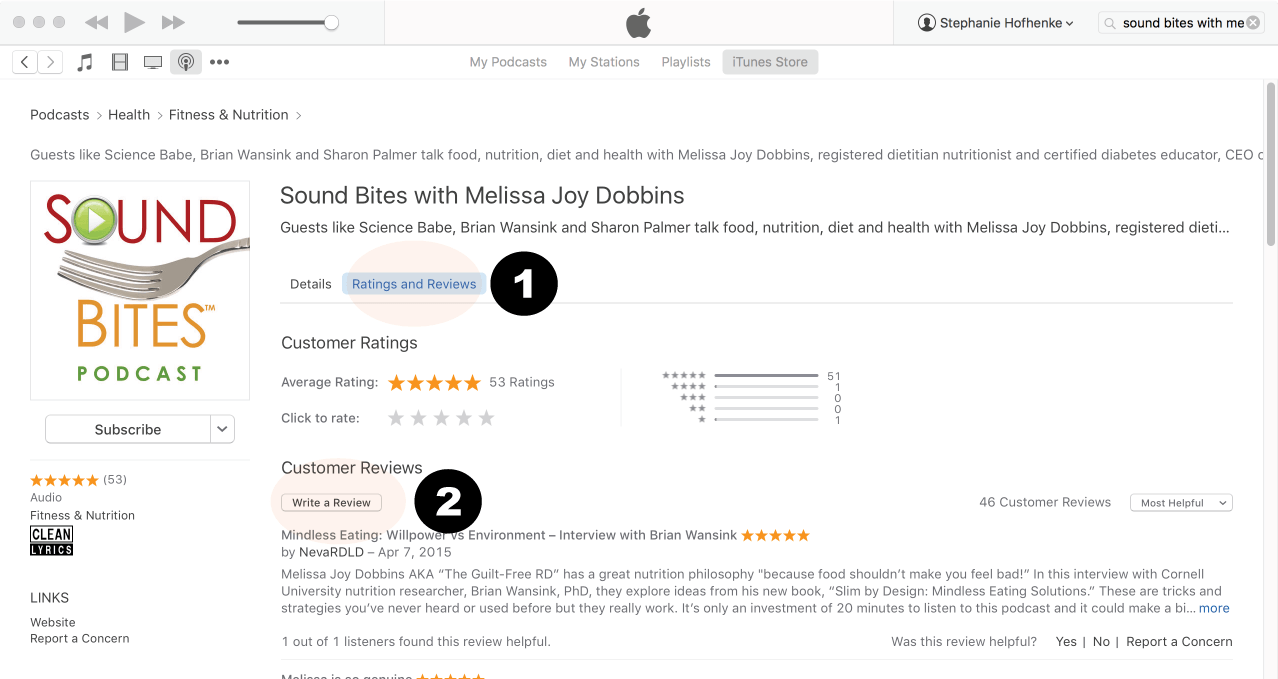
Search for Sound Bites podcast in iTunes
Click Ratings & Reivews
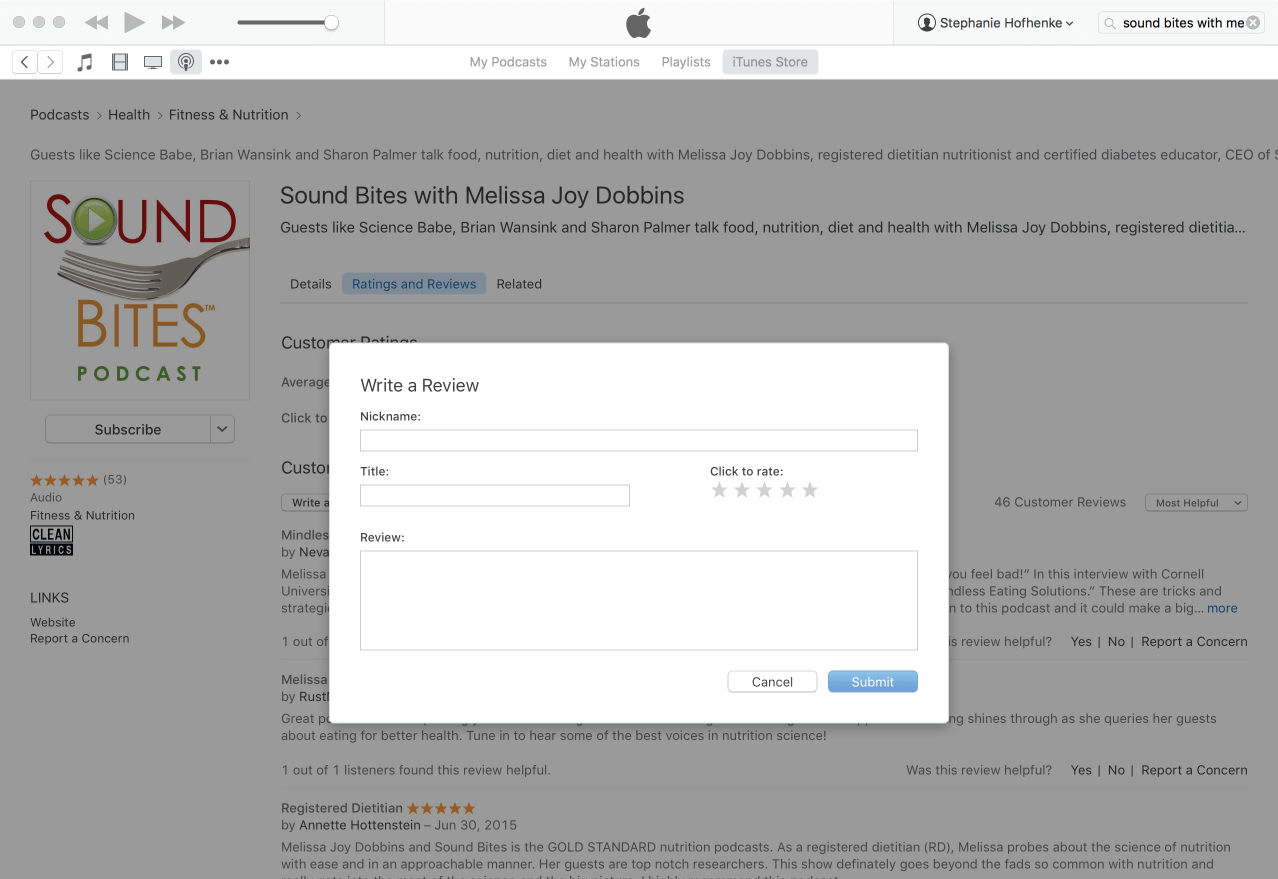
Click Write a Review
View reviews and write your own review.
Write your review…. Thank you!
Write your review!
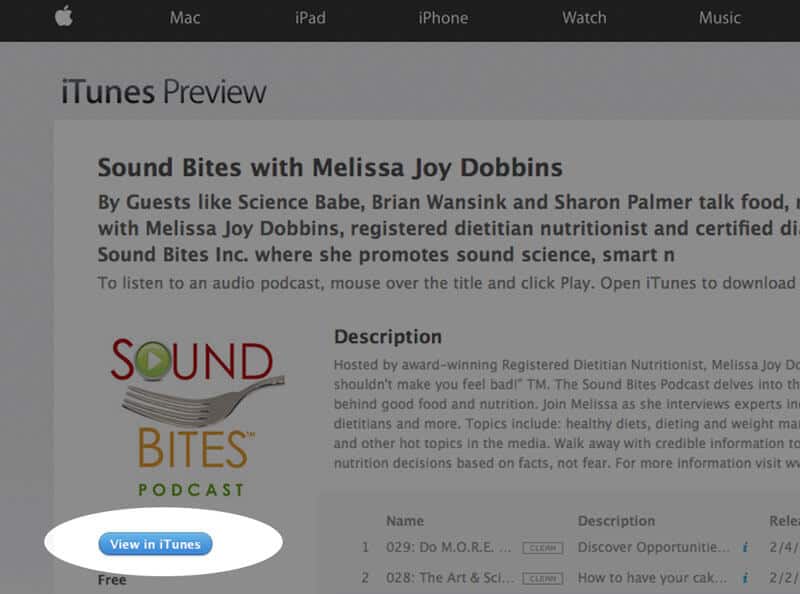
How to subscribe via iTunes
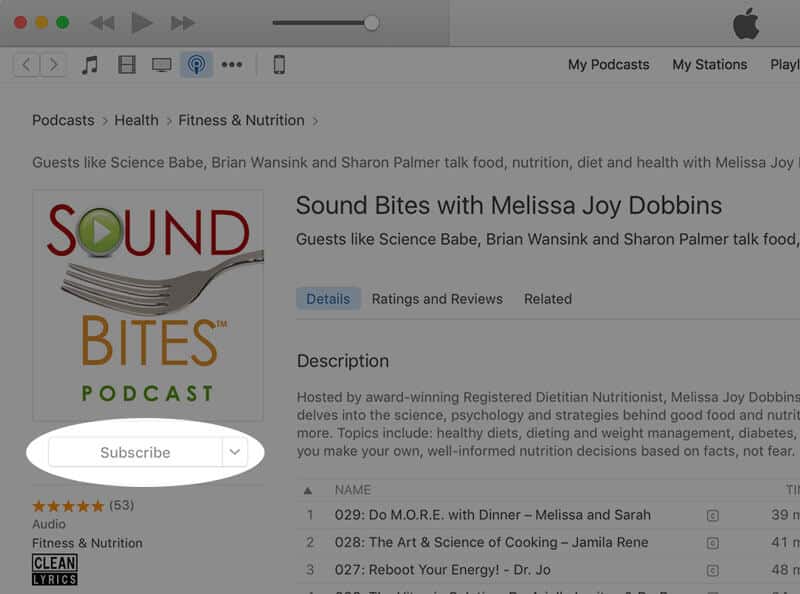
Click here to view the Sound Bites Podcastin iTunes, then click the blue “View in iTunes” button. This will open your iTunes application directly to Sound Bites Podcast. Click the “Subscribe” button, and your done!




 As Chief Scientist and Senior Vice President of Science and Research at the International Alliance for Responsible Drinking (IARD), Jennifer Tujague oversees the world’s largest repository of peer-reviewed research on alcohol consumption and health outcomes. IARD is a not-for-profit supported by the world’s leading beer, wine, and spirits producers, working in partnership with global health organizations to reduce harmful drinking. In her role, Jennifer develops the organization’s research strategy, establishes priorities, and oversees the implementation and outputs of the Science and Policy team. She leads a team of scientists in advancing new capabilities, methodologies, and materials, and in communicating research findings related to alcohol, health, and alcohol policy to IARD’s members. In addition to guiding scientific initiatives, Jennifer contributes actively to IARD’s broader operations and organizational management.