Celebrating over 1 Million Downloads and 50,000 Free CEUs on the Sound Bites® Podcast | NEW: Get 1 years’ worth of CEUs with the new 15-CEU Podcast Course
This episode offers the opportunity to earn 1.25 free CEU credits including an ethics performance indicator. Simply enjoy the podcast, complete the quiz and reflection, and download your CEU certificate. Get started here.
This episode is not sponsored. Sound Bites, with support from Bayer, is offering 1.25 free CEUs for this episode.
The Attention Economy vs. Code of Ethics
Critical thinking is not natural for human beings — just like with food, we have to LEARN to think critically about the information we consume.” – Dr. Camille Ryan
A new paper published in the Journal of Nutrition addresses mis- and disinformation in food science and nutrition and how this impacts practitioners and the public. The introduction and expansion of social media has created opportunities for credible health professionals but also challenges in that self-proclaimed experts use this platform to get attention, grow their brands and ultimately, spread mis- and disinformation.
This episode sheds light on the attention economy, where stories, regardless of accuracy, vie for scarce online attention and discusses the importance of learned critical thinking, encouraging listeners to question information, overcome personal biases, and prioritize relationships during challenging conversations. The role of registered dietitians as trusted sources of nutrition information is emphasized and listeners are urged to seek clarity from professionals when encountering contradictory claims. The dynamic nature of science is highlighted, urging openness to new knowledge and questioning of outdated beliefs. Overall, the episode equips listeners with valuable tools to discern credible nutrition information amidst the sea of misinformation and disinformation.
Tune into this episode to learn about:
Why the authors decided to publish a paper on the topic
Why it’s important for nutrition professionals and the public to be aware of this issue
The distinction between misinformation and disinformation
The attention economy
Critical thinking – what it is and how it impacts nutrition practice
Code of ethics for nutrition professionals
Responsibilities of nutrition practitioners
How the introduction and expansion of social media has created more challenges
Why perpetuation of misinformation harms society
References and resources for the public and health professionals
Mis- and disinformation are pervasive in our world and it is important to always ask ourselves – does this sound too good to be true? Does this contradict the larger body of evidence?” – Connie Diekman
Cami Ryan, PhD
Lean into the discomfort of not having full or complete information about any topic or issue. Be prepared to push back on your personal biases, engage in active listening, think slow before you share information, and always put the relationship first when having tough conversations.” – Dr. Camille Ryan
Cami Ryan, PhD, is a Bayer Science Fellow, a Professional Affiliate with the College of Agriculture at the University of Saskatchewan and a social and behavioral scientist for a multinational agriculture company. With a broad academic and professional background in social sciences and economics, Dr. Ryan is particularly interested in studying the impact of dis/mis-information in the marketplace and passionately advocates for policy based on science-based evidence in the agriculture industry. Dr. Ryan is a prolific researcher whose recent work focuses on how the “attention” economy shapes public opinion, regulatory decisions, and scientists’ license to operate. In addition to her publications, Dr. Ryan is also a regular guest and contributor to podcasts, editorials, and other media outlets.
Connie Diekman, M.Ed., RD, LD, FADA, FAND
Science is a complicated area that is constantly evolving. As we learn more, don’t hesitate to question professionals who seem to advocate old information.” – Connie Diekman
Connie Diekman, M.Ed, RD, LD, FADA, FAND is a Food and Nutrition Consultant in St. Louis, Missouri. Diekman is the former Director of University Nutrition at Washington University in St Louis, a Former President of the Academy of Nutrition and Dietetics and a former chair of the American Heart Association – Missouri affiliate. She is also a former Chair of the Weight Management Dietetic Practice Group, a subunit of the Academy of Nutrition and Dietetics. She is currently the Chair of the Academy of Nutrition and Dietetics PAC and a member of the Missouri State Committee of Dietitians.
Diekman worked as a television nutrition reporter for close to 15 years, working for the NBC, CBS and finally, the Fox affiliates in St Louis, Missouri. For fifteen years Diekman was the voice of the “Eating Right” minute which aired on radio station WBBM in Chicago. Diekman is the author of “The Everything Mediterranean Diet Book: All You Need to Lose Weight and Stay Healthy!” and the book “SuperFood Nuts.”
Honors received include the Academy of Nutrition and Dietetics Medallion award, the Alumni Distinguished Service Award from Fontbonne University, the Outstanding Dietitian of the Year Award from the Missouri Dietetic Association, the Recognized Young Dietitian of the Year from the Missouri Dietetic Association, and the Dr. Arthur Strauss Award, from the American Heart Association – St. Louis.
[00:00:00] Narrator: Welcome to Sound Bites, hosted by registered dietitian nutritionist Melissa Joy Dobbins. Let’s delve into the science, the psychology, and the strategies behind good food and nutrition.
[00:00:22] Melissa Joy Dobbins: Hello and welcome to the Sound Bites Podcast. Today’s episode is about misinformation and disinformation in food science and nutrition. How to think more critically about food and nutrition information in the news. And, if you’re a dietitian or a health professional listening, how to communicate more accurately and effectively about food, nutrition, and science. This is such an important topic and one that is much easier said than done that I created my sound science toolkit years ago as a resource for dietitians and health professionals, and the public as well. I will put a link to that in my show notes if anybody is interested in checking that out. My guests today are Connie Diekman and Dr. Camille Ryan. They are co-authors, along with Tracy Oliver, of a paper published in the Journal of Nutrition in January 2023 titled Misinformation and Disinformation in Food Science and Nutrition, Impact on Practice. Welcome to the show, ladies.
[00:01:25] Dr. Camille Ryan: Thank you.
[00:01:26] Connie Diekman: Thank you.
[00:01:26] Melissa: I’ll give you a short introduction and then I would love to hear more about your backgrounds. Connie is a food and nutrition consultant in St. Louis, Missouri. She’s a registered dietitian, former president of the Academy of Nutrition and Dietetics, and Current Academy PAC chair. Connie worked as a television nutrition reporter for close to 15 years working for the NBC, CBS, and finally the Fox affiliates in St. Louis, Missouri. For 15 years, Connie was the voice of the Eating Right Minute, which aired on radio station WBBM in Chicago where I live. Fun fact, Connie, I did a few of those commercials as well, which was a lot of fun.
Connie is also the author of the Everything Mediterranean Diet Book, All You Need to Lose Weight and Stay Healthy, and the book Superfood Nuts.
Cami is a social and behavioral scientist for Bayer CropScience, a Bayer Science Fellow, and a Professional Affiliate with the College of Agriculture at the
University of Saskatchewan. With a broad academic and professional background in social sciences and economics, Cami is particularly interested in studying the impact of dis/mis-information in the marketplace and advocates for policy based on science-based evidence in the agriculture industry. She is a prolific researcher whose recent work focuses on how the “attention” economy shapes public opinion, regulatory decisions, and scientists’ license to operate.
Again, welcome to the show, both of you. I am so excited to dig into this paper with you. I do want our listeners to know that this episode is not sponsored, but as you both share more about your backgrounds, please share any disclosures that you have to note. We might be submitting this episode to the commission on dietetic registration for free continuing education credits for dietitians, diet technicians, and diabetes educators.
Like I said, I would love to hear more about your backgrounds particularly as it applies to the topic that we’re discussing today and how you got interested in this niche, this topic. Anything you would love for us to know about your backgrounds? Connie, let’s start with you.
[00:03:41] Connie: Thanks, Melissa. Appreciate you having us on today and letting us talk about this important topic. In terms of background, I think it has always to me been about the science. I was trained through Washington University and that’s clearly a very strong science-grounded institution. My dietetic internship director, Kathy McCluskey, who many dietitians know, was also very adamant about we practice based upon the evidence, we practice based upon the science. As I worked with clients through the years, and it’s been a lot of years, as I’ve worked with clients and especially once I went back to Wash U with the college population, the confusion of the client really became evident. The confusion about, well, one website says this and one says that, that I realized we need to do a better job helping people understand that not everything you read is accurate and how do you tell the difference. And how do we work with clients so that they feel comfortable about saying, “I’m confused.”
Then it also became that ethical piece. For me it’s the twofold, the consumer confusion, and then that ethics of us as professionals. What should we be doing to ensure that our clients are doing what they’re comfortable with and in the best interest of their health?
[00:05:06] Melissa: Yes, absolutely. I know you have a long history of talking about ethics within our profession, so I’m really happy that we’ll get to hear all about that today. Maybe this will be part two because there’s so much to talk about.
[00:05:20] Connie: Yeah, there is.
[00:05:21] Melissa: But Dr. Camille Ryan, I would love to hear more about your background as well.
[00:05:25] Camille: Thanks, Melissa. Well, I first want to say it’s been an absolute delight to work with Connie and Tracy on this paper. I’ve worked in agriculture for more than 30 years, so I’m getting a bit long in the tooth, as we say, up in Canada and have a bit of experience around this. Probably originally when I started out with my career, I was focused really on ag-economics, a bit of psychology around business and organizational behavior, and a lot about sociology and understanding decisions in the field, how farmers make decisions about their production methods.
I became interested in this space probably about the time that social media started becoming this part of our, what can I say, our virtual living rooms, where we started engaging in this space a little bit more regularly. I was teaching a class in the University of Calgary back in 2006 or 2007, and my students dragged me kicking and screaming into Facebook, and I haven’t looked back. They did that because they wanted to do online learning. They wanted that methodology class to be very online engagement-based. It was good. What I realized was that the conversations we were having about food and agriculture, because those two things are greatly intertwined, that those conversations weren’t always based in evidence and science. You could see what was going to happen on the horizon. That actually all of us that work in these spaces, these industries, whether it’s food, food science, whether we’re registered dietitians or we work in agriculture, those conversations and those dialogues are going to impact perceptions of the work that we do as scientists and evidence-based advocates.
I was just really fascinated with the mechanism that was social media and really how we humans interact in that space. That was the driver for me. I’ve been working around mis and disinformation probably and myth-busting about agriculture and food probably for almost 20 years now. It’s been a fascinating space. I think at one time I was hoping, “Oh no, we’re going to fix this.” Then you realize, no, you’re never going to fix it. I think that there’s things that we could do as professionals, no matter where we work along the value chain horizontally or vertically, that we can do to be part of those dialogues and to direct people in different directions. I won’t go on a little bit more, but I want to say one of the most amazing things I learned, and I learned on one of your episodes, Melissa.
[00:08:09] Melissa: Wow.
[00:08:10] Camille: Robin came in, you had an episode with her, and one of the things that she said in that episode was-
[00:08:15] Melissa: Robin Flipse?
[00:08:16] Camille: Yes. Flipse. One of the things she said, and it just hit me, is she said, “Humans are the only animal that instinctually doesn’t know what and how to eat. They have to learn how to consume food.” I went, “Well, of course.” It’s the same thing with information on the internet and on social media. We have to learn that process. The problem is most of us don’t think we have to learn anything, we just absorb it, right? It becomes a little bit about what’s your information diet and how are you managing, how are you moderating it.
[00:08:50] Melissa: Absolutely. Well, that’s fascinating. This conversation we’re having today, we think about these things, and we talk about these things, but I feel like your paper is a great opportunity to take that deeper dive. Because I think there’s a lot of questions. As dietitians and clinicians, we know we’re supposed to be evidence-based, but how do we put that into practice? I think your paper provides a really nice overview and details out the concepts. We’re going to talk about critical thinking, which I talk about on the podcast all the time and just some of the nuts and bolts that people need to actually apply this in their practice. Before we move on, though, I do want to make sure that both of you disclose any disclosures that you have.
[00:09:33] Camille: I currently work as a social behavioral scientist for Bayer Crop Science. I have been working for the company for almost 10 years. Prior to that, I was a public sector researcher with the University of Calgary and the University of Saskatchewan. I have a mixed bag of a background in terms of some of the sectoral spaces I’ve worked in.
[00:09:56] Melissa: Thank you. I have to say I mean, you have such a strong online presence. That’s how I first connected with you and just appreciate the work that both of you do in this space. Connie, do you have any disclosures?
[00:10:09] Connie: Yes. It follows very similarly, being based here in St. Louis, I have worked with the Monsanto, now Bayer group for a lot of years. Currently, I am a member of the Bayer nutrition expert network where our goal is to really try to clarify the science, the realities in the food agriculture arena because it is confusing. You hear a multitude of pieces of information and as dietitians, we, of course, need to understand what really happens on the farm.
What does the farmer have to deal with as it relates to cost of seed, cost of animals, feeding those animals, all of these variables? It has been a real education for me to be involved with the Monsanto now Bayer group in learning the realities of our food system. And that I hope has translated to what I’ve done with my clients so that relationship piece yes, I am on the Bayer nutrition expert network, but it’s a plus that I bring to the table.
[00:11:15] Melissa: Absolutely. We aren’t going to be speaking directly about anything about Bayer today but that’s I’m guessing one of the ways that you two connected and collaborated. Is there anything you wanted to say about the third co-author, Tracy Oliver?
[00:11:28] Connie: Yes. Tracy is a registered dietitian, PhD educator at Villanova. Camille and I started the paper pre-COVID, maybe early COVID.
[00:11:41] Camille: Yes. It’s one of those things that just we were working on it, talking about it, and engaging. It was great.
[00:11:47] Connie Yes. We have done some speaking, working with our Bayer colleague, Kelly Bristow, and came to a, “What should we do?” “Let’s do a paper.” As we were working on it, Tracy and I have done some things on critical thinking for the weight management DPG. Again, with her educator position, she brings that perspective that Camille and I both felt would be very helpful as it relates to what is it we need to communicate to those who are educators so that they can help students really become more astute at the critical thinking and the ethics piece. Tracy is a former weight management DPG chair. I think she might have been chair right behind me. That’s how she and I started working together. She brought a lot to the paper.
[00:12:33] Melissa: Great. Yes, I definitely wanted to include her in the conversation. Let’s talk about the paper. Why did you decide to write this paper?
[00:12:41] Connie: I think it, as Camille said, we had a lot of conversations for a lot of years around the perceptions of many versus the realities. We had done a couple of speaking things together and it finally became to– When you do a speaking engagement, it’s great but you have a limited audience. How do we get this to more people which, of course, is why we’re so appreciative of you having us on because it is that next reach to more people. I think that’s how we decided we need to do an article.
[00:13:15] Camille: Of course, I always defer to Connie and Tracy in this because I am not a registered dietitian. I have never published in the Journal of Nutrition before. I really defer to them in better understanding where are the gaps in the literature out there and how can we fill them. I think that a lot of the work that we did was just really, what I would call strategizing around what would that audience want, and get value out of and actually that probably took longer to do than to actually write the paper because we had to formulate that a little.
At the end of the day, if you dive into the topic around mis and disinformation, period, across a number of industries, topics, issues, or whatever, it’s just a burgeoning topic in that space, in that academic publishing space. There’s always gaps. There’s always opportunities out there. I think one of the things that I personally picked up on because I follow a number of registered dietitians, very good science-based dietitians like both of you. I also follow the wellness industry a little bit because I always find it interesting what happens.
But what I was noticing and Connie, please jump in on this, but I was noticing a lot of very legitimate registered dietitians out there but I noticed many of us that are experts, when we get caught up in that social media machinery, our priorities might change.
We might shift from being evidence-based as a priority to being how can I get more attention? How can I get more likes? I think that that was something that we dive into a little bit in the paper and I think that’s one of the most important things that we have to explore as experts of any kind is we have to look at what is our behavior online.
What is incentivizing and motivating that behavior? Ethically, what do we need to do to maybe pull back at some of those things and think slower, and maybe think more critically about our own behaviors, not just about how we try to encourage others to think critically? I think that that’s something that is very interesting about that social space, virtual space that’s very interesting is that it can easily shift you into maybe prioritizing things that maybe you shouldn’t.
[00:15:42] Connie: No, I agree with you totally. I also think it’s important that– When we talked about the Journal of Nutrition from the standpoint of we touch more professions than just the RD, and we felt that was a real strong positive from the standpoint of. this is a problem that permeates its society. It is not unique to us, which also makes it challenging for the RD because they look at others out there on social media who are pushing the boundaries, who are stretching the science. Well, why can’t I do the same thing? Why can’t I be in that same place? Let’s be straightforward. Cami said many times, people want likes, they want to have their social media platform all of a sudden become the social media platform.
That’s great because if that’s your brand, you need that piece but you need to be sure that your brand speaks to your ethics, your science, your responsibility to the consumer. We looked at how can- maybe this is stretching a little far, but how can we help make a difference for healthcare providers out there to be more ethically responsible for how they communicate with clients? That was our hope, again, one small paper isn’t going to change the world but that was the hope.
[00:17:03] Melissa: It’s a start for sure. We are definitely going to dig into social media and this self-branding concept that you bring up in the paper that we’re discussing right now. I often say that we as dietitians, we have our work cut out for us to translate evidence-based information in a way that is not only clear and concise but compelling because these self-proclaimed experts can be very compelling because they can say whatever they want. It’s not a fair fight but we have those challenges-
[00:17:33] Connie: Yes. We do.
[00:17:34] Melissa: -right at our feet.
[00:17:35] Connie: I think an important add to that is that challenge extends into the policy arena as well. We are being challenged as professionals as to why should we be the licensed professional versus any other nutrition-credentialed individual. Unfortunately, if throughout social media, we as registered dietitians are not demonstrating why we are the science-based expert, we’re going to have a harder time justifying why we should be the licensed nutrition credential.
[00:18:09] Melissa: It’s a great point. Before we go any further, I would like to discuss the definitions of misinformation and disinformation. They certainly are becoming more common in our daily vernacular, but some people may not be familiar, especially obviously with disinformation. Can you define them and the difference between the two?
[00:18:29] Dr. Camille: I’ll take this one. Connie.
[00:18:30] Connie: I was just going to say you do this very well.
[00:18:33] Dr. Camille: It’s interesting because I think sometimes we lump those terms together. Mis and disinformation are often used interchangeably out there. I think I’ve done it in the past. We all do it to a certain degree. Sometimes when we’re communicating about it, we just use it interchangeably. There is a difference. Misinformation is something that is shared out of negligence or perhaps unconscious bias, or without really knowing or understanding, and often is incomplete information. It’s without context. Disinformation is significantly different. In the literature, it is defined as information that is shared intentionally to mis and disinform.
Those that create and share disinformation have a strategy and an agenda. Often that is driven by dollars which most people don’t understand because that whole economy, that attention economy, that internet economy is kind of invisible to us. We don’t really see what’s going on behind the algorithms but that’s often what is driving disinformation.
There’s an agenda there. They’re either looking to ban a product, to vilify some kind of food and we’ve all seen that, or there is an intention to misinform. But, these two things can work together. Someone who is driven or drives disinformation can take a piece of misinformation and turn it into disinformation. Likewise, misinformation or someone who is misinformed or is looking to misinform someone else, they’re taking the disinformation and they’re carrying it along. It may not have the intent of disinformation, but you’re still providing this misinformation. It’s a very complex space. Any piece of information you have, it’s often just a combination of a few things. and it usually is completely without context.
[00:20:31] Melissa: Okay, great. Thank you. That intent piece helps me. I think we’ve been dealing with misinformation forever and probably disinformation has been there, but now our eyes are open and we’re more aware of it. I do think it’s helpful to, again, think about what that person’s agenda might be. Obviously, this is an issue because ultimately the public is misinformed and disinformed and clearly as healthcare providers, that’s concerning to us. Is there anything you wanted to call out maybe Connie, specifically about why it’s an issue and why we need to worry about it as healthcare providers?
[00:21:07] Connie: I think one of the things that we see, I was going to say we worry about, but we really do see this, is that when healthcare professionals maybe don’t stay as on top of the literature as would be ideal or they follow people not knowing completely the individual’s, as Camille said, strategy or agenda, they’re dissuaded by information. They get the misinformation and they don’t know it’s misinformation. That’s where the critical thinking piece comes in. That’s certainly where our code of ethics, it says you’re grounded in evidence-based practice. But what is happening is in our crazy world, we’re all busy people. As I’ve had many say to me, I don’t have time to go read every research study.
I just can’t do that. It takes too much. But we need to figure out a way professionally for ourselves, how do I stay on top of science? The three of us and many of your listeners know, science evolves. It is not static. We have to stay on top of the changing science so that we don’t get caught in the- “Well that used to be correct, so therefore it must still be correct” or, “Well, that sounds pretty good, so therefore I’ll go with it.” I think the other big one that gets us into a much bigger topic, but is we certainly work in great partnership.
As I said, in my case, currently. In the past I’ve worked with many food brands, but currently, it’s Bayer. But we work with many food brands that are bringing products to market that we need to know about. We need to know how to educate our customers, but we also need to know how to read through their marketing to be sure what we share is in fact grounded in evidence, not brand marketing. It’s crucial to our client. That’s the bottom line. Sure, we all could get called on an ethics charge if we’re miscommunicating, but the key is what are we doing to our client? That’s who drives us first.
[00:23:08] Melissa: Every time I do a presentation to a group of dietitians, I ask them, why did you want to become a dietitian? Basically, the answer is always the same. “I want to help people.” We want to help people. You called it out, Connie, it’s a daunting task to try to keep up with the science. I hope we can share some specific examples or case studies as we go through today. I’ll put one of my own out there because we are certainly not pointing the finger or wagging our finger at anybody. This is something that anybody can make a mistake.
[00:23:41] Connie: Yes, exactly.
[00:23:42] Melissa: I outed myself on a recent episode and I’m not proud of it, but I think it’s really important to say is back when I was a supermarket dietitian and that was 20 years ago, I did promote the dirty dozen a little bit before I realized that it was bunk. It can happen to the best of us. It can happen to anybody. That critical thinking aspect is really key. We’re going to touch on that. In the paper and in our conversation already today, we’ve talked about this introduction and expansion of social media has created more opportunities, but also more challenges and really brings this problem of misinformation and disinformation to the surface. But it existed before social media. I would love for you to maybe address what are the differences between the challenges created by social media versus those that were already existing with traditional media? Or how has the traditional media landscape changed with regard to mis and disinformation?
[00:24:44] Connie: The key from my perspective is the internet, social media is 24/7. When I did television here in St. Louis, I was on at x time and once I was off, that was it. My pieces were not posted on the internet. We didn’t have those kinds of things. Even I went off here here in St. Louis in 2001. It’s been a long time, but there still was computer technology at that point. It didn’t live on. Whereas in today’s world, even traditional media, you can catch an episode anytime you- or a newscast anytime you want. Social media is forever. Not only is it forever, it’s on forever and it is forever. It doesn’t go away. That means people are being influenced all the time, anytime, wherever.
[00:25:39] Melissa: And with traditional media, there’s somewhat of a gatekeeper with the journalists, whereas with social media, we’re all our own journalists.
[00:25:48] Connie: True. It is very true. We certainly are seeing traditional media, it’s become more entertainment than newsy. Again, it all comes down to one thing. We all want to be heard. If you’re a television newscast, when you and I did the Eating Right minute pieces, you want to be heard. It all comes down to how do you hook those people in. Social media just does it all the time.
[00:26:12] Camille: They do. Let me just add to that a little bit, Connie, because that’s the thing. To your point, Melissa, mis and disinformation aren’t new. If you think about from a traditional media perspective, remember War the Worlds back in the 1930s? That was put out there as a drama, radio drama, but people heard it and they heard something else and then there was misinformation about that misinformation that came out. Mis and disinformation aren’t new, but to Connie’s point, it’s like everything is on hyper steroids. Everything’s just crazier now. The thing is, we only have so much attention in the day. Now the difference is we do spend a lot of time on social media. The stats suggest that probably we spend three or more hours a day on social media. That’s significant if you think about it.
To Connie’s point with traditional media at one point, you’d have, you’d get up in the morning, you might read the paper, you’d go to bed at night, you’d watch the evening news, that was it. Now you have visual cues going through and through your Facebook threads or whatever, you have the same messages and memes popping up again and again.
They become implanted in different ways because with that repeated exposure to those signals or those cues, they become more embedded in your brain in a different way and you absorb them more. It’s like when you think about GMOs, I think pretty much everybody’s got this consensus. I think the public’s let the GMO thing go away.
But it’s so embedded in the social psyche that we still have a whole bunch of new products coming out all the time that are labeled non-GMO. We’re just there. That’s just what the social expectation is. I think social media has really driven a lotof that. Another just bit of statistical piece here is that 2021 represented a tipping point. It was a tipping point for societies globally because at that point, there were more people globally on social media or using social media than not. As a person that’s worked in agriculture for as long as I have, I know that in the US and Canada in around the early 1920s, that was a tipping point.
There were more people living in urban areas than living in rural areas. We know what that did for agriculture and how we see food. This just represents another social tipping point that is changing how we see the world and how we experience the world. That’s what’s shaping things. We’re herd animals. Like, come on. That’s what we do.
In order to socially survive today, which is different than maybe thousands of years ago, in order to survive today, we have to survive socially. We have to stay embedded in our little networks or groups or personal networks. Social media is the glue that holds some of those relationships together. We don’t want to get voted off the island. We’re going to follow those things.
[00:29:22] Connie: Very obviously as we went through COVID, which eliminated that social connection piece, the need to have social media became even stronger. That connection.
[00:29:34] Camilla: I would say though, that another thing that happened with mis and disinformation, I think we were sort of aware that it existed out there and I’m speaking from an ag standpoint, but I think what COVID did, it all of a sudden raised awareness about mis and disinformation. I think people around the world, not everybody feels affected by agriculture. What 2% of population are actually farmers, right? All of a sudden you have an issue like COVID come out and all of a sudden that affects everybody, that went global. Then all of a sudden, everybody is aware about that there is mis and/or disinformation around those public health issues. I think it raised awareness around the issue of mis and disinformation. You can even see it in the engagement of a lot of social and behavioral scientists. They’re actually out there and engaging about what that means, about critical thinking. They talk about what happens with human behavior and why we act the way we do. I think generally the public is more exposed to that kind of information than they ever have been before. I think that’s a good thing.
[00:30:38] Melissa: I agree. Yes. A lot of the concepts that you just mentioned, Camille, I did a podcast interview back in Episode 100. I remember because I was celebrating 100 episodes and now I’m like at 230 something. It was communicating science in a modern media environment with Dietram Scheufele from University of Wisconsin-Madison, who’s phenomenal. If anybody’s interested in more of those nuts and bolts, we talk about narrowcasting versus broadcasting. We talk about all different types of bias and heuristics and how the thinking fast and slow type stuff, which we’re going to dive into critical thinking right now. A lot of that is in that conversation, so I’ll put a link to that in my show notes as well. Like I said, I talk about critical thinking a lot on the podcast and it looks like we’re getting more critical thinking into our schools.
I talked to fourth and fifth-grade students recently and they have a critical thinking curriculum. The fifth grader’s actually, funny story is it’s on flavored milk debate. When my son, who’s now a freshman in high school was in fifth grade, I think I’ve talked about this on the podcast before, but I don’t know if either one of you know this. The teacher was asking if I was the Melissa Joy Dobbins in the flavored milk video. I said, “Oh yes, that was with my daughter who’s now 23.” She said, “Well, we use that in our curriculum. The kids watch your video and a Jamie Oliver video and they do all kinds of research, and they have to write a letter to the principal with their position whether the school will keep flavored milk and they have to state their case and use their citations and everything.”
I just think it’s great that, I mean, I don’t think I learned critical thinking in fourth or fifth grade so I think that that’s just wonderful. But are we getting this in our dietetics curriculum? Are we getting this in high school? Are we getting this hopefully like I said fourth and fifth grade, we’re seeing that more now. Let’s talk about what it is, what is critical thinking. I know that you referred to Jason Riis in the paper and I’ve interviewed him a couple times on the podcast as well. I’ll also link to those episodes if people want a deeper dive into critical thinking, but let’s talk about what it is and how we can be more aware of our own critical thinking. You already mentioned that, Camille, like we need to be aware of our own critical thinking habits, if you will, and be aware that our clients, our patients, the public, we can help them with that as well.
[00:33:08] Camille: You know, that’s the interesting part about critical thinking is that we all need to learn and practice it. It doesn’t matter what we know, what we don’t know. That’s a piece of all of this. I think what tipped things over the edge, and Connie alluded to this earlier, is that we’re in this fast-paced world. We don’t think slow anymore. You talked about Thinking fast, Thinking slow, right? My favorite behavioral economist of all time, Daniel Kahneman, and it’s one of my favorite books. Critical thinking is about moderating our own behavior, it doesn’t matter who we are, but we live in a world where we get rewarded for being first in line. And I think forcing ourselves to go, “Okay, I’m just going to stop, I’m not going to share this because I don’t really know and I don’t have time to look it up, so I’m just going to leave it alone.”
Sometimes that’s really hard. I know that, I’ve made mistakes in the past, I probably will continue to make mistakes because we’re so in that mode of, “I just want to put this out here because this totally confirms my bias.” Sometimes that’s what you have to do. It’s pulling back. We often talk and my colleagues in social behavioral sciences get frustrated when the scientists talk this way, is that, “Oh, we need scientific literacy.” That pushes hard on people from my discipline because actually that just infers that you know everything and we know nothing. That is not true of anybody no matter what education they have. I think what we need to become more grounded as we move forward with critical thinking in kindergarten to grade 12 or in universities or amongst our expert groups, is we have to start thinking about what could help us with understanding science is if we are media literate, if we have digital literacy, if we have information literacy.
I think once we start even teaching those kinds of things in schools and in spaces, that’s going to lift that critical thinking action and activity as it’s experienced out there. I think we focus on the science and that’s good because we have to communicate about it. But I also think that we’re dealing with a whole other set of issues that are influencing our behavior. In order to really think critically about what’s in front of us, we have to be digitally literate. We have to understand how information is shared. We’ve got to understand at least to some level what algorithms are. We have to understand this attention digital economy in a way that will help us think more critically about what’s in front of us.
[00:35:50] Connie: I think one of the things that I will often do is go back to something that is ancient, but if you remember, Melissa, The 10 Red Flags of Junk Science. I go back to the, does it sound too good to be true? It does what Camille alluded to that, stop, think for a moment, what do you know versus what this is saying, and then trying to help people go from there. It really is so tempting to react to everything because disinformation typically has a nugget of truth to it. It’s hard to know that it is in fact not quite accurate. If you can do that, “Wait a minute, let me just think here for a moment.” It often will buy you that time to make the questions or to go do the search. Now I also think in terms of one of the things that the IT people at the university used to seriously beat into our head. “Do not open anything that you’re not expecting even if it’s coming from someone you know.” It’s the same thing. Don’t click on that, don’t respond to that if it’s not something that sounds like what you think it should be.
[00:37:02] Melissa: And don’t share it.
[00:37:03] Connie: Exactly. Don’t get in there, give them one more click, one more like, and I don’t know if it’s Twitter, I think it is Twitter. Now if you click on an article, it will ask you, do you want to read the article first?
[00:37:16] Melissa: Before sharing it. Yes.
[00:37:17] Connie: Which is a good thing from the standpoint of it gives you that moment to think about what are they saying versus what I know.
[00:37:27] Melissa: Right. How can practitioners recognize if they’re using critical thinking when they’re dealing with their clients, with research, and the media?
[00:37:37] Connie: Wow, that’s a big question [laughs]. I do believe that we need to not react when a client says, “Well, I read X, Y, and Z”, because that is our tendency. We need to do that stop, and what I will do to the client is say, “Tell me more about what you learned or what you read” to get the information to understand where they’re coming from. Then very obviously, once you get that information and you see the gaps or you see the confusion, it is appropriate to ask them, “Could I maybe share with you what I’ve learned or what some of the studies I’ve looked at look like that are a little different than this?”
I guess what I’m saying very simply is, have a conversation with the individual. Don’t automatically shift to, “Let me tell you everything I know” because that’s not going to achieve the goal which is of course, a big part of why the three of us were big on let’s have some charts, some tables so that people can walk away, hang it on their office wall and refer to, “Oh yes, that’s what I should be doing.” We all do tend to practice as we’ve always practiced. There might be some changes in that process. Tell me what you read, why is it you think X, Y, and Z? Now can I share with you some more information?
[00:39:03] Melissa: Building that trust?
[00:39:04] Camille: Yes, good word. I think that the other piece of this is that when you’re in that scenario and you’re having that engagement opportunity, whether it’s a client or it’s a conversation with someone, whatever. Even if what they’re thinking is not true, what they’re feeling is completely valid. That’s where the trust bridge can be built because moving the issue to the side and then just focusing on, “Please tell me how you feel about this or tell me more about where you’re coming from in all of this,” like Connie suggested. I think leaning into and validating those fears helps build that bridge and gives you that license to move forward maybe with putting forward different information.
[00:39:54] Connie: I think that’s a big part of why we did put the words ‘relationship engagement’ on our tables and our charts as opposed to a more directive type word, because it is about that engagement component. I think in social media, people forget because you don’t have the person in front of you, that there are people behind all these posts and as soon as you react, respond, whatever it might be, there is an engagement that takes place. You need to be thinking in terms of, is my message what I would communicate to them if they were sitting right here in the same room with me? I think that’s what’s something we’ve lost with social media as well, is you get these very– Of course, 140 characters doesn’t help but you get these very short, direct curt responses. You don’t build a relationship or an engagement or trust when you do that.
[00:40:49] Melissa: Right. The charts you’re referring to is some of the figures and the images, and we’re going to talk about those. I’m going to have you share some of that when we talk about applying this. As you’re talking, I turned to the paper because I wanted to read under providing guidance to clients, it says, “Judgments are typically made quickly, yet our intuitions often feel very strong. We do not generally feel an urge to self-reflect on these intuitions so we are often wrong without knowing it.” I wanted to read that from the paper because it speaks to what you were saying, especially you, Cammy. We could talk all day about critical thinking and it is again, it’s one of those concepts that is easier recognized or said than practiced. I think it’s an ongoing learning curve there but when it comes to putting that into place, you mentioned a little bit about code of ethics, Connie, so I wanted to know what more you can talk about and share with us with regard to the code of ethics and also identifying responsibilities of practitioners because I have a lot of questions about this myself.
[00:41:55] Connie: If we really were to walk through our code of ethics, it really does very clearly talk about our responsibility is to communicate accurate information. Our responsibility is to not mislead. There you go with that mis and disinformation, we need to look very closely at am I being too tantalizing and potentially misleading someone and that is a part of our code of ethics. It does talk also in terms of the critical thinking piece from the standpoint of recognizing the differences in people. You get two clients in your office or again on Facebook, Twitter, with two different interactions. The message you give may be totally different and we need to be sure that we are adjusting the messaging, the comments, the instruction to meet the needs of the client. It is about the client piece. That doesn’t often get carried over, in my view, strictly in my view, to social media because again, we think in terms of it’s broad, it’s everyone out there, what’s the big deal?
No, it’s still within. If we speak anywhere as a registered dietitian, whether you’re an Academy of Nutrition and Dietetics member or not, if you are credentialed by CDR, Commission on Dietetic Registration, you must abide by the code of ethics. That code covers social media. Therefore we need to be cautious. If I were to say something on any social media platform as it relates to a Bayer product, I’ve got to declare that it’s a sponsored post, that I am a part of that. We’ve got to do that. Clients lose their trust when we are hesitant to disclose. My students, I think they’ve stopped laughing, but they chuckle at me because my slides in class, the disclosure slide is often long and it’s like, well, this has nothing to do with the lecture you’re giving. It’s like, that’s okay. You at least know where I’m affiliated and therefore you have no questions about what I bring to the conversation.
That code of ethics and this is true with all professions, they’re different, codes are different. Ours is grounded in the International Code of the International Confederation or the International Congress. I always get my ICDA mixed up but of Dietetic Association so that is the big code and then the academy’s follow from there but you look at any medical profession and you have a code of ethics.
[00:44:30] Melissa: Right. Well, you touched on something that I’m constantly saying. Well, you said it’s my personal opinion. I agree with you that when we’re working with a client or a patient one-on-one, we can have that conversation. We can ask questions, we can really tailor everything to them but when we try to translate that to mass communications, whether it’s traditional media or social media, we do tend to get general and maybe oversimplify or things get lost in translation and are taken out of context and so it’s a very challenging aspect of us, nutrition and science communicators.
[00:45:02] Connie: Melissa, to just add to that, I think that’s our opportunity to say what you exactly said there at the end, that science is complicated and there is a lot to it. Let me talk to you about I’m posting on this one piece, I can do more. You’re right. You are totally right.
[00:45:19] Melissa: Okay, great. I’m on the right track. As a follow-up to that then, when it comes to translating research into recommendations, we often hear or believe that the public wants definitive black-and-white information, black-and-white answers, but oftentimes, it’s a very complex and nuanced message or concept. If we try to simplify it, that could result in it being oversimplified, in my opinion, unhelpful. Can we build trust with the public by trying to communicate the complexities instead of trying to simplify or does that make the public trust us less because, well, there’s too many gray areas? You don’t know the answer. I don’t trust you.
[00:46:02] Connie: You are correct. It’s funny you bring this up because there’s actually a conversation on one of the social media platforms today about this very topic. My approach and what I do educate because I do teach a class on interpreting and translating science for consumers. My message to my students in that class is that we need to share with the client or on social media a little bit about here’s what the evidence shows but if you look at this in practical terms, here’s what it might mean so yes. We talk about translating the textbook to the table. If we can’t do that science translation and I mean translated, I don’t mean sit there and go, well, then the research method was this and they had this many people, no, that’s not what the consumer wants. They want to trust that we know the science, we understand the science and we can help them figure out what to eat because that’s what they want to know. We’ve got to stop being, ignore the science because again, I’ll go back to what we said earlier. If they don’t want the science, they’re going to go get it from anybody on social media who proclaims to be a nutrition expert.
[00:47:13] Camille: It’s true. Oftentimes people don’t even understand where expert lines exist. Like where your lines of expertise exist. I’ve always been very careful about what I talk about in the agricultural world because I’m not an agronomist, I’m not a plant geneticist and you really have to communicate where your expert lines exist. I think that that’s also a challenge for all of us as experts, we have to be open and honest about that. The other thing I want to pull into this, and this is something that I think is a really important issue and I’m pretty sure that you both would agree, is that science, general, thinks that it stops after publication, and what we’ve been trying to do, especially internally, or at least in agriculture more broadly, is these great scientists that do this great research and do this great work and publish it in peer-reviewed journals, which is great and there’s also junk journals out there, which we’ve come to learn, but they’re publishing good stuff. That’s not where it ends.
You have to, as a scientist today, be able to talk about your science and that is not natural for scientists. There’s a reason why we call it the Ivory Tower. It’s because we want to stay removed from society so we can study society, that’s just being objective. Well, we no longer have that privilege. That’s not what the public wants. Now all of a sudden you’re seeing shifts even in academic journals where they’re going, “Okay, this is great. We love your paper, we’ve peer-reviewed it and we’re going to publish it but you have to do a visual abstract. We want you to get on camera and do a 30-second to 1-minute blurb about what this paper means. Then the expectation for us as a company, when our scientists do all this great work with some of their partners at universities, we want them out there talking about it. Just like what we’re doing with you today, Melissa. Bayer wants us out there talking about this because this is where people go to listen to understand. This is part of that translation process, which science has never been really great at. I think that that’s another learning curve that has to happen. I think we’re beginning to see that evolve a little bit now too.
[00:49:30] Melissa: That reminds me of how farmers didn’t want to communicate and we impressed upon them the importance of getting their voice into the conversation and that their work and their stories matter so much. When it comes to the responsibilities of practitioners, do we as dietitians, for example, need to do something if we see another dietitian spreading mis or disinformation, what is our charge? Is the onus on us? Is there a role that the academy plays in this? I know that we have this like if we see a non-credentialed person practicing medical nutrition therapy but what would you say to that question, Connie?
[00:50:12] Connie: We do have a responsibility. I forget it exactly what it says in the code, but it is a part of the code to hold each other accountable is pretty much the terminology. There is a process by which through the academy we can file ethics complaints. One of the things the academy does encourage is that before we go to that point, we as colleagues try to discuss it with each other.
[00:50:36] Melissa: Not on social media.
[00:50:37] Connie: No, not on– [laughs]
[00:50:39] Melissa: Just to put it out there.
[00:50:42] Connie: No, probably not the best place to do it. [laughs] Sorry, our brains are going in the same place.
[00:50:49] Melissa: I just had to say it.
[00:50:51] Connie: I know. Seriously, it’s an important thing to say because that is not where we should be discussing it. It should be an approach to each other and obviously in a collegial manner. I noticed you posted X, Y, and Z. I’m concerned about that because it doesn’t follow what I’ve learned. Can you share with me what you’re basing that on? Clearly, if the process escalates from there with denial or refusal to discuss, then you might say, “Okay, time to file a complaint.” Because remember, we all carry the same credential. We all carry the same credential. If one person abuses it, it has an impact on all of us. We’ve got to protect that credential.
Which is why again, it’s so important to say, anybody who has that CDR credential, you’ve got to abide by that code of ethics. It is a part of you carrying that credential. That is one piece. The other piece is of course licensure. In many states, I guess I should have said this at the top, I do sit on the Missouri State Committee of Dietitians, which is our licensure board. We do get, fortunately not a lot, but we do get complaints about things that dietitians in the state are doing that other members are questioning, because yes, our licenses are grounded in our credential as well. Now again, states are different so everybody might not do it the same way but here in Missouri, that is a part of what the licensure committee does follow.
[00:52:21] Melissa: Good to know. Where can people find out more about that? In the code of ethics?
[00:52:25] Connie: For sure. Maybe because I Google it too much, but if you Google Code of Ethics Academy, it comes right up as a link. Clearly, it’s also on eatright.org.
[00:52:37] Camille: Our paper is open access too, so all of those links are in there. You know what I want to add to this, and again, I’m speaking as a non-registered dietitian. I want to challenge us all whether we’re dietitians or whatever area we’re in, why don’t we elevate what this whole online social media circus is about? We can take our ethics, follow them and follow the evidence, follow the science, and try to rebuild ways to build our brand in ethical ways. I think sometimes we’re sitting here going, well this is wrong, this is right or that person’s not credentialed this.
As networks or societies or group of individuals that are experts that are trying to do the right thing, let’s try to experiment with ways that fulfill the ethical part and our obligations to our clients, to the public, but also helps you build your brand because I do believe that you can do it. I think what we’ve been living in for the last several years is basically the wild west of social media. It’s a whole new type of society. It’s a new space where we interact as human beings and there are no road signs, there’s no patrol cars, there are no lines down the middle of the road to guide you on your way. We’re just beginning to build the etiquette around this. I think what we have is a lot of people taking advantage of that and building brands motivated by likes and dollars and whatever to do this.
I think we are building this society that is obviously not going to go away unless we have some sort of world collapse of communications. It’s going to be there, but I think we’re going to build towards this. I think it’s people like you Melissa and you Connie, in your area of expertise, of encouraging your counterparts to build their brand in a way that also follows the ethical protocols that have been built.
[00:54:38] Connie: Great point.
[00:54:40] Melissa: When it comes to providing guidance to clients, there are three figures or charts in the paper that we referred to briefly earlier. I would love for you to talk us through some of those. Yes, the paper is open access and I’ll have a link to it in my show notes at soundbitesrd.com of course. There’s three charts: Client and clinician scientist engagement pathway, the client and clinician scientist relationship, and the clinician scientists’ checklist for ethical practice. Can you just briefly give us an overview of those? I mean we can’t see the visuals but they’re in the paper so people can access that but walk us through those.
[00:55:21] Connie: Do you want to walk the first one, Cammy?
[00:55:23] Camille: Well, I was hoping you would take all three of them, but what I remember mostly is when we were discussing this paper, we were thinking, one, readability and we were going, “What are we going to put out there in a way that people would be able to print off, it was easily understood?” I felt like we did the three things to fill three gaps and that’s probably where I’m at with this because you and Tracy really helped to flesh out what the content of those things were.
[00:55:50] Connie: That’s a great point, Cammy, and it was that visual to support the word. I think people, if they go to the paper, what they’ll see, especially in the engagement pathway, what we’ve talked about, they’ll see almost dead center, not quite, but is empathy. Right below that is trust. There’s another on trust. It’s about how do you ensure that those things with the arrows going back and forth, if this happens, then here’s what you need to do to ensure you maintain that trust or ensure that you demonstrate empathy. Let’s be real. That is what people want. They want that somebody cares about me. They really are listening, hearing me and the same thing holds true as you look at the relationship figure from the standpoint that we see on social media and that we hear from clients all the time. “I’m afraid of carbohydrates, I’m afraid of gluten, I don’t want to eat whatever it might be.”
Instead of us automatically thinking, well, carbohydrates are perfectly fine, why should you be afraid of them? It’s that stop, listen, hear, and then come back with those “What scares you? What is it that makes you uncomfortable? Let’s talk about that.” It’s working you through establishing that real connection so that the client isn’t uncomfortable, that they’re going to be judged because you’re a registered dietitian and I know what that means and I’m coming to you with things I got off of social media and you’re probably going to think I don’t know what I’m doing.
Then finally, the checklist for ethical practice really ties to that code of ethics piece, where it talks in terms of make sure you are doing what you do based upon the evidence. Are you critically looking at what you read? Are you questioning? Are you taking that minute to think like we discussed a few minutes ago?
Then making sure that when you do things you don’t stretch the boundaries of truth or in this case, the boundaries of facts. Don’t infer something to get that like or that click or whatever it might be. Then finally, we talked a lot about it in the paper and it’s at the bottom on the checklist, is really looking at the emotion piece. Because it’s easy for us to have, as Cammy has said, our own biases and to develop it not only in the words but in the facials. The client says, “I don’t eat carbs because they’re bad,” and the eyes go rolling. It’s making sure that we keep those emotions in check.
Also, remember to ask permission. If we’re going to share something that the client has already said, I’ve learned, I think, and we’re going to share something that contradicts it, that’s a put-down. Making sure that can I give you some information that I’ve learned to see what you think about it? As Cammy said, the real hope though was that people would see these as good visual reminders hanging on that wall, which might also be a plus for your client who sees, wow, you care about the relationship. It’s not going to translate the visual to social media, but hopefully, the behavior will.
[00:59:00] Camille: Just to add to that, I think what that third checklist does for me, if I look in and use it, that’s my excuse to slow down. If I read something and my immediate thought is I’m going to share this, just reading through the checklist reminds me to slow down and then think about what I’m going to do with that piece. If anybody even just uses it for that to think about sharing something on social media, I think that that’s good. Just to further to your point, Connie, there’s two additions of the debunking handbook out there and Melissa, I’m happy to send you a link to the latest one.
One of my longtime mentors and colleagues, Steven Lewandowski, John Cook out of University of Melbourne, and there’s a few others that are involved in the second one. The great thing that I learned out of actually the first one that they’ve expanded upon the second is that if you present a piece of information that shakes the ground beneath people’s beliefs, they’re more apt to ignore you and go back to their beliefs because that’s comfort. That’s also where their networks are. They don’t want to get voted off the island like I said before, but what the debunking handbook suggests is that, yes, part of the process is, yes, you address the piece of misinformation or disinformation. If you’re trying to pull a piece of information out of someone’s head about their belief system and you don’t have a narrative to replace that, someone else is going to fill that in. It’s not just about replacing it with a fact. You have to replace it with this narrative that makes sense that you’ve connected that to, meaning that that narrative has to be relationship driven.
That has to be about an authentic and engaging dialogue and discussion that’s commitment to the person and putting that relationship first because then you will be allowed to share with them that narrative that can replace something that you’ve debunked. I like the way they formulate their thinking and how they articulate it in the handbook. The handbook’s three or five pages long, so it’s really easy to consume. I love how they say that because oftentimes in the past we would go, “What do you mean, carbs? There’s nothing wrong with carbs, because let me tell you this percentage, this and this and that.” That doesn’t work. They don’t want that, but they will respond to a story that you can tell about carbs.
Let me tell you something that I learned or my experience because I used to do this. People love that. They want to hear about you. They want to hear your story.
[01:01:33] Melissa: I think Connie’s point about the question, what scares you about this or what are your concerns about this can really help open that door to help you tailor that story, that narrative to that person. I will add that debunking handbook to my sound science toolkit. I’ve already added your paper to the toolkit.
[01:01:51] Camille: Thank you.
[01:01:52] Melissa: It’s just a curation of articles, videos, books, anything related to how to understand nutrition and science research better, how to translate it, how to communicate it, understanding critical thinking, understanding a variety of biases, including confirmation bias, and so on. I really do encourage people to check that out. As we’re wrapping up, I want you both to share where people can find more information about you and follow you on social media and any parting words of wisdom about this topic.
[01:02:24] Connie: Website is pretty simple, C-B-D-I-E-K-M-A-N.com. I am on Twitter, Cbdiekman. Those would be the places to find me.
[01:02:35] Melissa: Any parting words of wisdom?
[01:02:38] Connie: I think in terms of us as professionals, remember, clients come first. Hear their needs, help them achieve their goals by sharing what we know, but remember that it is their life goals, not our goals for them. Certainly for the people we work with, as Melissa said, we are here to help people eat healthier, enjoy what they eat, and feel good about it. Therefore, ask questions, challenge us, feel comfortable to have dialogue, not just be told what to do.
[01:03:16] Melissa: Great and Cammy?
[01:03:18] Camille: I’m pretty easy to find. I am CamiDRyan on most social media platforms. I’m information wrangler on TikTok. Yes, I’m on TikTok if you can believe it. I have a blog also too, a website. It’s camiryan.com so pretty easy to find.
Parting words, I would say, no matter where we work, what we do, we have to continuously demonstrate trustworthy behavior. I think modeling critical thinking, thinking slow, just demonstrating that behavior, and moderating and monitoring our own responses in this weird space in this weird social media life, I think that goes a long way in building trust with people.
I would say that that’s probably something that I’d had to learn to do because I think I was one of those people too. I got a little caught up in what I knew or thought I knew without considering how other people felt. The empathy piece comes with also not only being empathetic and being authentic in your engagement but also just in your day-to-day life. If you are on social media, continuously think about how do I act ethically. How do I demonstrate trustworthy behavior? Put that first. Put that before branding. That becomes your brand.
[01:04:41] Melissa: I love it. I often say this in my media trainings. We see these sensational headlines that are not bottom-line takeaways for people. Us, as dietitians and communicators, we need to create our headlines that are compelling, but also bottom-line takeaways for people. Hopefully, that will resonate with our listeners as well. Thank you both so much for sharing your time with me today and for writing this paper. Thank you to Tracy Oliver, the co-author as well. As I mentioned, all the links to everything we talked about will be in my show notes at soundbitesrd.com. I encourage people to follow you and connect with you as well.
[01:05:19] Connie: Thanks, Melissa. This was great. Really appreciate it.
[01:05:22] Camille: Loved it. Thank you, Melissa. It was wonderful. Connie, great to see your face again, too.
[01:05:26] Connie: I know and I miss you here in St. Louis.
[01:05:28] Camille: Miss you.
[01:05:29] Melissa: My pleasure to you both. For everybody listening, as always, enjoy your food with health in mind. Till next time.
[music]
[01:05:37] Narrator: For more information, visit sound bites rd.com. This podcast does not provide medical advice – it is for informational purposes only. Please see a registered dietitian for individualized advice. Music by Dave Birk. Produced by JAG in Detroit podcasts. Copyright Sound Bites Inc. All Rights Reserved. [music]
[01:05:59] [END OF AUDIO]
LISTEN, LEARN AND EARN
Listen to select Sound Bites Podcasts and earn free CEU credits approved by the Commission on Dietetic Registration (CDR) for registered dietitian nutritionists and dietetic technicians, registered. Get started!
Get Melissa’s Sound Science Toolkit here!
Partnerships:
Sound Bites is partnering with the Association of Diabetes Care and Education Specialists (formerly the American Association of Diabetes Educators)! Stay tuned for updates on the podcast, blog and newsletter!
Sound Bites is partnering with the International Food Information Council! Stay tuned for updates on the podcast, blog and newsletter!
I just listened to your podcast with Connie Diekman and Dr. Cami Ryan regarding dis- and misinformation and wanted to say thank you! What an excellent conversation. I so appreciate the time you must spend finding such top-notch guests and producing such an easy to listen to and engaging podcast.
Sign up for my monthly newsletter and episode eblasts so you never miss an update!
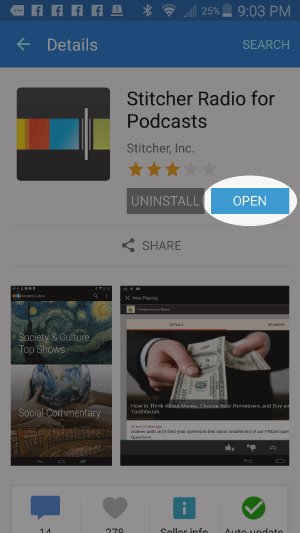
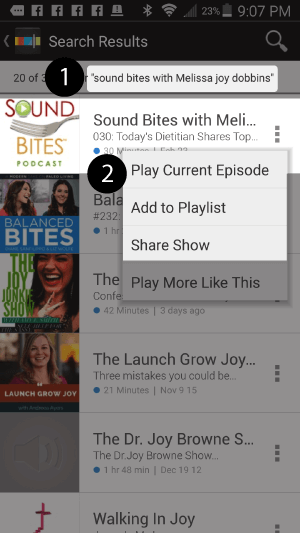
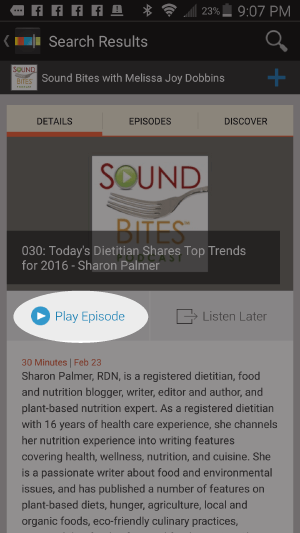
Listen on Stitcher (Android)
Install the Stitcher App
1. Search for “sound bites with melissa joy dobbins” 2. Choose Play Current Episode or Add to Playlist
Choose “Play Episode”
Subscribe & Review on iPhone
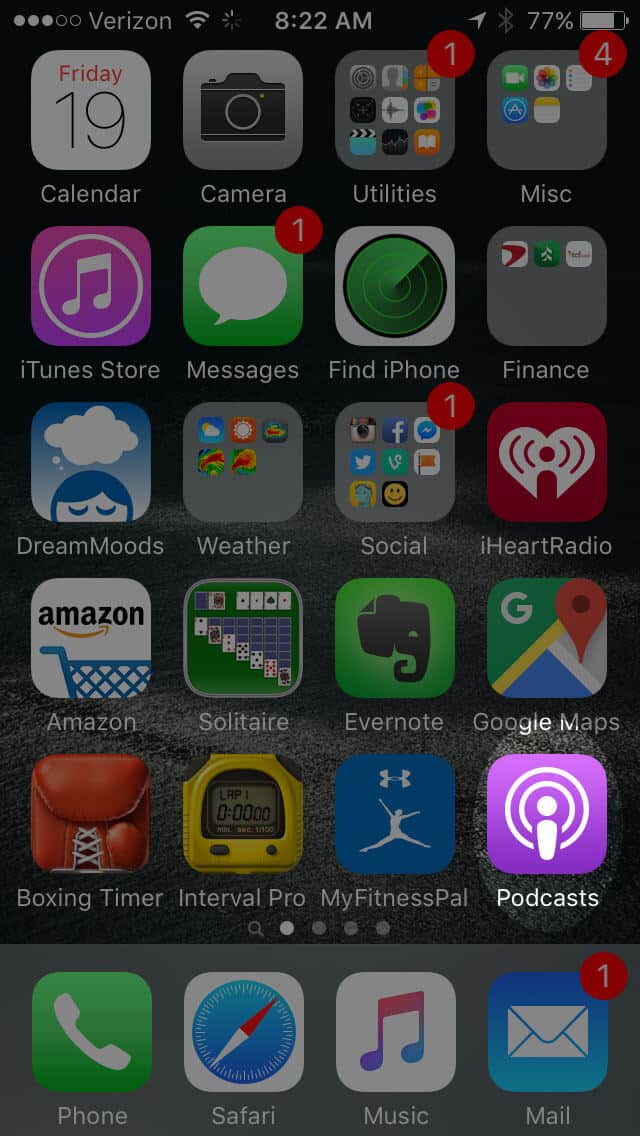
Open the “Podcast” app on your iPhone
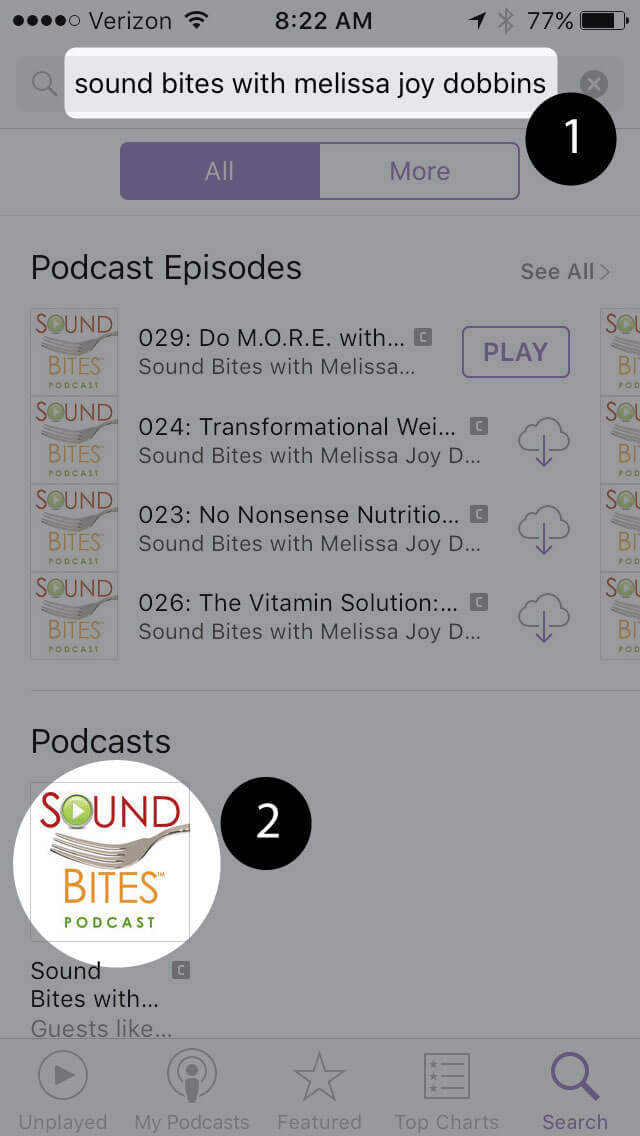
Search for “Sound bites with melissa joy dobbins”
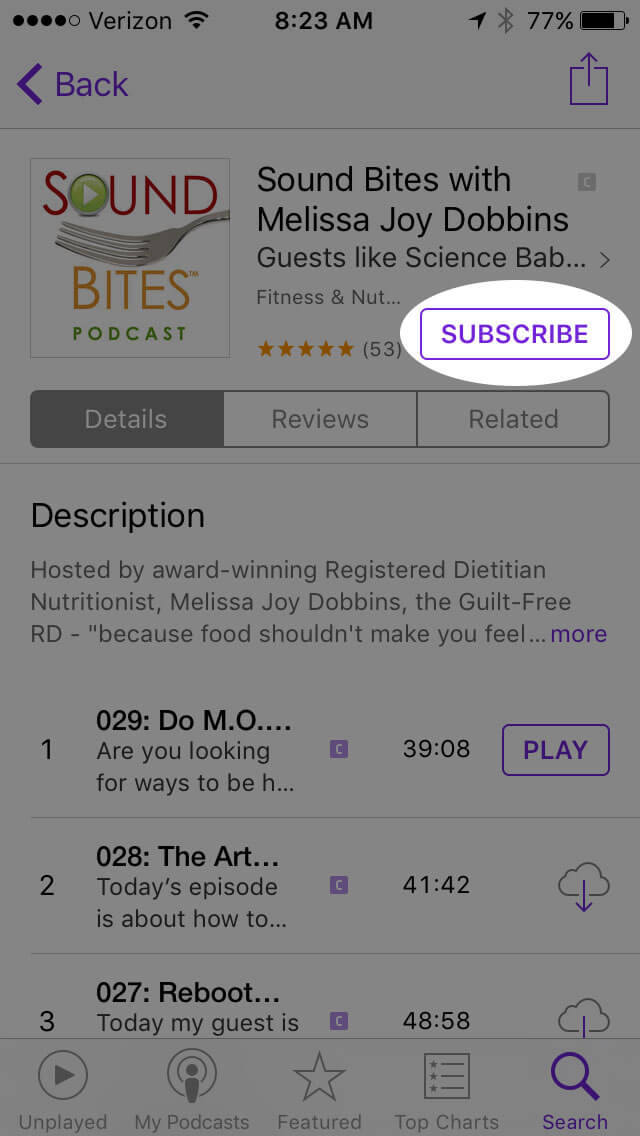
Open the podcast and click “Subscribe” and your done!
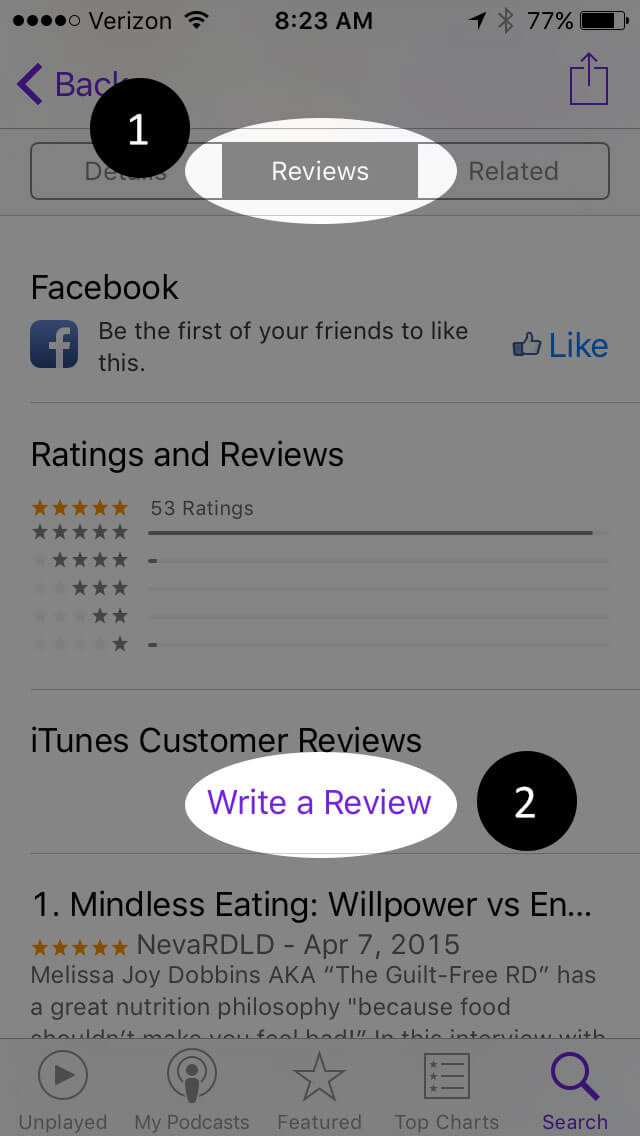
Write a Review
Click “Reviews”, then “Write a Review”.
Subscribe via RSS Feed
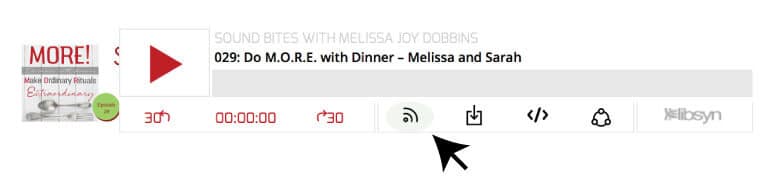
Navigate to any podcast player . Click on the RSS feed icon.
Click on the RSS feed icon.
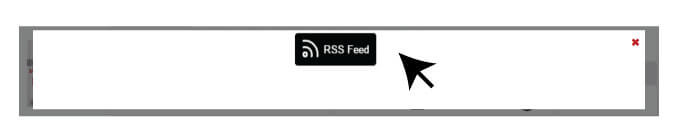
Click on RSS Feed
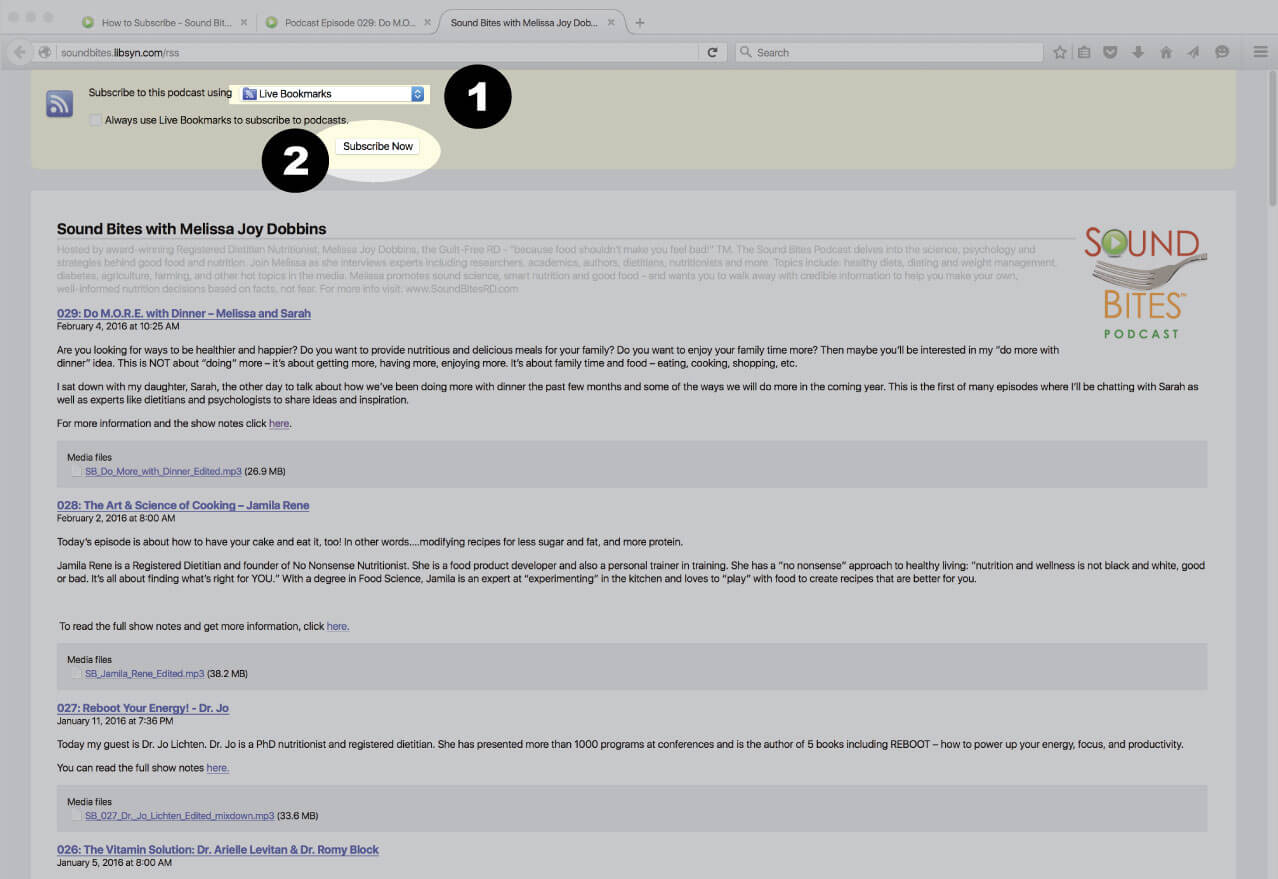
Choose which application you would like to use to receive the RSS feed
Click “Subscribe Now”
Confirm settings and subscribe.
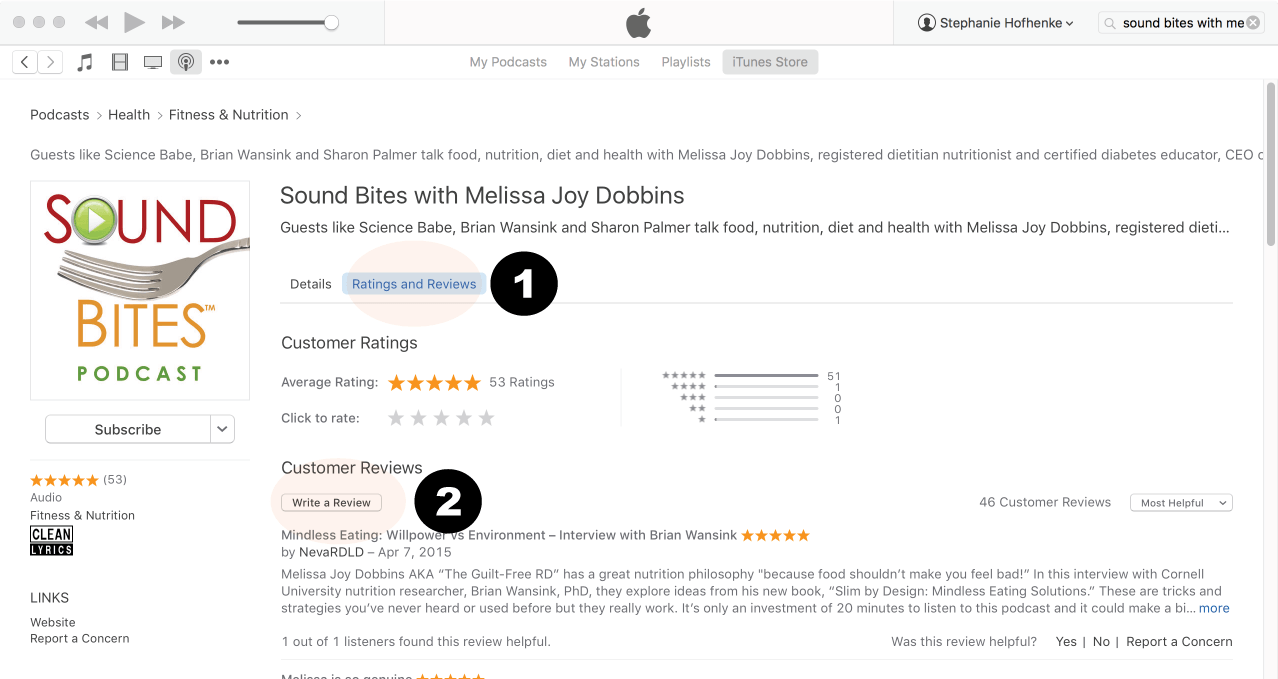
How to Review in iTunes
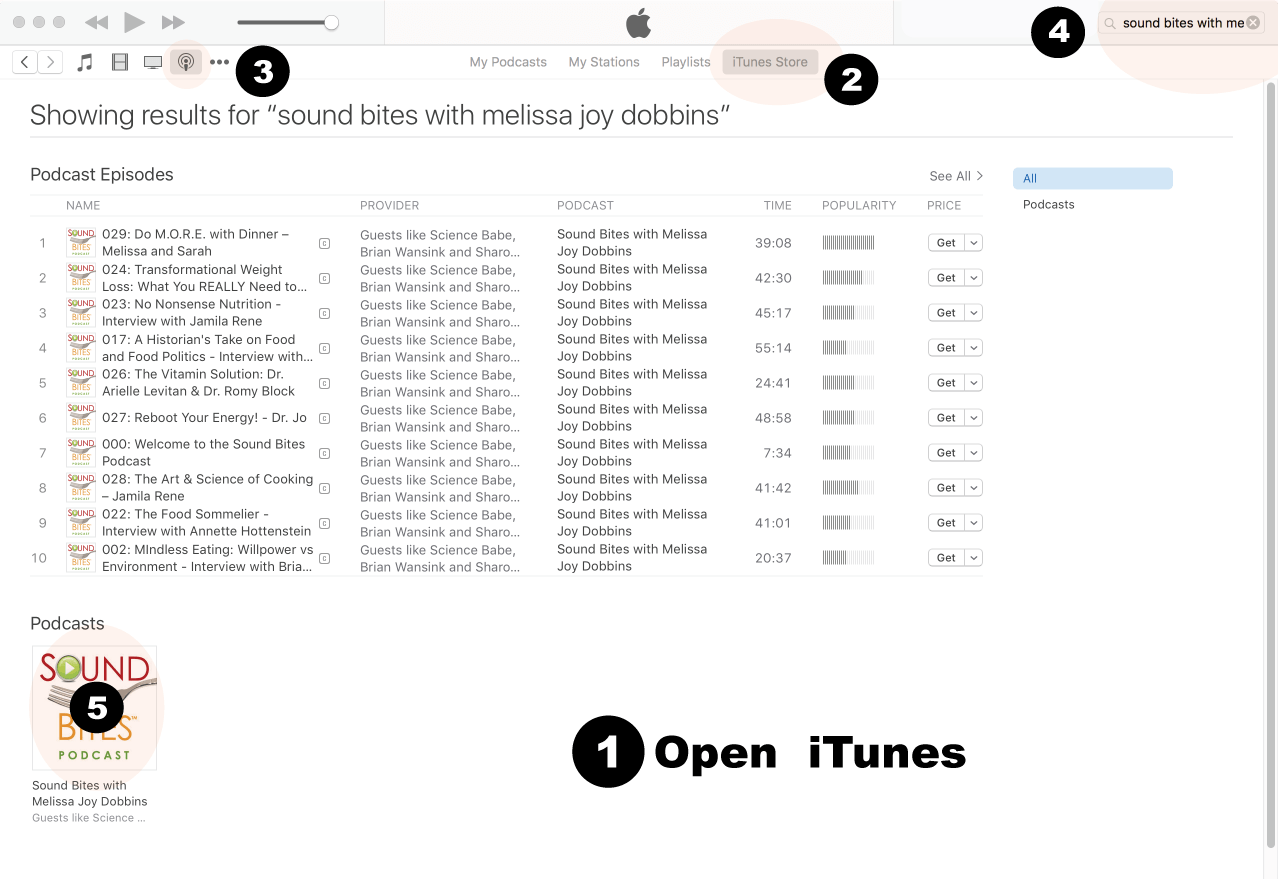
Open iTunes desktop application
Click iTunes Store
Click on Podcasts
Search for “Sound bites with Melissa Joy Dobbins”
Click on podcast image
Search for Sound Bites podcast in iTunes
Click Ratings & Reivews
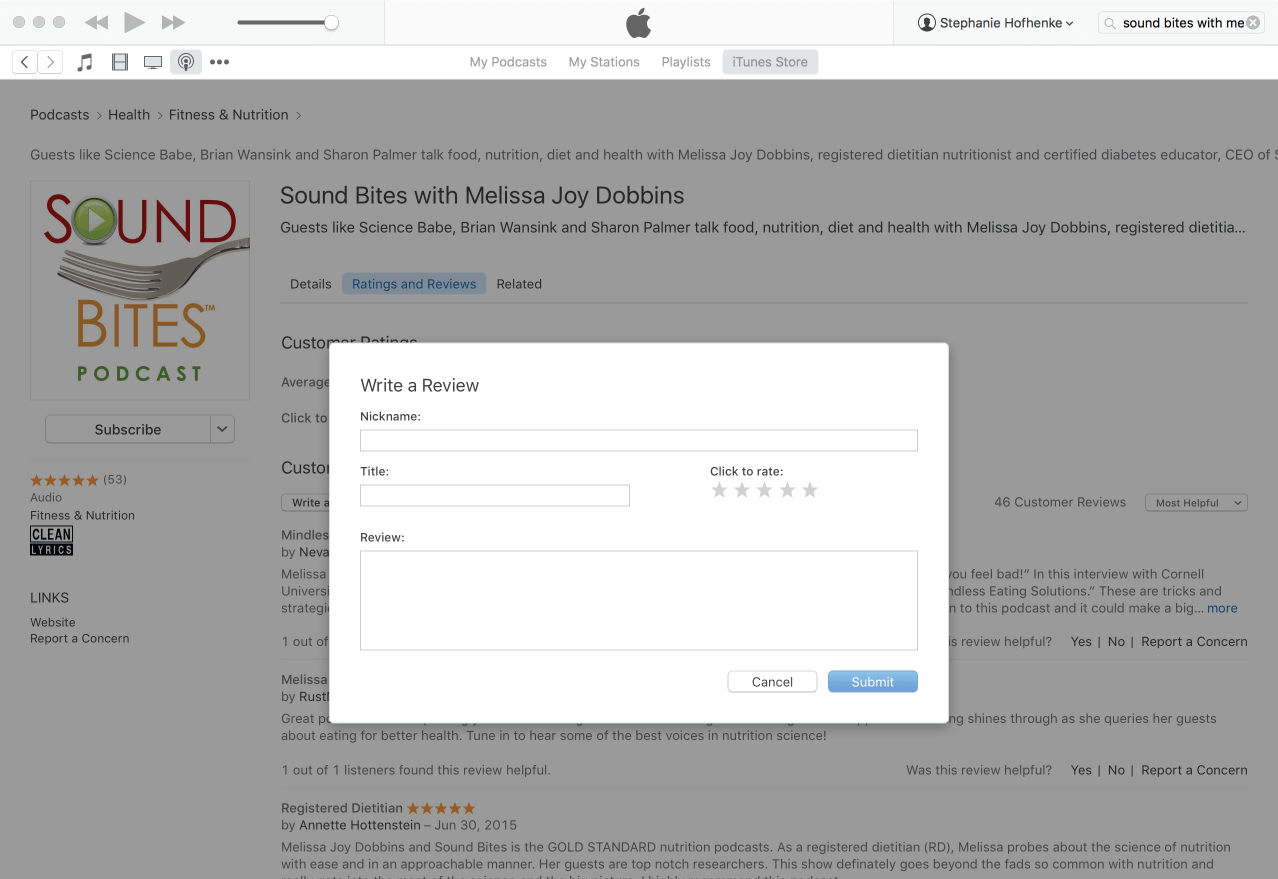
Click Write a Review
View reviews and write your own review.
Write your review…. Thank you!
Write your review!
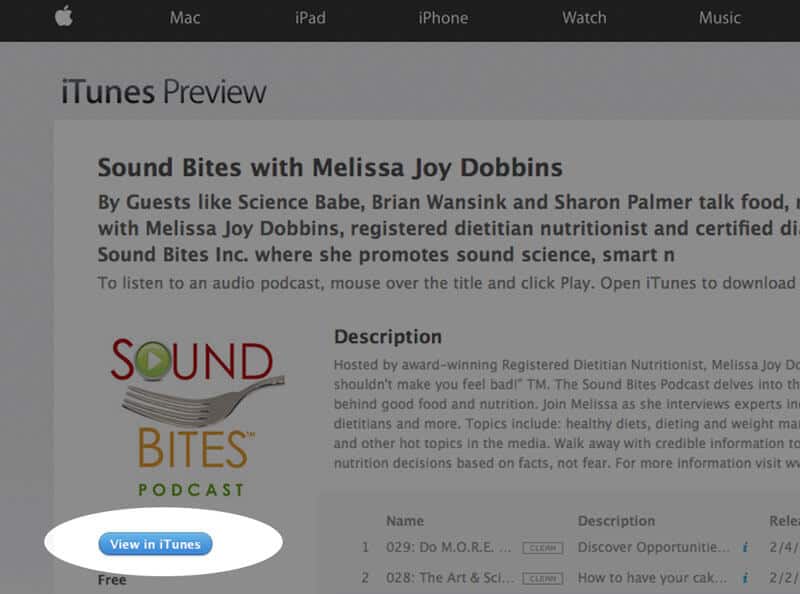
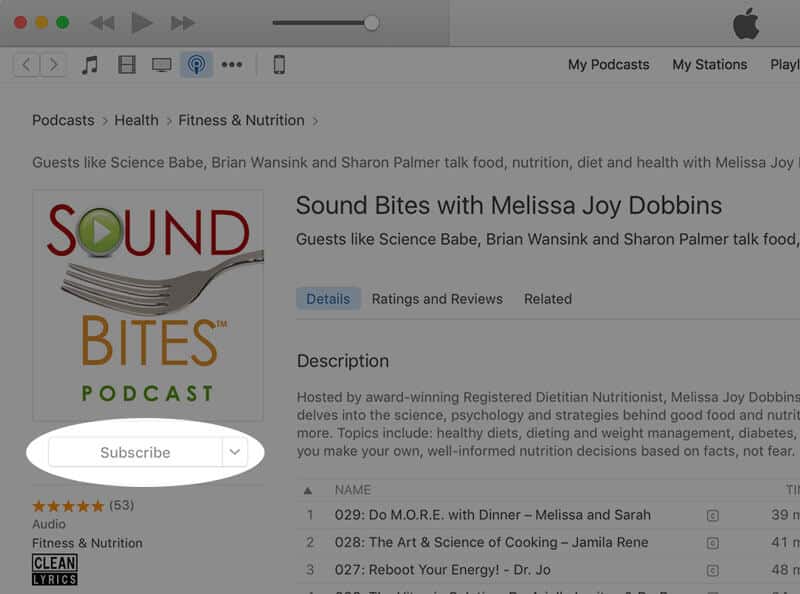
How to subscribe via iTunes
Click here to view the Sound Bites Podcastin iTunes, then click the blue “View in iTunes” button. This will open your iTunes application directly to Sound Bites Podcast. Click the “Subscribe” button, and your done!








Dear Melissa,
I just listened to your podcast with Connie Diekman and Dr. Cami Ryan regarding dis- and misinformation and wanted to say thank you! What an excellent conversation. I so appreciate the time you must spend finding such top-notch guests and producing such an easy to listen to and engaging podcast.
Thanks again,
Darlene Zimmerman, MS, RD
recipesmadehealthy.substack.com
Darlene,
Thank you for listening to the podcast and sharing your feedback. I’m so glad you are enjoying the show!
Melissa
Excellent and timely Podcast.
Completing my 5 year CEU RDN Professional credentialing
The Podcast has given me another view on a relatable topic.
Thanks
Thanks, Denise! So glad you enjoyed it – it certainly is an important topic for our profession.