Celebrating over 1 Million Downloads and 50,000 Free CEUs on the Sound Bites® Podcast | NEW: Get 1 years’ worth of CEUs with the new 15-CEU Podcast Course
Today’s episode is about menopause and this important transition in midlife – both physically and mentally. We discuss some of the research and recommendations for navigating this journey as healthfully and joyfully as possible.
Tune into this episode to learn about:
Estrogen’s role in muscle health and bone health
Exercise recommendations during menopause
Strength training and “inefficient” exercise
Training to train
How to reevaluate the stories we tell ourselves about our food choices
Tips for getting adequate protein in the diet
Why exercising fasted is not recommended
The role of supplements in menopause
What makes you feel good changes, what’s important to you changes, what your body needs changes. Take time to learn and connect with your body in new phases. This takes time.” – Jenna Braddock
Jenna Braddock MSH, RDN, CSSD, LD/N, ACSM-CPT
Jenna Braddock is a St. Augustine Florida based Registered Dietitian Nutritionist, Certified Specialist in Sports Dietetics and ACSM Certified Personal Trainer. Jenna’s mission is to “Make Healthy Easy” so you have more space to live vibrantly and with purpose. She specializes in performance nutrition and behavior change strategies, helping all people to perform at their best in the roles that matter most to them.
She publishes health, nutrition and recipe content at JennaBraddock.com as well as online courses to help people become more confident eaters. She has published two cookbooks, Easy Cooking for Two and The High Protein Vegan Cookbook for Athletes. In addition, she owns OffSeasonAthlete.com, a website dedicated to teen athletes and their parents to provide safe and effective sports performance information.
[00:00:01] Voice-over: Welcome to Sound Bites, hosted by registered dietitian nutritionist Melissa Joy Dobbins. Let’s delve into the science, the psychology, and the strategies behind good food and nutrition.
[music]
[00:00:23] Melissa Joy Dobbins: Hello and welcome to the Sound Bites podcast. Today’s episode is about menopause. This transition in life, both physically and mentally or emotionally. We’ll discuss some of the research and recommendations for navigating this journey as healthfully and joyfully as possible.
My guest today is Jenna Braddock. She’s a St. Augustine, Florida-based registered dietitian nutritionist, certified specialist in sports dietetics, and ACSM certified personal trainer. Jenna’s mission is to make healthy easy, so you have more space to live vibrantly and with purpose. Welcome to the show, Jenna.
[00:01:05] Jenna Braddock: Hello. Thank you so much for having me, Melissa. I’m really excited to be here.
[00:01:10] Melissa: I’m so happy that you are finally on the podcast. We have been planning this for some time. We had seen each other at a conference and almost immediately– well, I’m sure I asked what you were doing, and you said you were working with perimenopausal women and about muscles, and I’m like, “I’m in. Let’s get this on the podcast.” So where I’m at in my life right now.
Before we jump into the topic, tell us a little bit more about yourself, your work, your background, and how you got interested in this niche, because you’re younger than me and I know that our metabolism, and our muscle health, and our bone health starts changing pretty early, but you are younger than me, again, I’ll just say that.
[laughter]
[00:01:53] Jenna: Yes, I’m younger, but I’m moving into that midlife area, where I have moved in officially, I have residency. As a woman, certainly, I care for that reason. I have been a sports dietitian since about 2007, and that was really my initial drive to take me into nutrition as I love sports, I love helping people perform. What I realized over a quite a collective career of working with a variety of different populations and in outcomes is, that really everybody wants to perform. It’s not just athletes.
This idea of performance is so crucial for helping us unlock a lot of possibilities with what we can do with our health and wellness, and to show up for what’s really important to us in our lives, whether that’s as a spouse, or a parent, or a sibling, or as a community member, or in a job, or as a boss. I think there’s a lot for us to translate over from the sports world. I still work with athletes, still really enjoy that, but I’ve also worked in the corporate world and with just the average person.
What led me to this interest in the menopause journey or aging for women is just, I’m a trainer, I work at a local gym, and then just with my other clientele and even my girl friends, I started to have more and more women come to me and just share how frustrated they were, with their bodies, with their change in health, and really feeling like their body was fighting against them. Things that had worked or had made them feel good or look good weren’t working anymore.
They’ve tried everything and we’re getting bombarded by so much health information, granted, much of it is good. Not all of its good, but they’re like, “What do I do? Is it my gut? Is it my brain? Is it toxins? Is it this? Is it that? I’m so frustrated.” Over the past probably five or six years, I’ve worked in this idea of understanding our purpose and developing purpose for our lives down to a purpose statement and really living out our values.
What I realized is that midlife really offers an incredible opportunity for us to connect with our values, maybe for the first time or maybe again, because sometimes our values change. Define what purpose is and really use that for a lens to help guide us through this transition of aging. For women to really redefine what that looks like for us versus what our culture or society tells us it should look like.
[00:04:23] Melissa: I love everything you’re saying in your approach, and I’m just so excited to dive into it because as you and I had talked before, there’s so much about the mental emotional side of it and shifting our expectations. Like you said, what worked before, like I had this balance. It was a balance that I’d grown comfortable to, I eat this way, I exercise this way, I accept my body this way, and then it’s all out the window and you go through the menopausal weight gain.
I am active, but I know that I’ve lost muscle mass. You have sleep issues, there’s so many things that we could talk about, but what really interested me in bringing you on, is because you look at the hard research too. A lot of that is fitness-focused and with that aging process, but in particular, we are definitely going to focus on muscle building and menopause, what that looks like, why it’s important, how to do it, but we’re going to have a healthy dose of this whole performance approach, like you said, and this purpose, having a purpose.
It’s a big part of what you’re doing with your business right now. We know there’s a lot going on during pre-menopause, perimenopause, menopause, and post-menopause, what would you like us to know or where would you like to start today to set the stage for this conversation?
[00:05:43] Jenna: I think a great place to start is on the mindset component of this. One of the most important things for us as women, I think is to just accept that our bodies are going to go through a change and be changed. This is not, our body’s broken, this is not a bad thing. This is the way we are designed to flow in our life.
Just flipping that from the very beginning, just accepting, “I will go through this change. There’s nothing I can do to stop it. I will lose my cycle. I will go through these changes,” and just normalizing that, so that we can all just say, “Okay, we’re all going to go through it. Let’s start talking about it,” because even the social aspect is really important.
Then as a piece of that, I think it’s important for us to understand what’s actually going on in our bodies. This hormone balancing idea is thrown out to women at all stages of our life cycle. When it comes to the menopause journey, what is happening is that ebb and flow of estrogen and progesterone in a 28-to-30-day cycle is now changing sporadically. It’s no longer progesterone and estrogen balancing each other so much.
We can have big fluctuations, low fluctuations until we get to the point where our body is producing a much lower concentration of these powerful hormones. Again, that’s not a bad thing. That doesn’t mean we’re breaking down. It just means we’ve gone through a situation now where we’re no longer in our childbearing years. Even that is often seen as a bad thing.
The program I work with is called Eating for a Purpose and it’s for women 40 and up. We start by just laughing at all the memes that are out there related to women’s hormones and through menopause, and just saying, “This is what our culture says. We’re about to go through this awful situation where we treat people terribly because we can’t control ourselves.” That’s just not the case when we make it through to the other side of menopause, we actually don’t have those fluctuations anymore. We don’t have those concerns weighing on us like we did in our younger years, so there’s benefit to that. There’s good things on the other side
In addition, we’re just more experienced humans. [chuckles] We’re in different stages of our life with potentially more opportunities to do other things and have our worlds open up, especially if we’ve committed many years to raising children. Youth is nice. There’s a lot of great things about it and certainly our culture really celebrates youth, but age is nice as well. I think we should celebrate some of those benefits that come to us with accepting this change that we’re going through.
Then making our days purposeful, bringing life into this new season. Maybe it is redefining our purpose and our values. Again, for women who chose to raise children for a good, I don’t know, 15, 20 years of our lives, we dedicated a good portion of our time and energy to raising our humans. For many women going through this season, not just are they dealing with changes in their bodies, but they might be dealing with changes in the responsibilities and roles as well.
Pausing to really connect with what’s most important to me in this time? How do I want to take care of my body? What do I want to accomplish with my body as well? That brings in that performance piece here too. Instead of, always being sad about how our body was and how it is now, having a more positive mindset around, “Okay, what do I need my body to do in this season of life? Is there something I’ve always wanted to try? Is there injuries I’m trying to prevent? Do I have a family history that I would like to not experience in my journey? Do I want to be able to travel? Do I want to–”
Whatever those things might be, having that idea of, “Okay, well how do I need to train my body? How do I need to fuel my body? How do I need to bring joy into my life so that I can live with purpose in this new season, with these new circumstances, and in some ways this new body that I am in as well.”
[00:09:49] Melissa: Yes. I know you often talk about wanting to bring joy into this process and I know that that will be a theme in our conversation today. As you’re talking, that makes me think about one of the, I guess, realities of life is we’re all going to get older, we’re all going to die. I swear, it’s the thing that keeps me in therapy is like, “I’m getting older, but it’s not just me. My babies are growing up, my dog that I had for 16 years passed away, my parents are getting older, my parents are passing away.”
My dad passed away, my mom is still young and healthy. These realities of life and the mortality that we face, but I love the focus on that purpose and how that changes. I know we’re going to talk more about that, but shifting to, you mentioned the hormones, let’s talk about estrogen’s role in muscle, and whatever the research on that, and as far as like muscle building in menopause.
I think we all know, but you can put a finer point on it, if we can at least maintain the muscle mass that we have that supports a healthy metabolism, it’s also supporting bone health. Typically, what we do for strong muscles, is helping us have strong bones. I’d love to dig into that because that’s one of the most important things that I want to cover today is, the importance and the research on muscle building and menopause.
[00:11:17] Jenna: Yes, let’s talk about this. Really, it’s a great segue from the mental side of things because I think women have been fed a lot of stories about muscle building, what we should and should not do, what can and cannot happen to our bodies, and it’s unfortunately set a lot of us up for disaster come midlife and as menopause happens.
As it relates to estrogen, one quote I pulled out from one of the studies which I know sciency people will geek out on this, but we’ll make it into a little bit layman’s terms as well. Estrogen is regarded as a master regulator of bioenergetic systems in the female body. Very simply that means is that estrogen plays critical roles in almost every system of our bodies. It’s a very potent anabolic hormone, meaning, it helps build muscle tissue and other tissue in our bodies as well.
Estradiol, which is the more potent version that we have in our first half of our life, and it trickles out as we go through menopause, is really a strong initiator of us being able to build strong muscles. I have talked to many women who have said, “Man, I had no issue building muscle in my earlier years, and now it’s just getting a little bit harder.” It’s because we don’t have estrogen in the receptors of our muscles to help promote that muscle protein synthesis more easily.
It doesn’t mean that it’s case closed, that we’re a lost cause for building muscle, it just means that the other factors that can help us build muscle become even more important. That starts with having a strong resistance training program and just weightlifting basically. We can talk about it that way. This is something that a lot of women struggle with.
A, they’re maybe not comfortable in the gym, they’ve never lifted weights, whether it’s barbell or dumbbell, or they have misconceptions about what’s going to happen to their body, they don’t want to get bulky. I hear that all the time in the fitness world, or they’re just intimidated to go in a situation where maybe they feel like there’s competition, and I just want to go have a workout and feel better.
I hear that a lot, “I just want to go get my workout done, move on in my day, and feel good about myself.” Sometimes these other situations might feel intimidating. It is incredibly crucial for women at any age, the younger, the better though, to implement a really strong full body weight training program, with the goal, and this is the key, to actually build muscle. To lift heavy weight and build muscle. To challenge your muscular-skeletal system to build muscle.
Can you go into the gym and do your 25 repetitions with a lighter weight and have benefit? Yes, you get muscular endurance, and if your goal is to be able to lift something with this motion, many, many, many times and not get tired, then you’re accomplishing that goal. We want to go in and lift heavier weight, potentially for less repetitions and more sets to actually build and initiate that protein synthesis in our bodies.
That stimulus of, “Oh, wow, this is really heavy, and I’ve got to use my whole body and my whole nervous system to lift it and create power,” is going to be a very strong anabolic force for us as we go into the menopause journey and have less estrogen to help us. If that’s not something you’re comfortable with, there are so many options out there for women to gain comfort.
This is again where purpose and mindset play a role. If you’re nervous, if you’re uncomfortable, if you’re scared, “I don’t want to get injured,” which is a legitimate concern, connecting to why you want to do this, why it’s important for you to do this, can help push you to actually take the steps. Whether it’s to hire a trainer, or try a group fitness class, or go to a new gym. Sometimes we need that push.
I’ll give you an example. I do not like doing pull-ups. They’re not fun. They’re super hard. One time long ago, and I share this with almost all of my clients, when I was working in the gym, I saw an older woman doing pull-ups, and we just started chit-chatting there. She told me, the one reason she does pull-ups was because it’s a movement that could save her life or save someone else’s life.
When you think about if you ever had to pull yourself up out of something, or pull someone out of a dangerous situation, and gosh, darn it, that was the story I needed in my head. Every time I do pull-ups now, that is what I’m thinking about. Not, “Oh, my word, I love this, I’m so glad I can do a pull-up.” No, it’s I’m connected to this is a movement that could save my life or somebody else’s, and I want to be able to do that.
That’s just a small example of connecting to purpose there as well because it’s hard to lift weights. It’s not always enjoyable. Certainly, it’s fun, some people like it, but you may not honestly like it, but it’s still something that you should try to do and incorporate in a way that’s more enjoyable and more acceptable to you as well.
[00:16:18] Melissa: Yes. I’ve been lifting weights ever since college, and I’m comfortable with it. I do more of the dumbbells, and I used to do it at home, sometimes now I work with a trainer or I should say my physical therapist, my ongoing physical therapy.
[00:16:32] Jenna: Who are wonderful.
[00:16:34] Melissa: I love it. I love it. I don’t love that I need it, but long story short, a year ago, when I was having random shoulder, elbow, and hand pain, I thought, “This always seems like it’s something. I wish that I could have ongoing physical therapy.” A year later when I started having back pain, my prayers were answered and now I have this wonderful therapist who is working on my whole body.
There’s more flexibility here and less strength here. Really, just as a side note, I think there are physical therapists and programs that really want to change their business model to be more like a dentist, where you come in every six months and you get an evaluation, here’s what you need to stretch, here’s what you need to strengthen, and I think that that would help the aging population immensely. I know for myself like I said, it was a wish that came true.
I’m comfortable with strength training, weight training but I hadn’t put so much thought into your point about building muscle, not just maintaining muscle. That’s not lost on me, but right before you said, “Fear of injuries,” I wrote down, fear of injuries. Let’s talk about that a little bit. I know that’s always been a concern for me even when I was younger.
It really came about– I was able to put my finger on it when I was training for a triathlon about 10 years ago because I realized, I’ll do all kinds of exercise. I do ballet, I do karate, strength training, the triathlon was something new, I had done a lot of running for the year prior to that which I had never been a runner, but the common theme was I only pushed myself so far because if I get injured, and I can’t exercise at all, I’m going to gain a bunch of weight. That’s the story in my head.
Obviously, if you don’t know how to strength train– like you said, you want to take a class, you want to hire a trainer, you want to go somewhere where you have guidance and instruction, but beyond that, can you give us some advice on avoiding injuries? Also, maybe stretchy bands or things like that if people aren’t quite ready to go to the dumbbells or the barbells.
[00:18:41] Jenna: First, let me just praise you for having the courage to speak that story because I know that can be frightening to get some of those things out of your head, but there’s so much power when we verbalize what has been holding us back, and we can speak truth to it. I think that was amazing that you shared it. That’s really a gift to us, so thank you for that.
[00:19:02] Melissa: Thank you.
[00:19:03] Jenna: Then this is a huge point. I’m so glad that you brought this up because I see this often where either people don’t start because they’re afraid to get injured, or they go hardcore, then they do get injured. The phrase that I like to teach people is sometimes you need to train to train. If you are making a lifestyle change with exercise, and you’re like, “I need exercise. I need to lift weights. This sounds great. I’m in.” Well, have a long-game perspective.
If you want to be able to squat and do some of these core functional movements, you may not be able to start there in a safe manner. You may need to build strength to even get to some of those more complex movements, those more intense exercise routines, thinking about some of the group acts that you can do that super high metabolic interval training, throwing kettlebells around, and things like that. None of those movements are bad nor good, but they may not be the right progression for you to begin this journey with. I think for women, as we’re talking about this, think of I need to train to train. If I want to be able to build muscle and lift heavier weights, you may need to start small with stability and flexibility, and proper movement. It sounds weird as adults to think that, “Well, I need to teach my body how to do these movements properly.” If we think, go do a squat, you’re like, “Oh, yes, go do a squat.” That may not be the right movement to do it safely under a weighted bar. You may not have the flexibility.
A lot of people are surprised to know that in order to do a quality squat, you need ankle mobility. That’s not an intuitive thing to actually know, but many people are so stiff they can’t even get in a proper squat with the weights. Why would we go to a weighted barbell when we can’t even quite do the movement properly or with stability there? My biggest encouragement is to have a long game.
It may take one to two years to feel like, “Man, I’ve really begun to build muscle.” If you progress with the right professionals with you or in the right stages, and maybe it is starting with resistance bands to simply build some core strength and mobility and then move to dumbbells. Dumbbells are a wonderful way to begin to work into some of these more complex body movements. That is the way we should go. Don’t just go gung ho. Don’t start doing weight training five days a week with high intensity and high weights.
That is a recipe for disaster. We need to slow down and this can be hard for women as well, when I want to do something and see results in 30 to 60 days, that doesn’t rarely happen. Maybe when you’re 18, you’ve got the metabolic capacity to see that, but as we age, that’s not going to be the reality. It really is something that it’s a daily investment so that in the long run, I begin to see these changes occur.
When we build muscle, I think it’s also important for us to say, and this will just plant a seed we can dig into now or later. When we build muscle, for some women, that means they may gain weight, they may see an increase in their body mass. I can tell you, this has been my personal story. I have gained about 10 pounds in the last year. I’ve been fortunate to be able to have really good body composition testing. Seven pounds of that has been muscle. I’m super proud of that.
I am happy to tell you now that I have gained weight, because that’s made for a stronger body. We also need to uncouple success in health with what that number on the scale is. When we build muscle and we don’t care what the scale says anymore or what the pant size says, but we’re stronger and have bodies that are more resilient to aging, I don’t care what the scale says, I don’t care what pants size you’re wearing, you’re going to have a better quality of life.
[00:22:52] Melissa: Yes. I’ll share, too, whenever I’ve taken a break from strength training and gotten back to it, every single time I see the scale go up a little bit and then gradually down. I don’t know if my body’s going to do that now that I’m postmenopausal. We can talk about that because we had a little pre-chat about that before I hit record. For those who are out there freaking out by that, it doesn’t always mean that it’s bad weight gain.
[00:23:19] Jenna: I wish that women could get their body composition measured in really accurate ways more easily, and we might get there. There actually are some very cool tools coming to us even in the home setting that are pretty high-caliber, because I think that’s really helpful information. We’re going to talk about biomarkers as well, but we are inundated with what we could do to find out data on our body.
Some of it’s good, not all of it’s good or necessary. In some cases knowing what’s actually going on in your body can be very helpful and very empowering. Especially if you have invested time and energy into something like building muscle, and then to be able to see, “Oh, wow, I actually have gained muscle.” That can help your brain accept, “Oh, okay, well, there’s a good change no matter what’s happening on that scale,” which you might just need to say sayonara to your scale for a while too. [laughs]
[00:24:10] Melissa: I know I talked about this on the podcast before, some people can weigh themselves on a regular basis and other people it’s just very, very triggering. Wherever you’re at on that journey or on that spectrum, it’s all whatever it does for you.
[00:24:29] Jenna: Absolutely.
[00:24:30] Melissa: I’ve heard this term inefficient exercise. Is this what you’re talking about with regard to this high intensity? Could you explain that a little bit? Is that what we need to focus on and why?
[00:24:42] Jenna: With resistance training, which we’ve talked about weight training, it doesn’t necessarily need to be at high intensity as far as interval goes. Max effort for a short period of time, weightlifting can be done in that capacity. You need to be careful and also be prepared for that. When we talk about inefficient exercise, I’m addressing more from the aerobic standpoint, so cardiovascular work.
The beauty of this is that when we do exercise we’re inefficient at and certainly, that does apply to weight training in some ways, our body has to work harder to do it. What that calculates as is our body works harder, burns more energy, and potentially has a greater response to the training that we’ve done. One of the things I hear or see in women quite often is like, “Well, I’ve always been a runner, I’m just going to go out and run. It’s easy. All I need is shoes. I put in my podcast and I go for the hour or whatever I do.”
That’s great. If you love a lower intensity, long-duration exercise, you’re not doing bad things for your body, by any means, and you should absolutely do things that you truly enjoy. When it comes to the type of cardiovascular work that’s going to actually produce body composition changes, which is what a lot of people want to help protect as they age, you want to do very inefficient, high-intensity, short-duration work. That’s where we get our interval training.
There’s some really cool research on this for very short periods of time, even intervals of 30 seconds– I can’t quite remember how many, but it was within only 4 or 5 minutes, doing 20 to 30 seconds intervals on with a rest period, created significant metabolic changes in individual’s bodies. It doesn’t need to be a lot. Another protocol that’s been looked at frequently is 10 to 20-minute bouts of intervals, anywhere from 20 to 40 seconds of high-intensity work. Somewhere between 70% and 90% of your max heart rate, give or take, and then a rest period, and then hit it right back in.
The good news to this is that when we do things that are inefficient, so I’ll use the example of the exercise bike with the handlebars. That’s like, ugh, it’s the worst. I will never be great at it, but the benefit is if I do a short-duration, high-intensity workout on that, it’s really hard work for my body and it’s going to initiate some of these incredible processes I want to occur.
The good news is for some women, you may not need to go run for an hour to get benefits to your cardiovascular system, which is a very important thing to protect as we go through menopause as well, but then to also see some of that stimulus and benefit to our body composition and how we function and feel too. We don’t want to do only exercise we’re really good at, or that’s easy for us. We actually do want to do some things that are challenging, not challenging in a painful or dangerous way, but challenging, like it’s hard.
I always tell my clients, if your brain and your body start talking and your body’s like, “Yes, I don’t really like this, I think I’d like to stop.” Your brain’s like, “Well, I think we’re okay, but I don’t know,” and you start having that conversation, whatever that sounds like for you, you’re probably in a good spot.
[00:27:56] Melissa: For the non-ultra exercise knowledgeable people like myself, can you explain more about interval training? I have a couple of ideas in mind and I’m not sure that I have got it quite right.
[00:28:09] Jenna: The nice thing about interval training is it can happen in any modality. Running, walking, biking, jump roping, skipping, swimming, whatever way you like to move your body, that’s challenging and regular. First, you can put yourself in any situation–[00:28:25] Melissa: Cardio.
[00:28:26] Jenna: Cardio, that you can move yourself in. Then what we’re looking to do is short-duration intervals. Anywhere from 20 to 60 seconds of very hard effort. You would start with very short intervals, even a 20-second interval, especially if you’re new into this type of training because it’s going to be really hard to sustain a hard pace for long.
20 seconds of work, followed by 30 to 40 seconds of rest or recovery to bring that heart rate back down, and then to hit it again with another 20 to 40 seconds of work. Let’s say you’re on an exercise bike, it would look like hard pedaling for 20 seconds and then gentle pedaling as you recover. If you’re on a treadmill, you might sprint for 30 seconds and then recover for 30 seconds. If you’re rowing, you will do the same thing. Hard rowing, rest. If you’re walking, it would be brisk walking as fast as you can go and then slow down to recover.
The comparison I use for this type of exercise is being a monster truck, where we’re revving up and then pausing and revving up and slowing down. It’s a gas-guzzling machine. If you compared to a hybrid or our electric vehicles now that are smooth, although they’re getting a lot better with electric vehicles. My analogy’s breaking down a little bit. Let’s think hybrid where it’s a very smooth, gentle process. That’s what we’re getting in long-duration exercise, that’s lower intensity.
We want to be monster trucks when we’re hitting our cardio because we’re going to be gas-guzzling, energy-guzzling, metabolic-stimulating, body composition changing exercise there. Does that paint a clear picture?
[00:30:05] Melissa: Yes. It sounds like– I think I was going to Life Time Fitness when I started training for the triathlon and I think I was doing something similar to that. I want to say they called it metabolic coaching, I don’t know if that’s the same thing, but I was on the treadmill and I had to run. I had to get my heart rate up and then I had to get it down.
They did the test, I don’t know, is that VO2 max where you’re breathing in the thing and what they found out about me because my heart rate goes really high when I’m doing cardio. I’m like, “No wonder this is not fun.” When I was training for the triathlon and I was running with other people for the first time and they’d be doing a comfortable 10-minute mile pace and I’d be like dying and I had the heart rate monitor on my wrist and I was like, “Because my heart rate’s 190.” They’re like, “What?” I’m like, “Yes, look you guys are like in your 160s or 150s, I’m dying over here.”
My question I guess was my understanding of that interval type training would eventually, ultimately I would be better conditioned and ultimately, my heart rate wouldn’t go that high when I ran and things like that, but you have to keep doing it in order to maintain that, right?
[00:31:18] Jenna: Yes. It is a really powerful benefiter to our cardiovascular fitness and it can help reduce that VO2 max, that estimated VO2 max, which is that point we shift from aerobic to anaerobic using oxygen, not using oxygen, breathing comfortably, breathing really hard basically so it can lower or increase the heart rate, so you can do more work at comfortable paces below.
Again, the nice thing about interval training is it’s very potent and you don’t have to do a lot of it to get these benefits and the changes happen rather quickly. One study looked at six sessions of 10 minutes done over two weeks and saw significant improvement in cardiovascular fitness, metabolic markers, and I think even body composition as well. It doesn’t need to be a lot but it’s super effective and it will help with that for sure. It’s going to build a stronger heart or stronger engine that we like to say in our gym, which is really important because our heart health is at risk as well through the menopause journey.
[00:32:21] Melissa: Great. We are trying to aim for a combination then of the weight lifting and this interval type training. Just in general, obviously, if somebody’s just starting up, some is better than none, correct me if I’m wrong, but what are we realistically aiming for and and what do you think most people can reasonably fit into their schedules?
[00:32:46] Jenna: That’s a great question. The ideal situation, we’ll start there and then work backwards is I’d say about three full body training sessions for weight training a week and two interval training sessions. They can happen together or separate depending on how much time you want to give and devote to that, but getting started, some is better than none.
You might start at one to two days of full body weight training and one to two days of your interval training starting at smaller duration and building up to that. We’re looking at about five days there. Now, another piece to consider as well is also adding in some jump training or plyometrics is another word used out there. I want to address this because this also has a story with it that I personally bought into for a little while.
Jump training is when you just jump, it could be onto a box, down from a box, it could be jump rope, it could be side to side bunny hops. I think a lot of middle-aged and older people think of that and they’re like, “Oh, they cringe like joints, et cetera.” Just the thought of that sounds very risky, but they did a really cool meta-analysis of all these studies done with plyometric training in older adults and actually found that it didn’t increase the risk for injury at all.
In fact, it increased joint stability, posture, blood pressure and bone health, body composition, muscle strength, so there’s a lot of benefits in there. For women, this is very important because it’s going to be what helps us preserve our bone health in addition to just the strength training. For me, being an ex-athlete with creaky knees, I was like, “I do not need to be jumping like that just doesn’t sound like a recipe for success.”
After learning this, I realized, well, I can’t actually afford to not do some jumping or bounding. What I’ve found is doing quality strength training has actually made my joints stronger. I don’t feel discomfort anymore, as well as some smart supplementation in there too that may or may not help people. I actually feel much more confident and once again, when I’m doing my box jumps or my jump rope, which is not my favorite thing, what’s going through my mind is bone health, bone health, bone health because I want to do everything I can to prevent that from being an issue for me later in life.
[00:35:05] Melissa: That’s a perfect segue into and I know we’re probably not quite done talking about exercise, but the bone health aspect. Like I said earlier, what’s good for your muscles is good for your bones. I know that what I’ve talked on the episode before about there’s diet and exercise and both are important for muscle health and bone health and unfortunately, I have a new diagnosis of osteopenia.
This is the first time I’ve been able to share that on the podcast. It’s fairly recent and I just want to put it out there because I’m not really the poster child, at least in my mind. What I always learned about was, if a woman is petite, I’m not petite. If they– well, I am white Caucasian, but my grandmother had osteoporosis. I’ve done weightbearing exercise my entire life. I was a big milk drinker growing up.
I’ve been doing strength training since college, like I mentioned, so it was a bit of a surprise. It’s also, how much of that is genetics? Family history. How much of that is the power of the estrogen being sucked out of your body when you go through menopause? Then also– and we can beat ourselves up like, “Oh, was it this? Did I do that? Did I do this?” Honestly, was it due to some restrictive dieting that I did in my younger years?
After I had my son, I don’t know if my routine changed or whatever, but I got out of the habit of doing cereal and milk for breakfast. I took supplements for a while and then I got off of that, so I’m back on the calcium supplements. I’ve always been good with my vitamin D, I’m back on having some more dairy in my daily diet and I feel confident that I can keep it where it’s at.
Another reason, I didn’t need another reason but another reason to really focus on my strength training and that type of exercise because I love my karate, I love my ballet. I’ve had this long relationship with strength training and it took a backseat to some of these other activities. Really wanted to share my story and put that out there and just say, “We don’t know what is around the corner for us and we may not fit a typical profile or whatever.”
In a weird way, like I shared with you before the podcast, Jenna, I felt like maybe that’s why I’ve gained a little weight. Maybe my body needs to protect my bones in some way. Maybe my body knows what it’s doing more than what I think it should do. Just wanted to share that and let’s talk a little bit more about bone health.
[00:37:40] Jenna: Let’s tease a few wonderful things out of that. First of all, it is reality that as women, our bodies will change and we cannot prevent every– I’ll use the word negative, but I don’t even necessarily want to use that word, negative outcome that will be a result of going through menopause in our hormones declining. We can’t prevent everything no matter if you do everything by the book.
This is once again, why I think having purpose and value so clear is important because you can beat yourself up, you can have anger, but we don’t have time to deal with that. We want to live vibrant lives. Having an alignment there is helpful for them. Just know we may not come out unscathed even if we have tried to do all the things that are right, we can’t control that. We love to control, especially as women, but we can’t.
You may have done everything right, but yet estrogen declining does impact bone strength and integrity. The other message that you brought out there at the end is it doesn’t mean you’re on a downward spiral and your hip’s about to break. You can prevent that from getting any worse. For some women, a reduction in bone strength is going to be a reality. It’s going to be a part of their health journey, but it doesn’t mean we give up and let things go brittle. It’s even more reason to engage and really maintain.
The research shows that weight training and jump training can actually help preserve that and prevent worsening from happening. It’s really good that you know that. It’s once again, something you can tie into your purpose and this new season of your life to really push you to do some things that are really critical for you having a good quality of life. If I can say anything, it’s women in your 30s and 40s, do not be scared to weight train. This is the time. Build as much muscle as you can so that you go into this next season as prepared as you possibly can.
Then if you are in your 50s and 60s, it’s not too late, it’s absolutely not too late to begin to invest in this area and protect our bones. As a dietitian, we learn about bone health. That’s a part of our curriculum. We know it’s an issue, but until you experience it in yourself or in your close circle, I feel like as women, we can really easily forget that we are basically all at risk at that because we’re just simply female. This is one that is a long-game disease. Disease is the right word, right Or condition? Condition, I don’t know, it feels more like a condition, but that we really need to be cognizant of, and this is why weight training is so crucial, especially in our earlier years.
[00:40:18] Melissa: Absolutely. I definitely want to continue the conversation about strong bones, strong muscles, and transition into nutrition and diet if you will, because protein is a big part of that. I have a lot of protein-related episodes that I’ll link to in the show notes at soundbitesrd.com. What do we need to know, not just about protein and I think you’re going to talk a little bit about creatine. Also, just nutrition-wise, but also our mental approach to that as well, because you’ve mentioned a couple of times where it’s like, what are the stories that we’re hearing or telling ourselves? I think there’s a lot going on there as well.
[00:41:03] Jenna: One of the mindsets I think is really important for us as we age to embrace is the idea of flexibility, and understanding that what “worked” before may not be the right approach for us anymore. The word I use a lot with my clients is experiment. We need to experiment with some other options. We have so many tools in our toolkit for eating, for performance and for energy, and for health. We need to try them, and then you get to evaluate based on how you perform and function and feel if that’s going to be a tool that really works for you.
First and foremost, be prepared to experiment with new things and be open. If you’re clinging to some strategies that kept you at a certain body size in your past, it may be time to just– I just say, just open up your hand and let’s start to ask questions like, how’s this working for us? If someone else presented these factors and what was happening in their body, what kind of feedback would you give them in a very caring way? Just to be open to experimenting with some different approaches.
Since you’ve talked about protein at length, I don’t think we necessarily need to belabor the point that protein’s very crucial and how much necessarily, but I think what is important for us to note in this topic is that since we don’t have the anabolic effect of estrogen as powerfully, we need protein to also act on our muscles to give us that anabolic push. So the presence of amino acids in there, particularly our branch or essential amino acids branched chain and leucine in particular, has to be present there to really stimulate that muscle protein synthesis.
I know for women, myself included, it’s sometimes challenging to eat adequate protein, to get us into that 20 to 40-gram amount that’s recommended in our meals and snacks. Essential amino acid supplementation can be very beneficial. I call it a protein hack because it’s not the full grams of protein, but it’s these essential amino acids that when we take them in and around exercise can give that stimulating effect. We still want to have the context of energy and protein building blocks in our meals there, but it can really help drive those muscles to get the idea of like, no, no, we want to build, you’re important.
Connected to that too, is often the question I hear of, do I work out fasted? If I work out fasted, will I burn more fat and see results more quickly? The reality is for most women, that is not going to be an effective strategy. What they found in research, and this is- women and men are very different here so we need to look at female-specific research for this. What they found is when women worked out fasted, it really blunted the sensitivity of amino acids. Muscle protein synthesis and fat oxidation were blunted, meaning they were not as turned on for us. They were turned down when women were fasted, compared to when they ate.
We’re not actually going to burn more fat when we do a workout fasted. We might burn more calories, but it’s not going to be in the way and it could actually contribute to muscle breakdown as opposed to increasing muscle. This is again where I use the mindset of performance for women. When we’re talking about to eat or not to eat before workouts, I ask, “Okay, well what’s our goal? What do we want to get out of this? Do we want to work hard? Do we want to have the energy to complete it?” Because sometimes just the accomplishment is very good for our mental health.
Is it building muscle? Is it not getting tired, being able to complete it, whatever it is. Well most, 9 out of 10 times having fuel in our system is going to enable you to accomplish that goal and perform better. One interesting thing that research has found too is that preloading with protein for women as opposed to just carbohydrate is in much better way for initiating some of these protein synthesis as a result of exercise. Getting protein before your workout or during your workout and then immediately after becomes very important for women to help initiate that muscle building.
[00:45:17] Melissa: Okay. Great. Thank you. I know I shared an outro after the episode with Dr. Don Layman where I shared some of the products and foods that help me meet my protein goals. Again, I’ll link to that in the show notes, but if you have any suggestions, any personal- or that you’ve worked with clients on, any particular foods or beverages or supplements that help us meet those higher goals without eating a lot more food. [ chuckles]
[00:45:45] Jenna: Yes. Well, one of my favorite products is NOW Foods has their Big 6 amino acids complex. It’s a powder and it also has a couple other helpful components like L-citrulline and L-arginine I believe, which are performance enhancers, non-stimulatory performance enhancers. It is a great workout beverage for me. You can take it before, during, or after. It sits really nicely. I work out early in the morning so it’s cumbersome for me to eat much, so that covers my bases. It’s also really nice if you just don’t have a big appetite around your workout to still get those building blocks in, and it’s been a fantastic hack for me.
I recommend it to a lot of women because it’s just so darn easy to utilize in that. Outside of that, I’m a big egg person. I eat eggs on the daily, they’re just too easy. My favorite plant-based protein as of right now is tempeh, slabs of tempeh. It’s a fermented soy product, it has a meaty texture. I happen to love it. Not everybody likes it, but it’s so easy and it’s very affordable. It’s usually under $3. A whole slab is nearly 40 grams of protein. Even having half of it, which is a very manageable portion size is about 20 grams. I use that for my lunch regularly. Getting seafood in, fish, I use that for a lunch a lot because it’s very easy to prepare.
It’s just an easier protein to consume in larger quantities I think because of the texture. Then I just enjoy a wide variety of animal proteins and plant-based proteins. Once you don’t get fatigued on that and then just have enjoyment and flavor, and then we lean on the supplements, a protein powder can be a very effective strategy. The protein shake that I love right now is called EO3. It’s an omega-3 smoothie shake that has protein and 1,000 milligrams of high bioavailable omega 3s. I love that post-workout, because it’s so easy and it’s 20 grams without even blinking. Those are some nice options that I have found for myself and my clients.
[00:47:54] Melissa: Thank you. What do we need to know about creatine?
[00:47:58] Jenna: Ooh, one of my favorite topics, and I have a whole post on this, but creatine, I will say probably honestly started some of this journey for me into this middle-aged performance for women idea, because learning about creatine, as a sports dietitian, when I started out we were all like, “Creatine, not so sure, give it to the guys in the weight room, but outside of that–” Since then in the nearly 20 years I’ve been practicing, creatine has now become considered one of the safest, most effective performance supplements out there.
Now we’ve found out that there’s benefits to women in nearly every stage of our life cycle. When it comes to middle-aged in the menopause journey, what is specifically beneficial with creatine is that it can help our performance in the gym, which if we can work harder in less time, that means better results more quickly, so I’m all about that. Then let’s also face it, some days we’re tired, whether it is our cycle still taking us through or changes in that, or family stuff or all the things we have on our mind as women, sometimes we’re tired. Creatine can actually help fuel our muscles to have better performance in the gym. That is a huge one.
There’s a lot of misconceptions about what creatine does and does not. If you do not weight train alongside of creatine, taking it together, you’re not going to just magically gain bulk and muscle. It just doesn’t happen that way. Beyond that though, what probably really sold me on this for women is we’re refining significant benefit in mental health and cognition. Many women deal with brain fog, they also deal with mental health, depression, and anxiety in new ways because guess what, once again, estrogen plays a role in the serotonin situation in our brain and the receptors up there, and just- things can go haywire for the first time in our lives.
What we’re finding is, one, women have 70 to 80% less stores of creatine than men. There’s a big difference in how much is naturally available in our bodies. Then we’re seeing, when we supplement with creatine, we have some benefits in the brain fog and also in the mental health departments. Again, at all stages of the life cycle, but this is particularly relevant to us here, and it’s 5 to 10 grams a day is where we see those additional cognitive benefits. This is huge for women because we need our brains to perform. It’s very frustrating when we go through those moments of brain fog.
We can’t think clearly. We forget things that we remembered five minutes ago, whatever it might be. That alone is huge for women. Once again, having this idea of performance, I want to perform in my life. I want to have a sharp brain so I can do the things I need to do. When we have that, we can maybe step out of some of the stereotypes we’ve lived under and say, “Oh, well there’s tools out here.” Athletes can use it. Why can’t I? [laughs] I’m an athlete in my life as a mama of boys, I’m an athlete doing all that stuff and all the other things I’m balancing. Let’s think about that as well. These could enhance our performance in the roles in our lives as well, in addition to just the gym too.
[00:51:07] Melissa: Okay, great. I know you shared a lot of research articles with me, and I’ll have links to those in my show notes as well if people want to take a deeper dive on that. We started off with the emotional and headspace approach, like the performance approach or the purpose approach. I think it would be nice to- as we’re wrapping up, talk about- you say, what stories do we have around our food choices? I’d love for you to speak to that.
[00:51:35] Jenna: Storytelling is the idea that we as humans will make meaning around something, especially when we don’t have all the pieces to the story, but we want to make things have meaning. We’ll put a story around it. Sometimes they’re true, sometimes they’re not, sometimes they were true, sometimes they were given to us by someone else through our life experience. When it comes to our food, I think a lot of women think the outlook is really dismal as they age. Oh, I’m just going to have to cut out more and more and eat less and less to prevent this weight gain. I can’t have this, I can’t have that.
I truly believe that food is a part of the joy in our life. [laughs] It shouldn’t be the only source of joy. We shouldn’t only be relying on that. There should be other sources of joy in our life. Gosh darn it, my favorite place to be on the planet is around the table with friends and family, eating a delicious meal and drinking wine. That brings so much joy to my life. Really starting to evaluate, well, what are the storylines around my eating that have maybe not served me well or aren’t serving me well right now? Another way to think about it is if we could snap our fingers and take away something around food that you think about all the time. What would that do for you?
What would that open up for possibilities, for energy or other focuses? If there’s something that immediately comes to mind, then I’d say, “Well, that’s a story you should probably take out and pull apart and evaluate.” Asking them things like, “Is this story true for me?” Maybe carbs are bad. That’s a generic one that we use a lot. Okay, well why do you feel that way? What’s been going on there? Was there truth to that at some time, is it now? Carbs is something we should definitely be aware of. We have lots of tricks and tools to figure out the right way, but they’re not inherently bad. Is it helpful to you? Is this story still in fact helpful to you?
I’ve had a couple of clients lately say, “I eat to live. I don’t live to eat.” No, I live to eat. Sorry, I got that backwards. “I live to eat. I don’t eat to live. I should eat to live.” I’m like, “Well, why? That’s your personality. You enjoy food. There’s nothing wrong with you.” I love Oreos. That doesn’t mean I’m bad. That doesn’t mean there’s something wrong with me. I’ll love Oreos till the day I die and someone else may love chips. I don’t know. It’s part of who we are. Is it helpful to beat ourselves up all the time over these foods that we love? I don’t necessarily think so.
Then the last question I’d like to ask is is it helping me be my best self? Sometimes that will help us clarify how much and how often we should enjoy certain foods if they are impacting our energy and how we show up for people. That can also give us some freedom to be like, “I really enjoy doing this. It brings life.” My husband and I love wine. There’s nothing more I enjoy than sitting and having a glass of wine with him. I am going to figure out how to do that for the rest of our days. It may look different in different seasons, and we’re certainly not going to pound anything, but that’s an important piece of who I am.
What are you allowing to play out in your mind? Is it helpful? Is it true? Sometimes we need to readdress some of these stories, particularly around food or aging or fitness, and really ask ourselves, what is that working for me? Would I like a different story? We can actually, there’s tactics to help rewrite the way that our brain works and thinks about some of these situations. It really does start with that defining purpose, so that we have a clearer lens.
[00:55:10] Melissa: Thank you. Yes, I think opening up your mind to seeing things differently or just taking a step back. I know for a fact I do not crave sweets and chocolate hardly at all like I used to, and that had to be a hormonal thing. I don’t have any other explanation for it. Something that you said kind of stuck with me, and I don’t think it was on this interview, I think it was before, but I’d love for you to say it for our listeners to hear it is, as these things change, they continue to change.
I don’t want to put words in your mouth, but it was powerful to me because I think it’s true. It’s just because this is where I’m at now in my journey- granted there’s pre peri post, but things just continue to evolve and change. I’d love for you to share your thoughts on that.
[00:56:03] Jenna: Yes, I’m so glad that you brought that up because that is one thing that we can count on through this process is that we’ll continue to change, and not just physically, spiritually, emotionally, mentally, in all the ways. It can feel very daunting when you’re in a sticky spot, a spot that just feels frustrating, or maybe you are in pain– I’ve gone through very serious painful moments with injuries before and you feel like all hope is lost. This is why we need each other too, to talk about this. Just be like, “No, you’re going to make it through, hot flashes, they do end. This discomfort, it does end. You will figure out how you need to move your body or what’s going to fuel you out. Just don’t give up.”
It can be very discouraging at moments that you feel like, “This is it, this is the end of my story.” That’s just usually not the case. You never know what twists and turn is there or what new thing you’re going to try that actually brings vitality and energy back to your life as well. That’s a great kind of point to bring us home with, is that we should be talking about this more with each other. We should really normalize it, this change that we go through is normal, and to have women–
In my program, I do 40 and up and my goal is to have women in every decade who can just speak back and speak forward to each other and just say, “You know, you’re going to make it through this. It’s going to be okay and we can talk about it.” No, the men in our life may not understand, but we do. We know what’s going on. Just have hope that it’s important to honor who we were in the past part of our lives, but not cling to it so desperately that we can’t be present in our normal lives today or be open to new possibilities in the future.
[00:57:49] Melissa: Yes. We need to talk about this more. I’m so glad that you’ve been able to come on the podcast. I do have a related episode about the menopause diet plan that I’ll link to as well. It’s been a while– I’ve probably mentioned menopause here and there [laughs] on any slightly related podcast because that’s my life, that’s what I’m going through. Yes, if we talk about it more, normalize it like you say– Just a really short example is it wasn’t until I was talking with a dietitian colleague of mine who mentioned that she had read some studies about anxiety increasing during perimenopause.
That I connected the dots about some things that had happened to me that just seemed really out of character. I had basically a panic attack on a flight once and I was like, “What’s happening? What’s going on with me? I never did this before.” I was like, “Oh.” It just kind of made me go, “Yes. There’s chemical reactions going on in my body,” and things got real. Anyway, everything was fine. To your point, the more we can talk about this, we can support each other, we can understand and connect some of the dots, and really just a PSA to everybody listening.
Just try to get your regular doctor’s appointments, even though we have the best intentions, we get busy and we forget. I just spent the last couple of weeks catching up on various regular medical checkups that I needed, including a dermatologist because I had a spot on my face. Just things that I can’t emphasize enough that if I hadn’t had that DEXA scan, I wouldn’t know that I had osteopenia. It is empowering. I feel like I can do something about it. We can’t prevent everything. We can’t control everything, but we can make a difference. Just get your regular checkups and talk to other people.
If you want to hire a dietitian, a dietitian can help you through this process as well. Jenna, I don’t know if you see patients virtually, but I definitely want you to share, I know you’ve got some virtual programs. I want you to share your website, your social media, and where people can find more information and follow you and connect with you.
[01:00:00] Jenna: Thank you so much. Can I say one thing before I do?
[01:00:03] Melissa: Of course.
[01:00:03] Jenna: About what you were just saying. One story that I hear from women too is they don’t go to the doctor because they’re afraid about what they’re going to hear as well, for a variety of things. I want to honor that. I understand that, but once again, we need to really work on changing the story. We can’t do something if we don’t know what we’re doing it about.
It can feel very defeating, a lot of people have baggage related to that. Ladies, be free of that and just be empowered in your health, know what’s going on, and then take steps to just be improving. You don’t have to change the whole world. Just take one little step towards that because it’s going to bring better vitality in your life, and a better quality of life and help you be who you are supposed to be.
[01:00:45] Melissa: Yes. Even if it seems something tiny–
[01:00:49] Jenna: It’s significant.
[laughter]
[01:00:51] Melissa: You want to catch things early and let that little thing on my face– It turned out to be something that needed to be removed. Now it’s gone. I have peace of mind. We got to listen to our bodies and listen to ourselves and talk to others about this stuff.
[01:01:08] Jenna: Yes, for sure. You can find me at jennabraddock.com. My website, there is called Make Healthy Easy. I have recipes. I have some online courses. I have to make Healthy Easy Approach, which is a behavior change self-pace course. Then in the fall I will launch my third round of Eating for Purpose for Women 40 and up. I’m actually in the middle of my second round right now, and that is an eight week group program where you do some learning on your own, virtually through videos. Then we meet once a week to discuss the topic.
Really it’s an opportunity to gain a new skillset through the aging process. To your point, we often say, “You need to listen to your body.” People are like, “What does that actually mean?” We go through a process, step by step of learning how to listen to our body, make tweaks in the different aspects of our eating and health and then evaluate, did that work for me? Did it make me feel good? Then we really conclude with some menopause specific topics to equip women.
It’s been a such a joy to do that and I hope you’ll consider it. We can definitely put on an interest list for when we’re going to run it in the fall. Then you can find me on Instagram at make.healthy.easy, and Facebook at Make Healthy Easy. Then I’ve joined Lemon8. That’s the new thing the kids are talking about. If you’re into that, you can find me at Make Healthy Easy there too.
[01:02:27] Melissa: Oh, I have to find out all about that, I have no idea what that is.
[01:02:31] Jenna: That’s about all I know about it, Melissa.
[laughter]
[01:02:34] Melissa: You’re there. Got to love it. I just did see your recent reel about your biometrics jumping up on the box and that’s awesome. You look great. I love it.
[01:02:44] Jenna: Thank you.
[01:02:44] Melissa: Thank you again so much for coming on the podcast to talk about this important topic that we need to talk about more. I love the fact that, we were able to address the emotional and mental, as well as the physical and the research. Thank you again. For everybody listening as always, enjoy your food with health in mind. Till next time.
[01:03:06] Voice-over: For more information, visit soundbitesrd.com. Music by Dave Burke, produced by JAG in Detroit podcasts.
[music]
[01:03:28] [END OF AUDIO]
LISTEN, LEARN AND EARN
Listen to select Sound Bites Podcasts and earn free CEU credits approved by the Commission on Dietetic Registration (CDR) for registered dietitian nutritionists and dietetic technicians, registered. Get started!
Get Melissa’s Sound Science Toolkit here!
Partnerships:
Sound Bites is partnering with the Association of Diabetes Care and Education Specialists (formerly the American Association of Diabetes Educators)! Stay tuned for updates on the podcast, blog and newsletter!
Sound Bites is partnering with the International Food Information Council! Stay tuned for updates on the podcast, blog and newsletter!
Sign up for my monthly newsletter and episode eblasts so you never miss an update!
Listen on Stitcher (Android)
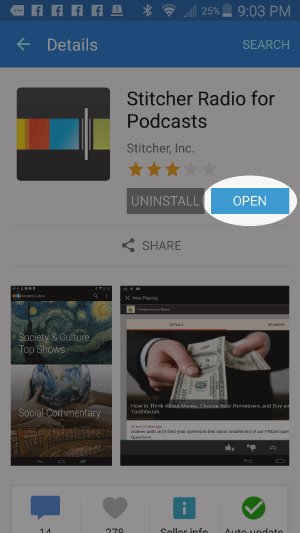
Install the Stitcher App
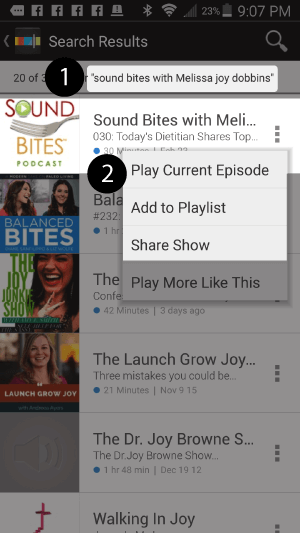
1. Search for “sound bites with melissa joy dobbins” 2. Choose Play Current Episode or Add to Playlist
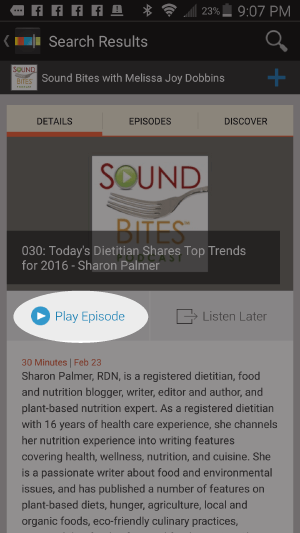
Choose “Play Episode”
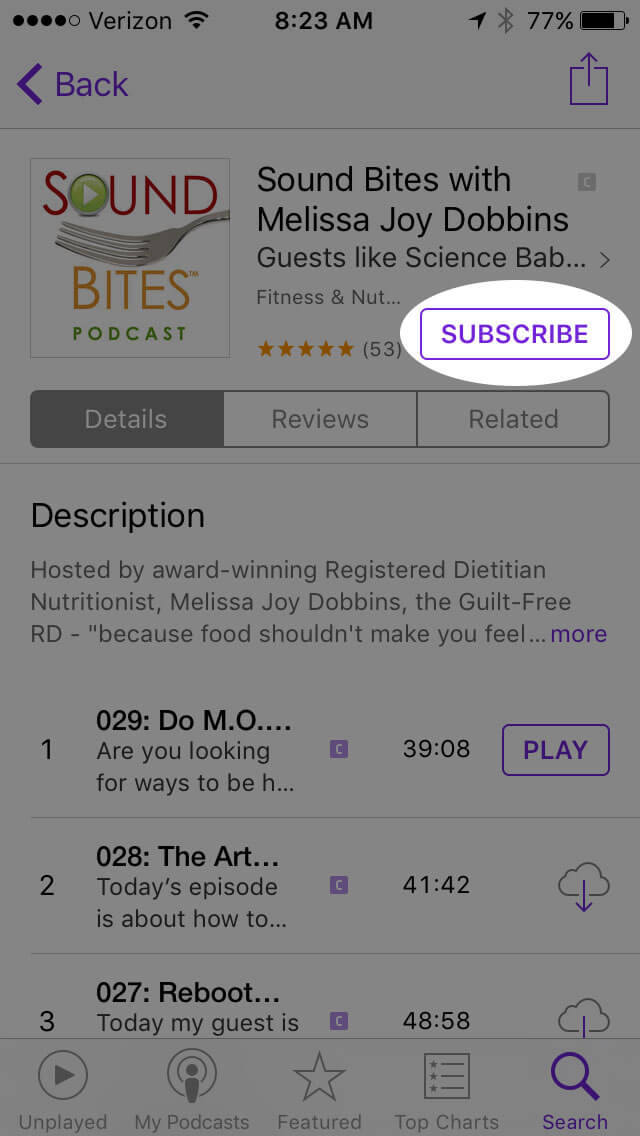
Subscribe & Review on iPhone
Open the “Podcast” app on your iPhone
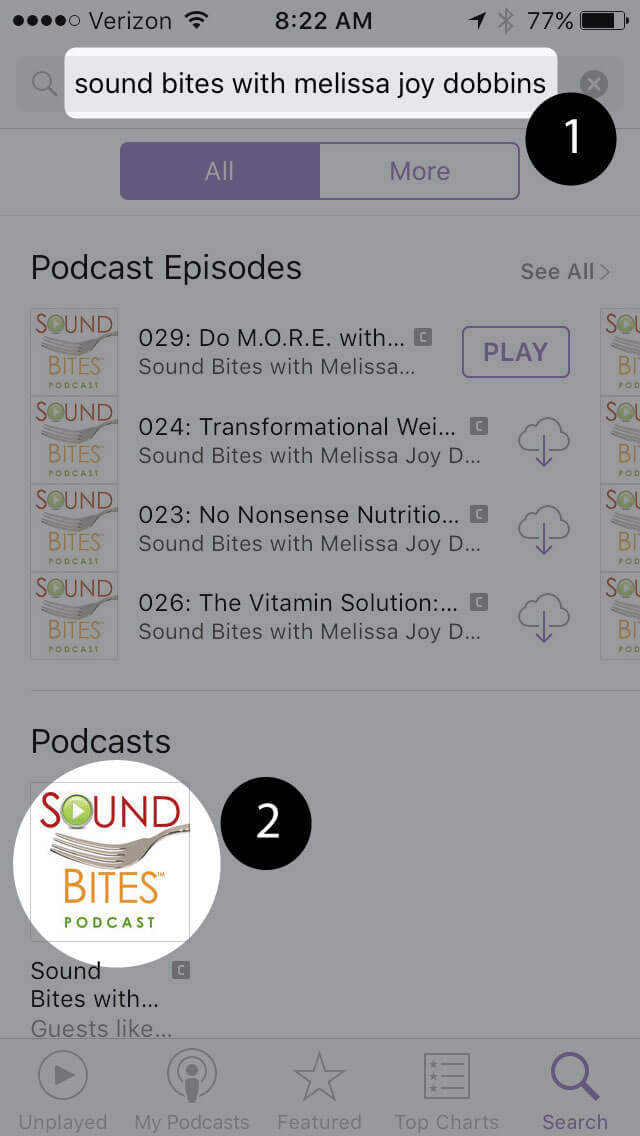
Search for “Sound bites with melissa joy dobbins”
Open the podcast and click “Subscribe” and your done!
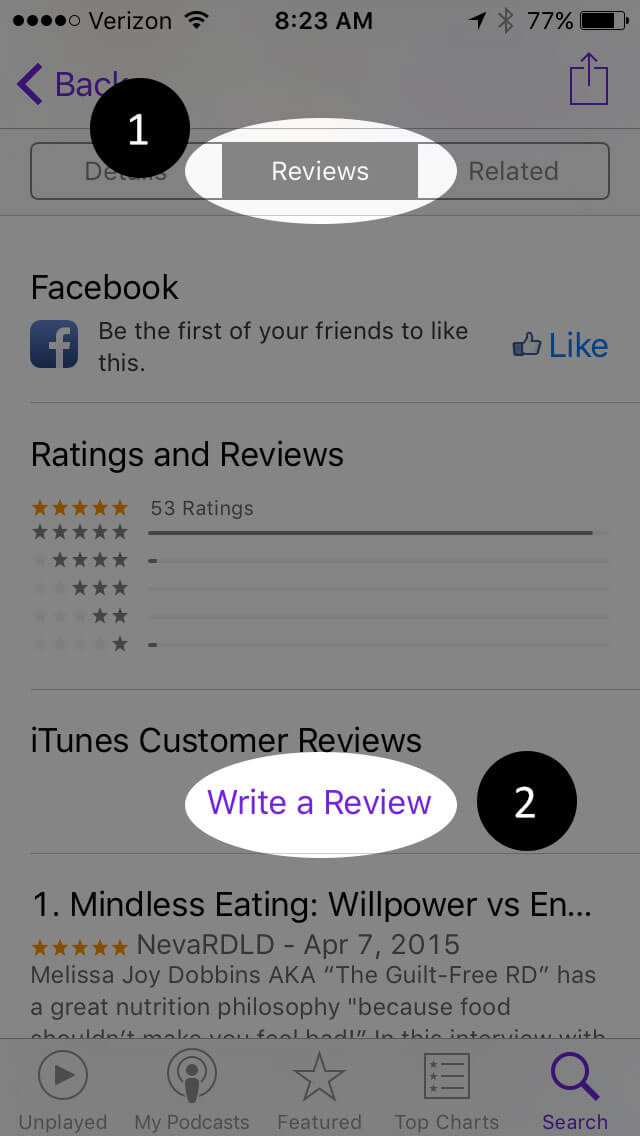
Write a Review
Click “Reviews”, then “Write a Review”.
Subscribe via RSS Feed
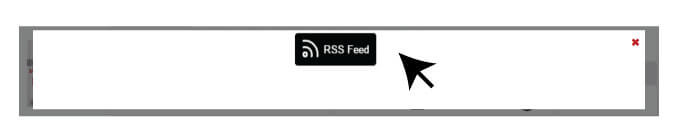
Navigate to any podcast player . Click on the RSS feed icon.
Click on the RSS feed icon.
Click on RSS Feed
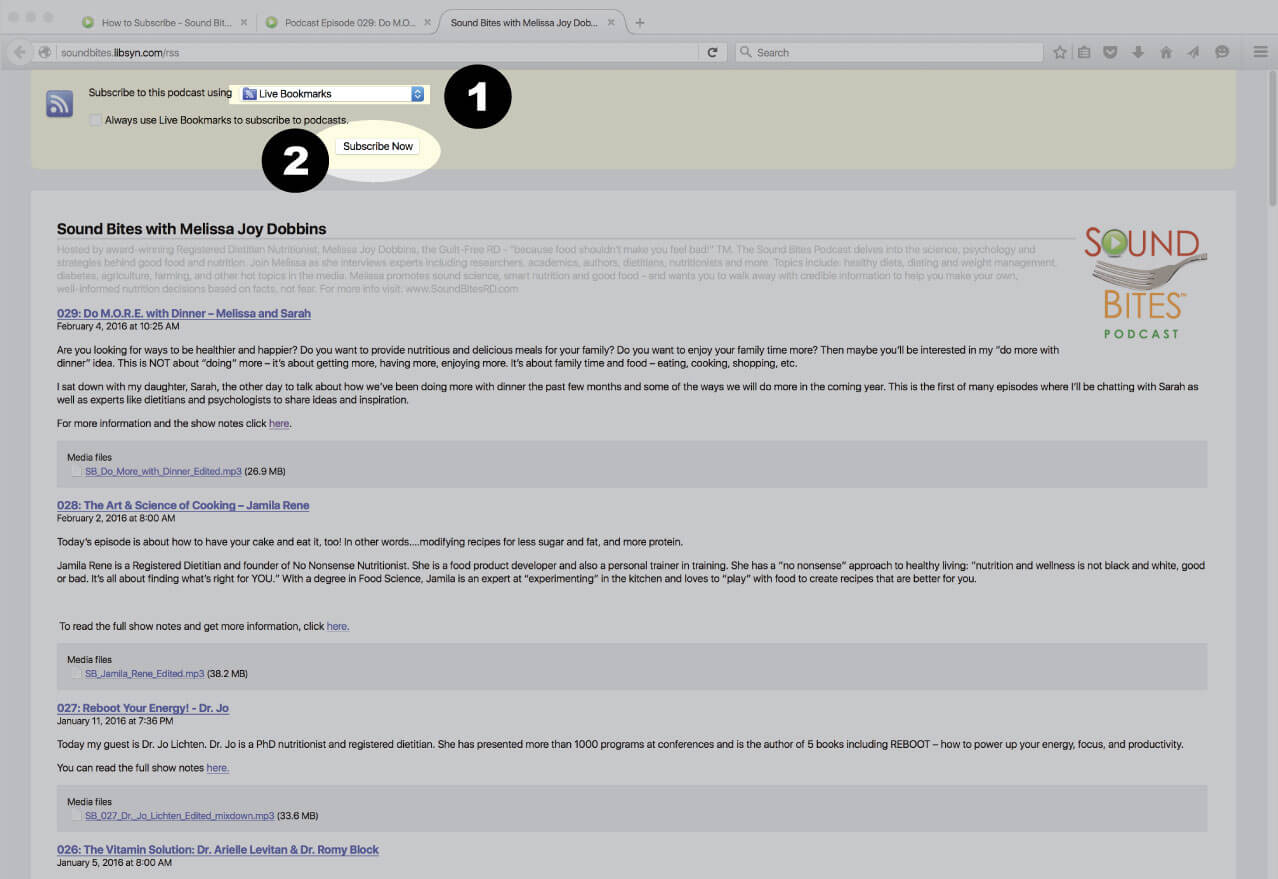
Choose which application you would like to use to receive the RSS feed
Click “Subscribe Now”
Confirm settings and subscribe.
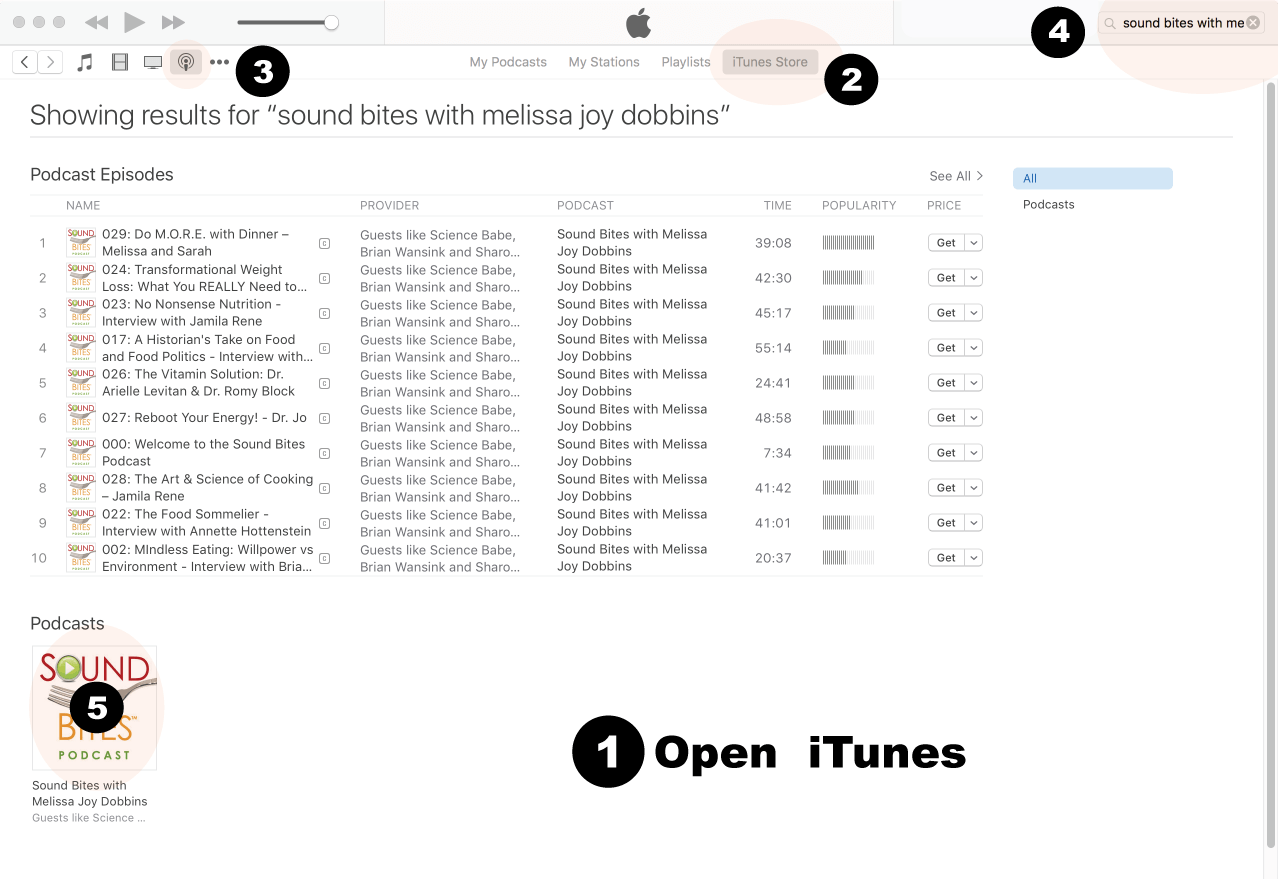
How to Review in iTunes
Open iTunes desktop application
Click iTunes Store
Click on Podcasts
Search for “Sound bites with Melissa Joy Dobbins”
Click on podcast image
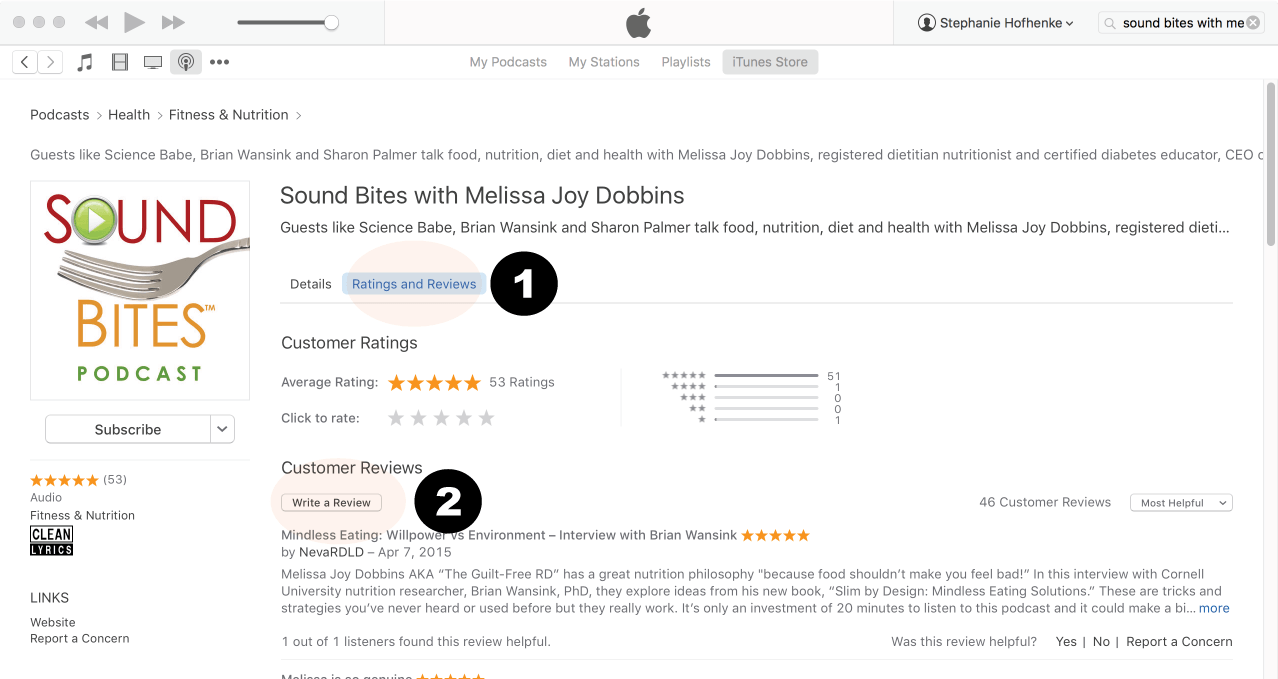
Search for Sound Bites podcast in iTunes
Click Ratings & Reivews
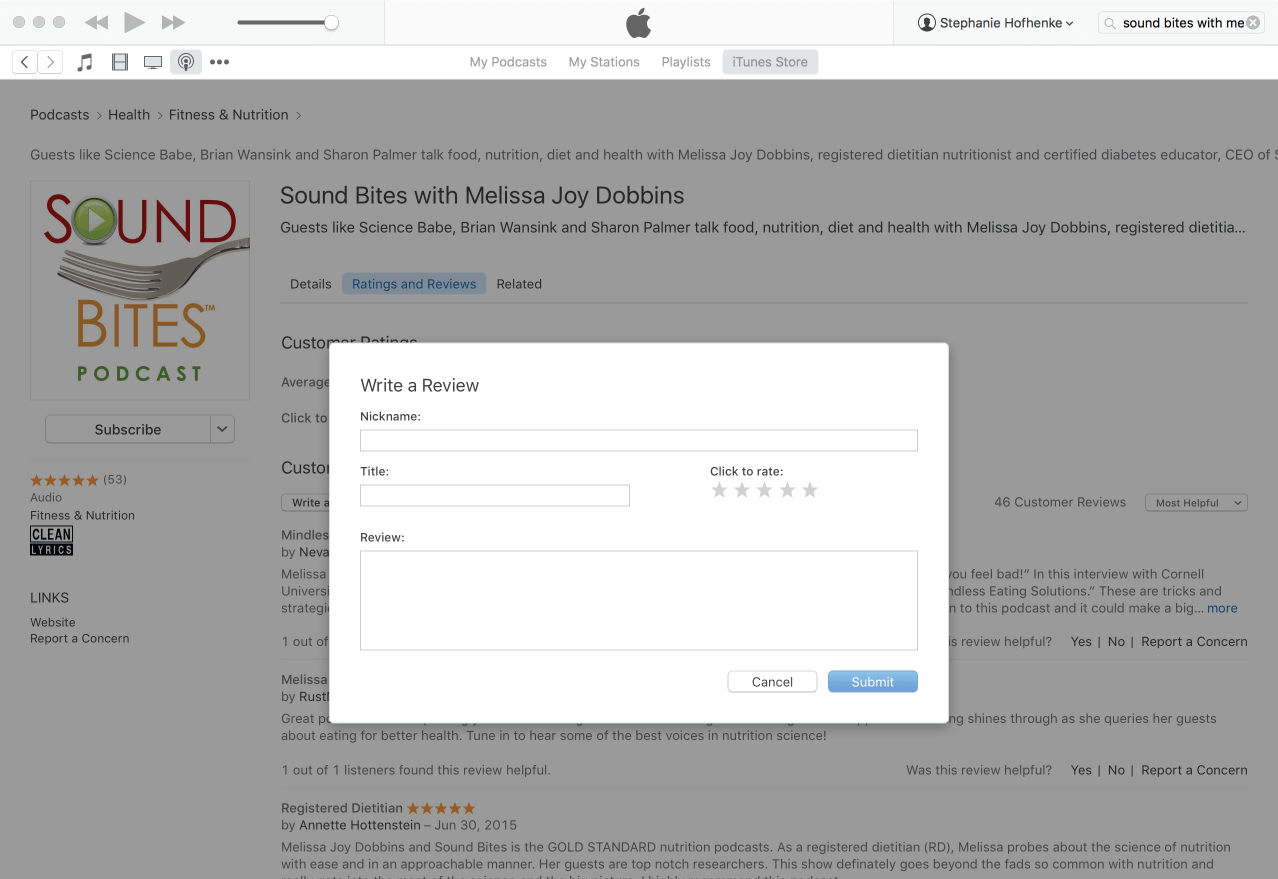
Click Write a Review
View reviews and write your own review.
Write your review…. Thank you!
Write your review!
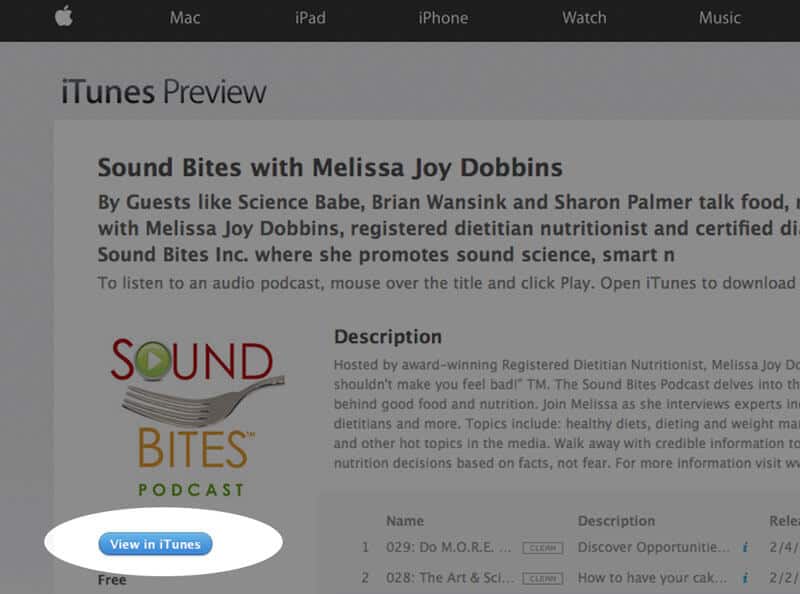
How to subscribe via iTunes
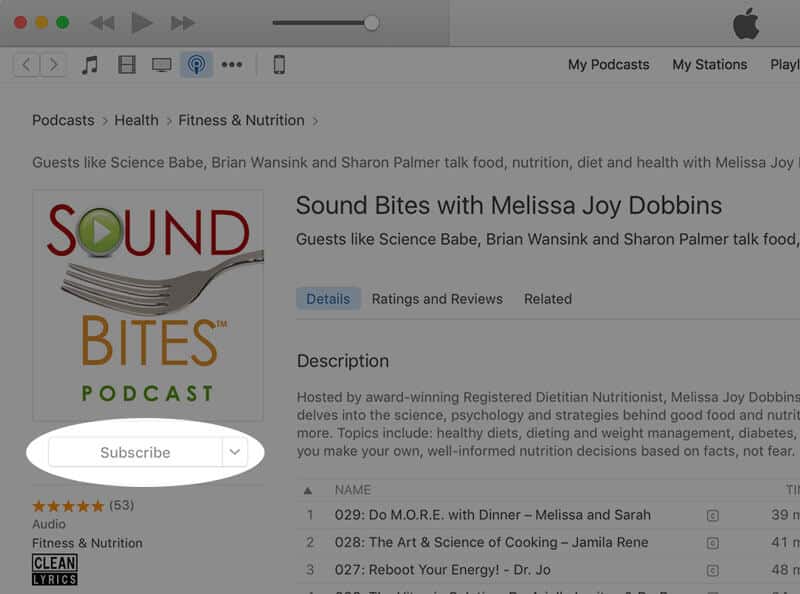
Click here to view the Sound Bites Podcastin iTunes, then click the blue “View in iTunes” button. This will open your iTunes application directly to Sound Bites Podcast. Click the “Subscribe” button, and your done!











Great Information!! Thank you!
Thank you, Lori! So glad you listened and found it helpful!
Melissa
Very good information! Enjoyed listening to this.
Thanks, Julie! So glad you enjoyed it!
Melissa