Celebrating over 1 Million Downloads and 50,000 Free CEUs on the Sound Bites® Podcast | NEW: Get 1 years’ worth of CEUs with the new 15-CEU Podcast Course
Nearly twenty percent of adults (or 50 million) experienced a mental illness in 2019. One in four adults with a mental illness report an unmet need for treatment, and this number has not declined since 2011. Anxiety disorders are the most common mental illness in American affecting 42.5 million U.S. adults, with major depression affecting 21 million U.S. adults. In addition, sleep is closely linked to mental and emotional health and has demonstrated connections to depression, anxiety and other conditions.
Research into the potential benefits of cannabis therapy is ongoing and promising, with preliminary research suggesting benefits including improvements in pain, sleep, and anxiety disorders as well as various brain-related issues from headaches to inflammation to traumatic brain injuries.
The cannabis plant has been used for thousands of years medicinally and has only been illegal for seven or eight decades. And the reason it was made illegal had nothing to do with its efficacy or science or medicine. It was strictly due to political and racial reasons.” -Janice Bissex
Tune in to this episode to learn about:
definitions of cannabis, CBD, THC, terpenes, anandamide, endocannabinoid system
why the term “marijuana” is stigmatizing
why cannabis became illegal
barriers including stigma and access to cannabis/CBD
the importance of healthcare professionals learning about cannabis and how to talk with patients about it
If you choose to try CBD or cannabis it’s important to work with someone who can guide you on dosing, method of administration, and to make sure there are no possible drug interactions. There is a wide variety of products on the market, with big differences in quality.” -Janice Bissex
Janice Newell Bissex, MS, RDN, FAND
Janice is a Holistic Cannabis Practitioner, Registered Dietitian Nutritionist, and cookbook author.
After her dad found relief from his pain using medical cannabis she completed training to be a holistic cannabis practitioner to help others suffering from pain, anxiety, insomnia, autoimmune diseases, IBD/IBS, and other debilitating conditions find relief with CBD and cannabis.
Janice now advises clients on access, proper cannabinoid ratios, dosing, and best consumption methods at Jannabis Wellness. As Program Director of Cannabinoid Medical Sciences and professor of cannabis therapy at John Patrick University School of Integrative and Functional Medicine Janice is on a mission to educate health professionals on the therapeutic benefits of cannabinoid therapy.
[00:00:00] Melissa: Hello, and welcome to the sound bites podcast. Today’s episode is about cannabis and the brain. We’re going to be talking about cannabis and CBD, mental health and brain health. My guest today is my really good friend, Janice Newell Bissex. She’s a holistic cannabis practitioner, a registered dietitian nutritionist, and an author.
Janice has had a varied career in nutrition, but her career path took an unexpected turn after her father found relief from his severe pain using medical cannabis. This inspired her to pursue training and become a holistic cannabis practitioner. She founded Janice wellness to help people who suffer from pain, anxiety, insomnia, and other debilitating conditions find relief using medical cannabis and CBD. Janice is also director of cannabinoid medical sciences in the integrative and functional medicine program at John Patrick university. Welcome to the show, Janice.
[00:01:04] Janice: Melissa. It is always a pleasure to talk to you.
[00:01:07] Melissa: So great to have you back on the show. My regular listeners will know that you were on back in episode 160, talking about cannabis, the stigma versus the science.
And we’re going to talk a little bit about what we covered in that episode as sort of a recap, or really encourage people to go check that episode out. But I would love for you to share a little bit about your background and your story and how you got interested in cannabis. And then we’re going to take a deep dive into the brain and brain health.
[00:01:41] Janice: All right. Well, I’ve said to people before that, if there was such a thing, I would have been voted the least likely to be in the cannabis business. I mean, it just never crossed my radar. I grew up in the just say no generation and I believed it. I thought cannabis was a gateway drug and it was bad for your brain.
And I bought into all that. And then when, as you mentioned, when my dad had this very severe pain and they gave him all the traditional pain medications that made him groggy and so severely constipated, it required a three-day hospital stay – not fun. So I said to his doctor, isn’t there anything else we can do for his pain?
And I said, what about medical marijuana? Because it had just been legalized in Massachusetts. And I thought, please say no, because I don’t know anything about this. And I think it’s a bunch of malarkey. So the doctor said, I think that’s a great idea. So I did my research, I got my dad certified and of course I did the research and the more I read.
Well, whoa, this plant has been used for thousands of years, medicinally and has only been illegal for seven or eight decades. And the reason that it was made illegal had nothing to do with its efficacy or science or medicine. It was strictly due to political and racial reasons. It was just in the 1930s, the long story that I will try to make very, very short, but after prohibition ended, the guy in charge of that was going to be out of a job.
So he needed something else to vilify. He was a racist. Some of the quotes that came out of his mouth are. Like, I can’t even repeat them. He didn’t like Mexican immigrants. He didn’t like those satanic jazz singers that black jazz singers. So he decided to vilify cannabis and essentially made it illegal in 1937.
It was in the pharmacopeia with dosing information for doctors. It was removed in 1942 and it just continued to be vilified stigmatized. And then in the seventies, Richard Nixon basically, well, he was not a fan. He didn’t like that all these hippies who opposed his Vietnam war smoked cannabis. So it became a schedule one substance, meaning it has no medical benefit and the high potential for abuse, both of which are untrue.
[00:04:09] Melissa: I’m glad you shared that story or that history. Because I found that very interesting. I’ve seen you present on this topic, but we talked about that in episode 160 as well. Before I have you share some of the basic definitions, because
It’s like, okay, give me a refresher. So that I get it all straight. I do want to just briefly recap what we covered in episode 160, we talked about the basics and I always like to say you gave me the 411 on the 420, right. Yeah. We talked about the history of the use of cannabis, the barriers, a lot about the stigma and misunderstandings.
Also some legal and regulatory information, dosing, side effects, drug-nutrient interactions. We might touch on some of that, but our focus today is really how cannabis and CBD impact the brain. So give us some of those definitions, cannabis CBD, THC, what do we need to know moving
[00:05:13] Janice: forward? So the cannabis sativa L plant that’s sort of the mother plant, you have hemp.
That’s part of that plant and hemp has very, very, very small amounts of THC. THC is one of the cannabinoids, one of the hundreds over a hundred cannabinoids in the plant. That’s best known for its intoxicating effect. It can make you high. It can make you stoned. But it has a lot of medical value. It’s only when it’s used in excess that you have an issue.
If you use small amounts of THC, it’s actually got a lot of great things going for it. It’s an anti-inflammatory it’s analgesic. It helps with pain. It helps with muscle spasms. It helps with appetite. There are so many good things about THC. CBD is the non-intoxicating cannabinoid. So this is particularly good for anxiety.
It’s also an anti-inflammatory it’s neuroprotective, which is why it’s used – we’ve done a lot of research looking into the use of CBD in Alzheimer’s disease. Definitely for anxiety for depression, because it does affect the brain.
[00:06:32] Melissa: Yeah. And we’re going to talk specifics on that as well. Any other definitions we need before we move forward?
[00:06:38] Janice: Well, terpenes are also found in the plant. So you have all these cannabinoids. You also have terpenes that gives the plants, the smell, but there are also really good medical benefits from terpenes. So if you smell lavender that nice calming they say lavender is very calming that’s because of the linalool, which is a terpene and lavender, that terpene is also found in cannabis and in hemp.
So the terpenes and then also in the plant, there are flavonoids – So we’re dietitians. We tell people, eat your fruits and vegetables, partly because of the flavonoids and the antioxidants also found in cannabis
[00:07:15] Melissa: and hemp. Great. As I mentioned, episode 160, we talked a lot about the stigma. Is there anything you want to briefly address about stigma and access to cannabis and CBD before we dive into the brain health
[00:07:31] Janice: specifics?
Well, I think that the stigma is one of the major problems. They’ve done studies. I’m giving a talk in a month about cannabis and CBD for gut health. And one of the studies in particular asked, have you tried using cannabis for your inflammatory bowel disease? And a reason that was given by some of the people, is that the stigma, the legal issues, they don’t have access to it.
Remember we only have 17 states or 18 states now that allow cannabis use for adults. There are about 37 states that allow it for medical use, but there are people, millions of people in this country that cannot access this medicine and that has to change. And the stigma is one of the reasons because people still buy into the whole, oh, well it’s bad.
And it’s a gateway drug. And people who use it are just sort of lazy and just sit on the couch. When in reality, the people who are using it are your grandmother with arthritis, your neighbor trying to get off opioids. Your niece who suffers from severe social anxiety. So these are the people that are using the CBD and cannabis.
And of course there are people who abuse it. Just like there are people who abuse alcohol. The stigma we really have to work on. And that’s part of my mission. And that’s why I like teaching fellow health care professionals about this medicine because like myself, five years ago, a lot of us still weren’t trained in it.
I don’t think you learned about this in your internship, Melissa, and even now med schools only about 15% of medical schools teach about the endocannabinoid system and cannabis and cannabinoids and how it impacts this system that we all have in our bodies. We have this system of receptors, and we make cannabinoids in our body on our bodies on our own.
So we have receptors, we make cannabinoids, but we can also utilize the cannabinoids in the plant. So if I don’t make enough of, let’s say anandamide, one of the endocannabinoids, if I don’t make enough and I use CBD, it will allow my body to keep more of the anandamide in my blood. And that’s called the bliss molecule.
So I want that, I want more anandamide flowing through my veins, especially right now with anxiety and depression, of course, at an all-time high. So it’s really important. So if CBD can work with your body, to really maintain those levels. I say that’s a win. Yeah,
[00:10:19] Melissa: absolutely. So in your role teaching at John Patrick university, your students are healthcare professionals, correct?
[00:10:26] Janice: Yes. Nurses, doctors, social workers. I’d like to see more dietitians. We have some, but I would like to see a lot more dietitians as far as I’m concerned, this is a leafy green and we should, we should own this space. That’s right.
[00:10:44] Melissa: So when you’re talking about the stigma and the access in your teaching healthcare professionals, you’re teaching them the science of it, but I assume you’re also talking to them about how do you.
Invite that conversation with patients, because a lot of times the questions are not asked, or it’s not asked properly. And it’s, they’re afraid to be honest about their either interest or their actually use of it.
[00:11:12] Janice: Yes. Most clients, patients will not share that they are using cannabis or CBD for fear of being judged.
So if we present it in such a way, and we say, do you use cannabis or CBD to help you with any of your health conditions? That’s an inviting way of presenting it as opposed to having a form that says, do you use heroin or illicit drugs? There’s a big difference there.
[00:11:45] Melissa: Right. One other question, just to clarify in my mind, because I always get confused about this cannabis versus CBD two different things.
Yes. Because cannabis
[00:11:55] Janice: is the plant. Yes. Cannabis is the plant and CBD is one of the cannabinoids in the plant. THC is another one CBD CBN. All sorts of cannabinoids. So THC and CBD are the two most popular, if you will. Well studied cannabinoids in the plant. And I also encourage people to use the word cannabis instead of marijuana, which is really a pejorative word.
It was meant to convey that this is a, it’s a foreign plant, a foreign substance that they’re bringing in over the border. And it’s bad. It was always called the cannabis throughout history doctors used cannabis. So what’s interesting was that just this week, there is a bill in the state of Washington that says any legislation going forward around cannabis, you cannot use the word marijuana.
I was so excited about that. I mean, all these states have medical marijuana programs. It should all my students at John Patrick university, I say from now on, do not use the word marijuana because it’s slang, it’s just comes with this racial history of the plant. So let’s leave that behind and call it what it is.
Cannabis.
[00:13:19] Melissa: I just find that so telling – it really brings the realities to the surface. It’s like, oh, I see this a little differently now. One more question about cannabis CBD, THC. So when it comes to the legalities, is it all the same? Because there’s certain states that, is it legalizing cannabis?
Is it legalizing CBD? Is that all the
[00:13:47] Janice: same? Yeah. Cannabis is federally illegal. It is legal in 37 states for medical use. And in 18 states for adult use CBD is essentially legal nationwide. There are a couple of states that it’s a little bit of a gray area. I think it’s Idaho and South Dakota, but it’s essentially legal nationwide.
No, one’s going to come after you for using a CBD product.
[00:14:16] Melissa: Okay. Very good. I feel like I’m getting this, I’m understanding this one more thing before we get to the mental health and brain health, because while this is not the focus of this episode, it’s so important. I would love for you to address a little bit about the pain management, the opioid crisis, and the significant role that cannabis can play in this crisis.
Sure.
[00:14:43] Janice: Interesting. Just today I was looking at a study and they said that the CDC center for disease control reported that there were over 100,000. Opioid related deaths in America in the last 12 months, a hundred thousand Melissa, how many cannabis related deaths have there been in the last 12 months?
Zero? No one has ever died from a cannabis overdose because the receptors in the respiratory tract, that opioid receptors, there are none, there are no cannabinoid receptors in that part that controls your breathing. So no one’s ever died of a cannabis overdose, a hundred thousand a year of opioid related deaths.
So one study that they just released this week, university of Texas looked at the effect of cannabinoid therapy on opioid use. Now this was a test in research monkeys. Okay. And part of the reason that we don’t have clinical trials in this country is the federal legal status, which has to change. We need to make this plant federally legal so we can do more research.
That’s not to say that there isn’t a lot of research because there really is when people say, oh yeah, there’s not enough research. Yes, there’s plenty of research. But we would like to do more large-scale clinical trials. So what they found was that the CBD and THC don’t enhance the rewarding effects of opioids.
So when you take an opioid, it affects this part of your brain for reward. The pleasure. They’re like, I need more, I need more. Right. So what they said was these CBD and THC compounds do not increase the risk for addiction, right. Even when you use them with opioid medications and they may help relieve opioid withdrawal or decrease relapse and drug seeking behavior, following periods of abstinence. So it can help people get off opioids.
When we give people who use opioids, cannabis access, they decrease their use by 44%. This was a study in 2016. legal cannabis states have a 25 to 30% decrease in opioid overdoses.
Wow, it’s compelling. It really is. If you can get some of your pain relief using cannabis or CBD, and you can cut your dose of opioids in half. Or maybe stop using them then the risk of overdose is much, much less. Yes.
[00:17:29] Melissa: And if we can try cannabis before going to opioids, absolutely prevent that in the first place.
So heartbreaking.
[00:17:38] Janice: Yes. I’ve had, I have a friend of mine who’s having surgery tomorrow and he reached out and said, they want me to take these opioids after surgery and I don’t want to, so he’s going to use a water-soluble CBD product that I have to help to manage his pain. And it also decreases inflammation after surgery.
So that’s another good thing. It’s an antioxidant anti-inflammatory so it can help with the pain and these other issues after surgery. Right.
[00:18:09] Melissa: Well, thank you for sharing that. Like I said, I know that it’s a really important aspect of how cannabis can be extremely. Powerful and in a positive way. Yes. But let’s talk about the brain.
And not that that pain management doesn’t, it doesn’t involve the brain, but I pulled some statistics for our conversation. The most recent numbers I could find in 2019, just prior to COVID-19 pandemic, almost 20% of adults experienced a mental illness. And that was about 50 million Americans. More than half of adults with mental illness do not receive treatment.
We’re not even talking about the youth statistics, we’re talking depression, anxiety, PTSD, bipolar disease. There’s all sorts of different diagnoses that fall within the mental health space. So let’s talk and that’s not even like, I know those numbers are even higher. We know that COVID has been extremely difficult on our mental and physical health.
[00:19:22] Janice: Absolutely. And Melissa, I just yesterday saw something online as a research study and they said between August 2020 and February 21, the number of individuals with recent anxiety or depressive symptoms grew by 5%, from 36% to 41.5%. Can you imagine that almost 42% of people?
[00:19:49] Melissa: Yeah. And I mean, it’s impacting so many people, it’s a crisis in and of itself.
Talk to me about the research and the different types of mental health that you’ve seen. The research studying CBD
[00:20:05] Janice: cannabis. Okay, well for anxiety and depression CBD, for example, I mentioned that CBD can increase this anandamide, this bliss molecule in your body. It also can increase serotonin levels.
It increases gaba, which is this inhibitory neurotransmitter kind of a neuro calming substance. And it can decrease cortisol stress hormone. So that’s pretty compelling that CBD can do that. But also the terpenes found in cannabis and hemp also contribute to this calming effect. There’s linalool I talked about in the lavender and there’s also limonene, which is an uplifting terpene.
So when people talk about, well you could use a pharmaceutical THC or CBD what that’s lacking is what we call the entourage effect. So it’s the cannabinoids and the terpenes and the flavonoids all working together synergistically to produce these effects. So you can’t just pluck one molecule out and say, okay, we’re going to treat this person’s anxiety with just the CBD molecule, for example.
And if you buy a CBD product and you see something that says CBD isolate, that’s an example of that. You don’t want that because that only has the CBD you want CBD along with the other compounds in the plant. So either a broad spectrum, which has all the other components of the plant minus the THC, or you want full spectrum, which has all the components, including a tiny bit of THC.
You’re only allowed if it’s a CBD product or a hemp product, 0.3% THC. So not at all enough to impair you in any way, but just enough to sort of add to that synergy.
[00:22:09] Melissa: Interesting. And there is a lot of science here, obviously, and some of these terms are new to me even, and certainly some of our listeners, but it’s interesting, like serotonin, everybody’s heard of that, right?
So hopefully these terms will become more commonplace and more familiar. And that will also decrease some of the barriers to understanding and using these people have
[00:22:38] Janice: heard of the runner’s high, which I never, ever got. We never got that. Never got them. You have to run! I did run.
[00:22:50] Melissa: I just didn’t get it
[00:22:50] Janice: though. And people say, oh, it’s the endorphins that are released when you run.
Well, what we’re finding now is that it’s actually anandamide. So they’ve done studies and sent people out exercising, and they, they measure anandamide before and after. And there’s this surge of this bliss molecule, this endocannabinoid that is at least partially responsible for that quote runner’s high.
[00:23:16] Melissa: Interesting. Wow. I always said the reason people are happy when they’re done running is because they’re done running, right? But that’s very interesting. Well, I know that you’re talking about anxiety. Anxiety disorders are among the most common mental illness in America as is depression. What can you tell me about the research in depression and are there other mental health disorders?
You’ve seen any research on,
[00:23:42] Janice: well, there’s some interesting new research out. That’s looking at major depressive disorder and they’re finding that neuroinflammation may be a factor in this depressive disorder. So. If we can decrease the inflammation and cannabis and CBD are anti-inflammatory, then that’s potentially going to be helpful for this depressive disorder.
Yeah, that makes a lot of sense.
And another study found that actually taking CBD prevented the detrimental effects of chronic stress and it also increased hippocampus proliferation. So the hippocampus is an area of the brain that is important for our mental health. And they find that CBD can actually promote hippocampus neurogenesis.
So you actually can make more brain cells in this area, which is to me, very fascinating. So if you take CBD and it can reverse the effects of chronic stress by promoting this neurogenesis and sort of remodeling of your brain. Again, fascinating research being done on this that when I meet with people and I work with people and they say, yeah I definitely feel like this takes the edge off my anxiety or I have a teenage boy and he tells his mom, he has autism and ADHD.
And he tells his mom I feel less jumpy when I take my CBD kind of subtle things where the research is there, but I see it anecdotally and my clients and people say, well anecdotal, we want double blind placebo-controlled studies. And we do absolutely we do. But I can tell you that when you see hundreds of people who have seen life-changing benefit from CBD and cannabis, it’s enough for me personally, to know that there’s something there. Now that said it does not help.
100% of people for 100% of conditions,
[00:25:57] Melissa: right? Yeah. That’s a common phrase that you always share. And I appreciate you saying that. Yes.
[00:26:02] Janice: It works for a lot of people. Life-changing benefits for some of my clients. And then some clients say it, it helped a little bit, and we don’t know. It depends on your endocannabinoid system.
It depends on a lot of factors. It’s not a miracle cure. It is very, very beneficial to a lot of people. That’s what I can say.
[00:26:27] Melissa: Yeah. And even some of those smaller, subtle changes impact your quality of life. And that’s what it’s all about. Whether it’s severe pain or this patient who said, I feel less jumpy.
Well, who doesn’t want to feel less jumpy? I mean, that’s huge
[00:26:42] Janice: in one study showed that in a pain clinic that the average pain level of an eight was brought down to a four. Now it didn’t bring it to a zero, but that’s significant. That is for those people that’s life-changing you can live with a four and eight is debilitating.
Oh my
[00:27:02] Melissa: gosh. Right, absolutely. What about saw something briefly about CBD and eating disorders and since it’s nutrition-related I thought
[00:27:10] Janice: I would ask you about that. Yes. We need a lot more research in this area. I mean, I can see that it could be helpful. Even just the anti-anxiety and antidepressant effect would be helpful, but some preliminary research has shown that people with anorexia and bulemia have an underactive endocannabinoid system, I’m not even sure how they do these tests to determine that, frankly, but they, they look at the components of the endocannabinoid system.
They look at the receptors and they look at the anandamide levels and whatnot, and they find that it’s different in people with anorexia. It’s also different in people with anxiety. So in one study they gave a small dose of synthetic THC, which again, not a fan of, but that’s a lot of the people who do the research, they need a very controlled, exact dosage, and that’s harder to get, unless you’re using the pharmaceutical.
But anyway, it did result in weight gain in some of these patients with anorexia and bulimia. So it’s got potential really as an adjunct to treatment. Obviously you need a whole team dealing with these eating disorders. It certainly has potential to help. We’ve heard
[00:28:31] Melissa: of cannabis treatment for years with regard to cancer, and that there is the side effect of increasing or improving appetite for people who need to have better intake.
So it’s all very interesting that the whole nutrition piece of it.
[00:28:50] Janice: Yes. I
[00:28:51] Melissa: want to share just a little bit more statistics about mental health. Before we move on, I want to talk about sleep. Some of the statistics I looked into about 11% of Americans with a mental illness are uninsured and even 8% of children had private insurance that did not cover mental health
[00:29:15] Janice: services.
[00:29:18] Melissa: First of all, it’s a lot of people and it’s not just adults, it’s children. And this was since the affordable care act. I had an issue in 2013 when I went full-time in my own business, my soundbites business, I had been working part-time as a diabetes educator at the hospital. So this was the first time that I was going to have to get my own insurance.
It wasn’t through an employer and my husband had his own business. And while I knew we would probably pay more and we could do that. I was fine with that. It never occurred to me that I would have trouble getting insurance. Not only did I get denied health insurance by a major company who I had been insured for years, the reason they denied us was because my daughter and I were each seeing a counselor, like a counselor, we were not on psychiatric medication.
We had had no issues. Yeah. I almost went to the TV stations on this one because I,
[00:30:23] Janice: oh, that’s a whole episode for you
[00:30:25] Melissa: as a whole other episode, right? Yeah. So my point being to deny me medical coverage, because I was in counseling, I mean, we ended up finding an insurance broker and finding some off-brand insurance that we could use, but we had no medical issues.
We were there, there was nothing. So anyway, health insurance is a whole other story. My point or my question is. Treatment for mental health is so important. And thankfully we saw during the pandemic, many counseling services become no charge and access and telehealth telemedicine, tele counseling.
Thank goodness. But when we’re looking at medical treatment, prescription medications, I mean, these things cost a lot of money. And so it would make sense that something like cannabis, if it’s affordable and accessible, could really be an important piece in this solution.
[00:31:28] Janice: A hundred percent.
I couldn’t agree more, but it’s interesting that insurance, if you have insurance, they will pay for you to use an anti-anxiety or an antidepressant, which costs, I don’t know, hundreds of dollars.
Right. And yet they won’t. The cost of cannabis for CBD. There is a health insurance. There’s an insurance Canada that covers medical cannabis, but I don’t know of any in the states yet. I think that will change. I hope that will change.
[00:31:57] Melissa: And we are going to talk before we wrap up, we are going to talk about where you get CBD and cannabis and like how dispensary’s work and all of that, because you, you, you need to kind of give us a, fill us in on all those details,
but let’s transition to sleep. I mean, we all know that sleep impacts our health. That includes our mental health. Sleep is very closely connected to mental and emotional health, and it has been demonstrated to have links to depression, anxiety, bipolar disorder, and other conditions.
And I think it’s, it seems like it’s a two-way street. If you don’t sleep well, that’s going to impact your health and mental health. And if you’re having mental health issues, anxiety, depression, that can impact your sleep. So talk to me about if you’ve seen anything in the research that has to do.
I mean, I know that. Most common uses for CBD is for insomnia. So that’s where, and I’ve been thinking a lot about sleep. I think I’m going to do a sleep episode because I’ve been having a lot of issues with sleep and I never did before. And I want to learn more about. Everything that that’s going on.
So what have you seen in the research regarding cannabis and CBD and
[00:33:11] Janice: sleep? Wow. And it’s interesting about 50% of the adult population in the U S experiences, sleeping problems. So you’re not alone. I mean, there’s so many of us out there who have either occasional or chronic issues with sleep, they did do a study of 409 users of cannabis.
And they use this app to track their cannabis use and sleep. And the results show that the consumption of medical cannabis is associated with significant improvements in perceived insomnia. So it does help a lot of people. And you don’t need much. I mean, you can take just a little bit, a little micro dose of THC before bed.
And it’s helpful for a lot of people CBD. I think CBD in particular because of the anti-anxiety effect. Because when we wake up in the night, typically our minds start going round and round and round, right? We think about what we should have done today, what we need to do tomorrow. What we worry about our family.
We, we, we worry and that’s what keeps many of us awake at night. So if the CBD can help manage the anxiety, that can be helpful. And then the THC also in small doses now, THC in large doses can create anxiety. So you have to be careful with how much you use. I have a woman in my yoga class and yesterday she brought in this chocolate bar.
She said, I went to a dispensary. I told them I had a hard time sleeping. They sold me this. What do you think? Each square of the chocolate bar had 25 milligrams of THC. Is that a lot? Now, Melissa, I tell my people to use 2.5 milligrams, 25 milligrams, if you or I took 25 milligrams of THC right now, I can tell you that I would be on the floor.
Unable to move. No seriously. I mean, no, but I mean, and this is what happens that some dispensary’s the people behind the counter are experienced because they use it, but they have no idea – to tell a, I think this woman is probably in her seventies to tell her that she should take this product for sleep?
Wow. I mean, irresponsible. So I told her, you need to take one 10th of this little square of chocolate. She said, I’m not even going to take it. That’s too scary for me now. So, so let me tell you about another study. There was a four-week study of over 2,700 participants, 21 and older, and they self-reported anxiety, pain or sleep disturbances as a primary reason for wanting to take CBD.
So they were randomly assigned to get one of 13 commercially available CBD products. So this is real world stuff. So their results so far are promising participants reported a 71% improvement in wellness. 63% reported, clinically meaningful improvements in anxiety and 61% in sleep quality. I mean, that’s pretty significant.
I mean, do you know many other medications, pharmaceuticals that see a 71% improvement in well-being? No, no. I mean, but again, 61% said it helped their sleep, not a hundred percent, but in the ones that it didn’t help, what happens is people sometimes try CBD or try THC a couple of times. And they’re like, yeah, it didn’t work for me.
What I do. And I’ve worked with my clients. It might be that you’re not taking enough. It might mean you’re taking too much. Let’s try taking it a different time of day. I take my CBD in the morning, and it helps me sleep because it just helps with that general anxiety. Some people find CBD to be energizing.
So if you take it right before bed, it might not help you for.
[00:37:31] Melissa: And does it need to build up in your system
[00:37:34] Janice: a little bit? Yeah. I tell people to give it two to three weeks to really assess, although this study, I was just talking about 61% reported a therapeutic effect within one to four hours of taking the CBD.
So some people do see an effect right away, but I do think it takes a couple of weeks for really to get into your system and to sort of realign your endocannabinoid system. Interesting. One other study I want to mention is it was an outpatient psych clinic and there were 72 patients that had issues with anxiety and insomnia.
So they were given a 25 milligram CBD capsules, soft gel. If you had anxiety, you got the CBD after breakfast, you had insomnia, you got it after dinner, the sleep scores improved in 67%. The anxiety scores improved in 79%. Wow. This is with 25 milligrams of CBD. That’s great.
[00:38:32] Melissa: And it’s a safe option to try exactly.
[00:38:36] Janice: Even the world health organization has said that CBD has a very good safety record. They haven’t found any issues with people taking CBD. Now it’s possible that someone could have. Have a side effect. It’s common not to have any side effects from CBD, but the most common is more vivid dreams. People remember their dreams when they take CBD more.
Some people, not everyone, some people say the very first week, they feel a little bit fatigued and that’s just that neuro calming effect. After the first week, they don’t report that anymore. If someone has very, very low blood pressure, it’s possible that a big dose of CBD, not what we’re talking about, 25 milligrams, but if you took 300 milligrams of CBD, because it’s a vasodilator, which means it opens up your blood vessels, which is a good thing, right?
I mean, we want more blood. We want more blood to our brain, into our hearts, but if you have very low blood pressure, there’s the potential. That you could get lightheaded with a huge dose of CBD, but
[00:39:39] Melissa: unlikely. Yeah. And that fatigue from the neuro calming, that kind of reminds me of working with people with diabetes, if they’re used to their blood sugars running high, and then we get them more in the normal.
Range that doesn’t feel normal or good to them until they readjust to that
[00:39:56] Janice: new normal. Interesting. Yes. Well, let’s transition
[00:40:01] Melissa: to brain health and you and I wanted to make a distinction between mental health and brain health, because brain health encompasses just the aging process, cognition, inflammation.
Certainly Alzheimer’s could be headaches, concussions, seizures traumatic brain injuries. So there’s a lot of information that is out there, but I would love to hear from you what some of the most compelling or most important information is that you want to share with us.
[00:40:30] Janice: Well, I’m going to start with something that, again, I read today, I don’t know what was happening this morning, that I was, I get these newsletters that have the most up-to-date research in one.
This study was okay, you’re going to laugh. They were using roundworms. Hmm. I guess this is a common thing for researchers to use as models. So they have the roundworms, and they were exposed to CBD throughout their life. I don’t know what the life expectancy is of a round worm. Didn’t get that deep, but their findings showed that CBD can reduce neuronal aging.
Which is associated with the decline in the behavioral and cognitive functions of the brain. So the research has said, quote, these findings collectively indicate the anti-aging benefits of CBD treatment in both in vitro and in vivo models and its potential to improve neuronal health and longevity. I mean, that’s a pretty strong statement, but when you look at the decreasing in inflammation, the antioxidant capabilities, and you think about our aging brains, right.
Kind of makes sense to me based on what I know that it could be helpful. So that I thought was really, really interesting. I mean, they’ve done a lot of research with Alzheimer’s patients, and they have found that. CBD and cannabis can decrease the amyloid plaque development in the brain. That’s sort of the signature of Alzheimer’s.
So that’s really interesting. It protects the myelin insulation of the nerve fibers. So I mean, all these things kind of add up. One study with real patients showed that 65% decrease in agitation when Alzheimer’s patients were given a very small dose of THC and they gained weight too. So there is some good research.
We need more, but our U S government has a patent on CBD as a neuroprotectant and antioxidant. They were doing research into Alzheimer’s and Parkinson’s, and they found that cannabinoids held the most promise. So there there’s research, I’m really excited about more widespread clinical trials, but certainly there’s an.
That we know already to show that it could very well be helpful.
[00:42:58] Melissa: So that begs the question. If the us has a patent than why isn’t
[00:43:02] Janice: it legal? Oh, Melissa, that’s such a good question. That’s the million-dollar question. Yes. Why is cannabis still federally illegal? There are a lot of people out there that do not want cannabis to be legal.
That might actually, it might affect their bottom line. For example, pharmaceutical companies. When people find out that they can use CBD and cannabis to help with such a myriad of conditions. Well, maybe they’re going to use less of the pharmaceutical and they’ll lose billions of dollars. There’s no doubt they will lose billions of dollars in sales of pharmaceuticals when CBD, when cannabis becomes legal federally.
[00:43:43] Melissa: Wow. Okay. What about traumatic brain injury? I did an episode a while ago about omega-threes and traumatic brain injury. And that was really interesting. I’ll link to that in the shownotes at soundbitesrd.com. But what have you seen in the research?
[00:43:58] Janice: Good research into traumatic brain injury and concussion.
One study looked at 66 traumatic brain injury patients, and they were given a tincture, a one-to-one tincture of THC and CBD. 80% of patients experienced significant improvement in activity level and symptoms. They had an 83% improvement in mood, 76% improvement in sleep in 74% improvement in headache.
And I can tell you I’ve worked with probably eight or 10 concussion patients over the last few years. And one mom called me. She said her son had a soccer injury or a sports injury. And he had been pretty much on the couch for two weeks because he had such severe headaches and couldn’t look at a screen.
She drove to my house; she lived a couple of hours away and got some CBD. And she called me two days later and she said, no more headaches. The kid is so much better after just two days of CBD. So good research there’s research in stroke. So after a stroke, there is damage to your brain, much like a concussion.
And because of the properties, the anti-inflammatory properties of CBD and cannabis and the vaso relaxing properties, you can see a decrease in damage long-term damage after a stroke, as well as a traumatic brain, then. Wow.
[00:45:28] Melissa: Okay. What about PTSD seizure disorders? I mean, all of us have headaches and there’s migraines as well.
What can you tell us about those?
[00:45:38] Janice: So PTSD is estimated to affect three and a half percent of a population, and only one in nine people find relief with antidepressants, which is the common treatment. So they did a study of over 8,500 people with PTSD, average age, 55 years old, and they started cannabis therapy.
Two thirds of the patients reported at least moderate improvement with no side effects. It was a 91% therapeutic success after six months. In addition, the reduction in medications after six months, 52% decrease in opioids, 37% decrease in anti-psychotic. 36% decrease in anti-epileptics 35% decrease in hypnotics and sedatives.
So that’s fairly compelling. I would say that’s a large population, 8,500, this isn’t an N of two or four, anecdotal, pretty compelling. So yeah, I mean, cannabis micro dose of THC can help a lot of people with PTSD. Even just taking two or three milligrams at night before bed can help with sleep and can help manage the symptoms.
Again, good research on PTSD. Seizure disorders, anyone who’s interested in learning more about seizure disorders. Watch the Sanjay Gupta documentary called weed. Dr. Gupta was not a big fan of cannabis. And then he did this documentary for CNN and followed these young children who had pretty severe seizure disorders.
I mean, dozens of seizures a day, and he was completely stunned how these kids would go from dozens of seizures a day two, maybe one seizure a week, one seizure every two weeks, just with CBD. CBD has very well-documented anti-seizure properties. In fact, FDA has approved a CBD drug for seizure disorders.
So that’s pretty compelling. The problem is that, again, a CBD product that has the full spectrum of all the components of the plant would be more effective and a lot cheaper. I mean, this Epidiolex it’s called is about $35,000 a year for the prescription. So I have a young client in Florida and her dad just emailed me the other day.
And he said she has been seizure-free for one year. So he said, he’s going to give me a whole testimonial and give me more details, but he has not yet, but just getting that email made my day.
[00:48:30] Melissa: And I’m glad you’re sharing some of your personal experience with your patients because yeah, we’re talking research, but that really brings it to life too.
I mean, it’s real people and real lives before we get into just the basics about the different types. What should people do if they want to try it? What do you look for on a label? I do think it’s important cause you’ve mentioned this to me before and it’s kind of an eye-opener, let’s talk just briefly about alcohol versus cannabis and brain health.
[00:49:00] Janice: Boy sadly, because I love my red wine. I’m not gonna lie this new study that just came out. What, in the last month in the journal nature, it showed that just even one drink a day, causes a reduction in brain matter. And that’s very sad for me. That’s really bad news. It’s bad news. Right? But cannabis on the other hand is actually good for the brain.
I truly believe we would all be better off than using a little bit of cannabis than drinking alcohol. Now, me, I, again, I mean, I don’t use cannabis regularly, even though I know it would be much better for me than alcohol. I am trying to incorporate, I grew a plant, so I’m trying to make some oil that I can use.
And just to incorporate a small amount in my diet every day, I’d make a tea with the families of the plant. I dried them and I make a tea. I have a friend who I gave some of this to who is a terrible sleeper. She just has chronic insomnia. And she drinks this before bed at night. She says it has been completely life-changing – that she sleeps much better with just the family. It’s just those the big classic cannabis leaf. And that’s not where the majority of all the cannabinoids and the THC, but it’s enough. And there are other things, right? The synergy I told you, we’ve got the terpenes and all these things in the plant.
And she says that helps her immensely.
[00:50:35] Melissa: That’s amazing. Well, I was going to ask about this later, but now it brings me to this question. I mentioned you’re an author and you are just finishing up your fifth book called the simple guide to cannabis gardening. So before we talk about your products and what do people do look for the label and all that, those questions that I have.
Talk to me about your new book and grow. Your own
[00:50:59] Janice: cannabis growing cannabis. Can you imagine who would have funk it? So I did. I grew up plant last year. Well, the first year I grew, I, I basically, I’m not a green thumb. I killed my plants. None of them survived. It was pretty pathetic. And then the next year I got a plant that was already.
A couple of feet tall from a friend so that I managed to keep alive by watering it. But I had so many questions and I mean, I was so annoying. I would call my friends and I’d say, they say, you’re supposed to top your plant. What does that mean? How do you germinate a seed, how do I know this? And so I gathered all this information and I thought I can’t be the only nincompoop that doesn’t know anything about growing.
So I said it would be fun for people who want to perhaps incorporate some cannabis into their life to figure out how to grow a plant. I’m not talking about growing a greenhouse. This is just take the seed. I have some seeds germinating right now on the floor of my bathroom. Cause I have radiant heat.
It’s warm, hoping these little seeds will sprout. Then you put them in a little peek pod, and then you put them in a little tiny cup and then you put them into a bigger cup and then a bigger pot. And then you plant them outdoors. And yeah. And then I teach people how to, how do you harvest it when you harvest it?
How do you know how, and that’s all the questions I have. I don’t know. Is it ready? It’s September. So they harvest it. My friends would say, you got to look at it. You can’t, we can’t tell you that. I said, well, get over here and help me. So that’s what I put in the book. Yeah. Simple guide to cannabis gardening.
And I put the word gardening in there to let people know this is not about indoor growing. I don’t know anything about the lights and I don’t want to pay all that money, pay a couple thousand dollars to do an indoor grow. That’s not my jam. I like to grow in my garden. It’s out there. I’m going to plant my basil around it.
Because basil goes well with cannabis. I’m not too sure. I swear it does they say to plant basil near your cannabis plant.
[00:53:01] Melissa: Okay. I didn’t know if you meant, like mix the herbs together in your lasagna or something. Like what are you talking
[00:53:07] Janice: about in the gardens? Right. Okay.
[00:53:10] Melissa: So the book covers how to garden grow your own plant.
How do you know like how much CBD or THC
[00:53:19] Janice: is in it? You have to look at what particular cultivar you’re buying or growing. So most people use the term strain, but it’s strain is really for animals, not for plants, but anyway, so whatever the strength slash cultivar is. So if you say, okay, I bought this particular cultivar, it’s called, oh, I don’t know, Bubba Kush.
They have all sorts of crazy names and it’s 20% THC. Well, what you do is you measure a gram of this cannabis flower, and then you say, okay, 20%. One gram is a thousand milligrams. 20% of that is 200 milligrams. So there are 200 milligrams of THC in here. If you use that and make an oil, then you say, okay, there are 200 milligrams of THC in this oil.
Is it a cup of oil? Okay. Then divide eight ounces by 200. And then you find out how much THC is in. a teaspoon of the oil. It’s not an exact science. And I tell people in the book, you have to be very, very, very careful with homemade edibles. I give some recipes, I teach you how to do it, but I have so many disclaimers because if you’ve talked to someone who’s had a bad experience with cannabis, 90% chance, they took an edible.
[00:54:42] Melissa: Right. And that’s not even cause you’ve told me it’s not even just the homemade ones, which is edibles in general can be a problem.
[00:54:47] Janice: Yes. Well, if you’re buying one and you have a problem, it’s because you just took too much. Like my friend, if she took that 25 milligrams, that’s a problem. Right. But if you make your own and you think that this little bit of brownie has five milligrams, It might have ten, you can’t be sure that you stirred it and incorporated it all evenly.
So it’s a little tricky when you make your own, but yes. So you do have to be careful with the dosing when you make your own. And again, when you buy it in a dispensary also,
[00:55:20] Melissa: and then just curiosity, you can cook with it. Like you’ve got this plant, you can make this tea that you were talking about.
You can do the oil or whatever, but you can cook with it, right.
[00:55:30] Janice: You can, but you have to do, what’s called decarboxylated. So when you have a cannabis plant, let’s say you have a little bud, a little flower, there’s THC a and CBD a it’s the acidic or raw form of those cannabinoids still with health benefits.
But if you just use the raw form of the plant, you’re not going to have the same effect as if you heated it to activate it. So to activate it is the decarboxylation. So you have to cook it at a low temperature in the oven, all these little bugs on a cookie sheet, 225 degrees, just enough to take that THCA to THC, to activate it.
[00:56:13] Melissa: Then what do you do with it?
[00:56:15] Janice: And then you take those buds and then you put it in oil. So maybe it’s coconut oil or another kind of oil. And then you heat that low and slow to extract all these cannabinoids from the plant into your oil. And then you use that oil or that butter. Okay. It’s a few steps and that’s
[00:56:40] Melissa: all in your book, right?
I mean like it’s about gardening and then what to do with it, right?
[00:56:44] Janice: Oh yes. Cause that would be funny if I just said, okay, there’s your plan have fun. Isn’t it pretty? Oh yeah, no, I talk about because when you harvest it, then you have to dry it. Right. You have to hang it upside down. To dry for a couple of weeks and then you have to cure it.
So you put those little bugs in Mason jars for at least two weeks to quote cure and you have to burp the jars every day, open the lid. It’s very involved. Yes, it is.
[00:57:15] Melissa: Well, thank you for sharing. all of that is this very interesting, but I know that some of the most common questions, and again, we covered this in episode 160, but you know, before we sign off here, I would love to just in a practical sense, if somebody wants to try it, where did they even start?
And what do you look for on a label? I, how am dosing? And there’s different there’s salves and tinctures and things like that. So give us kind of lowdown on
[00:57:44] Janice: that. Okay. A couple of things to look for, make sure that there is a certificate of analysis on any product that you buy. You need to know what’s in there and it, you can’t go by the label.
FDA did a study and found that 70% of the products are mislabeled. So you can’t just trust a label. Even my labels. I mean, I tell people, you, you need to look at my certificate of analysis. I mean, I pay $500 per product to have it independently lab tested. Yep. It’s on my website. So when you click on my water-soluble tincture, you can click through and say, oh, the lab testing shows this much CBD this much CBG, this many terpenes.
So you want to make sure you have that. I prefer organically grown a USA grown. I just worked with a company that, that will provide a little bit of guidance, which is frankly very unusual. I answer emails and phone calls all the time for my clients. Who say, you know what? I’m using this much. Do you think I should increase it?
Do you think I should decrease it? And that’s what I do. I love that. But if you go online and it’s a company that there’s no contact or no phone number, I don’t know. I mean, I guess it doesn’t mean they don’t have a good product, but I personally, myself, when I deal with a company, I want to know that there’s somebody there,
[00:59:04] Melissa: especially for this, because it seems like the amount it’s a little trial and error.
[00:59:11] Janice: Yep. It is. And I always say start low and go slow. Right? I’m not going to start you at 20 drops of my water soluble of tincture. I know that will take care of your pain. I’m going to start you with three because you know what? Maybe Melissa can find results with three drops. So what a waste of money if you’re using 20.
So we star at 3 and then after a few days, we go to five and then we go to seven until you find the relief that you’re looking
[00:59:40] Melissa: for. Great. And we talked about the story behind why you have your own products and people can go listen to the other episode to hear that whole story, but it’s not something that you set out to do.
And it ended up being kind of a necessary thing and it ended up having some great benefits because if somebody is on a certain dose of your product and it’s not working, then you know that you need to either try a different product or change the dose. You the quality of your own product.
So it takes a lot of the guesswork out of the situation. And there’s, like I said, there’s that trial and error already. So there’s a lot of different
[01:00:15] Janice: variables. Yes. And some people, a tincture is good for them. Tinctures are good, because you can titrate up or down, right. You might take three drops every day and then.
Maybe tomorrow you go out and you do some ballet and you twist your ankle. Well, now you’re going to need 15 drops the next day. Right. And then you can go back to your baseline. I mean, I increase my dose if I do have an injury playing pickleball. Right. If I hurt my, I banged into a wall during him or pickup all yesterday.
So I came home and, and use some tincture. Whereas I mostly just take a daily, soft gel. So some people like the convenience of a daily soft gel. That’s good. Some people like the tincture. Cause they can go up and down. Some people just like a topical, they have sore knees, they have elbow pain, they have headaches.
Right, right. They can actually use a topical salve to massage onto their forehead when they have a migraine or headache. And some people find relief with that. So it’s very variable. That’s why, when I work with people, I learn about what would be good for you? What do you think would be, do you want a peppermint tincture under your tongue?
What do you want to put it in your water bottle? Yeah.
[01:01:30] Melissa: And this is the heart of what you’re doing is working with people on a variety of reasons for, for using it. The dosing, what the side effects might be drug nutrient interactions and yeah. Making those adjustments up and down and side to side whatever’s necessary.
Well, just one more question real quick. Before we go. I mentioned this earlier. I don’t really understand how dispensary’s work now. People can go to your site and look at your products and email and interact with you. And order for you.
[01:02:01] Janice: Some people
just
[01:02:02] Melissa: order. That’s a good point. They can just order.
They don’t need to have a consultation. Yeah.
[01:02:06] Janice: And they hear from their friend that she’s got a good tincture. They just won. They order it. They don’t even call me,
but some people do reach out with questions. And then I see clients, if you want a one hour consult, you just go on my website and book a one hour consult. So if someone has a lot of health conditions, a lot of medications, I look at all the medications that people tell me about to make sure that there would not be a drug interaction.
[01:02:32] Melissa: Right, right. Yeah. And this is virtually, it’s all tele health, but yeah. So like, if somebody is going to go to a dispensary like I learned from you, like, you can pretty much buy CBD anywhere but yeah. Right. But, so what are people buying at the dispensary, the actual cannabis and I’m sure it varies, but if you want to just kind of give us a little bit of overview of how a dispensary works.
Sure.
[01:02:57] Janice: Well, I mean, you go in and if it’s a medical dispensary me, either way you go in and you talk to either what they call a bud tender or patient care advocate, and you say, I haven’t insomnia. I have MS. I have this, I have that. And they will try to guide you to the appropriate product. As I mentioned, I have had people get very bad advice in dispensaries.
I don’t think that the level of education is where it should be. So you just have to be, even when my dad went, I, they wouldn’t let me in. I had to send him in and they gave him a particular cultivar that had THC V, which is a cannabinoid that can suppress your appetite. And he had just lost 30 pounds. He was a little skinny old man.
They should have thought of that. He said I have pain. They gave him something that was good for pain, but didn’t look at the terpene profile. Didn’t look further at the minor cannabinoids, which is what I do. And I help people go to dispensaries, I’ve taken clients to dispensaries, but if you live in California and you say, this is my problem, this is what I want.
I will look at your local dispensary. I’ll look at their menu online and I’ll say, I would recommend this product or this product. Very interesting. And then they can go with confidence. Yeah. Oh, I
[01:04:18] Melissa: didn’t know that. That’s really cool. Well, thank you so much for coming on the show and sharing all this information.
For more information and your products people can go to your website jannabiswellness.com and you’re on twitter, Instagram, facebook and linkedIn as well. I’ll have all those links in my shownotes at soundbitesrd.com.
I wish you the best and I looking forward to your new book. I hope I get to see you in person sometime
[01:04:40] Janice: soon. I hope so, too. Good to talk to you, Melissa.
All
[01:04:43] Melissa: right. And for everybody listening as always enjoy your food with health in mind till next time.
LISTEN, LEARN AND EARN
Listen to select Sound Bites Podcasts and earn free CEU credits approved by the Commission on Dietetic Registration (CDR) for registered dietitian nutritionists and dietetic technicians, registered. Get started!
Get Melissa’s Sound Science Toolkit here!
Partnerships:
Sound Bites is partnering with the Association of Diabetes Care and Education Specialists (formerly the American Association of Diabetes Educators)! Stay tuned for updates on the podcast, blog and newsletter!
Sound Bites is partnering with the International Food Information Council! Stay tuned for updates on the podcast, blog and newsletter!
Sign up for my monthly newsletter and episode eblasts so you never miss an update!
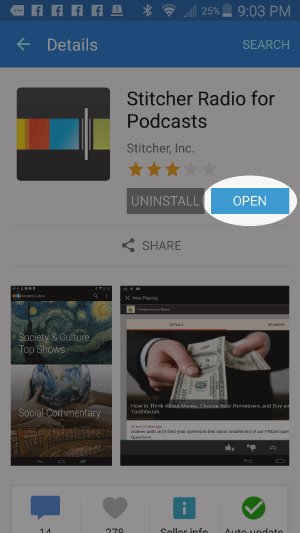
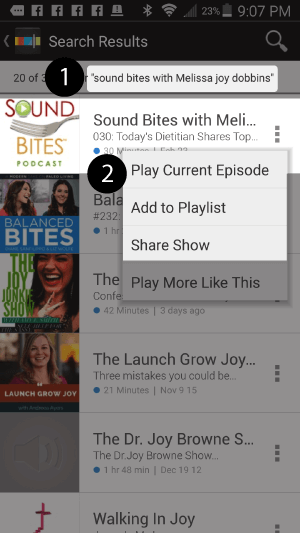
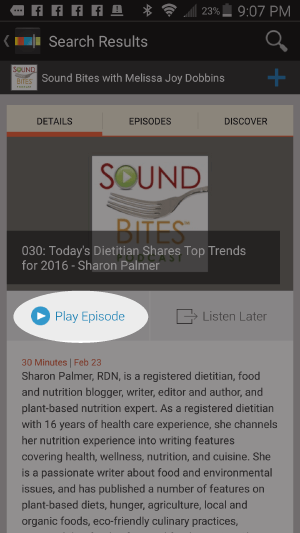
Listen on Stitcher (Android)
Install the Stitcher App
1. Search for “sound bites with melissa joy dobbins” 2. Choose Play Current Episode or Add to Playlist
Choose “Play Episode”
Subscribe & Review on iPhone
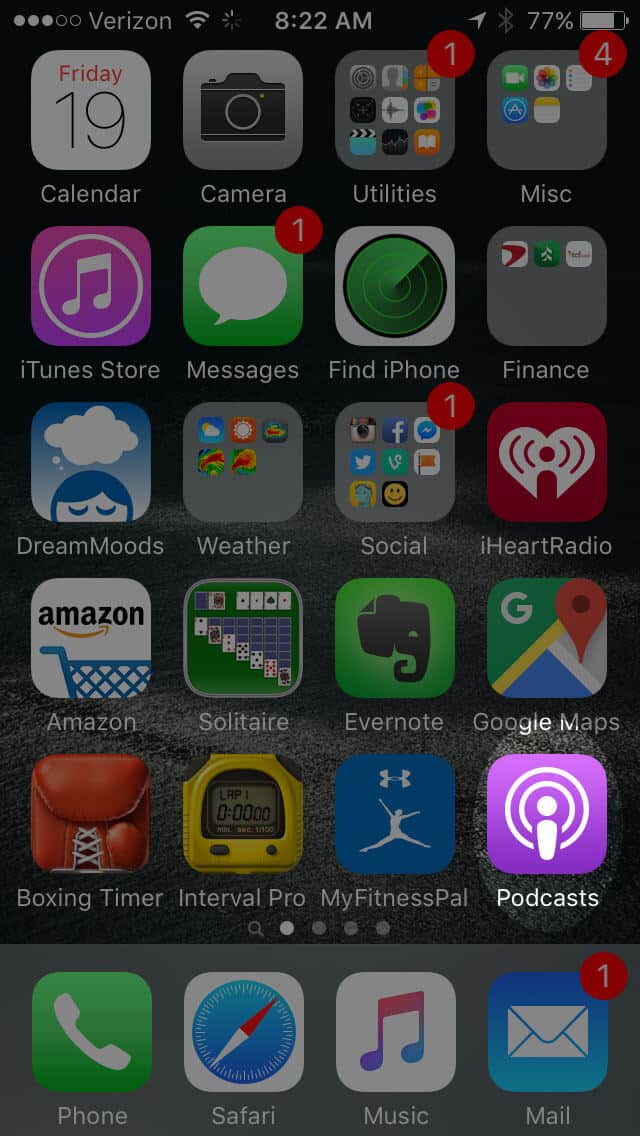
Open the “Podcast” app on your iPhone
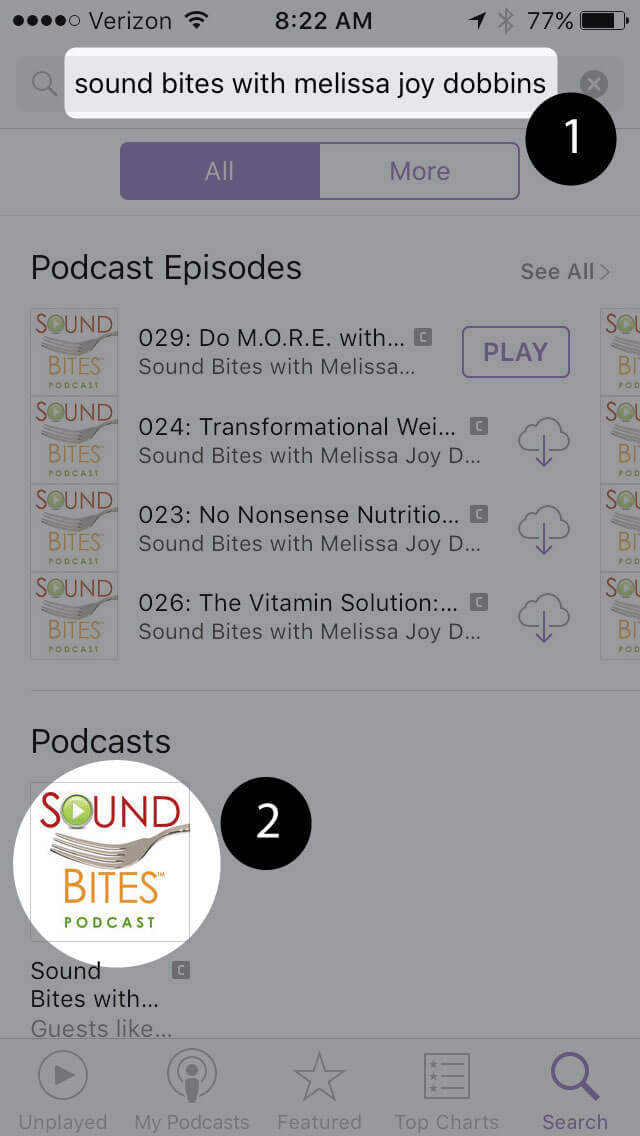
Search for “Sound bites with melissa joy dobbins”
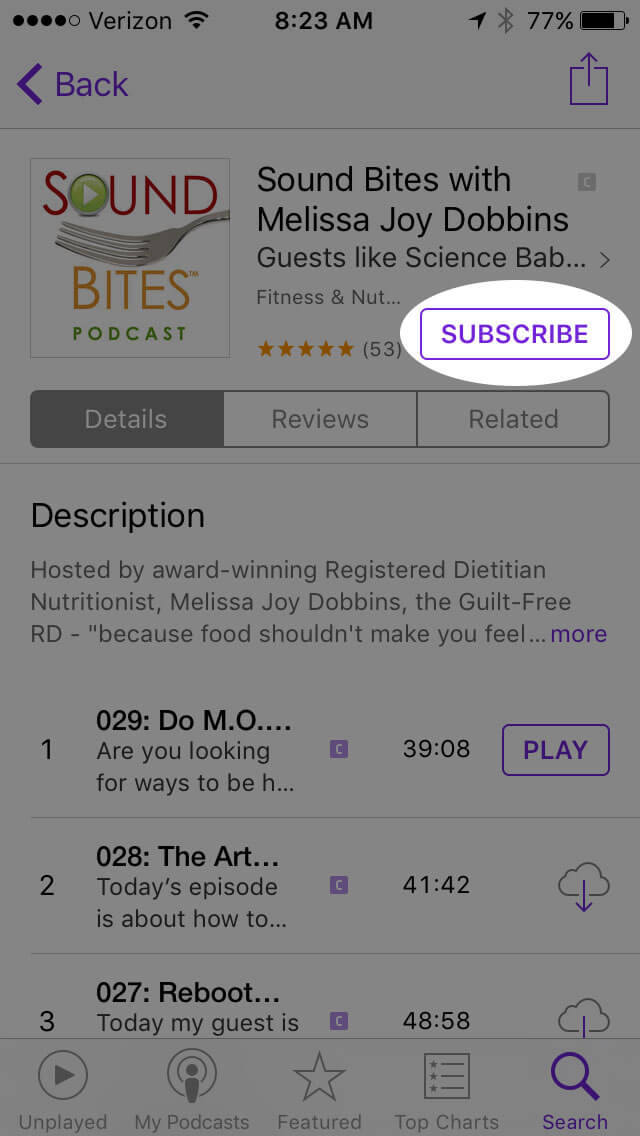
Open the podcast and click “Subscribe” and your done!
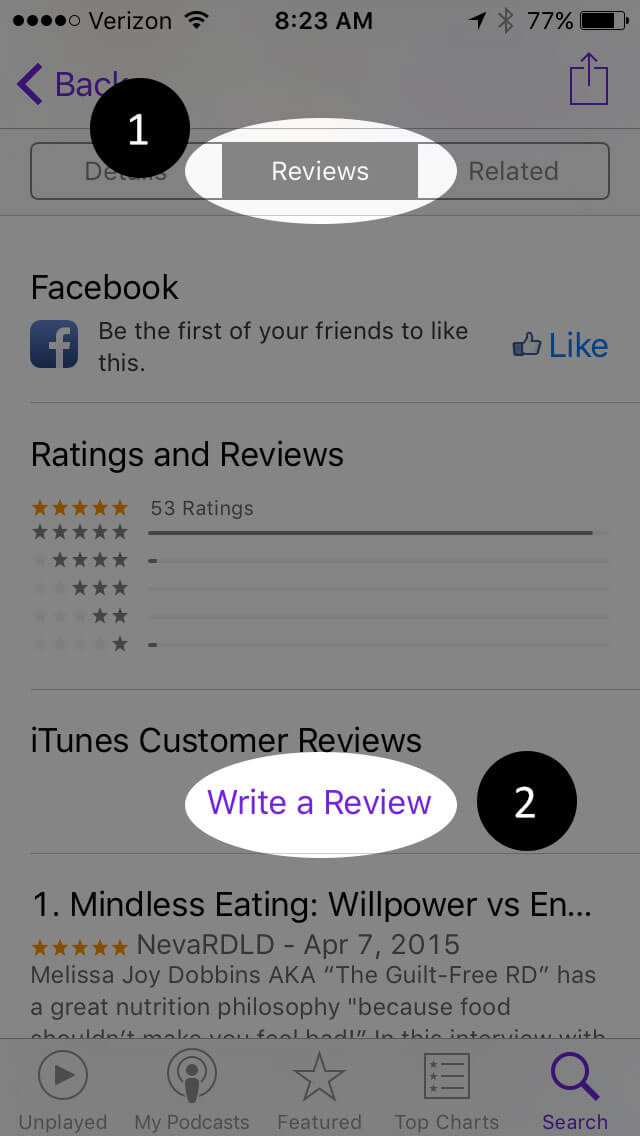
Write a Review
Click “Reviews”, then “Write a Review”.
Subscribe via RSS Feed
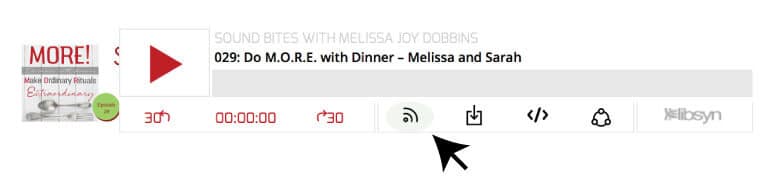
Navigate to any podcast player . Click on the RSS feed icon.
Click on the RSS feed icon.
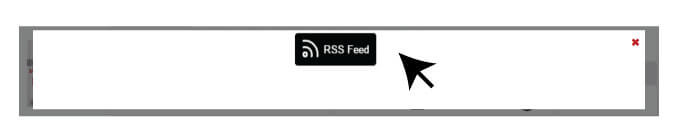
Click on RSS Feed
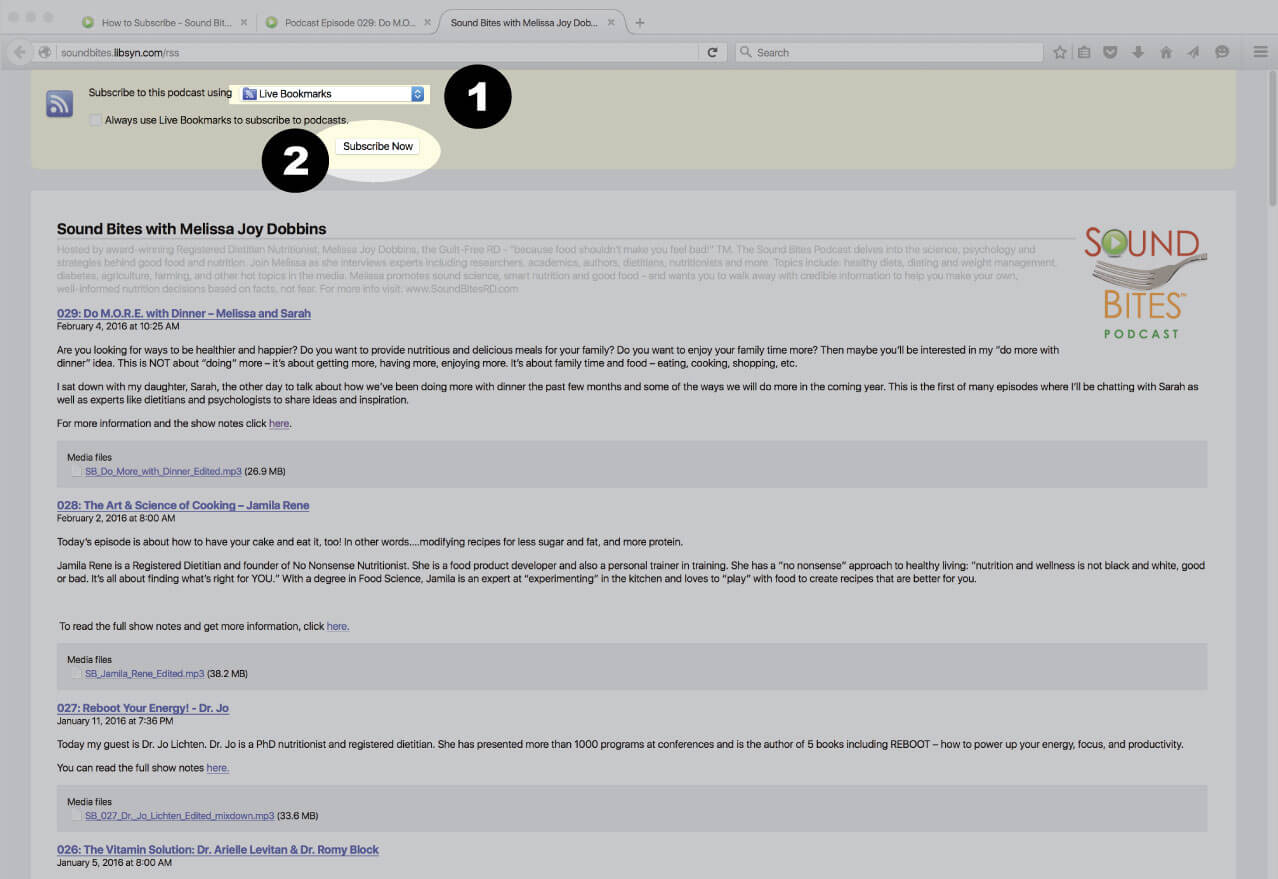
Choose which application you would like to use to receive the RSS feed
Click “Subscribe Now”
Confirm settings and subscribe.
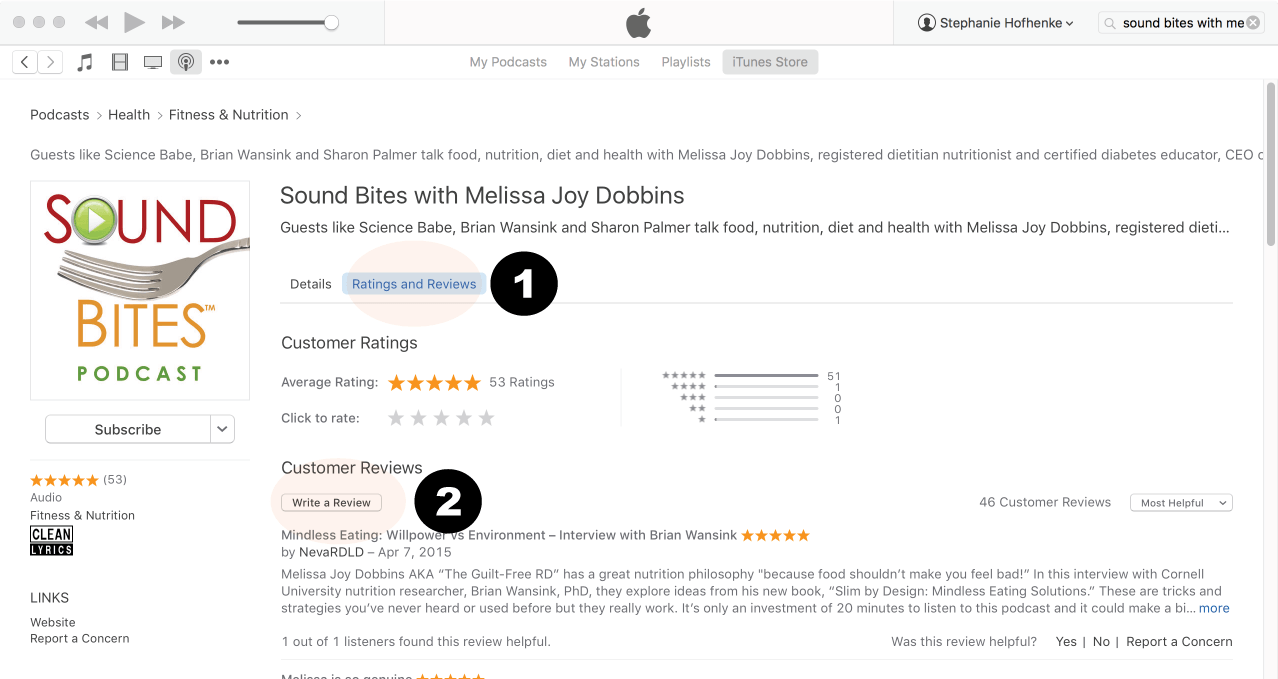
How to Review in iTunes
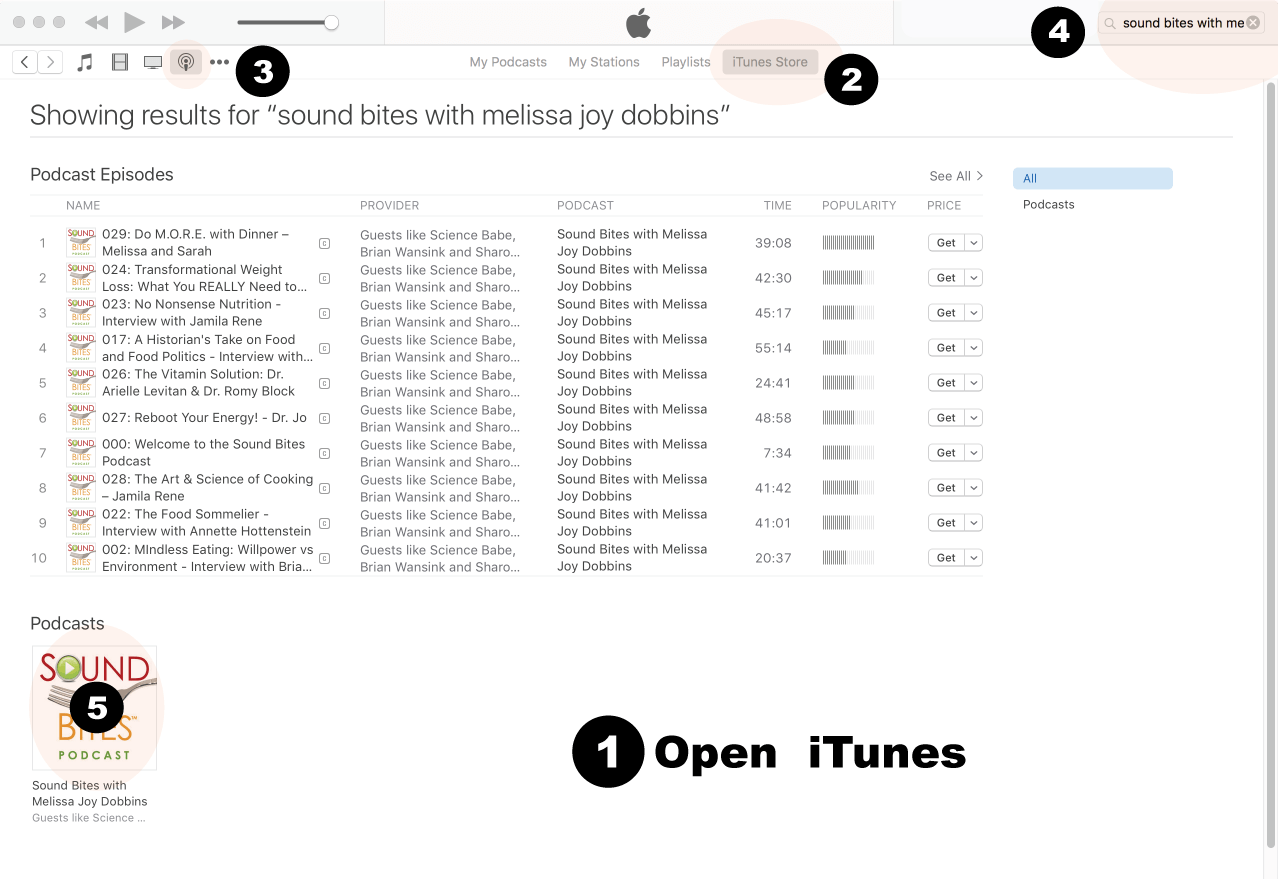
Open iTunes desktop application
Click iTunes Store
Click on Podcasts
Search for “Sound bites with Melissa Joy Dobbins”
Click on podcast image
Search for Sound Bites podcast in iTunes
Click Ratings & Reivews
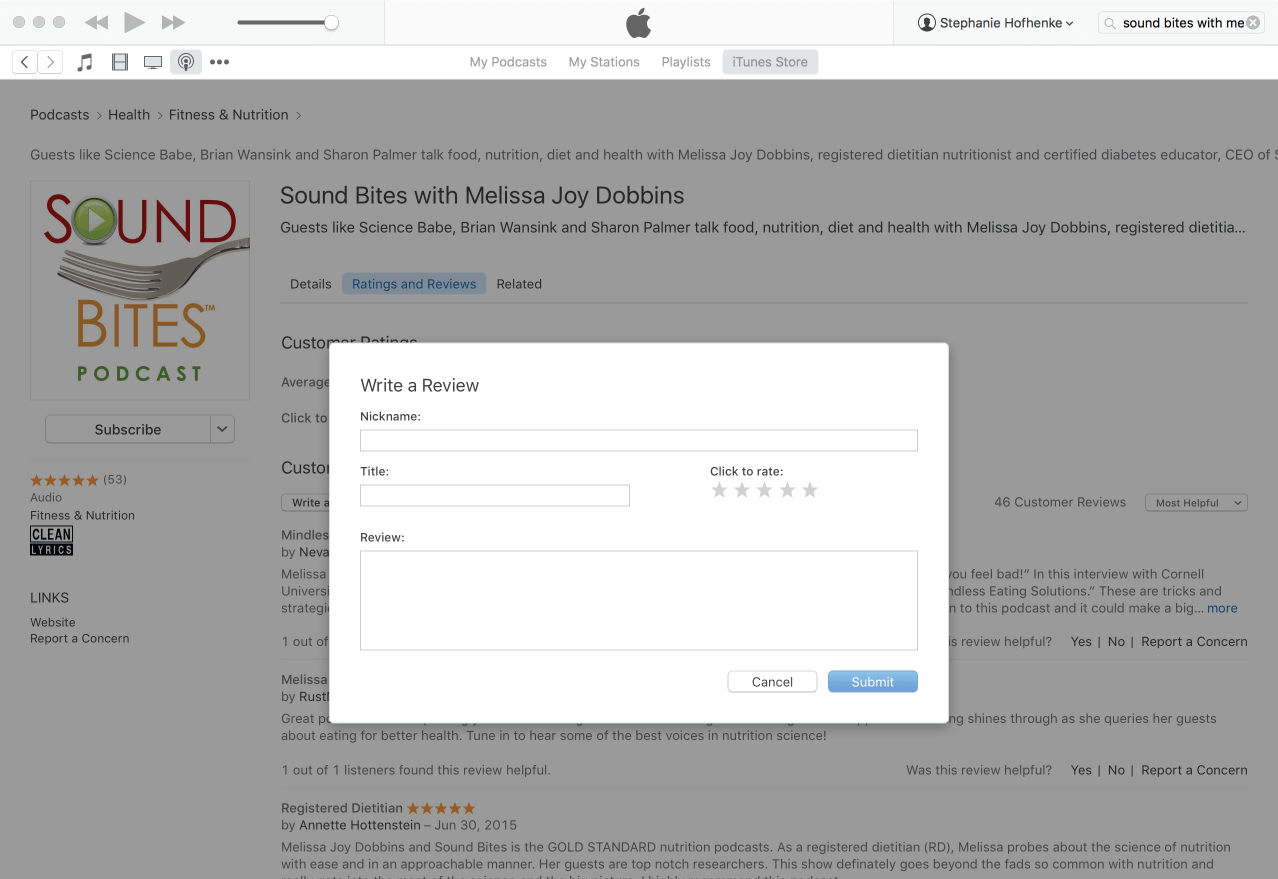
Click Write a Review
View reviews and write your own review.
Write your review…. Thank you!
Write your review!
How to subscribe via iTunes
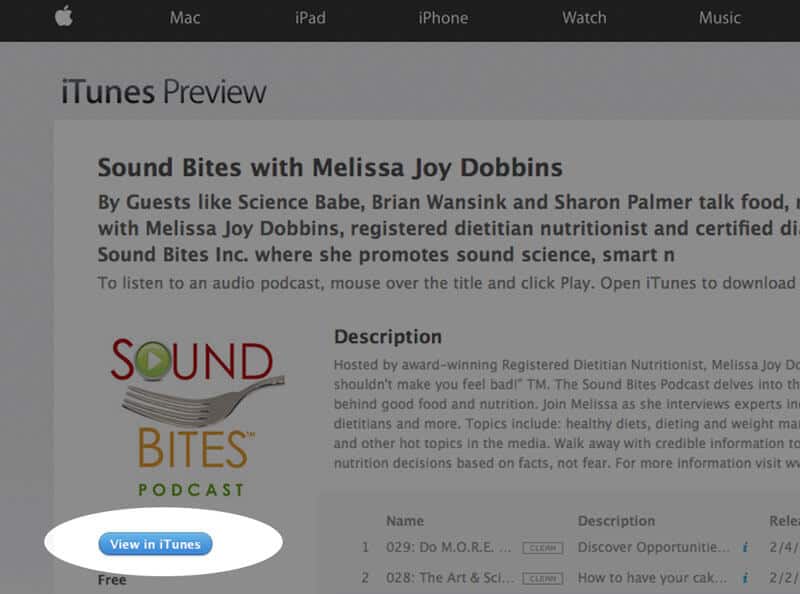
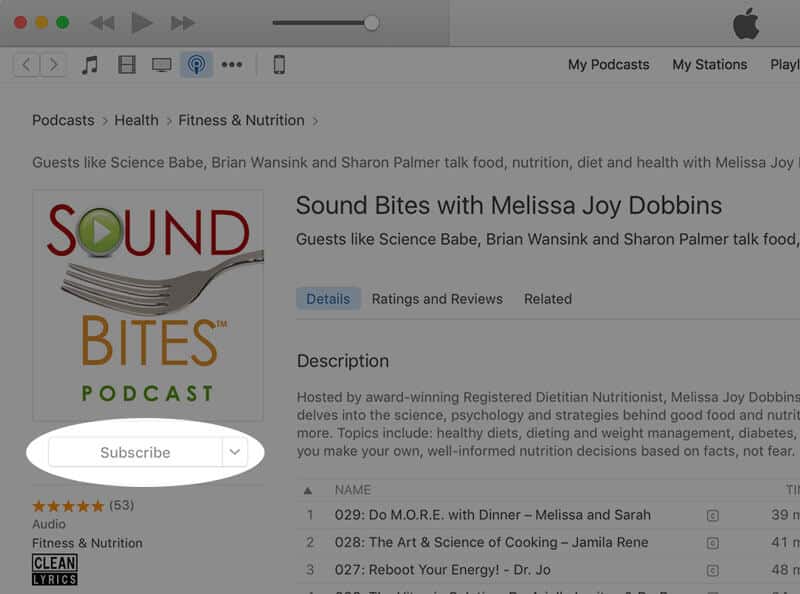
Click here to view the Sound Bites Podcastin iTunes, then click the blue “View in iTunes” button. This will open your iTunes application directly to Sound Bites Podcast. Click the “Subscribe” button, and your done!