Celebrating over 1 Million Downloads and 50,000 Free CEUs on the Sound Bites® Podcast | NEW: Get 1 years’ worth of CEUs with the new 15-CEU Podcast Course
This episode offers the opportunity to earn 3.0 free CEU credits as part of a 3-part series. Simply enjoy the 3 podcasts, complete the quiz and reflection, and download your CEU certificate. Get started here.
This 3-part series is sponsored by Danone North America. This series has been submitted to the Commission on Dietetic Registration for 3 hours of continuing professional education credits for RDNs, NDTRs and CDCESs.
Part 3 of 3: Zero Waste Cooking & Flexitarianism
Reducing food waste has multiple benefits: you’ll stretch your food budget to save money, time, and potentially even boost your nutrition, all while supporting a healthy planet. You’ll likely become more creative in the kitchen too, thinking up new ways to use different ingredients or scraps.” – Rosanne Rust
The USDA estimates that over 133 billion pounds of food is lost every year because it’s either lost in the field, during processing, during delivery, in restaurants, or at home. It’s estimated that the average US household wastes $1800 per year in food waste, with bread products, dairy and produce being the most likely foods to go to waste. Food waste impacts our climate and our environment because when you throw food into the trash, it ends up in your municipal landfill. Food is the largest single category of trash in landfills, and landfills are the third largest source of human related methane emissions in the US.
This 3-part podcast series discusses the benefits of flexitarian eating and its intersection with promoting a healthier relationship with food and planetary health through sustainable zero waste cooking efforts.
It’s unfortunate that so many foods like dairy products go to waste. For most people, it often comes down to not knowing different ways to use them. For instance, yogurt is so versatile – there’s at least 10 different ways I use yogurt on a weekly basis. Learning new tips and getting creative in the kitchen can go a long way in preventing food waste.” – Amanda Blechman
Tune into this third episode in the series to learn about:
where food waste happens and how it impacts the environment
how reducing food waste saves time and money
how flexitarianism provides opportunities to reduce food waste
strategies to reduce food waste at home
food planning vs. meal planning
flexitarian fridge clean-out meal ideas
repurposing ingredients and recipes to reduce food waste
A flexitarian eating style can help reduce food waste because you have more flexibility to eat and enjoy all types of foods, so there is less food waste than if someone was on a more rigid eating plan. Since there are no good or bad foods or specialty ingredients/recipes, it’s easy to use up the food in the house in a variety of creative ways.” – DJ Blatner
Rosanne Rust MS, RDN
Rosanne is an internationally recognized nutrition expert and author, blogger, and fact finder. Owner of Rust Nutrition Services, she provides a variety of nutrition communication services to the food industry and science-based organizations. She offers freelance communications work via her Chew the Facts® brand, crafting food and nutrition content for consumers that help them turn confusion into clarity, and mistrust into confidence. Words are her jam. To that end, she’s published several consumer books including the Zero Waste Cooking For Dummies® and the 2nd edition of DASH Diet For Dummies®. She’s a contributing writer to Today’s Dietitian Magazine, and has written textbook chapters and more, including a chapter in Communicating Nutrition: The Authoritative Guide. Currently living in Venice, Florida, she received the 2021 Keystone Award from the Pennsylvania Academy of Nutrition, for her career achievements during her 30 years working in Pennsylvania. Find her on TikTok, Instagram and Twitter @chewthefacts or visit her website at www.rustnutrition.com.
Dawn Jackson “DJ” Blatner RDN, CSSD
Dawn Jackson “DJ” Blatner is a registered dietitian nutritionist and certified specialist in sports dietetics. She also has a Certificate of Training in Integrative and Functional Nutrition. She is the author of two books: The Flexitarian Diet, ranked a top plant-based diet by US News & World Report, and her second book, The Superfood Swap.
She is a trusted expert appearing regularly in local and national media outlets such as The Today Show and Good Morning America. She won the primetime reality TV show on ABC called, My Diet Is Better Than Yours. Dawn worked as the head dietitian for the Chicago Cubs for 10 years, hosted an Emmy-nominated TV show in Chicago for 3 seasons, and won the 2021 Media Excellence Award from the Academy of Nutrition & Dietetics.
She owns a nutrition consulting & communications business with a focus on real food & more fun. She lives in Chicago and has a healthy obsession with jumping rope. You can find her online at djblatner.com and on Instagram @djblatner.
Amanda Blechman, RDN, CDN
Amanda is a registered dietitian nutritionist and Director of Health & Scientific Affairs at Danone North America. Since joining Danone North America in January 2013, Amanda has led a broad array of activities in several evolving nutrition spaces including flexitarian eating patterns, pediatric nutrition and organic dairy. In her role, she supports leading yogurt brands including Oikos, Light + Fit, and Two Good, pediatric brands including Happy Family Organics and Aptamil, and more. She’s a regular media contributor, providing expert commentary and credible nutrition content to journalists. As a mom of two young children, Amanda loves to combine her passions of food and family in her work. She is also a creative cook and recipe developer, and in her free time she enjoys sharing helpful tips on social media to make family meals less daunting for parents and caregivers. Visit her Instagram @amandablechman.
Rust, Rosanne. Zero Waste Cooking for Dummies. John Wiley & Sons, Inc., 2022.
Blatner DJ. The Flexitarian Diet: The Mostly Vegetarian Way to Lose Weight, Be Healthier, Prevent Disease, and Add Years to Your Life. New York: McGraw Hill, 2008.
Eshel G, Shepon A, Makov T, Milo R. Environmental costs of animal-based categories. Proceedings of the National Academy of Sciences of the United States of America. 2014;111(33);11996-12001. [online] Available at: https://www.pnas.org/content/111/33/11996 [Accessed April 21, 2020].
Gustavsson , Jenny, et al. “Global Food Losses and Food Waste: Extent, Causes and Prevention.” FAO, Food and Agriculture Organization of the United Nations, https://www.fao.org/3/i2697e/i2697e.pdf. [Accessed September 2, 2022].
[00:00:00] VO: Welcome to Sound Bites, hosted by registered dietitian nutritionist, Melissa Joy Dobbins. Let’s delve into the science, the psychology, and the strategies behind good food and nutrition.
[00:00:23] Melissa: Hello and welcome to the Sound Bites Podcast. This is the third episode in a three-part series on the Flexitarian Diet and how it intersects with a healthy relationship with food and planetary health through zero waste cooking efforts and more. Throughout this series, I have interviewed several distinguished registered dietitians, and I wanna thank Danone North America for their support and sponsorship of this three-part education and C E U approved series.
We are submitting this series to the commission on dietetic registration for three hours of continuing education credits. For registered dietitian nutritionists, dietetic technicians, registered and certified diabetes care and education specialists, and one of those CEUs can count towards your ethics c e u.
For more information and resources, you can check out my website at soundbitesrd.com, and there’s also information at danonereferralpad.com. But in today’s episode, we will be discussing how Flexitarianism can save money and reduce food waste. We will identify where food waste happens and how it impacts the environment, communicate specific flexitarian benefits of sustainability, and discuss how it provides opportunities for reducing food waste.
And we will discuss opportunities for reducing food waste by following a flexitarian lifestyle and strategies to help reduce food waste especially at home. My first guest is Amanda Blechman, a registered dietitian and the Director of Scientific Affairs with today’s sponsor, Danone North America. Our second guest is Rosanne Rust, an internationally recognized nutrition expert and author her most recent published book
Zero Waste Cooking for Dummies helps everyday consumers do more with the food they have, waste less, save money, and eat well. And our third guest is Dawn Jackson Blatner, or DJ Blatner, a nationally recognized Flexitarian expert and author of the Flexitarian Diet and The Superfood Swap. Welcome to the show, Rosanne, and welcome back Amanda and DJ.
[00:02:34] Dawn: Hey, thanks for having us.
[00:02:35] Rosanne: Yes, thank you.
[00:02:37] Melissa: Glad to have the two of you back. And Rosanne welcome back to you too cuz you were on the podcast back in episode 14. Crazy way back in the beginning. Can you imagine? Can you believe it?
[00:02:50] Rosanne: Yeah, I was your Guinea pig. Yeah.
[00:02:52] Melissa: Yeah. I reached out to my really close friends and I was like, you wanna do this with me?
Cause I’m not really sure what I’m doing. And would love to highlight all the great work you’re doing. And we talked about your DASH diet book, your dash diet for dummies. And I the best kept diet secret, if anybody wants to tune into that. I’m sure the audio is not phenomenal, but I’m sure the conversation is still relevant today.
So Amanda, we’ve gotten to know you a little bit over the past two episodes, but for those who might just be joining in now and listening to episode three in this series before the other two, I would love for you to just share a little bit more about your background and the work you do at Danone.
[00:03:30] Amanda: Of course. Thank you so much, Melissa. I’m so excited to be back. These past two episodes have been a dream and I’m so excited to be here for number three. So a bit about me. I started my career as a clinical dietitian in New York City and then over to this industry role with Danone North America, where I’ve now been almost 10 years.
I’m really proud to be a dietitian at a company whose mission is to bring health through food, to as many people as possible. I’m really proud to be part of a small but mighty group of us who are. At the table in the food industry, making sure that nutrition has a voice and true nutrition expertise of registered dietitians is reflected.
So you know a bit about Danone, Danone North America is one of the largest certified B corporations in the world, and we’re part of this growing movement at B Corp that really strives to use business as a force of good. So what does that mean? We have to have a positive impact on the planet and people, and we do this by really supporting a variety of different eating patterns and different products that we know will fit
all different needs and preferences because we are for sure certain that one size is up at all. And so today we’re just so thrilled to partner with DJ and Rosanne. There’s really a ton of interest in plant-based foods and it’s growing more and more. So consumers are looking to incorporate more plants in their diets, but not everyone wants to cut out animal foods entirely there can also be some waste elements of that as well. If we’re cutting out food groups. So Flexitarian, the whole point is that it’s flexible and I’m not gonna steal DJ’s thunder, but it really focuses on incorporating plants. So adding plants, but allowing for the flexibility to incorporate some animal foods like nutrient-rich dairy.
So it’s flexible, it’s easy to follow, and not only can it have health benefits, that DJ, the Flexitarian expert is gonna take us through, but also can have some benefits for food waste as well. So at our company, we’re committed to addressing food waste and we start that with how can we reduce waste within our operations?
But we know that it’s really important to look beyond what we can do as a company, we know that our impact doesn’t just stop at our factory doors. And we are trying to help people, trying to help dietitians and consumers really learn more about how they can help reduce food waste at home. And that is where our new guest today, Rosanne comes in.
I channel her all the time in my kitchen at home, and she really does an amazing job of just simplifying so many steps that we can use at home to take action and really help reduce food waste.
[00:06:14] Melissa: Absolutely. Thanks Amanda. Yes. So Rosanne, like I said, it’s been a while since you’ve been on the podcast, but welcome to the show.
Why don’t you share a little bit about your background with our listeners?
[00:06:26] Rosanne: Sure. As I think you might have mentioned, I’ve authored a few books. I am a nutrition communicator, so I do most of my communications through the written word. Words are my jam. But I’m also a speaker and I do a lot of social media, but my goal from way back has always been to make nutrition doable for everyone.
So I really took a look at this food waste topic, and I wanted to bring reducing food waste to everybody’s kitchen. Whether they are looking for a plant forward diet or a plant-based diet, they don’t have to be vegetarian. Just like Flexitarian diet lifestyle incorporates that bit of animal product. I wanted to have some messages for people who may not wanna be a vegetarian, but still can reduce food waste in their household.
So reducing food waste is for everyone, no matter what they eat. Absolutely.
[00:07:22] Melissa: I’m so glad you wrote this book too, because it’s such a hot topic right now and I think it’s fairly recently that we started connecting the dots between food waste and the environment. So let’s start off by having you share with us how big is the food waste issue, the problem in the US.
[00:07:42] Rosanne: For sure. It’s it’s pretty huge. It’s almost hard to wrap your head around, but the United States wastes an estimated 30 to 40% of our food supply. Wow, that’s a lot over a third. And the U S D A estimates that over 133 billion with a b pounds of food is lost every year. And that’s through the entire chain. It maybe is never delivered.
It’s thrown away. It’s lost in the field or during process or delivery at restaurants and at home. So today we’re gonna focus on what we can do at home, but it’s a really important problem that I think we have a role in solving, because I think it’s important to note that 10% of Americans are food insecure.
So we have this situation where we’re literally throwing food into the garbage, but we have hungry people who are undernourished.
[00:08:39] Melissa: Absolutely. Okay. So let’s talk about this connection with food waste in the environment. How. Exactly. Does food waste impact the environment?
[00:08:48] Rosanne: A couple of ways.
So when we throw away food at home, it goes into the garbage can that we put by the street, and that goes to your municipal landfill. And food waste in your local landfill is the number one category in that landfill. And as it sits there, it rots. And when it rots, it produces methane gas.
So while some may argue that methane isn’t as volatile of a greenhouse gas as co2, that’s part of the big picture too, because the production of food also emits some of that co2. So when you’re throwing away food, it’s going to your landfill. The food is directly producing methane. But the whole process, you’re also throwing all of the production in the garbage with it.
[00:09:41] Melissa: So you, we’ve used all this energy to produce it right. And then it didn’t get eaten. So that’s a waste in that sense as well. Exactly. Okay. So as I said earlier, I think people are just starting to connect these dots more, but it’s still a fairly new issue and a very hot topic these days.
I’m wondering, cuz I’ve heard some statistics, but since you’re the expert, how much of food waste is at the consumer level versus during production at retail and so on?
[00:10:09] Rosanne: It’s estimated that the average household throws away $1,800 worth of food a year. So I think that’s pretty significant. That is, and research shows that consumer’s food budget is at the top of the list for their concerns.
I think saving money is one way we can help consumers pay attention to the food they’re wasting.
[00:10:31] Amanda: That’s a really fantastic question and I saw a report over the past couple years that really shocked me. So it was, the EPAs report came out in November, 2020 about wasted food and it estimated that starting in 2018, but we can probably extrapolate to years following that food and beverage manufacturing and processing
tops the list of food waste at nearly 39% of all the food waste. But number two is consumer and residential food waste. That’s 24% of it. And it just highlights to me exactly what I was saying before, which is we all have a role to play. The food industry has a role to play. Danone North America is trying to lead the way with what we do with our practices and help inspire other companies.
But also we all have a job to do at home. And that’s another thing we were really committed to doing, helping people figure out how they can play a role. But it really was so staggering to me to see that those are the top two big contributors to the waste.
[00:11:31] Melissa: Yes, thank you. Yeah, I knew that I had heard the consumer portion was quite large, but I appreciate those numbers and like you said, it’s not pointing fingers, it’s not, it’s your problem.
We all want to do something and feel like we’re contributing and feel like we are part of the solution. And so I’m really glad we’re having this conversation today. When I was a supermarket dietitian, I did a lot of media interviews and store tours talking about eating healthy on a budget.
Because as DJ mentioned in one of the previous episodes people are like, doesn’t it cost a lot of money to eat healthy? And wanted to bust those myths or that misinformation. And one of the big points that I would tell people was a great way that you can save money and prevent throwing your cash in the trash is by watching the food waste.
And even though I hadn’t made the environmental connection way back then that is a very big motivator. To your point, Rosanne. So you mentioned that the average household wastes about $1,800 per year, throwing that cash in the trash. Can you say more about how we can save money by reducing food waste?
[00:12:39] Rosanne: Absolutely. I love that. Cash in the trash. We’re gonna have to hashtag that, use it. Don’t throw your cash in the trash. So how can someone save money by reducing their food waste? We’re gonna talk about some of these strategies and it really is gonna begin with having a plan. And looking at how you shop, the types of foods that you’re buying, how you store them, and all of these little behaviors over time are going to ultimately reduce your food waste.
So it’s a kind of, you take it little steps by step and it’s pretty painless. And then you’ll end up spending less money on food overall because you’re not throwing it away. It’s gonna go farther for you.
[00:13:20] Melissa: Awesome. So what types of food have you seen are most likely to go to waste that we’re throwing out?
I did a food waste challenge once, so I have my own experience. It was actually, it’s interesting if you ever wanna try this and you’re listening, it’s like when you’re throwing something out cuz it went bad, take a picture of it in the trash and then you’ll start to be more aware of what are you throwing away and figuring out why.
[00:13:42] Amanda: What a good idea. I love it.
[00:13:45] Rosanne: Yeah. And it is that stop and think moment. You have to be aware that you’re throwing this food away, but the top foods are cereal products, fruits and vegetables and dairy. According to the food and agriculture organization of the un, the f a o, cereals, fruits and vegetables, and dairy comes in third.
So in that order globally, those are the most wasted. Food and cereals would include what we think of a cereal and that any grain product like breads and that kind of thing. Okay. Fruits and vegetables. Of course, fresh fruits and vegetables are more perishable, right than canned or frozen. I just did a couple of short videos about throwing lettuce away because everyone has had a slimy bag of lettuce or spinach in the refrigerator at one time.
Things get shoved to the back. I am much better at taking inventory and keeping my refrigerator clean and not stuffed. Since I’ve written this book, since I did the research and wrote the book. Because if you can’t see it, bad things are happening to it in the back of the drawer.
[00:14:53] Melissa: I have another little sound bite for you.
Then it gets forgotten and it goes rotten.
[00:14:59] Rosanne: Yeah,
[00:15:00] Amanda: I love that. All about the rhyming today. I love, it’s true though. I’ve definitely pulled out a couple of smushed and slimy lettuce bags. You can’t even see them. They got some tiny in the back of the drawer. I work really hard too Rosanne at trying to make sure that I take stuff of what I have.
But those numbers, it makes me so sad. Bread products, produce and dairy, like that’s a balanced meal right there. And it’s so unfortunate because so many of these foods are very versatile. And sometimes it comes down to just people not knowing how many different ways you can use them.
One thing I always say to a lot of my friends who are introducing foods to their babies, introducing solids and different textures . When in doubt put it on toast. A dietitian friend said it to me. I was like, that’s amazing. And now I live on that. But also yogurt, I talk about this a lot, but it is a staple in my fridge.
It’s so hugely versatile. I can think of at least 10 ways that I use yogurt on a daily basis. If I had to guess, I would say if I went to like your average person and said, how many ways can you use yogurt? They’d probably have two, maybe three ways that they use it. And it’s not just yogurt. They’re right.
Like fruits, veggies,bread products all of it. There’s so many different things you can do, and part of that is educating ourselves on really creative ways to use things in your kitchen. We can really go a long way in preventing that food waste.
[00:16:19] Dawn: And I gotta just jump on that because when it comes to flexitarian, that’s where I think the real gold is.
It’s that versatility, it’s that flexibility of learning how to use these products and being able to include them in your lifestyle in so many different ways. That helps with this whole food waste conversation.
[00:16:37] Rosanne: Yeah, absolutely. Put it, on a pizza.
[00:16:40] Melissa: That’s another one of my a flatbread put it on toast, on a pizza.
Yeah. I love that. I hadn’t thought of that. And I know we are gonna get into some really specific examples and I feel like sometimes it’s just finding that one go-to, like that one fallback that mixing it in a frittata or something that’s oh, I don’t have to be ultra creative if that’s not my jam.
Sort of so to speak. I also think that food expiration dates are really confusing to people. And Rosanne, I know your book addresses this, and I’ve talked about it on the podcast before, but I was wondering if you could just briefly mention or comment on that before we move on.
[00:17:18] Rosanne: Yeah. Best Buy dates sell by dates that are marked on packages.
And this has been in the news a lot lately because there’s been discussion about what is the impact that these dates have. There’s a lot of consumer misperception about what a Best Buy date means. So we see that, let’s say a can of soup or a can of beans or a loaf of bread. Those dates are quality measures.
So those dates are about when the best quality of the food is, when does the quality maybe possibly start to degrade? It has nothing to do with food safety. So I think a lot of foods are thrown away by consumers because they think this was best. July and it’s not good anymore. It’s not safe. and it is not a safety indicator.
It is a quality indicator. So that’s really important to continue to try to educate people about that
[00:18:20] Melissa: fact.
And this is a little beyond the scope of our conversation today, but there are other ways to look at the safety aspect. But these Best Buy dates, which I think they’re becoming or they’re doing a better job of using one term instead of 10 different terms.
But those refer to the quality.
[00:18:35] Rosanne: Yeah. Best if used before. Yeah. There’s a lot of different terms and many of them, there’s no clear regulation for them. A lot of times they’re just inventory dates for the grocer.
[00:18:47] Melissa: Thank you for that little side note. I just wanted to address that cause I know it’s confusing.
[00:18:51] Rosanne: As far as food safety and using foods past a Best Buy date goes, people should be aware of some of the top signs to look for, to determine if a food is spoiled. This might be a foul odor or maybe some mold growth. There might be a change in texture, it may be slimy, or the color might look a little off. Then you wanna pitch it.
[00:19:14] Melissa: So thank you for that. So as I know we’re gonna talk about some specific ideas, but before that, let’s talk about the many benefits of decreasing food waste.
[00:19:24] Rosanne: Absolutely. We talked about money, so you’re definitely going to stretch your food budget and save money. And once you implement some of the strategies that DJ and I are gonna talk about, you’re ultimately gonna save time as well.
That’s awesome. And I feel that there’s a lot of potential to improve nutrition. And improve your overall diet quality. Once you start becoming more mindful of the foods you’re throwing away, and then more creative. In terms of prevention and how am I going to use, we mentioned fruits and vegetables and dairy being the top three food groups wasted.
So how am I going to include those nutritious foods and actually consume them, right? Because in addition to money and the environment, environmental impact, when you throw food away, you’re also throwing nutrition away, right? You’re throwing nutrients away. I feel as you become more creative in the kitchen, you’re actually probably gonna improve your nutrition too, which is an awesome bonus.
[00:20:28] Melissa: I love it. I agree. Okay, so DJ, let’s turn to how the flexitarian eating style is connected with sustainability.
[00:20:37] Dawn: Yeah. When I go around talking about becoming more of a flexitarian oftentimes people associate that with your own physical health but it really does impact the environment, what we are choosing to eat.
Because Flexitarians eat more and buy more plant and plant-based proteins. It tends to be less taxing on the environment than a heavy meat oriented diet. And so when I recently was looking at some stats here I found in 2019 there was a journal of nutrients calculated, specifically looking at a flexitarian style eating versus a very meat centric diet.
And the water and the cropland usage in this calculation of the study, very similar but where there was a big difference about three times less greenhouse gas emissions to a Flexitarian diet. I think that’s great even when I hear like greenhouse gas emissions, I’m like what is that really meaning?
And so what I tend to talk about more than the statistics of a flexitarian diet on the sustainability and the environment is really just like the basics of it helps reduce food waste when you are a flexitarian because
You are flexible enough to eat
all the things, right? Is that I’m not on some sort of strict plan where, oh my gosh, I can’t eat that and I will let it go to waste.
It’s oh man, I’ll flexitarian baby. Bring it over. Bring it on. I can eat that. And I think that is so incredible when you think about I as a Flexitarian can eat all the protein sources. I can eat all the foods, and so therefore I have less food waste. And it’s really like that good relationship with food.
That you can eat all the things. You don’t need to have specialty ingredients or special recipes. Everything counts, everything can be used in that house.
[00:22:33] Melissa: Yeah. I love how your emphasis is on the flexibility is what’s helping reduce the food waste. But is there anything else about Flexitarian eating that helps prevent food waste specifically?
[00:22:45] Dawn: You know what? Here’s what I’ll tell you that there are, when I look at a flexitarian sort of staples that I’m always telling people about and I was like, oh my gosh, a lot of these flexitarian staples tend to really help reduce food waste because they can last a long time. So for example, I say, oh my gosh, frozen spinach.
Just a great way to always have plants on hand and adding more in there. And because it’s frozen it’s not winding up in that back of the fridge and in the slimy bag that we were talking about before. Or same kind of thing goes for frozen fruits, or I’m encouraging people to have frozen edamame in their freezer.
Tofu is another one of those things. It doesn’t last forever in your fridge, but yes, you can cut it before it’s date and keep that in the freezer for a long time. And actually I love tofu frozen even more than right out of the fridge because when you freeze tofu, it creates almost like ice crystals and a toughening of the texture.
So I love that. Nuts and seeds can be frozen to extend their shelf life. Of course, Canned beans and lentils are a big staple in a flexitarian diet. And those are canned and have those long shelf lives even the frozen and shelf stable whole grains. So when you think about all of these things that I am talking about all the time for a flexitarian lifestyle, they’re great in terms of reducing the food waste.
But then when we look at the stat that Rosanne gave us about, yeah, I knew fruits and vegetables would be on there, but to think dairy is on this list, and as Rosanne said it’s throwing nutrition away. I always encourage Flexitarians to have either the plant-based yogurt
alternatives or the dairy yogurt in their fridge because there is so many things you can do with it. That’s why I’m glad Amanda’s here too, to talk about. We cannot let that go to waste because breakfast, lunch, dinner, snacks, dessert there’s so many ways you can use both dairy yogurt and the plant-based yogurt alternatives.
[00:24:47] Rosanne: Yes, absolutely. And I have to add did you mention frozen peas? Because I love some frozen peas in my freezer. Oh, I love that. But that whole idea of you have things in your freezer and when you go to this lower my food waste, when you’re on that mission, you’re gonna choose snacks from all of those great foods too.
So that’s another way that you’re improving your diet. But like Amanda mentioned earlier, she always has yogurt a hand. She thinks it’s super versatile. And I absolutely do as well. You can use it to create dips for sauces. We usually have two types in our fridge. I like a plain yogurt on hand because then I can use it in place of sour cream and I can use it in my
yogurt bowl in the morning with fruit and some seeds or nuts, and that’s also very good for your blood pressure. I also like to have other items we mentioned earlier you said put it on toast and I said, put it on a pizza. So yogurt falls into this category that I like to call food waste heroes.
Because you can whip up a snack dip with it, you can use it in a bowl, and other items like flat breads any kind of, whether it’s a pizza crust or a naan or a tortilla, you can use that as the platform for all of those bits and pieces of veggies that you might have for some of those frozen bits that might be in the freezer to make them into something delicious or even leftovers.
Because that’s another category. Not the top three, but people do throw their leftovers away. And you can make them into something new.
[00:26:26] Amanda: I call them new overs
[00:26:28] Rosanne: constantly. I call ’em leftover makeovers or planned overs planned overs. Oh, I love that. Planned overs, all the words.
[00:26:35] Amanda: Today, I definitely put leftovers as like a meal on my weekly meal plans for sure.
And I love this term, food waste heroes. I think that’s such a great concept because yes, we’re talking about foods that are versatile themselves, so they’re easy to use up. But another great point you just made is, They make it easier to use other foods up as well, right? So you’re not just not wasting them, but they’re helping you not waste your whole fridge. I just love that.
[00:27:02] Melissa: Yeah. The hero is saving the food.
[00:27:05] Rosanne: I give permission to like, enjoy nachos once a week as a food waste hero, cuz you could put all your extra leftover veggies on there and a dollup of yogurt, a little bit of cheese and it’s a healthy treat.
[00:27:18] Melissa: Rosanne, you mentioned like the flatbreads and the pizzas and it’s ironic.
DJ and Amanda know what I’m gonna say. What I use the plain Greek yogurt in my fridge for is making a pizza crust. And I’ve mentioned it on all three episodes. And I did talk to my colleague Jen Haugen, who created that recipe, and she has given me the permission to share the link in the show notes at soundbitesrd.com.
So it’s a very simple, it’s plain Greek yogurt, self rising flour, and I think it, it’s either baking soda or baking powder. You probably know, I can’t remember which one. But anyway, I’ll have the recipe in the show notes, and then you can make any kind of pizza on top of that you want.
[00:27:55] Amanda: That’s exciting.
The anticipation has been getting me.
[00:28:00] Melissa: Yeah, it’s so easy. It’s so easy. It’s so good. So DJ, what strategies can you share with us about whole flexitarian reducing food waste concept? I know you’ve got some specifics.
[00:28:12] Dawn: Yes. And I know that Rosanne, you have a very similar mantra to this, but I basically think in three sort of buckets, buy Smart Store it right, use it all. It’s like always in my head. And when you take those apart, it’s like buying smart. That’s where it all starts, right? It’s if I’m just going to the store and I’m buying just a bunch of stuff and I have no plan for it likely it’s going to go to waste. So having a plan for it I think is great.
And then as we talked about do we have those food waste heroes in our basket? Those ingredients that have multiple uses, multiple recipes that help us use other foods. So buying smart is where it all starts. Storing it, right? This is like a big deal. And it’s not just about do I have the proper container?
Yes, clear containers I think are great, but I think it’s even more about not just shoving it in the back. We talked about that before. In sight in mouth. If it’s somewhere deep inside that you cannot see in your fridge, it’s gonna go to waste. So storing it right. Being able to see it is really that first step.
And then using it all. We’ve talked already about some great ideas of the fridge, clean out, go-to meal ideas. And I have some of my own to share when we all are spitballing about what we use our leftovers for and our produce and our dairy before it goes bad, but having those go-to ideas to use it all – that fridge clean out attitude or Amanda said having it actually in your sort of meal strategy for the week that there is always a day that’s the whole family knows that it’s about fridge cleanout I think is key in terms of the strategies.
[00:29:56] Rosanne: I agree, and I’ve reflected on this whole idea of the fridge cleanout and I probably create a meal at least twice a week with fridge, clean out just literally looking at what I have and what I can make from it. But that food storage piece, it’s not just about seeing it, but it’s also about knowing where to put it, how to store it, whether it needs wrapped, whether it should stay in its original bag.
Dairy, for instance, should be in the coldest part of the refrigerator, and that could literally make the difference between a container of milk staying safe and good for maybe four days longer. The bottom part of the refrigerator is usually the coldest but appliances vary. But sometimes it’s important to just check your appliance manual and figure out where you should be storing dairy products.
But they should be in the coldest part of the fridge, not on the door. And while I do totally agree that you wanna keep things in sight, we often, as dietitians would make those recommendations put fruit on the counter so that if your children see it or if you see it, you’re going to be more likely to grab an apple as a snack.
But not all fruits should be put together. We often see images of a fruit bowl or a fruit basket that’s delivered with apples and bananas and kiwi fruit or whatever, all mixed together, apples and pears particularly emit a lot of ethylene. So they’re going to enhance and hasten the ripening of things like avocados or bananas.
So you don’t wanna put it all in one bowl. You wanna keep them separated even though they might be visible. And then the freezer DJ mentioned lots of things that she keeps in her freezer. But you could also freeze items. So you wanna have that buy smart, you wanna have a plan for everything you’re putting into your cart.
And that part of that plan could be, I’m gonna freeze this. Maybe berries are on sale and you freeze one and you eat one and you can even freeze shredded cheese and you can freeze milk as long as you put it in a proper container. You have to allow for the expansion. But we definitely wanna utilize our freezer.
[00:32:11] Melissa: Absolutely. Totally. My freezer is my best friend sometimes. Yeah. Although I’m getting better about, I’m really good about putting stuff in, but then getting it back out. And so one of the things that all of you have mentioned is having a one day a week where you pull together a meal based on leftovers.
I am very good about, okay, what’s in my freezer that could be a meal component or a meal inspiration. And I do have to say I do think it’s a trade off of like putting stuff in the CRISPR drawer where it is better preserved. But for me it’s better to have it out where I can see it. And I put things like, cheese, in the CRISPR drawer, because I always know I always know where it is and I can go get it, but I need to be reminded and see all those fresh produce.
So that works for me. So I do think it’s helpful to play around with what that works, but couldn’t agree more that the storage aspect is so underrated and not talked about enough. And I know we’re gonna have some great resources for people, but I think that’s something that the storage aspect and the creativity aspect I think is really challenging for a lot of people.
And I’m probably speaking for myself when it comes to that, even though I’m a food safety fanatic. And I have a lot of food science in our nutrition degree. I’ve taught food science classes, but it still can be challenging.
[00:33:29] Rosanne: Yeah. Can I mention one more thing about the freezer? Really quickly. I think that. Sometimes people have a negative perception of frozen food. Oh, if I put the bread in there, it’s not gonna taste the same, but it’s about wrapping it properly and we’re not talking put it in there for two years. Yeah, it could just hold you over for one more week.
Or three more days.
[00:33:50] Amanda: That’s such a good point. I do that all the time. You should actually see how much bread is in my freezer I make on Fridays. I’ll make a couple challas at the same time. Can’t eat all those in one weekend. So it saved me some time the next few weeks.
But one other thing you know that I wanna point out is not just saving ingredients or foods that you might not get to in the freezer, but taking your leftovers before they’re really old. If you think you’re not gonna get to them, because look we all have really great intentions, but there’s sometimes there’s just not enough meals in a week to get to all the leftovers and you could totally freeze those.
I like to freeze them in like little individual portions, especially like stuff that my kids love. There’s two things that they just are constantly, my daughter is constantly asking for and I’m not cooking it every week. So when I make it, I’ll make a really big batch. We’ll eat it for the week, but I’ll take the rest of it and I store it in little individual portions and that way I can pull one out anytime.
She’s Hey, I want lentils. And I’m like, where do you think I’m getting lentils from? Like the freezer mom. So it’s really, for me, it saves me time, which is also something that we had talked about a little bit at the beginning, making sure, reusing all this food, but also saving me time so I can just grab something outta the freezer and have dinner on the table for the family, like very quickly.
[00:35:07] Melissa: Yeah, absolutely. DJ, you had mentioned some flexitarian fridge clean out meal ideas. I would love to hear more about those.
[00:35:15] Dawn: Yeah. And I know they’ve been mentioned a little bit some of these, but I gotta go back to something Melissa you said, which I think is so critical, is that you really don’t have to have some sort of PhD in creativity to do this.
It’s this concept of my fridge cleanout are all very simple ideas. So I’m gonna run through a list of six, tend to be my go-to when I studied myself of what do I do the most with these leftovers? Here’s what I came up with, these six. And then I can go into each one a little bit more in detail and we can add to it.
So my first one that I’ve been calling the fridge cleanout Charcuterie.
We’ll talk about that. I also do a pasta, a nacho, grain bowl, frittata and smoothie. So those are like my base, like when I’m like, oh my gosh there’s leftovers or, oh my gosh. There’s something going bad, I turn to those six ideas and then I will play with it.
So for the charcuterie, it really is just like what we’ve said, giving leftovers a new life so that they don’t end up in the trash. Getting out a beautiful tray or platter and then putting everything that I didn’t eat for the past few days on there. And I gotta say, I am a huge condiment person.
I love dips. So give me any dairy or plant-based yogurt alternative and I can make you a dip. It could just be some fresh herbs I put in there that are about to go bad or I can make a sweet dip with a little bit of jam on there. But, Bottom line is you got a good dip on your board, you got a bunch of random leftovers and things you need to eat.
Put it on a pretty tray and it works great. So the fridge cleanout charcuterie is one of my all-time favorites. But then I love pasta, whole wheat pasta, bean based pasta for extra plant protein, and it tends to be, I can put any vegetable or protein in there similar to how Rosanne was saying, put it on a pizza.
It’s like I feel like toss it with some pasta and we’re in the same category here. Rosanne also mentioned nachos. That is for sure in my family a go-to. We call ’em super nachos and always have every sort of vegetable that’s slept over on them. Everything tastes great on nachos.
Put a
[00:37:28] Amanda: cape on and call them super nachos.
[00:37:31] Dawn: Exactly. There you go. Why not? And guacamole, salsa, I told you I’m, I love condiment, guacamole, salsa again with the yogurt as that sour cream swap, whether it’s dairy or plant-based yogurt, alternative. I think those are, it’s just delicious.
[00:37:46] Amanda: I love nachos. And DJ, we actually do a really similar one in my house, but I call them Tot-chos. Oh. And I always have at least a bag, one bag of frozen sweet potato tots in my freezer for that clean out meal. But we put it on top of the sweet potato tots instead of nachos, just for something a little different. Keep it fresh. That’s so delicious.
[00:38:08] Dawn: I wanna invite to that next tot-cho party.
[00:38:11] Amanda: Oh my gosh. You’re invited anytime.
[00:38:13] Dawn: That sounds delicious. I just love how fun. Even when we’re talking about we like smiling and giggling and laughing I think leftovers can have such a bad name or like fridge clean out day can have such a bad name.
But these are like delicious foods. I love a good grain bowl. I always will have brown rice or quinoa in my freezer, and so I can toss whatever kind of veggies or proteins that I have on hand that I need to use. And then again, because I’m a condiment queen give me pesto on there. Give me a sesame ginger dressing.
Give me a yogurt ranch dressing on there. I think Melissa, you mentioned frittatas and I gotta say they’re not just for breakfast. I love a good frittata at dinnertime with side of baked fries or maybe those sweet potato tots that you were talking about, Amanda and a side salad. I think it’s great.
And then smoothies. I think a lot of people know that they’re a great place you can use a lot of fruits and a lot of vegetables. I like ’em in particular because smoothies are like the ultimate flex meal because you can use dairy milk or you can use a plant-based beverage. I have both in my fridge, so depending on the day and which one I need to use, I can switch that up with the smoothie.
[00:39:18] Amanda: Totally. And that’s another great way to use up, like a lot of the stuff that you’ve shoved into the freezer, it’s so easy to use stuff that’s already frozen. The summer I was growing a ton of stuff outside and for some reason every cucumber grew at the same exact time and I didn’t know what to do with it.
But a quick Google search told me that I can actually freeze a cucumber. So I cut them into smaller portions and now I pull out a cube or two along with other fruits and vegetables to go in my smoothies. And I was I didn’t wanna waste them. They were my little babies that I grew and they’re who can eat 20 cucumbers at one time?
Not me. I don’t know about you guys.
[00:39:53] Rosanne: Yeah. A banana tree is a similar phenomena. Yeah.
[00:39:56] Dawn: I love that. All of these things. Okay, so think about we’re all spitballing these ideas. I think it. The thing that is, I believe so great about it is that you’re never bored with food when you do it this way because you’re always eating some different variety of a super nacho or some different variety of a frittata or a different variety of pizza or whatever.
So I love that it also keeps us excited about what we’re eating. Yeah.
[00:40:21] Amanda: And you know what, one more thing that I’m like just thinking about, I don’t know about you, but whenever I come up with something new and creative and feel like it’s a win in the kitchen, I feel so good about myself.
Like I feel, I just feel like it gives me so much confidence. And I think that probably a lot of people can relate to that, to having an unexpected success in the kitchen can really boost your confidence. And I think in the long term help like build a really strong, healthy relationship with food, which I know we’re not focusing on today.
But it’s, doesn’t it all come back to here we are, joy is a nutrient. Melissa Joy is a nutrient and just there’s so many things that are really interconnected here that can come together.
[00:41:02] Melissa: That’s so funny, Amanda. I was gonna mention the joy nutrient too and the wild child, which we will just drop that and leave that there because people will have to dial back to the previous episode to get the deets on all of that.
But yes, definitely having fun with food.
[00:41:19] Rosanne: And we’re giving people permission to have super nachos. It’s and you can feel good about it. Absolutely. Look, I am bringing you these nachos. We reduced food waste. We’re having a party. It’s awesome.
[00:41:31] Melissa: Yes. Rosanne, can you share some of your specific ideas for reducing food waste?
[00:41:37] Rosanne: I absolutely can. So we talked a little bit about being aware of what’s in your kitchen, what you’re putting in your cart. So you wanna occasionally take a look around and look at what’s on the shelf, how long’s it been there, we mentioned those Best Buy or use by dates. You can still look at those and you can inventory your own kitchen based on them so that you are using things first, when they’re at peak freshness, so it’s that first in first out strategy where you’re gonna put something that’s Best Buy three months from now right in front, and then use the one that has a Best Buy date a year from now later. So then you’re still getting that quality. And you wanna take a look at like DJ said, what can I make for dinner?
What kinds of fridge clean out can I do at least once or twice a week? Bowls are a great option because everyone doesn’t even have to have the same bowl. You have that grain, whole grain base perhaps, and then someone doesn’t like that – they don’t have to put it in their bowl and whatnot.
And I think it’s important when you’re looking at clearing out the refrigerator, sometimes it may be a matter of I think Amanda mentioned batch cooking earlier. Just cook it. So I think the bag of fresh spinach is always a great example because maybe you buy a giant bag of fresh spinach. If you’re a household of two, you may only need half of it to make a salad.
Or one thing that you’re making. And then you have that half a bag or third a bag that’s still in there. You could certainly do a smoothie with it, or you could just cook it and it takes two minutes max, just steam it, cook it, and then put that cooked spinach away. You don’t have to eat it right now.
Use it tonight, but it’ll last a few more days. Whereas the raw produce may go a little more quickly. Slimy. Yeah, that’s right. This week I, like I said, I practicing when I preach and I went and looked at the fridge like, Ooh, I have this container of mushrooms because it was buy one, get one, and we sometimes take advantage of those deals, but I used the one, and now I have the second one, I just cooked them.
I sliced them. I cooked them with some bell pepper that I had. So now I have this nice pepper mushroom mix. I put it on a flat bread. I used it in an egg scramble. And then yesterday I finished it on a sandwich. I threw the rest of them on a sandwich. That’s a really good idea. So if you cook them a, the work is done and then you can use them in multiple ways. And save a step and not waste food.
[00:44:16] Melissa: Very cool. Yeah. When I did the food waste challenge one of the things besides taking a picture of what you’re throwing out was to shop your kitchen. And I think that’s a great place to start. I agree with that. Speaking of the first place to start, if somebody’s wanting to start making some changes making it doable, not overwhelming, where would you suggest that people start?
[00:44:38] Rosanne: So DJ mentioned her mantra, which is my mantra as well, she said Buy smart. You also might consider buying less because sometimes I just mentioned the bogo. Buy one, get one. It’s very appealing, but if you aren’t going to be able to consume those foods that you’re buying two of. Then it may not always be of value to you.
So overbuying is one way that we’re producing more food waste. So I want you to take a step back and look at your shopping habits. So you’re gonna shop smart, you may even need to buy less unless you can freeze it. Or it’s a product that you can keep on the shelf that may lead to more food waste.
And then consider those multipurpose ingredients, like we’ve mentioned, plain yogurt can do all kinds of things in our kitchen because it’s not flavored, it doesn’t have any sugar added. You can use it for those savory dishes, but then you can still use it for a fruit smoothie bowl or that kind of thing.
And then we always talk about variety in our diet as dietitians, we want people to eat variety. And a variety of vegetables and fruits and the rainbow and so forth. And we do. But the reality is we can only eat so much at once. And if it’s fresh fruits and vegetables, we’ve mentioned a few times they’re perishable.
So choose something that you are going to be able to consume for that week, and that’s where the frozen fruits and veggies come in handy because you can put variety and they’ll stay in your freezer and they’ll last longer. But you might think about if I buy a giant head of broccoli because I’m going to make this tofu stir fry, but I’m only using half the head cuz there’s only two of us in our house.
What am I going to do with that broccoli? You want another dish that you can put that broccoli on – Pasta or make a veggie tray or do something else with it. So you wanna be thinking about multiple ways you can use fruits and vegetables and you’re still gonna have variety. Like next week you’re gonna choose another vegetable, but bell peppers are gonna be your star of the week and you’re gonna use them in multiple ways.
[00:46:46] Amanda: Rosanne, you just teed up my favorite my favorite food waste tip, or at least one of my top tips perfectly. Thank you for being my mind reader, but for me it’s all about meal planning. Similar to what you’re saying, right? Versatile foods, it’s great if they’re versatile, but if you have to actually know what you’re gonna do with them, or at least know what you could do with them going into the week.
So for me, it’s really all about meal planning. Especially when it comes to dinners. I base my week on what we’re gonna have for dinner each day, and I base my shopping list on that. So I take stock of what’s in the fridge, what we might need to replenish in some of the more long-term like pantry freezer.
And then I think about what dishes can I make that use the same ingredient over and over again? Or like what ingredients can be used for a lot of different types of meals? So we always have rainbow carrots because they’re pretty, but also they’re great for snacking, but you can also shred them and I can put them in baking or a salad.
I roast them and they’re really like easy and soft for the baby to eat. I guess I like talk about my kids and I haven’t mentioned that I have a four and a half year old daughter who is very much her own person and has very strong food opinions. And then I have a 16 month old son who will eat anything you put in front of him.
So it’s different challenges with both. But I try to offer them the same foods maybe in different ways. So versatility is great, but having a plan to use those foods in a variety of ways is just equally as important for me.
[00:48:13] Melissa: I love that. And I agree a hundred percent on those veggies that like you mentioned the carrots and Rosanne, you mentioned broccoli and bell peppers.
They can be raw, they can be put in a stir fry. They can be roasted and they also last pretty long in the fridge, so I love those. Yeah, those are carrot like carrots too. Absolutely. They last forever. Rosanne, let’s talk about how repurposing ingredients and recipes help decrease food waste. Just building on what we’ve been talking about.
[00:48:42] Rosanne: You mentioned your kids, Amanda, and you do wanna choose things that you like to eat. I think part of the Flexitarian lifestyle is it gives you the flexibility to choose what you like. And there are a lot of different plants to choose from. So we don’t all have to eat the same exact ones.
There might be a couple of vegetables we don’t prefer, and that’s okay. I wanna encourage people to buy what they know they’re going to enjoy eating.
[00:49:12] Dawn: I need to just interrupt and give you a Woo.
[00:49:15] Rosanne: I like that. Woo. Raise a roof on that. Anyway. I love that. Yes. Buy what you like. Yeah, that’s right.
That’s right. And I think that you do wanna have a plan, as Amanda said, and I like to call it food planning as opposed to meal planning. But you still need those. Go-to recipes, so you know, find a few, go-to. Lunches that everyone likes. A few go-to dinners that you can repeat and maybe vary a little bit and you wanna give yourself I want everyone to have the confidence to experiment in the kitchen.
And it’s okay if you make a little substitute, especially with cooking, baking, maybe not so much, but cooking if you don’t like a flavor. Leave it out, put a different flavor in. If you don’t like carrots, use peppers. It’s okay.
[00:50:04] Melissa: And if you don’t know, I gotta add on cuz Rosanne, I made your salmon, the lemony salmon patties today.
And I’m halfway through the recipe and I’m like, I don’t have any dried dill. I guess I don’t use that. I have a hundred spices in my cabinet that I use pretty regularly. I’m like, I don’t have any dried dill, so I don’t know how to experiment. So I went to the University of Google and I said, what’s a substitute for dill?
And they suggested tarragon and I had a new bottle of tarragon, so I used that.
[00:50:33] Rosanne: There you go. And somebody may not like dill. So they’re not gonna have it. Yeah, absolutely. Use what you have and as I mentioned, having those multipurpose ingredients or doing a little bit of that batch cooking with veggies, and then you can use that spinach in the pasta, scramble it into an egg.
And use it up in a variety of ways, but as an individual, you wanna choose what does your household like, and then build on just those couple of recipes that are simple they’re doable for you and not complicated or complex. And then it’s a win-win.
[00:51:07] Amanda: Yeah, that’s a hundred percent the way I think about what I keep in my fridge.
And I love what you said before about confidence, having confidence in the kitchen. I think it’s something if you cook a lot, it’s something that we may take for granted. I was with a friend last night who said to me, I really need your help with a recipe. I’m making this soup, and it says I need a Japanese
Yam, but can I like just use a sweet potato cuz what is a Japanese yam? And I was like, oh girl. Not gonna lie. That would be me about a year ago.
Yeah. And I think that for some people it’s intuitive, but it isn’t for everyone. So having the permission to swap an ingredient, a Japanese yam and a sweet potato like that, there’s really not a ton of different you could go, like we were talking about, Completely different spices or like leaving out ingredient, leaving things out, adding things in.
I think that is a learned skill and can be really empowering and boost so much confidence in the kitchen and in terms of versatility, keeping those staples around that once you gain your confidence – kitchen whizz whipping things up that you can then pull out.
And I love also Rosanne, what you said about food planning. Yes. Rather than meal planning. Because yes, we do anchor ourselves to dinner, but then how do we use those ingredients for mix and match other meals. Cuz lunch is always a hodgepodge mix and match bento box. And so thinking about it as the overall food ecosystem in your house, not just meal by meal.
I love that point.
[00:52:39] Melissa: I agree. I love that.
[00:52:41] Rosanne: And mistakes are okay. Everything doesn’t have to taste fantastic all the time.
[00:52:45] Amanda: Could still eat it and try again next time.
[00:52:48] Melissa: As long as it’s edible. That’s right. I did make a mistake once with I don’t know if I should share this or not because only once.
Yeah. I, one only made you guys know me. I don’t make mistakes. I did make a mistake once where I was trying to use up food that maybe I would’ve thrown out. And so I made these Mozzarella quesadillas that tasted more like blue cheese quesadillas. We couldn’t eat those. No that was not edible.
But most of the time it’s not gonna be that bad. I told myself it was not gonna share that story, but can’t help it. And here we are. Yeah. So Rosanne, I think you have a specific example ingredient or a recipe that you wanted to share with us about repurposing an ingredient.
[00:53:32] Rosanne: Yes. Amanda mentioned having those staples like plain yogurt.
So I’ve got this super green super sauce. And it was a zero waste creation that I made initially as a salad dressing. So I blended up some yogurt and I had some leftover spinach and I used herbs from my garden. I have an herb garden, so I used some mint and basil. And it was delicious. And I used it on a salad and I made enough that I had leftover, so I refrigerated it and oh, what am I gonna do with it the next day?
So we put it on warm pasta and I used it heated and it was delicious. Sounds yummy. Yes. So sometimes you come up with something that you can use a lot of different ways. You can make it a little thicker. It would be a great dip for veggies or chips.
[00:54:25] Melissa: Yeah, that’s a great idea.
[00:54:26] Dawn: You’re talking about that my mouth is watering. I have something similar.
[00:54:30] Rosanne: Super green, super sauce.
[00:54:32] Dawn: I love it. Super green. Super sauce is delicious. I did something very similar. I’m obsessed with eating what I crave, but making it with better for you ingredients. I love spinach artichoke dip. So I made a spinach artichoke dip. And of course, because I’m a flexitarian, you can make it with dairy yogurt, you can make it with plant-based yogurt alternative.
And I made a big batch and similar to you Rosanne, I was like, I’m loving it, eating it. I had a dip for my veggies and crackers. I put it in pasta like you said too. And then I was making a sandwich wrap and I was like, oh my God, this is a swap in for hummus. And I think having those recipes like that you love it, can use a million ways.
[00:55:12] Amanda: When in doubt. Put it on toast or a sandwich.
[00:55:15] Rosanne: Yeah, there you go. That’s right. Yogurt. A can of beans and whatever leftover vegetable you have. There you go. Yeah. Done.
[00:55:22] Melissa: All these ideas are really great and I know that they’ll be helpful for our listeners. So what would be some like next steps our listeners could take after hearing this episode?
Rosanne, DJ, Amanda. Any advice?
[00:55:36] Rosanne: Sure. I would say first take inventory of what you’ve got. What’s in your fridge, what’s on your pantry shelves.
[00:55:43] Melissa: And that’s an ongoing thing.
[00:55:45] Rosanne: That’s an ongoing thing. But when you’re gonna sit down and say, okay, I wanna start reducing more of my food waste, you wanna start with taking inventory.
You want to then use what you have, like you mentioned, clean out your freezer do some freezer meals to clean out the fridge meals. You wanna reconsider how you shop. Shop smarter. That might mean buying less, but it means having a plan for everything you put into your grocery cart. And then you wanna store food properly, utilize your freezer and try out some of the examples that we talked about today.
I think all of DJs clean out your fridge examples are great Amanda’s ideas. And then of course I have a lot of ideas in my book Zero Waste Cooking for Dummies, and a lot more information about specifics about storing food.
[00:56:34] Melissa: Yeah, and there’s recipes in there too. And yes, we talked about, there’s recipes in DJ’s book as well.
[00:56:38] Rosanne: 10 Ways to Use Dairy That’s almost going bad. And 10 Ways to Use Bread, stale Bread.
[00:56:45] Melissa: Leftover Eggs. Yep. 10 ways of reducing food waste from restaurants.
[00:56:50] Dawn: I love that. And I do think that I started recently, this thing that I’m gonna pitch as my like last idea here. I started an “eat” section in my fridge.
Okay. And it has legit been a game changer because here’s what I did. As you guys are talking about looking at inventory, I’m like, oh my gosh, like I have to eat this right away. So my husband and I both know this little section in our fridge is the “EAT” section, which means today our top priority is to work this into our meals, work this into our snacks.
And at the end of the day, because we’re both flexitarians nothing’s off limits super flexible. So you can go to that “eat” section of your fridge and know Hey, you gotta do something with us
[00:57:33] Rosanne: today, people.
[00:57:34] Melissa: Pick me.
[00:57:35] Rosanne: Yeah. I love that idea. I’m gonna incorporate that one.
[00:57:39] Amanda: I love the idea of organizing the fridge also. It mine can get completely out of control. And it feels really I dunno, it feels really good to organize it and know where everything is, but also having a dedicated section so that you don’t lose track of that slimy bag of lettuce, which I think is now the mascot of this conversation.
Slimy bag of lettuce, but everything in its place, I think is a really nice way to approach the fridge. Cuz also as much as I would say enter your week with a plan, plans change. Things change maybe life happens, right? You worked really late and you didn’t get to cook that meal or.
You got a last minute invitation to go out and then what you had planned on cooking or eating leftovers is still in the fridge. And being flexible as a flexitarian, having another way to organize it in your fridge or having a plan for when your plan changes. That’s so meta.
[00:58:36] Melissa: That is very meta. This has been so great. So many great ideas. Love the free flowing conversation and all of these ideas. Amanda, is there anything else you’d like to share before we wrap up?
[00:58:48] Amanda: I have to thank you, Melissa, for having me, for having us. This has been such a fun and also really informative conversation.
I’ve learned a ton. And just wanna reiterate some of the top things that I’m taking from today are just like how flexible a flexitarian lifestyle really is and your balancing nutrition and enjoyment, but also really being a responsible steward of our planet and our food system. Again, as a dietitian at Danone North America and as a dietitian in general, I know how nicely that a balance of plant and animal foods, dairy can really fit within Flexitarian eating.
And having that flexibility can really bring enjoyment. So I think that’s just so important that we not only think about how we can incorporate some of these concepts into our life, but also why and what some of the benefits are, right? So not only is it good for you, but it can really help reduce food waste, and that’s really good for our planet as well.
Other than that I’m just so happy that we had this conversation today, and hopefully if someone is listening and you’ve been feeling like, I’m really not that confident in the kitchen, or I don’t have that much creativity. Hopefully some of these little tidbits that we shared today can maybe give you a little bit of inspiration to go home and try something yourself tonight, next week, whenever you feel ready.
The tiniest changes can add up to really big differences, what we eat, how we store it, how we reuse or upcycle some of the things in our kitchen, and really manage that waste. So don’t feel overwhelmed. Just one change at a time is really all it takes to add up to something big.
[01:00:27] Rosanne: Can I add something?
[01:00:29] Melissa: Of course.
[01:00:30] Rosanne: Progress, not perfection. This is just about those tiny steps and it’s not about – you know, my book’s called “Zero” Waste. We may not be able to do that, but it’s progress. It’s starting to think about these things and being flexible and wasting less.
[01:00:48] Melissa: I was gonna say, that’s where the flexibility comes in, cuz it’s not perfection, it’s progress.
Wonderful. Thank you so much. This has been a really fun three-part series. I’ve learned a lot, and I’m just really excited to share this out with our listeners and for everybody listening, remember all of the information, the resources, the links that we’ve discussed are in the show notes at soundbitesrd.com.
And we’ve got information also on the danone referral pad.com. And if you’re interested in the books, DJ’s books, Rosanne’s books, you can find all that on my website. But also a link for Rosanne’s book is on her website at rustnutrition.com. And both of DJ’s books are on her website at dawnjacksonblatner.com.
And then you click on shop. So thank you to all of the special guests today, and for everybody listening and of course to Danone North America for making this series possible. If you are a healthcare professional and interested in the continuing education, don’t forget this is a three hour continuing education opportunity and I’m very excited to announce that the first 50 people who take the c e u course will receive a copy of Rosanne’s book Zero Waste Cooking for Dummies, compliments of Danone.
So look for the link on my c e U page for that. Thank you again for tuning in to the podcast and as always, enjoy your food with health in mind and the flexitarian lifestyle. Till next time.
[01:02:18] VO: For more information, visit sound bites rd.com. Music by Dave Birk, produced by JAG in Detroit podcasts.
LISTEN, LEARN AND EARN
Listen to select Sound Bites Podcasts and earn free CEU credits approved by the Commission on Dietetic Registration (CDR) for registered dietitian nutritionists and dietetic technicians, registered. Get started!
Get Melissa’s Sound Science Toolkit here!
Partnerships:
Sound Bites is partnering with the Association of Diabetes Care and Education Specialists (formerly the American Association of Diabetes Educators)! Stay tuned for updates on the podcast, blog and newsletter!
Sound Bites is partnering with the International Food Information Council! Stay tuned for updates on the podcast, blog and newsletter!
Sign up for my monthly newsletter and episode eblasts so you never miss an update!
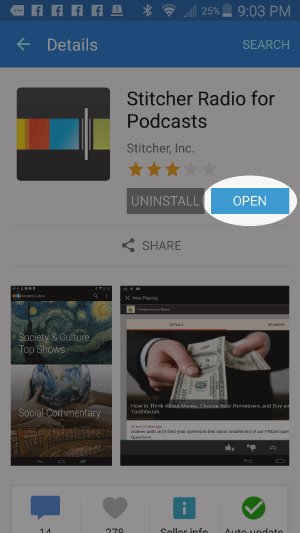
Listen on Stitcher (Android)
Install the Stitcher App
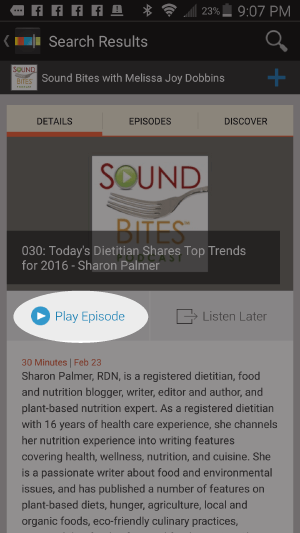
1. Search for “sound bites with melissa joy dobbins” 2. Choose Play Current Episode or Add to Playlist
Choose “Play Episode”
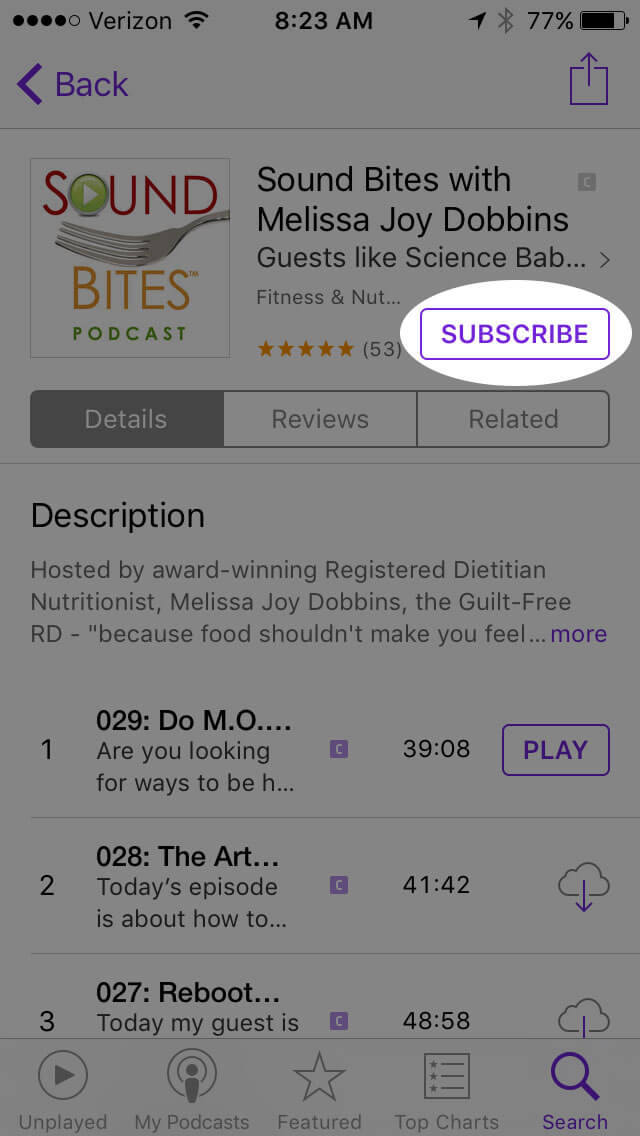
Subscribe & Review on iPhone
Open the “Podcast” app on your iPhone
Search for “Sound bites with melissa joy dobbins”
Open the podcast and click “Subscribe” and your done!
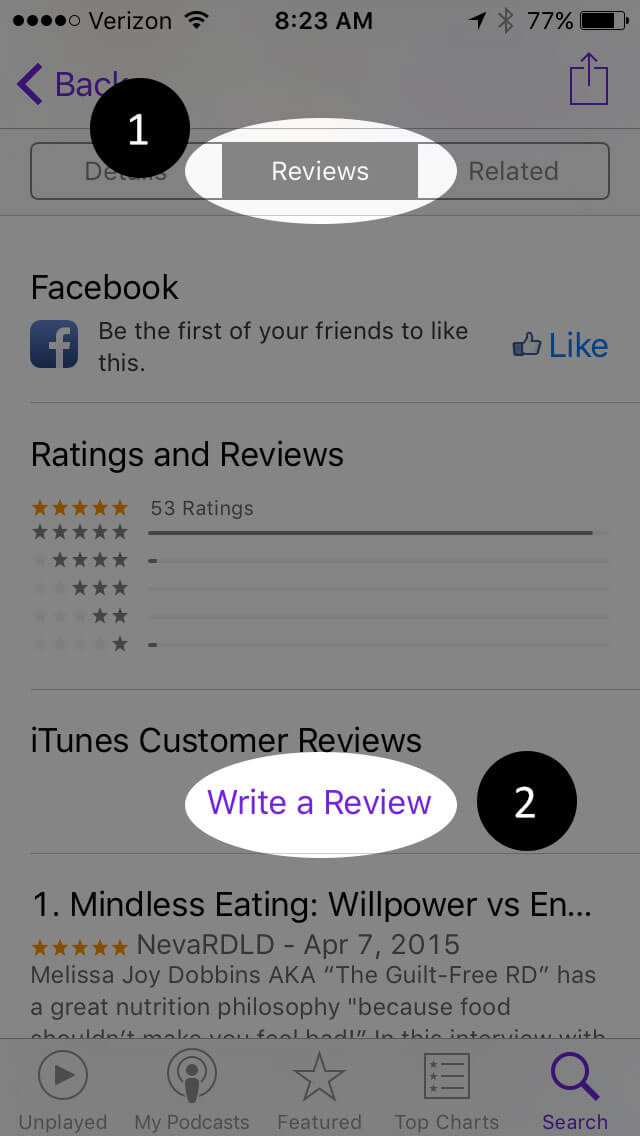
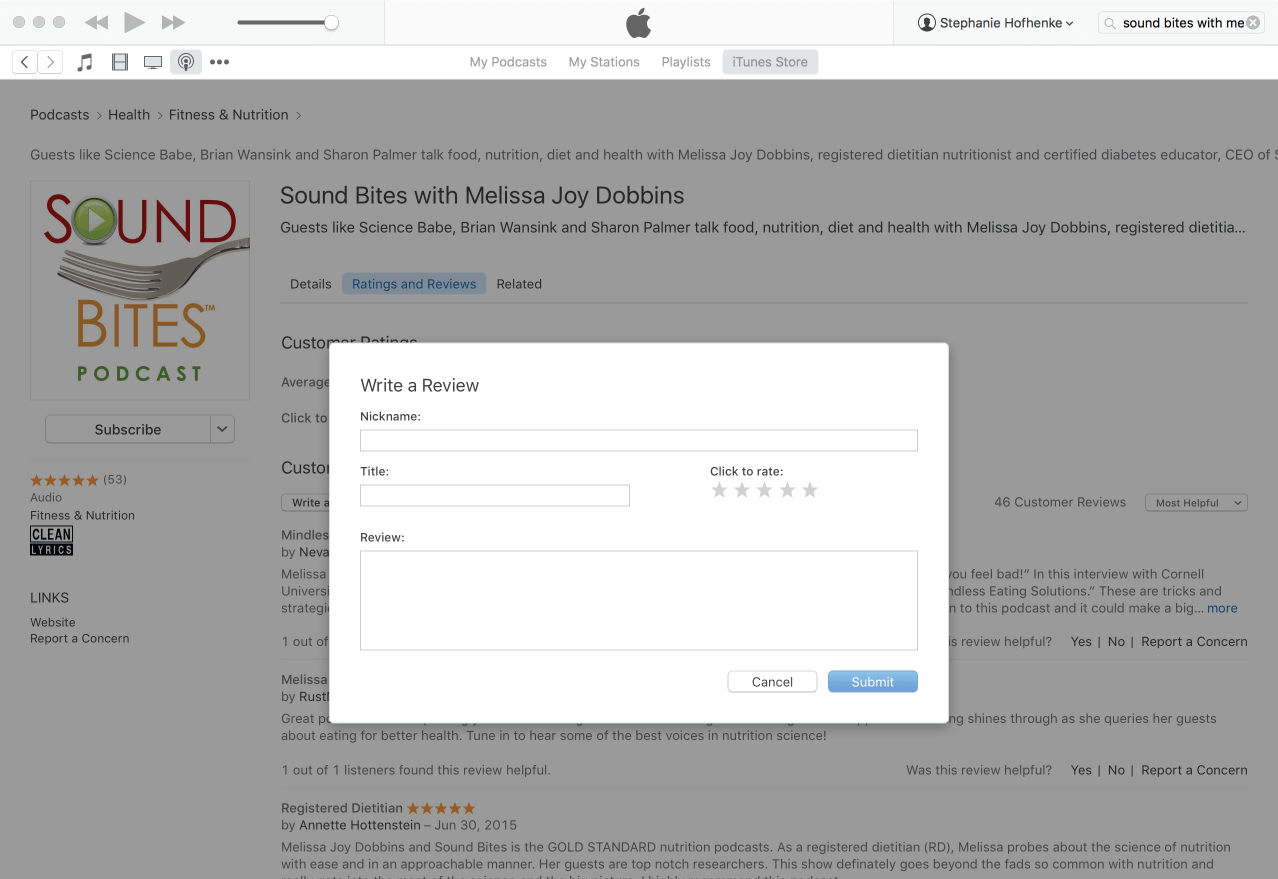
Write a Review
Click “Reviews”, then “Write a Review”.
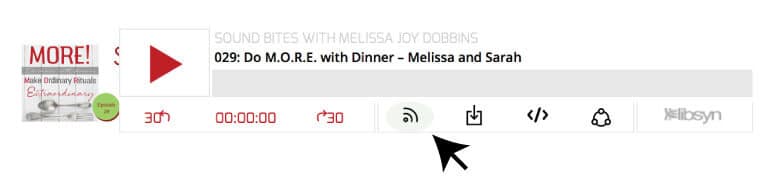
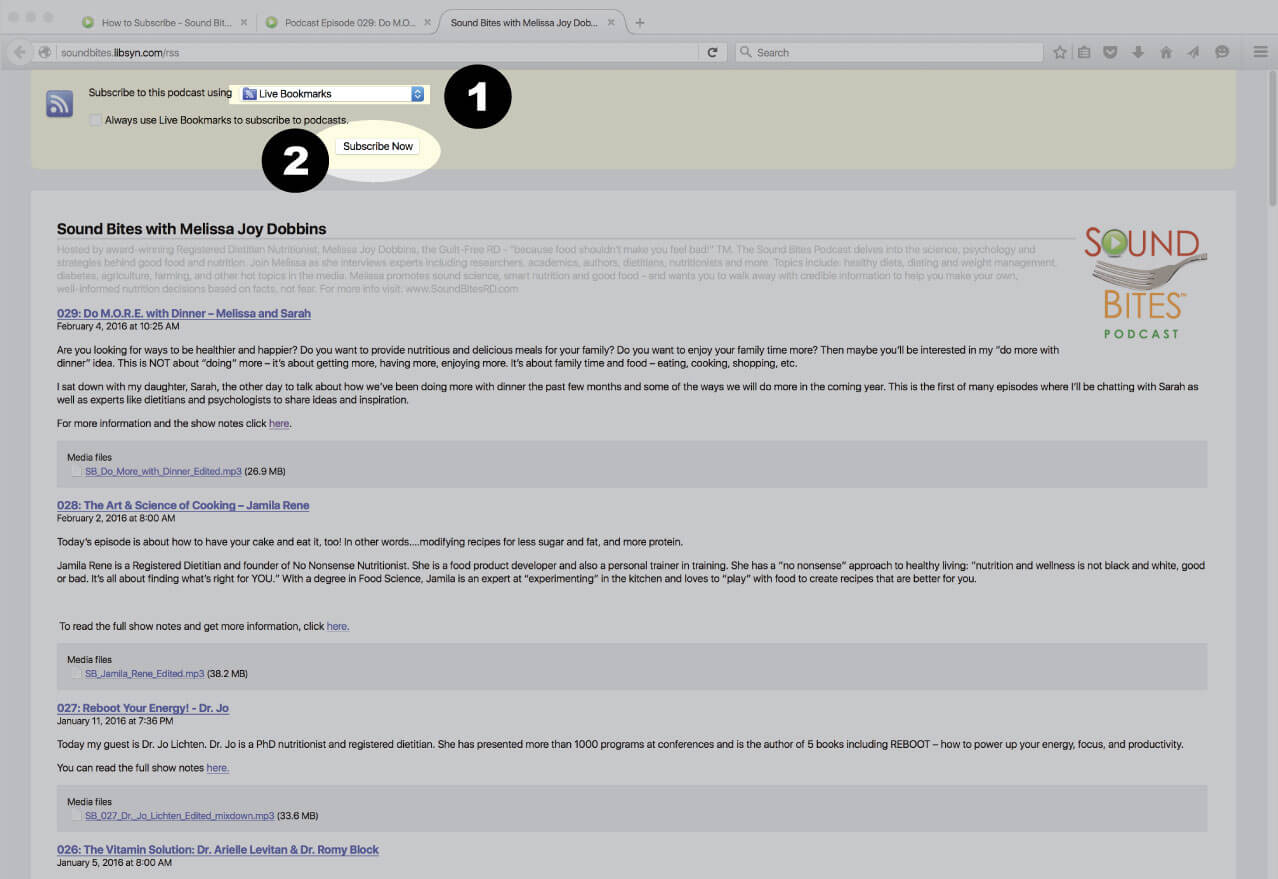
Subscribe via RSS Feed
Navigate to any podcast player . Click on the RSS feed icon.
Click on the RSS feed icon.
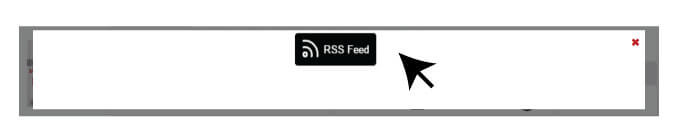
Click on RSS Feed
Choose which application you would like to use to receive the RSS feed
Click “Subscribe Now”
Confirm settings and subscribe.
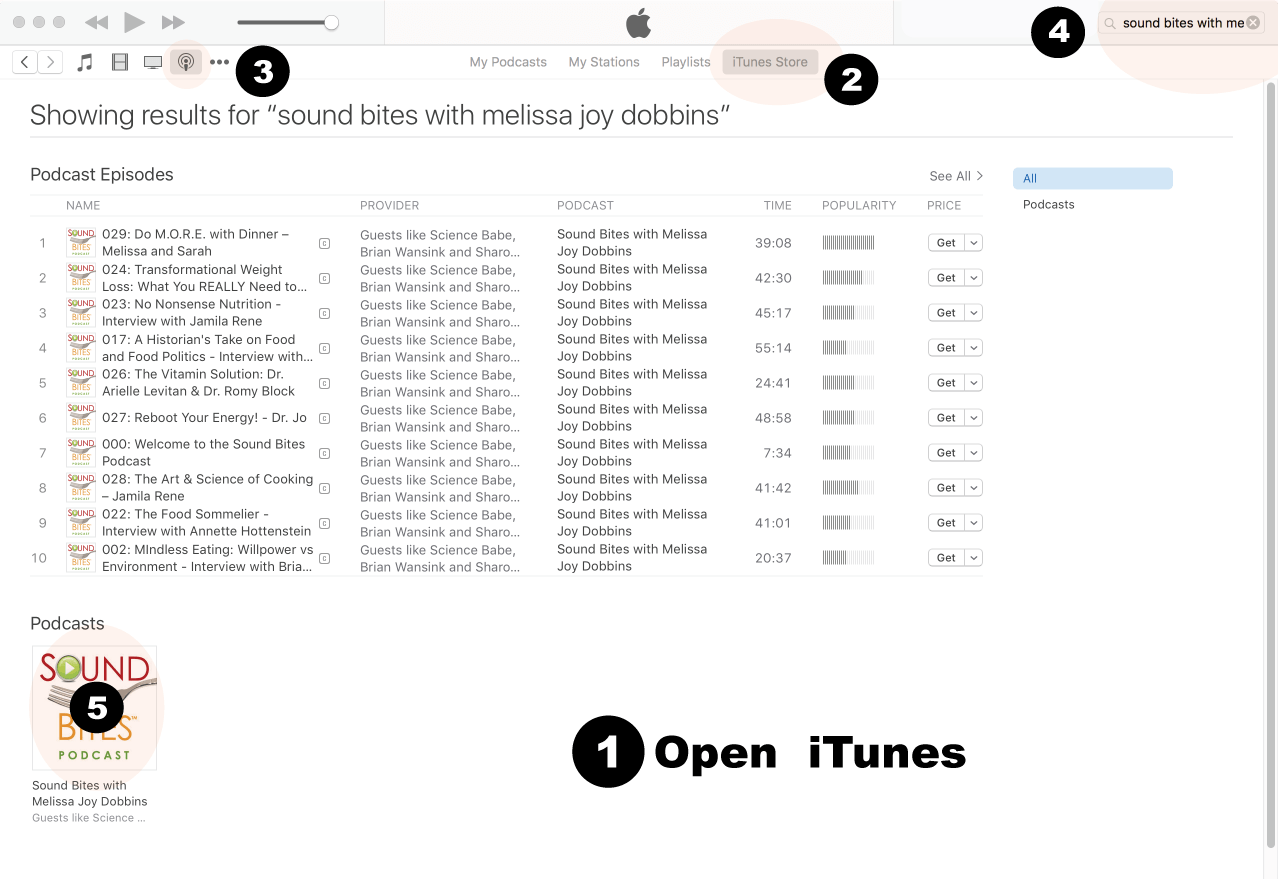
How to Review in iTunes
Open iTunes desktop application
Click iTunes Store
Click on Podcasts
Search for “Sound bites with Melissa Joy Dobbins”
Click on podcast image
Search for Sound Bites podcast in iTunes
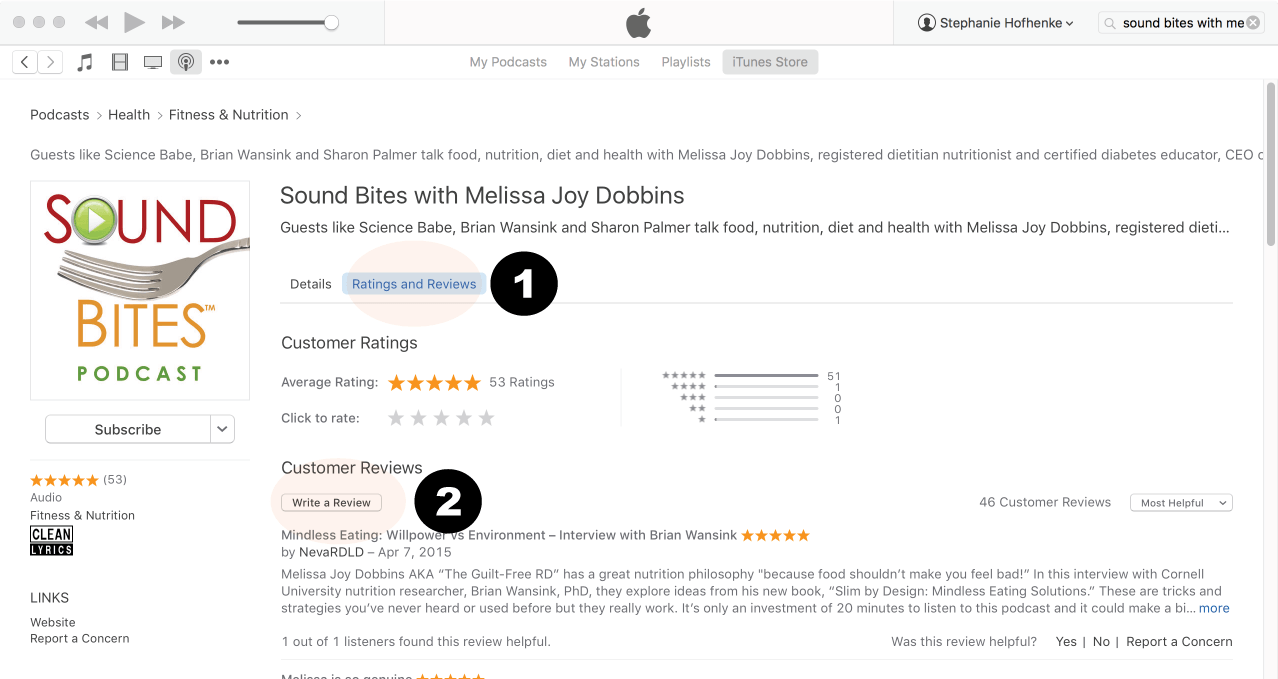
Click Ratings & Reivews
Click Write a Review
View reviews and write your own review.
Write your review…. Thank you!
Write your review!
How to subscribe via iTunes
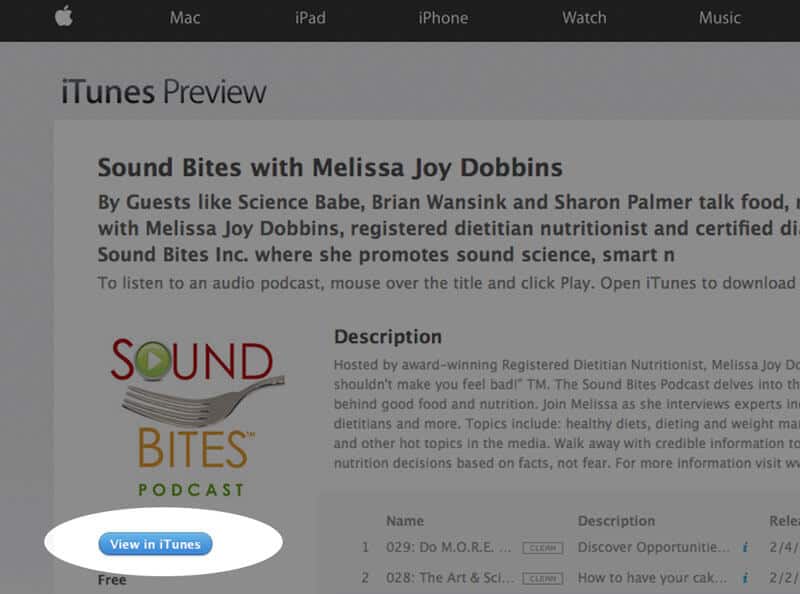
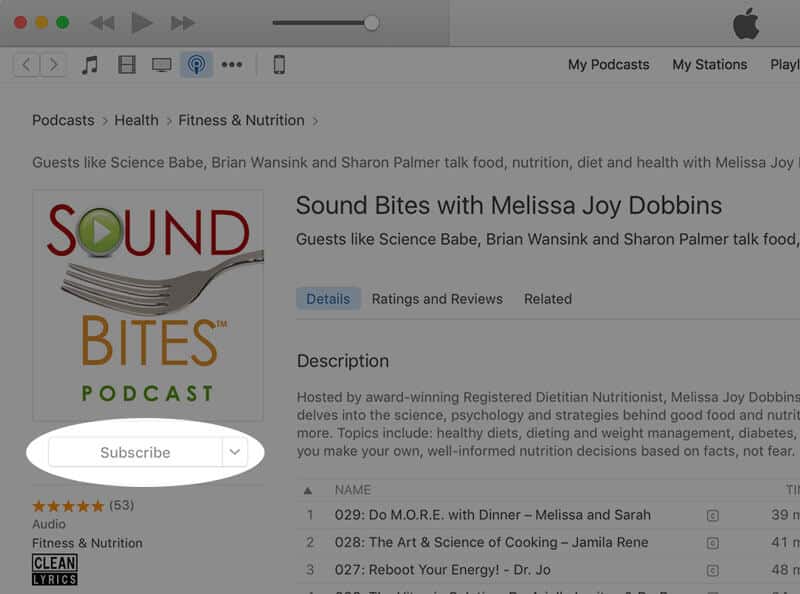
Click here to view the Sound Bites Podcastin iTunes, then click the blue “View in iTunes” button. This will open your iTunes application directly to Sound Bites Podcast. Click the “Subscribe” button, and your done!














I always batch cook, so I have several meals in the freezer.
Since I was a child we made french toast with bread ends, then freeze it for breakfast.