Celebrating over 1 Million Downloads and 50,000 Free CEUs on the Sound Bites® Podcast | NEW: Get 1 years’ worth of CEUs with the new 15-CEU Podcast Course
New Opportunities in Dietitian Services: Awareness, Accessibility & Affordability
Access to dietitian services is evolving—and so is the way we think about nutrition care. In this episode, we’re diving into how and why more people can (and should) work with a registered dietitian, especially when the focus goes beyond food advice to meaningful behavior change. We’ll unpack what’s shifting in the RD landscape, from referrals to insurance coverage, and what that means for both the public and nutrition professionals. If you’ve ever wondered how to actually access dietitian services, make the most of your benefits, or why this field is often misunderstood and underutilized, this conversation will connect the dots and offer practical, real-world insights.
Tune in to this episode to learn about:
how and why the field of dietetics is undervalued and underutilized
how the dietitian services landscape has changed over the past few years
that many insurance companies are covering preventive nutrition services
how to increase referrals to dietitian services
what makes the dietitian “coach” approach different from the “expert” approach
how to get beyond the meal plan requests and really make a difference
how dietitians can get support to start their own practice
pros/cons to telehealth
challenges and opportunities facing the field of dietetics
how personal stories can inspire more people to become dietitians
resources for health professionals and the public
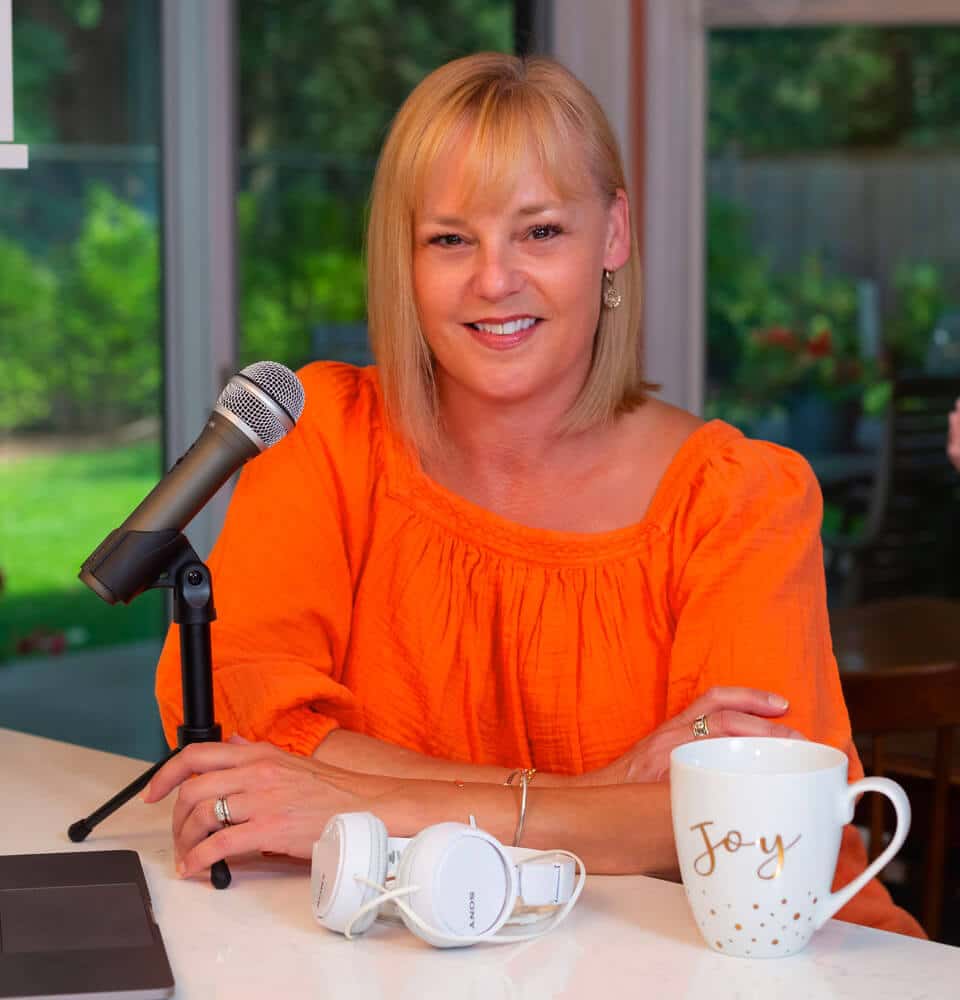
Jenny Westerkamp, RD
Jenny Westerkamp is the Founder of All Access Dietetics and All Access Dietitians. All Access Dietetics has supported the future dietitian since 2008 with admissions resources, RD exam preparation, and career resources. All Access Dietitians is a large virtual group practice. She also leads a one-of-a-kind Dietitian Coach Fellowship for dietitians looking to improve their retention, relationship, and results with their clients. Prior to All Access Dietitians, she had a 15-year career in professional sports serving the Chicago Bulls, Blackhawks, and Cubs (and even has a World Series ring!).
Nutrition is a science, but eating is a behavior. My Dietitian Coach Approach combines the expertise of a dietitian with the behavior change guidance of a coach to get next-level results for our clients.” – Jenny Westerkamp
Resources
Some links may be affiliate links. As an Amazon Associate, I earn from qualifying purchases.
Welcome to Sound Bites, hosted by registered dietitian nutritionist, Melissa Joy Dobbins. Let’s delve into the science, the psychology, and the strategies behind good food and nutrition.
Melissa Joy (00:23):
Hey there, if you are a dietitian and you’re trying to fulfill your continuing education requirements, be sure to check out my free CEU activities. I have nearly three years’ worth of free CEUs you can receive by listening to my podcast.
I also have a CEU package on sale for one year’s worth of continuing education credits, which offers the convenience of taking only one quiz and receiving one certificate for all 15 credits. Simply go to my website at soundbitesrd.com/freeceus for all the details.
Hello, and welcome to the Sound Bites Podcast. Today’s episode is about better access to dietitian services and how people can benefit from working with a dietitian, especially when the approach focuses on behavior change, which may sound obvious, but there are some important points that we are going to dig into.
We’re also going to discuss how insurance coverage has changed, and what you need to know about maximizing your opportunity to work with the dietitian. And I do want to point out that this episode is for the general public as well as dietitians and other healthcare professionals. We’re going to talk about aspects that I think will be helpful for both types of listeners today. And this episode is not sponsored.
My guest today is Jenny Westerkamp. Jenny is a registered dietitian and the founder of All Access Dietetics, which she founded in 2008 as a dietetic student. She’s also the founder of All Access Dietitians, which she founded in 2022.
In between, she had a 15-year career in professional sports working with the Chicago Bulls, the Chicago Blackhawks, and the Chicago Cubs, and she even has a World Series ring to prove it. Welcome to the show, Jenny.
Jenny Westerkamp (02:18):
Thank you, Melissa. I’m thrilled to be here.
Melissa Joy (02:20):
We’ve both been in Chicago for our whole careers, yet our paths don’t cross a lot. But we were both in leadership positions with an organization called the Chicago Nutrition Association, which is not a dietitian organization. It’s not like the Chicago Dietetic Association was, which is now the Chicago Chapter of the Academy of Nutrition and Dietetics. But the Chicago Nutrition Association, which I don’t think it exists anymore.
Jenny Westerkamp (02:44):
I know. I think it might have changed names to — it was the Chicago Food and Nutrition Network, they went through that rebrand. I think you were on the board and then I was president-elect, and then president. And yes, we connected through that, which was really fun.
Melissa Joy (02:56):
Yeah, and I mean, dietitians were members of that, but it was such a great organization. PR people, chefs, it was so much fun. And I was part of the rebranding, and I just really was dedicated. That organization had been around for 30 years at the time, and I was like it’s not going to die on my watch or whatever. Then yeah, you were the president and anyway, I digress.
But I’ve admired your work from afar. I love that you have worked with Chicago sports teams. I actually did a little bit of work when I was with the Dairy Council with the Cubs and the Bears, not from a nutrition standpoint — was public relations. It was a lot of fun. But that’s so cool.
So, let’s start off by having you share more with our listeners about your background and the work you do.
Jenny Westerkamp (03:41):
Sure thing. So, I became a dietitian about 17 years ago. Originally, what brought me to dietetics was wanting to be an inventor of Doritos flavors. So, I was very interested in food science at the time. I was interested in science that brought me to food science and human nutrition, which is the name of the major at University of Illinois.
Fast forward, learned about dietetics, learned about specifically sports dietetics. Met a dietitian, Julie Burns, who was working for pro sports teams. I came from a family with five younger brothers, very into sports, like family culture was sports for us, so I thought, oh, that’s a great fit. So, that’s really how I got into it.
But once I got into it and I was applying for dietetic internships, which were required at the time, and realizing how competitive they were, and even though I had an amazing advisor at my college, I still felt like there needed to be more to support future dietitians. So, I began on this now 17-year long journey of supporting future dietitians, meeting their needs, which have changed over the years.
So, when I initially was applying, it was all about how do you find the right program to apply to? And then from there, it became how do you actually get into that program? So, I did admissions coaching and coached hundreds of students on their applications, their resumes, personal statement. Then had a team of coaches and kind of grew that.
And then fast forward, maybe about five years ago, we got into the exam prep space where how can we help the pass rates which we’re going down to pass the RD exam. So, now, we have an amazing program called Pass Class that helps thousands of future dietitians pass the exam and become dietitians. So, I’ve really been very much passionate about the field of just making sure from being an RD to be, even before you enter the field, that you have confidence to go after what you want.
That evolved. Then from there, my sports career was going on at the same time, but then the evolution of All Access Dietetics and to All Access Dietitians really came about because I knew that so many students wanted to become private practice dietitians and work one-on-one, but then realizing in their education that they didn’t get a lot of experience with that.
And I knew that if I was going to support the needs of dietitians and now new dietitians, that I needed to learn about how to start a private practice, how to take insurance, how to be an effective one-on-one dietitian, and create results for people so that then I could teach people how to do that.
Now, I have All Access Dietitians, it’s a group practice, but it’s also a fellowship which takes on brand new RDs who then work under us. We train them in our specific approach, which I know we’ll get into today, and allows me to have this teaching practice to really … not only do I want to impact the patients we’re working with, but also impact the field by giving these new dietitian really a launching pad for a very fulfilling and impactful career without the burnout, getting paid well, all those good things.
So, that’s what I’m doing. But yes, in between the sports world, which was such a dream and a privilege to be able to work alongside highly motivated people who really planted the seed for me with this dietitian coach approach, which we’ll talk about. But yeah, that’s been the story. And the World Series ring was hilarious, I mean, just hilarious like that even happened (laughs). What are the chances?
Melissa Joy (06:56):
Yeah, so that was … I should know because I’m a huge Cubs fan. But what year was that?
Jenny Westerkamp (07:02):
That was 2016, which was my first year. I was actually the minor league dietitian brought on by the head dietitian Dawn Jackson Blatner at the time. But yes, I got a ring and supported their minor league plus assisted at the major league level that year.
Melissa Joy (07:15):
That’s awesome. My son will be so disappointed that I didn’t remember that was the date, but yes, very, very exciting. And yeah, it is interesting how that work inspired this approach that you have that we are going to talk about.
You’ve dedicated a huge chunk of your career to supporting dietitian, so thank you for that. And that’s one of the reasons I’ve been admiring you from afar.
You have said that our field is underutilized, so I want to hear more about why you think that, and what you think needs to change there.
Jenny Westerkamp (07:50):
I will preface this by saying this is one dietitian’s opinion, and it’s just based on my perspective, knowing that my background has been really in the trenches, talking to future dietitians, talking to educators, as well as just seeing why do people come into the fields? What’s their perception of it? And then are they happy five years out in the field?
So, that’s where I’m coming from with this. But I think my opinion is, it’s kind of a PR problem because not only are we too small of a field for the impact that we’re really trying to make, but we’re spread out in a lot of different specialties.
If we think about even the one-on-one, I think the academy has said something around 10% of dietitians work in a one-on-one capacity. But what I’ve seen from my experience of admissions coaching and people becoming dietitians (more people to become dietitians) — a lot of the reasons that people became dietitians were because they were impacted personally by one.
And originally, maybe it was people that had gone through eating disorders, digestive disorders, a parent that had diabetes or heart disease, whatever it was, oncology. Whatever it was, there was this personal impact that a dietitian made that was so impactful that it made them want to become a dietitian.
And I was like what a missing piece that we could be using to recruit people to our field and be able to grow the field. And I think then there’s power in numbers and how we make more impact and change and all these things. I think it is a numbers game in my opinion.
Then we have dietitians that are coming into the field wanting to do that same one-on-one experience, but then not having the opportunity or not knowing how to go and get that type of role or start their own business or whatever it is.
So, I do think there’s a little bit of a PR problem from the sense that we aren’t out there helping a lot of people, and people don’t know that they could even be using a dietitian and have it even covered by insurance. So, that’s where I’m seeing the underutilization.
Melissa Joy (09:43):
Yeah. I mean, I have felt for a long time, if not my entire career, like do people even know that we exist? Do they know what we do? Because you hear like dietitians are the food police.
And I’ve said this on the podcast before, but I was doing a media training at the Illinois Dietetic Association meeting, and it was a group training, and we were talking about that phrase like dietitians are not the food police. I’m like okay, so then like what are we? And we came up with this phrase collectively that said, “Dietitians are not the food police, we’re more like coaches than referees.”
Which is perfectly fitting for this conversation today. And I just feel like if the public understood better how we are there to work beside them and help them and not be like here’s what you need to do, sort of a thing, which is again at the essence of what we’re going to be talking about today.
But it’s interesting you say that it sounds like that personal story could be a powerful thing to have a PR campaign about like how a dietitian helped me. Which, so ironically, I was on the academy’s website the other day doing some of the action alerts to help promote nutrition research and tell Congress not to make any changes to the SNAP Program and school lunches.
And underneath those two action alerts, there was an option to submit how a dietitian has impacted your life.
Jenny Westerkamp (11:08):
Amazing.
Melissa Joy (11:09):
So, that is the universe listening to Jenny Westerkamp.
Jenny Westerkamp (11:13):
Right, I know. But then I will say there’s another piece to that, is making sure dietitians are trained to know how to create real impact in people’s lives, because there’s-
Melissa Joy (11:23):
Yes. That’s why we’re going into the field, but do we have the tools and the skills and the support to do that, right?
Jenny Westerkamp (11:30):
Exactly.
Melissa Joy (11:32):
Let’s talk about the dietitian services landscape, from your experience and perspective, how it’s changed over the past several years.
Jenny Westerkamp (11:41):
Well, in 2017, the Affordable Care Act added preventive diet counseling to a requirement and like commercial plans basically took that on. There’s nuance to each different payer and what they cover, but it started to exist and then it was in office, and then in I think 2022, it expanded to where it was covered virtually.
And I think at that point, that was the tipping point to where accessibility became so much greater than it had ever been before, where you had dietitians that could get licensed in multiple states, could see people all across the country virtually. And then you saw some very large companies coming into that landscape to scale and make that really big.
So, we see the landscape now where these private companies are kind of doing what maybe companies that were in the mental health space were doing where they were getting a lot of providers getting into insurance, being able to then do visits covered by insurance.
That’s pretty new. And so, when I was learning about this and deciding to do a group practice back in around 2021, it was like right around that time. I launched my practice in ‘22 when virtual was now getting covered.
And I was like wow, I personally have Blue Cross Blue Shield, that’s my personal health insurance in Illinois, and I have unlimited visits covered with a dietitian with $0 out of pocket, no deductible needs to be met, no referral is needed. I have that on my plan, and I didn’t even know that, and I’m a dietitian.
So, imagine if a doctor would know that about their patient’s health insurance or even any person would know that. And that’s what really fueled me to be like oh, I have to spread the word and add another group practice that takes insurance to the Chicago area so that we can continue to increase access because people didn’t know about that.
But to summarize, I mean, payers will cover anywhere from three to unlimited visits and $0 out of pocket as a preventative service. So, you don’t need to have a certain type of — well, some plans do, but you typically don’t need to have any sort of condition or-
Melissa Joy (13:44):
Diagnosis, diagnosis codes, things like that.
Jenny Westerkamp (13:48):
Yes. But then there’s still medical nutrition that’s covered as well. But sometimes, you have to meet a deductible to cover that. Or some payers have a requirement like a BMI requirement, which is unfortunate, but that’s where we’re at right now. Or some sort of family history of heart disease, something like that. But that’s just detailed in their plans.
But overall, I mean, more so than not, people are covered if they have these commercial PPO plans.
Melissa Joy (14:13):
Okay. Yeah, that was big news to me. And one of the reasons I wanted to talk with you more. When I started my own business in like 2011, 2012, that’s one of the reasons I did not do private practice as part of my business because I was like I’m not dealing with insurance and reimbursement. It sounds like a nightmare, every plan is different. I just was like I can’t, I can’t.
So, there’s like two sides of that coin. So, you are helping dietitians start their own private practice, and we’re going to talk about … there’s a lot of different ways to do that, but also, spreading the word for the public to even know that they have these visits covered.
So, is there a quick and easy way? Can people just call their insurance company and find out what their coverage is? Is that the short answer?
Jenny Westerkamp (15:01):
That’s the short answer, yes. So, they would just call the member services back with the card phone number and ask about their preventive nutrition counseling benefits, and then hopefully, get a pretty clear answer. They can also ask about their medical nutrition benefits.
So, there’s kind of like two sides to their plan, and so, medical versus preventative, so they want to ask about both. And then also if it’s covered virtually as well, and if there’s any limitations there. But yes, that would be the best way to do it.
Melissa Joy (15:29):
Okay, great. Yeah, so, we’ve got the awareness challenge, do people even know that we exist, and know what we do, know who we are. And then the accessibility and the affordability. So, you’re kind of tackling all of those.
One of the other things that I always think about is (and I don’t mean to sound negative) — but I just feel like why aren’t more doctors referring patients to dietitians? And when I say doctors, I guess it could be a nurse practitioner, whoever the prescribing provider is. What are you seeing with regard to that? Is it better than I think it is? Are doctors referring people? Do people need a referral in every situation?
Jenny Westerkamp (16:12):
Well, I had to do all of the on the ground, going on LinkedIn, finding doctors, connecting with them, pitching them, saying, “Hey, did you know that this is covered?” Like really have an educational piece to the message of me trying to get referrals from them, because that’s really how we’ve grown our practice, and been able to see so many patients.
But I would say that generally, they’re surprised that they don’t believe that it’s covered a hundred percent. They think it’s just diabetes and renal, which they’re getting that from Medicare, which Medicare only covers diabetes and renal, and maybe a wellness visit generally.
And so, it’s a lot of education. But then once they know, they’re very open, I think in my experience to than sending referrals. There’s a difference though. I’ve had much better luck with let’s say privately owned primary care offices or smaller like concierge doctors or direct primary care, people that maybe aren’t in large health systems because large health systems do have a dietitian, and they have a protocol where they would refer to the dietitian in their health system.
Jenny Westerkamp (17:18):
However, they’re then like, “Oh, well, I would, but they’re full for six weeks.” Or they can’t even see them for more than once a year or something. And so, then we become this wrap around service for the overflow or for the patients that would want to see their dietitian on a weekly basis, or in a more high-touch intensive way and have it still covered by their insurance.
I guess to summarize all that, I do think they’re always pleasantly surprised and happy, but they do not know about the preventative coverage. So, once they do, then I think there’s definitely a willingness.
Melissa Joy (17:53):
Yeah. So, when I worked in a hospital setting a couple different times in outpatient roles, it was the same as what you were describing. Letting the doctors know, “Hey, I’m here, refer people.” Building that relationship, so it sounds like that’s still a thing. But in the hospital setting then, it would depend on how many visits they would get through the hospital situation, or is it still dependent on their insurance?
Jenny Westerkamp (18:19):
Well, my general understanding is health system dietitians, they tend to just prioritize certain types of patients or referrals. When I’m speaking to dietitians in health systems just in the Chicago area, they aren’t doing the preventive visits. They are doing medical nutrition therapy on the medical side of their plan.
Melissa Joy (18:38):
Right, gotcha.
Jenny Westerkamp (18:39):
And they’re not even like touching that. And it could be hospitals just don’t want to make that change or they don’t even have the capacity. They have to prioritize the higher risk cases.
I’m not sure with the answer honestly, but I don’t see a lot of health systems doing like what a private practice is doing or like what we’re doing where we’re saying, “Hey, come work with us. We have plenty of capacity, plenty of availability to have you see someone weekly and see them 12 times because your insurance covers it, so let’s do it.”
So, that’s like the difference, it’s just not happening. It’s not the model in health systems.
Melissa Joy (19:12):
Got it. Thank you. So, a lot has changed with insurance, that’s all great news. Again, kind of getting the word out about that. I assume like not everybody needs a referral. Is it like the HMO-PPO thing, is that-
Jenny Westerkamp (19:27):
That’s the issue. So, PPO where you wouldn’t need a referral, but you would just want to go to someone in network with your plan, that would be what you would be doing to get those benefits. But then HMO, they need to go to a specific provider. Which a private practice could go through that, but it is a harder process that we haven’t gone through that process to be in network with HMO plans.
Melissa Joy (19:49):
So, I guess when I’m saying referral, I’m kind of using that term to also just mean like suggesting seeing a dietitian, right?
Jenny Westerkamp (19:57):
I see, yes. And we love that. That’s just a better way for coordination of care to be able to get a referral, get the last patient note from the primary care physician, for example. And so, we do get referrals technically, we just don’t need them for insurance purposes unless we need documentation for something and how we’re billing it.
Melissa Joy (20:13):
Yeah. And I’m assuming that you like to have that communication then with the physician, the healthcare team because you’re saying this is what we’re working on, maybe you share progress notes, goals, things like that.
Jenny Westerkamp (20:26):
Yes, absolutely. It’s all based on what the physician or the let’s say like physician’s assistant would want. But yes, we are able to fax notes back and forth, have phone calls, be able to coordinate care. So, it’s really great.
Melissa Joy (20:38):
Awesome. You have a saying that, “Nutrition is a science, but eating is a behavior.” And like I alluded to earlier, I mean like focusing on behavior change seems like an obvious and essential aspect of nutrition counseling, helping people make dietary changes. But you approach this differently.
So, tell me, what do you do or what have you learned that you’ve incorporated into your business that differentiates you from others?
Jenny Westerkamp (21:06):
This is going back to my career in sports, and more so at the end of my career, my last role was for five years I was the team nutritionist for the Chicago Bulls. There’s only 15 to 17 players on the team, particularly one or two rookies every year. And I was very much under a microscope of like you need to get this one player to eat breakfast. And I’m like okay, that should be easy. Yeah, you need to eat before you go and do three hours of training.
I can educate all day, like this will help you maintain your muscle, this is how you get in your antioxidants room, blah, blah, blah, blah, blah, blah, blah — didn’t matter. That was the science part. I was not incorporating the behavior part or the habit part or the identity part, or how do I talk to this player to get them to be intrinsically motivated to make this change, not be immediately defensive or resist because someone’s telling them to do it.
Which is totally normal, human response, by the way, to someone telling you what to do. Anyone, no matter the most highly motivated NBA player that does all the right things and is so motivated to be the best he could be is still going to respond that way.
And that’s when I … the entry level was sort of like sports psychology, talking to the sports psychologist about it, understanding behavior change, maybe like atomic habits, reading that. But it started to open up for me like this other aspect to what I could be doing to make an impact with my pro athletes.
I’m bummed that I learned it so late in my career, but I took that concept and dug deeper to say, “How do large companies train their people to get health outcomes in a reliable way?”
So, I looked at companies like Teladoc, Hinge, NEW, like ones that were hiring all these health coaches with this NBC-HWC credential. And I knew about that credential, but I was like very intrigued by it.
Melissa Joy (22:52):
What is that credential?
Jenny Westerkamp (22:54):
That is the National Board Certified Health & Wellness Coach. And they had just started this credential, I think in the last five years, to really sort of legitimize their approach. And then they standardized all their training to then have a board exam, and now, they’re trying to get insurance codes, to get health coaching covered by insurance improve outcomes.
So, they’re on their way to creating a lot of impact in healthcare. But the idea was there’s this additional training around coaching psychology and sustainable behavior change that I did not feel that I personally got in my education.
I felt like I was taught how to assess very well, how to educate, how to do a lot of good math and understand what people needed. But that behavior change piece, and we know that we need to be looking at all these different factors as dietitians to assess. But then by knowing that person, how do we help them actually make that a reality for themselves without us just telling them what to do, and being that food police and giving them those orders.
So, I decided when I started the practice that everyone was going to go through training with Wellcoaches which is an NBC-HWC Program. They have the book that we’ll have in the show notes Coaching Psychology Manual that we use. And that was going to be the approach that we were going to be dietitian coaches, not just dietitians.
And that was going to allow us to bring both the education and the behavior change coaching together, and really be less of an expert and more of a curious type of coach that really tries to understand, be empathetic, non-judgmental with their patients so that they can then have more self-efficacy and more confidence to actually make those changes on their own for the long term.
And there’s tons of research to prove that that’s going to create a better outcome than someone being told what to do, having it stick short term and not having any sort of intrinsic motivation or autonomy over that decision. And that’s really what we did.
And then again, I’m so passionate about it that I want more students or new dietitians to learn this earlier on in their career so that they can just again, be more impactful and feel more fulfilled in their role.
Melissa Joy (25:05):
So, motivational interviewing is something that was not being taught when I was in school. Is that something that came along later for you as well? Or maybe they’re not teaching it in school. I don’t know.
Jenny Westerkamp (25:18):
You do get a counseling class typically, like all dietetics programs and motivational interviewing can be included in that definitely.
I think the missing piece is just the — well, first I think it’s a specialty, and they can’t possibly cover all of this in education, they have to cover many things. I mean, there’s not a lot on the RD exam about one-on-one counseling, let’s just say that. So, I do think it’s not like a fault to the education, if you want to go into this space, you have to continue to develop as a dietitian to do that.
But you get motivational interviewing. It’s just, I think, a little bit too much from an expert lens than from a coach lens where there’s still this feeling that you’re not partnering with your client, you’re kind of above them, you know more than they do.
Where as a coach, like you’re at equal levels where they’re just as insightful and knowledgeable about their own body, their own experience, their own past history with food and you’re looking to uncover that, uncover their strengths and values and all these things to kind of partner together to move forward on what their goals are and their vision for themselves.
So, it’s kind of like the dynamic changes. And how do you do that? It’s through language, communication through being skills, how you show up in sessions where you don’t want to just immediately solve a problem.
It’s being more curious instead of judgmental, it’s more listening instead of talking. So many other things, but like that’s the essence of how we’re different and how I think it really fits well with nutrition behavior change, of course.
Melissa Joy (26:51):
Okay. Yeah. So, you said it’s a language and communication, and I know when you and I were talking before, the book Nonviolent Communication came up, and that’s something that I have, should we talk about Chere Bork?
Jenny Westerkamp (27:07):
Yes. Chere Bork, yeah, so she was the one that I knew about Wellcoaches from 17 years ago when I was becoming a dietitian. And yes, she was talking about values and what your strengths are, and how you apply that and give people autonomy to change their lives.
So yes, she was such an inspiration to me to come back to Wellcoaches and to really make that part of my practice.
Melissa Joy (27:32):
Yes. So, she’s a fellow dietitian and I used her as a business … oh, I don’t even know, just a coach. I mean, it was a business coach, but it’s kind of like part business coach, part therapist (laughs).
Jenny Westerkamp (27:48):
Right, life coach.
Melissa Joy (27:49):
Yeah, life coach, thank you. That’s what it is. Because she helped me align my values with my business actions, I guess. And so, it was very, very helpful for me. And one of the resources that she suggested is this Nonviolent Communication book: The Language of Life. And Nonviolent Communication, it’s a weird name. But in like one of the first few pages, it says another term for it is compassionate communication.
Jenny Westerkamp (28:19):
Yes.
Melissa Joy (28:20):
So, I want you to share with our listeners kind of like what that is in a nutshell, and how that ties into this dietitian coach approach.
Jenny Westerkamp (28:30):
Yes. And I think this is the identity piece of who are you as a dietitian coach when you’re working with someone? You have to kind of erase a couple things.
I mean, there’s a time and place for education and assessing, that still exists. We’re still dietitians who still have to do that. But in a lot of the session, it’s yes, this nonviolent communication. So, instead of judging, we’re just observing.
So, if someone is saying, “Oh, I messed up, I had a pint of ice cream last night.” It’s not commiserating with them like, “Oh no, I’m sorry, that’s too bad. You’ll get back on track.” Instead, it’s like, “Okay, I’m seeing that you’re eating ice cream every night. Like no neutrality, no judgment, we’re just observing.”
The next would be getting into their feelings. So, how did you feel when you did that? And it’s not like we’re trying to be therapists and go out of our scope of practice. We don’t, but it is helping the client get in touch with their feelings about their decisions or like this gap between their actions and what they want, and who they want to be. So, we uncover that, and they might say, “Oh, I feel frustrated and defeated when I eat like that.”
Then we go into needs, what are your underlying needs? How can the dietitian coach be curious about what is it that they’re really needing when they’re going for that ice cream or whatever other example choice they’re making or something they are or are not doing. And we help them uncover, well, what is the core need that’s connected to that feeling, but also how can we meet that in another way?
So, are you just needing comfort or a way to unwind after a stressful day? Is that what’s going on? Let’s see how we can meet that need.
And then the final would be requests, which I would kind of say requests, how we do it is a little bit more brainstorm. So, we lead a brainstorm session where we’re not the ones listing of, “Oh, here’s 10 snack ideas for you, blah, blah, blah, blah. These are the ones I do, blah, blah, blah, blah, blah.” It is, “What do you think? If you knew that you needed this because you’re feeling this way, what would be an idea that you would have?”
And this is their only time they’ve maybe even thought about these questions and gotten to a deeper level than just this surface level action that’s happening. That’s where there’s a lot of space, and patients can access like the core what’s going on, and then come up with ideas from that place rather than just like a logistical place. Like oh, I’ll try that new snack. Let’s get deeper and let’s connect whatever you’re going to do next to actually meet your needs and actually have you feeling good.
So, that’s the brainstorm, although they would say in nonviolent communication, more like requests, like, “What do you think about this? Or what do you think about trying something different?” And then giving them space to come up with ideas themselves for them, which usually they do.
Melissa Joy (31:20):
Right. They’re going to be able to come up with a solution that is more likely to work than some random suggestion.
Jenny Westerkamp (31:26):
Yes, yes. Exactly.
Melissa Joy (31:28):
And sometimes, it’s even just asking the patient, “Would you like me to offer some suggestions?” Maybe I’m not even wording that right.
Jenny Westerkamp (31:40):
No, that’s in motivational interviewing. So, in the education piece where we would go elicit, provide, elicit. So, eliciting permission really, “Would it be okay if I shared some ideas with you?” And then they say yes. And then you could provide that information, but then ask at the end, what do you think about that?
And pause, don’t just go to the, I guess, problem to solve. Like, “What do you think about that? What stands out to you? Or is there anything that comes up on you … any other ideas from what I said?” To just make it collaborative as opposed to me talking to you and educating solely.
I think because people come back for the relationship, not the education. People don’t come back just to keep learning more and more. Sure you could — sure you could have like mini lessons in every section for a very long time, but they come back for the relationship for how they feel when they are going through this with you.
Melissa Joy (32:33):
And maybe getting more value from the sessions.
Jenny Westerkamp (32:37):
Absolutely. And that’s what personalized means. I think some dietitian might say, “Oh yeah, I offer personalized advice.” But I’m like if you’re giving the same snack list to everyone — sure, it’s great ideas, there’s nothing wrong with that. It’s just do we really know what’s going to work for the patient? Are we asking the right questions? That’s really what I’m trying to get at.
Melissa Joy (32:57):
Yeah. So, Jenny, you know that I recently helped launch a concierge program for diabetes and prediabetes. So, I’m back to patient care and I’m so excited. And the first session is an evaluation. So, it’s really even different from a typical first session with a patient, very little education going on there.
A lot of questions, but I get people wanting to follow up, and have more of an education counseling session, and a lot of them want that menu, they want that sample menu. And I’m like, “But you don’t really want that sample menu.”
[Laughter]
“You do, but it’s really not going to help you.”
So, like in some of those situations, what would you suggest?
Jenny Westerkamp (33:37):
Okay. This comes up a lot because most people when they’re coming and wanting a meal plan, there’s a feeling and a need underneath that they need to know for sure that it’s going to work because they don’t feel that they fully believe in themselves that they can make this change. So, they need to rely on something external to do that.
So, first, uncovering that with some really good open-ended questions that are non-judgmental, that are not trying to push that, “I know you don’t need a meal plan” because there might be a case where they do need a meal plan, and they’ve been able to prove to you that they do.
But it would be through questions just like, “Have you used a meal plan in the past? Tell me about your experience using a meal plan in the past, how did that go?” Get curious without judgment. So, you followed it for a couple weeks and then you didn’t, or you never followed it at all — like uncover, “Did that really work for you? And also, understand why do you think you need one? Is it something that more that you think you should do because you’re seeing ads from meal plans all over Instagram or whatever it is?”
And just get curious, give them the space to tell you the story behind that request, and to look for the feelings and look for the needs that they’re trying to meet, things they’re feeling through that. But help them to see that they do have it in them, they do have strengths in them that would allow them to meet their goals without a meal plan. And that’s kind of like through the conversation, I guess, everyone gets there a little bit different.
But I would say bringing to light, just why are you asking for it and why do you think it will work? And hopefully, you can have them sort of come to the conclusion on their own that it’s not the best choice for them.
Melissa Joy (35:12):
Yeah. I’ve been working with them like we can together kind of create your own meal plan based on foods that you like and just by starting from what you’re already doing and seeing where that goes.
Jenny Westerkamp (35:28):
Yeah. The other thing is, in order for it to be sustainable for life, like long after you stop working with me, patient, it’s something where you’ll have to navigate changing your eating pattern through all different seasons of life. And I want you to feel that you can be flexible and adaptable no matter what.
So, maybe like taking it just one small step at a time, like going through the process of making one small change to what you’re currently doing, that’s going to be more sustainable approach than like this overhaul that might only work in this season of life, but then won’t help you in a future season with different challenges.
Melissa Joy (36:04):
Very good. So, you mentioned telehealth. Are you and your staff seeing anybody in person? Is it all telehealth?
Jenny Westerkamp (36:13):
We are a hundred percent telehealth right now, and that is because insurance covers telehealth visits. If that would change, obviously, we would need to get an office. But I really love telehealth. It kind of goes along with our name of All Access, where we can then see people across the country if we have dietitian’s license in those states that need licensure.
It also allows us to be a convenient option for busy people that maybe couldn’t go drive to an office and have an appointment. And also, some very surprising benefits would be that they can show us their kitchen, and they can show us products and grab them from the fridge, and it could be a really great educational piece that makes it easy. We can even guide them in a short meal prep lesson and be able to see what they’re doing and guide them in that.
I also found, because we do work with a population where there might be some body shame or them not wanting to show their body to their healthcare provider, maybe from a negative experience in the past or an anticipation of one in the future. But that has been something that people have felt safer, being able to just show up, neck upright and be able to not show their full body, which has been interesting. But yeah, that just is what’s come up in our practice.
I’d say the negative might be sometimes they think they can call on a car ride or while they’re driving. And so, we’re like we’re not that convenient. We can’t have that session if you’re driving. And then maybe a little bit with not being in person with the relationship, but I think we make up for that with our approach and building that relationship even though we’re virtual.
Melissa Joy (37:49):
Yeah, I was curious about that. I mean, telehealth has come a long way (thank you pandemic for helping with some of that). But I remember 2011 or ‘12, I was doing some telehealth, which was just basically over the phone, nothing visual, and I just missed seeing patients in person. With most of your patients, is it mostly video or do some people still just audio?
Jenny Westerkamp (38:19):
It’s all video. And I believe I could be wrong on this, but we have to have it be video for insurance coverage, it needs to be face to face, from what I know. And we do 12 weekly visits, so it is a high touch, so it’s even better that they stick with it and not have any … they don’t need time for commuting, or if they have a busier week, they can still commit to that. So, that helps.
Melissa Joy (38:44):
Definitely more convenient. Yeah, I was curious about the pros and cons there. That’s great. I would love to hear your thoughts on some of the challenges and opportunities that our field is facing right now. And we’ve talked about some, but would love to hear your thoughts on that.
Jenny Westerkamp (39:00):
And again, I come from an interesting place, just having so many conversations and always trying to learn about the field and the industry, both from being a dietitian in that perspective, as well as what it’s like to work with a dietitian.
I would say the challenges, kind of what I mentioned before, just about enrollment in programs going slightly down. We can’t say for sure what the impact that pandemic had as well as the graduate degree requirement that just came into play. I think there’s like dust needs to settle on that still to fully understand the impact.
But I do think that’s unfortunate if we are not doing a good job of recruiting and showing that the dietitian fields or becoming a dietitian is what they want it to be. So, I do think that people come into the field and maybe they realize it’s not what they thought it was going to be, which is a messaging issue, or they don’t have the resources or the skills, or the opportunities to make it what they want it to be.
And the same goes for how they get paid and the limitations there to then like they’re actually in reality paying their bills and doing all these things, and realizing like it’s not working. So, I just think that there’s a lot of challenges there to like what the expectations should be as well as can we get education to dietitians to make it so that they know what they’re getting into, and make that more clear.
There’s always going to be that disconnect between academia and the real world. And that’s what All Access Dietetics has tried to bridge the gap between, like here’s what’s going on outside, like when you’re done and you’re an RD, and try to bridge that education.
For example, we have this free eBook, 75 Dream Jobs for Dietitian and people will email in all the time, “I didn’t even know I could do that in the field,” right?
Melissa Joy (40:43):
Exactly.
Jenny Westerkamp (40:44):
Just things like that that could increase enrollment and also give opportunity for people to have the careers that they came here to have and to have the impact that they want to have.
But then I would say, I think there is opportunity to be even more impactful, especially in the one-to-one where we can have even stronger outcomes that would support better insurance reimbursement or more expanded reimbursement.
I think there’s data collection that needs to happen and dietitians seem to be like very focused on outcomes as opposed to just kind of showing up doing their job and, “Oh, they fell off,” like the client fell off like, “Oh, well …” Whereas my practice and like what I’m trying to teach all the fellows and the dietitians that work for me is that long-term impact.
And going through and having your client show up when they didn’t meet their goals is when you really show that you’re a gold standard dietitian as opposed to getting all the low-hanging fruit of the highly motivated patients who are going to be rock stars and be amazing.
Okay, awesome. You did a great job, you were there for them, you were the accountability, you had a great relationship with them, that’s amazing. But it’s when you can really impact the people that don’t have a great time, that struggle and go up and down in their motivation and still show up with you to work through it with them.
I think that is a huge opportunity of people that we aren’t maybe currently equipped to impact as well as we could. And maybe, you’d get there overtime, like 5 years, 10 years into your career, you can get better, but I’d like for dietitians to start off with that level of effectiveness and I think it’s possible.
Melissa Joy (42:21):
Right out of the gate.
Jenny Westerkamp (42:22):
Yeah, I think it’s possible because otherwise, I think dietitians then they’re not having retention, they’re seeing a lot more new people all the time. It’s not as good of an experience as when you have these longstanding relationships and can go deeper with clients and have this greater impact in their lives. And so, it works both ways.
But yeah, that’s where I see, and that’s really my mission to make dietitians even more impactful. Then we get more students coming in saying, “I worked with a dietitian coach and now, I want to be a dietitian (chuckles).” That’s the dream that we then can increase the field. So, that’s what I see.
Melissa Joy (42:55):
Very good. And could you just talk a little bit more about private practice like a dietitian, you’re helping dietitians learn how to start their own private practice, but there’s a lot of different ways to do this, working for a company like yours. Can you kind of talk about the different options, pros and cons?
Jenny Westerkamp (43:13):
Yes. There are a lot of options now, and I will say, the way I explain it is, I think the first step is to learn the skills. That’s what’s going to be the foundation of any successful private practice, is that you’re really good at relationship, you’re really good at retention, that people will stay on with you for many visits.
I mean, at the end of the day, it is a business. So, you do have to know that you have strong numbers to support that business. But then there are many options.
So, you could have your own insurance contracts, set up your own business, and then rely and kind of go towards referrals to grow that business. And that’s one way to do it. Or you can basically work for a practice like mine and not have to deal with any of that. You’re really just only a dietitian coach, no admin or anything besides tracking your own metrics and roster.
But then the middle piece in the private companies that we’re seeing come up where they’re sort of the middle. Where you’re a contractor to them, you don’t have to do your billing or admin, but you do probably have to get your own patients, or at least a portion of them to support your practice. And that’s kind of like the middle ground.
And when I’m talking about the middle group where you’re a contractor, I’m thinking Berry Street, Fay Nutrition, Nourish. Nourish, they’re our employees currently, but the same idea where you’re just showing up and maybe you do get your own patients or they’re providing them for you.
Melissa Joy (44:29):
And that’s different than what you do?
Jenny Westerkamp (44:33):
So, I have my own insurance contracts at All Access Dietitians, but then we also do have a contract with Berry Street as well that our fellows work under.
Well, the way I will mentor or coach new dietitians on that is it’s just what kind of role do you want? Because if you have your own business, you probably would have to hire a dietitian or two to make that model, just the numbers work for you.
And you also would not be doing patient time full time. And that’s why the numbers wouldn’t work. Like if someone wanted this to be their full-time job (I know that’s not the case for everyone) — but if you wanted that to be the case, then just know that okay, a smaller portion of your time is actually patient time, and then you have to focus on getting patients, business development, meeting doctors, like doing all these types of things. Do you want that kind of job? Yes or no? And you figure that out.
If you don’t, then you can just go into that middle route with these private companies and just focus on patient time and a little bit of business development. But you could be a one-person solo practice and be very happy and could do pretty well.
And then if you want to work for practice, think about it more like a job, you’re an employee, there’s a security there, you don’t have to find your own patients, and you can have a good salary in that space as well. So, those are kind of the options. It’s like what kind of role do you want to have and do
Melissa Joy (45:49):
Okay, excellent. So, as we’re wrapping up, what would be some bottom-line takeaways for our two different types of listeners that we have here today?
Jenny Westerkamp (45:57):
For the dietitians out there, I would say just remember that your education doesn’t stop when you become a dietitian. And that there are skills out there that could really be a superpower. If you do want to go into the one-on-one space, you do not have to show up to sessions feeling like you have to give a TED talk and educate all day long.
It’s also very tiring, and it doesn’t always work or at least doesn’t work in the long-term. People will usually fall off after three or four visits because they feel like they got the education, and now they will try to do something with that.
If you can be along with them during that whole journey so that when their motivation does go down, they can come to you and problem solve and become more confident through those times, that’s when you’re really making that long-term change. You’re teaching them how to go through change, behavior change that they can do that for the rest of their lives. But looking into the dietitian coach approach, Wellcoaches, the fellowship that we’re doing, that would be my takeaway for dietitians.
And then for healthcare providers or even the general public, just knowing that insurance is incredible for this preventative nutrition counseling, you just have to find an in-network dietitian that takes insurance, which is probably the harder part of that puzzle.
So, of course, reach out to me if you’re interested in creating a referral partnership. And then I also would encourage you to think about adding a dietitian to your practice, knowing that you could add these codes and be able to have that be another division to your team. So, yeah, that would be my takeaway.
Melissa Joy (47:27):
And just to reiterate, for the general public listening, obviously, we’re showing you what value you can get by meeting with a dietitian and finding a dietitian that does have this sort of coaching approach would be ideal.
Jenny Westerkamp (47:41):
Yes. And I will say that there’s only about 400 dietitians in the country that have the NBC-HWC credential and the RD. And I’m hoping that there’ll be more, maybe not with the credential, but with the same like skillset, there’ll be more to work with. But yes, that’d be something to ask around, how do they work with their clients and get more into that.
Melissa Joy (48:01):
Okay. And I think you wanted to say a little bit more about this coaching psychology manual that we mentioned earlier.
Jenny Westerkamp (48:07):
The book that we use in our training is Coaching Psychology Manual by Margaret Moore, who is the founder of Wellcoaches, and also, was co-founder of Harvard’s Institute of Coaching. And it’s just been kind of leading the way with legitimizing, credentializing behavior change coaching. So, we use that and think it’s a wonderful resource.
Melissa Joy (48:27):
And I actually purchased it. It’s on Amazon, and I cannot wait to dive into it. It’s going to help my counseling skills. So, I’ll put a link to that in the show notes at soundbitesrd.com, along with links to your allaccessdietetics.com, allaccessdietitians.com, your LinkedIn, and the Nonviolent Communications book that we talked about, and any other resources that you’d like to share with the listeners, Jenny.
Jenny Westerkamp (48:57):
I think that covers it. Just going to the website, the fellowship that we have, we’re always taking applications, so that’s on allaccessdietitians.com. We have a discount for members of our All Access Dietetics community, if they did want to go through Wellcoaches training, either their first module or going the full all four modules to get the NBC-HWC credential.
Melissa Joy (49:19):
Okay, great. Good to know. Well, thank you so much for educating me on (chuckles) all things dietitian services and the changes in insurance, and all of this. It’s a very exciting time, and I’m so grateful for the work that you do in supporting dietitians.
Jenny Westerkamp (49:36):
Thank you. It’s been a very enjoyable experience and career, and I just want that for as many people that enter the field as possible because I think it is possible. So, yes, I am grateful for the opportunity to share my message and share what I’m doing, and hope to help people that are listening.
Melissa Joy (49:51):
Excellent. Thank you so much.
Jenny Westerkamp (49:53):
Thanks, Melissa.
Melissa Joy (49:54):
And for everybody listening, as always, enjoy your food with health in mind. Till next time.
[Music Playing]
Voiceover (50:02):
For more information, visit soundbitesrd.com. This podcast does not provide medical advice, it is for informational purposes only. Please see a registered dietitian for individualized advice. Music by Dave Birk, produced by JAG in Detroit Podcasts. Copyright Sound Bites, Inc. All rights reserved.
LISTEN, LEARN AND EARN
Listen to select Sound Bites Podcasts and earn free CEU credits approved by the Commission on Dietetic Registration (CDR) for registered dietitian nutritionists and dietetic technicians, registered. Get started!
Get Melissa’s Sound Science Toolkit here!
Partnerships:
Sound Bites is partnering with the Association of Diabetes Care and Education Specialists (formerly the American Association of Diabetes Educators)! Stay tuned for updates on the podcast, blog and newsletter!
Sound Bites is partnering with the International Food Information Council! Stay tuned for updates on the podcast, blog and newsletter!
Sign up for my monthly newsletter and episode eblasts so you never miss an update!
Listen on Stitcher (Android)
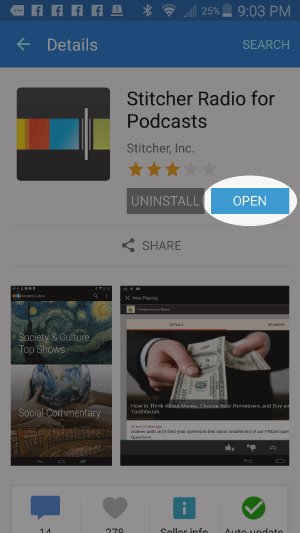
Install the Stitcher App
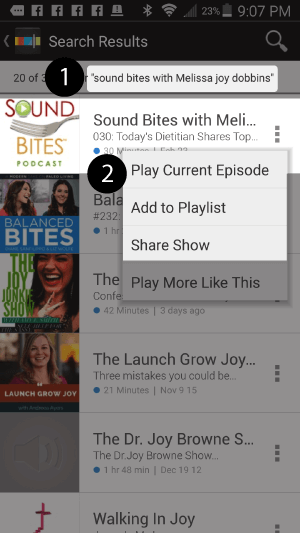
1. Search for “sound bites with melissa joy dobbins” 2. Choose Play Current Episode or Add to Playlist
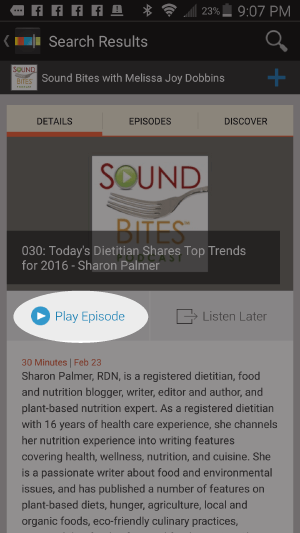
Choose “Play Episode”
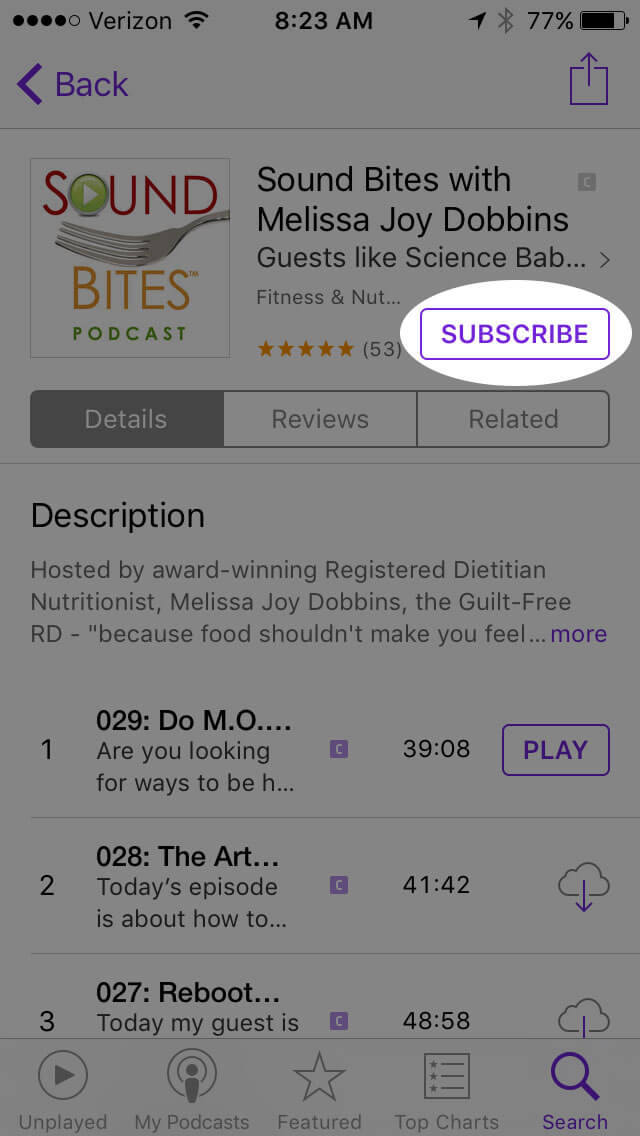
Subscribe & Review on iPhone
Open the “Podcast” app on your iPhone
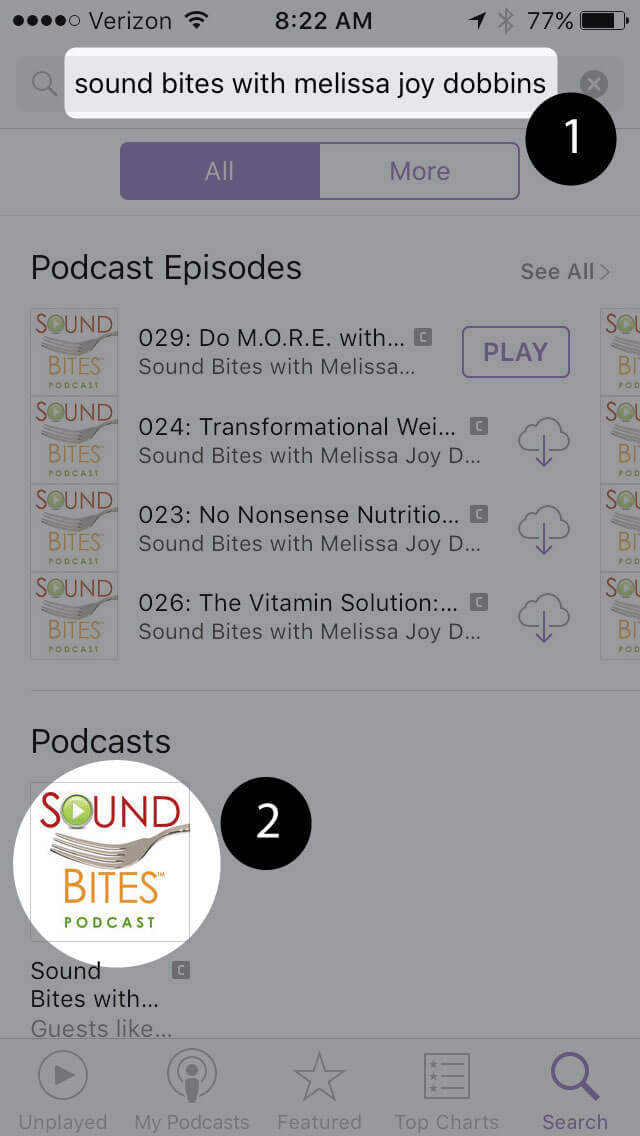
Search for “Sound bites with melissa joy dobbins”
Open the podcast and click “Subscribe” and your done!
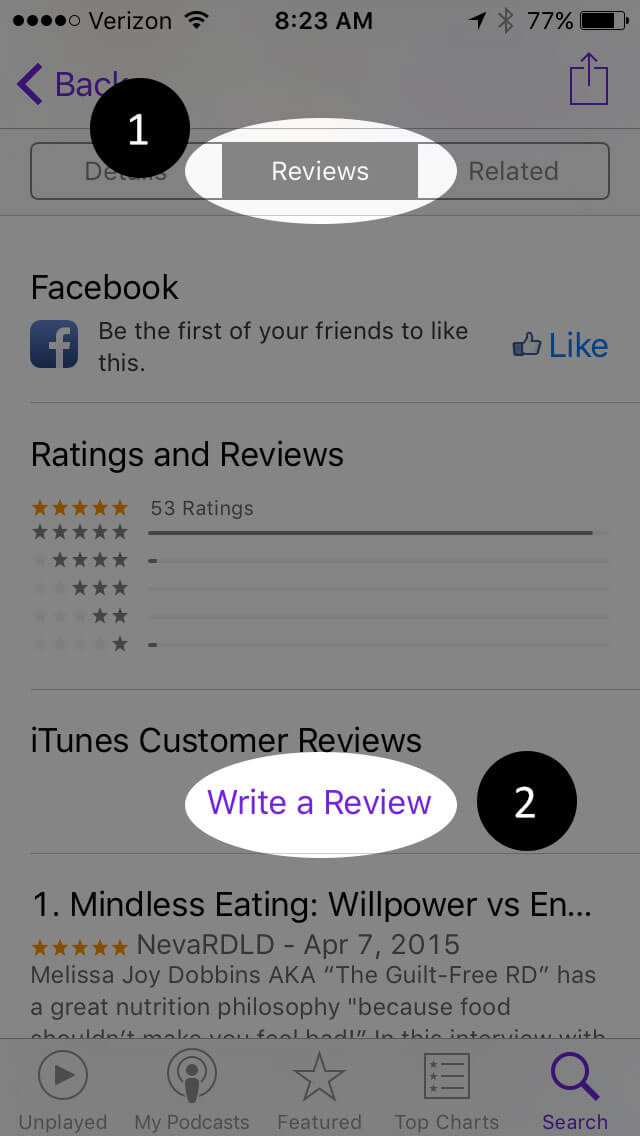
Write a Review
Click “Reviews”, then “Write a Review”.
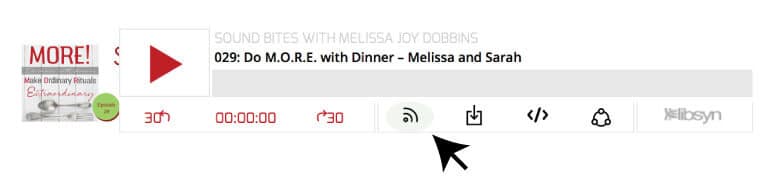
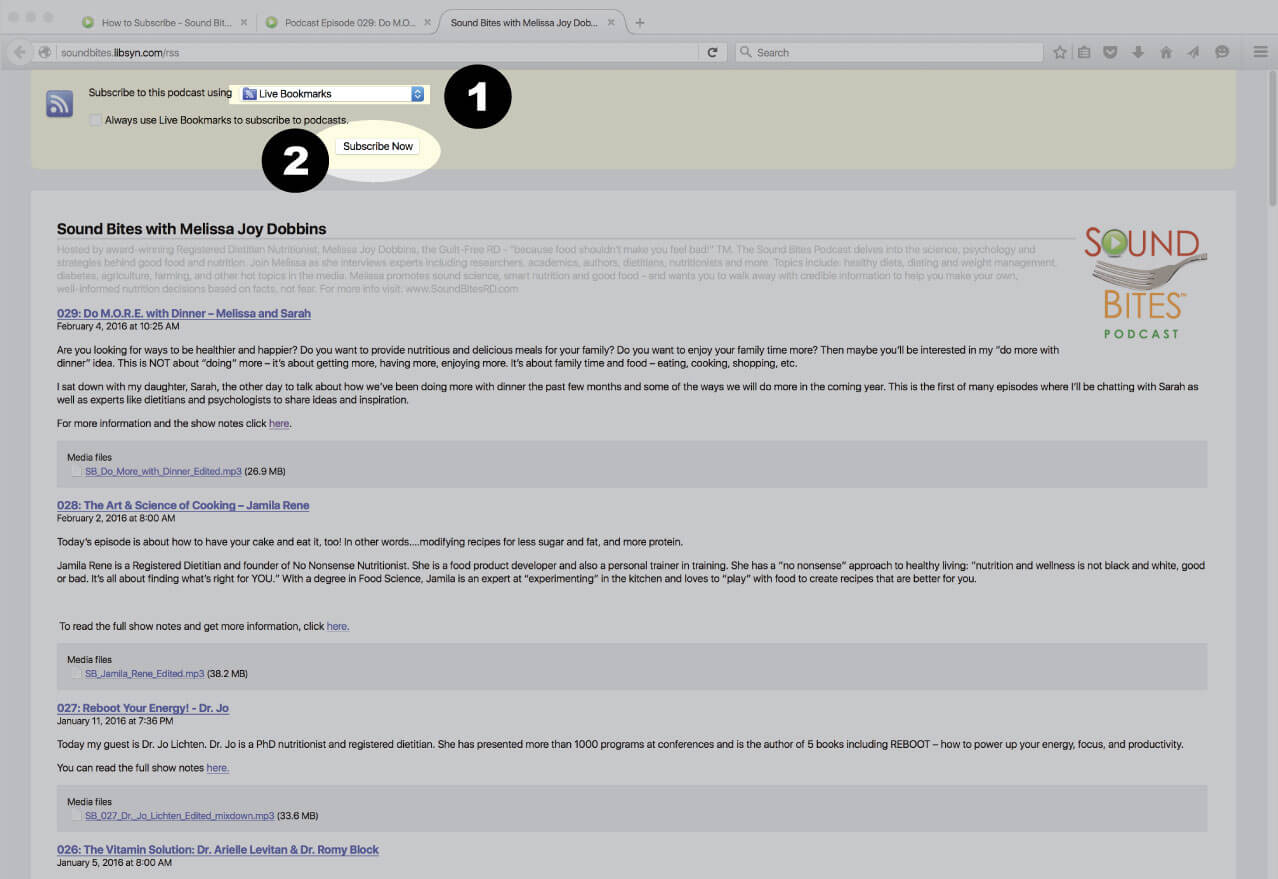
Subscribe via RSS Feed
Navigate to any podcast player . Click on the RSS feed icon.
Click on the RSS feed icon.
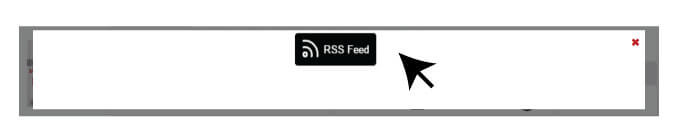
Click on RSS Feed
Choose which application you would like to use to receive the RSS feed
Click “Subscribe Now”
Confirm settings and subscribe.
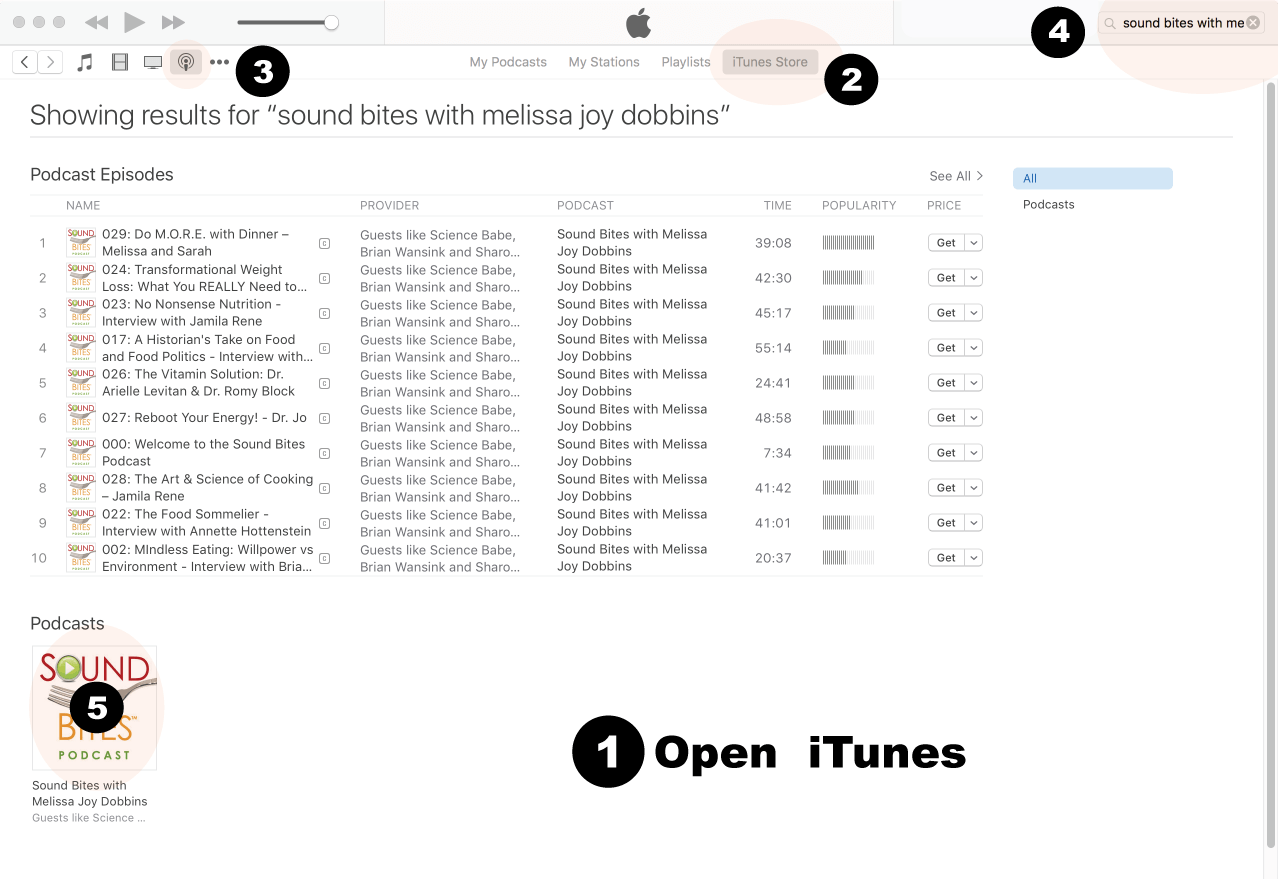
How to Review in iTunes
Open iTunes desktop application
Click iTunes Store
Click on Podcasts
Search for “Sound bites with Melissa Joy Dobbins”
Click on podcast image
Search for Sound Bites podcast in iTunes
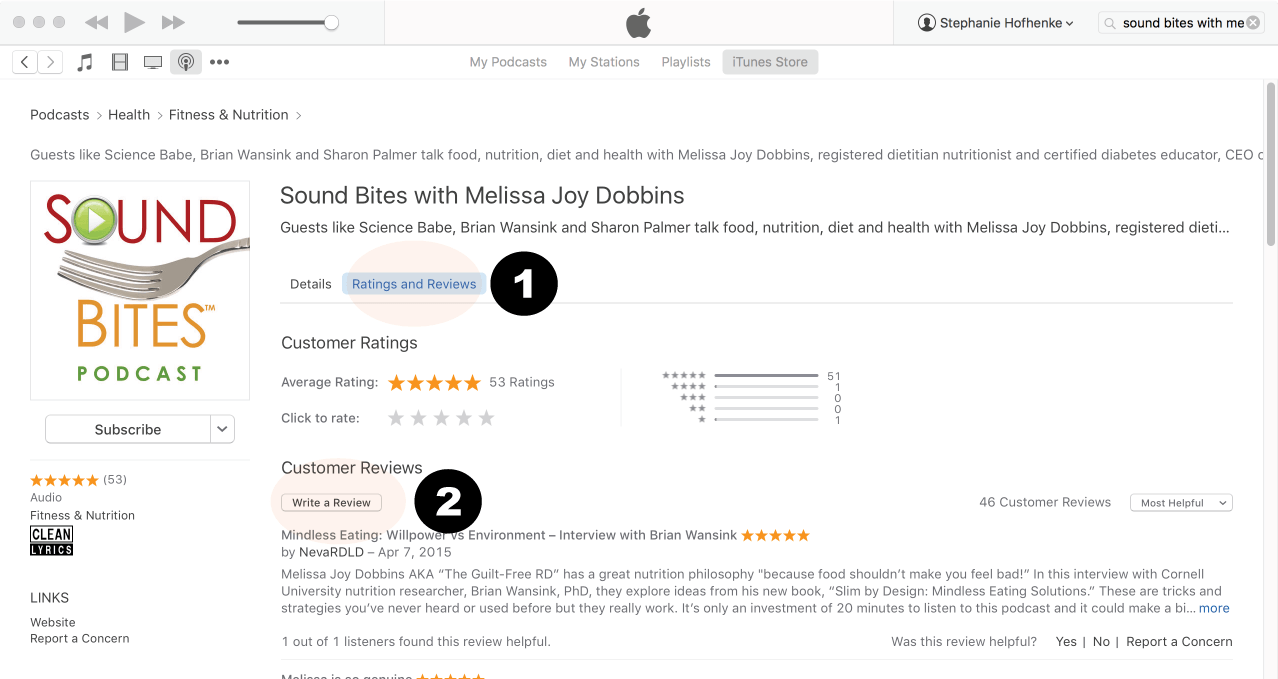
Click Ratings & Reivews
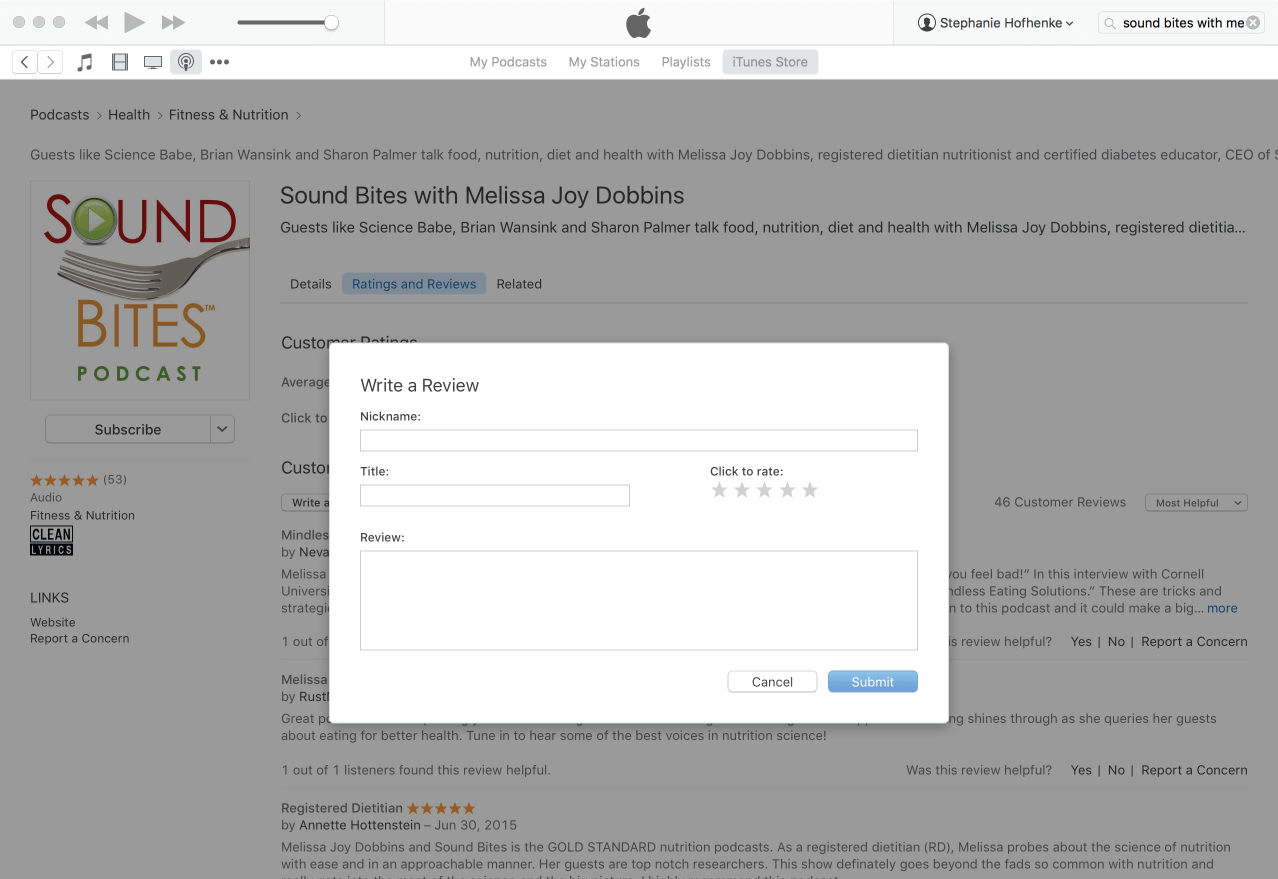
Click Write a Review
View reviews and write your own review.
Write your review…. Thank you!
Write your review!
How to subscribe via iTunes
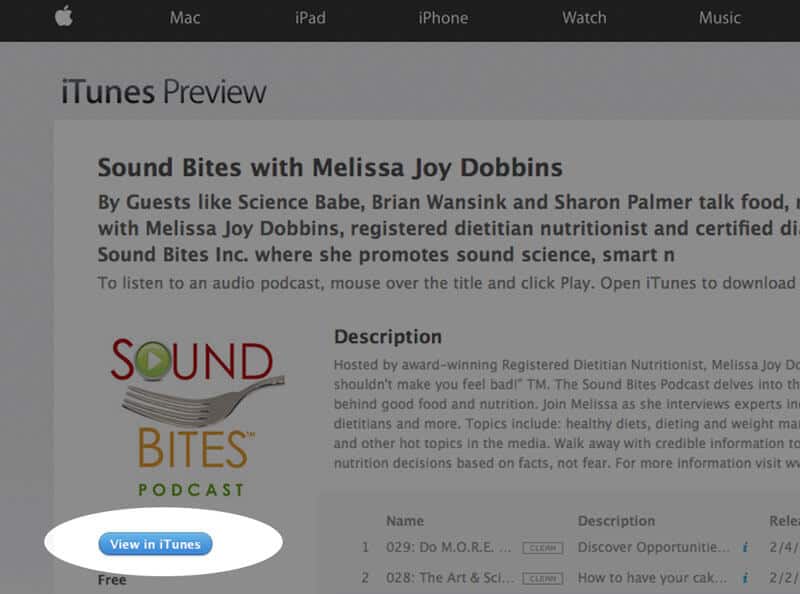
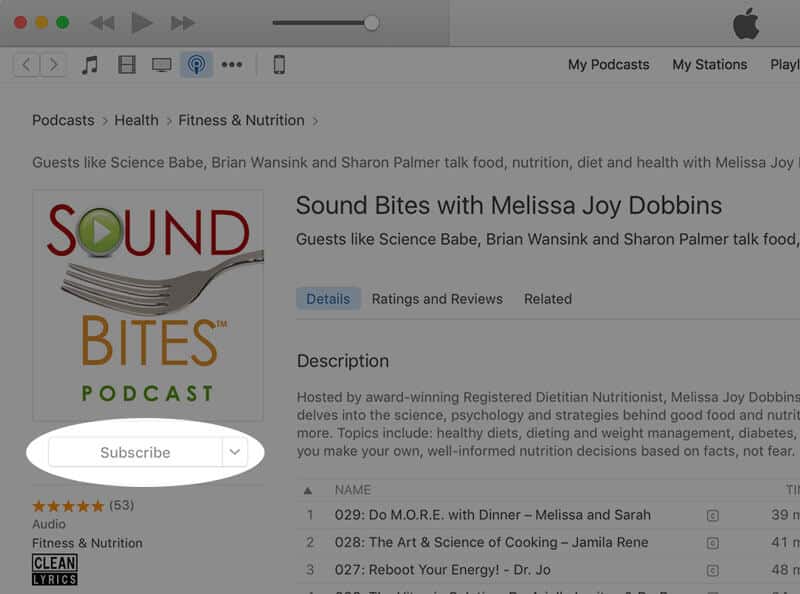
Click here to view the Sound Bites Podcastin iTunes, then click the blue “View in iTunes” button. This will open your iTunes application directly to Sound Bites Podcast. Click the “Subscribe” button, and your done!




 Jenny Westerkamp is the Founder of All Access Dietetics and All Access Dietitians. All Access Dietetics has supported the future dietitian since 2008 with admissions resources, RD exam preparation, and career resources. All Access Dietitians is a large virtual group practice. She also leads a one-of-a-kind Dietitian Coach Fellowship for dietitians looking to improve their retention, relationship, and results with their clients. Prior to All Access Dietitians, she had a 15-year career in professional sports serving the Chicago Bulls, Blackhawks, and Cubs (and even has a World Series ring!).