Celebrating over 1 Million Downloads and 50,000 Free CEUs on the Sound Bites® Podcast | NEW: Get 1 years’ worth of CEUs with the new 15-CEU Podcast Course
Click here to earn 1.0 FREE CEU for listening to this podcast episode! What’s in Your Freezer? The Science, Myths & Benefits of Frozen Foods – Jennie Norka awards 1.25 CPEUs in accordance with the Commission on Dietetic Registration’s CPEU Prior Approval Program.
Disclosure: This episode is NOT sponsored.
The Power of Frozen Foods: Convenient, Affordable, Versatile & Nutritious
Frozen foods are having a moment – and the science, policy, and nutrition research behind them is more nuanced than most people realize. In this episode, we take a fresh (and frozen) look at how freezing works, why it matters for nutrition, and how frozen foods fit into today’s evolving dietary guidance and food systems. From debunking persistent myths to exploring how frozen fruits and vegetables can support healthier eating patterns, reduce food waste, and improve access to nutrient-dense foods, this conversation connects the dots between research, real-world eating habits, and public health programs. We also dive into emerging policy efforts and pilot programs that recognize frozen produce as a powerful tool for improving food security and diet quality—especially for communities using SNAP and nutrition incentive programs. If you’re curious about how frozen foods stack up nutritionally, practically, and sustainably, this episode offers a timely, evidence-based perspective.
Tune in to this episode to learn about:
the science behind the freezing process
how and why foods are frozen
the benefits of frozen foods
common myths about frozen foods
what drives shoppers to purchase frozen foods
how frozen foods fit in the context of evolving nutrition science and dietary guidelines
nutritional equivalency of frozen foods compared to fresh or home prepared foods
innovative ways to include frozen foods into a healthy diet
how frozen produce can improve fruit and vegetable consumption
how the frozen food industry supports food waste reduction
GusNIP pilot to integrate frozen produce into the nutrition incentive program for SNAP participants
SHOPP Act legislation that ensures frozen produce is represented in the Produce Prescription Program
resources for health professionals and the public
Instead of cutting foods out of the diet, try adding one nutrient-dense item to meals you already make. Utilize frozen foods to add fruit to breakfast, a veggie at lunch, or protein at snack time. When we lead with a positive, addition-focused mindset, meals naturally become more balanced and the foods we want to eat less often tend to take up less space on the plate—without pressure, restriction, or rules.” – Jennie Norka, MPH
Jennie Norka, MPH
Jennie Norka is the Senior Director of Scientific and Regulatory Affairs at the American Frozen Food Institute (AFFI), where she leads efforts to advance food safety, nutrition, and regulatory priorities in the frozen food industry. With a background in food science, public health, and nutrition, she collaborates with federal agencies, nonprofits, and industry stakeholders to support research, policy advocacy, and consumer education. Her work in nutrition focuses on expanding access to frozen foods through federal feeding programs, supporting consumer choice and dietary health, creating nutrition resources, and advancing research on frozen foods. Jennie holds a Master of Public Health in Nutrition from UNC-Chapel Hill and a Bachelor of Science in Food Science from Purdue University. Her experience spans community nutrition programs, food safety, quality assurance, and training development.
A lot of people assume that there must be additives included in frozen foods or that those are inherent parts of the freezing process, and really freezing is just a temperature state. We use cold temperature and air to freeze products. There’s nothing else that needs to be added.” – Jennie Norka, MPH
Resources
Some links may be affiliate links. As an Amazon Associate, I earn from qualifying purchases.
Vegan Hoppin John: Jennie used this recipe but swapped frozen black eyed peas, frozen chopped onions, frozen collard greens, and served on frozen steamed brown rice
A lot of people will assume that there has to be additives included in frozen or that those are inherent parts of the freezing process, and really freezing is just a temperature state. We use cold temperature and air to freeze products. There’s nothing else that needs to be added.
[Music Playing]
Voiceover (00:18):
Welcome to Sound Bites, hosted by registered dietitian nutritionist, Melissa Joy Dobbins. Let’s delve into the science, the psychology, and the strategies behind good food and nutrition.
Melissa Joy (00:40):
Hello, and welcome to the Sound Bites Podcast. Today’s episode is about the science and the benefits of frozen foods.
We’re going to discuss the process from farm to freezer, how frozen foods, nutritional qualities stack up compared to fresh foods and homemade foods, and most importantly, some practical tips to incorporate frozen foods into our daily diets in tasty and innovative ways. So, in other words, beyond the morning smoothie or steamed vegetables.
This episode is not sponsored.
We may be submitting this episode to the Commission on Dietetic Registration for a free CEU. So, stay tuned for that if you’re a dietitian and you’re interested in that.
By the way, do me a quick favor and click on the follow button wherever you’re listening to this podcast. That’s a really great way to support the show and get notified about new episodes right when they come out.
My guest today is Jennie Norka. Jennie is the Senior Director of Scientific and Regulatory Affairs at the American Frozen Food Institute where she leads efforts to advance food safety, nutrition, and regulatory priorities in the frozen food industry.
She has a background in food science, public health and nutrition, and received a Master of Public Health in nutrition from University of North Carolina, Chapel Hill, and a Bachelor of Science in Food Science from Purdue University.
Welcome to the show, Jennie.
Jennie Norka (02:08):
Thanks so much Melissa. I’m happy to be here. Really excited to talk today.
Melissa Joy (02:11):
Yes. Share a little bit more about your background with our listeners and the work that you do, and I don’t think there’s any disclosures to note other than your employer. So, yeah, we’d just love to hear more about the work you do.
Jennie Norka (02:25):
So, as you said, I am the Senior Director of Scientific and Regulatory Affairs at AFFI or the American Frozen Food Institute. And in that role, I have been primarily leading all of our work on nutrition, and I support on our food safety and sustainability work.
In the nutrition space, that really leans in on nutrition regulations through engagement with the agencies like USDA and FDA on priority nutrition policies that may look like analyzing them and understanding them for AFFI members to help them meet nutrition regulations, and understand them for themselves, or it’s providing feedback on proposed regulations that the administration or agencies are working through.
I also help oversee our nutrition-related grants that we fund through the Frozen Food Foundation, which I know we’ll probably talk about a few of those today. And I engage with a lot of external organizations that work in the food and nutrition space.
Before starting at AFFI, I was getting my Master of Public Health at University of North Carolina at Chapel Hill. I really ended up wanting to get an MPH because I worked with a nonprofit in the D.C. area right before I started my full-time job after graduating my undergrad. And it really opened my eyes to how public health nutrition is operationalized on the ground. And so, that’s what kind of drove me into my MPH in nutrition.
During my MPH, I did a lot of different things. I don’t know how I was working all the time and also studying, but I volunteered with the Cooking Matters Program at the university. So, I was doing nutrition and culinary education with students and families.
And then I did a lot of project-based research, all volunteer work, and then worked with NC State University Extension in developing training programs for a variety of different settings, but one being community meal events as well as for nutrition directors at North Carolina Public Schools.
So, as you mentioned as well, I got a degree in food science, so I’ve kind of been on every spectrum of the food and nutrition space, starting in food science and manufacturing, and now I’m in the public health and nutrition space. So, it’s kind of been a full circle experience for me.
Melissa Joy (04:50):
Very cool. Yeah, so we share extension experience. I worked in extension in graduate school and just love extension. And it’s so cool how you are combining food science and public health. How long have you been with AFFI now?
Jennie Norka (05:04):
I have been with AFFI for about two and a half years now. It’s flown by.
Melissa Joy (05:08):
Great. It’s funny, I started off in clinical and outpatient and became a diabetes educator. But when I was a supermarket dietitian, that’s where I really learned a lot about the frozen food aisle. I actually have some funny pictures of me in the freezer section and in one of the store advertisements. It’s kind of funny, maybe I’ll post those.
Jennie Norka (05:25):
You’re going to have to put it in the show notes (laughs).
Melissa Joy (05:28):
I remember they were like, “Wear this puffy jacket or this puffy coat,” like from Seinfeld or whatever because you’re so cold. And they wanted me to wear gloves too, and I was like, “I just look like a burglar.” Because I was all in black, I’m just, “I look like a burglar. I’m just in the frozen food section. I’m not wearing the gloves (laughs).” So funny.
That was in the early ‘2000s, so I don’t know. But I learned that there’s just so much more to frozen foods than meets the eye. And I’ve talked many times on the podcast about how I rely on my freezer so much, especially when I talk about my do more with dinner initiative where I’m trying to get people to just get more out of that dinner time.
Whether it’s spending less time in the kitchen, more time and fun conversations or finding easy healthy recipes or products that make your life easier, and how to like I’m pretty good at getting stuff into the freezer, but how to get it back out and utilize it and date it properly and things like that.
So, I’m excited to hear some tips and insights that you have, and I think you have a new report, you have some new insights that you’re going to share with us so that’s really cool, I love talking about insights on the podcast. But maybe a good place to start is an overview of the many benefits of frozen foods that we can kind of dig deeper as we go through our conversation today.
Jennie Norka (06:45):
I think that’s so funny that you talk about this awakening of frozen food for you because I think everybody who gets on the frozen food train has that awakening.
Growing up in the Midwest, I have been a consumer frozen probably since I was born because we don’t always have fresh produce access in the Midwest, it’s pretty cold there in the winter, so frozen fruits and vegetable were so standard. And I taught my fiancé that they’re nutritionally equivalent and he has been on board ever since.
But yeah, we’re all consumers, we all can find these benefits within frozen. You mentioned this new report that we had come out. And so every two years, AFFI conducts a report called the Power Frozen, and it is a consumer insights report where we survey consumers and also overlay that information with category and market insights to better understand not only what are consumers saying they want, but what are they actually purchasing, and does that line up.
And it’s a great first question because we have an answer from the power of frozen on the top reasons that people are really turning to frozen foods. And it’s always kind of been these top reasons around price. Frozen foods are quite affordable, especially when you take in the value add of a frozen fruit and vegetable that’s already pre-peeled, chopped and things like that or a complete meal.
They’re easy to prepare. So, as you mentioned, like getting dinner on the table, it has a great use for that. They’re tasty and they have great taste and quality. They bring quick and total meal solutions to the home, so I think that kind of goes hand in hand with the ease of preparation.
And number one always that we talk about, is longer shelf life. They stay in your freezer pretty much indefinitely when it comes to safety. There can be some quality concerns over time, but people really value frozen for its extended shelf life.
Melissa Joy (08:44):
Yeah, absolutely. That’s one of my favorite things. I was going to ask you this later, but it seems to fit now. I’m going to share some of my favorite frozen foods, but I’d love to hear some of your favorite frozen foods.
Jennie Norka (08:53):
Oh my gosh, yes. So, I think you don’t have time for the list of my favorite frozen foods because I have so many. Right now, I am turning to frozen pre-chopped onions because I hate the onion tears. I don’t know if you experience those, but pretty much every time I chop onions, I’m crying.
Melissa Joy (09:11):
I didn’t even know this was a thing, okay.
Jennie Norka (09:13):
You will need to get them. I use them in my frittata that I made this weekend because we didn’t have any fresh onions on hand and they are delicious. So, that’s one of my primary kind of starting a meal ingredients. I also have been just kind of looking for these speed, scratch solutions in the frozen food aisle lately. So, I turned to a lot of frozen vegetables and frozen greens.
So, for the new year, I actually made a Vegan Hoppin’ John which was so good. And I used frozen collard greens, frozen black-eyed peas, and frozen rice to whip it together really quick. It was so good. I’ll send you the recipe.
Melissa Joy (09:51):
Okay. I’ll put it in the show notes (chuckles).
Jennie Norka (09:52):
Okay, sounds good. It doesn’t just stop at the frozen fruits and vegetables. I think frozen dumplings to go into a soup are next level frozen prepared foods on hand. Like my fiancé and I are eating frozen pizza every other week. It’s pretty much in every household, we’ll probably talk about that.
Our other go-to meal is the frozen prepared like salmon that has the seasoning already on it, and then you just compliment it with some salad or frozen veggies or rice or something.
Melissa Joy (10:24):
Yeah, awesome.
Jennie Norka (10:25):
Let me hear yours.
Melissa Joy (10:26):
Okay, cool. Well, you just mentioned the frozen pizzas. So, my son is a senior in high school and oh by the way, I forgot to tell you (laughs), he got into his top choice.
Jennie Norka (10:38):
Oh congratulations.
Melissa Joy (10:40):
Yeah, so for our listeners, Purdue was one of the schools my son was looking at. And since you hail from Purdue, we’ve had a lot of conversations about that (laughs).
Jennie Norka (10:46):
I was trying, I was pushing for engineering, but-
Melissa Joy (10:48):
I know. So funny. So, anyway, so he has his guy friends over every couple weeks or so and we were doing like ordering pizza, something kind of cheap, and it just dawned on me one day in the freezer aisle at the supermarket where I could get frozen pizzas like so much cheaper. I was like, “Why is it taking me this long to connect those dots?”
Jennie Norka (11:11):
And better?
Melissa Joy (11:12):
Okay, thank you. Yes, absolutely.
Some of my favorite frozen foods are — number one right now is frozen cod or any frozen fish. I do have — not always, but oftentimes I’ll have like the battered kind of fish stick type things on hand, but just the plain, like I said, cod is my number one choice because I can cook it from frozen.
The instructions talk about cooking it from frozen, so that makes it really easy. Frozen cooked shrimp too, I can either sort of quick thaw that or if I remember, I can take some out and thaw it. That’s my biggest, I guess crutch is that I am like, “Oh, I forgot to thaw some of my frozen meat out,” or I’ll thaw it, and then I don’t get around to cooking it.
So, anything that I can cook from frozen or one of the things I’ve shared on the podcast before and I’m putting it in my revised do more with dinner kit, which I’ve been talking about it for years and I’m like, “Oh my gosh.” People are like, “When is this going to be up?”
Jennie Norka (12:39):
It’s coming.
Melissa Joy (12:39):
It is. It’s finally happening, is a really effective way to thaw frozen ground meat.
Jennie Norka (12:45):
Oh, cool.
Melissa Joy (12:47):
Quick thought, it has been a game changer for me. So, that’s going to be in this do more dinner kit. What else? A frozen cod, frozen shrimp, thawing ground meat, making my own casserole or stews or whatever, and getting those into the freezer and then whatever. And that’s a little different than our conversation today, but always have some kind of frozen meals.
Anyway, so those are our favorites and we can sprinkle in some more as we talk, but what are some common myths about frozen foods? I know I would hear people, they think they’re not healthy or, I mean, let’s be honest, if you’re going to take some plain frozen vegetables and steam them, I don’t know, is that going to taste as good as fresh? Hopefully, there’s some tips you can give us on how we can maximize that flavor.
Jennie Norka (13:36):
For sure. I mean, I think you hit on the number one thing that people kind of have a misperception about frozen, is that they’re inherently not healthy or they’re less nutritious than their fresher homemade counterparts, which I’m sure we’ll get into today.
But I think there’s a really interesting research study that just was published this past month in current developments in nutrition that was funded by the Frozen Food Foundation. This was a study looking at SNAP and EFNEP participants and serving them on their perceptions and usage of frozen foods.
And in this research, we found that they were overwhelmingly reporting that fresh was more nutritious than frozen when it came to produce. And so, these are people that are receiving nutrition education on a pretty regular basis, and it’s still not getting through to them.
So, there is one caveat that after 10 or more lessons, they were more likely to view them as equal. So, that’s great. Continued exposure to the same messaging can really make a difference. But yeah, we’re still seeing people kind of considering frozen as less than when we look at it.
And then some other myths I think is probably that frozen has inherent lower quality than fresh counterparts. And we just talked about even the pizza, I’d rather have a frozen pizza personally. It’s probably going to show up warmer or it’s going to be warmer because it’s coming out of my oven.
And then the last one, I would say is just on the freezing process and how frozen foods are made, really, a lot of people will assume that there has to be additives included in frozen or that those are inherent parts of the freezing process, and really, freezing is just a temperature state. We use cold temperature and air to freeze products. There’s nothing else that needs to be added.
Melissa Joy (15:35):
Very interesting. And one of the things I talk about maybe almost every episode on the podcast and that it’s appropriate for, is how people are not getting enough produce, they’re not getting enough fruits and vegetables. And I know that I have some data in front of me, and this is from one of your … let’s see, this is from a produce consumption … I don’t know if it’s a survey or there’s some research.
So, correct me if I say anything wrong, but I jotted this down from one of the websites that by the way, I’ll have in the show notes for everybody. I mean, we know there’s a produce consumption crisis. Only 1 in 10 adults are eating the recommended servings of fruits and vegetables a day and nearly half of all children ages, one to five, don’t eat a single vegetable on a daily basis.
And I firmly believe as a dietitian for over 30 years, that myth of that concept that fresh is best is partly to blame, if not almost entirely to blame. I mean, there’s access issues, there’s all kinds of barriers, but I think that pervasive thought that it has to be fresh just like the 10 lessons in repetition equals retention, people are finally going, “Oh, the nutritional value and the quality is just as good as fresh.”
I mean, it really takes a lot to change that assumption and that belief. So, I’m always promoting all forms: frozen, canned, juices, dried, all of that. So, just throwing that out there and we can talk more about all of that as we move forward and especially the research, I believe it shows that people who eat frozen fruits and vegetables are actually getting more than those who aren’t. That makes sense.
Jennie Norka (17:12):
Happy to jump into that discussion now if you want to start with produce consumption. I think you’re dead on with the research that you’re talking about, is they were looking at NHANES data, which is obviously the national nutritional survey in the US as well as the food pattern equivalence database to really do a secondary analysis around produce consumption. Not to a specific form, it’s kind of looking at all forms of produce consumption in this survey and analysis.
And you’re correct, they did find that consumers of frozen fruits and vegetables consumed more total fruits and vegetables than non-consumers of frozen fruits and vegetables. And that difference looked at about a half a cup to a cup difference between consumers of frozen to non-consumers.
We’re still not meeting the needs there. Like the high end of the frozen fruit and vegetable consumption was 3.3 cup equivalents a day, we still need more, and we need about two more there, but it’s getting you closer to that goal.
Another interesting point from that research is that the nutrients of concern, dietary fiber, potassium, calcium, vitamin D were all higher among consumers of frozen fruits and vegetables compared to non-consumers. Which we would expect because we are eating more produce, we would have more of beef nutrients of concern.
So, kind of going back to power of frozen, I think that this kind of ties in really well because power of frozen looks at the different categories that are being purchased by consumers and the top categories are, let me tell you not fruits.
The top categories include vegetables, but fruit is not a huge purchase coming from consumers, only about 67% were purchasing it in the power of frozen. And I think this shows that people probably still don’t have that recognition that frozen fruit can be used to kind of meet that produce consumption goal.
And as you said in the opening, they can be really limited in their scope of how they use it. Like oh, frozen fruit is only for smoothies, and it is much more versatile than that. And I think that having nutrition and health professionals promote the versatility of frozen fruit can be really helpful.
Maybe that’s one. I always tell people you can eat it just fresh, you can kind of thaw frozen fruits and vegetables on the counter for like 10 to 15 minutes, or pop them in the microwave for about 30 seconds and consume them just as you would fresh produce, or I guess fresh fruit. You can also integrate it in different ways like topping it on oatmeal, yogurt, things like that.
And the quality concerns I think a lot of people have around produce have really been addressed through more advanced freezing processes, namely around individual quick freezing, which creates a really high quality product that doesn’t have the frozen block type structure that people might have experienced in the past or the degradation of quality once you thought or it’s maybe soggy or something like that.
Melissa Joy (20:22):
That’s a really good point, yeah.
Jennie Norka (20:23):
But I think also there’s a component to policy. There are policies that have historically done that fresh is best approach or made fresh kind of seem synonymous with healthy and not given that all forms approach.
And so, that’s something that AFFI has really honed in on and promotes all forms and wants to advance policies that will encourage produce consumption. And so, if you want to talk about the SHOP Act, we can here.
Melissa Joy (20:53):
Sure, yeah.
Jennie Norka (20:53):
So, this is a bill that’s kind of brought into the Farm Bill and who knows if we’ll get the remaining titles from the Farm Bill eventually, but it is a bill that would amend the GusNIP Program, which is the Gus Schumacher Nutrition Incentive Program.
This is a program that’s administered by USDA, it funds grants that fund programs that offer nutrition incentives to SNAP participants, and that looks like your double up bucks type thing where maybe they buy fruits and vegetables, and they can then double the money.
And then there’s also the produce prescription side of it, which is a health provider can prescribe fruits and vegetables to address a health concern or a dietary risk factor. So, currently in GusNIP, produce prescription only allows fresh produce to be prescribed, and in the nutrition incentive component for the SNAP consumers, they allow all forms (frozen, canned, dried and things like that), but the overwhelming majority of programs that are funded are for fresh only programs.
And so, the SHOP Act, which I mentioned kind of goes into the Farm Bill, would mandate that frozen be included in the produce prescription side of things, and then just urge USDA to kind of consider projects that have frozen included for the nutrition incentive side of things.
And the legislative process is always very drawn out and murky. But basically, it’s been integrated into the Republican and Democratic frameworks for the Farm Bill, and it was integrated as an all forms focus. So, not only frozen but frozen, canned, dried.
And I think that other people recognize this other than the associations and companies that represent these industries. There’s a paper that was also just published last month (and I will send you the link because I don’t think you have it yet) by the Center for Nutrition & Health Impact. They’re the center that does the analysis of GusNIP programs. They’re contracted by USDA, I think you might know them. They used to be the Gretchen Swanson Center. Okay, no worries.
They do all the evaluation for GusNIP programs, and they just released this paper kind of highlighting that GusNIP should expand produce prescription to be all forms, and that it’s really limiting that it’s fresh only and they call on USDA to really urge grant proposals to focus on all forms rather than fresh only programs.
So, it’s an interesting, long-term kind of bill that people have been really focused in on, and it has bipartisan support.
One other policy too that I think is interesting that most people don’t realize around produce consumption, especially for kids, when you mention kids not consuming enough produce, there is in the school nutrition program crediting standards. And so, for smoothies, the fruit in a smoothie credits as juice, not as whole fruit.
And so yeah, if you look at the evidence available of like blended fruit nutrition, it doesn’t change from whole fruit very much. And in fact, when you blend, you actually might get more dietary fiber. So, AFFI has actually been really clued in on that with the expected updates to the school nutrition program after the dietary guidelines was released to make sure that the fruit and vegetables in smoothies are being credited as produce so that there’s no disincentive for school nutrition providers to integrate smoothies into school.
Especially because we know kids love smoothies. That’s one easy way to get them to eat their produce. And there’s a really cool study that just came out from University of Maine piloting a smoothie intervention in rural middle schools that really showed promising results around fruit consumption, skin carotenoid levels, and less food waste because they love smoothies.
Melissa Joy (25:07):
That’s great. Well, I know there’s a lot of change going on, policy changes. I recently did an episode on SNAP and SNAP-Ed cuts and SNAP cuts and all of that.
So, with GusNIP and the SHOP Act and the Farm Bill and the things that you’re talking about, are those potentially impacted by all of this, or I mean we have seen the SNAP-Ed cuts, but this is where people can learn how to spend their SNAP dollars on more nutrient-dense foods.
Jennie Norka (25:37):
Yeah, the GusNIP program is not cut, it’s still funded, and they actually just released, I think this past month the new funding awards for the 2026 year. Obviously, SNAP-Ed being cut is really worrisome just for how are people going to get nutrition education, especially our most vulnerable populations. EFNEP is still around and so that’s pretty much our only federal nutrition program right now.
Melissa Joy (26:07):
I know when I was at Extension, we were doing EFNEP, but can you explain what that is for the listeners who don’t know?
Jennie Norka (26:12):
So, EFNEP is the Expanded Food and Nutrition Education Program. I just had to look it up, so I didn’t get the acronym wrong. But this is another nutrition incentive program that is for communities in need, generally those that are below certain poverty line/levels to get them connected to resources and to get further nutrition education.
Melissa Joy (26:33):
Well, that all sounds promising. Hope to keep our fingers crossed for all of that.
Jennie Norka (26:37):
Policy moves slow if there’s one thing I’ve learned.
Melissa Joy (26:41):
And I mean there’s just a lot of regulatory stuff that goes on in your world too. And not many dietitians have expertise in that so that’s also really interesting in your work.
Tell me more about the power of frozen report. We may have touched on this a little bit, but who’s purchasing frozen foods? What’s driving them to purchase them? What are they looking for? Talk to me about that.
Jennie Norka (27:07):
So, in the report, we kind of assess both, like I said on the consumer angle, and also on the sales angle. And the consumers that are purchasing frozen, it’s pretty much 99% of individuals are purchasing frozen. They also have access to freezers. So, there’s no barrier really there to limit them from purchasing frozen.
The core consumer, those that are kind of purchasing them frequently and eating them maybe every week or multiple times a week, they are generally more like your older millennial, your Gen X, they have a larger household probably with kids. So, they’re trying to feed kids on a budget and quickly, and they are often turning to frozen for that convenience, for the consistency, for the affordability, and for the overall quality.
What’s interesting with this core consumer segment is since 2019, we have seen it increase 5%. So, it went from 35% to 40% of the consumer market for frozen. And I think that’s an interesting timeframe. You look at 2019 to now, we had a global pandemic, everybody was eating at home. We saw a huge rise in frozen food purchasing in 2020. And that really has kind of sustained since then.
People have invested in more freezer space, additional freezers. And I think that ability to come into the aisle and try new things kind of created those more lifelong consumers. But that’s our core consumer market.
But like I said, everybody is purchasing frozen foods, and so across all consumers what’s most popular tends to be ice cream, pizza, meat products, but also vegetables and single serve entree. So, those are the top five categories that we’re seeing in the frozen food aisle.
So, we’ve already talked about pizza multiple times (laughs), but that’s an interesting thing for nutrition and health professionals to consider. Like 88% of people are purchasing frozen pizza. So, avoiding it or having blanket statements like you shouldn’t eat this or avoid or reduce pizza consumption just isn’t good because everybody’s doing it.
So, how do we create messaging and connect with our clients and our audiences to really help them understand what is moderation when it comes to pizza, or how do you make a frozen pizza into a full meal for your family or so.
Melissa Joy (29:48):
Rounding it out with a salad or adding some veggies to the pizza. I want to talk about frozen meals and also, how they compare to making homemade from scratch.
But before that, I wanted to say as a supermarket dietitian, when I would give store tours, the frozen dessert section was where we ended up spending almost all of our time because there was such variety, and some of the tours were for diabetes and just showing people how to read the label. This one might say no sugar added, low carb, but when you look at the actual numbers, then you have a lot of variety to pick from or whatever.
So, we’d get stuck there (chuckles), but there’s so many options. So, when it comes to the frozen meals, talk to me about how they’re made. I mean, yes, there’s a whole gamut of, we know that there’s healthier choices, there’s more indulgent choices. But yeah, talk to me how they’re made and how they compare to homemade foods.
Jennie Norka (31:03):
I think that demystifying the idea that frozen foods are just like these concoctions of mysterious ingredients or things like that is really helpful here. And what we like to say is frozen food manufacturers are like your home kitchen but just on a bigger scale.
And so, oftentimes, if you’re kind of thinking through the product development process, a frozen, prepared product starts with a small kitchen, a research and development kitchen in a manufacturing facility, and they’re really just doing recipe ideation.
And this is where they would bring in chefs and registered dietitians to really bring the taste, quality, and nutrition to the forefront at the very beginning of the recipe development process. Once they’ve kind of honed in all that they’re looking for there, they will then scale it up to the manufacturing facility. So, that would be scaling up the ingredients and scaling up the process. But otherwise, it’s very similar to what you’re doing in your home kitchen.
So, I think, like a health food example would be maybe like the green bowls that are so prevalent now. So, we have in the quick service restaurant, they’re going crazy; in the frozen aisle, they’re going crazy as well. And so, we would take each component and those are cooked and frozen individually, and then brought together.
So, you would have your grain like a rice and quinoa mix that would be par-boiled and frozen. You have your protein. If it’s an animal protein, it would be like a chicken or a beef that’s par-cooked and then frozen. And then a sauce, maybe the manufacturer is creating that sauce in house, and so they’re mixing ingredients, they’re blending the sauce, they’re simmering it to cook it down to the right consistency and texture.
And then they would add in maybe pre-frozen vegetables that were blanched and frozen, and all this is just mixed into a bowl and then sent through a blast freezer to lock in that quality and nutrition. And so, that’s kind of easy for us to get our head around. Like it’s very component like how you would see at not name brand restaurant chain that creates these kind of grain bowls for you.
But those items that receive the extra scrutiny from maybe consumers or media like a pizza or maybe a burrito, those are also starting from scratch in a very kitchen like atmosphere. So, the majority of our frozen pizza members are creating their own dough in-house.
They are mixing water, yeast and flour and maybe some other key ingredients that add the taste that they’re looking for and letting that dough rest and rise before they form it and add on their scratch prepared sauce, or they are shredding cheese in-house to put on top of your pizza. Maybe some of those toppings are pre-frozen from an ingredient manufacturer. But also, sometimes they are developing those toppings like a sausage or a pepperoni in-house.
For the Latin-inspired dishes, they are crafting and developing tortillas from scratch. They’re taking masa and water and other ingredients, and pressing tortillas in-house. And I think this one always blows people’s mind, but they are soaking dried beans from scratch in-house for every frozen prepared meal.
I don’t even do that at home (laughs). This is not even comparable to my home prepared meal. So, I think ultimately, what is really helpful to understand is that frozen manufacturers are really looking to have care and craftsmanship in their frozen meals, and they’re looking to make products that you enjoy at home just with the convenience and added longevity of a frozen meal.
Melissa Joy (35:05):
And just the options in the variety. We always talk about balanced variety, moderation, and those are purposeful. I mean, I know they’re kind of vague terms, but really the variety is because you need a variety of foods to get a variety of nutrients.
So, if you have a variety of frozen foods in your freezer, whether it’s frozen meals or the produce we talked about or some of the proteins, then you’re getting a variety of nutrients in your daily life and that lends itself to better nutrition, better nutrient intake.
And then just the different flavors, like I tend to gravitate towards, let’s see, like Italian flavors or Mexican flavors, we love all of those and I’m like, “Oh I should maybe have some more Indian flavors or Mediterranean influence and that sort of a thing,” and you can get that variety without having to have all of those spices and things at home or whatever.
Jennie Norka (36:01):
Well, according to the power of frozen, you line up with most consumers too because Indian and Mexican global cuisines are kind of what people are looking for mostly, but there’s so much available like you said.
And I feel like the Asian category has continued to expand as people are kind of demanding that more. But I’ll mention too here, like we are planning on doing a lot of more of how it’s made type videos as an organization and kind of really allowing consumers to see how frozen foods are prepared from scratch, and so those will be available later this year on our frozen advantage website.
Melissa Joy (36:38):
That’s really cool because I think the time is ripe, people are hearing about processed foods, they might be worried about ingredients, and they don’t really understand how frozen foods are made. And so, you have an opportunity to show them how wholesome it is, I guess.
Now, we might’ve touched on this briefly, but I think one of the biggest benefits in my world for frozen foods is that food costs have gone up, and when you want to eat healthy on a budget, a huge piece of that pie is food waste. It’s not just the price of the food you’re buying, it’s are you using it all? Is it going bad? Are you throwing it out?
And especially when it comes to fresh produce, I would tell people get the amount of fresh that you can eat within that week or however often you’re going to the store, and balancing it out with the other forms. There’s other ways besides frozen fruits and vegetables that can help with food waste. Talk to me about all the different ways that frozen foods can help with food waste.
Jennie Norka (37:37):
Yeah, definitely. I always like to preface what is food waste when we kind of have this conversation, and that’s going to be the uneaten foods and inedible parts that end up in a variety of locations. Like it’s a landfill, it can be composted, it can be just not harvested from a field or dumped or put into the sewer system. So, there’s a variety of ways.
I mean, primarily, generally, food waste within the landfill unfortunately, and so ReFED is actually the leading organization in the US that does data analysis of food waste. And they reported in 2024, we had 70.7 million tons of food wasted in the US. And that’s primarily going to landfills, and also not being harvested. And we see that residential food waste is the top contributor to food waste.
And so, yeah, I think frozen definitely really fits into there. Frozen is the second least wasted food category according to ReFED. I think the least wasted is drinks, which I get. And then meanwhile, we see fresh produce is the number one wasted, followed by those fresh prepared foods that you either get in a restaurant or a retail deli or as a leftover or something like that.
So, frozen fits into that really well, reducing food waste at the consumer level. Whether it’s utilizing your freezer more to freeze your leftovers, to freeze food that you purchase fresh that you’re not going to be able to consume in the appropriate amount of time, and thus reducing how much is going to a landfill because of that, or it’s getting more farmers connected to a frozen value chain.
So, that stuff that’s not being harvested, if it is able to be harvested, we should be harvesting that and either getting it into frozen form or canned form or dried form, and just really investing in the infrastructure there to support that.
At the consumer level, I think that frozen also plays a huge role in portion control, and only having to use the amount that you need to cook for that meal generally, especially for resealable packages and things like that, and so frozen has been really helpful in that sense.
But overall, there’s also some research that kind of just shows how Frozen compares to other forms of food or how it’s kind of utilized in the consumer or retail setting to reduce food waste. We have a survey actually that was done I believe in 2022, really focused with consumers on how they utilize frozen as a food waste tool and if they see frozen as a food waste tool.
And the majority of the survey participants found that having frozen meal ingredients on hand helped them reduce the risk of spoilage, it helps them prepare more meals at home which I think we’re all trying to get to.
And in the Power of Frozen report, we see that people are really trying to eat more at home, reduce food waste, and really just reduce their overall food cost in this inflationary environment. And so, food waste reduction has been key to that because you’re throwing away money if you’re throwing away food that you bought.
Melissa Joy (40:58):
I always say you’re throwing your cash in the trash.
Jennie Norka (41:00):
Yeah, yeah. And so, in that same consumer survey, they are buying frozen foods to reduce their food waste and as an economic tool. And I think that as we communicate to consumers, as you tell them they’re throwing their dollars in the trash, really leaning into the economic perspective of food waste for them can help them identify the need to kind of address it.
Melissa Joy (41:26):
Really good point about the portions, that’s another reason I love the frozen fish, because in the bag, each one is individually sealed, I would say, like almost vacuum sealed. And so, let’s say there’s four in there, I can use three if I want, I can do all four if I want.
And then same with the cooked frozen shrimp, I take like half the bag and thaw it, and leave the rest back in there. So, that’s a really good point. Was there anything else about the portions that you wanted to share because I think that’s really interesting?
Jennie Norka (41:56):
Yeah. And I mean I think it’s not even just stopping at seafood. You can do it with grains, you can do it with fruits and vegetables. I mean I get the biggest bags of fruit. I know, I’m saying like, “Don’t only use them for your smoothies,” but I drink smoothies a lot.
Melissa Joy (42:09):
Well, I tell my son, I’m like, “You’re really missing the boat if you’re not using frozen fruit in your smoothie because it gives you the frozen-
Jennie Norka (42:17):
You don’t need to put ice in there.
Melissa Joy (42:18):
Exactly. You don’t need to water it down with ice. I’m like, “Use the frozen blueberries, not the fresh ones, please.”
Jennie Norka (42:25):
And honestly, sometimes they taste better.
Melissa Joy (42:26):
It is. Yeah.
Jennie Norka (42:28):
Portion control is a huge priority I think for nutrition professionals, for the frozen food industry, like they’re continuing to innovate in the single serve entree space. If you walk down the frozen food aisle, half of it is single serve entrees, and this obviously is depending on the story you’re in, but the DGAC scientific report was super focused on portion control as a tool to meet the dietary guidelines and to reduce over consumption of certain food groups.
And even the new dietary guidelines coming from this administration included portion control as a tool. So, I think we can all agree, we got to focus on portions. There is a really cool group out of Georgetown University called the Portion Balance Coalition, and they solely focus on portions, that is their whole priority.
And they conducted a consumer research project a couple of years ago where they ask consumers, what are your two top considerations for making decisions about the food that you prepare and eat and purchase in your home? And the core things that people turn to are always the same, whether it’s taste or convenience or ease of preparation, but 85% chose portions as one of their top two considerations.
And so, people are clued into this, and they’re open to these messages. In that same consumer research, 51% of the respondents said they’re turning to frozen meals and entrees because of the portion size, because it offers that inherent portion control. And so, it’s like yeah, let’s hit the easy button, let’s not have to think about it.
And I eat my frozen single serve entrees for lunch every day because I sit in front of a computer and it’s easy to forget to eat lunch. So, at least, I have my frozen single serve entree.
Melissa Joy (44:22):
Absolutely. And you can just look at the nutrition facts label, and like my son will decide, “Oh, that’s more of a lunch size portion. I want this one because it’s more of a dinner size portion.” I’m like, “Okay.”
Jennie Norka (44:34):
How did he decide that? I’m curious.
Melissa Joy (44:36):
Well, because he’s a growing young man and I’m looking for, “Oh, this is the right calorie or protein level for me.” And he’s like, “That’s not enough for me, mom.” I’m like, “Okay.”
Jennie Norka (44:43):
He wants the double protein option?
Melissa Joy (44:45):
Oh yeah. He’s just like, “Mom, 350 calories is not going to be enough for me for dinner.” I’m like, “Probably not.” And sometimes, he’s really good about rounding it out with some salad or some raw veggies or fruits. But sometimes, he wants two frozen dinners and I’m like, “That’s fine. You’re a growing young boy and young man, so that’s fine.”
Jennie Norka (45:05):
Definitely. I think that’s something that people really analyze too in frozen is kind of looking at the nutrition facts panel, is it the right calories? Is the sodium or saturated fat okay? And one of course, looking at the nutrition facts panel, start there, what’s your dietary need?
Melissa Joy (45:24):
What are your goals? What are you aiming for? And it’s right there, and like if you’re tracking your food, you can usually scan the barcode and that goes into your tracker, and you know what you’re getting, you know how much protein. If I make a sandwich or something for lunch, I’m have to sit there and add it all up or whatever but with the frozen meal, you know all the nutrients.
Jennie Norka (45:42):
Yeah, it’s right there.
Melissa Joy (45:43):
Fiber, whatever.
Jennie Norka (45:45):
And I think that your discussion with your son is a good point too of this is more of a meal component, and so we often want to have this hard and fast rule of 20% or less of the key thing that we’re looking for, consider it healthy or to consider it as a good choice. And when it contributes more to the diet, I think that’s where we could use some more nuanced messaging around a frozen meal.
If it has more than 20% of your daily value in sodium or saturated fat, does that make it inherently poorer choice? And I think that another policy option that has kind of operationalized that really well is the new final rule that updated the criteria for the healthy claim. They give a consideration for the contribution to a diet. So, a meal would be allowed to have more sodium and more saturated fat than say, a snack because it’s contributing more to the diet.
Melissa Joy (46:47):
Cool. I haven’t talked much about the new healthy definition, so thank you for saying that. That’s a really good point. And I was going to ask you again because there’s the whole gamut from healthier choices to indulgent choices with some of the more indulgent choices or maybe that’s not the way to ask it. Because other than the fact that there’s a variety to choose from, what would you recommend for people to make healthy selections in the frozen aisle, maybe just with frozen meals?
Jennie Norka (47:14):
I think that there’s very obviously like those brands that are more health-focused or we kind of turn them better free-focused, and that would be the ones that emphasize the balance portion. They probably come in a single serving or are packaged in a way that you can have one portion at a time.
Melissa Joy (47:33):
Maybe it’s got more protein or more fiber that they’re calling out, right?
Jennie Norka (47:37):
Yeah, they’re focusing on getting all the food groups, they’ll have whole grains, they’ll have a full serving of vegetables and they’re advertising that on the front of their pack because they’re making it known. Yeah, exactly.
But on the traditional, that’s what I call it, a traditional entree versus a better for you entree. The traditional entrees, we have an analysis that AFFI conducted that shows that the nutrition is either the same or similar, or sometimes even better in the frozen prepared options versus the home prepared options.
Melissa Joy (48:12):
Which means they’re probably a lot better than a restaurant option (laughs).
Jennie Norka (48:15):
Oh my gosh, yeah. And that’s what’s so interesting too, like involuntary sodium reduction, which we’re unclear of where that’s going now, but there’s such a focus on the packaged food side, which obviously industry is working hard to reformulate and has been very committed to that.
I expect when we see this report come out this year that the FDA has mentioned they will be publishing, we will see that there has been overwhelming reduction in packaged foods, and I don’t know if the same has happened in the restaurant side of things and talk about portions.
Frozen prepared foods generally have lower sodium than their home prepared counterparts. If you think about it, we talked through how a nutritionist or a dietitian or a chef is clued in from the very beginning of a recipe development, so they’re paying much more attention to that than-
Melissa Joy (49:06):
There’s different flavors, they’re using things, different spices — maybe they’re making sure there’s some garlic in there or some onion or something to provide flavor. It’s not just salt.
Jennie Norka (49:16):
Exactly. Which I don’t know if we could say the same for our home. Everybody’s home prepared. I’m pretty liberal with the salt too when I cook, so.
Melissa Joy (49:25):
Yep. Very good. Before we get into some of the great resources we have for people, was there anything that I didn’t ask you that you wanted to mention? I mean, there’s so much going on, we have a lot of information to share, I didn’t want to skip anything important.
Jennie Norka (49:38):
Yeah, I think it would be great to just kind of reiterate that frozen foods are really locking in the nutrition for both prepared foods and for fruits and vegetables. I don’t know if everybody is aware that when you’re getting a frozen fruit or vegetable, it is often harvested and diced, sliced, peeled, and then frozen within hours of harvest. And so, it is able to lock in the nutrients right when they’re picked.
We often see in research that when we have fresh produce that’s stored over time, those nutrients are degrading. So, you don’t have that worry when it comes to frozen fruits and vegetables. And I’m sure we’ll link to those studies in the show notes. But then the same with frozen prepared foods compared to home prepared, we’re cooking those and freezing them pretty instantaneously to lock in the quality of those nutrients so they’re ready for you when you need them.
Melissa Joy (50:36):
Excellent. Thank you. Any other tips, innovative ways to use frozen foods? Because I wrote down the frozen chopped onions, but beyond the smoothies and beyond the steamed vegetables, what do you got for us?
Jennie Norka (50:49):
For smoothies though, I think it’s like put anything in smoothie too. Like you have frozen fruit in there to cover the taste of whatever you’re putting in there.
One time I microwaved frozen collard greens because I had extra, and that is my actually the … I’ll go back to mention for the food safety side of things, frozen fruits you can eat just like you would fresh. For frozen vegetables and for frozen prepared foods, make sure to follow the unpackaged cooking instructions, those are not ready to eat products.
Melissa Joy (51:18):
Good point.
Jennie Norka (51:19):
And for seafood, I will say make sure you’re removing it from the modified atmosphere packaging because there is a risk there when you’re thawing it. But yeah, so I microwaved collard greens, I put them in the fridge to cool down a little bit and then I threw them in my smoothie, and you can even taste them.
But some other unique things to think of, so I actually learned this from a dietitian on roasting the frozen vegetables and preheating your pan while you’re preheating your oven to make the frozen vegetables nice and crispy, and to roast up just kind of like fresh produce food.
Melissa Joy (52:02):
I’m going to try that.
Jennie Norka (52:03):
Yeah, that’s a really cool hack. I think also just being a little more innovative in the way that you integrate frozen in. Like if there’s a recipe that calls for an ingredient that comes from the freezer, use it. Like I make stuff with frozen sweet potatoes, all the tough chopping fresh ones, but my knives are not sharp enough for that.
Melissa Joy (52:23):
There’s certain things like, I mean, frozen corn, you’re not even going to tell that it’s frozen. And yeah, and certain recipes, I have like frozen broccoli works great. I wouldn’t even think about using fresh because the recipe calls for that. So, that’s helpful. Very cool.
Jennie Norka (52:38):
I think there’s a lot of cool TikToks out there right now too that are all about enhancing your frozen pizza experience, so look those up. Like how to use a pizza stone to make the crust extra crispy or ways to add to it on top and things like that.
Melissa Joy (52:56):
Oh, that’s good.
Jennie Norka (52:57):
I’ve been getting a lot of targeted TikToks about that maybe they know.
Melissa Joy (53:00):
They know this is what Jennie wants, let’s get Jennie some more frozen tips (laughs) to share with other people.
Well, thank you so much. We’ve got lots of links in the resources section of the show notes at soundbitesrd.com. There’s some of the research that we’ve talked about, there’s some tips and a lot of consumer insights, so definitely want people to go and check that out to get more information.
But thank you so much for sharing all this with us and helping us think about this a little bit differently and utilize these frozen foods for the many benefits that they bring us.
Jennie Norka (53:35):
Thanks so much, Melissa. I was happy to be here and always happy to chat.
Melissa Joy (53:38):
Yeah, well take care. And for everybody listening, as always, enjoy your food with health in mind and some frozen foods. Until next time.
[Music Playing]
Voiceover (53:49):
For more information, visit soundbitesrd.com. This podcast does not provide medical advice, it is for informational purposes only. Please see a registered dietitian for individualized advice.
Music by Dave Birk, produced by Jag in Detroit Podcasts. Copyright, Sound Bites, Inc. All rights reserved.
LISTEN, LEARN AND EARN
Listen to select Sound Bites Podcasts and earn free CEU credits approved by the Commission on Dietetic Registration (CDR) for registered dietitian nutritionists and dietetic technicians, registered. Get started!
Get Melissa’s Sound Science Toolkit here!
Partnerships:
Sound Bites is partnering with the Association of Diabetes Care and Education Specialists (formerly the American Association of Diabetes Educators)! Stay tuned for updates on the podcast, blog and newsletter!
Sound Bites is partnering with the International Food Information Council! Stay tuned for updates on the podcast, blog and newsletter!
Sign up for my monthly newsletter and episode eblasts so you never miss an update!
Listen on Stitcher (Android)
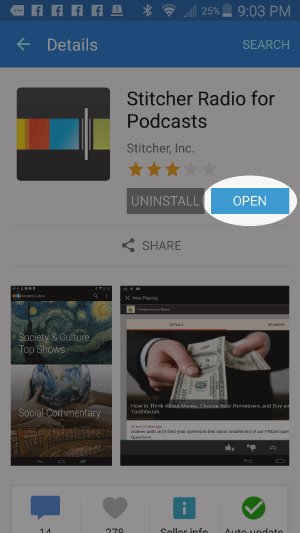
Install the Stitcher App
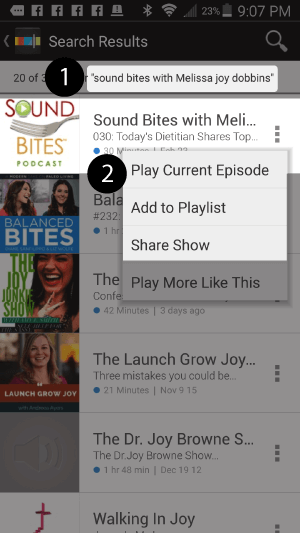
1. Search for “sound bites with melissa joy dobbins” 2. Choose Play Current Episode or Add to Playlist
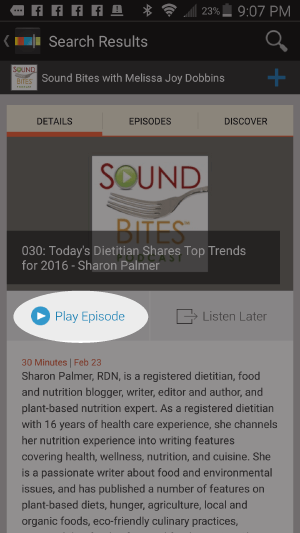
Choose “Play Episode”
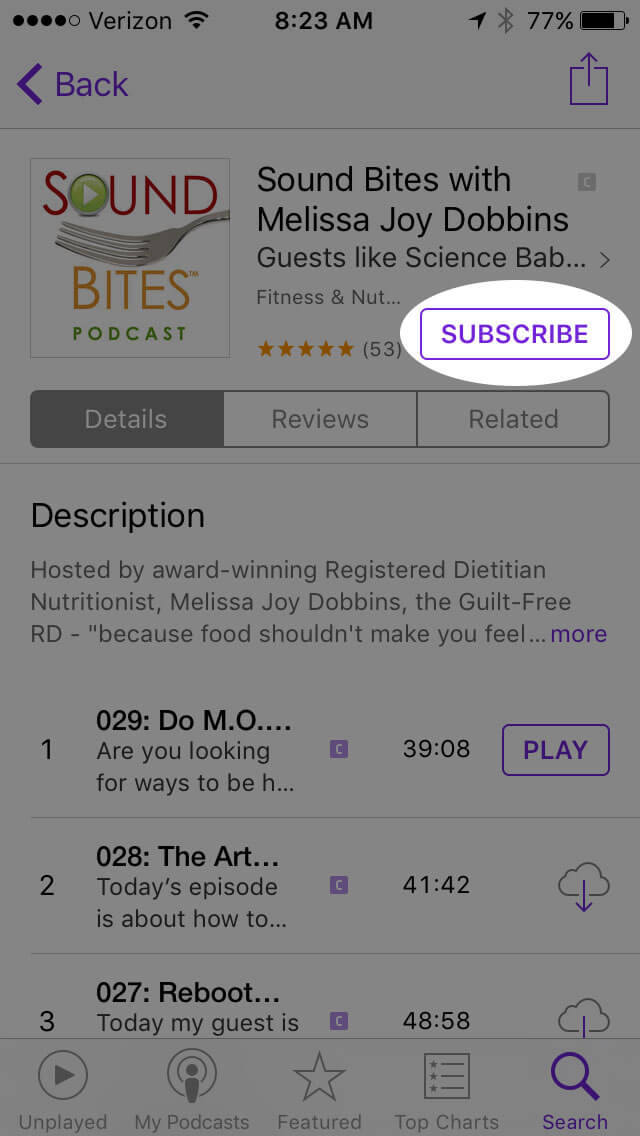
Subscribe & Review on iPhone
Open the “Podcast” app on your iPhone
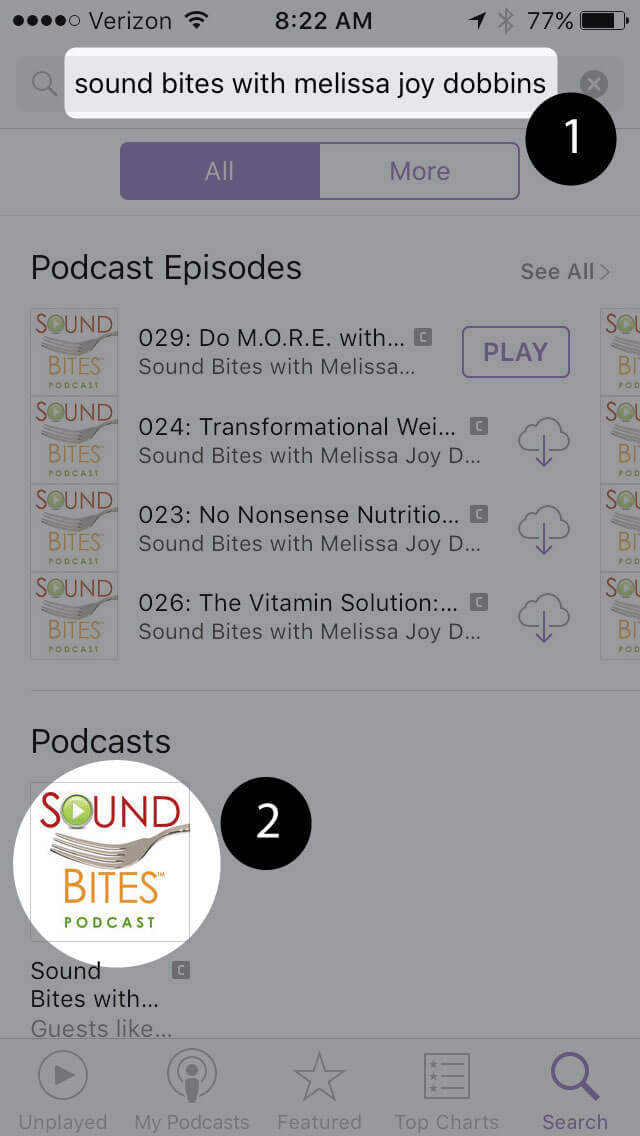
Search for “Sound bites with melissa joy dobbins”
Open the podcast and click “Subscribe” and your done!
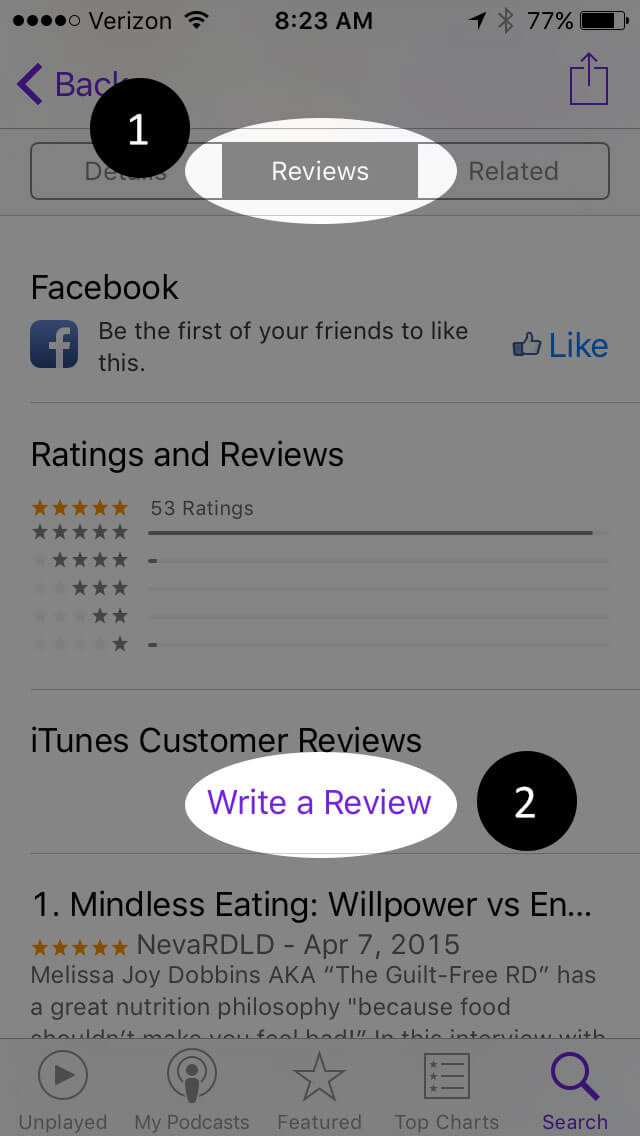
Write a Review
Click “Reviews”, then “Write a Review”.
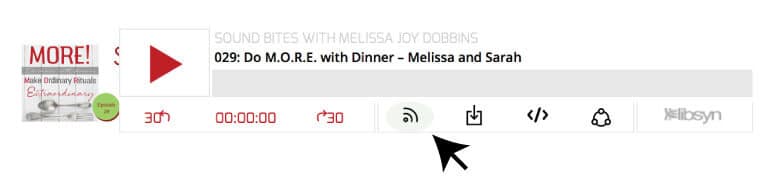
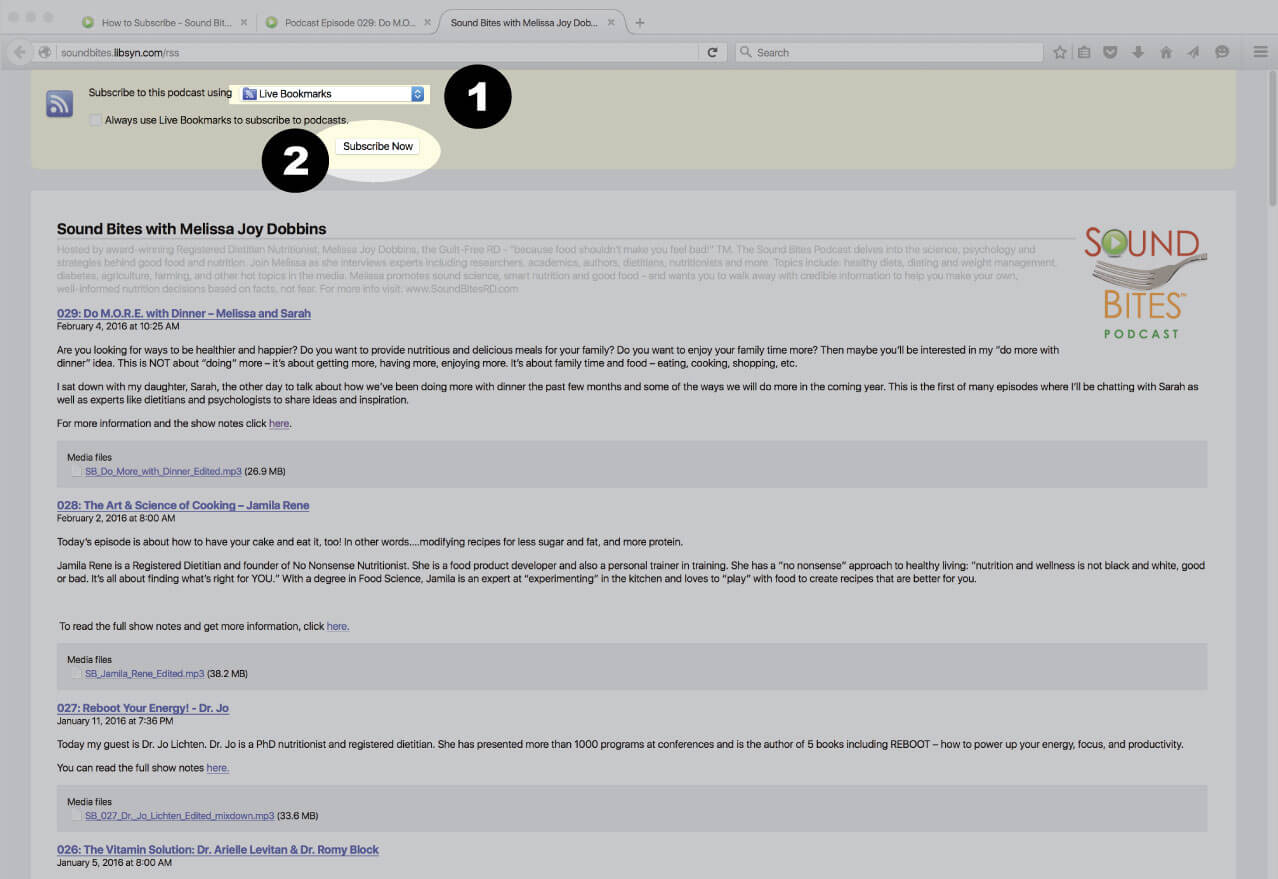
Subscribe via RSS Feed
Navigate to any podcast player . Click on the RSS feed icon.
Click on the RSS feed icon.
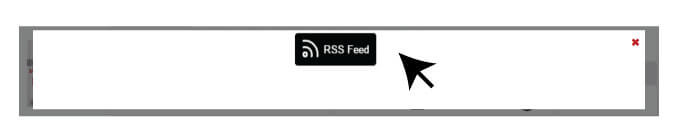
Click on RSS Feed
Choose which application you would like to use to receive the RSS feed
Click “Subscribe Now”
Confirm settings and subscribe.
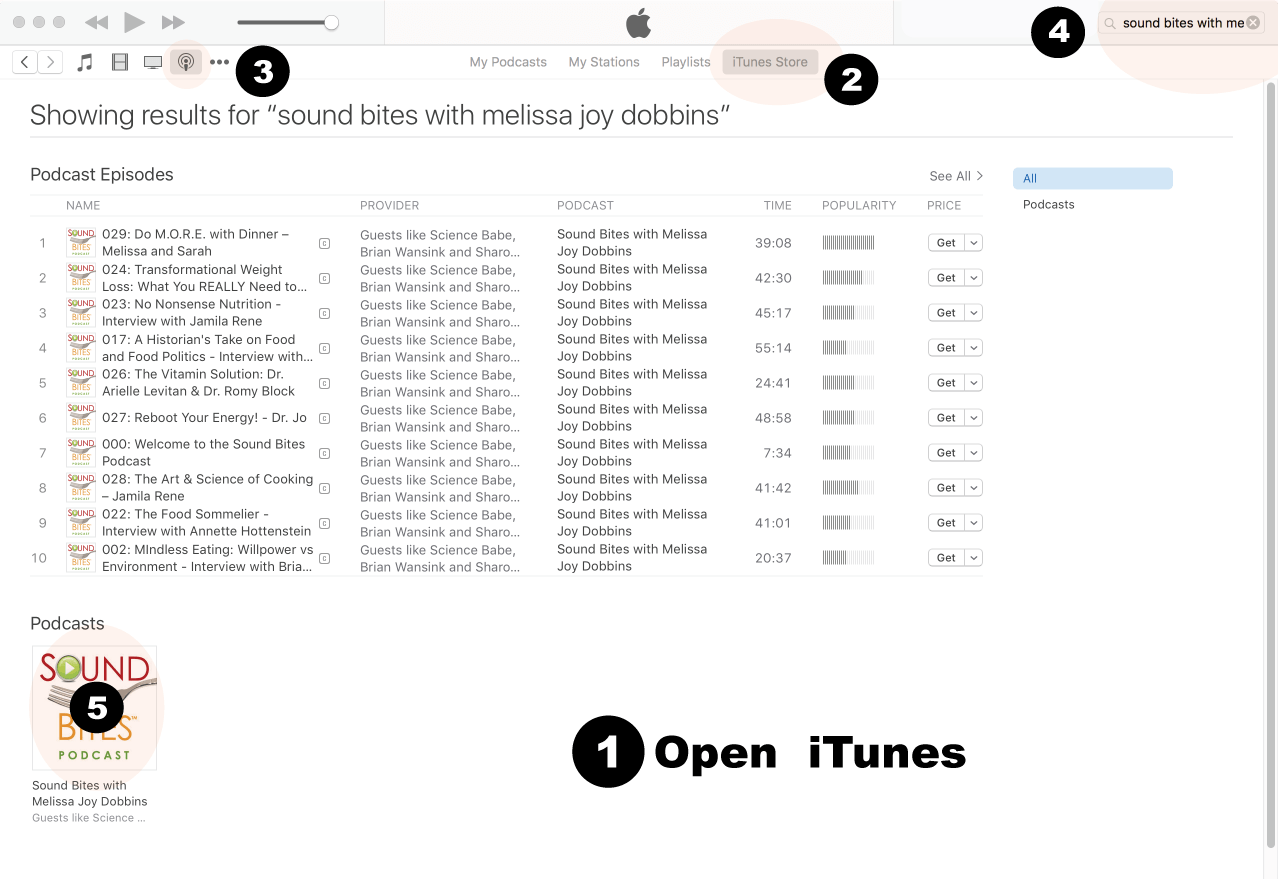
How to Review in iTunes
Open iTunes desktop application
Click iTunes Store
Click on Podcasts
Search for “Sound bites with Melissa Joy Dobbins”
Click on podcast image
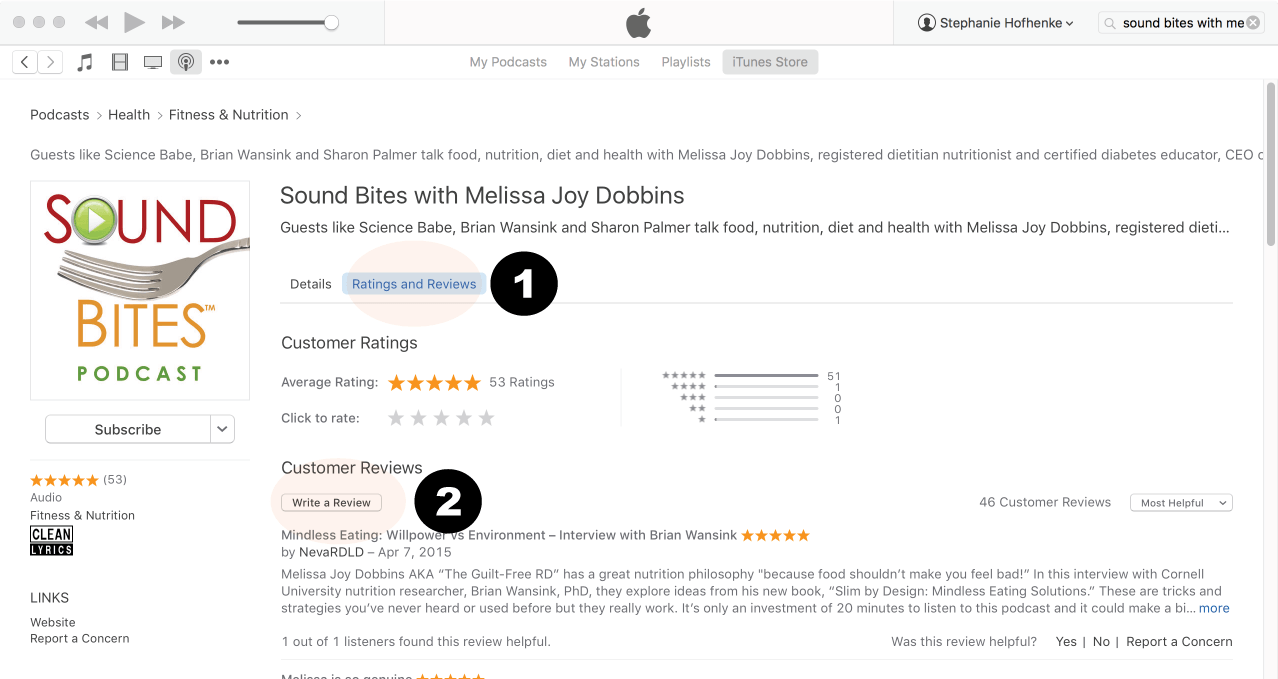
Search for Sound Bites podcast in iTunes
Click Ratings & Reivews
Click Write a Review
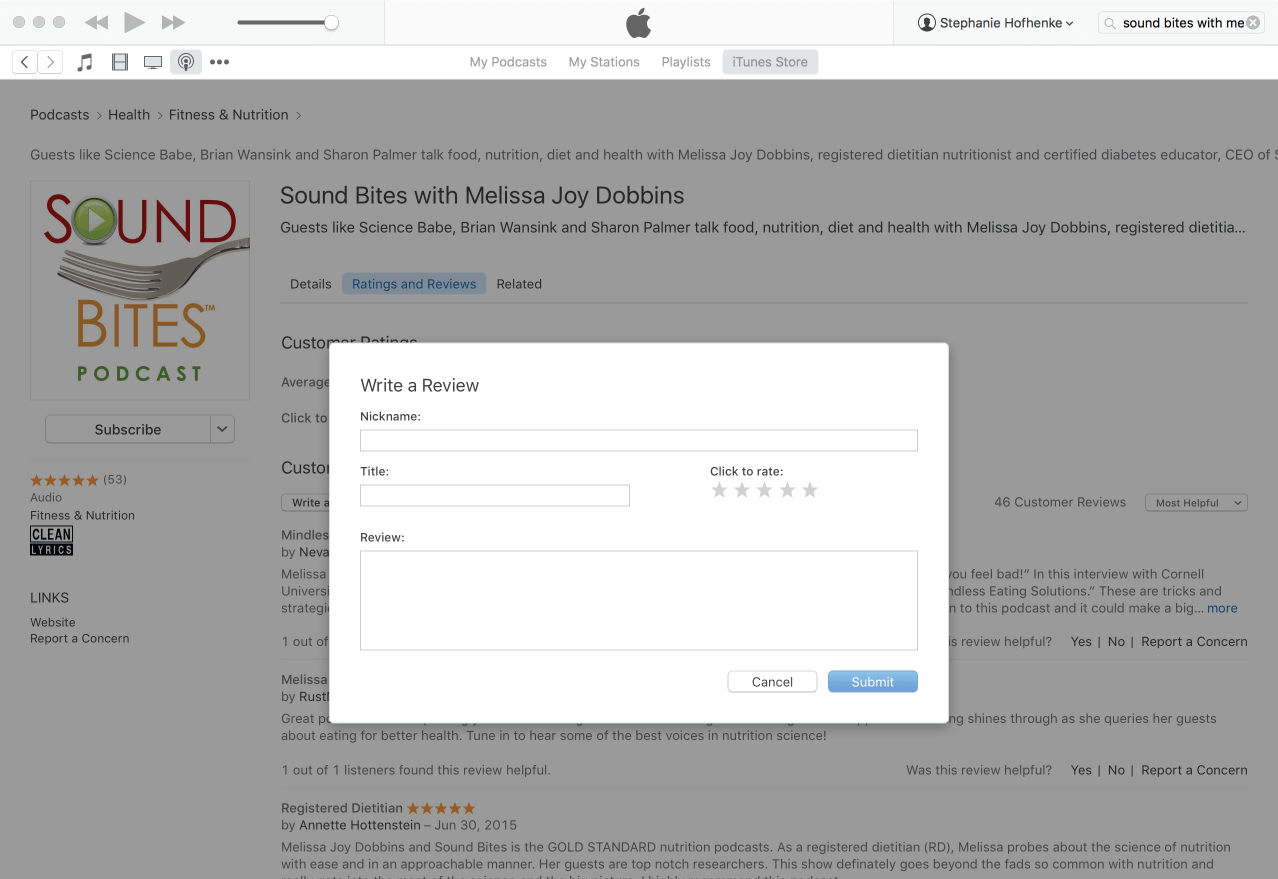
View reviews and write your own review.
Write your review…. Thank you!
Write your review!
How to subscribe via iTunes
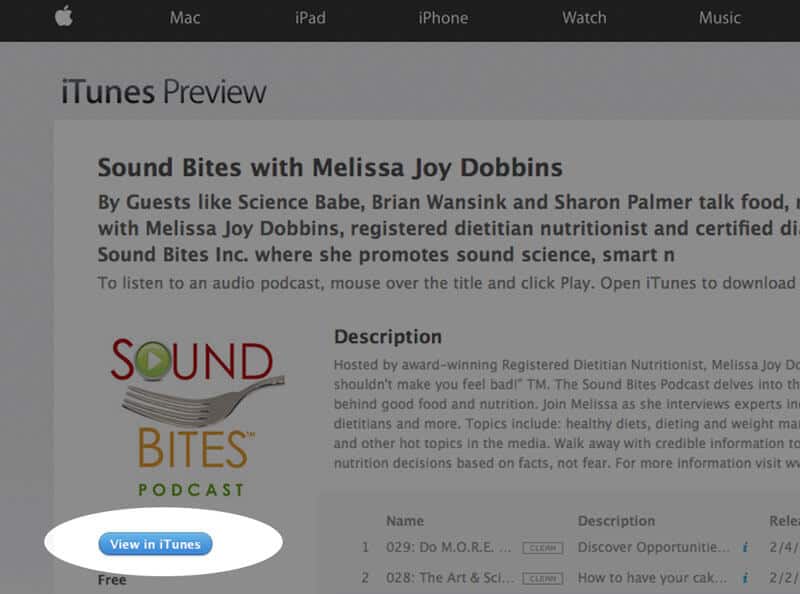
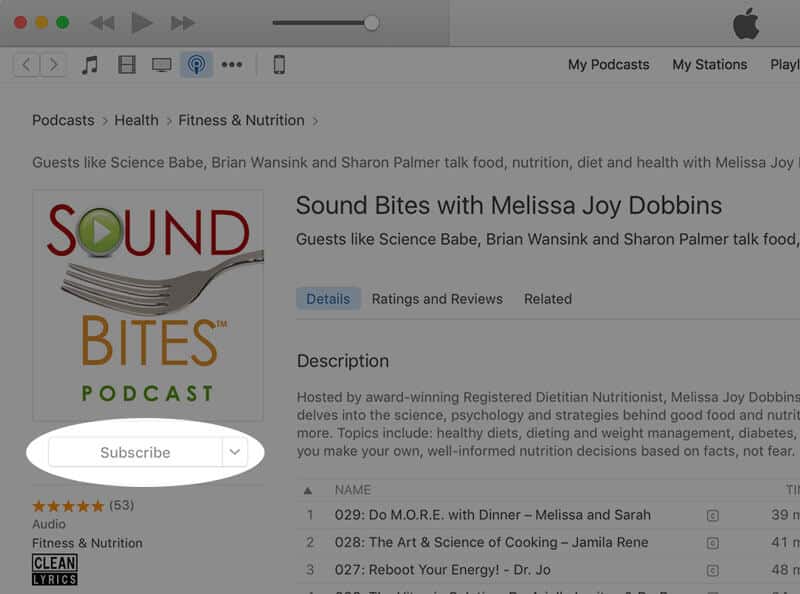
Click here to view the Sound Bites Podcastin iTunes, then click the blue “View in iTunes” button. This will open your iTunes application directly to Sound Bites Podcast. Click the “Subscribe” button, and your done!





 Jennie Norka is the Senior Director of Scientific and Regulatory Affairs at the American Frozen Food Institute (AFFI), where she leads efforts to advance food safety, nutrition, and regulatory priorities in the frozen food industry. With a background in food science, public health, and nutrition, she collaborates with federal agencies, nonprofits, and industry stakeholders to support research, policy advocacy, and consumer education. Her work in nutrition focuses on expanding access to frozen foods through federal feeding programs, supporting consumer choice and dietary health, creating nutrition resources, and advancing research on frozen foods. Jennie holds a Master of Public Health in Nutrition from UNC-Chapel Hill and a Bachelor of Science in Food Science from Purdue University. Her experience spans community nutrition programs, food safety, quality assurance, and training development.







Thank you very interesting
Thanks Melissa!
Great content! Appreciated the podcast & that CEU’s were available!
Thanks Theresa! So glad you enjoyed the episode and the CEUs, too!
Melissa