Celebrating over 1 Million Downloads and 50,000 Free CEUs on the Sound Bites® Podcast | NEW: Get 1 years’ worth of CEUs with the new 15-CEU Podcast Course
Click here to earn 1.0 FREE CEU for listening to this podcast episode! Support Gut Health and Holistic Wellbeing with Science-Based Strategies awards 1.0 CPEUs in accordance with the Commission on Dietetic Registration’s CPEU Prior Approval Program.
Disclosure: This episode is sponsored. Commercial support has been provided by Danone North America & Activia. Dr. Hannah Holscher is a paid consultant to Danone North America. No brands are discussed or promoted.
Science-Based Strategies to Support Gut Health and Holistic Wellbeing
Gut health and the gut microbiome play an important role in overall wellbeing, including digestion and immunity. This episode explores the latest research and practical strategies for promoting gut health through nutrient-rich dietary patterns, lifestyle factors, and the inclusion of probiotics and fermented foods.
Tune into this episode to learn about:
why the gut is such an important foundation for overall health
what the gut microbiome is and how diet shapes it
key roles of the digestive tract and how the microbiome factors in
how long it takes for the microbiome to respond to dietary changes
research on how diet quality and variety impact the gut microbiome
how plant-based foods and fermented foods impact microbial diversity
definitions of prebiotics, probiotics, synbiotics and postbiotics
strain-specific probiotic effects
lifestyle factors that impact gut health
practical steps to support gut health
how dietitians can simplify the science for clients
resources for health professionals and the public
When we think about fermented food, one of the desired benefits of having converted milk into yogurt is the microbes present have the ability to break down lactose. If someone has lactose maldigestion or lactose intolerance, with something like yogurt, you are able to tolerate that much better than something like drinking a glass of milk.” – Dr. Hannah Holscher
Hannah Holscher, PhD, RD
Dr. Hannah Holscher is a registered dietitian and professor at the University of Illinois Urbana-Champaign, where her research explores how nutrition and the gut microbiome interact to influence health. She is a nationally recognized leader in the field, with numerous awards and a passion for translating science into practice through publications, presentations and media outreach.
Resources
Some links may be affiliate links. As an Amazon Associate, I earn from qualifying purchases.
Baldeon AD, McDonald D, Gonzalez A, Knight R, Holscher HD. Diet quality and the fecal microbiota in adults in the American Gut Project. The Journal of Nutrition. 2023; 153(7): 2004-2015.
Baldeon AD, Holthaus TA, Khan NA, Holscher HD. Fecal microbiota and metabolites predict metabolic health features across various dietary patterns in adults. The Journal of Nutrition. 2025; 155(6): 1795-1803.
McDonald D, Hyde E, Debelius JW, Morton JT, Gonzalez A, …, The American Gut Consortium, Knight R. American Gut: an open platform for citizen science microbiome research. MSystems. 2018;3(3):e00031-18.
Holscher HD, Taylor AM, Swanson KS, Novotny JA, Baer DJ. Almond consumption and processing affect the composition of the gastrointestinal microbiota of healthy adult men and women: a randomized controlled trial. Nutrients. 2018;10(2):126.
Holscher HD, Guetterman HM, Swanson KS, An R, Matthan NR, Lichtenstein AH, Novotny JA, Baer DJ. Walnut consumption alters the gastrointestinal microbiota, microbially derived secondary bile acids, and health markers in healthy adults: a randomized controlled trial. The Journal of Nutrition. 2018;148(6):861-867.
Thompson SV, Bailey MA, … Holscher HD. Avocado consumption alters gastrointestinal bacteria abundance and microbial metabolite concentrations among adults with overweight or obesity: a randomized, controlled trial. The Journal of Nutrition. 2021; 151(4) 753-762.
Mysonhimer AR, Brown MD, Alvarado DA, … Miller MJ, Khan NA, Holscher HD. Honey added to yogurt with Bifidobacterium animalis subsp. lactis DN-173 010/CNCM I-2494 supports probiotic enrichment but does not reduce intestinal transit time in healthy adults: A randomized, controlled, crossover trial. The Journal of Nutrition. 2024. 154(8):2396-2410.
Cannavale CN, Mysonhimer AR, Bailey MA, Cohen NJ, Holscher HD, Khan NA. Consumption of a fermented dairy beverage improves hippocampal-dependent relational memory in a randomized, controlled cross-over trial. Nutritional Neuroscience. 2023; 26(3): 265-274.
Welcome to Sound Bites, hosted by registered dietitian nutritionist, Melissa Joy Dobbins. Let’s delve into the science, the psychology, and the strategies behind good food and nutrition.
Melissa Joy (00:23):
Hello, and welcome to the Sound Bites Podcast. I’m your host, Melissa Joy Dobbins, a registered dietitian nutritionist and certified diabetes care and education specialist.
We’re coming to you live from the expo hall floor at the 2025 Food and Nutrition Conference and Expo, the annual meeting of the Academy of Nutrition and Dietetics, and the world’s largest gathering of food and nutrition professionals.
This episode is part of a four-part series from Danone North America. Today’s episode is brought to you by Activia, and has been approved for one CPEU by the commission on dietetic registration.
Throughout the series, I’ll be sitting down with experts to explore the latest science and practical strategies that help people of all ages eat well and feel well. And because we’re recording live here at FNCE, we’ll also be taking questions from the audience. So, be sure to stick around until the end of each episode to hear these questions answered by our guests.
Today’s episode takes a closer look at gut health, and specifically, the gut microbiome, which plays a vital role in digestion, immunity, and even overall wellbeing. We’ll explore how the foods we eat influence this complex system and what that means for supporting health at every age.
I’m thrilled to be joined by Dr. Hannah Holscher, a registered dietitian and professor at the University of Illinois Urbana-Champaign, where her research explores how nutrition and the gut microbiome interact to influence health. She’s a nationally recognized leader in the field with numerous awards and a passion for translating science into practice through publications, presentations, and media outreach.
Dr. Holscher and I are both paid consultants to Danone North America to share the science and support for yogurt’s role in a healthy eating pattern. Commercial support for this series has been provided by Danone North America. Hannah holds a voluntary seat on the scientific advisory board for the International Scientific Association for Probiotics and Prebiotics.
Hannah, welcome to the podcast. Thank you for traveling to Nashville to be with us today.
Dr. Hannah Holscher (02:33):
Oh my gosh, this is amazing. The energy here on the expo floor is just electric.
Melissa Joy (02:38):
It is, for sure. We’re live. Before we dive in, let’s set the stage for our listeners about why the gut is such an important foundation for overall health. It’s common to think about the digestive system as just digestion, but it’s an extremely complex system that performs many vital functions and science suggests its role is much broader.
Can you explain why it’s important to view gut health as foundational to overall wellbeing?
Dr. Hannah Holscher (03:12):
Yeah, so as you mentioned, the gastrointestinal tract is really a complex ecosystem. So, when we even just think about the different cells in the intestine, you have four different cell types. So, one’s enterocytes to do digestion and absorption, but then we also have cells that are called interendocrine cells, and those secrete hormones.
So, we can think about those hormones having effects both locally to be able to affect the transit time but those hormones are also signaling to the brain. So, that’s why we’ve got all of this buzz and entrance in the gut brain access.
We also have other types of cells in our intestines that secrete anti-microbial components because there are trillions of microbes in our gastrointestinal tract, and we have to be able to find a balance between allowing those microbes to be there and making sure we’re protecting our cells.
And then again, as we think about this ecosystem, the gastrointestinal tract is in essence an external tube, but we have to allow things to come in. We are thinking about digestion and absorption, nutrients have to come in. But one of our defense systems that we have is just right in the intestinal tract, under the M cells we have called Peyer’s patches, and that’s full of immune cells.
Those immune cells, there’s lots of different types but one thing that I find really interesting is there are dendritic cells and they’ve got these really long arms and projections, so they are actually reaching up and sampling in the intestinal tract to see what’s going on, so that our bodies can mount an immune response when it’s necessary.
So, again, the digestive tract, yes, it’s digesting and absorbing to make sure we get nutrients, but we’ve also got a lot going on with managing our metabolism and also immunity.
Melissa Joy (05:06):
Very complex, and certain things we want to come in and certain things we don’t want to come in. The term gut microbiome gets thrown around a lot. How do you define that term in your research, and what’s important for us to know and understand about the microbiome?
Dr. Hannah Holscher (05:23):
Yes, so my research laboratory studies the gut microbiome, and some of the ways we study that is through molecular methods. So, when we’re studying the microbiome, we extract the DNA from the stool samples that we’re studying from our human participants, and so we take that DNA and we sequence it.
We can sequence it a couple of different ways. If we’re interested in studying the microbiome, we sequence it in a way that allows us to see the entire genome, a whole genome sequencing approach. That allows us to see not only what microbes are there, but also to be able to understand what is their functional capacity.
There’s another term you’ll also frequently hear that’s microbiota. When we study the microbiota, we’re using a molecular technology that allows us to not only see what microbes are there, but also what is their functional capacity.
Melissa Joy (06:17):
I’ve never heard it explained that way so well, thank you. This is a topic that I talk about a lot on the podcast, and the more I learn, the more I have questions. So, thank you for clarifying some of this as we go along. So, what would you say are the key roles of the digestive tract and how does the microbiome factor into that?
Dr. Hannah Holscher (06:40):
So, as we think about this post microbe interaction, and the presence of microbes within our gastrointestinal tract, we have to realize, again, this isn’t a sterile environment. We have microbes throughout the gastrointestinal tract, and they’re going to increase in their density and diversity as we move throughout.
So, you can think about the stomach, it’s a really acidic environment, so very few microbes can reside and live in there versus the small intestine against some microbes present. But because the chyme is moving really rapidly through there and there’s a lot of bile acids, there’s a lot of enzymes being secreted, it’s not a very conducive environment for microbes to be able to spend a lot of time, so not as much density or diversity there.
When we get into the colon, that is where we have the densest and most diverse microbial population. It has an environment conducive to that. The oxygen content is much lower, the transit time is much slower, and there is a lot more hopefully non-digestive components for them to use. So, this is when we get into that area of dietary fiber, for example.
So, we have digestive enzymes that allow us to break down some carbohydrates, things like starch. It’s got an alpha-1-4 glycosidic bond, our salivary amylase and pancreatic amylase can break that bond.
But if we just switch the configuration of the alpha to beta, it’s actually cellulose, those glucose molecules connected by beta-1-4. We can’t break down cellulose, we can’t please that beta-1-4, but some microbes can in the gastrointestinal tract.
Not as many are breaking down cellulose when we think of the human gastrointestinal tract, but just to use that example, it’s really this beta configuration. So, these configurations that we don’t have the digestive enzymes for, and this is such a fascinating area to me.
So, to give you an idea of the complement of the microbiome to our own host digestive enzymes for non-digestible carbohydrates. So, we’ve got carbohydrates — our genetic capacity, we have the genes to make enzymes for approximately 16 different enzymes. The microbiome, it’s like 16,000. So, there are so many complex hydrolase activities that these microbes can have.
And we have to have that because things like fruits, vegetables, full grains, nuts and legumes contain lots of different types of fibers, and all of those fibers are made up by different types of sugars that are connected through lots of different types of linkages.
So, when we think about the complement for our diet in the microbiome, having a really diverse plant-based diet is going to provide a nutrient source for lots of different types of microbes that can break down all of that array of the complex carbohydrate.
And that’s important because when the microbes break down the dietary fiber, they’re providing energy sources for our colonocytes, short-chain fatty acids — those short-chain fatty acids act in the intestine, they also have systemic effects.
And so again, we’ve just got this really interesting and complex collaborative activity in a sense that’s going. So, we do want to think about our microbiome when we’re eating. We need to help nourish it through lots of fiber food, so it’s a really cool synergy.
Melissa Joy (10:14):
It’s so awesome to see your passion for this topic. Having a variety of foods in the diet is one of our foundational basic recommendations for people and I love getting into some of the reasons why, and also, we think of fiber soluble, insoluble, and there’s so many more types within that and that variety is so key. So, I’m so excited that we’re talking about this and learning more about this.
How quickly can the microbiome respond to dietary changes? Are we talking, days, weeks, months?
Dr. Hannah Holscher (10:49):
So, when we think about the time of course, for how rapidly the diet is going to have an effect on the microbiome, it’s going to vary. One of the original studies that demonstrated there could be a very rapid and reproducible effect had really extreme differences in the diet.
So, the dietary fiber was about twice of the DRI amount they were getting, I think it was 25 grams of fiber per thousand kcals, and the DRI is 14 per thousand. So, really high in fiber, really high in plant foods, and the other diet that they were using in that David study was no fiber.
It was very high in meat, processed meat, processed cheeses. So, with that study, it was nice because it showed with dietary extremes within about three to five days, yes, you can rapidly and reproducibly affect the microbiome.
Now, when we think about the types of recommendations we’re going to be making to patients or our family or clients, those changes are going to take a little bit longer. So, for the types of studies that I do, for example, you may be having an avocado per day or 40 to 50 grams of almonds or walnuts.
So, when we have these translationally relevant doses, when we study them, we don’t tend to look any earlier than about three weeks. You probably start to see some changes around the one-week mark you’ve got … and this kind of maps back to thinking about people’s transit time, and also the sloughing of intestinal epithelial cells.
The turnover is about three to five days for those intestinal epithelial cells, and then we can think about having regular bowel movements every day, every couple of days — you’ve got kind of an opportunity to have a full turnover of the ecosystem in about a week’s time. So, looking at those sustained changes, you’re going to need a couple of weeks to start to see those more robust and reproducible changes.
And again, when you’re looking at these more subtle changes, you are not going to change the entire microbial ecosystem. You’re going to provide an opportunity for microbes that have the functional capacity to break down the fibers in those foods to be enriched.
They’re going to be able to bloom because they’re going to have a nutrient source that allows them to have a competitive advantage, and so that they can bloom in that environment. So, for our studies on walnuts for example, it took about three weeks to get an enrichment of Roseburia that was statistically significant.
Melissa Joy (13:22):
Interesting. And part of those cryptical recommendations that we’re giving patients have to do with obviously, you want to increase your intake of fiber gradually, so that makes sense. I’d love to dig a little deeper into how the diet shapes the microbiome.
Your lab has published some large-scale studies looking at how overall dietary patterns, not just single nutrients, relate to the gut microbiome. So, can you share what you’ve learned from that research?
Dr. Hannah Holscher (13:52):
Yeah, absolutely, I’m glad you asked. So, I was really fortunate to be involved in some of these larger scale studies at their inception. So, The American Gut Project was one of those larger scale studies where they were able to enroll over 10,000 citizen scientists to submit stool samples so their microbiome could be sequenced.
And what we captured in that study was there was a validated food frequency questionnaire, it used VioScreen, but there was just a simple question that asked them, how many different plants did you eat in the last week? And individuals would count that up. All of the different types of fruits that they ate, apples, bananas, pears, all of the different vegetables they were eating.
So, again, we’re thinking about there was a wide array. You can have eggplant, you can have broccoli, you can have lots of different colorful things like squash, pumpkin. When we move into the grains, again, you have the opportunity to have lots of different whole grains in that, seeds, legumes.
So, when they counted that over the last week, the individuals that had greater than 30 plant sources over the week compared to those individuals that recorded less than 10 different plants over the course of the week. The microbiota diversity was significantly different.
Those individuals that had consumed more than 30 plants had significantly higher microbiota diversity. So again, this is mapping back to what we were talking about, about how complex the fibers are in all of the different plant foods and they are going to provide nutrient sources for diverse microbiota.
Melissa Joy (15:32):
Very interesting and I’m glad that you specified some of the different types of plant foods because I think sometimes people think it’s fruits and vegetables, and they forget that grains are plants also and seeds and legumes, so those are all plant sources of different types of fiber.
Now, you’ve also conducted several controlled feeding trials to test how specific foods influence the microbiome. So, can you share some of that?
Dr. Hannah Holscher (16:00):
And then we’ve also been able to do another study based on participants that have gone through research in my laboratory. So, we started with about 130 participants. It was only down to about 120 when we had the microbiota and the food frequency questionnaires.
But we wanted to take this dietary pattern research one step further and not just look at the healthy eating index, but also look at other diet patterns like the DASH diet, the Mediterranean diet, and the MIND diet.
And what we found in that cohort was that there again, were differences in greater diversity with these different diet patterns. But what was really fascinating was that we were able to do some hierarchical linear regression. So, essentially, looking at the relationships between consuming a diet pattern like the DASH diet and blood pressure, which we know lowers blood pressure.
So, what we did was we systematically determined if there were associations with certain microbes and those diet patterns as well as microbial metabolites, and we incorporated them into the models. And what we were able to find is that the ability to predict adherence to the DASH diet, our ability to see if they had a reduction in blood pressure, it’s actually improved when we added the microbes and microbial metabolites into this model.
So, really what that means is that the microbes and microbial metabolites were also helping to contribute to our ability to have that reduction in blood pressure when we consume the DASH diet pattern.
So, when we think of the totality of the evidence, these were cross-sectional studies and we were looking at relationships that the regression equations we were using were controlling for a lot of factors like BMI, physical activity, sex, all of that.
So, it’s an exciting area of research because again, what we’re seeing is that the diet scores with microbiome and metabolite data, it actually predicts those metabolic markers in our blood pressure better than just alone when it’s diet and the outcome.
Melissa Joy (18:05):
So, I’m following, it’s a lot of science. Are you saying that the particular microbes are part of the reason that different outcomes are associated with different dietary patterns like the blood pressure?
Dr. Hannah Holscher (18:22):
Yeah, that’s a great question. So, yes, so when we were looking at the relationship between adherence to the DASH diet and blood pressure, that’s going to be a relationship that shows your blood pressure goes down; more DASH diet, lower blood pressure.
When we added in the microbes and the microbial metabolites, that relationship was stronger. So, you can think about the tilt of a line. So, it was a stronger relationship. The R squared is the actual value that we’re using.
I think it was around 0.2 for the DASH to the blood pressure connection, but when we added in the microbial factors, we were able to increase that to 0.3. So, those may not be the exact R squared values, but we did see about a 50% increase in that predictive capacity whenever we were able to add in those microbes.
So, again, yes, to answer your question, the microbes and microbial metabolites do appear to be underpinning that metabolic health benefit from the DASH diet, and if we want to link it back all the way, what we’ve got is microbes are breaking down these foods and they’re producing metabolites like short-chain fatty acids that can help to lower your blood pressure for example.
What was the metabolite that was actually for the DASH diet was actually a secondary bile acid. And so, the secondary bile acids, if we map back to digestion and absorption, our bodies secrete primary bile acids. We make those in our liver, and then store in in the gallbladder and secrete them when we consume a meal, it emulsifies fat.
Well, bile acids are a lot more complicated than that, microbes actually modify them and they’ll decorate them in different ways. And microbes produce secondary bile acids. And the way those secondary bile acids interact with different cells in the intestine influences signaling for hormones like GLP-1 and insulin, and just has a wide array of effects.
And so, for blood pressure, the metabolite that was most predictive in helping contribute to that lowering of blood pressure was deoxycholic acid which is a secondary bile acid.
Melissa Joy (20:30):
So, let’s scroll back to talking about some of the research with some of the specific foods that you’ve looked at in influencing the microbiome.
Dr. Hannah Holscher (20:39):
Yeah, exactly. So, we have done a number of feeding trials where we were really interested in one specific food. So, some of these studies were done in collaboration with my colleagues at the USDA Beltsville Human Nutrition Facility.
So, their Ag research station there, they had done a really elegant complete feeding study where the primary question they were interested in was metabolizable energy of the diet. Because what they suspected and were able to actually test and confirm is that the metabolizable energy of nuts like walnuts and almonds is actually lower than predicted by Atwater factors, the values we use to calculate and put on the nutrition facts labels.
So, they set out to test that hypothesis. And so, the only difference between their baseline background diet, and the intervention diet so either walnuts or different types of almond was the inclusion of those almonds.
And what they found in their primary study is the walnuts had about a 20% lower metabolizable energy than was predicted by the Atwater factors. And so, my lab was able to follow that up and look at how are microbes changing when we do that because there’s more energy available in that diet that had the walnuts in it than the control diet, more energy available to the microbes.
And so, what we reported in that study was an enrichment in Roseburia, an enrichment of the Faecalibacterium. So, these are microbes that can break down fiber and make short-chain fatty acids. We also saw that there were lower secondary bile acids.
And this is a good thing because high concentrations of secondary bile acids can be cytotoxic, they can be damaging to the colon, they’re related to higher rates of colorectal cancer and even liver cancers. So, having the walnuts in the diet, there was lower secondary bile acid concentrations and a greater proportion of some short chain fatty acid producing microbes.
My lab just finished another complete feeding trial where we replicated this study and we were really interested in looking at the food matrix, so walnuts, walnut oil, and then our control condition was a corn oil condition, and those were incorporated within muffins. So, again, these meals were absolutely identical between the different conditions, and again, we saw an enrichment in Roseburia, and we saw a reduction in these secondary bile acids.
And what was absolutely just so interesting was we were really interested in connecting this back to glycemic control for that particular study. So, we did mixed meal tolerance test, and measured their glucose over six hours, and the walnut condition had a lower insulin secretion than when individuals consumed a corn oil condition.
And so, we have been looking at the bile acid profiles for this and thinking about how they’re signaling through FXR (farnesoid X receptor) and different incretin hormones. And so, this is just a really interesting area and that’s just for the walnut.
For the avocado research, again, avocados, might kind of fly under the radar as being really high in fiber, but they are, and they’re also high in unsaturated fatty acids. And so, we can think about those two different nutrients that we’re interested in for the microbiome.
So, for that one, we did find in a 12-week dietary intervention, we just provided one meal per day for that one, people mostly substituted their lunches. So, we had a control condition and an intervention condition with the avocado, followed it for 12 weeks.
And with the avocados, there was again, an enrichment in the Faecalibacterium, Lachnospira was another main one that was enriched and also short-chain fatty acids as a whole, and then also for that two carbon short-chain fatty acid. So, it was enriched and a reduction in these secondary bile acids.
You’re kind of seeing a trend here. These high fiber, high unsaturated fat foods are able to enrich microbes that can break down fiber, make short-chain fatty acids, and also reduce these more pro-inflammatory secondary bile acids. So, that was really interesting. And we did just also finish another complete feeding trial where we were following up on that work, and we saw replication of those results.
So, an enrichment of Lachnospira increased concentrations of acetate with avocado and a reduction in secondary bile acids. And so, we’ve been mapping that back to the different metabolic health benefits that we saw, which included things like a reduction in blood pressure.
Melissa Joy (25:13):
Excellent. Well, as a diabetes educator, you really piqued my interest with the glycemic control, and the decreased insulin secretion, so I’ll stay tuned for more research on that. You also have been extending your work into fermented foods, so I’d love for you to address that. Like how live microbes from foods like yogurt or kefir or “cah-feer” as some people say are affecting the gut. What have you found there?
Dr. Hannah Holscher (25:42):
We’ve done research and published it on a yogurt intervention, and also using kefir. So, with the kefir intervention, this was a randomized crossover design study and we were really interested in the gut brain access. And so, we had a control kind of milk condition. We use Lactaid versus a kefir.
And so, the reason you would use Lactaid is those microbes are breaking down the lactose and making it. That’s part of the reason why even if you tend to have some lactose maldigestion, those microbes in the fermented milk products can really help for you to be able to tolerate something like a kefir or a yogurt better than drinking a straight glass of milk.
And so, the control was a Lactaid versus the kefir, and we were interested in the gut brain access. We did see some improvements in hippocampal function with the kefir condition. The microbiota changes were primarily an enrichment of all the microbes that are known to be in the kefir that we studied.
So, we were able to quantify those and say yes, in fact, there was an enrichment of those. So, we could use that as both a fidelity measure, compliance, the study participants were drinking the beverage every day for three weeks.
And then also, we were able to track that through their microbiome. And then the connection with the improvement in hippocampal function. Since it was a smaller study around 20 participants, we didn’t see any mediating or moderating effects of the microbial enrichment with the cognitive health outcome.
So, we can’t say if those were benefits that were traveling together, if the microbes were actually underpinning it. But regardless, it was a randomized control trial and we did see that benefit with consumption and some hippocampal functions. So, thinking about cognitive benefits and brain health benefits.
Another randomized control trial that we did, we were interested in food pairings, especially when someone consumes a plain yogurt. When we build that plain yogurt parfait in the morning (at least me) — well I’m usually putting some whole grains on there, some nuts seeds and some berries, and also some honey. That’s what I will use to sweeten it.
And so, that study we did actually want to test that culinary carrying of a yogurt with honey in it with the research question of probiotic survival. What had been shown before we did our study in the literature was that honey could help with probiotic survival better than micro encapsulation.
And they were doing these studies in vitro. They’re testing them in Petri dishes and in plate methods, and found that honey was as effective, far more effective than microencapsulation of some common probiotics that are studied, so Bifidobacteria for example.
And so, we use a yogurt that had a probiotic Bifidobacteria that had been shown to improve regularity in individuals that have slower intestinal transit time. So, most of the work that had been done with this particular probiotic yogurt had shown benefits with increasing intestinal transit time when you had a bit more of a dysregulation.
So, thinking, not quite constipation, but with some of the patients had had constipation that had been studied for this probiotic and they saw benefit. But we were testing it in individuals that had between three and six bowel movements per week, so they were recording a bit of a dissatisfaction with their bowel movement, but they certainly didn’t have constipation.
And when we looked at the actual final data, we tracked their intestinal transit time using blue dyes. And so, they consumed the blue dye and in a capsule it’s just a safe food dye, and then they would mark down in their journal when they had it. We did three different pills, and then average that time with their intestinal transit.
When we did the actual testing of their baseline intestinal transit time, the average was right at six per week. They were having bowel movements most days. And when we did do the yogurt, we didn’t see a statistically significant improvement in intestinal transit time because we’re really already looking at about one bowel movement per day.
But we did see that the honey was able to improve the survivability of the probiotic better than when it was consumed alone. So, we saw more of the probiotic whenever it was in that culinary pairing of yogurt with honey than it was just the standard, but there was still no change in any of the groups.
The heat-treated yogurt that destroyed the probiotic, the plain yogurt with the probiotic or the yogurt with the probiotic and the honey; all of the bowel movement maintained the same kind of relationship for that.
So, there wasn’t a decrease in this kind of already normal healthy intestinal transit time, but that work was really interesting because again, it kind of gets back to what we were discussing earlier with dietary patterns.
We eat foods, we really eat meals, we’ll snack on things, and so when we think about making recommendations, it really has to be thinking about these culinary pairings and meal patterns and ways that individuals can incorporate dietary recommendations in their lives that are manageable for them.
And so, it was still a great study, an interesting study, and I thought an interesting scientific study because we did show that even in our yogurt when we did the Petri dish components, there was better survival of the probiotic with the honey.
Melissa Joy (30:57):
That’s very interesting. Thank you. So, we’ve talked about probiotics and prebiotics a little bit. Can you break down the difference? It’s kind of confusing to people including myself sometimes.
Dr. Hannah Holscher (31:09):
Yes, probiotics and prebiotics, those terms can be really confusing. So, I’m a big fan of mnemonic devices, and I like to break down the words and look at their spelling. So, when I see the word probiotic, I’m homing in on that O, and thinking organism. So, these are live microorganisms that when consumed in adequate amount confer benefit to host health.
When I look at the word prebiotic, I’m homing in on the letter E and I’m thinking energy. So, prebiotics provide energy for microbes. So, these are substrates, mostly fibers that are going to be able to be broken down by certain microbes and enriched in a way that can benefit post health. So, again, probiotic, O organism; prebiotics, E for energy. Hopefully, that helps.
Melissa Joy (32:01):
Thank you. I hadn’t heard the O and the E; that’s a great way to try to remember it.
Dr. Hannah Holscher (32:05):
So, the most well studied prebiotics would be things like inulin-type fructans. You can find inulin-type fructans isolated from foods and added into different food products. You’ll see them on the label like chicory root fiber; agave fibers are also becoming more commonly studied, and you’ll also find them intrinsic and intact in foods they’re not as highly concentrated in, and why they’re not isolating them from them for the food products.
But things like artichokes and garlic and onions are also good sources of prebiotic fibers, those inulin-type fructans. So again, probiotics are the live microorganisms, it has the O; prebiotics are the metabolizable substrates that microbes use, we can’t break them down, but the microbes can.
For the most part, they’re dietary fibers. But not all fibers are prebiotics because not all fibers can be fermented by microbes. And some fibers don’t make the prebiotic designation because they are able to be a nutritional substrate for a lot of different types of microbes so they don’t selectively enrich. So, with the prebiotics, that’s the energy for just a select few microbes.
And for the most part what we see in the literature, we published a systematic review on this in advances in nutrition a couple years ago. Riley Hughes is the first author, but when you do the systematic review and look at this with the prebiotic inulin-type fructans, you see enrichment of Bifidobacteria, Lactobacilli, and in some cases Faecalibacteria are the main ones being enriched in the human gut.
Melissa Joy (33:39):
Or do we need to know other terms like synbiotics or postbiotics? Those aren’t as common, but …
Dr. Hannah Holscher (33:46):
Yeah, certainly synbiotics and postbiotics are becoming way more common and people are asking about them. So, certainly, understanding those definitions, I do think there’s value in that. And then I was also able to participate on the scientific panel that came out with the synbiotic definition. So, I’m one of the scientists that was involved in that conversation.
So, what we did for the most recent definition of symbiotic and this was a scientific panel organized by ISAPP (International Scientific Association for Probiotics and Prebiotics), and then publish in Nature Reviews, Gastroenterology and Hepatology. And so, this definition, we did it in two ways.
We did it first as thinking about a complimentary synbiotic using the root word, “syn”; “syn” meaning “and” — so, a probiotic and a prebiotic. So, a synbiotic in its simplest form, the complimentary synbiotic is simply an accepted prebiotic and an accepted probiotic in a dose that’s previously been shown in a clinical trial to have a health benefit.
Now, to meet that synbiotic definition, there does need to be another clinical trial testing that specific combination to ensure that that health benefit is still maintained. And so, the other component of the synbiotic term is a synergistic synbiotic, and synergy can be really hard to come by when you study it in a biological system.
But when we boil it down, what we are essentially pointing to was that in these cases, a lot of times, the prebiotic was more likely to be a substrate that the microbe would use to have a better chance to survive in the gastrointestinal tract, and thrive, and then interact in the gut and produce metabolites that could have a health benefit.
When we think about synbiotics, oftentimes you’ll see them in sachets or capsules and they’re quite small amounts. And so, you may be able to have a synbiotic formulation that is a probiotic in 200 milligrams of a substrate that you could put into a capsule.
But for the most part, when you’re thinking about the complementary synbiotic, the prebiotic paper, the research that they summarized at that time suggested that you really need at least two, three, probably five grams of the prebiotic before you can start to see a measurable benefit in an adult.
And we’ve done research studies on this with prebiotic fibers where you can look at almost a dilution effect. We provided 5 and 7.5 grams of an agave inulin fiber, and when you map that back to how many calories someone was consuming, you saw a greater bloom in Bifidobacteria when that 5 grams or 7.5 grams of the inulin per day was in someone consuming closer to 1,200-1,800 calories when you think more of the female, a lot of our female participants were on that lower 2,000, and we didn’t see as much of a bloom in bifidobacteria in our participants that were consuming 3,000 calories per day.
Again, you’ve got this dilution effect where you’ve got seven grams of fiber in their total diet, which could be several hundred grams of nutrition throughout the day. So, bottom line, when we do these synergistic synbiotics, that substrate is mostly going to be benefiting the microbe. And then again, you would need to test that hypothesis that you have a synbiotic in a clinical trial and demonstrate that there is immeasurable benefit for that synbiotic.
The final term you asked about was postbiotics, and again, postbiotics, this is probably the one honestly that has the most confusion around it. This is one of the newer terms that ISAPP organized a scientific panel around, and this is thinking about the microbial components and their metabolite.
The postbiotics for the ISAPP definition, these are going to be heat treated microbes in their microbial components so they’re no longer live microbes. But for those postbiotics, it could have the cell components and also the metabolites, and this is important because those cell wall components of microbes can have positive immune stimulating benefits.
Because again, we talked about in the very beginning how dendritic cells are reaching into the intestine and sampling. And when they sample these microbes that are commensal ones where they’re like, “This is fine, I don’t need to sound an immune alarm to extract this microbe,” those can have immune modulating benefits.
So, the postbiotics are … the most heavily studied would be Akkermansia at this point. And then oftentimes, they’ll also have microbial metabolites that Akkermansia can produce, like propionate could be in the mix. So, postbiotics I’d say, again, we don’t have a lot of products on the market, but there’s a lot of interest in the area and it’s definitely growing. But yeah, those would be the biotic terms.
And then our other term that we’re all very interested in is thinking about fermented foods. And ISAPP also has a definition for that where we’re thinking about these foods made by desired microbial activity, and producing a final product.
To be fermented food by the ISAPP definition, it doesn’t have to provide a health benefit, but the microbes do have to create a desired product. We’re not talking about moldy bread on the counter, we’re talking about sourdough, or we’re talking about yogurt. And when we think about that fermented food, one of the desired benefits of having converted milk into yogurt is the microbes present have the ability to break down lactose.
And you are talking about this and how if someone has lactose maldigestion or more importantly, lactose intolerance, something like yogurt, which has been broken down by microbes starting to break down that lactose and then continue to break down lactose in the intestinal tract so that you don’t have to, you are able to tolerate that much better than something like drinking a glass of milk.
And so, again, fermented foods by an ISAPP definition don’t have to have a health benefit, but they often do because of that microbial activity and the microbial enzymes that are produced.
Melissa Joy (39:54):
Thank you. Very interesting. We also hear the term “strain specific.” So, what does that mean when we say certain probiotic benefits are strain specific, and how do we want to think about this in our practice?
Dr. Hannah Holscher (40:08):
I love that question about strain specificity. I think of it as when someone has high blood pressure, a doctor’s not going to just give them a drug, they’re going to give them a very specific drug, an anti-hypertensive medication like a diuretic.
If someone asked me if they should take a probiotic, I don’t just say yes. I say, “Well, what do you want to take a probiotic for? What issue are you having that you think a probiotic may be able to help to address?”
And if they say something like, “Well, I’m about to travel to a really underdeveloped country, the water isn’t going to have the standard level of purity that I’m used to,” and then I would say, “Oh, absolutely, there’s some really great evidence around certain probiotics and being able to prevent travel-associated diarrhea.”
And I point them to the US Probiotic Guide which is a summary of all of the clinical trials that have been done and published on probiotics. So, the 2025 edition has around 240 peer reviewed publications that they’ve evaluated and assigned them either level one, two, or three evidence.
So, with level one evidence there’s at least one randomized controlled clinical trial that demonstrated that there was a benefit for that probiotic, and then two and three are going to be much lower where you’re getting down into an expert opinion.
So, again, if someone is saying, “I’m concerned about traveler-associated diarrhea, I would point them to Saccharomyces boulardii.” Has the greatest level of evidence, and I would, and again, need to point them to that US Probiotic Guide because there even are different strains of Saccharomyces boulardii with the different numbers that are going to come after it and they’d want to map that all the way back.
In that same sense, probiotics, there are different probiotics that have been shown to be beneficial for reducing the duration and intensity of antibiotic associated diarrhea, and there is a good amount of research on a number of those. There’s others that have shown to have benefits for reducing respiratory tract infections when kids are in daycare. So, again, there’s just so many different probiotics.
When I was in my doctoral training, I studied BB-12 (Bifidobacterium animalis subsp. lactis BB-12®) and we studied an infant formula and we showed that infants that received the BB-12 infant formula had a more robust response to when they received the rotavirus and poliovirus vaccines.
And so, that had that benefit in BB-12 and infant, where there’s a different strain of Bifidobacterium animalis subspecies lactis that has been shown to have benefits in elderly individuals when they get different vaccines.
So, bottom line, they can be very different in what benefits that they can provide just like medications are very different. We don’t have a statin for high blood pressure. We use statins for high cholesterol, we use diuretics for hypertension and other medications. So, again, when someone says, “Should I take a probiotic?” My question is, “For what?” I point them to the U.S. probiotic guide and they can go from there.
And then just a silly example that I provide is lots of people have dogs or know what dogs look like. And so, you can think about dogs or there’s different types of dogs. So, if you’ve got a cute little Maltipoo or Chihuahua, you can set it in your purse and you can take it with you versus if you have a Saint Bernard, that’s not going in your purse.
But if you are an avid explorer and you fall down in a big snowbank on a mountain, please do not send the Chihuahua, it’s not going to help you; we need a big dog. We need a Saint Bernard, you need sled dogs.
So, that dog example is just hopefully to help you remember probiotics have strain specific effects, and so go to the US Probiotic Guidance, see what indication you’re looking for and see if there actually is evidence on it because there are some probiotics that don’t have associated benefits where the research has not been as robust for things like mental health, for example.
Melissa Joy (44:08):
So, Hannah, we’ve been talking a lot about how food shapes the microbiome, but diet is only one piece of the puzzle. What are some of the other factors that influence gut health and also what happens when the microbiome gets a little bit out of balance or disrupted?
Dr. Hannah Holscher (44:24):
Those are great questions. So, as a registered dietitian and nutritionist, I do focus primarily on diet, but because we know that physical activity can also have a role, we do query physical activity, we’ll have participants do questionnaires and I’ve also been involved in a study that was specifically testing the question: does physical activity affect the microbiota in that study?
And they did show that being more physically active did have a benefit to the microbiota by enriching more of these fiber fermenting microbes, and I was involved because we were controlling the diet.
We asked participants to consume the exact same meals for the three days that they did at baseline compared to at the end. And so, we had some dietary control there, but we weren’t modifying their diet. We were asking them to be consistent so we could try to test the signal from physical activity.
So, again, if we think about the recommendations that we as dietitians make to patients, if they’re experiencing something like constipation, we do recommend moving a little bit more. To address constipation, we need more fiber rich foods, we need more water, and we need more physical activity to help keep that regularity, and so that maps back.
And certainly, there have also been some other studies looking at sleep disruption or shift work and differences in the microbiota. But those areas of research, I’d say are still mostly evolving and are at the cross-sectional level where they’ve done them in animal models so preclinical models.
So, I think it’s definitely we’re keeping an eye out for, but any recommendations I would make would still be on the diet realm because that’s where I personally feel we’re growing the most robust and usable research.
Melissa Joy (46:11):
Okay, great.
Dr. Hannah Holscher (46:13):
So, if we think about microbial disruption, I mean, certainly we can think about the extremes of when someone needs to take an antibiotic. And so, certainly if your physician prescribes an antibiotic, you should take that and take it to its course as is recommended, but there are some ways that we can help with the potential antibiotic associated diarrhea.
There are some probiotic strains that are found in different fermented foods, and also as supplements that can help reduce the duration and the stool frequency that can be associated after completing a course of antibiotics.
But one of the other things I do want to point out is that you do hear this term dysbiosis when you’re talking about the microbiome. I personally am in the camp that doesn’t like that term because the reason is we don’t have a definition of a healthy microbiome.
So, to say that there’s dysbiosis of the microbiome, it’s too murky. We don’t have a threshold. We have health associated microbes that we are targeting for enrichment, but we don’t have an alpha diversity level that’s optimal like we do about blood glucose level.
We can diagnose diabetes with certain levels of glucose; we can’t diagnose gut dysbiosis with certain level of microbes. We just simply don’t have the data, we don’t have the research, we don’t have the scientific consensus to make that.
So, to support the microbiome, it’s going to go back to the same types of recommendations that dietitians are making, thinking that being a diverse balanced diet full of plant foods. And again, these fruits, vegetables, whole grains, and legumes, making sure they’ve got fermented foods in there because of the immune stimulating benefits of microbes and those microbial metabolites that are present in fermented foods that can help provide health benefits.
So, at this point, hopefully the research will evolve and we’ll get there, and we can start using a microbiome as a clinical marker and tool to track, but at this point, it’s still too early to say that.
Melissa Joy (48:14):
Thank you. You’ve just alluded to some kind of practical ways that dietitians can work with patients who want to improve their health and their gut health. But I’d like to talk a little bit more about some of these practical steps and the role that dietitians can play in helping make gut health approachable.
Not overwhelming, we don’t want to oversimplify things, but we don’t want to hype things too much, not too complex, and so on. So, what are some tips for dietitians working with patients and clients on improving their gut health?
Dr. Hannah Holscher (48:46):
I mean, certainly, we have to acknowledge there’s going to be confusions. People are going to come in and say, “What is gut health? I don’t understand what it is.” Well, it’s because again, we don’t have a true definition of gut health, scientists are working on that. And so, gut health can be really personalized and this is a great opportunity for dietitians because we work with people one on one a lot of times.
And we can say, “Well, what is it for you that you feel that you need to do to feel better about your gut health? Are you experiencing irregularity, constipation, diarrhea? Are you having bloating and flatulence?”
And then we can go in and make specific recommendations for that regard or we can talk to them about, “Oh, that’s really great that you’re trying to have more beans and legumes in your diet because they’re a great source of fiber and they’re really affordable, but maybe you started that too high. Maybe you started trying to consume too much too quickly. So, let’s keep that in the diet, but let’s try to have a smaller dose, and then we can increase it. We can titrate up as we acclimate. We give our body some time to become attuned to that.”
Again, as we’re thinking of practical solutions, we have to think of affordability, frozen fruits, vegetables, often could be more nutritious because they’re getting picked right off the vine or the tree and processed and flash frozen really quickly; those frozen fruits and vegetables may be more nutritious or at least just as nutritious as the fresh. And so again, oftentimes they can be more affordable.
So, going for those or going for canned and making the suggestion to aim for things that are in their own juice or for thinking about vegetables in water with no added salt or again, the beans, because you can buy dried beans that is very economical, but thinking about the timing that may not always be feasible for your busy household, we can get the beans in the can and rinse them off to help reduce some of that sodium.
So, we really want to meet people where they are so that they feel that you’re providing them with some recommendations that they can fit in their life and will still allow them to feel the joy of eating. And one of the other things that I think is sometimes overlooked is again, just teaching people different ways to approach different foods so that they will enjoy them.
So, personal example for me. I know broccoli is very healthy. I’ve done a clinical trial on it and looked at the microbial changes, but I also know that when we heat it up, it changes some of the enzymes that are in it. When you boil broccoli, it changes the enzymes and makes it so that they’re not active to create these glucosinolates in them.
Well, I understand that research, but I do know there’s still a benefit if I eat broccoli, even if it’s not raw, because I can’t eat raw broccoli, I just don’t enjoy it. It’s too bitter, I just can’t do it. But my husband does all of our cooking in our house, and he figured out that if he takes our broccoli and he tosses it in some olive oil with some herbs and spices and puts it in the air fryer, I will eat an embarrassing amount of broccoli, just like huge bowls of it.
So, I can get a benefit, the health benefits that are associated with consuming broccoli, it’s still got those phytonutrients in it, it might not have quite as much bang from my buck as if I ate them raw, but I’m still getting lots of health benefits from it.
So, that moves into when we’re giving our patients and our clients and our communities recommendations, not just telling them, “Here, eat cauliflower.” Well, show them ways they can eat cauliflower with herbs and spices and helpful ways and creative ways that they can incorporate them in meals that their kids are still going to eat, that they’re still going to eat.
So, again, the goal, let’s meet people where they are, be creative because food is really fun and can be really delicious, we just have to be creative sometimes.
Melissa Joy (52:38):
Excellent tips. And I love all forms of the fruits and vegetables and the beans. I talk about that all the time. We have time for one question from our audience and that is this: what’s one simple, affordable change families can make to support gut health without overhauling their whole diet?
Dr. Hannah Holscher (52:59):
I love that question. Again, I’ve talked about a lot of different swaps already, but one swap I haven’t talked about is we almost exclusively use Greek yogurt in our house instead of sour cream. So, these are both fermented foods but the yogurt is going to have some other health benefits involved in it, and it’s going to be lower in fats. And so, a swap that we can use for Greek yogurt, I’ll often substitute that for mayo, I guess would be a better swap that we’re thinking about there.
So, if you want to think about an egg salad, that was an example my husband was just making the other week. I asked him, “Hey, can we try a recipe with Greek yogurt in it instead of mayonnaise?” And he said, “Yeah, let’s give it a try.”
The recipe we found just required a little bit more mustard (I think mustard is delicious), a little bit more capers and celery. And so, again, a swap that we were thinking about there was Greek yogurt instead of a mayo or a sour cream in those different recipes.
Other swaps that I like to encourage people to do to get more fermented foods in their diet that isn’t necessarily going to leave much difference in a price point would be something like kimchi or sauerkraut if you’re looking for something salty instead of chips, or if you’re trying to put different things onto sandwiches or as your side.
So, again, thinking about these fermented foods, getting more live microbes in your diet and displacing things like potato chips, which again, we can have those every now and then. But if that happens to be your go-to every day with your sandwich, that can get you into problem areas because of the sodium and saturated fat in there. So, if we can talk about swapping in something like, again, a kimchi, a sauerkraut, some other types of fermented foods, yogurts on the side, those types of swaps can be really helpful.
We’ve already mentioned it, but it’s worth mentioning again, if you’re thinking about affordability, healthful swaps would definitely be beans and finding recipes. If your family enjoys soups, just find the perfect bean to put in there. You can incorporate beans into chilies, into obviously vegetable soups, there’s lots of different delicious medleys that have a perfect bean pairing that could go in there.
And then we talked about already frozen fruits and vegetables can be another affordable spot. So, at the end of the day, we are looking for progress, not perfection in incorporating this. And just even setting a simple goal and for something like five plant foods a day can be really helpful and attainable for people.
As you’re walking out the door in the morning, look around, is there a fresh fruit or vegetable that you could throw in your bag? Apples, bananas, oranges, maybe some carrots, celery, something, snap peas, those easily things that you can add in.
When you’re at your lunch, if you doing something like a yogurt, again, it’s are there some whole grains and berries you can add on into it, different beans again in soup. So, we’re just thinking about what are swamps and incorporations that we can make that will get us more fiber each day aiming for that target because unfortunately, most people aren’t hitting those goals.
Melissa Joy (56:02):
Yes, the statistics on that are not good, for sure. Well, Dr. Holscher, thank you so much for joining us today and helping us better understand how gut health is connected to overall wellbeing.
A big takeaway that I have is that the gut is incredibly dynamic and small, consistent choices in our diets, like adding more plant foods (and I’m going to hold onto that five plant foods per day and a variety of plant foods or fermented foods, we can’t forget that), these help nourish the gut microbiome and supports overall wellbeing. Are there any final takeaways that you’d like to share? You’ve shared so much already.
Dr. Hannah Holscher (56:42):
Oh my gosh, it was really fun. This was really great to be here on the expo floor to feel the energy around us, and I got to talk about really cool research that I’m able to be involved in as we think about diet and the microbiome.
And I think it’s really exciting and important area for dietitians because a lot of the recommendations we would make thinking about the microbiome already align with the recommendations we make for heart health or the dietary guidelines.
So, we don’t have to be overwhelmed by the term gut health and the microbiome, we can just ground ourselves in our backgrounds and training in nutrition and the nutrition knowledge that we have and think about how can we tailor that to make it approachable and understandable when people are asking about the microbiome or gut health.
Melissa Joy (57:32):
Thank you so much, and thank you to our audience here at FNCE for being part of this important conversation. This episode is part of a special four-part series brought to you by Danone North America.
We’ll be continuing these conversations with other leading experts on topics that matter for every stage of life, from child nutrition to diabetes risk reduction and weight management. So, be sure to check out the other episodes in this series.
Thanks again for tuning in, and as always, enjoy your food with health in mind. Until next time, I’m Melissa Joy Dobbins, and this is the Sound Bites Podcast.
[Music Playing]
Voiceover (58:08):
For more information, visit soundbitesrd.com. This podcast does not provide medical advice. It is for informational purposes only. Please see a registered dietitian for individualized advice.
Music by Dave Birk, produced by JAG in Detroit Podcasts. Copyright, Sound Bites, Inc. All rights reserved.
LISTEN, LEARN AND EARN
Listen to select Sound Bites Podcasts and earn free CEU credits approved by the Commission on Dietetic Registration (CDR) for registered dietitian nutritionists and dietetic technicians, registered. Get started!
Get Melissa’s Sound Science Toolkit here!
Partnerships:
Sound Bites is partnering with the Association of Diabetes Care and Education Specialists (formerly the American Association of Diabetes Educators)! Stay tuned for updates on the podcast, blog and newsletter!
Sound Bites is partnering with the International Food Information Council! Stay tuned for updates on the podcast, blog and newsletter!
Sign up for my monthly newsletter and episode eblasts so you never miss an update!
Listen on Stitcher (Android)
Install the Stitcher App
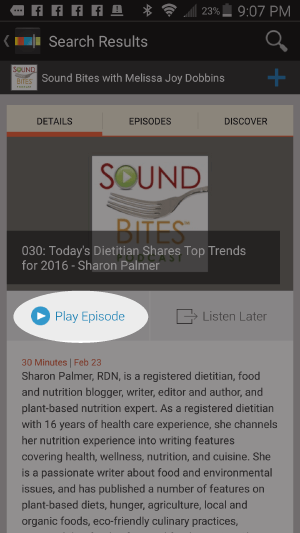
1. Search for “sound bites with melissa joy dobbins” 2. Choose Play Current Episode or Add to Playlist
Choose “Play Episode”
Subscribe & Review on iPhone
Open the “Podcast” app on your iPhone
Search for “Sound bites with melissa joy dobbins”
Open the podcast and click “Subscribe” and your done!
Write a Review
Click “Reviews”, then “Write a Review”.
Subscribe via RSS Feed
Navigate to any podcast player . Click on the RSS feed icon.
Click on the RSS feed icon.
Click on RSS Feed
Choose which application you would like to use to receive the RSS feed
Click “Subscribe Now”
Confirm settings and subscribe.
How to Review in iTunes
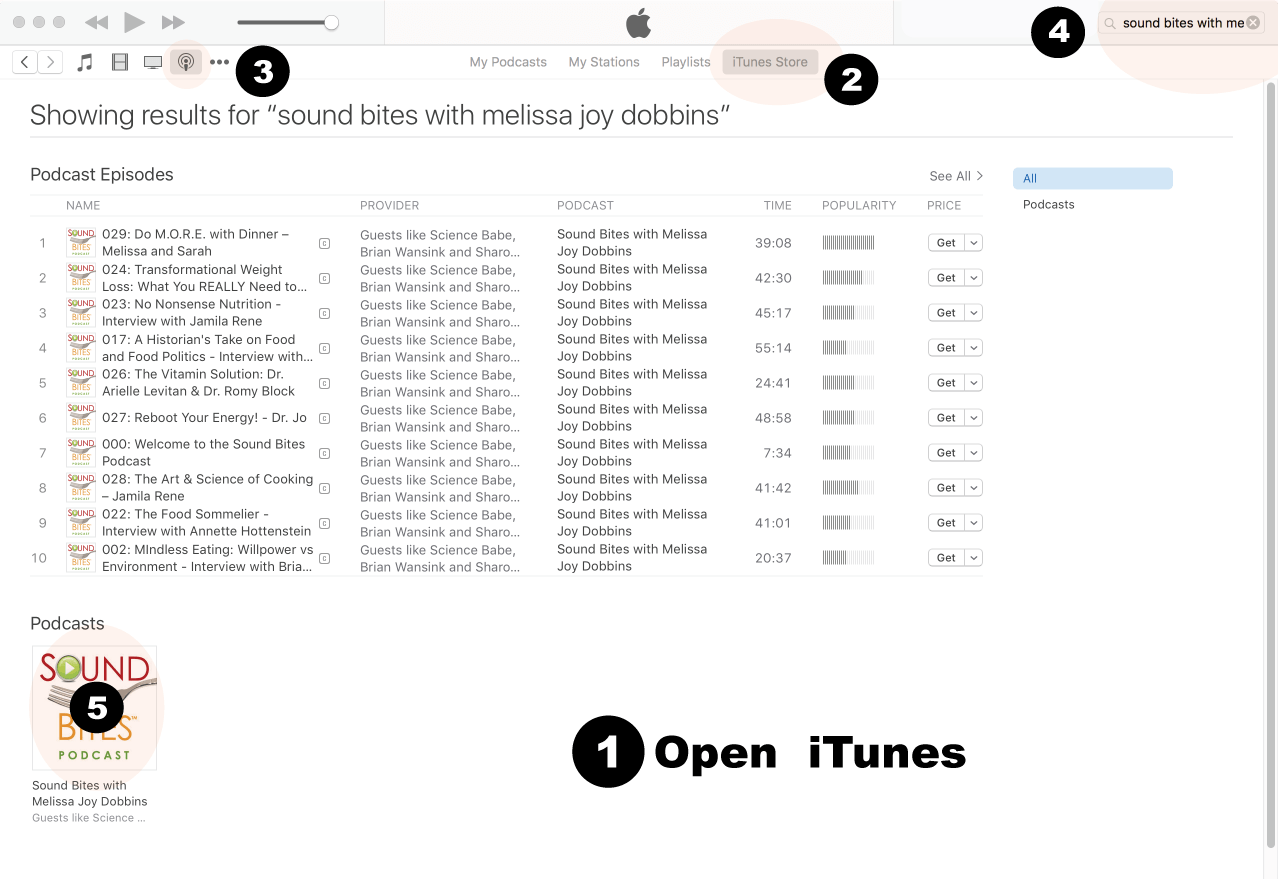
Open iTunes desktop application
Click iTunes Store
Click on Podcasts
Search for “Sound bites with Melissa Joy Dobbins”
Click on podcast image
Search for Sound Bites podcast in iTunes
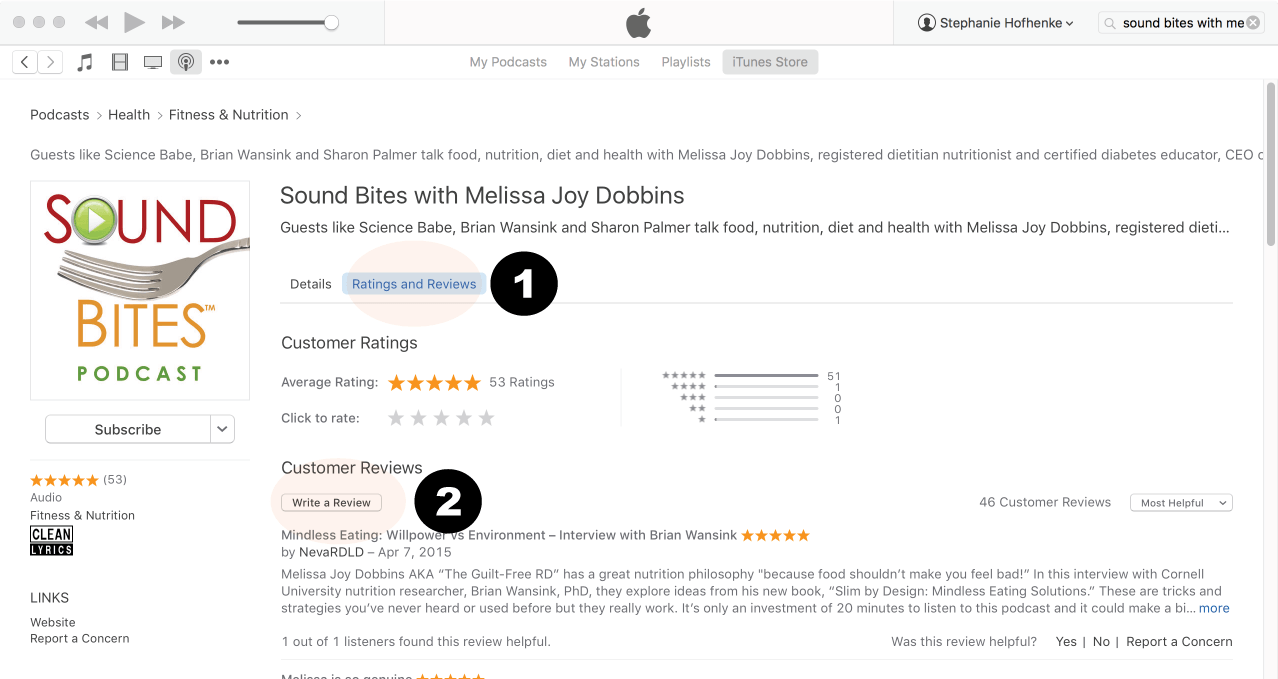
Click Ratings & Reivews
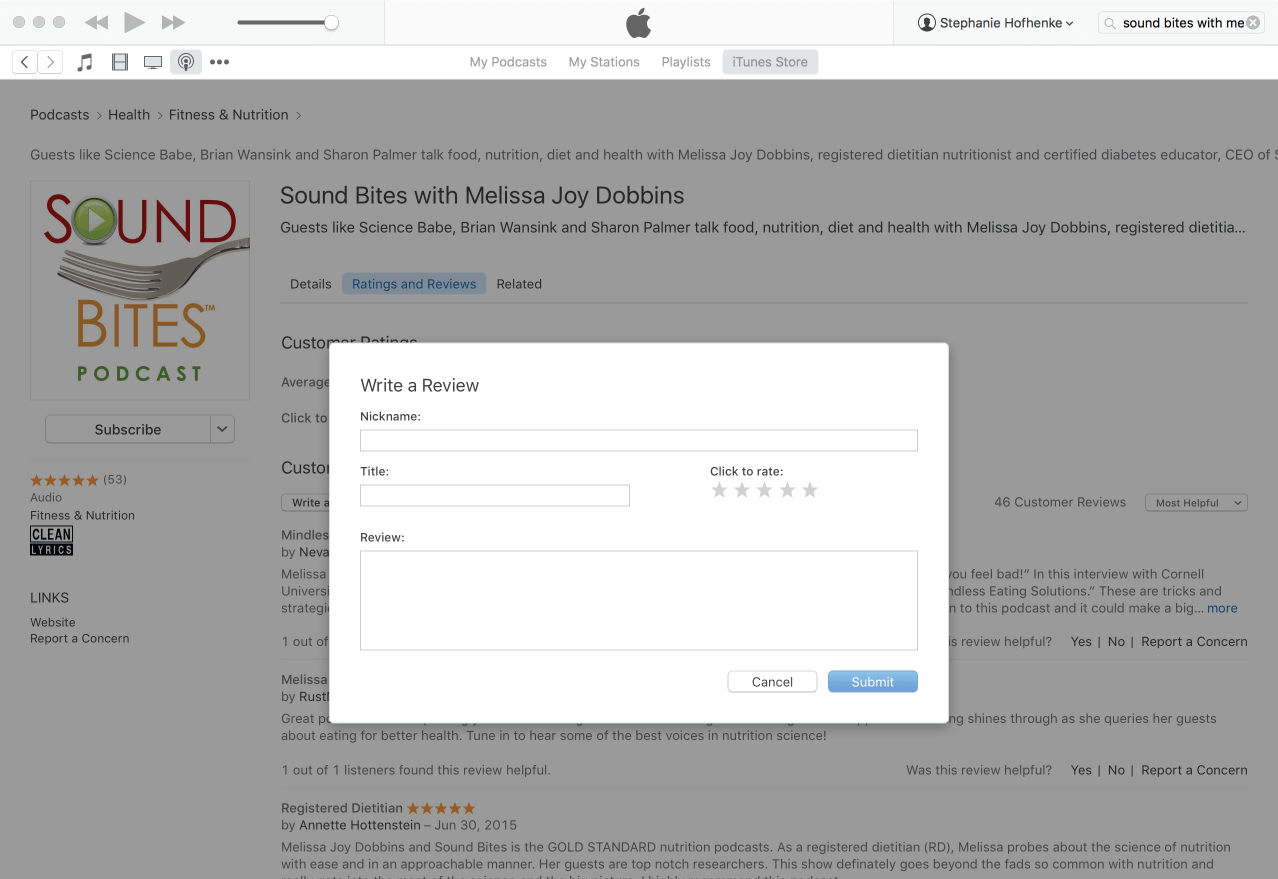
Click Write a Review
View reviews and write your own review.
Write your review…. Thank you!
Write your review!
How to subscribe via iTunes
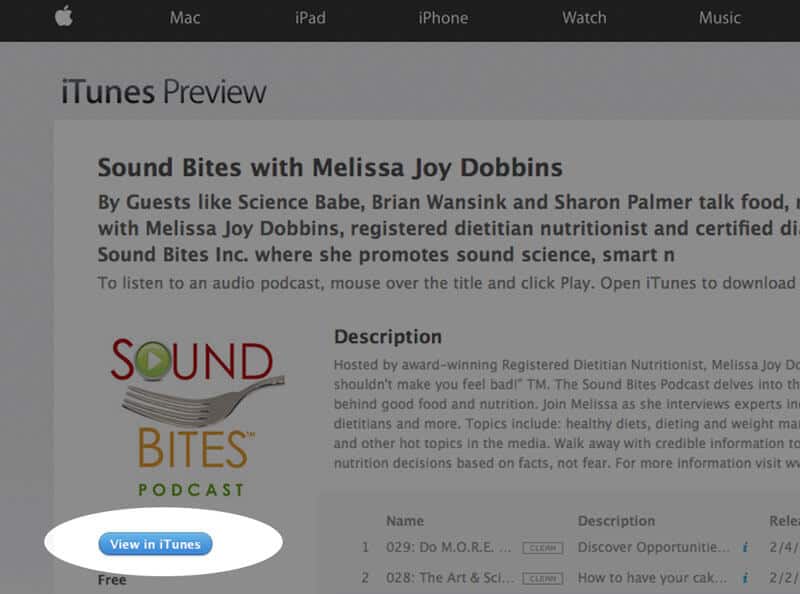
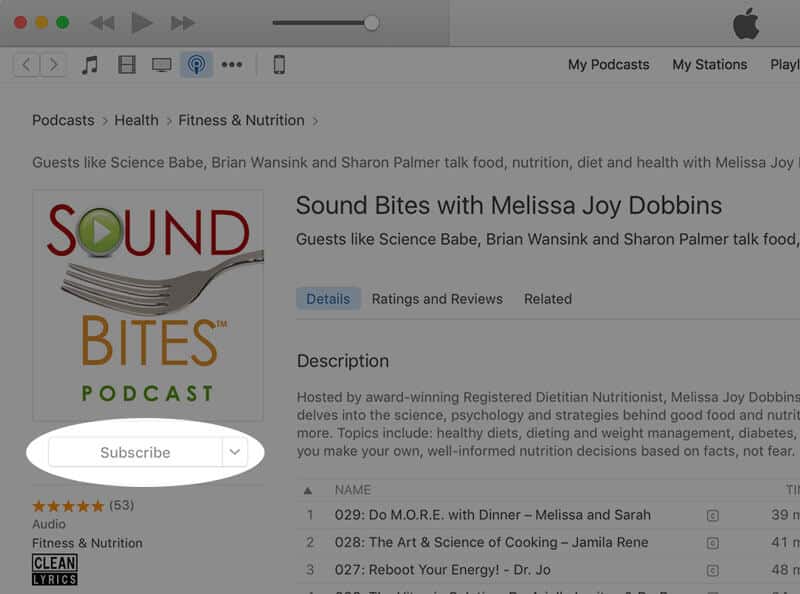
Click here to view the Sound Bites Podcastin iTunes, then click the blue “View in iTunes” button. This will open your iTunes application directly to Sound Bites Podcast. Click the “Subscribe” button, and your done!