Celebrating over 1 Million Downloads and 50,000 Free CEUs on the Sound Bites® Podcast | NEW: Get 1 years’ worth of CEUs with the new 15-CEU Podcast Course
Disclosure: This episode is not sponsored. I received a complimentary copy of the book, Safe & Simple Food Allergy Prevention.
New Research on Food Allergy Prevention Indicates Crucial Timing of Allergen Introduction
Current research shows that how we feed babies during infancy can help reduce the risk of food allergies. However, feeding guidelines regarding allergens have changed radically in the past decade, so it’s important to make sure we’re not following outdated advice that doesn’t align with new research. In addition, infant feeding guidelines in general have also changed. To address these updated guidelines and help parents navigate all the latest research and the process of starting solids, Malina Malkani recently released an evidenced-based baby-led feeding guide and cookbook that makes it easy to feed your baby with confidence, introduce allergens early and consistently, and offer delicious, stress-free meals the whole family will enjoy.
This is what I suggest if you want to take a baby-led approach, feed with confidence, lower the risk of food allergies, and grow a healthy, adventurous, intuitive eater without overthinking it: Eat together. You provide, baby decides. Offer real foods in safe sizes and textures. Feed allergens early, often, and consistently. Variety is key!” – Malina Malkani, MS, RDN, CDN
Tune into this episode to learn about:
Why food allergy prevention strategies are necessary for all babies, not just those at increased risk
What the current research shows about best practices to reduce the risk of food allergies
How infant feeding guidelines have changed regarding food allergies and in general
The risk factors for developing food allergies
What the top food allergens are
What it means to offer top allergens early, often and consistently
How to safely feed common allergens that may be a choking hazard
Recommended first foods for baby-led weaning or baby-led feeding
How food allergies disproportionately affect low-income families
What we know about how food allergies develop
The difference between baby-led weaning and traditional spoon feeding
What age to start solids
Clarification regarding the 4-6 month window for starting solids
Malina’s new book that addresses these issues and provides family friendly recipes
Other resources for parents and health professionals
Malina Malkani, MS, RDN, CDN
Malina Malkani is the pediatric dietitian, best-selling author, speaker, and single mom of 3 behind the handle, @healthy.mom.healthy.kids. A top nutrition influencer dedicated to educating her combined audience of over 150K, Malina is a trusted expert in the media and owns a New York-based private nutrition practice. She has authored two books: Simple and Safe Baby Led-Weaning and Safe & Simple Food Allergy Prevention. A member of the Forbes Health Advisory Board Member and Advisory Council for RWJF’s Reframing Child Health and Obesity project, Malina is a former national media spokesperson for the Academy of Nutrition and Dietetics.
Resources
Some links may be affiliate links. As an Amazon Associate, I earn from qualifying purchases.
Welcome to Sound Bites, hosted by registered dietitian nutritionist Melissa Joy Dobbins. Let’s delve into the science, the psychology and the strategies behind good food and nutrition.
Melissa Joy (00:21):
Hello and thanks for tuning into the podcast. As you may know, my audience is a mix of healthcare professionals and the general public, and while I delve into the science quite a bit on the show, I do try to make it digestible and meaningful for all listeners regardless of their background.
But if you’re a dietitian or a diet technician, I want to make sure that you know about all of the continuing education opportunities through my podcast. I have about three years’ worth of free CEU activities that you can access through my website.
And I also recently created a 15 CEU package for one whole year’s worth of credits, including the required ethics credit that you can purchase. There’s only one quiz to take, and you get one certificate for the 15 credits.
I’ve provided over 30,000 free CEUs through my podcast, and I’m getting great reviews about the new 15 CEU course as well. So, head on over to soundbitesrd.com/freeCEUs to learn more. And if you’re not a dietitian, now you know more about the continuing education requirements that dietitians have.
Hello and welcome to the Sound Bites Podcast. Today’s episode is about what you need to know about new research on infant feeding guidelines, including how to reduce the risk of food allergies. And this episode is not sponsored.
My guest today is Malina Malkani. Malina is a pediatric registered dietitian and single mom of three with a specific passion for infant feeding and food allergy prevention.
She’s the bestselling author of two baby-led weaning books, runs a New York-based private pediatric nutrition practice, and is dedicated to providing evidence-based nutrition education to her combined audience of over 150,000 followers on Instagram and TikTok and YouTube via her handle at @healthy.mom.healthy.kids. Welcome to the show, Malina.
Malina Malkani (02:24):
Thank you so much for having me.
Melissa Joy (02:26):
I’m so excited to have you on the show. We’ve been talking about this for a while and before your most recent book came out, we’ve been talking about this. So, it’s a long time coming and I’ve just learned so much from you on this topic, and I’m super excited about your new book, which by the way is, Safe and Simple Food Allergy Prevention: A Baby-led Feeding Guide to Starting Solids and Introducing Top Allergens with 80 Family-Friendly Recipes.
So, we are going to be talking all about this book, and I’m kind of jumping ahead here a little bit, but this is not just about food allergies. Your book is a comprehensive one-stop shop all in one resource, and there’s a lot to dig into.
This isn’t just like some little tweaks or basic stuff that we might know, this is all really interesting. So, before we jump into all of that, please share with our listeners more about your background and the work that you do.
Malina Malkani (03:26):
Absolutely. And thank you so much. I’m so excited to be here with you. I love your podcast, love listening to all of the amazing topics that you bring up, you take deep dives and it’s just wonderful to hear. So, thank you, thank you.
So, I started my career in vocal performance and I think that’s maybe one of the reasons why I’ve always been drawn to you, Melissa, you have a background in the arts as well. But I went to Northwestern, I did their dual degree program there and ended up with a Bachelor of Music in vocal performance and opera and musical theater and a Bachelor of Arts in comparative literature.
And then performed professionally for about 10 years post-college in everything from off Broadway shows to national touring companies to light opera in almost every state in the U.S.
Melissa Joy (04:16):
That is so cool.
Malina Malkani (04:18):
Yes. It feels a little random sometimes when I think about my path to nutrition but I wonder if you can relate with this. I eventually found myself really struggling with pressure from within the industry to maintain a specific weight while sustaining enough energy to get through eight shows a week, which was massive.
And so, I started learning more and more about nutrition out of a necessity really because I needed to figure out how to properly fuel myself. During that process, I just fell so madly and passionately in love with the science of nutrition and food and felt drawn to the helping aspect of a career in nutrition.
So, I went back to school, I went to NYU, got a master’s in clinical nutrition, and then did my dietetic internship at the Bronx VA Medical Center and took a job post internship at the same Bronx VA Hospital working with veterans in weight management and bariatric surgery. And I hope we’ll circle back to this part of the conversation; I loved working clinically at the VA.
I learned so much from the veterans, from the struggles they faced as we worked through chronic lifestyle, disease related and weight related challenges that they were facing together. But I saw firsthand how much, so many of them struggled with just a basic ability to recognize their own cues for fullness.
And that experience truly, as I think back and sort of look at the totality of the path that it took to get me here, it has really inspired my work in pediatric nutrition because if we can help families potentially avoid some of the food parenting practices that we know now from research can often contribute to a person’s sort of inability to self-regulate food intake, we can really help raise a new generation of children and adults eventually, who have a much more peaceful and joyful relationship with food and with feeding. And that’s really a large part of the foundation of baby-led weaning, in my opinion.
Melissa Joy (06:37):
Very interesting. I hadn’t connected those dots, but that makes so much sense.
Malina Malkani (06:42):
I think so too. And then, so I ended up leaving the workforce after working there for a while, for a handful of years to raise my three girls who were all born within about three and a half years of each other.
And at that point I found myself wading through this kind of just a sea of feeding related challenges with each of them. And really Melissa, it was rough. I felt like we were experiencing … even though I look back now, and it could have been so much worse, but it felt like we were experiencing the gamut.
Whether it was difficulty breastfeeding, intractable thrush with all three, one was premature. She wasn’t gaining weight, another had severe reflux, another seemed to have food allergies that nobody could diagnose at the time, we had picky eating, you name it.
And I wasn’t finding parent facing resources that helped me through these issues, or professionals who knew how to guide me in actionable ways and practical ways. So, I have all girls, we bumbled through together, we made a lot of mistakes that I had to unwind. And when my little one turned two, I went back to work really determined to fill that resource gap.
And so, I pivoted into pediatric and maternal nutrition, and I now have a small private, all virtual New York-based pediatric nutrition practice, as you mentioned, authored a couple of books and I really love translating evidence-based science into those practical actions and guidance that parents can use to not only feed their babies healthfully, but just with confidence. So, I’m really happy to be here to talk more about that.
Melissa Joy (08:34):
Wonderful. The confidence is a key part of this. So, your book, which by the way, as I mentioned, this episode’s not sponsored but I did receive a nice complimentary copy of this beautiful book. So, thank you so much.
Malina Malkani (08:46):
Oh, my pleasure.
Melissa Joy (08:46):
Tell us why you wrote this book and why it’s so important to discuss this topic.
Malina Malkani (08:53):
Yeah. So, through many years of working with families one-on-one and then connecting with people online and at speaking events, I’ve really found that food allergy prevention is the kind of information that parents really need to have before they know they need to have it.
And often by the time they realized they needed to have it, it’s too late for them to have taken advantage of it when it was most protective. And the reason for this is that it’s possible, and in my opinion, quite critical to prevent food allergies as best we can. But it’s only possible during a very short window of time during infancy. So, it’s so important not to miss it, and it’s very easy to miss it.
And food allergies themselves are hard on families in many different ways. They’re hard financially, emotionally, practically, psychologically. They can be life threatening, which can cause so much stress for parents and for the children themselves and they’re worth preventing. And there are helpful resources out there, but rarely with everything you need to know all in one place.
So, I wanted to create a single feeding resource in the form of a book for parents that would include everything they need to know about starting solids, reducing the risk of food allergies, avoiding unnecessary stress, because there’s so many myths and misconceptions about infant feeding and to grow adventurous, intuitive little eaters using a baby-led approach all in one place.
And I also think it’s important, it was important to me that while preventing food allergies was the inspiration behind the book, it really needed to include all of the foundational, evidence-based, infant feeding guidance that parents need to know. Because this phase of starting solids and reducing the risk of food allergies are inextricably linked. They go together.
Melissa Joy (10:55):
That makes a lot of sense. Yeah, because you can’t just talk about food allergy prevention sort of in a vacuum, like you said, it’s part of the whole process. So, the food allergy prevention aspect is really important.
And we’re going to get into some of the newer research that our listeners need to know. And as I said, this book is about so much more than food allergy prevention. Tell us what people can find in the book and then I’ll follow up with some more questions.
Malina Malkani (11:22):
So, the beginning of it, it’s a guide. It contains everything parents need to know about how to keep your baby safe while starting solids, while eating, while exploring new foods. It embraces both a baby-led weaning, so a finger foods approach as well as purees if you want to do both, or one or the other, which is why I call it baby-led feeding as opposed to baby-led weaning.
But then it also has all of the most up-to-date research about reducing the risk of food allergies and that includes a complete flexible roadmap for allergen introduction of all nine top allergens. And then there’s a really important piece to food allergy prevention that many parents forget or aren’t aware of.
And it’s that once you introduce an allergen, it’s not enough to just introduce it once and if baby doesn’t have a reaction, assume that you’re fine and move on with your merry way. We need to keep those allergens in baby’s diet regularly going forward to help maintain that tolerance.
So, the book also has eight weeks of baby-led feeding meal plans made up of 80 family-friendly recipes, all of which include at least one and many of them include multiple top allergens so that you don’t have to do the math yourself and wonder what on earth to feed your baby or whether you hit all those allergens every week. It’s all laid out in a roadmap for you.
The other piece that was really important to me is that the recipes be foods that the baby can enjoy, but that the entire family can eat together. Because I know as a single mom of three and in working with families in my private practice, creating and cooking more than one meal at a time is a very quick recipe for burnout.
So, it’s just exhausting. So, I wanted these recipes to be foods you can feed your toddler and your tween and your teen and your partner as well as your baby, while keeping all of these tenets of food allergy prevention in mind.
Melissa Joy (13:27):
I was really surprised to see that. That’s amazing and so important. So, let’s talk about how have infant feeding guidelines changed regarding food allergy prevention?
Malina Malkani (13:37):
There has been a massive shift in infant feeding guidelines over the past couple of decades, which in my opinion has probably led to a lot of the confusion in this space. Back in 2009 when my first baby was born, doctors were recommending that we delay the introduction of common allergens until one, two, and even three years of age.
And nutrition’s a relatively new science. It evolves and thanks to really exciting new research, it has led to a total 180-degree reversal of those old recommendations on allergen introduction. And we now know, thankfully, that offering common allergens early, often and consistently is key to preventing the development of food allergies.
Although I always want to point this out it’s not a guarantee and some babies will still develop food allergies regardless of how and what they’re fed. Really important to point that out because I have a lot of parents who reach out to me and say, “I did everything right. I did what you said, and I still ended up with a food allergic baby,” and that can happen.
But parents need to have this information early on because the window of protection is so short and fleeting and if we miss it, that potential protective window of opportunity is lost. Now, of all the top nine allergens and there are nine in the U.S., we have the most research on peanut and egg, which makes the introduction of these foods the highest priority for babies.
We don’t unfortunately yet have as much research on the other common allergens, but there’s very good reason to believe that as more research is conducted, the same is going to apply to them as well and I love this statistic.
In any case, diet diversity is key anyway during infancy and may lower a child’s odds of developing a food allergy during the first decade of life by a third. So, offering babies a wide variety of foods is a good idea, anyway. It’s nutritious, it’s a win-win. It helps expand their palate and their affinity for different textures.
So, diet diversity is a good thing. But again, a critical part is remembering that it’s not enough to offer that allergen wants and assume baby isn’t allergic. If there’s no reaction, we need to keep it in the diet going forward because the immune system, the infant immune system doesn’t seem to like it when we introduce an allergen once during infancy and then stop.
We need to continue offering those introduced allergens regularly to help maintain the baby’s tolerance. And again, my book makes it really easy to do this using step-by-step allergen introduction guidance.
Melissa Joy (16:34):
Yes. And I’m going to ask you a little bit more about that. But it’s interesting, my son was born in 2008 and I don’t remember receiving any guidelines about delaying or whatever, anything regarding allergens.
I do remember when I was pregnant wondering if I should be avoiding peanut butter or anything. And I think I had a friend who was a nurse and she said, “Don’t avoid it, if you don’t eat peanut butter, don’t force yourself to, or whatever,” I don’t remember.
So, I think you touched on this briefly, but I just want to be sure. Is it possible to prevent food allergies from developing?
Malina Malkani (17:12):
Yes. There are, again, no guarantees, unfortunately, I wish there were. But the new research that we have guides us on how to feed babies during infancy in a really practical, evidence-based way that greatly reduces the risk that food allergies will develop.
And the most robust research we have is on peanut thanks to a wonderful 2015 randomized controlled clinical trial called the Learning Early About Peanut or LEAP study. And thanks to the study we learned that offering babies peanut foods early and often in baby friendly forms that they can eat, reduces the risk of peanut allergy in high-risk babies by 86% which always blows my mind.
So, it works, and what’s even more exciting is that there was a recent update just released in May where the researchers from the LEAP study followed up with about 500 of their original study participants 12 years later.
And this was in a study called the LEAP Trio Study, and they found that the risk of developing peanut allergy was 71% less with the early introduction of peanut group compared with the kids who had delayed introduction, which is so exciting because what it tells us is that food allergy prevention works, but also that it lasts.
Melissa Joy (18:41):
Great. Yeah. I remember when I first learned about this, it seemed so counterintuitive. This was the peanut research and it’s so exciting to see now that there’s been some egg research and like you said, we’re going to touch on what the top allergens are, but maybe we should first address what are the risk factors or are there risk factors for developing food allergies to begin with?
Malina Malkani (19:02):
Yes. And I’m glad you mentioned the word counterintuitive because I think a lot of this is counterintuitive, including the risk factors. People are often surprised to hear that severe eczema during infancy is considered to be the strongest risk factor for food allergies.
Yeah. It’s not something that you would necessarily connect in your mind but babies with a previously diagnosed food allergy and/or mild to moderate eczema are also considered to be at some increased risk for having other food allergies.
Interestingly, having a family history of allergic disease in one or both parents has historically been considered a much larger risk factor, but now it’s considered a much smaller risk factor compared to the others.
So, there’s a lot we don’t know. And I think it’s also important to point out, we don’t want to make the mistake of thinking that this early and frequent introduction of top allergens is only for babies who are high risk. Because about 25% or a quarter of babies who develop food allergy never had eczema to begin with.
So, I get, there’s a lot we don’t know. And food allergy prevention really needs to be front and center in the process of starting solids for every baby, no matter the level of risk. And that’s really why I wrote this book to help just normalize it and make it a part of the conversation for families when they’re thinking about starting to offer complimentary foods.
Melissa Joy (20:36):
Yeah. No, that’s really important. The main takeaway from this is, this is for all babies. So, let’s at least touch briefly on what the top allergens are. I know we’ve talked a little bit about peanut and egg, but if you could list all of those out.
Malina Malkani (20:51):
Yes. So, in the U.S., we have peanut and egg, we have cow’s milk, tree nuts, fish, soy, wheat, shellfish and just recently sesame also joined the rank. So, we went from a group of eight to a group of nine. And again, we don’t have as much research about the rest of the allergens.
We have the most research on peanut and egg, but new research is being released all the time. And we have really good reason to believe that as more becomes available, we’re going to learn that early frequent and consistent exposure to the rest of the top allergens is protective as well.
And again, offering that variety during infancy is helpful from so many different nutritive perspectives, anyway. So, if you eat these foods within your family and within your culture and traditions, it’s a good idea to feed them to your baby early and often as well.
Melissa Joy (21:45):
So, at what age should we be starting solids? I know I had a little confusion about that as a mom, this four-to-six-month window. But then when you add in the allergy prevention piece, I really want you to explain this so that it’s clear.
Malina Malkani (22:00):
Let’s dig in on that. Because it’s really nuanced and you’re right, the messaging about when to start solids and introduce allergens can be really confusing for parents because it can seem like the guidance on exclusive breastfeeding and when to introduce solids and allergens conflicts.
And parents often hear breastfeed exclusively for six months and then start solids. But then, like you just said, are they suddenly supposed to have already introduced solids and peanut earlier than six months, which is it? And I get that question a lot.
So, The American Academy of Pediatrics recommends exclusive breastfeeding for approximately six months after birth and longer if it’s working for both the mom and the baby, not exactly, but approximately.
So, we’re talking about a window of time, not an exact amount of time. And that’s really amplified when you consider that some early term babies are born at 37 weeks, and other post-term babies are born as late as 42.
So, you can see how different a chronological age of six months can be, depending on how many weeks the baby was carried, which then may affect the age at which the signs of developmental readiness for solids emerge. So, it’s a range, an age range as opposed to a specific date.
The AAP also recommends that appropriate complimentary foods be introduced at about six months when babies are showing those developmental signs of readiness. And they also further support peanut introduction as early as four to six months of age for babies at high risk of peanut allergy because of the presence of severe eczema, as we talked about, and/or existing egg allergy.
So, what’s important for parents to hear in all of this is that when we’re talking about introducing peanut and other complimentary foods at around six months, and sometimes a little earlier, we’re not talking about weaning away from breast milk. We’re talking about adding foods and adding allergens when baby is ready to help reduce the risk of food allergy.
And there are two great studies that demonstrate how early introduction of allergens does not affect either the duration or the frequency of breastfeeding. So, in other words, breastfeeding is beneficial for both mom and baby, we know this.
And breastfeeding along with early allergen introductions through food when baby is ready can, and in my opinion, should really peacefully coexist and provide the best of all worlds for babies. So, it’s a nuanced answer and so when we say that it’s best to start solids at around six months, we have that four-to-six-month window in mind.
Also, it’s important to remember that for babies who are at higher risk for food allergies, that four-to-six-month recommendation for the introduction of peanut and egg is more important. So, there’s some nuance there and some different factors to consider in terms of the baby’s medical history as well.
Melissa Joy (25:21):
That’s very clear. Thank you. So, obviously they need to developmentally ready, and that early introduction is really what the research is showing is where the biggest impact can be made. So, obviously, you talk about peanuts in the appropriate form because nuts are a choking hazard and some of the other common allergens are as well. So, can you just address how you can safely feed these types of foods?
Malina Malkani (25:49):
Yes. So, peanuts in general don’t necessarily sound like the most obvious early food for babies. But they’re actually really nutrient dense, they provide lots of key nutrients for babies like iron and zinc, but they do need to be modified because whole peanuts and even globs of peanut butter are choking hazards.
So, a really easy way to do it is to just mix two teaspoons of smooth peanut butter or peanut powder into an oatmeal or a familiar puree that your baby has had before or you can even just thin it out with a tablespoon or so of breast milk or infant formula and feed it on a spoon for subsequent exposures.
So, you can even spread a thin layer of peanut butter on a strip of toast and feed it as a finger food. There’s lots of ways to do it safely and in ways that baby really enjoys, and my book has lots of options and recipes that incorporate peanut.
Melissa Joy (26:46):
Great. Is there anything about any of the other allergens that you’d like to address regarding choking?
Malina Malkani (26:52):
So, we need to always consider size and texture when we’re thinking about finger foods for babies and also texture when we’re even thinking about mashes and purees. So, for example, for something like shellfish, shellfish can be tricky to introduce to babies because it can be rubbery, like a shrimp if you cook it and it can easily pose a choking risk.
So, I recommend cooking it thoroughly and then mincing it and then you can mix it with something that the baby has had before. You can cook it into a fritter, which is something babies really enjoy. And for tree nuts, again, same issues with peanuts, you need to consider texture.
So, thinking about offering ground nuts or a nut butter that you’ve then mixed into a puree or sprinkled on into some yogurt or applesauce or something the baby can handle well. So, there’s lots of different options like that in the book for the first exposures.
But then also ways to combine the allergens once you’ve determined that the baby tolerates them, so that you’re able to keep those allergens in the diet going forward in baby safe forms that the baby enjoys.
Melissa Joy (28:04):
Okay, great. One thing I was curious about too, and you probably get this question a lot. I know your book is step by step and it walks you through everything, but it can seem a little daunting. Do we have to wait three days in between new food introductions?
Malina Malkani (28:21):
No. So, the single food introductions of non-top allergenic foods, that old guidance is now considered outdated. It’s one of those infant feeding guidelines that’s been tossed around for a couple of decades, which we now know actually can create more stress on caregivers and strain. And it actually makes it really difficult to achieve that wonderful diet diversity that we were talking about earlier.
Because if you’re waiting three days, every time you’re about to introduce a new food, it takes a long time to work up to a diverse diet, let alone getting all of the top allergens in during infancy. So no, no need to wait three days before introducing another new food.
That being said, single food introductions of those top nine allergens that I mentioned earlier and pausing for three days or so before introducing another, that is a kind of a conservative, common sense approach to allergen introduction that if the baby does have a reaction, just makes it so much easier to figure out which food is responsible.
There’s no evidence that it’s necessary or better, but from a practical standpoint, I do in my private practice recommend, especially for the high-risk babies, that we do it this way. It’s an option that you can use. If your baby is low risk, we encourage you to work up to a diverse diet quickly and to get those allergens in early.
And if you want to do it one after the other, that’s fine. If that matches your comfort level as a parent. But for a higher risk baby, I do think it’s a good idea to wait before introducing another. So, we can just keep on top of if there is a reaction, what caused it.
Melissa Joy (30:10):
Got it. Yes. Because if you’re doing it too slowly, then you’re going to get out of that early window.
Malina Malkani (30:16):
Exactly.
Melissa Joy (30:17):
Should we be screening babies before introducing allergens? Is that a thing?
Malina Malkani (30:22):
Great question. And it’s maybe, but it’s important to know that there’s a lot of debate in the scientific community about whether screening tests should even be a part of general food allergy prevention recommendations.
Interestingly, the U.S. is the only country whose recommendations include a screening step for high-risk babies. And this is per the NIAID, babies with severe eczema and/or egg allergy may need screening before introduction.
But there’s a more recent global consensus guideline document that de-emphasizes the need for screening. And it recommends introducing peanut and egg early, regardless of risk, noting that severe reactions during infancy are extremely rare and there have been no recorded deaths following an initial introduction.
And often, it’s really hard to talk about, but it’s some of the most comforting information for parents who feel a lot of stress around the early introduction process. Severe reactions are really uncommon during infancy because that infant immune system is so malleable, unlike later on in life at age one, age two, age three, and up, when the likelihood of a severe reaction is much higher.
So, when you really think about it, even for the 3% or so of babies who will develop a food allergy during the first year, it is so much safer to know their allergy status during infancy when mild reactions are so much more likely.
So, you can get your child established as a patient with an allergist and develop an allergy action plan individually for that child in case there’s an accidental ingestion rather than not knowing about your child’s allergy down the road and then their child’s at a play date, maybe they ingest their offending allergen at a birthday party and no one knows what to do about it.
So, I think what this really highlights for healthcare providers in your audience is how important it is to start conversations with families early on about feeding and food allergy prevention and get the show on the road with early intro without delay. Because a lot of families are delaying allergen introduction out of fear and confusion when the real risk is in waiting to introduce.
Melissa Joy (33:00):
Yeah, that’s a major takeaway from this as well. Yes, this is for all babies, and you have that early conversation with your healthcare provider and obviously the book can take care of a lot of your questions, if not all of the questions but you know, you still want to talk with your healthcare provider.
You mentioned food allergies are hard on families, and I’m guessing that food allergies disproportionately affect low-income families. Does your book address this? Is that something you can speak to?
Malina Malkani (33:32):
Yeah, you’re right. Unfortunately, there was a 2023 study in the Journal of the American Medical Association, they surveyed over 50,000 households and found that Asian, black and Hispanic people were more likely to report having food allergies compared with white individuals.
And the prevalence of food allergies was lowest among the households in the highest income bracket and there’s lots of reasons why this may be the case. Access to timely education about the importance of early frequent and consistent allergen exposure, access to healthcare, access to the actual foods, the allergenic foods in baby safe forms, knowledge about how to serve them safely to babies. These are all likely contributors among other drivers.
And currently there are resources available, but like I mentioned, most are not all in one place. There’s great baby-led reading guidance over here. There’s great starting solids guidance over here. There’s great allergen introduction guidance in another place, but not all in one book with maintenance, meal plans to help keep allergens in the diet going forward and not with the recipes that make it easy and actionable to keep them in the diet.
And so, my hope is that this book will be an affordable one-stop resource for families, but also for healthcare providers who may not yet be up to speed on the latest research and who may be recommending delaying the introduction of common allergens and particularly our amazing WIC providers.
And by WIC, I mean the special supplemental nutrition program for women, infants and children who are there from the very beginning of families’ lives serving and guiding lower income families. If they feel empowered to educate families about food allergy prevention early on, it’s my belief that we’ll be able to move the needle on hopefully lowering the prevalence of food allergies in the next generation.
And just as an example, so peanut butter is not currently a part of the WIC food package for infants, it’s a part of the mother’s food package, but not the babies. And so, it’s not obvious to WIC families without education that peanut butter can be fed to the baby and should be fed to the baby.
And if peanut butter were a part of that WIC package for babies, and it was obvious, and if all WIC babies had access to peanut butter during that four-to-six-month window, we could prevent 50% of all new peanut allergy cases every year because of how many babies are served by WIC. So, I’m just hoping we can get the message out there, and I’m thanking you, Melissa, for helping me to do that through your podcast today.
Melissa Joy (36:26):
Absolutely. And just a kind of a side note, in case I forget to say this towards the end, but this is a great gift for any family who is having a baby or who has a baby. And I’ve been recommending that to all the people that I know that have friends who have friends of friends who are having babies.
Malina Malkani (36:44):
So, I appreciate that.
Melissa Joy (36:46):
We got to spread the word on this. This can make a huge impact. So, got to get the word out there. I wonder if we could talk a little bit about how food allergies develop. Is there a lot of questions out there about this? Do we know much about how this happens?
Malina Malkani (37:04):
I wish I had a better answer for you to this question. We don’t know exactly and there are likely multiple factors that contribute to their development. Some researchers believe that the skin may act as a shield against food allergens in the environment. And there’s a name for this hypothesis, it’s called the dual allergen exposure hypothesis.
And this hypothesis suggests that food allergens that are in the environment that enter the body through broken skin are more likely to make the immune system react than if the baby’s first exposure to those same food allergens happens through the mouth and the digestive tract and the gut.
And that may help explain why the early and frequent and consistent oral introduction of top allergenic foods during infancy seems to be protective against food allergies, especially in babies who have eczema.
And so, this dual allergen exposure hypothesis is part of the inspiration behind my book, which guides families through the process of introducing allergens, hopefully before food allergies have had a chance to develop. Most babies are not born with them right away, they do develop over time. And so, we want to hopefully cut that process off before it has a chance to take root.
Melissa Joy (38:30):
Excellent. Before we wrap up, I wanted to talk a little bit more about baby-led weaning or baby-led feeding, that wasn’t really around when I had my son in 2008, so I’m vaguely familiar with it. But if you could discuss baby-led weaning in comparison to traditional spoon feeding and also, what do you recommend for first foods during baby-led weaning?
Malina Malkani (38:55):
So, yes baby-led weaning, it’s a wonderful method of starting babies on solid foods. It uses finger foods from the family table that are prepared in a developmentally appropriate size and texture for the baby as opposed to, like you mentioned, starting solids using the spoon feeding of purees, which is the kind of more traditional route.
And baby-led weaning has a lot of wonderful research backing up some of the many wonderful advantages that it offers. So, the good news for parents now, whereas we used to think that babies all needed to start solids using an iron fortified rice cereal that is a pureed food. We now know that they have options which is exciting.
And some of the potential benefits with regard to baby-led weaning include drawing baby earlier into family meals, which if you look at the statistics on family meals, there are so many wonderful positives for children of all ages. The earlier they can be involved in family meals, the better from many different perspectives.
Baby-led weaning babies are generally exposed to a larger number of flavors and colors and textures. They get lots of opportunity to practice those fine motor skills because they are self-feeding. So, they’re picking up foods with their fingers and bringing them up to the mouth, practicing fine motor, they get a lot of wonderful dietary variety early on.
And back to our discussion about the VA, the veterans, they have a lot more freedom to follow their own internal cues for hunger and fullness, which is wonderful because it allows them to learn to self-regulate their intake from the very first few bites. So, I love that aspect of baby-led weaning.
But it’s great for parents too because they can save a lot of time and money and energy by another thing that we talked about before as well, preparing just one meal for everybody because baby eats what the family eats with some minor modifications.
Melissa Joy (41:03):
Thank you. So, as we’re wrapping up, I would just love for you to share some bottom-line takeaways for our listeners. Keeping in mind some of our listeners are the general public and some of our listeners are health professionals.
Malina Malkani (41:16):
Yes. So, if you are a healthcare provider, the most important takeaway is to start conversations with families about food allergy prevention and starting solids early on. Especially if you have a high-risk baby in your practice, a baby with severe eczema.
Educate them early on about the importance of early consistent introduction of allergens without delay. Because remember, so many families are still delaying allergen introduction out of the fear of a reaction when we know the real risk to babies is in waiting to introduce, so we got to catch them early.
And if you’re a parent, you take the lead, start the conversations with your pediatrician about your baby’s level of risk for food allergies early, keep an eye out for severe eczema for any type of eczema so that when it comes time to start solids and introduce allergens, you don’t miss out on the most protective window of opportunity to prevent food allergies.
We do want to establish feeding first. So, offer maybe a sweet potato, maybe a little bit of avocado, establish feeding first so that we’re not confusing a feeding issue with a reaction because sometimes it can be a little bit confusing when you’re starting. There can be some gagging, there can be a fear of choking. So, you want to establish feeding first, but then don’t delay the introduction of top allergens.
For most babies, this will ideally be right around six months. Maybe even a little bit earlier if your baby is developmentally ready and or if your baby’s at higher risk for food allergies. Strive for frequency and consistency when offering allergens.
We know the most about peanut and egg in terms of research, so make those two allergens a priority. But if the rest of the allergens are a part of your traditions and foods that you eat within your culture, it’s a good idea to introduce those as well and don’t stress too much about amounts.
It’s smart to aim for about two teaspoons of peanut foods and about a third of an egg, two to three times a week each, but lower amounts of these foods might also be protective. And it seems that the regular exposure to an allergenic food may be more impactful in preventing allergy development than trying to hit a specific target.
We don’t want to consume too little, but we don’t want to stress ourselves out too much and over medicalize the process because babies don’t eat grams of protein. I don’t like to talk too much about grams of protein because it can get parents too stressed out about it.
Melissa Joy (44:03):
Oh my gosh. I can’t even imagine counting grams of protein for a baby.
Malina Malkani (44:09):
Melissa, it’s all there in the book. I did the deep dive in the rabbit hole and calculated every single gram of protein for the healthcare providers who might want that information and who might want to know that the recipes are providing enough of a threshold of these allergenic proteins to help move the needle on food allergy prevention.
But if you’re a parent, eating is unpredictable during infancy. Appetites can fluctuate, food refusal is common. So, focus on offering a reasonable amount of each allergenic food to your baby a couple of times a week in foods they like and seem to enjoy and leave it at that.
Melissa Joy (44:45):
Oh, that’s reassuring that we don’t have to be too focused on the amount, it’s more about the consistency. Great. Wonderful. Where can people find more about this topic, find your book, connect with you online? I know you’ve got websites and stuff; I’d love for you to share those.
Malina Malkani (45:02):
Yes. Wonderful. If you would like more information about this food allergy prevention book, visit foodallergypreventionbook.com. Super easy and then for daily nutrition and feeding tips, you can always follow me at @healthy.mom.healthy.kids. I’m on Instagram, YouTube, and TikTok under the same handle.
And then if you want to go even deeper, I like to take deeper dives into pediatric and maternal nutrition topics on my blog. You can also find access to my nutrition courses and free guides there. That is at malinamalkani.com. And again, foodallergypreventionbook.com will get you to my book.
Melissa Joy (45:49):
Wonderful. And of course, I will have all of these links in my show notes at soundbitesrd.com. A lot of people ask me, where are the show notes? And they are at soundbitesrd.com. And as I said before, this would be a wonderful gift for anyone who is having a baby.
So, Malina, thank you so much for coming on the show and sharing this important information. I am just thrilled to be a part of, hopefully what is a lot of people trying to get the word out for you.
Malina Malkani (46:18):
I cannot thank you enough. It was such a pleasure chatting with you.
Melissa Joy (46:22):
Oh, my pleasure. And for everybody listening, if you like this episode, share it with a friend, tell a friend about the podcast. And as always, enjoy your food with health in mind, until next time.
[Music Playing]
Voiceover (46:37):
For more information, visit soundbitesrd.com. This podcast does not provide medical advice. It is for informational purposes only. Please see a registered dietitian for individualized advice. Music by Dave Birk, produced by JAG in Detroit Podcasts, copyright Sound Bites, Inc. All rights reserved.
LISTEN, LEARN AND EARN
Listen to select Sound Bites Podcasts and earn free CEU credits approved by the Commission on Dietetic Registration (CDR) for registered dietitian nutritionists and dietetic technicians, registered. Get started!
Get Melissa’s Sound Science Toolkit here!
Partnerships:
Sound Bites is partnering with the Association of Diabetes Care and Education Specialists (formerly the American Association of Diabetes Educators)! Stay tuned for updates on the podcast, blog and newsletter!
Sound Bites is partnering with the International Food Information Council! Stay tuned for updates on the podcast, blog and newsletter!
This was totally unheard of when my child was young, but I will pass this information onto all the young mothers that I know. I found the information very helpful and interesting.
I work at a WIC clinic in the Chicagoland area & started talking to moms about introducing allergens. Some pediatricians are not addressing introducing on how to introduce peanuts (powdered form or PB). I purchased Malina’s book & plan to gift it!
Sign up for my monthly newsletter and episode eblasts so you never miss an update!
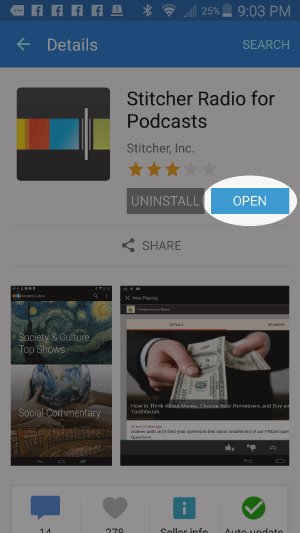
Listen on Stitcher (Android)
Install the Stitcher App
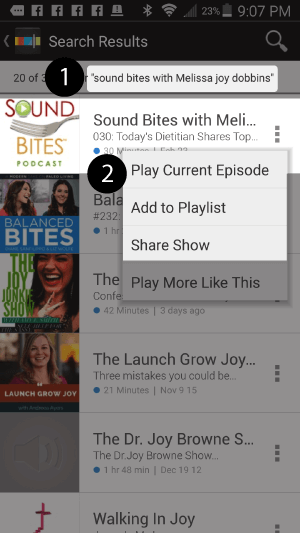
1. Search for “sound bites with melissa joy dobbins” 2. Choose Play Current Episode or Add to Playlist
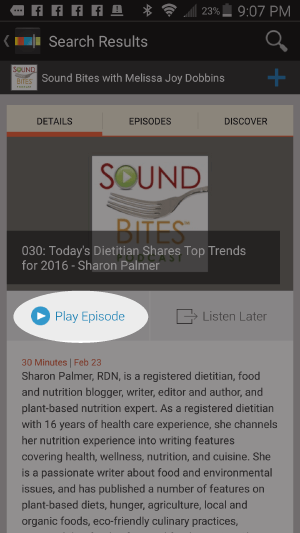
Choose “Play Episode”
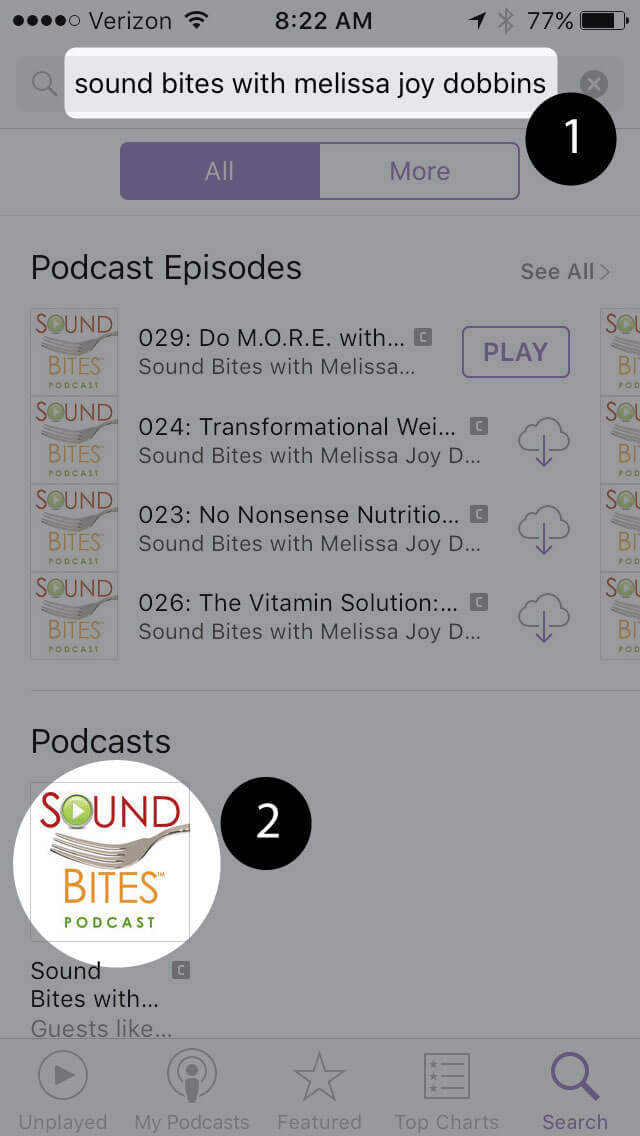
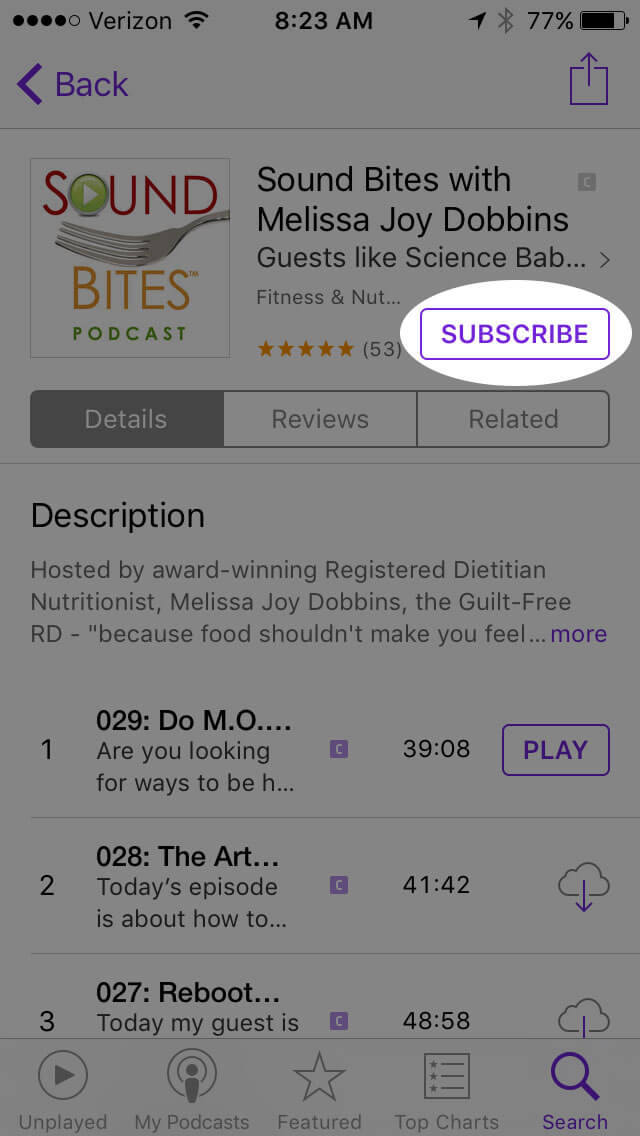
Subscribe & Review on iPhone
Open the “Podcast” app on your iPhone
Search for “Sound bites with melissa joy dobbins”
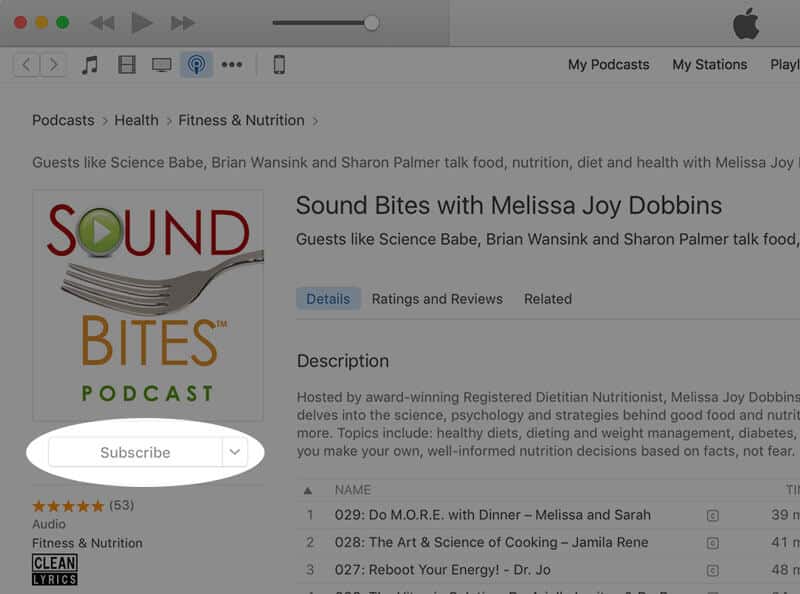
Open the podcast and click “Subscribe” and your done!
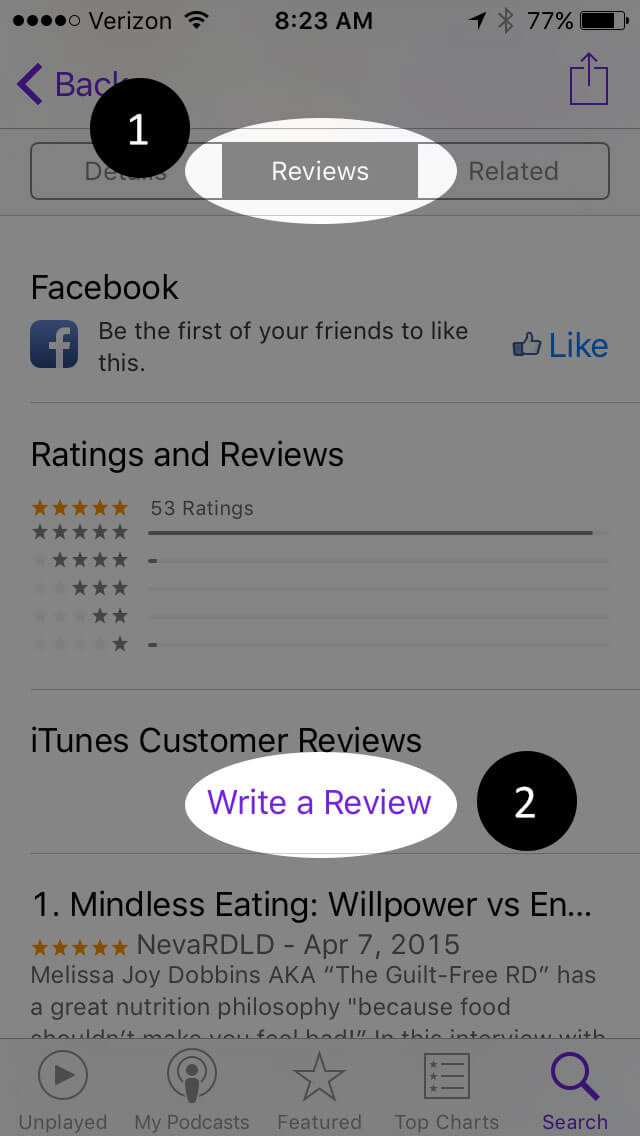
Write a Review
Click “Reviews”, then “Write a Review”.
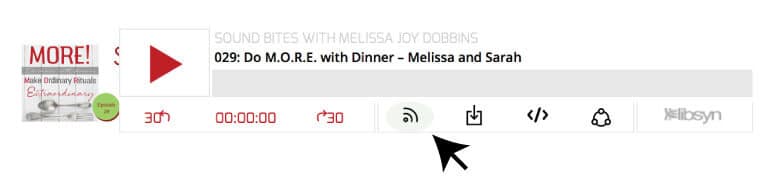
Subscribe via RSS Feed
Navigate to any podcast player . Click on the RSS feed icon.
Click on the RSS feed icon.
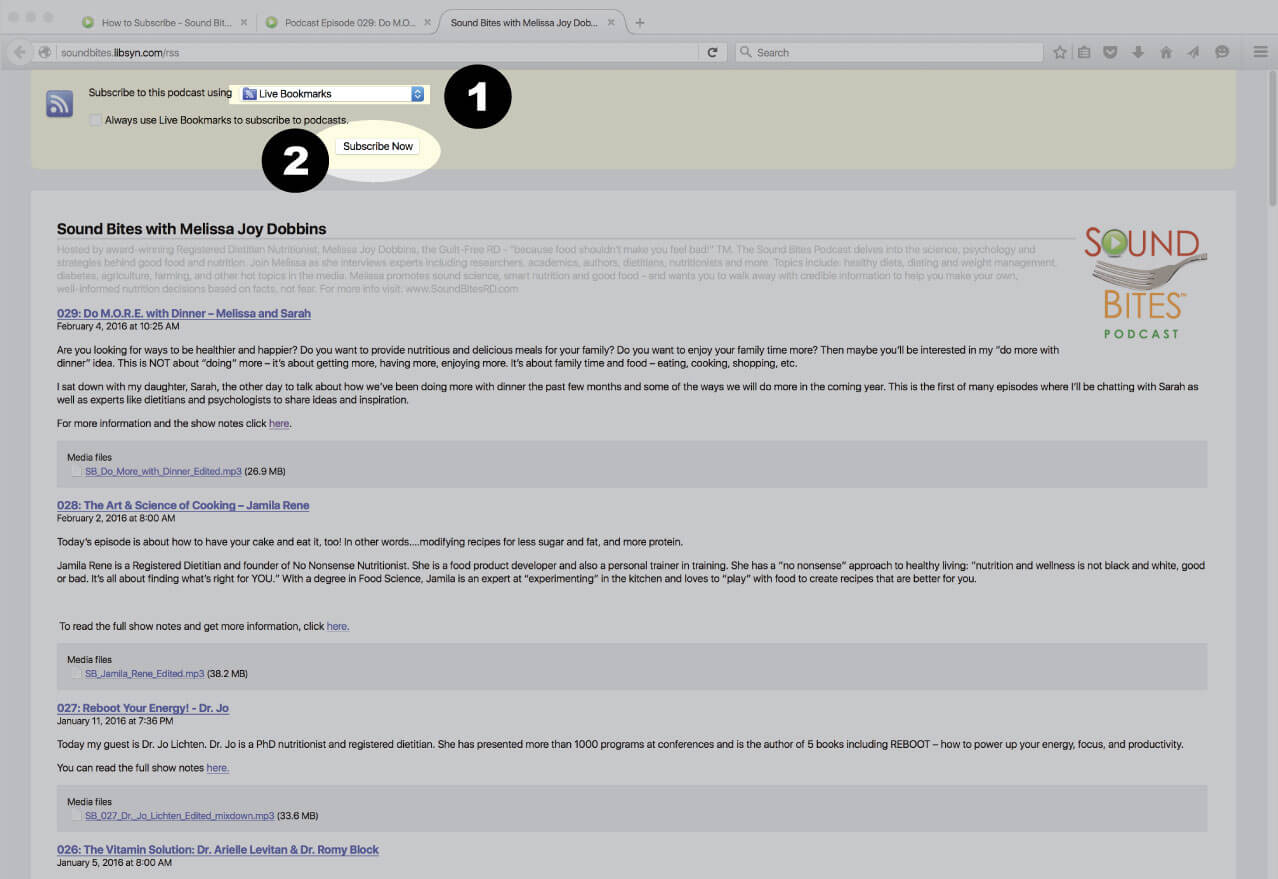
Click on RSS Feed
Choose which application you would like to use to receive the RSS feed
Click “Subscribe Now”
Confirm settings and subscribe.
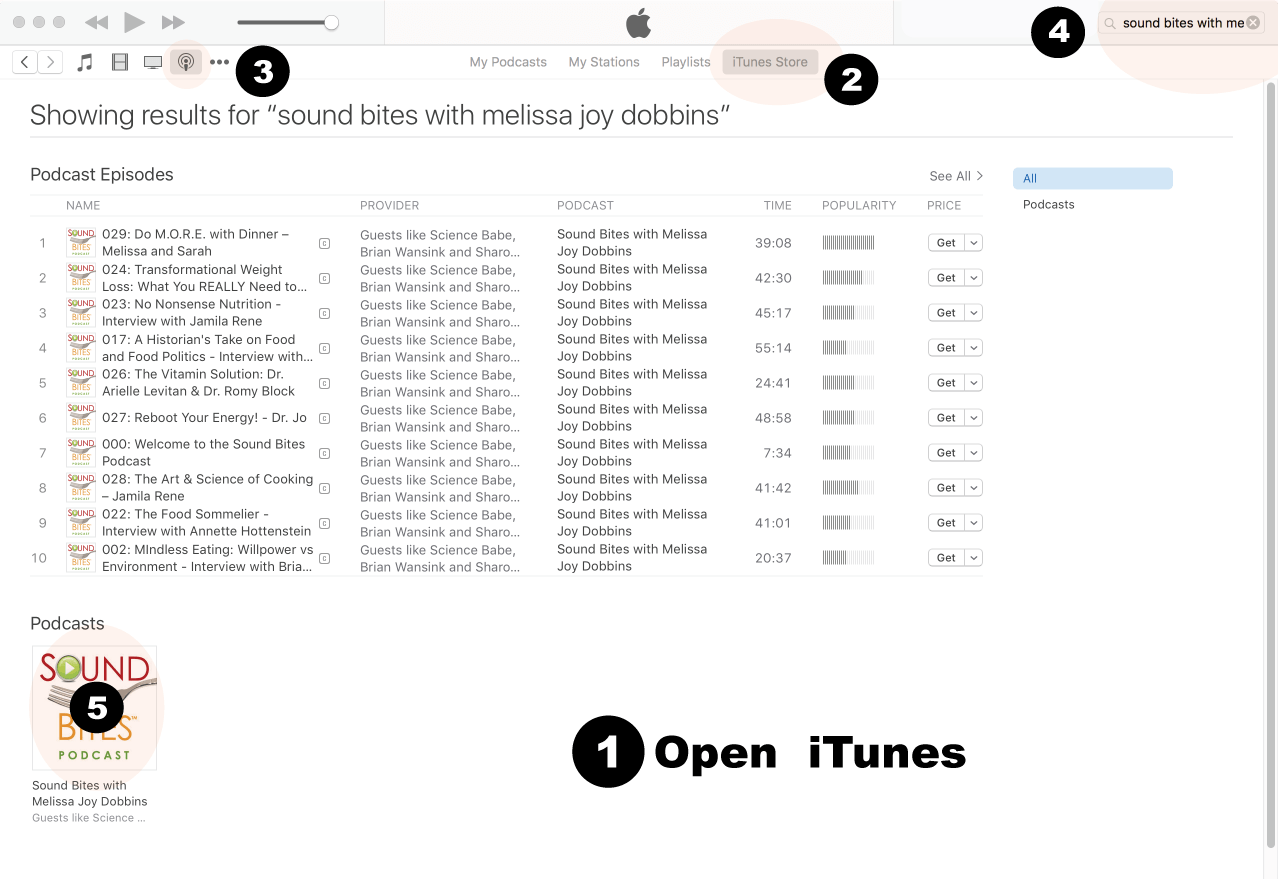
How to Review in iTunes
Open iTunes desktop application
Click iTunes Store
Click on Podcasts
Search for “Sound bites with Melissa Joy Dobbins”
Click on podcast image
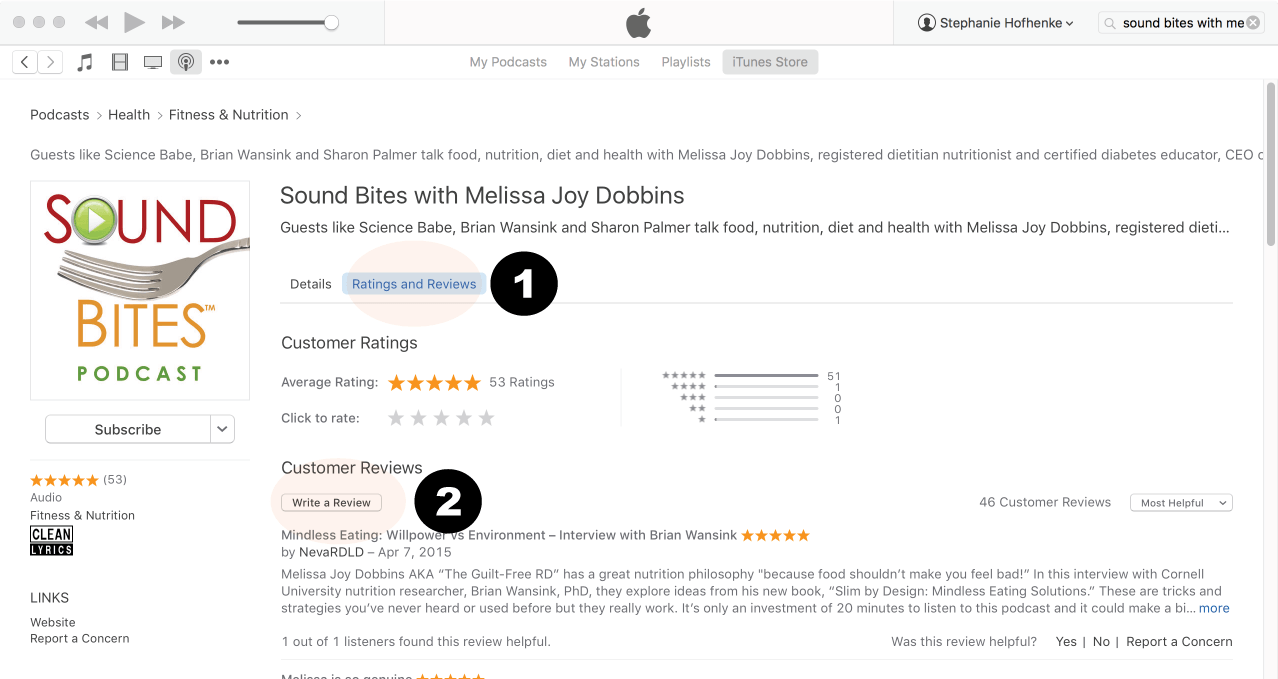
Search for Sound Bites podcast in iTunes
Click Ratings & Reivews
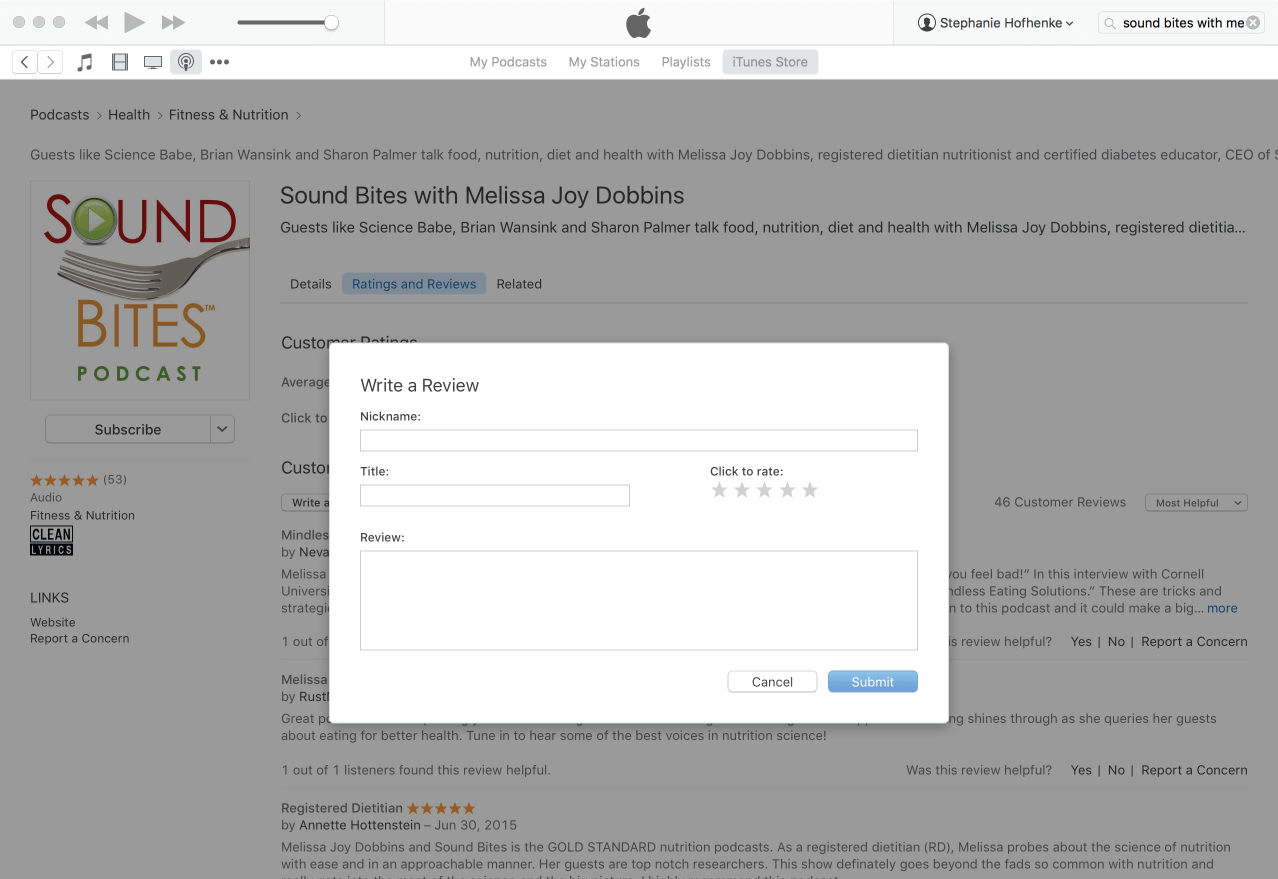
Click Write a Review
View reviews and write your own review.
Write your review…. Thank you!
Write your review!
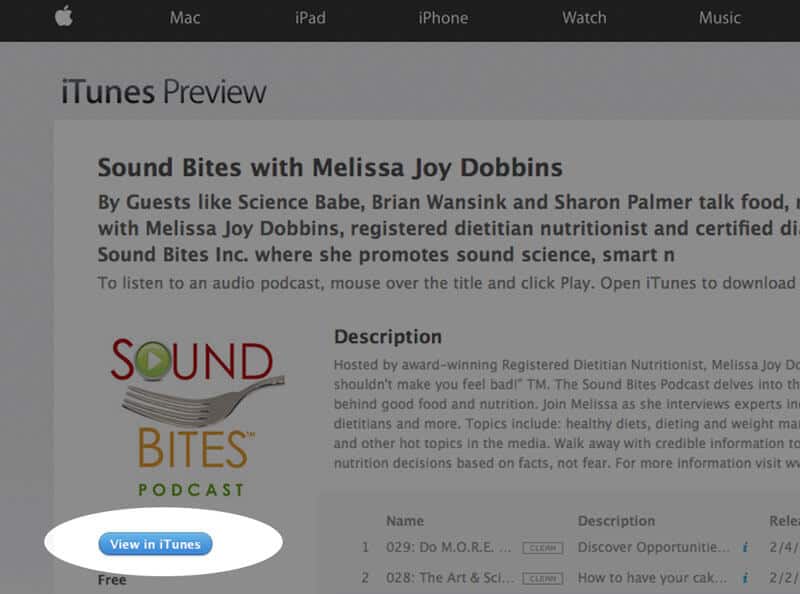
How to subscribe via iTunes
Click here to view the Sound Bites Podcastin iTunes, then click the blue “View in iTunes” button. This will open your iTunes application directly to Sound Bites Podcast. Click the “Subscribe” button, and your done!












This was totally unheard of when my child was young, but I will pass this information onto all the young mothers that I know. I found the information very helpful and interesting.
Thank you, Debra!
I work at a WIC clinic in the Chicagoland area & started talking to moms about introducing allergens. Some pediatricians are not addressing introducing on how to introduce peanuts (powdered form or PB). I purchased Malina’s book & plan to gift it!
Thanks for sharing this, Christina!