Celebrating over 1 Million Downloads and 50,000 Free CEUs on the Sound Bites® Podcast | NEW: Get 1 years’ worth of CEUs with the new 15-CEU Podcast Course
The Science & Creativity Behind Healthy, Positive Behaviors
Kids love cartoon characters so why not leverage that to entice them to try new foods and encourage healthy eating habits? That’s just what today’s guest has done in his new book, The Girls Who Lived in the Refrigerator! Whether a child is a picky eater or just isn’t interested in trying new foods, focusing on taste and fun first can make all the difference.
This book is a natural extension of my nutrition philosophy of meeting people where they live and feeling good about the foods they love.” – David Grotto
Tune into this episode to learn about:
statistics on fruit and vegetable consumption in children
nutrients of public health concern for children
the importance of taste and enjoyment regardless of age
increasing access to fruits and vegetables for kids and families
research regarding cartoon characters and food marketing
what types of messages resonate with children more than nutrition messages
the benefits of getting kids involved in the kitchen
the Family Meals Movement
a recipe for Fairy Salad
David Grotto, MS, RDN, LDN, FAN
Dave’s entrée into the world of food, nutrition and wellness started when he was 14 years old when he began working in the natural foods business, eventually owning and operating his own health food store. Dave went on to become a registered dietitian and attended the University of Illinois at Chicago earning a degree in medical dietetics and nutrition. Dave then pursued a Masters in Nutrition and Wellness at Benedictine University in Lisle, Illinois.
He hosted the live radio show Let’s Talk Health, Chicago for over 10 years and also the television show, Health & Lifestyles Weekly. He served as a national media spokesperson for the Academy of Nutrition and Dietetics and generated millions of media impressions with his sensible and effective message of “doable and delicious solutions that meet people where they live”.
As an author, Dave wrote the acclaimed books, 101 Foods That Could Save Your Life, which has been published in nineteen languages; 101 Optimal Life Foods, with a foreword written by Montel Williams; and The Best Things You Can Eat, a compendium of top foods for everything from Aches to Zzzzz. Now, Dave is excited to release his first children’s book, The Girls Who Lived in the Refrigerator! Dave lives in the Chicagoland area with his wife Sharon, daughters, and family pets.
Resources
Some links may be affiliate links. As an Amazon Associate, I earn from qualifying purchases.
The Girls Who Lived in the Refrigerator: Website | Book
Welcome to Sound Bites, hosted by registered dietitian nutritionist, Melissa Joy Dobbins. Let’s delve into the science, the psychology, and the strategies behind good food and nutrition.
Melissa Joy Dobbins (00:24):
Hello, and welcome to the Sound Bites Podcast. Today’s episode is about fun and creative ways to encourage children to try new foods and to enjoy healthy foods. We’ll also talk about marketing to children, child nutrition in general.
My guest today is Dave Grotto. He’s a registered dietitian and author of the new children’s book, The Girls Who Lived in the Refrigerator. Welcome to the show, Dave.
Dave Grotto (00:53):
Oh, my lord, Melissa, what an honor and a pleasure to be here. And it’s been a long time coming. I’m so glad to be here.
Melissa Joy Dobbins (00:59):
It has been a really long time coming. I’ve been doing the podcast for over nine years. I can’t believe this is your first time.
We have talked several times about you coming on the show, but you’re just like super busy. You have this super-duper career. And I do obviously want you to fill our listeners in on your background and everything, but I also want them to know this episode is not sponsored, and this is a video episode.
So, all of my episodes are audio, but occasionally, I do some fun video ones. So, if you want to watch this video, go over to my YouTube channel, and of course, I’ll have all the links in my show notes at soundbitesrd.com. But if you just want to listen in, that’s fine too.
And I also want people to know that you and I go way, way, way, way, way, way, way back in the way back machine.
Dave Grotto (01:46):
Alright, maybe not so many ways.
Melissa Joy Dobbins (01:48):
I know it’s like crazy. To my first job out of grad school when I moved to Chicago overnight was in South Chicago Hospital. It used to be called South Chicago Hospital, then it was Evangelical Health Systems, then it was Trinity Advocate. I’m not sure what it’s called now. That was my first job.
I didn’t meet you there, but you had worked there before me. You met your wife there, who’s a nurse. And a fellow dietitian friend by the name of Romaine Resnick introduced to us and we’ve been friends ever since. And then we figured out this connection about Trinity Hospital South Chicago.
And you also, are a former academy spokesperson, we’re going to get into all that. But you always encouraged me to apply to be an academy spokesperson. And I was like, “No, no, no, no, no, no.” And you’re like, “Yeah, you really should do it.” And I eventually did and served a three-year term.
So, thank you for being such a huge inspiration in our profession. Such a fun person, and it’s just an amazing career.
So, with that, please share with our listeners more about your background, your varied career, and all the interesting stuff you’re doing now, before we get to talk about your fun new book.
Dave Grotto (03:08):
Oh, that’s awesome. Well, Melissa, not to turn this entire hour into the mutual admiration society but sending that love right back to you.
And I want to talk a little bit about being a spokesperson for the academy, because we both know that’s such a big deal and a great career launcher and really opens up a lot of doors.
But I notice what talent you had way back when, and I’m so glad that you had listened to my advice and decided to apply to become a spokesperson. And you’ve done such a great job.
And full disclosure, everybody, I use Sound Bites continuing education opportunities to fulfill my five-year requirements as a registered dietitian. So, thank you, thank you, thank you, Melissa, for not only having me on today, but all you do for our profession. So, thank you.
Melissa Joy Dobbins (03:55):
Thank you.
Dave Grotto (03:56):
Alright, enough about you. Let’s get back to me. Since you used way, way, way back, you’re much younger than I am, but I’ve been around in this profession for three plus decades and didn’t start off as a registered dietitian.
So, in fact I think back of when I first had interest in becoming either a dietitian or just interest in food in general or healthy food, dates back to when my grandfather owned and operated a health food store in La Mesa, California.
And my mom used to go visit him and she would bring back things she called health foods. And she would open up her suitcase and there were all sorts of goodies in there. Rock candy, Tiger’s Milk bars, health food. And I’m like, “Wow, if this is healthy foods, I am in.” I thought, “Boy, this is a great, great thing. Who knew that eating healthy could be so delicious?”
So, long story short, I had my first job working at a local health food store in the Chicagoland area at the ripe old age of 14 and ate a lot of those same foods that were in that health food store.
But I’ll tell you, what I really got inspired about is actually giving advice to customers. Because a lot of people go to the natural food store, Melissa, as you know, and often seek nutrition advice from non-credentialed experts.
So, that was me before becoming a dietitian. And I’d had people come in and ask me how to quit smoking. And I was smoking at the time, and I put out my cigarette in the back room and tell them to go, “Hey, you try this herb, this will help you quit smoking.” So, not really the good face of nutrition.
But one story that I wanted to share with you and the listeners that was really a turnaround for me is that I realized how powerful incorrect nutrition information can be.
So, the case in point is I owned and operated my own natural food store at the age of 21. I had a gentleman who came in and said, “Dave, I’ve got high blood pressure, and I heard that sea salt is natural, so would that be okay for me to consume and put on my food?”
And I said, not being a registered dietitian, “Oh, anything natural, of course is great. Knock yourself out.”
Well, apparently, he did. He put all over his food, wound up having a hypertensive episode, wound up in the emergency room.
And thank God for him and I, he saw a registered dietitian who said, “That lung kid at the health food store doesn’t know what the hell he’s talking about. Go back and return your sea salt and while you’re at it, tell him that if he wants to play registered dietitian, maybe you should go back to school and become one.”
So, my business model at the time, Melissa, was not to kill my customers. They don’t spend a lot of money when they’re dead, that’s what I found.
So, I decided to go back and take all the math and science classes I avoided like could plague and become a registered dietitian.
So, luckily for me, I didn’t kill anybody. But that near miss turned the boat around and I realized how important it was to get that good clinical background, which of course you and I had at Trinity Hospital.
And I’ve worked in a variety of clinical settings from directing nutrition at an integrative cancer center in Chicago to launching a heart disease reversal program based on the work of Dr. Dean Ornish.
And then later I became a national media spokesperson like yourself. And also, I hosted a health and lifestyle radio show and cable television show for several years. And then I also started a private practice after that called Nutrition Housecall.
And this is where I think I first started getting insights, Melissa, about the importance of food and the role of food beyond just sustenance in people’s lives.
So, this Nutrition Housecall practice I had, I would go in to people’s homes and I would perform what I called a Shelvic Exam. It’s horrible, but I did say shelvic. So, I would go and take labels-
Melissa Joy Dobbins (07:57):
I remember this.
Dave Grotto (07:58):
I used this … in the store, yeah, I would have like red booboo face stickers I would slap on foods that they should get the heck out or give to a neighbor they don’t like. Yellow kind of neutral face, kind of like the stoplight things that you see in front of pack systems now. And then the green smiley face.
Well, I would go visit these people six months later, and I would find most often that those red booboo face sticker foods that I told them to get out of their pantries were still there. Do you know why?
Melissa Joy Dobbins (08:25):
Because they like them.
Dave Grotto (08:26):
Because they like those foods. They were part of their core foods, their vernacular. I might have a prize for you later on, Melissa.
Melissa Joy Dobbins (08:34):
Yay.
Dave Grotto (08:35):
Absolutely. Yeah, they like those foods. So, that’s where I develop my platform of meeting people where they live. Never taking away foods, but really focusing on what can they add in to improve their lives.
So, anyhow, long, long story short, after doing that, that really helped kind of guide this philosophy of meeting people where they live, I wrote three books. 101 Foods That Could Save Your Life, Amazon bestseller, came out on 19 different languages. That led to 101 Optimal Life Foods, that led to The Best Things You Can Eat.
And then after taking a 10-year break from writing, because the past 10 years I’ve been working in the food industry for a company called Kellanova, formerly known as Kellogg Company. Helping people in out-of-home in K through 12 and military by eating healthier foods or making sure that the foods that company develops actually meet all the nutrition criteria that are required in that.
And then I decided, you know what, let’s go ahead and write a children’s book. And here we are today.
Melissa Joy Dobbins (09:37):
Wonderful. Yes, I loved going down memory lane with you because I remember all of these things that you did. I was always impressed with your radio show and then the TV show as well, and the Nutrition Housecall. I remember all of that.
We won’t talk much about your role with Kellanova, but I really do want to emphasize like the regulatory aspect of that.
If you could just say a little bit about that niche that you’re in, because I know there’s a lot of dietitians listening and there are non-dietitians listening. But I think that’s an area that not many dietitians have opportunity or experience in.
Dave Grotto (10:16):
Yeah. Actually, very proud of the work that I’ve done at Kellanova because as I mentioned, working in highly regulated channels like K through 12 is a real conundrum.
So, we have the USDA Healthy, Hunger-Free Kids Act that has specific requirements for food as it should, to make sure that kids are eating healthy meals.
So, on the food manufacturing side is how do you take those regulations but still make foods appealing and taste good because added sugar, sodium, all these other different things that we have in foods have roles for not only making foods taste appealing, but they also, play a role in preserving foods and the way they appear and the browning reactions that we learn about in school.
So, that is a bit of a dance. How do we go ahead and still get kids to participate in these wonder school meal programs and not go off to the local 7-Eleven or something and get food that’s not compliant because that does happen.
So, how do we keep them attracted, keep them interested in eating those foods that are part of great programs that school food service operators are offering and making sure they’re nourished to be healthy and academically and mindfully well fed.
Melissa Joy Dobbins (11:28):
Excellent. Thank you for sharing that. So, as we discussed, this is not your first book. What inspired you to write an illustrated children’s book?
Dave Grotto (11:38):
And I’ll try not to make this a long story, but it is a long story, 20 years in the making in fact. When I was working not very close to my home, I used to travel from Evanston to Oak Lawn, Illinois.
And for those that are not in the Chicagoland area, on a good day, that’s maybe an hour and 15 minutes if you’re catching all the lights correctly. In Clement weather or something like that, that could be two plus hours.
But I was lucky if I could get home in time when my kids were young to be able to read them a story or tell them a story. And sometimes I didn’t get that opportunity.
But this story started off as my wife said, “Hey, I know you’re going to go. You have enough time, you got a few minutes to go ahead, tell the kids a story or whatever you’re going to do.”
And she goes, “But if you could this time focus on trying to get these kids to eat more fruits and vegetables, that would be wonderful.” And I’m like, “That can’t be possible genetically. I’m a registered dietitian, you’re a nurse,” I said to my wife, Sharon. “And how is that possible?”
But that was true that our kids were really struggling to eat fruits and vegetables. So, I said, “Okay, let’s see what we can do.” There wasn’t a book on the shelf that had anything to do with that. But I did notice that the girls had a fairy book that was there.
And I said, “Okay, girls, I’m going to tell you a story about three girls who lived in the refrigerator.” And they were like, “What?” And I of course, immediately thought legal and disclaimer, “But these were not ordinary girls at all because if they were living in a refrigerator, it would be quite dangerous.”
So, I did impress upon them that these were magical food fairies. And ironically, the first fairy, Chloe, which was my oldest daughter’s name, lived in the vegetable bin. The middle daughter, Katie, who was the dairy fairy, lived in dairy bin. And lastly, there was Madison who was the fruit fairy and lived in the fruit bin.
And so, they were very intrigued about this. And we’ll talk more about the book later, but fast forward they all get together and make a salad together and try new foods.
So, this book was really about inspiration to be adventurous, to be brave. It’s not really about nutrition or how good foods are. It was really just to give kids permission to try new things.
So, luckily, the story resonated with my kids. I saw some great results with them changing eating habits. And both my wife and kids have encouraged me throughout these 20 years.
“Dad, why don’t you go ahead and make this into a children’s book. You’ve written three other books before. Just write a children’s book.”
Well, for any of you authors out there or would be authors, writing an academic book or a book on food and nutrition is an entirely different thing than writing a children’s book. So, this was new territory for me. So, it took a while to kind of get this all figured out.
But I’m glad to say 20 years later the book is out in bookstores and online right now, as we speak.
Melissa Joy Dobbins (14:35):
Yes, wonderful. I mean, obviously I knew because I know you and I knew where the inspiration came from, but I love hearing the story because they’ve been poking at you for years to just make that an actual book that others could use and benefit from. So, that’s great. They must be really proud of you.
Dave Grotto (14:56):
Well, my daughter just did a TikTok video. This is something else the old codger dietitian here is now, getting immersed in other different social media platforms. But she did a very cute video holding my new grandson, AJ, and having him read through the story.
He is nine-months-old, and he is manhandling the book and doing all sorts of stuff. He’s just so excited about it because of the illustrations.
And that’s the other thing we’ll talk about too. Is that we know beloved cartoon characters and bright colorful illustrations are really impactful for young kids and influencing them and what they like.
So, I’ve kind of combined that nutrition background that we both have, Melissa, with the power of influencing and colorful cartoon characters and incentivizing kids to try new things and really had some great results, which I love to share.
Melissa Joy Dobbins (15:46):
Yeah, wonderful. Well, and not to jump ahead either, but one of your daughters is a dietitian.
Dave Grotto (15:53):
She’s my mini me.
Melissa Joy Dobbins (15:55):
Is it Katie?
Dave Grotto (15:56):
Madison, yep. Madison is my youngest daughter. And it’s amazing that you never fully understand, I think, the impact that you have on your children as parents. And I never said, “Gee, Madison, you should become a registered dietitian when you grow up.” But apparently, she listened to a few things.
But I think she was really inspired by stories that I shared. Of course, no HIPAA violations, but in general about how I impacted people’s lives.
And I think, Melissa, you and I became dietitians not because we thought it would be a get rich quick scheme, but because we truly have a heart for helping people. We want to inspire people and also our colleagues.
If we discover that there’s a different path to change behaviors, maybe meeting people where they live. That’s important to share with our colleagues as well.
So, anyhow, I’m honored, I’m thrilled. And of course, extremely proud that Madison, the fruit fairy is now, a register dietitian. And she’ll be at the Food & Nutrition Conference with me in October signing autographs as Madison, the fruit fairy.
Melissa Joy Dobbins (16:59):
That’s right. I’ll be first in line. And I don’t know if you’ll be wearing that strawberry costume or not, but-
Dave Grotto (17:06):
Well, she’ll be wearing a very cute strawberry dress because believe me, she’s going to look a lot better in a costume than I will.
Melissa Joy Dobbins (17:12):
I don’t know. Be hard to top you in that strawberry costume from years ago. I’m going to put that picture-
Dave Grotto (17:17):
I type cast [crosstalk 00:17:18].
Melissa Joy Dobbins (17:18):
That picture’s going in the show notes of you and me. You’re wearing the strawberry costume, I’m not.
I mean, obviously we know that child nutrition is important. We can all agree that child nutrition is important. But I would like to get into a little bit of science and statistics just to kind of set the stage what some of the nutrition challenges we see in this age group.
I mean, we know across the board, children, adolescents, adults, we’re not getting our fruits and vegetables. But I would love for you to share anything that you can share with here about like child nutrition, statistics, fruit and vegetable intake data, anything like that.
Dave Grotto (17:52):
Well, not surprisingly the target audience for this group are young kids. I would say kind of the 2 to 8-year-olds. Oh, I’m getting lots of feedback from 10-year-olds, 12-year-olds that are reading this book and just absolutely loving it too.
But we know that 2 to 8-year-old is kind of the sweet spot age range where kids are actually formulating a lot of lifelong habits. And a big message that … and I know you have a mixed audience out there, Melissa, not only healthcare professionals, but moms and dads.
And I want to first set a signal out to them. It’s normal for kids to have picky eating phases of their life. Problematic when it starts impacting their growth, their ability to thrive, if it becomes socially difficult for them to eat in restaurants or going out to friends and family’s homes, so forth and so on.
So, that’s why I really want to focus on the importance of giving your kids some latitude, understanding that this is an important thing that they’re going to go through.
But as you just talked about earlier, Melissa, fruits and vegetables in particular, and I know a lot of people ask why are you so focused on fruits, and vegetables, and dairy while those historically are under consumed food groups?
So, dietitians like us look to these dietary guidelines for Americans that come up every five years. And it seems to me it’s always like the same old stories. We are not simply getting enough fruits and vegetables. We’re not meeting the recommended amounts.
80 to 90% of adults are not meeting the dietary guideline recommendations for fruits and vegetables. Kids are not far behind. But also, that’s not just fruits and vegetables, it’s fluid milk consumption.
I know that you had worked in the dairy industry. We have seen a bump up of eating other different kinds of dairy foods, cheese and yogurt and things of that nature, which is great. But fluid milk is still an important dairy item that kids really need to be eating.
And also, I think a big part of this too is as I said, kids are not eating enough fruits and vegetables. In fact, the CDC recently reported that children age one to five years of age, one in two did not get their daily vegetable in. One and three did not eat a daily fruit. I mean, that’s even a single serving. That’s really scary.
Now, the good news is toddlers in general seem to be moving the bar upwards to getting more fruits and vegetables in, but they’re still not meeting the mark. So, there’s a lot of work to be done.
Melissa Joy Dobbins (20:17):
Yeah, absolutely. And you’re talking about those under consumed food groups. And we know about the nutrients of concern, nutrients of public health concern more specifically. And it’s things like calcium, fiber-
Dave Grotto (20:35):
Potassium.
Melissa Joy Dobbins (20:35):
Is it potassium? And what’s the fourth one?
Dave Grotto (20:39):
Vitamin D is an important one too.
Melissa Joy Dobbins (20:41):
Vitamin D, okay. Yeah.
Dave Grotto (20:43):
Absolutely, we’re on the same page here. Those nutrients are important for growth cognition. So, as we talk about not only just physical wellbeing, mental wellbeing, there’s a lot of great research that’s coming out that’s showing that those foods, your gut flora …
We hear about your gut bacteria and gut health fiber is an important part of that. And you get a lot of that from fruits and vegetables, certainly whole grains as well too. So, that’s why it’s important to make sure that kids are eating a well-rounded diet.
Melissa Joy Dobbins (21:10):
Yes. And in particular those nutrients of concern all speak to those food groups. It all just comes full circle because fruits and vegetables-
Dave Grotto (21:18):
The circle of life.
Melissa Joy Dobbins (21:19):
… are providing the fiber and the potassium and the dairies providing potassium, calcium, vitamin D and so on. Absolutely.
Dave Grotto (21:26):
That’s it.
Melissa Joy Dobbins (21:27):
You mentioned earlier about meeting people where they live and feeling good about the foods they love. So, talk to me a little bit more about your philosophy about this and where that intersects with the science behind healthy positive behaviors.
Dave Grotto (21:43):
Yeah, I think maybe it’s a good place to start about meeting people where they live not only in their nutrition and food journey, but literally about meeting people where they live. And they typically live in families.
And so, I’m very happy to announce, I’m partnering with FMI Foundation who has a September Family Meals Month. And they’ve done lots of great research actually that shows that if kids just eat together as a family …
And that can be defined many different ways. It could be that core nucleus family members, your brothers, sisters, mom and dad. But it also couldn’t be grandparents, aunts and uncles, the neighbor, friends and family.
Anywhere that you can eat together as a family that shows that kids eating more of those frequent family meals actually eat more fruits and vegetables. So, not such a disconnect of why we’re joining forces to get kids to eat healthier by eating together as their families.
But getting back to talking about meeting people where they live, whether you are 8 months or 80 years, taste and experience rule. We see this after consumer research study after consumer research study.
But I think we often as registered dietitians lead with what we know best for food and nutrition professionals, but we often lead with nutrition first. I think it’s critically important, especially when you’re talking to patients that they’re not fearful of giving up all of their favorite foods.
And kids really just want to have fun. You know Cyndi Lauper, it’s not just girls who want to have fun, but boys want to have fun too. And I think that’s really an important thing.
So, do you have a quick minute for me to share a story about Katie, about meeting her where she lives?
Melissa Joy Dobbins (23:30):
Yes.
Dave Grotto (23:31):
So, Katie is my middle daughter. We used to refer to her as Mrs. Cheese and that’s why she is the cheese fairy in The Girls Who Live in the Refrigerator. But we really struggled to get her to eat fruits and vegetables.
And so, one of the things that I found with Katie is that we took fruits and vegetables and made like different designs on the plate, and we found that she was attracted to that.
So, we took bell peppers and sliced them horizontally to kind of make a flower shape and also, put some tuna salad in the middle of that. She wasn’t eating fish, but we thought we’d try with tuna fish salad.
And what we found is that she would take a bite of the pepper, start dipping it into the tuna fish and start eating it. And so, check, check, we got her to eat more vegetables and more fish in the diet.
So, again, that’s again about meeting kids where they live because it’s not only taste, it’s about they eat with their eyes. It’s got to be fun and experiential for them.
Melissa Joy Dobbins (24:25):
Yeah, absolutely. I love that. So, let’s talk a little bit more about the characters in the book. And we know that they’re your three daughters, you’ve got these fairies.
But bring this to life a little bit for us, how you got creative and use some of your nutrition insights without really talking about nutrition. Right?
Dave Grotto (24:43):
Exactly. So, I found that that fell on deaf ears with my own girls. So, maybe I just kind of put that on the back seat for a while and I just focused in on how to make foods more fun. So, I haven’t given you an example about Madison, the fruit fairy.
One of the things that she absolutely loved was strawberries and she used to love to dress up her dolls and make little different hats. So, in the story, you discover that Madison takes the tops of the strawberry, which does anybody happen to know what the name of that is?
Melissa Joy Dobbins (25:19):
Oh gosh, no.
Dave Grotto (25:22):
It’s a calyx. That is the name of the green part that’s on top of a strawberry. But anyhow, useless factoid.
But in the story, she takes the calyx, (which we usually don’t eat, and it is edible by the way) and makes little hats for her dolls out of that. So, it’s very cute part of the story.
Chloe also, used to love to play dress up and she would get into different princess and fairy costumes. So, we made the part of the story where Chloe actually took the skins green bell peppers and made dresses out of them.
So, you see that Chloe actually takes on more of the look of her environment. She’s kind of greenish in color and all of her clothes are kind of green and purple.
And then as I mentioned, Madison really loves cheese. So, one of her activities is riding it around on her wheel of cheese in her little dairy bin. So, see, you can have your dairy and have physical activity both at the same time.
Melissa Joy Dobbins (26:14):
There you go, right. And there’s at least two more characters. A little boy and a puppy dog. Why did you have that play into it instead of just the girls living in the fridge talking to each other?
Dave Grotto (26:28):
Great question. So, the original story did not feature Sam and Maisey and also, as you meet later on Sam’s mother.
But one of the goals of this book, and I know we’ll talk a little bit more about this later on, is that I really do have a agenda for this book. I really do want kids to eat healthier, but it’s through bravery, it’s adventure and trying new things.
And so, in the story, Madison is actually reluctant to try new foods. The girls actually get together and make a salad. They bring foods from all their different worlds. But Madison’s a little reluctant because she’s never tried new foods before.
But the girls remind Madison that she’s so brave that she climbed to the top of the world, which took a lot of bravery because they’ve never met each other before and they got together and to meet each other. So, Madison tries the salad for the first time and absolutely loves it.
So, later on, they’re discovered by Sam who lives in the house where the refrigerator is, along with his favorite dog, Maisey. And they are absolutely shocked at what they see.
And long story short, they (meaning the fairies) convinced Sam to try salad because he’s someone who never likes to try new foods ever, ever. But they reminded Sam of Madison’s bravery and encouraged him to be brave.
So, Maisey starts licking him and that’s her way of saying, “Go ahead, Sam, try this.” And Sam knows that she wants a bite too. So, Sam tries a bite of the salad, and he is absolutely thrilled with it.
So, I wanted to show it’s not just magical food fairies, but also, taking bravery and the sense of adventure can be important for kids.
And I also, want to state something very obvious too, is that you’ll notice that on the cover, Sam is a boy of color, and his mom is a woman of color.
And that’s purposeful because one of the things that I found in my research, Melissa, is that even though kids are having struggles with eating enough fruits and vegetables, children of color struggle even more.
With whether it’s access or even having access to food, not having the experience of eating fruits and vegetables because it’s not part of their food vernacular. So, found that that’s something that I really want to do. I want to move the needle on consumption with all children.
And of course, Maisey, I had to sneak in there because we have a dog, Maisey. And my daughter Chloe has a dog, Mabel. So, the character Maisey, a little secret insight, is a mashup of both dogs. And they were both rescues from Magnificent Mutts. So, we literally rescued them both from a kill chapter and they’re just amazing dogs.
But we’re going to see later on that this dog, Maisey, is going to be the conduit to exploring the neighborhood in future books. So, these girls experience different cultures and learn how these cultures use fruits and vegetables.
Melissa Joy Dobbins (29:28):
Okay. Very interesting, yes. And I know we’ll talk a little bit more as we wrap up as well, like what your vision is beyond this book.
Clearly it was a long time coming, the story has been around for decades, but coming to fruition. And I definitely want to hear more about your vision for your plans beyond this book.
But first, I want to talk about cartoon characters and advertising to kids because I would love to hear in your experience and what you’ve learned about the impact of cartoon characters on children’s food choices or purchasing.
I mean, obviously the little kids aren’t purchasing the food, but would love to hear your thoughts on that.
Dave Grotto (30:08):
Well, it’s interesting that you say that kids aren’t purchasing foods, but if you look at today’s generation of young kids and that is now, referred to as Gen Alpha, this generation besides being the largest generation ever, is the one that’s most impactful and influential for mom’s purchase decisions.
So, I’m thinking of little Susie tugging on mom’s jacket saying buy this, wouldn’t it be great if we see little Susie tugging him on jacket and saying buy more fruits, vegetables and milk. So, that’s kind of my goal.
But that’s something that I think is a great thing to lean into. Like how do we work with what influences children?
So, there’s some great research. In fact Dr. Dan Graham did a research study looking at the impact of cartoon characters on children of different ages.
And long story short, with this research, he found that cartoon characters were most influential for like preschool and definitely the target age that we’re looking at here, but even more specifically boys.
And so, those cartoon characters for good being labeled on foods that are certainly more nutritious and healthy for you, they’ve seen that kids actually are more attracted and more willing to try those foods. So, that’s really kind of the science behind the book.
And of course, I wanted to make sure that this book was beautifully illustrated. So, I was lucky enough to partner with artist, Brian Dumm, who has drawn and illustrated so many great children’s books that are out there. Spaghetti is Ready is one of my favorite books. Would highly encourage people to check that out.
But that’s what we notice with the results and people looking at the book is not only were they intrigued with the story, but they were focused in on, I know this is kind of glaring, look at the beautiful colors-
Melissa Joy Dobbins (32:00):
No, that’s good. That’s perfect.
Dave Grotto (32:03):
… the vibrant, the characters are fun. And a lot of that really made a big impact on whether their kids are going to choose the story or maybe even try fruits or vegetables for the first time, if let’s say a produce company decides to take a character like this and put it on pack.
Melissa Joy Dobbins (32:21):
Yes, that would be wonderful. I mean, use those things to our advantage, instead of complaining if they’re being used on foods that aren’t as nutrient dense. Let’s get them on the nutrient rich produce dairy.
So, I wanted to follow up on that. Like you had mentioned a little bit about how this impacted your daughters. I’m sure her friends have heard this story or now, that the book is out, you started getting some feedback from 10 and 12-year-olds you said. So, I’d love to hear what kind of impact this book is having.
Dave Grotto (32:52):
Well, not to bop you with other things that I’ve done in my life, but I used to teach a ventures class for healthcare professionals at Benedictine University.
And one of the integral parts of developing a business plan to determine whether you have what’s called a MVP or minimal viable product is conducting lots of customer interviews.
So, looking at the characters, the size of their eyes, the colors that are used in there, all of those things. Got lots of great feedback from different people from different walks of life. So, I engaged multiple families to see whether these characters resonate with them, what their takeaway messages were.
And a lot of these folks that I’ve engaged early on in the process have gotten back to me and said, “Oh my God, my son, my daughter, all my kids are interested in trying new foods.” And it’s not always that they like them but at least they tried them.
And I think that goes along with a lot of the research that we see, especially with fruits and vegetables, that it may take more than 1, 2, 5, 10, 30 times before kids eventually engulf, or incorporate that I should say, into their core group of foods.
So, I think this is again, yet another tool in the tool belt for our healthcare professional friends that are listening to this podcast right now. Because it’s, again, we need more than just that nutrition message. We got to meet people where they live and got to work with the foods and taste and enjoyment that they love.
Melissa Joy Dobbins (34:27):
Yeah. And I just jotted down, this isn’t just for picky eaters, obviously this can help picky eaters and parents who have those challenges, but all children and maybe even some adults like trying the food to begin with. I mean, that’s the first step and becoming more familiar.
And yeah, they may not like it the first time, but they might. And just having that be more of the process instead of avoiding altogether.
Dave Grotto (34:55):
Exactly. And a good case in point, I mentioned my daughter, Chloe, who’s a vegetable fairy, has a baby who’s nine months old, my first grandson.
Melissa Joy Dobbins (35:04):
Congratulations.
Dave Grotto (35:05):
And she was kind of freaking out. Thank you. First boy in the family for over 50 years. I have three daughters. Even the cats and dogs are females. So, I didn’t know what to do with a boy. So, anyhow I knew enough not to buy him a cigar yet. That was weird.
So, I think she also struggled with hey, introducing new foods because maybe he made a funny reaction, but she learned to stay the course or try foods in different ways or maybe it’s a texture issue. So, it’s okay.
We have like these wonderful squeeze bottles that have pureed fruits and vegetables. They’re a hundred percent pureed fruits and vegetables. There’s no shame in doing that because it all gets digested into that puree, if you will, not to get too graphic with people.
But that’s a win. Whatever way that you can get kids to eat fruits and vegetables, and dairy is a great thing. So, take those wins, work on those challenges. And that’s why I think a book, like The Girls Who Live in the Refrigerator will be such a help to parents.
Melissa Joy Dobbins (36:05):
Yeah. I’m glad you brought up texture. I think that’s a huge thing. And I guess we should also touch on produce. Does it have to be fresh? Does it have to be organic? Like are you working any messages in that way with regard to other forms of produce?
Dave Grotto (36:21):
Interestingly, in this book not as much, not surprisingly because it’s a refrigerator, we have focused on fresh. But I’m really glad that you asked that, Melissa, because fresh produce is not the only way that you can deliver good nutrition to kids and adults.
And I think especially during these economically trying times, I really have been focusing on, at least with the patients that I see, looking at fresh, and frozen, and even canned vegetables and fruits as being all equally nutritious.
So, a lot of people say, “Well, isn’t canned vegetables high in sodium?” You can buy low sodium versions of that. You can take vegetables and put it in a colander and rinse it off and rinse away a lot of the sodium.
So, no reason not to incorporate fruits and vegetables because you’ll find that any of them will fit in your budget. Especially getting ones that are in season and so forth. But lots of different great ways to try them and still get all the nutrition that fruits and vegetables bring to the table.
Melissa Joy Dobbins (37:22):
Excellent. Well, I look forward to hearing more about how the book is going. I would love for you to share again, more about your vision. Anything that’s not a secret that you can share with us about your vision beyond the book. And also, of course, any bottom-line takeaways for our listeners.
Dave Grotto (37:39):
Well, as I’ve already shared with your listeners, I do have a secret agenda and that is to get kids to eat healthier. But as I mentioned, we’re not leading with nutrition in this book. There’s no mention of nutrition in the book and that’s purposeful because it’s really about focusing on adventure and bravery.
And so, we think that’s a great way to partner with dietitians and other healthcare professionals’ messages about nutrition.
But I’ll tell you, my bigger focus on that is not just book sales, but wouldn’t it be great to take a book like this partner, with commodities and retailers and maybe even making an incentive program.
In fact, there’s great research showing that rewarding kids for trying new foods actually is a great thing. I’m not talking about rewarding them with a candy bar. But whether it’s a little toy or a coloring book or anything of that nature would be fantastic.
So, there are rewards programs out there, but I would love to develop one in partnership that actually focuses on rewarding kids for trying new things. And then maybe mom and dad get rewarded by getting a coupon for trying a next new fruit or a vegetable and having almost like an explorer club. So, I would love to do that.
And as far as the future of the book, there’s a lot of great things that we’re looking to do. So, the next book, little foreshadowing at the end, is called The Boys That Lived in the Pantry. And that’ll be coming out God willing in 2025.
But then building on that idea of trying new foods from different cultures. And again, this book speaks to cultural diversity because it’s important when it comes to food. There’s so many different global flavors out there that kids may make the difference for them trying new foods being exposed to those different flavors.
So, the future extension of the book line will be the girls will go on an adventure and explore their very diverse neighborhood on the back of Maisey because she’s going to be the transport for the fairies.
And they’re going to meet other fairies from different cultures and learn how they celebrate different traditions and everyday life through those different cultures, which I’m really excited about.
Melissa Joy Dobbins (39:52):
Wow, that sounds wonderful. Very exciting. So, Dave, before I let you go, I have to say, I finally got to see your band play and unfortunately it was the farewell show of the band because your amazing lead singer is moving out of state. How dare he?
And as you know, Dave, I started taking drum lessons a little over a year ago and I can kind of muddle my way through a couple basic songs. But are you going to keep playing? Are you going to find a new lead singer? What are you guys going to do?
Dave Grotto (40:23):
Oh man, I don’t know. I mean, the band is called Loud Live 5. We said that we had our last performance because our wonderful lead singer is actually moving to Kansas City. But he said, “Don’t tell everybody it’s the last performance. I’ll be back.” I’m like, “Okay, well, I don’t know how if he’s going to be back.”
But if we do get a new lead singer, let me know, Melissa, if you find one, we decided to call our band the Dad Bods.
Melissa Joy Dobbins (40:50):
Dad Bods, okay. I think you’re … is that a joke?
Dave Grotto (40:53):
Or maybe not. Maybe we’ll go back to Loud Live 5. But if we lose our drummer, Melissa, you are coming along so nicely on your drumming. We’ll definitely maybe put you in the backup reserve.
Melissa Joy Dobbins (41:02):
Well, maybe someday. Although, you have asked when am I going to start a dietitian band. And I thought the dietitians would actually be a good name for a band, but that’s a long way off. It’s not even a goal of mine. I should say, you’re the keyboardist in the band and you were so good.
Dave Grotto (41:21):
Oh, you’re too kind. Well, $20 is coming your way and lots of copies of The Girls Who Lived in the Refrigerator.
Melissa Joy Dobbins (41:26):
Just another fun thing about you, Dave, you’re so much fun and I’m so glad we’re friends.
Dave Grotto (41:32):
I am so glad we’re friends too. And we’re going to keep that train going either through music or nutrition. And may the two meet.
Melissa Joy Dobbins (41:39):
Maybe that’s your next thing. You need to write a song to go with The Girls Who Lived in the Refrigerator book.
Dave Grotto (41:46):
Note to self, don’t tell Melissa that you’ve got a new book called Music and Nutrition.
Melissa Joy Dobbins (41:51):
You heard it here first. Please let us know how people can find out more about the book, get the book, what formats it’s available, and how they can connect with you online.
Dave Grotto (42:02):
I’d be happy to do that. So, I mentioned earlier that I’m collaborating with the FMI Foundation promote Family Meals campaign in conjunction with the launch of my book that’s going to be coming out in September, Family Meals Month.
And the reason again, that you want to focus on eating as a family, not only more fruits and vegetables, Melissa, but actually it can help develop positive social interactions that may help prevent them from engaging in risky behaviors.
Research on family meals have also, shown that it correlates to academic performance, higher self-esteem and a greater sense of resilience. Maybe that ability to bounce back from hardships and bullying.
And last but not least, as I talked about children who enjoy meals with their family, however that’s defined, actually eat healthier and they’re better able to manage long-term weight.
But as far as all the other bells and whistles that go with the book, if you want to know how to follow me personally, you can go to Dave Grotto on LinkedIn, grottodavid on Instagram, David Grotto on TikTok.
If you want to find out more about the FMI movement, you can go to fmi.org. And of course, if you want to find out more about produce pairings, we were talking a little bit about that, you can go to fruitsandveggies.org.
And last but certainly not least, all roads lead to thegirlswholivedintherefrigerator.comfor all four formats of the book. You can get a hardcover, a paperback, an eBook.
And I’m very excited to announce Audible is partnered with me to produce an audiobook. So, if you’d like Uncle Dave to read to your kids at bedtime, get them in their best jammy jams, tuck them into bed and press play and I’ll be there.
Melissa Joy Dobbins (43:46):
Excellent. Wonderful. Yes, thegirlswholivedintherefrigerator.com, all of these links, especially your social media ones, will be in my show notes at soundbitesrd.com.
Love the work that FMI does. Family Meals month is my birthday month, September. And the research they have on families that eat together and like you said, it goes way beyond nutrition, just overall health and wellbeing. It’s really great stuff. So, I’m so excited. It’s a perfect partnership for you. So, congratulations.
Thank you so much for coming on the show and sharing this information. It’s been so much fun.
Dave Grotto (44:21):
Thank you. And an honor and a pleasure. And all I’m going to say is long live Sound Bites and the girls that live in the refrigerator.
Melissa Joy Dobbins (44:28):
Absolutely. And for everybody listening, if you like this episode, please share it with a friend or family, tell your friends and family about the book. And as always, enjoy your food with health in mind. Till next time.
[Music Playing]
Voiceover (44:42):
For more information, visit soundbitesrd.com. This podcast does not provide medical advice. It is for informational purposes only. Please see a registered dietitian for individualized advice. Music by Dave Birk. Produced by JAG in Detroit Podcasts. Copyright Sound Bites Inc, all rights reserved.
LISTEN, LEARN AND EARN
Listen to select Sound Bites Podcasts and earn free CEU credits approved by the Commission on Dietetic Registration (CDR) for registered dietitian nutritionists and dietetic technicians, registered. Get started!
Get Melissa’s Sound Science Toolkit here!
Partnerships:
Sound Bites is partnering with the Association of Diabetes Care and Education Specialists (formerly the American Association of Diabetes Educators)! Stay tuned for updates on the podcast, blog and newsletter!
Sound Bites is partnering with the International Food Information Council! Stay tuned for updates on the podcast, blog and newsletter!
Sign up for my monthly newsletter and episode eblasts so you never miss an update!
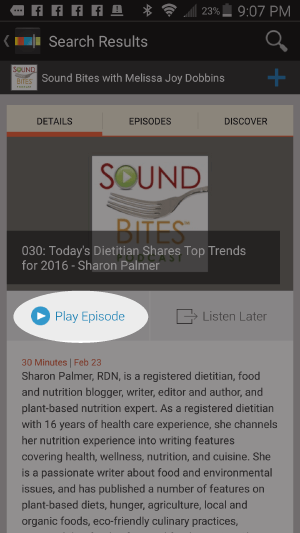
Listen on Stitcher (Android)
Install the Stitcher App
1. Search for “sound bites with melissa joy dobbins” 2. Choose Play Current Episode or Add to Playlist
Choose “Play Episode”
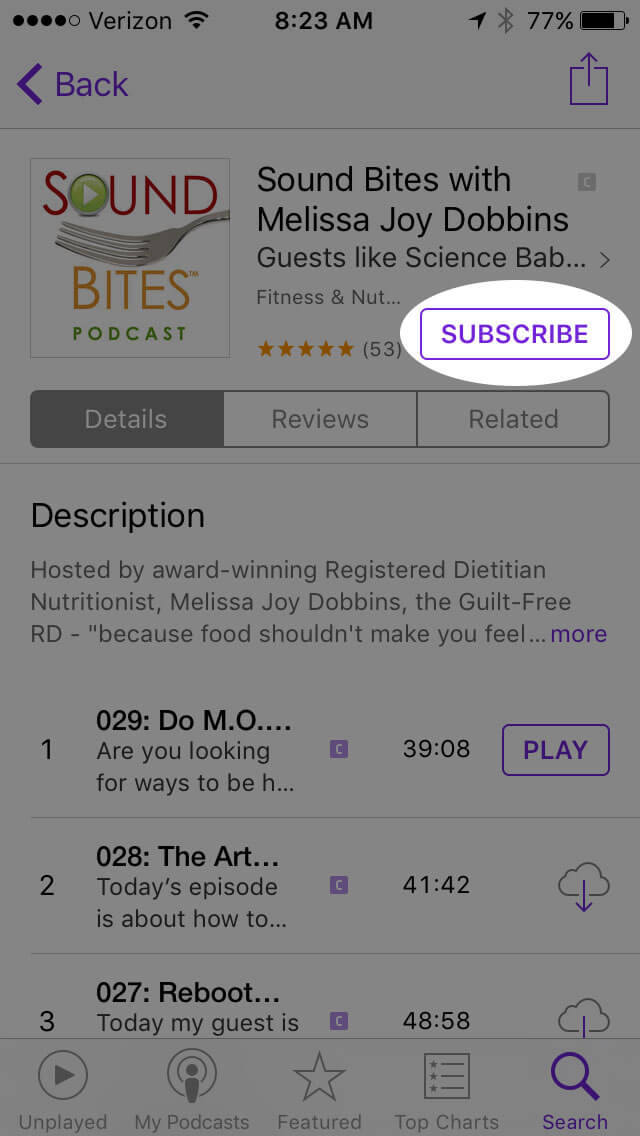
Subscribe & Review on iPhone
Open the “Podcast” app on your iPhone
Search for “Sound bites with melissa joy dobbins”
Open the podcast and click “Subscribe” and your done!
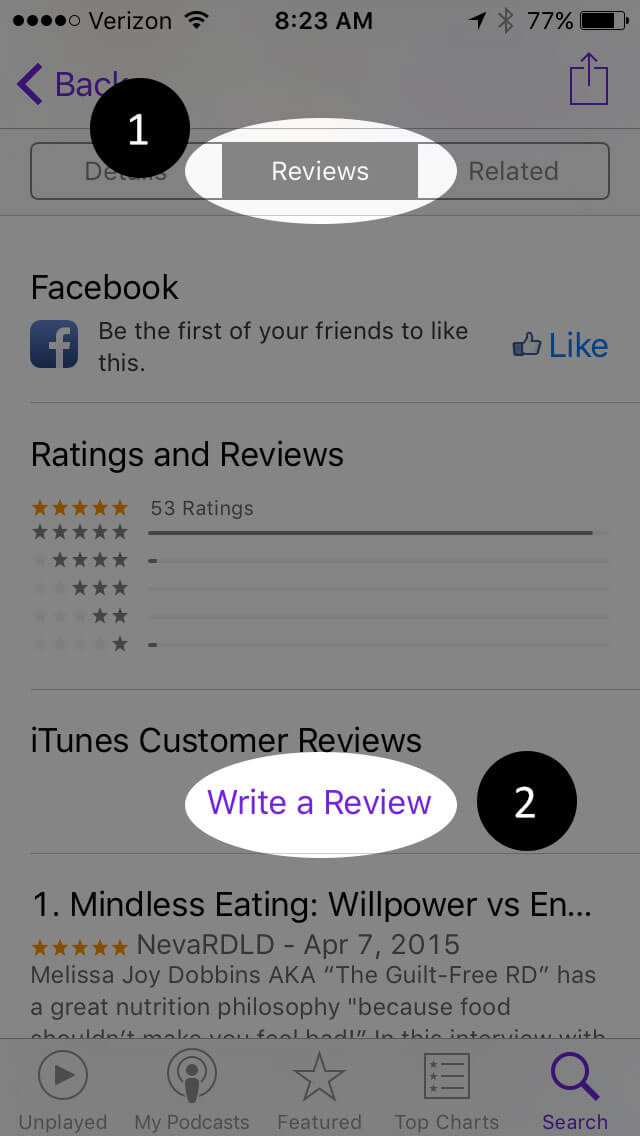
Write a Review
Click “Reviews”, then “Write a Review”.
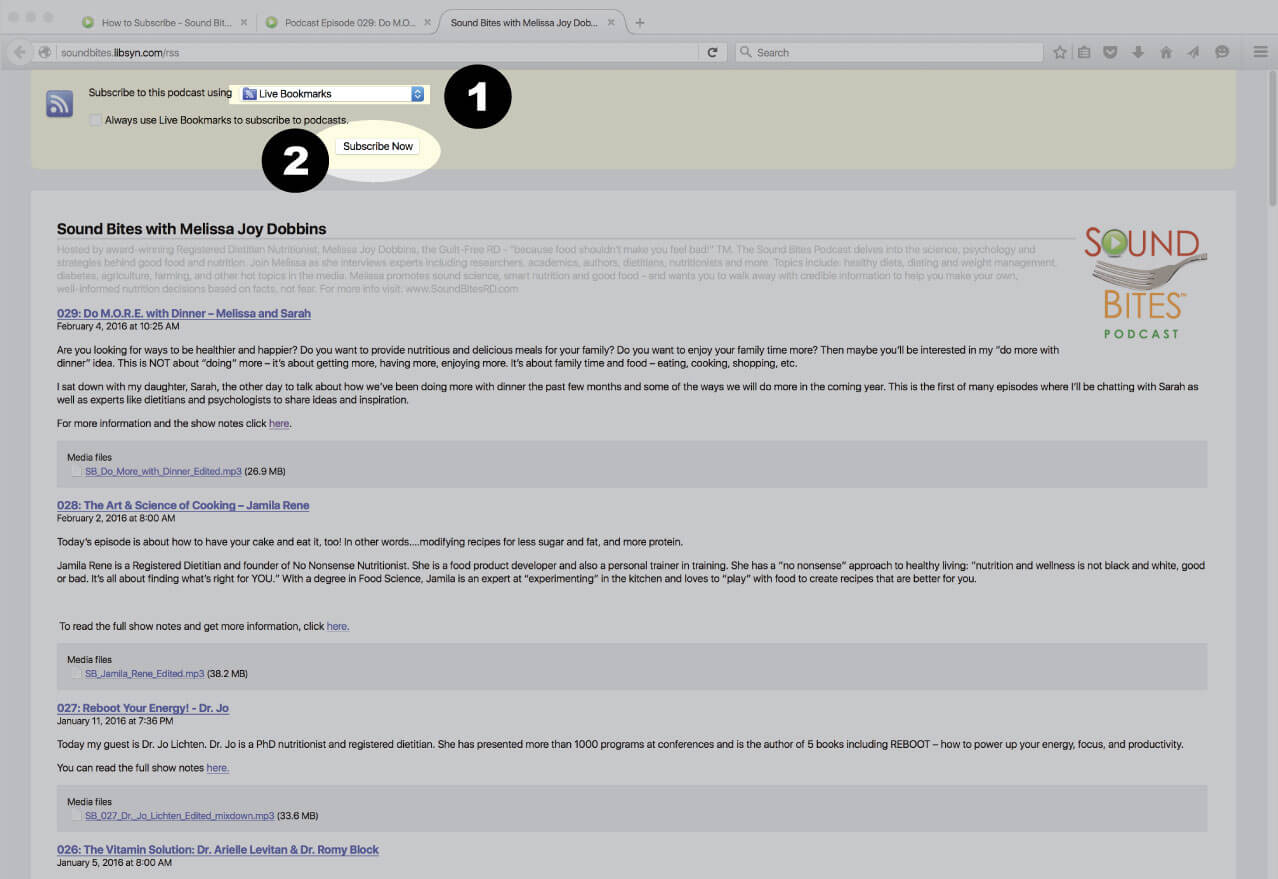
Subscribe via RSS Feed
Navigate to any podcast player . Click on the RSS feed icon.
Click on the RSS feed icon.
Click on RSS Feed
Choose which application you would like to use to receive the RSS feed
Click “Subscribe Now”
Confirm settings and subscribe.
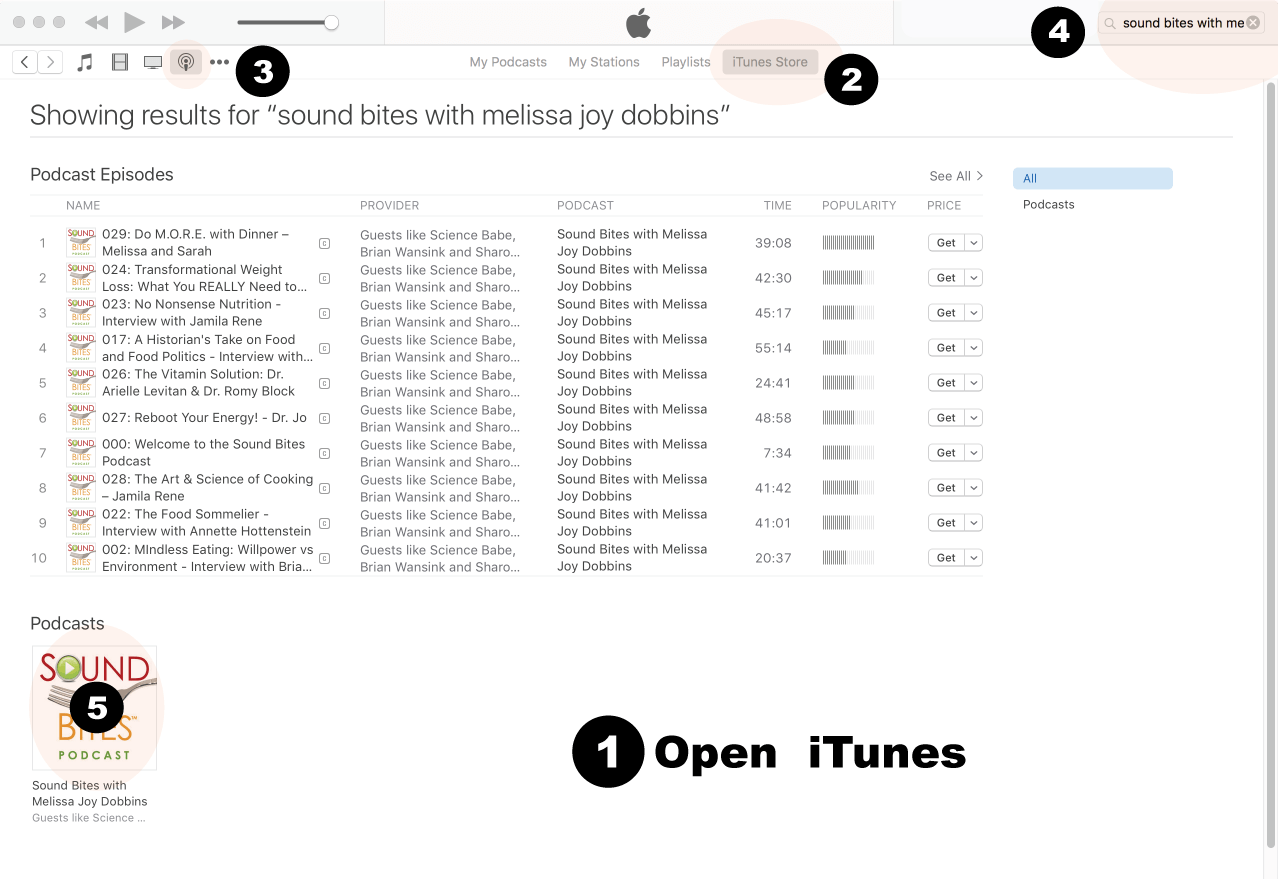
How to Review in iTunes
Open iTunes desktop application
Click iTunes Store
Click on Podcasts
Search for “Sound bites with Melissa Joy Dobbins”
Click on podcast image
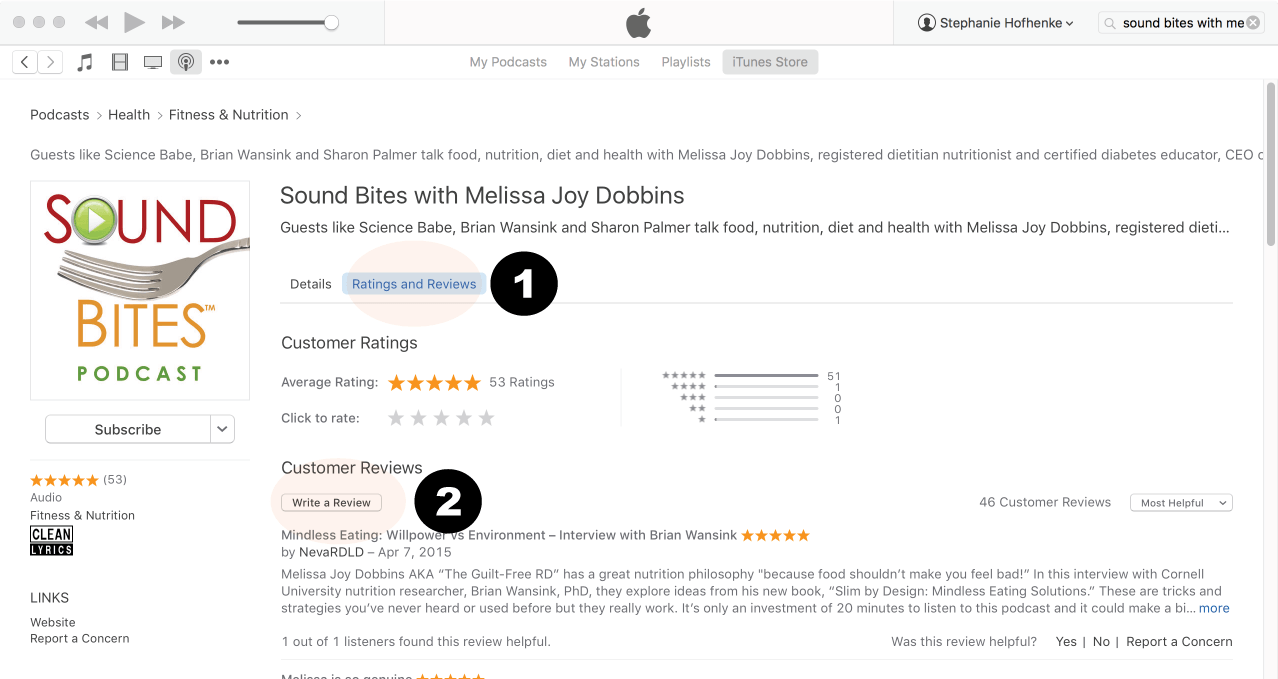
Search for Sound Bites podcast in iTunes
Click Ratings & Reivews
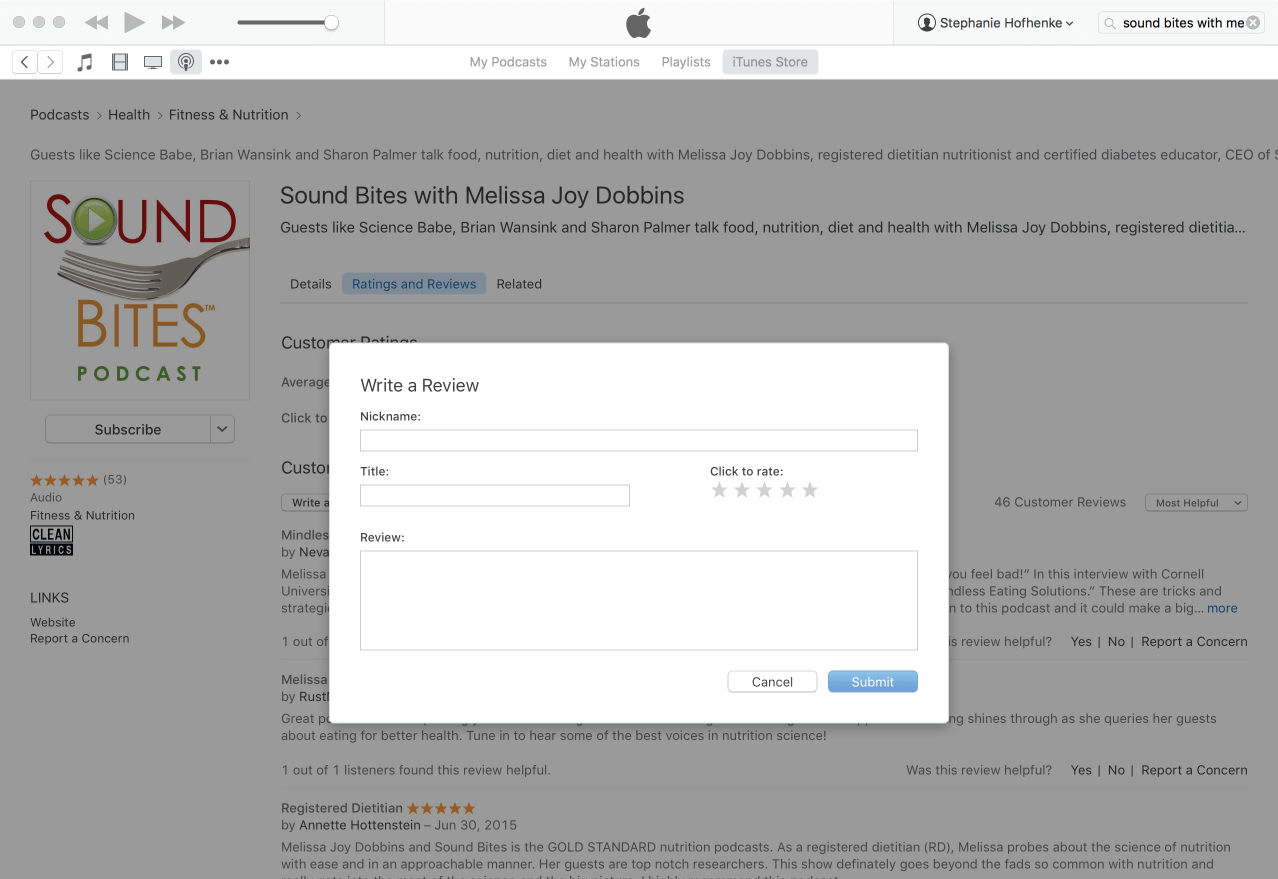
Click Write a Review
View reviews and write your own review.
Write your review…. Thank you!
Write your review!
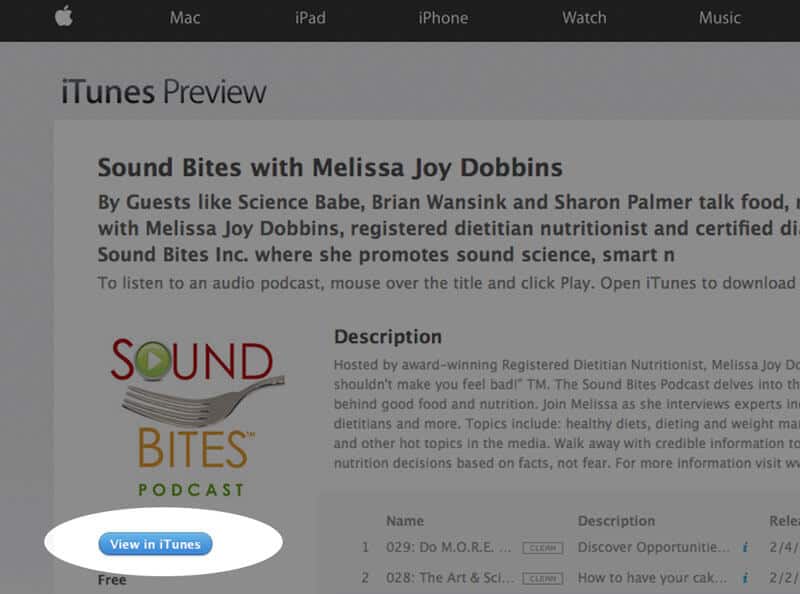
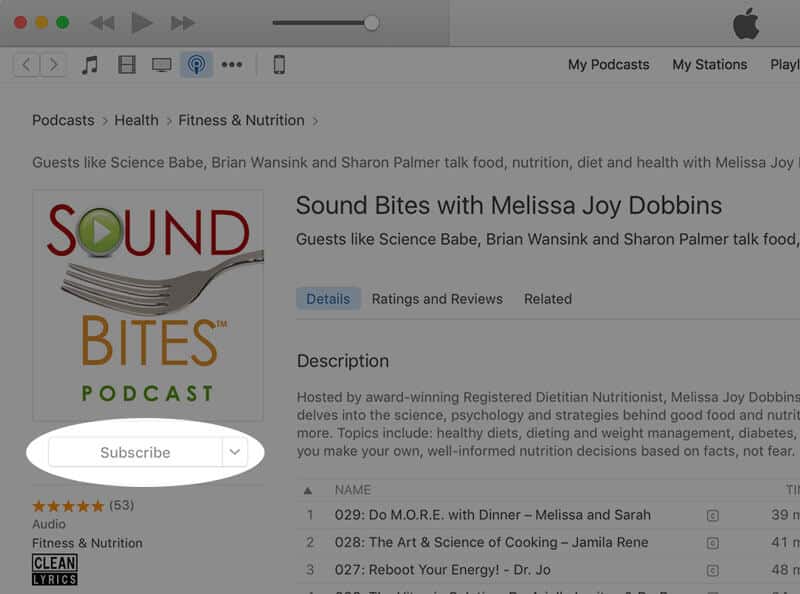
How to subscribe via iTunes
Click here to view the Sound Bites Podcastin iTunes, then click the blue “View in iTunes” button. This will open your iTunes application directly to Sound Bites Podcast. Click the “Subscribe” button, and your done!




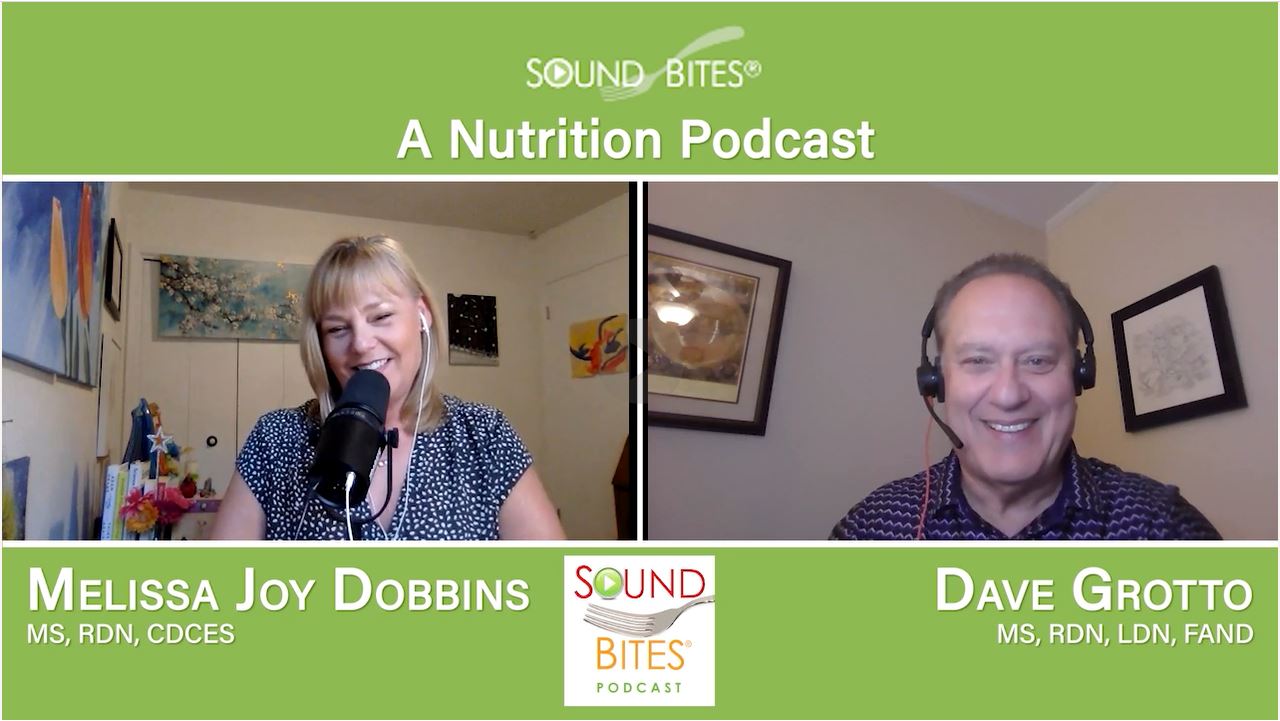
 Dave’s entrée into the world of food, nutrition and wellness started when he was 14 years old when he began working in the natural foods business, eventually owning and operating his own health food store. Dave went on to become a registered dietitian and attended the University of Illinois at Chicago earning a degree in medical dietetics and nutrition. Dave then pursued a Masters in Nutrition and Wellness at Benedictine University in Lisle, Illinois.