Celebrating over 1 Million Downloads and 50,000 Free CEUs on the Sound Bites® Podcast | NEW: Get 1 years’ worth of CEUs with the new 15-CEU Podcast Course
DISCLOSURE: This podcast episode was not sponsored, however the Grain Foods Foundation provided financial support to cover the costs of submitting the episode to CDR for continuing education review and approval.
Research Refutes Refined Grains’ Bad Rep
It’s no secret that whole grains are good for us. Dietary guidance tells us to “make half our grains whole,” cereal boxes and bread bags tout their whole grain goodness, and news headlines repeat the message. And indeed, whole grains do provide a host of health benefits — for example, the dietary fiber that they deliver supports a healthy heart, gut, and even weight by helping you feel full between meals.
But what about “the other half,” refined grains? Thanks to a misleading mix of media coverage, research, and dietary guidance, you’ve probably heard that they are something to completely avoid, or at least severely limit, in a healthy diet.
However, an in-depth review of recent published research on both whole and refined grains highlights the importance of including – and risks of excluding – enriched refined grains as part of a healthy diet. Furthermore, the study suggests that consumers should be careful not to take current “make-half-your-grains-whole” dietary guidance to mean that their six daily servings of grain foods should not include refined or enriched grain foods, which have been fortified to help to alleviate shortfalls of critical nutrients including B-vitamins, thiamin, niacin, riboflavin, iron, and folic acid.
In this episode, study co-authors Dayle Hayes, an award-winning child nutrition expert, and Dr. Glenn Gaesser, a leader in nutrition research, provide listeners with an overview of their findings related to the benefits of including and risks of excluding grain foods from the diet; health outcomes; dietary guidance; and areas for future research.
Tune into this podcast episode to learn about:
How are refined grains different from whole grains
What are enriched and fortified grains – do they still contain fiber
The difference between “staple” grains and “indulgent” grains
How many Americans are meeting (or not meeting) recommended fiber intake
What are “shortfall nutrients”
What does the “make half your grains whole” recommendation mean
The history of grains research
The consensus statement research and findings
Takeaways for the public, researchers and health professionals
Where to get more information, tips and recipes
Glenn Gaesser, PhD
Glenn Gaesser is a professor in the College of Health Solutions at Arizona State University and has had prior academic appointments at the University of Virginia and UCLA. He is a Fellow of the American College of Sports Medicine. Dr. Gaesser’s research focuses on the effects of exercise and diet on cardiovascular fitness and health and his work has been published in scientific journals, trade publications, newsletters and Internet sites.
Dr. Gaesser has given more than 300 invited regional, national, and international presentations to a variety of professional, business, and lay audiences on the subjects of health, fitness, diet, and body weight. He has had a number of national television and radio appearances and is the author or co-author of several books, including Big Fat Lies: The Truth About Your Weight and Your Health (Gurze, 2002) and It’s the Calories, Not the Carbs (Trafford/Wheat Foods, 2004).
Dr. Gaesser received the John Halverson Lectureship Award from the American Association of Cereal Chemists, and a public service award from the National Association of Anorexia Nervosa and Associated Disorders.
Less than 1 in 10 Americans consume the recommended 25-30 grams of daily fiber. But the good news is that grains provide more than 40% of fiber in the American diet and 2/3 of that fiber comes from enriched grain products.” – Dr. Glenn Gaesser
Dayle Hayes, MS, RD
Dayle Hayes is a registered dietitian and award-winning child nutrition expert, author and educator who has dedicated decades to making school environments healthy for students and staff.
She is a sought-after speaker across the US, co-authored and lead authored many important professional position and practice papers regarding child nutrition. She is past president of the Montana Dietetic Association and past-chair of the School Nutrition Services Dietetic Practice Group.
In recognition of her professional and volunteer leadership, Dayle has received numerous honors, including the Silver FAME Award as a Friend of Child Nutrition from the national School Nutrition Association, a Medallion Award from AND, Montana School Food Service Professional of the Year as well as delivering the prestigious Lenna Francis Cooper Memorial Lecture at FNCE. FoodService Director magazine named her as one of their “20 Most Influential” in 2012 and she was named the Top 10 Women Changing School Nutrition in 2014.
Removing refined grains from the diet results in more children and adults falling below recommendations for shortfall nutrients as identified by the 2015–2020 Dietary Guidelines for Americans.” – Dayle Hayes
Listen to select Sound Bites Podcasts and earn free CEU credits approved by the Commission on Dietetic Registration (CDR) for registered dietitian nutritionists and dietetic technicians, registered. Get started!
Get Melissa’s Sound Science Toolkit here!
Partnerships:
Sound Bites is partnering with the Association of Diabetes Care and Education Specialists (formerly the American Association of Diabetes Educators)! Stay tuned for updates on the podcast, blog and newsletter!
Sound Bites is partnering with the International Food Information Council! Stay tuned for updates on the podcast, blog and newsletter!
Sign up for my monthly newsletter and episode eblasts so you never miss an update!
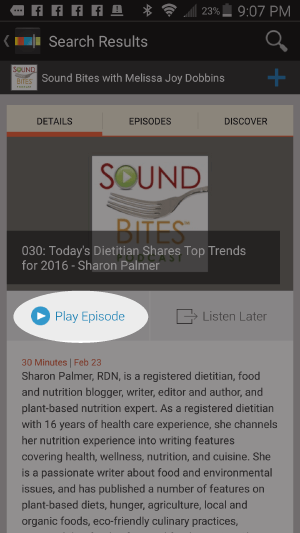
Listen on Stitcher (Android)
Install the Stitcher App
1. Search for “sound bites with melissa joy dobbins” 2. Choose Play Current Episode or Add to Playlist
Choose “Play Episode”
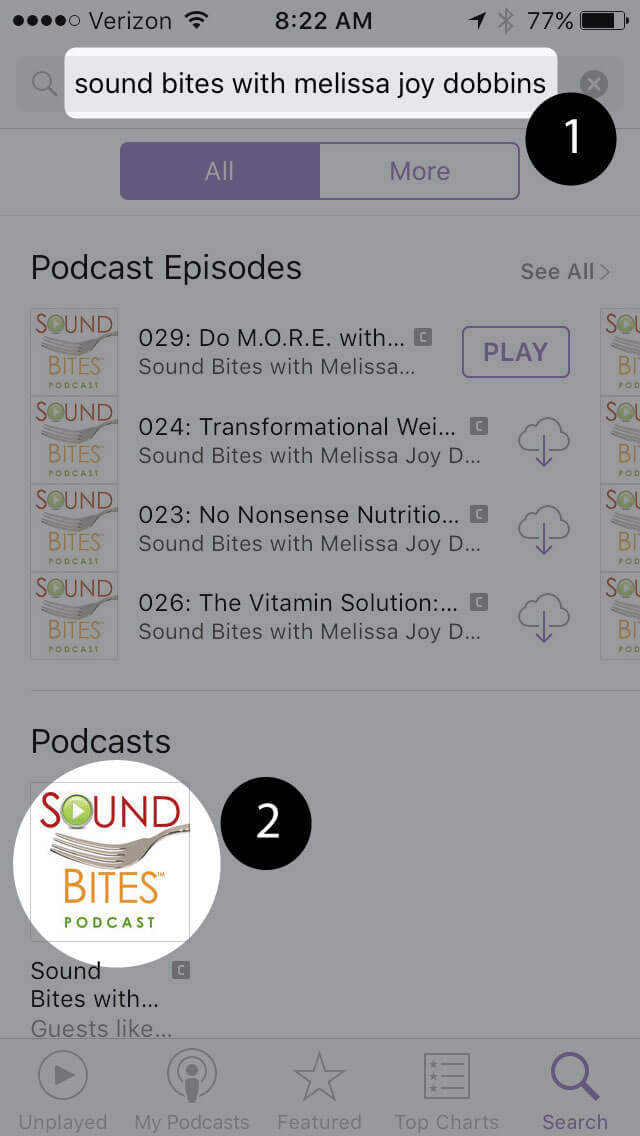
Subscribe & Review on iPhone
Open the “Podcast” app on your iPhone
Search for “Sound bites with melissa joy dobbins”
Open the podcast and click “Subscribe” and your done!
Write a Review
Click “Reviews”, then “Write a Review”.
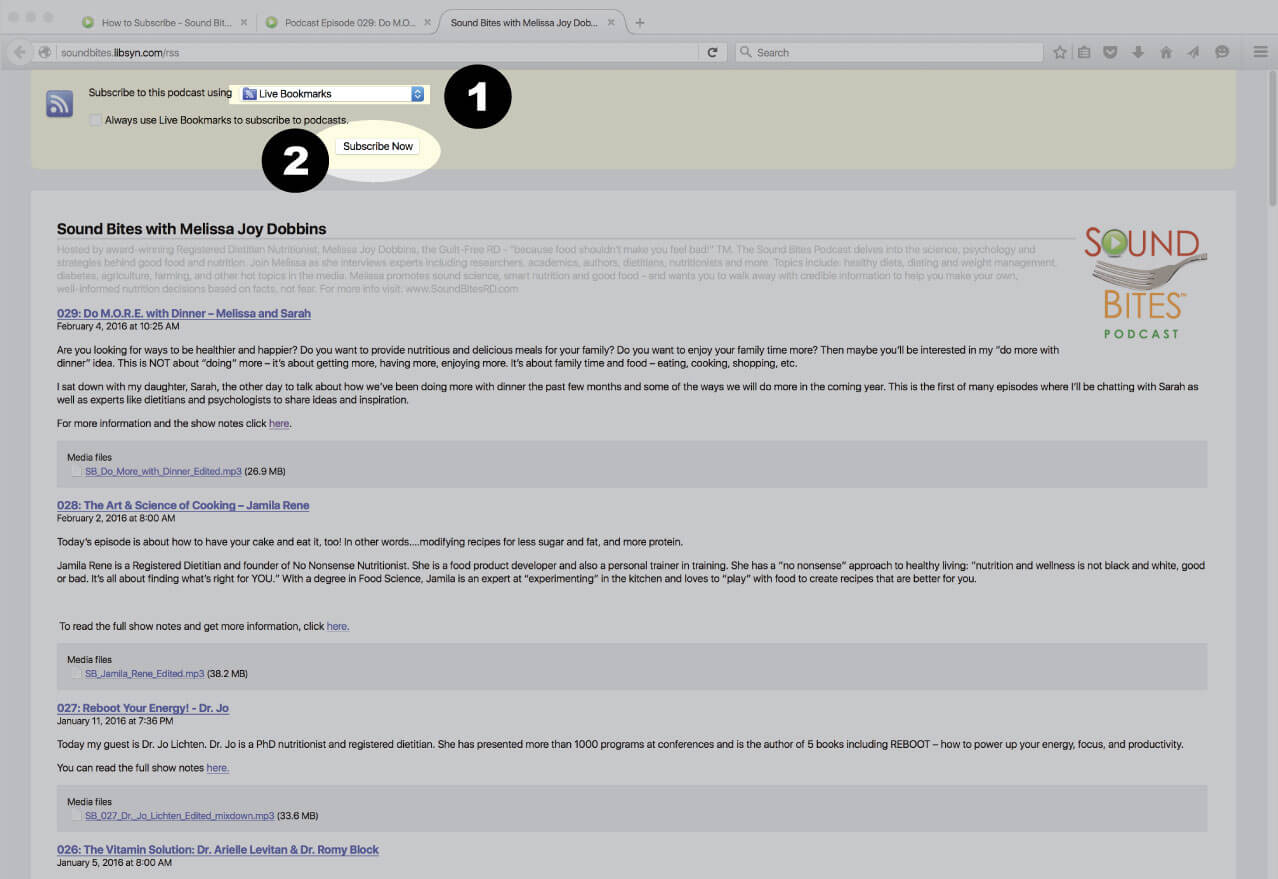
Subscribe via RSS Feed
Navigate to any podcast player . Click on the RSS feed icon.
Click on the RSS feed icon.
Click on RSS Feed
Choose which application you would like to use to receive the RSS feed
Click “Subscribe Now”
Confirm settings and subscribe.
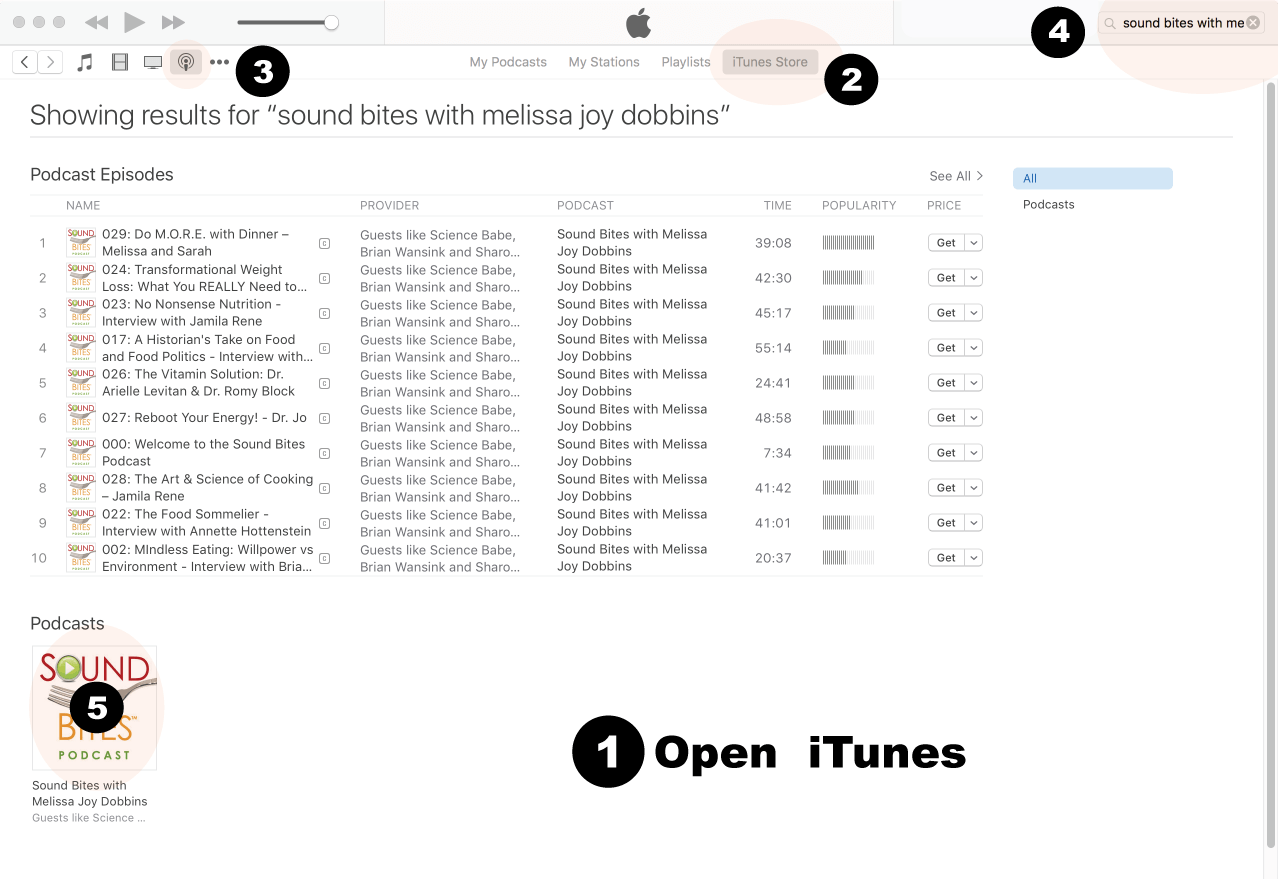
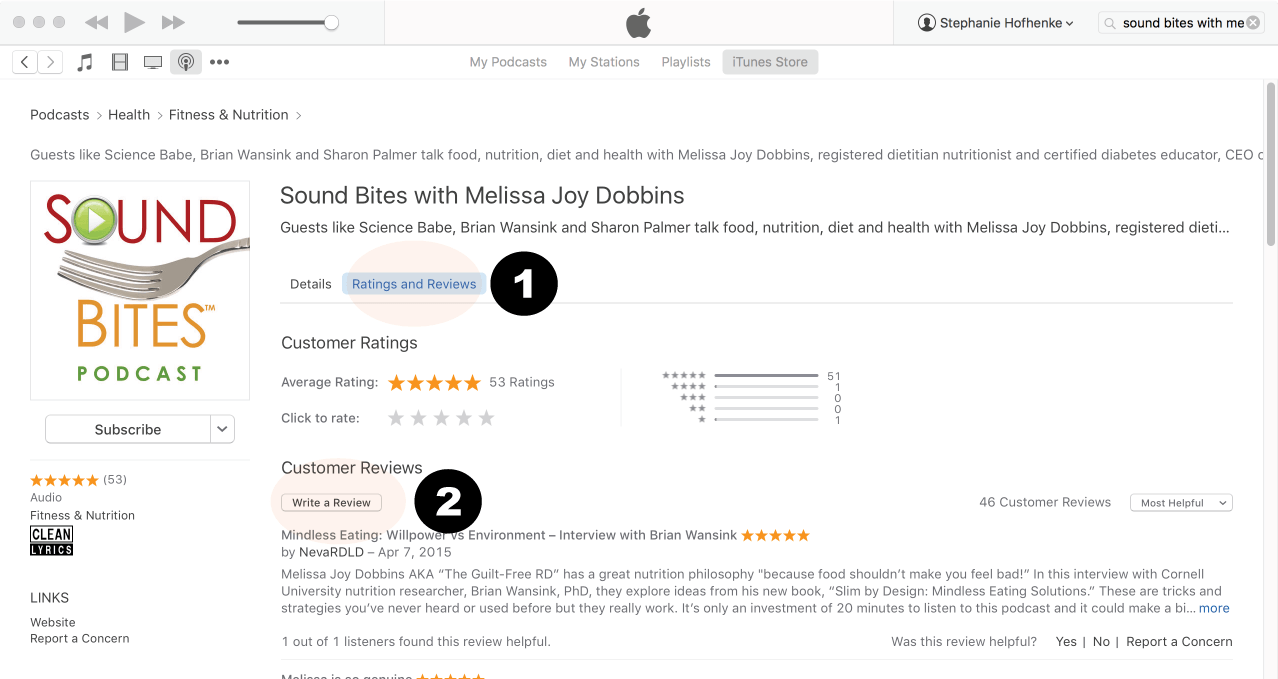
How to Review in iTunes
Open iTunes desktop application
Click iTunes Store
Click on Podcasts
Search for “Sound bites with Melissa Joy Dobbins”
Click on podcast image
Search for Sound Bites podcast in iTunes
Click Ratings & Reivews
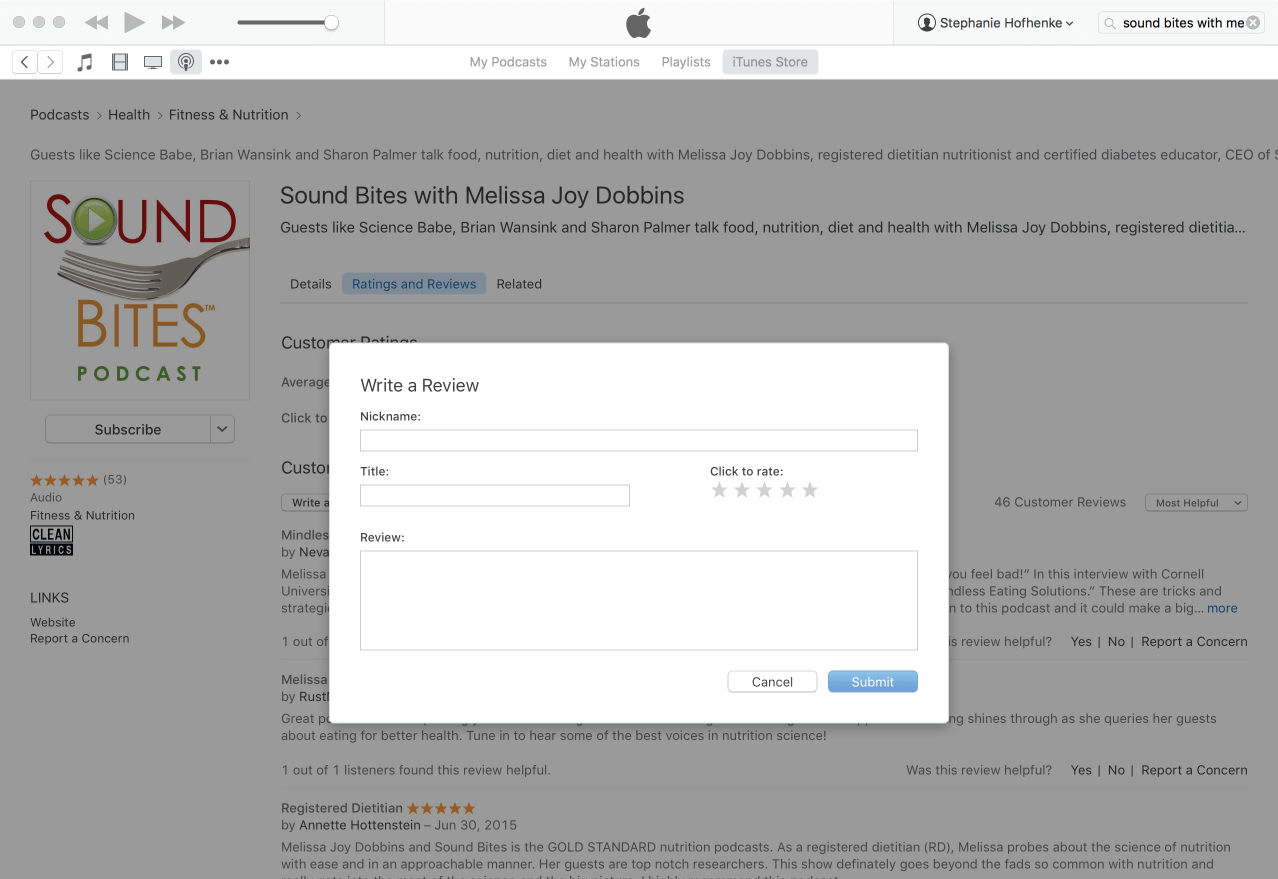
Click Write a Review
View reviews and write your own review.
Write your review…. Thank you!
Write your review!
How to subscribe via iTunes
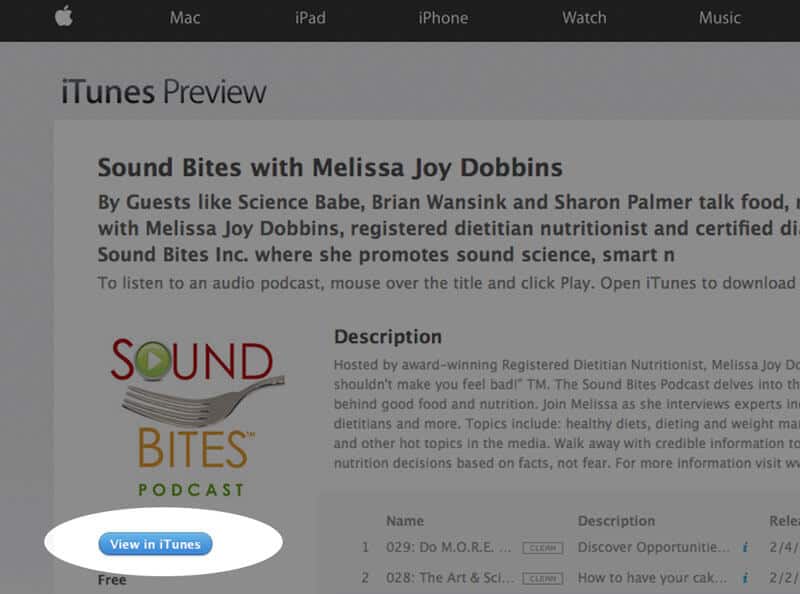
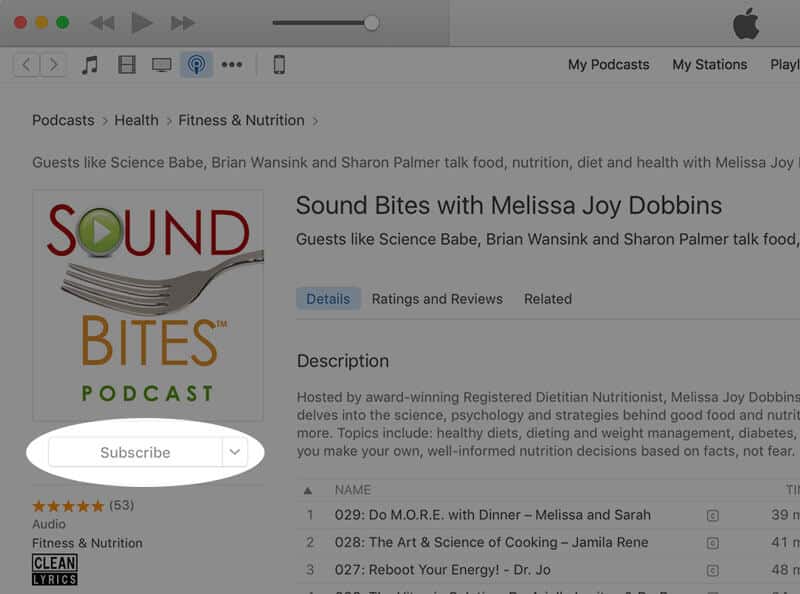
Click here to view the Sound Bites Podcastin iTunes, then click the blue “View in iTunes” button. This will open your iTunes application directly to Sound Bites Podcast. Click the “Subscribe” button, and your done!