Celebrating over 1 Million Downloads and 50,000 Free CEUs on the Sound Bites® Podcast | NEW: Get 1 years’ worth of CEUs with the new 15-CEU Podcast Course
Disclosure: This episode is sponsored by the National Peanut Board, who strives to help America’s 7,000 peanut-farming families improve their production practices and continue to put the world’s highest-quality peanut product in the hands of people around the globe. They do this so peanut growers can continue to farm the land that, for many, has been in their family for generations. And through research, marketing and promotion efforts they are committed to strengthening your love of America’s favorite nut, too. We thank them for their sponsorship and support of the podcast.
Infant Feeding & Food Allergies
Be proactive with early introduction of peanuts. The evidence shows there is more potential benefit than risk when it comes to feeding babies potentially allergenic foods.”
The newly revised Dietary Guidelines for Americans reinforce that in order to reduce the risk of food allergies babies should be fed infant-safe potentially allergenic foods once they’ve eaten a few other complementary foods successfully – starting at around 6-months of age, but not before 4 months of age. This recommendation is particularly important when it comes to helping prevent peanut allergies.
In addition, there’s no evidence that withholding any allergen prevents food allergies.
Despite these recommendations and expert consensus, many families are still apprehensive. Yet, research shows that parents and caregivers are 47 percent more likely to introduce peanut products to their infant if it is recommended by their pediatrician or family doctor.
Dietitians and other healthcare professionals have an opportunity to spread awareness of new evidence-based research in this area and help reduce parental stress around early infant feeding so that people are more likely to feed their babies in such a way that the likelihood of food allergies is reduced.
Tune in to this episode to learn about:
An overview of updated DGAs for infants/toddlers and pregnant women
The top 5 takeaways for pregnancy and babies from the DGAs
The top food 8 food allergens
Practical tips for introducing potentially allergenic foods and peanut foods in particular
A new certification program for dietitians to learn more and follow the latest guidance on early peanut introduction
Sherry Coleman Collins, MS, RDN, LD
Sherry Coleman Collins is a registered dietitian nutritionist, licensed in Georgia and based in metro-Atlanta. Sherry serves as a consultant for National Peanut Board as a bona fide peanut evangelist! Her areas of practice include nutrition communications, food allergies, digestive wellness, and culinary nutrition. As a communicator, Sherry is a sought-after speaker and has presented at professional and consumer conferences across the country. Sherry has published dozens of articles in a variety of print and online publications and serves as an expert to the media. With a particular interest and expertise in food allergies and digestive health, her professional accomplishments include developing the Academy of Nutrition and Dietetics’ Certificate of Training in Food Allergies and authoring the Academy of Nutrition and Dietetics’ Practice Paper, The Role of the RDN in Food Allergy Diagnosis and Management.
Sherry is a member of the Academy of Nutrition and Dietetics, Dietitians in Business and Communications DPG, and International Network for Diet and Nutrition in Allergy (INDANA). She is an award-winning dietitian, having received the Distinguished Service in Media (2016), Outstanding Dietitian of the Year (2012), and Outstanding Dietetic Student of the Year (2004) for the Georgia Academy of Nutrition and Dietetics.
Dietitians can help anxious parents overcome their fears by teaching them how to safely feed babies potential allergens at home following simple guidelines.”
Dietary Guidelines recommendations: U.S. Department of Agriculture and U.S. Department of Health and Human Services. Dietary Guidelines for Americans, 2020-2025. 9th Edition. December 2020.
Listen to select Sound Bites Podcasts and earn free CEU credits approved by the Commission on Dietetic Registration (CDR) for registered dietitian nutritionists and dietetic technicians, registered. Get started!
Get Melissa’s Sound Science Toolkit here!
Partnerships:
Sound Bites is partnering with the Association of Diabetes Care and Education Specialists (formerly the American Association of Diabetes Educators)! Stay tuned for updates on the podcast, blog and newsletter!
Sound Bites is partnering with the International Food Information Council! Stay tuned for updates on the podcast, blog and newsletter!
Sign up for my monthly newsletter and episode eblasts so you never miss an update!
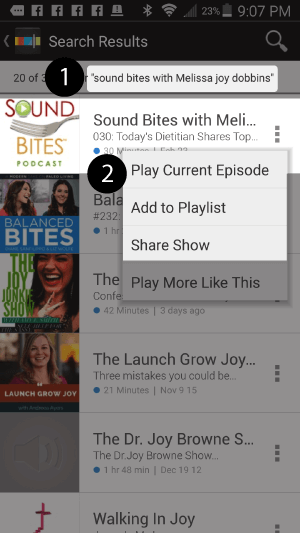
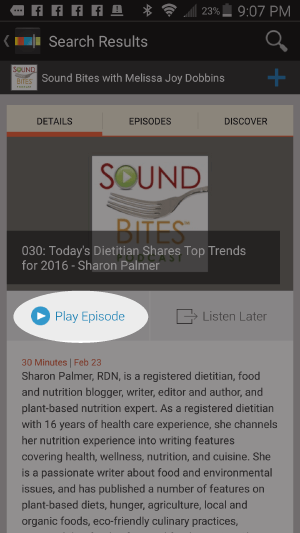
Listen on Stitcher (Android)
Install the Stitcher App
1. Search for “sound bites with melissa joy dobbins” 2. Choose Play Current Episode or Add to Playlist
Choose “Play Episode”
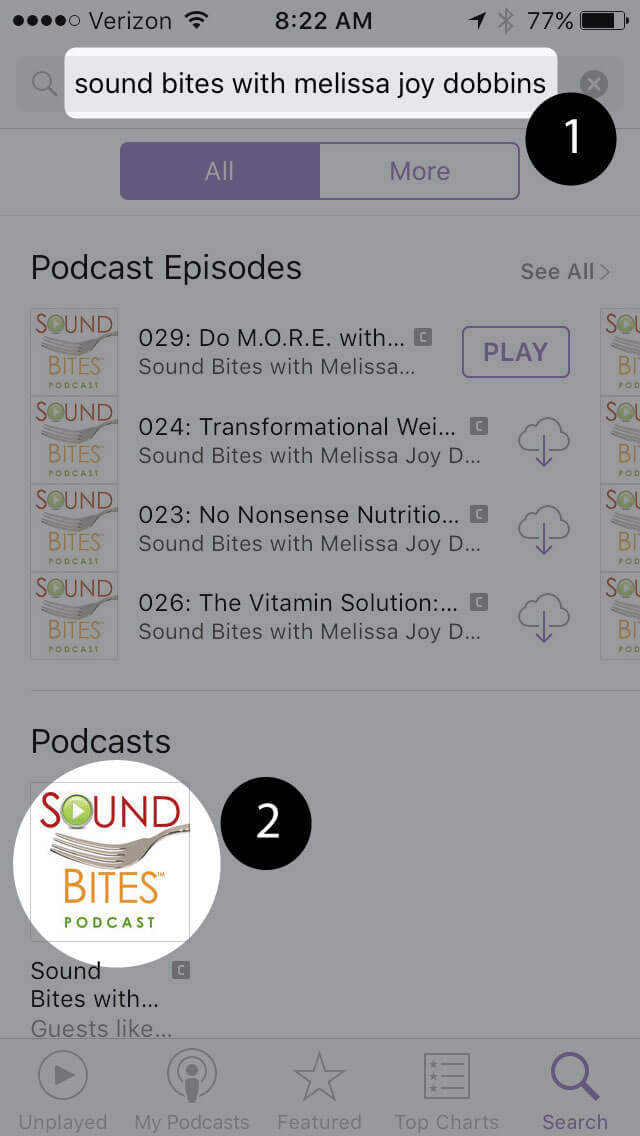
Subscribe & Review on iPhone
Open the “Podcast” app on your iPhone
Search for “Sound bites with melissa joy dobbins”
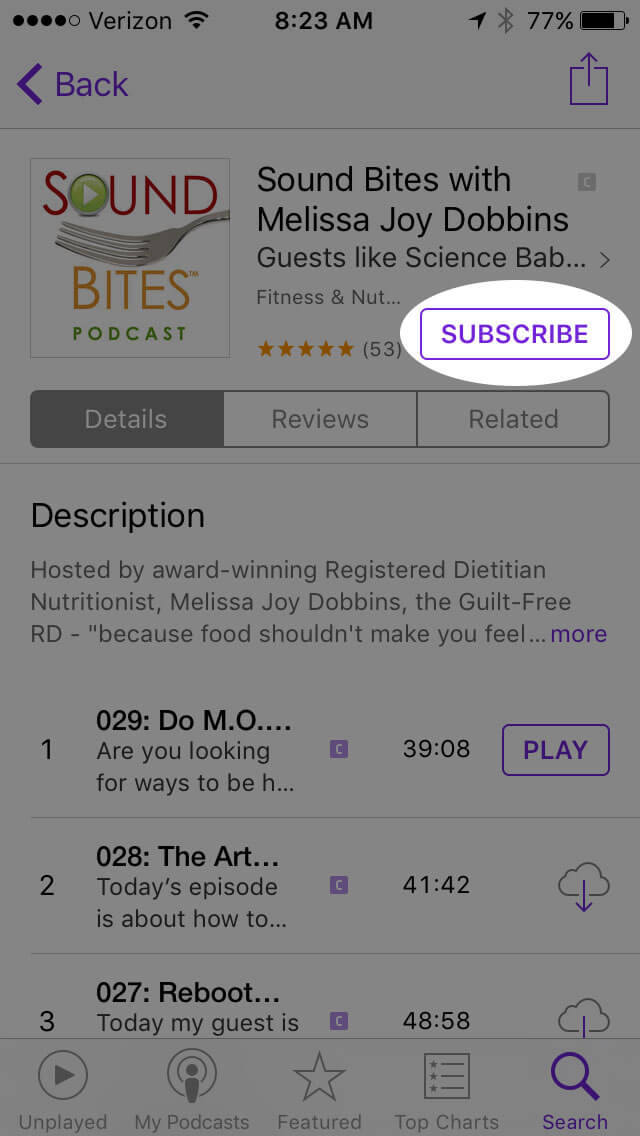
Open the podcast and click “Subscribe” and your done!
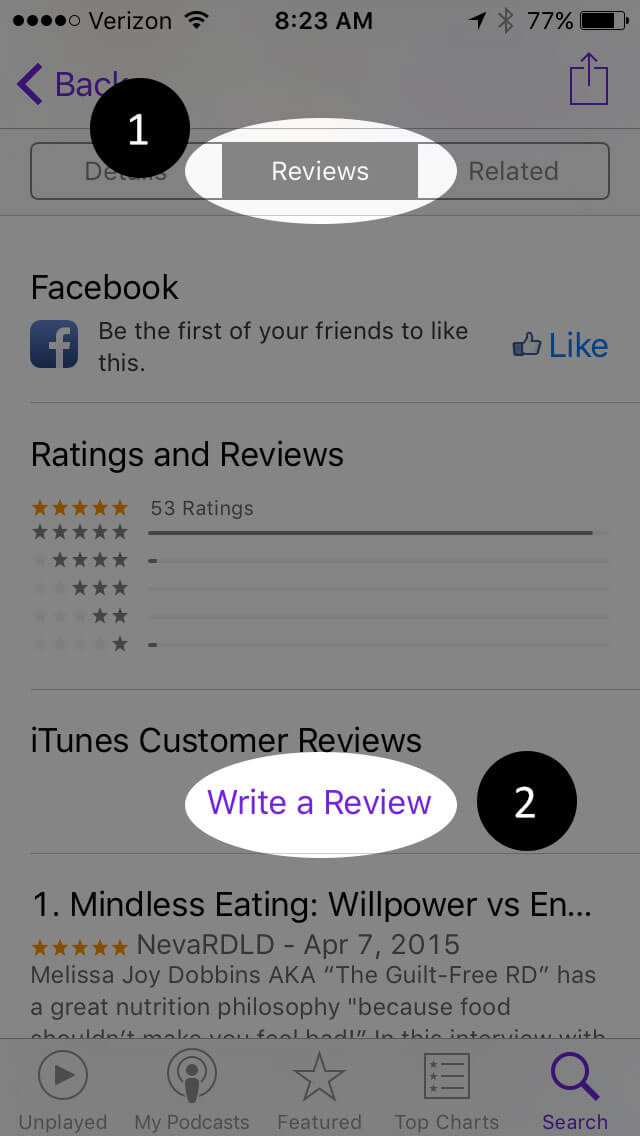
Write a Review
Click “Reviews”, then “Write a Review”.
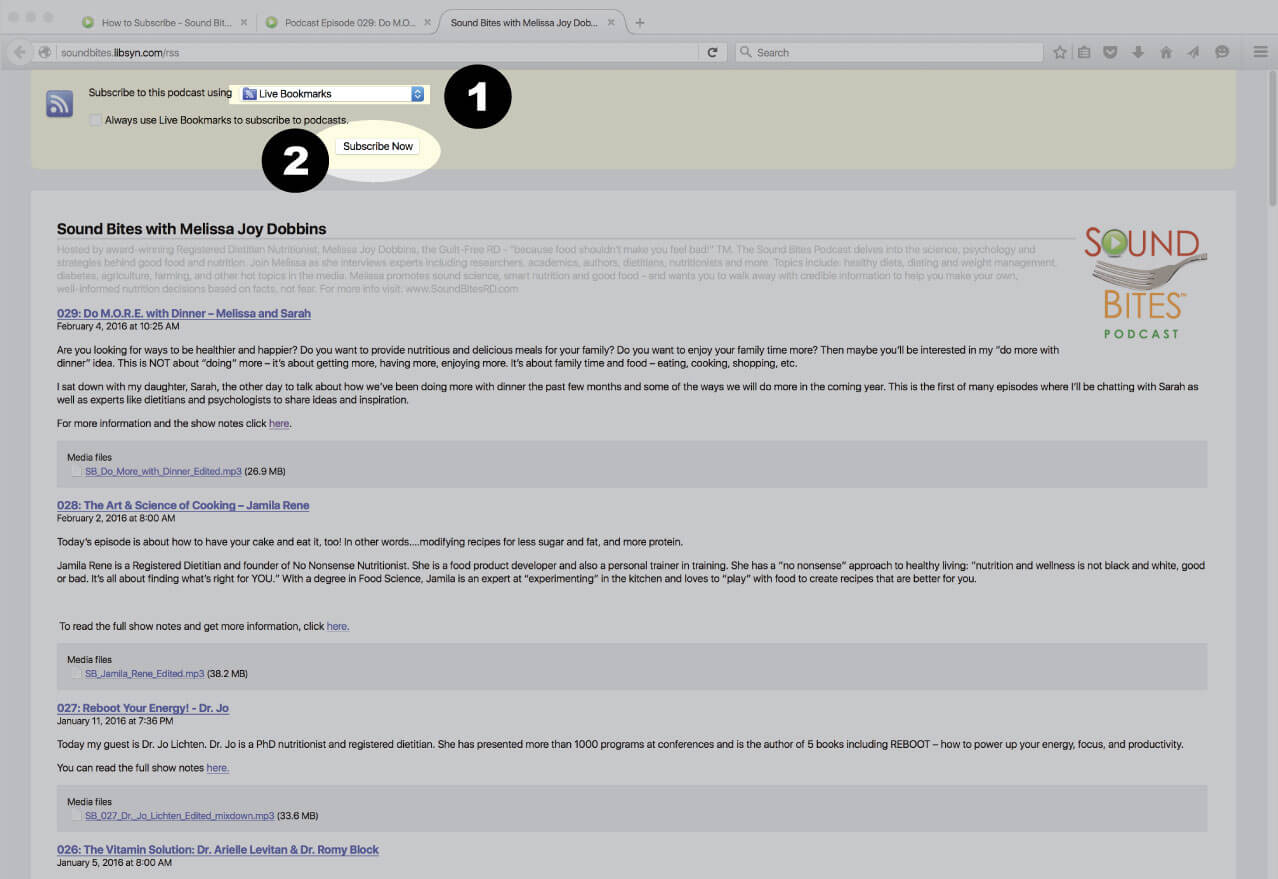
Subscribe via RSS Feed
Navigate to any podcast player . Click on the RSS feed icon.
Click on the RSS feed icon.
Click on RSS Feed
Choose which application you would like to use to receive the RSS feed
Click “Subscribe Now”
Confirm settings and subscribe.
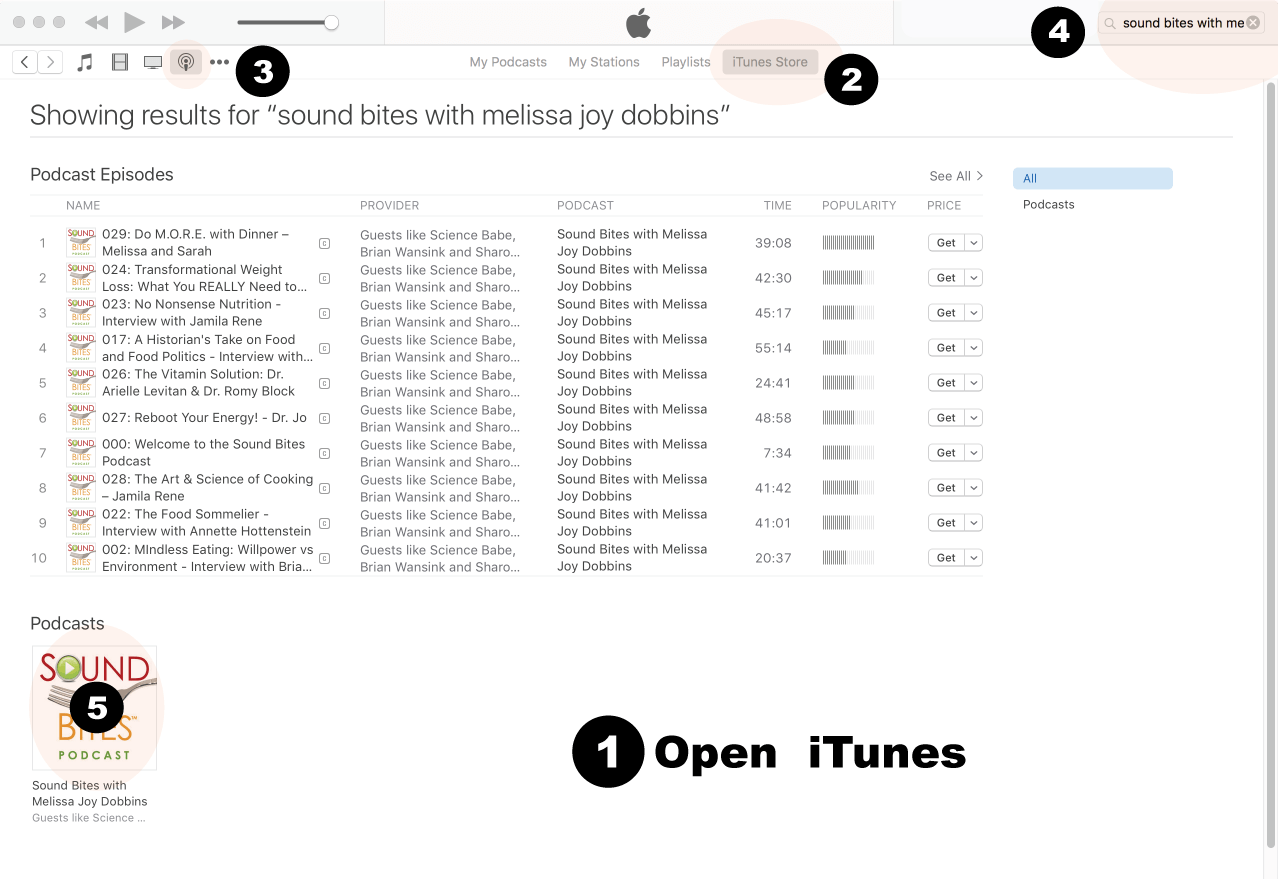
How to Review in iTunes
Open iTunes desktop application
Click iTunes Store
Click on Podcasts
Search for “Sound bites with Melissa Joy Dobbins”
Click on podcast image
Search for Sound Bites podcast in iTunes
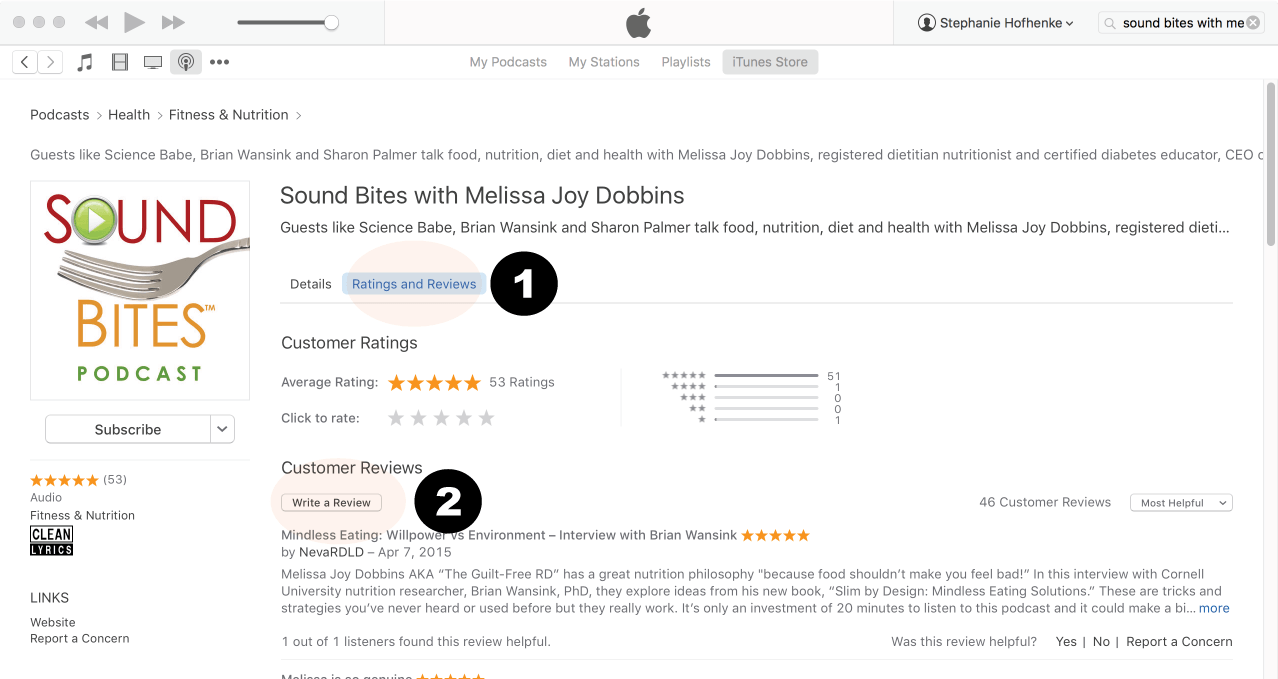
Click Ratings & Reivews
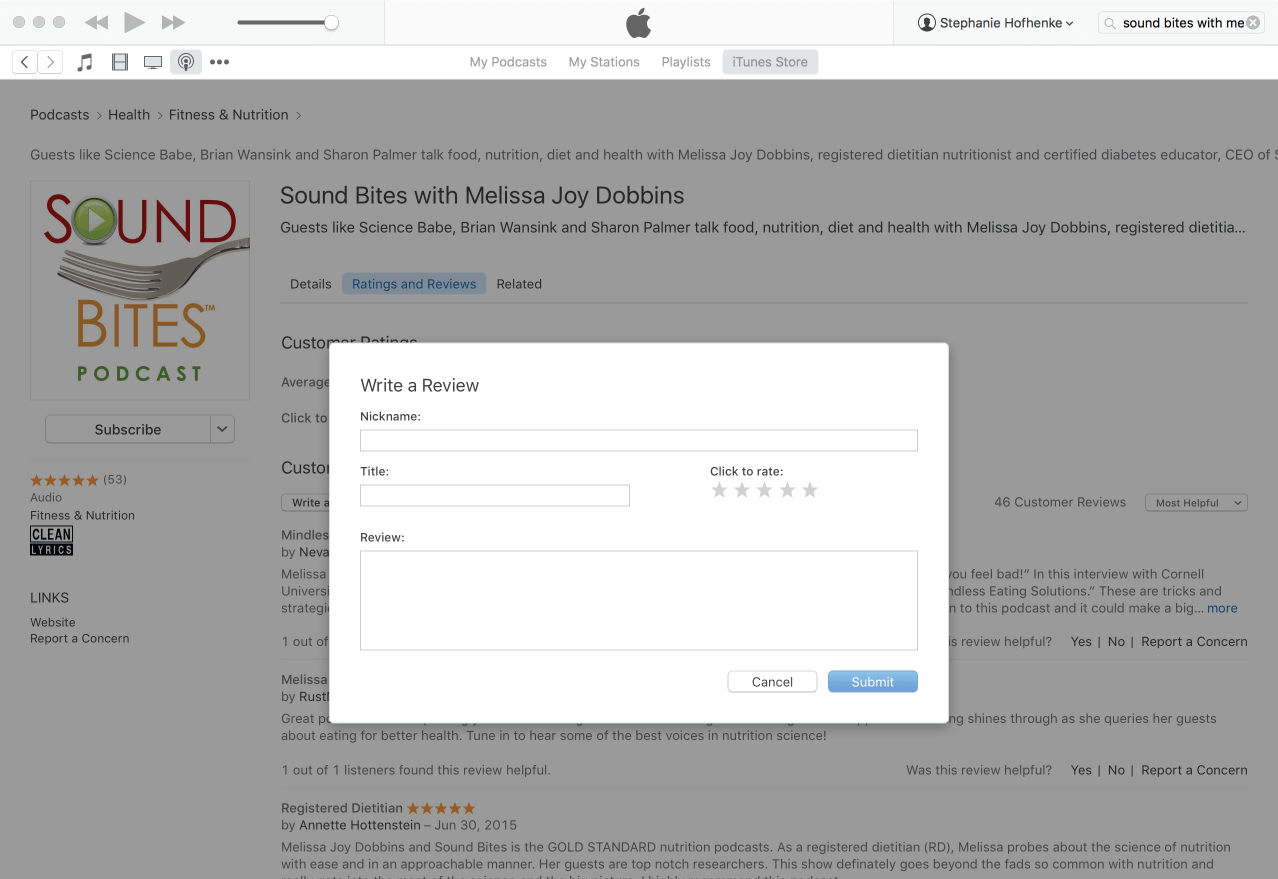
Click Write a Review
View reviews and write your own review.
Write your review…. Thank you!
Write your review!
How to subscribe via iTunes
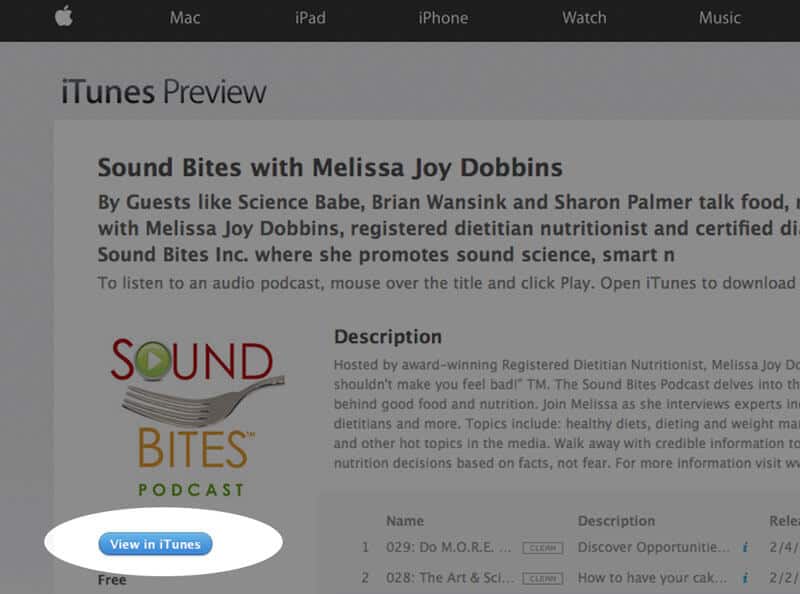
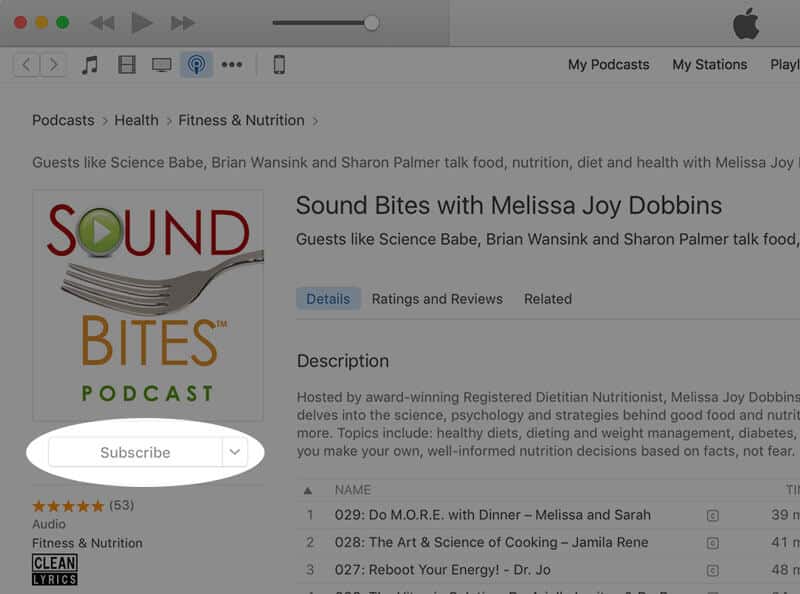
Click here to view the Sound Bites Podcastin iTunes, then click the blue “View in iTunes” button. This will open your iTunes application directly to Sound Bites Podcast. Click the “Subscribe” button, and your done!