Celebrating over 1 Million Downloads and 50,000 Free CEUs on the Sound Bites® Podcast | NEW: Get 1 years’ worth of CEUs with the new 15-CEU Podcast Course
Disclosure: This episode is not sponsored, but I received a gift of salmon when I was one of the first registrants for a Seafood Nutrition Partnership webinar.
Eat Seafood, America!
Sustainable seafood is good for our health, good for our economy, and good for our planet. And seafood produced in the U.S. is sustainable seafood.” – Dr. Paul Doremus
Eat Seafood, America! Is a new campaign to help Americans stay healthy during this public health crisis and beyond, as well as support our working waterfront communities that have been hit hard economically from COVID-19.
The health benefits of seafood are well researched – eating more seafood can reduce the risks of chronic disease affecting many Americans today. The newly released Dietary Guidelines for Americans encourage people to eat seafood at least twice a week, and includes first-time recommendations for babies and toddlers under two years old.
Fish and shellfish provide essential nutrients to the body that support immune health. Seafood is a nutrient-packed food that reduces inflammation with vitamins A, B, and D, as well as omega-3 fatty acids and minerals such as calcium, selenium, phosphorus, iron, zinc, iodine, magnesium and potassium.”
– Linda Cornish
The Seafood Nutrition Partnership’s science council of seafood nutrition experts have been working for over three decades. Through their work, it is clear that including seafood into our meals keeps us healthier and happier. In addition to the strong science on the heart health benefits from eating seafood, they are seeing stronger evidence on the brain boosting benefits from eating seafood.
While eating seafood is a good choice from a nutritional point of view, it is also a good choice from an environmental point of view: seafood is one of the most environmentally efficient ways to produce animal protein.
It’s simple to eat seafood. Think about your favorite dishes and try them with fish and shellfish: shrimp on pizza or pasta, fish tacos, lobster mac & cheese, or salmon on salads.” – Linda Cornish
Local seafood has lost its place at the table – more than 80% of the seafood consumed in the United States is produced abroad, and of that amount, about half is farmed seafood.
Tune in to this episode to learn about:
Seafood myths and barriers to consumption
How the pandemic has impacted seafood consumption
The many nutrients and health benefits seafood provides
What the newly updated Dietary Guidelines for Americans say about seafood
If U.S. seafood is sustainable and what that means
If farmed fish is sustainable
Resources for buying and cooking seafood
Resources for health professionals
How to join the #EatSeafoodAmerica movement
Paul Doremus, PhD
Paul Doremus is currently serving as the Acting Assistant Administrator for NOAA Fisheries, a branch of the Department of Commerce that is responsible for the stewardship of the nation’s ocean resources, including productive and sustainable fisheries, safe sources of seafood, the recovery and conservation of protected marine resources, and healthy ecosystems. He is working across government, industry, and the nonprofit sectors to provide a predictable and efficient regulatory environment, a robust scientific and technical infrastructure, and greater social awareness and acceptance of sustainable seafood.
Paul received his Ph.D. in Government from Cornell University, and has over twenty years of experience in Federal science, technology, and environmental policy and management.
Linda Cornish, MBA
Linda Cornish is President of the Seafood Nutrition Partnership (SNP), a non-profit organization inspiring a healthier America through a balanced diet that includes seafood. She is mission driven, working on addressing America’s public health crisis by empowering healthier sustainable food consumption.
Linda holds a Master of Business Administration degree from the University of California at Los Angeles and a Bachelor’s degree in Business Administration from the University of California at Riverside.
Listen to select Sound Bites Podcasts and earn free CEU credits approved by the Commission on Dietetic Registration (CDR) for registered dietitian nutritionists and dietetic technicians, registered. Get started!
Get Melissa’s Sound Science Toolkit here!
Partnerships:
Sound Bites is partnering with the Association of Diabetes Care and Education Specialists (formerly the American Association of Diabetes Educators)! Stay tuned for updates on the podcast, blog and newsletter!
Sound Bites is partnering with the International Food Information Council! Stay tuned for updates on the podcast, blog and newsletter!
Sign up for my monthly newsletter and episode eblasts so you never miss an update!
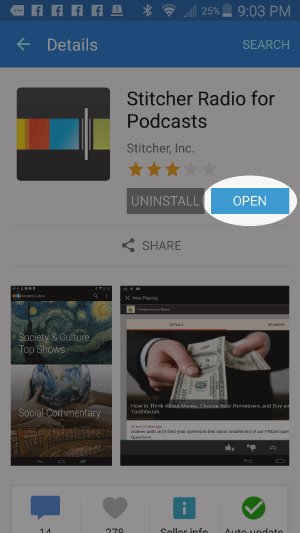
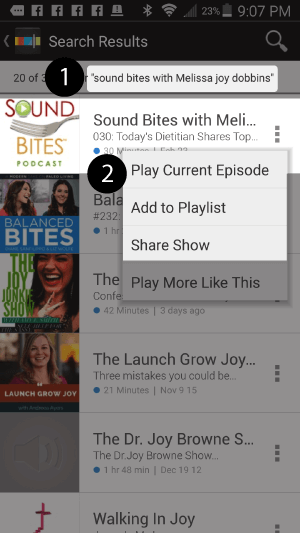
Listen on Stitcher (Android)
Install the Stitcher App
1. Search for “sound bites with melissa joy dobbins” 2. Choose Play Current Episode or Add to Playlist
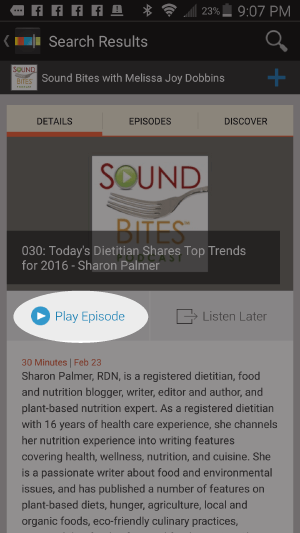
Choose “Play Episode”
Subscribe & Review on iPhone
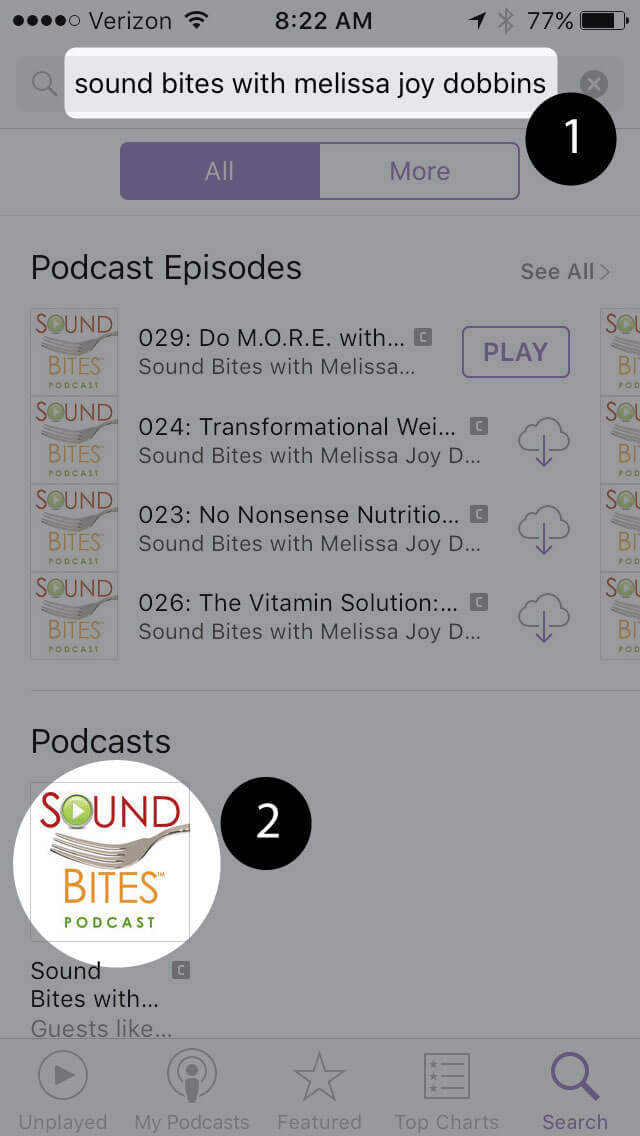
Open the “Podcast” app on your iPhone
Search for “Sound bites with melissa joy dobbins”
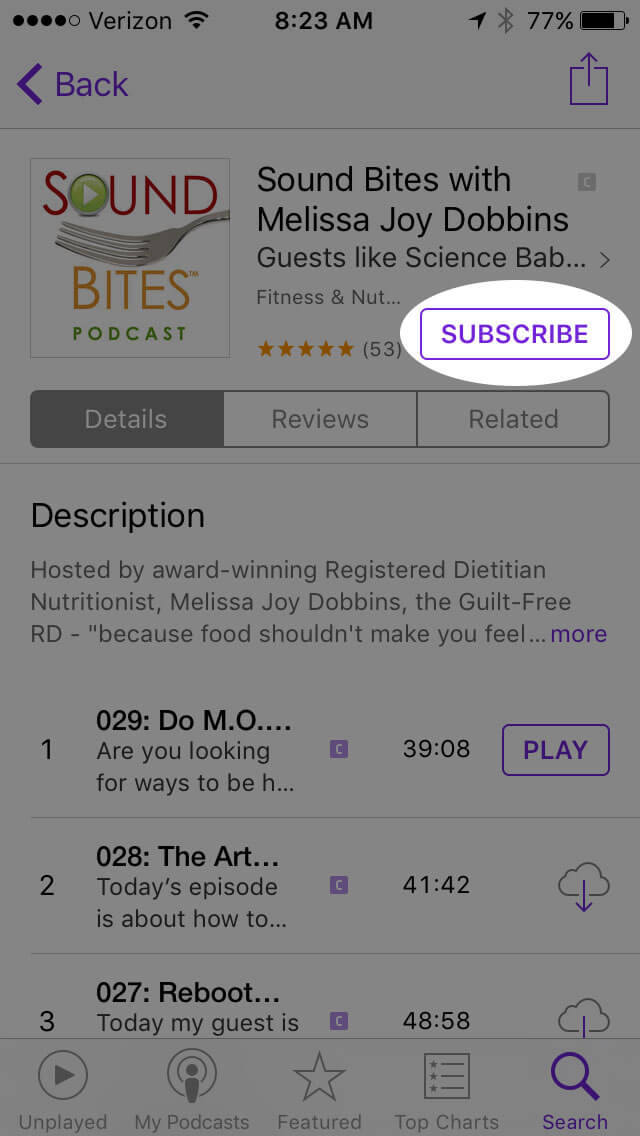
Open the podcast and click “Subscribe” and your done!
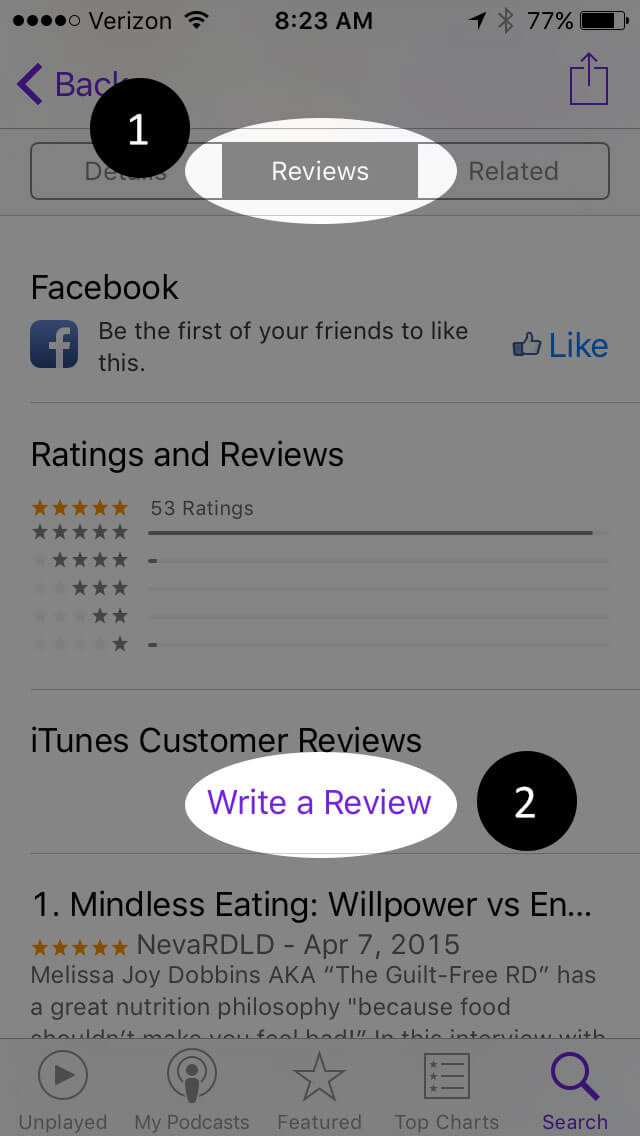
Write a Review
Click “Reviews”, then “Write a Review”.
Subscribe via RSS Feed
Navigate to any podcast player . Click on the RSS feed icon.
Click on the RSS feed icon.
Click on RSS Feed
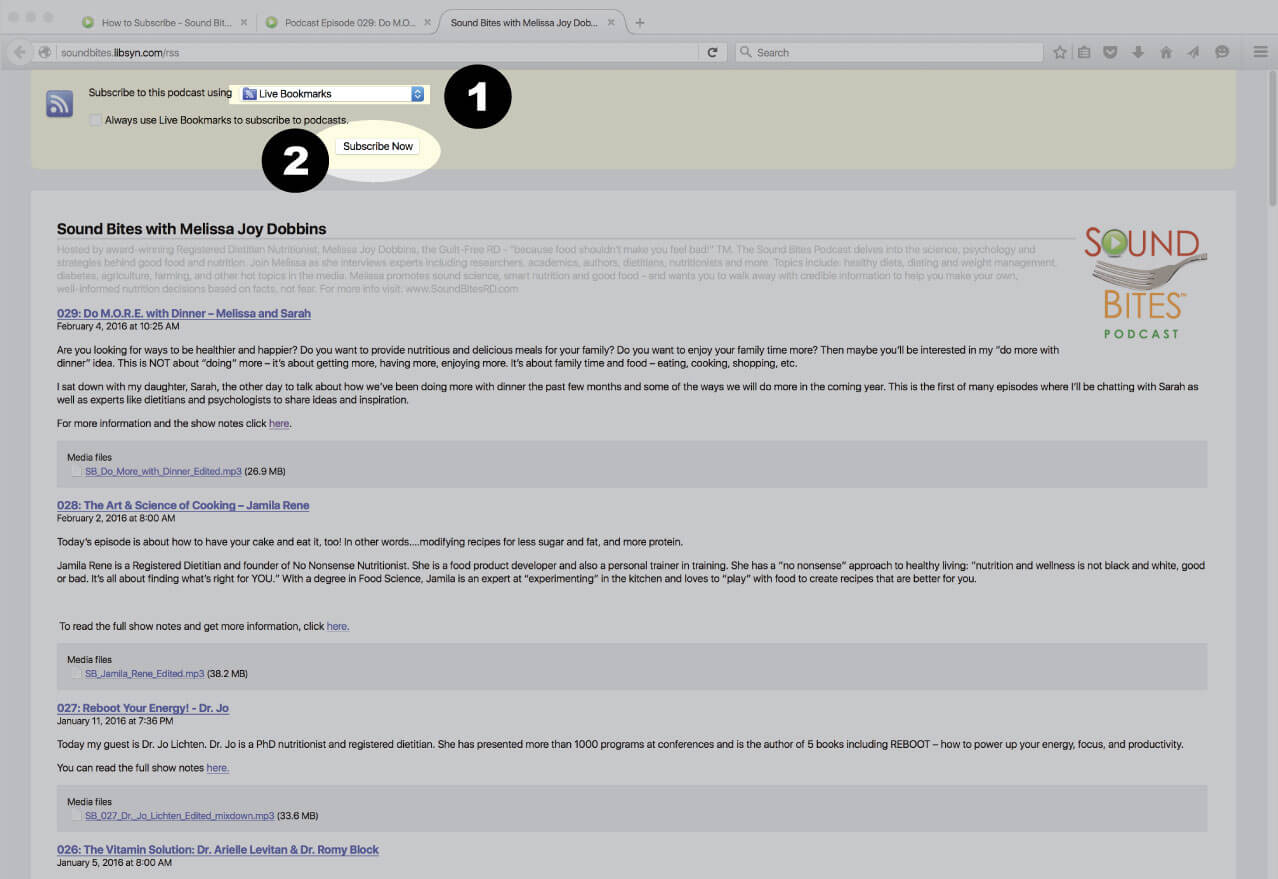
Choose which application you would like to use to receive the RSS feed
Click “Subscribe Now”
Confirm settings and subscribe.
How to Review in iTunes
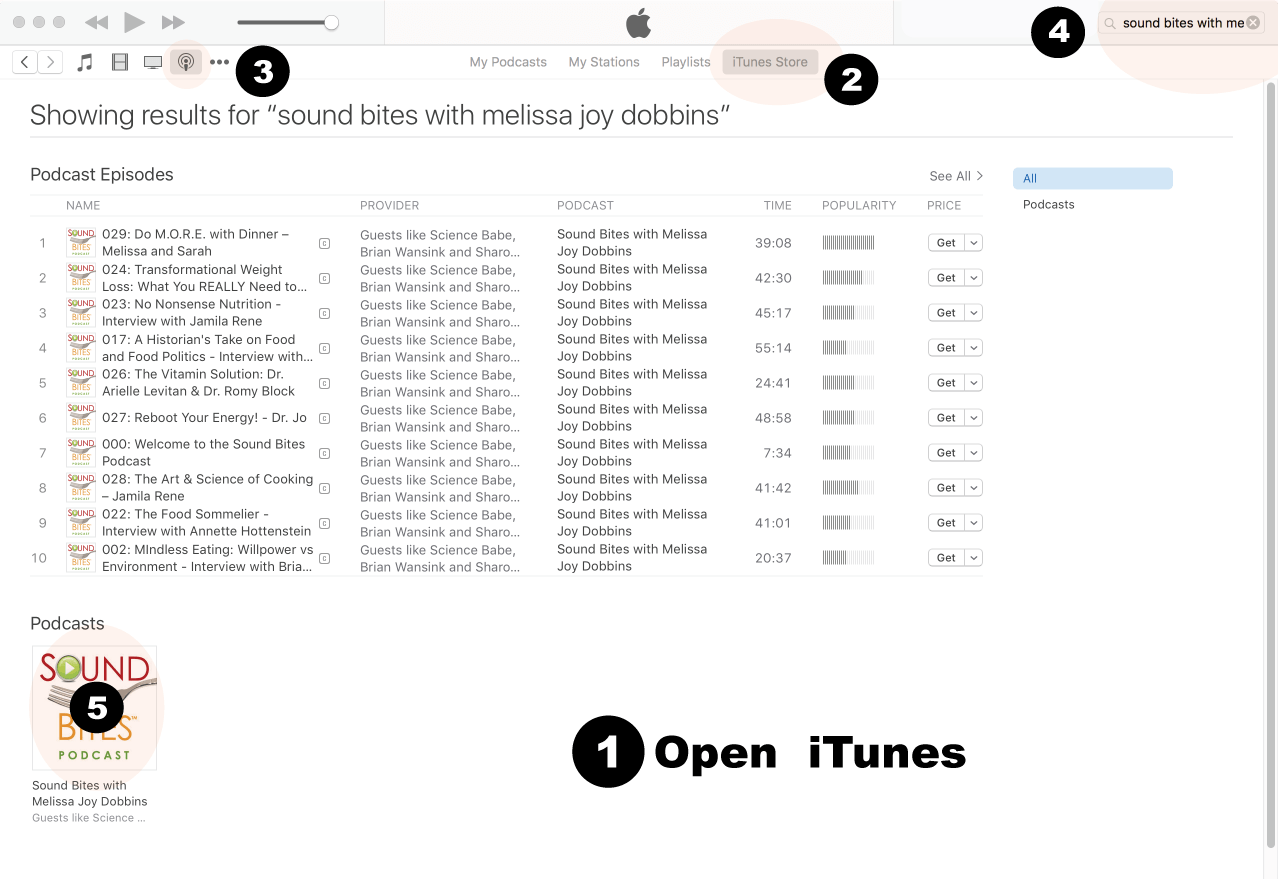
Open iTunes desktop application
Click iTunes Store
Click on Podcasts
Search for “Sound bites with Melissa Joy Dobbins”
Click on podcast image
Search for Sound Bites podcast in iTunes
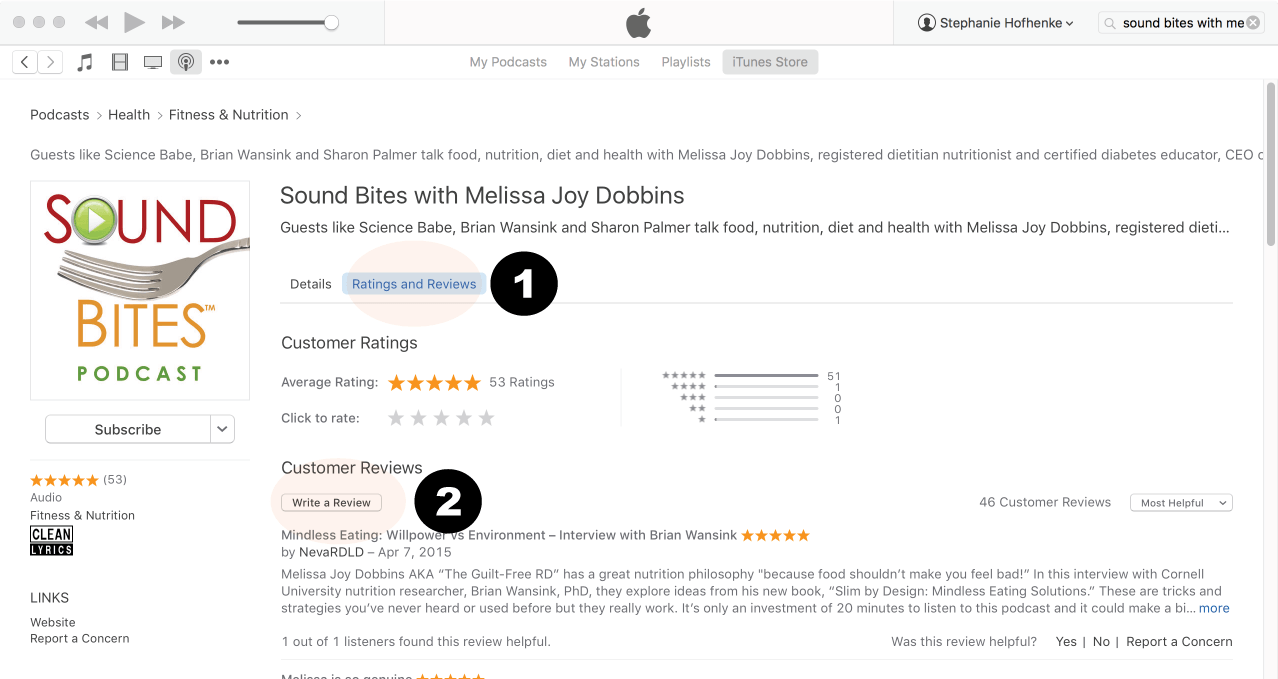
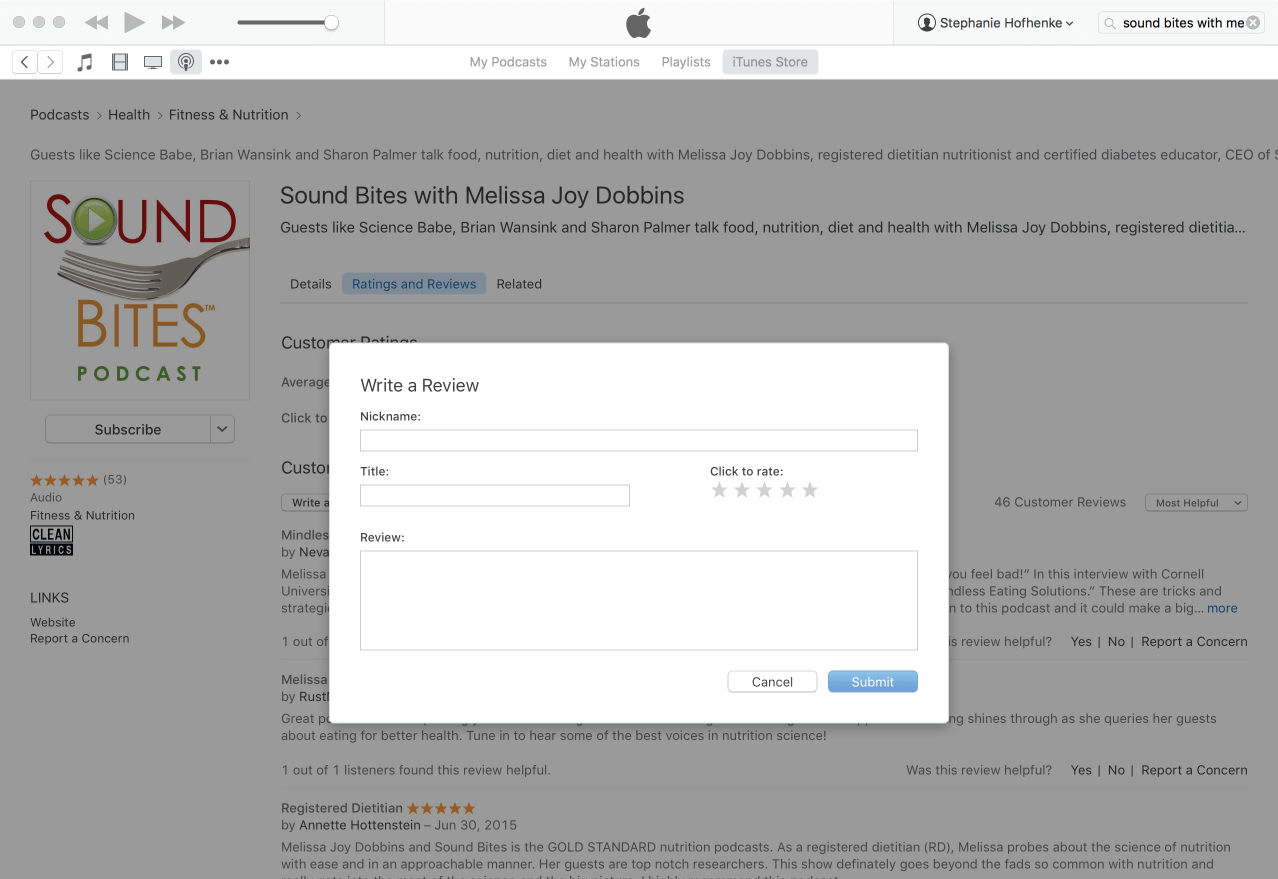
Click Ratings & Reivews
Click Write a Review
View reviews and write your own review.
Write your review…. Thank you!
Write your review!
How to subscribe via iTunes
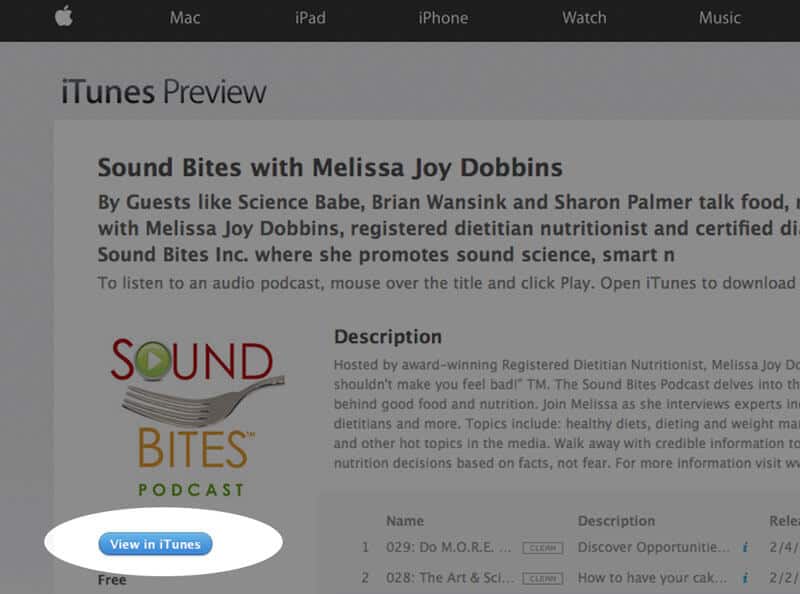
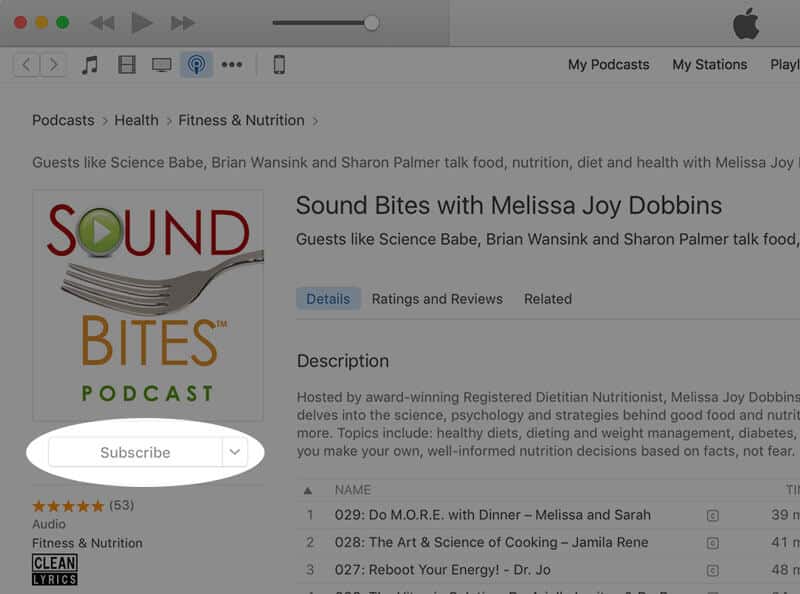
Click here to view the Sound Bites Podcastin iTunes, then click the blue “View in iTunes” button. This will open your iTunes application directly to Sound Bites Podcast. Click the “Subscribe” button, and your done!