Celebrating over 1 Million Downloads and 50,000 Free CEUs on the Sound Bites® Podcast | NEW: Get 1 years’ worth of CEUs with the new 15-CEU Podcast Course
A Look at Gen Z’s Complicated Relationship with Food and the Dietitian of Tomorrow
Global communications consultancy Ketchum recently published a wide-ranging research study on the attitudes and beliefs of Gen Z about food. The report, “The Gen Z Say/Eat Gap,” expands on Ketchum’s legacy of food insights, intelligence and landmark research and provides guidance for food companies and communicators on how to connect with Gen Z successfully. Ketchum’s research also looked at Gen Z RDs and nutrition students and identified differences in motivations, preferences and behaviors of Gen Z RDs and nutrition students compared with other generations of nutrition professionals. Ketchum’s report “Tomorrow’s Dietitian: A First Look at Gen Z RDs” offers a preliminary look at 10 different areas that are important considerations for nutrition professionals across a wide range of professional settings.
Tune into this episode to learn about:
Gen Z consumer insights
the “say/eat” gap and factors that influence purchase decisions
why Gen Z feels pressured about their food choices and the sources of pressure
what leads to negative emotions about food
if they are cooking differently from their parents
if their childhood diet impacts their current eating pattern
Gen Z RD insights
career motivations
their interest (or lack thereof) in diet culture, plant-based and culinary nutrition
what earns their trust
generational tension and shared concerns
tips for communicating nutrition to Gen Z audiences
the RD’s SciVantage and 3 steps to a productive conversation
how to get more information and access the full report
More than other generations, Gen Z feel pressure for their food to make a statement about who they are and what they care about.”
Jaime Schwartz Cohen MS, RD, SVP, Director of Nutrition, Ketchum
Always wearing two hats as a registered dietitian and seasoned communications professional, Jaime has 20 years of experience combining knowledge and expertise in food, nutrition and public relations to create innovative strategies for leading companies and organizations. As director of nutrition at Ketchum, Jaime leads a team of 7 dietitians who have written the playbook for nutrition edu-tainment programs that focus on the measurable results that matter to key stakeholders. She’s a mom of two boys, and a lot of her work inspiration now comes from them – how to make learning about food and nutrition fun.
33% of Gen Z RDs and students came into the profession to help others heal their relationship with food.”
Born and raised as a farmer’s daughter from Minnesota, Michele has deep roots connected to agriculture and is passionate about working for America’s food producers. As the former marketing lead for National Cattlemen’s Beef Association, she has spent her career creating demand-generated programs for food producers from walnut growers to corn farmers and cattle ranchers. Currently, she leads the Food, Agriculture and Ingredient sector at Ketchum where she puts her passion to action every day. Outside of Ketchum, she has served as a board member for GoFarm and hosts a Food Truck Night every summer.
Gen Z is more likely than other generations to feel like their eating pattern is ‘wrong’.”
[00:00:00] Announcer: Welcome to Sound Bites, hosted by Registered Dietitian Nutritionist, Melissa Joy Dobbins. Let’s delve into the science, the psychology, and the strategies behind good food and nutrition.
[theme music]
[00:00:22] Melissa Joy Dobbins: Hello, and welcome to the Sound Bites podcast. Today’s episode is about Generation Z’s complicated relationship with food, and also a first look at tomorrow’s dietitian, Gen Z RDs and nutrition students. This is new research and insights from Ketchum Public Relations. As we synthesize what all of this means, we’ll also touch on some information about how dietitians can use their nutrition SciVantage in today’s food conversation. This episode is not just for dietitians. As a mom of two Gen Zs myself, I find this information fascinating. I’m really excited to welcome two guests to the show today, Jaime Schwartz Cohen and Michele Murray. Welcome to the show, ladies.
[00:01:10] Michele Murray: Thank you so much. We really appreciate the opportunity.
[00:01:12] Jaime Schwartz Cohen: Thanks for having us.
[00:01:14] Melissa: Just want our listeners to know that this episode is not sponsored and we may be submitting this to CDR for continuing education for registered dietitians, dietetics, and diabetes educators. If that is of interest to you, please stay tuned for that. I’d like to give a short introduction to both Jaime and Michele and then have them share a little bit more about themselves.
Jaime is Senior Vice President and Director of Nutrition at Ketchum. She’s always wearing two hats as a registered dietitian and a seasoned communications professional. She has 20 years of experience combining knowledge and expertise in food, nutrition, and public relations to create innovative strategies for leading companies and organizations.
Michele leads Ketchum’s Food Agriculture and Ingredient practice, which specializes in providing communications guidance and counsel for companies that produce food and fiber throughout the food supply chain. She has more than 25 years of experience leading strategic communications in food and agriculture.
Again, welcome to the show, ladies. I’m really looking forward to learning more about the work that you do and your backgrounds and then diving into this conversation. Jaime, why don’t we start with you? Tell us more about your background and the work that you do.
[00:02:30] Jaime: Thank you, Melissa. I’m so excited to be here. I like to joke that I joined Ketchum the week that the first tweet was sent, right, so 2006, almost 18 years ago, and I had previous experience working at food companies, the middleman between what marketing wanted and what product development could deliver. This was my first role in communications and it took me years to have this perspective, but I was learning about this industry while everybody else was too, right? Because when Twitter was born, two-way conversation.
I lead a team of seven dietitians. We all wear both hats. We speak the languages of marketing, product development, regulatory in support of our clients, which could be anything that goes in and around your body, not just nutrition, right? Because science is science. Sometimes we’re working on things that it’s all based on what the research says, what the evidence says.
[00:03:18] Melissa: Great. Thank you. Jaime, I don’t know. I don’t remember the first time we met, but we’ve known each other for a long time and–
[00:03:24] Jaime: I have your business card from Dairy.
[00:03:26] Melissa: Oh, wow. Okay. When I worked for the Dairy Council, we worked with a variety of PR firms, and yes.
[00:03:33] Jaime: I think it was like when I was a student.
[00:03:34] Melissa: Oh my gosh.
[00:03:34] Jaime: I was a student who, there was no LinkedIn at the time, right, so opportunities in non-traditional roles, you couldn’t just Google somebody. There wasn’t a lot of information out there, so I would just stalk people that I thought had cool jobs to find out how they got there. I have your business card with your maiden name.
[00:03:51] Melissa: Oh, that’s so funny. It was probably my first married name, actually.
[00:03:55] Jaime: Oh. [chuckles]
[00:03:56] Melissa: Because I reclaimed my maiden name Dobbins after that divorce and got remarried. Anyway, long story. We go way back. Okay. That clears up, mystery solved there. Yes, networking and exploring the field of nutrition and dietetics was a lot different back then.
[00:04:13] Jaime: Yes.
[00:04:13] Melissa: Anyway, I’m just thrilled to have stayed connected with you. One of the things that we’re going to talk about later in the conversation about the Nutrition SciVantage is actually a presentation that you did at Today’s Dietitian spring of last year. I was just so happy to be your moderator and your speaker bodyguard, I guess I would say. [laughs]
[00:04:35] Jaime: Yes. [chuckles]
[00:04:36] Melissa: I had to rough up the tech guy a little bit to make sure your microphone’s working right. [laughs]
[00:04:41] Jaime: Also the leader of my hype crew.
[00:04:43] Melissa: Oh, yes. Yes.
[00:04:44] Jaime: It’s always helpful to have that table of dietitians in front of you smiling and nodding.
[00:04:48] Melissa: We’re your cheerleaders, work in the crowd, get the crowd going. It is a wonderful topic and I look forward to diving into that as well. Michele, tell us a little bit about your work, your background, and I’m shocked that our paths haven’t really crossed before. It’s like we’ve done this, like maybe it’s this parallel journey.
[00:05:08] Michele: Yes, [laughs] for sure. I know. I’m so grateful for the opportunity to work with you now and to get to know you a little bit better, Melissa. I lead up Ketchum’s Food, Ag, and Ingredient practice, and we really help clients sort through how they might be able to address complex communications problems, how they may be able to drive more interest in their products, how to create more demand, and also to build their story. What I’m particularly passionate about is really connecting consumers to people who make food. That has been really my life’s purpose.
I grew up on a dairy farm in Minnesota. I got my first start as an intern with Anderson Erickson Dairy in Iowa, where I quality-checked all of the ice cream cones to make sure they had enough bonbons in them, to being on the front lines with mad cow disease, with the beef industry. Then I also led communications for an NGO where we really dug into how we provide better food access to communities that are underprivileged. I feel like that whole journey of my career has brought me to this place of really being able to think about how we better connect consumers to the people who make food, how we tell that story on behalf of America’s farmers and ranchers.
[00:06:27] Melissa: Absolutely. Very cool. Well, thank you both again for being here. I attended FNCE in Denver back in October and attended the Ketchum Breakfast where this presentation was shared by both of you on Gen Z. I’ll tell you, okay, everybody listening, we’ve heard about the different generations, there’s stereotypes, we’re sometimes pitting different generations against each other. This presentation just blew me away. I just felt like it was so different from what we normally hear. This is not going to be a boring conversation about generations at all. I just had to have you guys on the podcast.
In fact, before I invited Jaime on, and of course, she’s like, well, Michele and I, we co-present this. It’s great to do this together. I brought it up on a previous episode where I was like, this is so interesting. I got to have this topic as a whole episode. I think the best place to start though, would maybe be to set the stage, like how did this research and the consumer insights and dietician insights even come about? Why was Ketchum looking into this? Maybe tell us a little bit about the backstory there and then also who was surveyed, how many people, and so on.
[00:07:41] Michele: Absolutely. I can take that one. Ketchum has had a long history of really trying to understand what makes consumers tick, what helps them understand how food is made and the nutrients behind foods. We really invested in food and agriculture research around what consumers’ behaviors, mindsets are for the last 15 years. This past year, we really were inspired by the idea of thinking about what really drives the future consumer, Gen Z, when it comes to food. What’s their mindset? What’s making them question food? How do we build trust with Gen Z? Really, how do we understand how to do communications better to engage with consumers? That’s what drove it.
Each year in the last 15 years, we’ve done a number of different types of studies. We’ve done research specifically on the consumer and the rise of the food evangelist. We’ve done research on food technology, how COVID changed the way consumers thought about food, as well as how do we think about sustainability and telling that story to consumers. This year, we did a nationally representative study, quantitative, of consumers to really dive deeper into Gen Z, but also to compare Gen Z to Millennials, Gen X, and boomers in terms of their attitudes towards food.
[00:09:07] Melissa: Okay, great.
[00:09:08] Jaime: Then when I started being involved in conversations about this research, I’m like, okay, well, I want to know more about the nutrition professional, the Gen Z of the future, the Gen Z dietitian of the future. My team did some complementary research. It was a smaller study and not nationally representative, but we surveyed 325 nutrition professionals. 25% of those were Gen Z RDs and nutrition students. We were able to do some comparisons to all the generations to see these early insights of Gen Z dietitians. Then we also did a panel discussion to contextualize some of the findings from the survey. That was moderated by our Gen Z nutrition intern, Kiara Joseph. We had five Gen Z dietitians and nutrition students on, which was a fascinating conversation.
[00:09:56] Melissa: Oh, I bet. I would have loved to have been a fly on the wall there. I talk about consumer insights a lot on the podcast, partly because what we see and hear in the media and social media, I feel like, oftentimes doesn’t really match up with what real people are thinking about and talking about. If you’re not sitting directly talking with patients one-on-one or in group classes, these consumer insights can be so compelling.
A lot of times, and I’m sure when we talk about the consumer insights versus the dietician insights, I’m basically telling you now, I’m going to say, what do you think all of this means? Because you have all this information and then you’re trying to connect the dots, but obviously, because you want to take this and use it, but with the RD research or insights, you have that extra conversation. I’m curious if that happened with the consumers too, but that’s really nice, like you said, to contextualize what your findings were and really get that sort of deeper dive. I just love all this.
[00:10:53] Jaime: Yes. There’s a specific example that we’ll talk about where we saw the survey data and we’re like, huh, what does this mean? Then the conversation that we had just blew us away.
[00:11:01] Melissa: Okay, cool. I can’t wait. Was there anything else, Michele, that you wanted to add about consumer insights or should we just dive right into this complicated relationship with food that Gen Z has?
[00:11:13] Michele: One of the things that was really interesting about this research was understanding how this generation compares to other generations. What is our future consumer considering when they make food purchases? We found, and historically, Ketchum and its 15 years of consumer research had identified what we call a food evangelist.
[00:11:34] Melissa: Yes.
[00:11:34] Michele: They traditionally have represented about a third of the population. When we did this research around Gen Z, we found that 50% of Gen Z really represent food evangelists. A food evangelist is somebody who is much more deeply involved in the food conversation. They’re the first to have conversations about concerns about food or questions about food, as well as they’re really passionate about food. It’s fascinating to us that we have a group of consumers now that are really invested in learning more about how their food is produced and they also may be making different food purchases as a result.
[00:12:15] Melissa: I’m glad you added that because you had mentioned the food evangelists a little bit ago. That’s a great way to explain what that is, who that is, and then you’re seeing a bigger proportion of that in Gen Z. Thank you for clarifying that. Great. Okay. I’ve got my slides in front of me here. I’ll have links to the information that we’re discussing. It’s not a video podcast today. It’s just an audio one, but we do have visuals for people if they want to read along with the conversation or go to those resources afterwards.
First, it’s really important that we define the generations’ timelines and ages. We hear this all the time, but I know for myself, I don’t always remember exactly what they are. If we can just walk through the generations and the age groups.
[00:13:00] Michele: Yes. Gen Z traditionally is consumers between the ages of 13 to 26, so young adults. Really those that are starting to create habits and behaviors in their life when it comes to food. Millennials are in the age bracket of 27 to 42. Gen X tends to represent 43 to 58-year-olds. Then boomers are between the ages of 59 and 77. They’re all a mix of generations in terms of different mindset. That’s what’s so fascinating about this research is digging into the differences between them. I mentioned food evangelists before, but food evangelists are people who are really invested in food. We looked at that subset across each of the generations.
[00:13:51] Melissa: Okay, great. Should we dive right into the first finding, this “Say/Eat” Gap?
[00:13:58] Michele: One of the most interesting points that we learned in this research, and it was really the headline of this research, is that we saw what we call a say/eat gap. We saw that Gen Z consumers say that these issues matter to them. They’re a very purpose-driven generation. They care about animal welfare, about the environment, about how their food is made, and yet they’re not making purchasing decisions around those values yet. They’re saying a lot about how they care and what they care about, but they’re not necessarily taking action on that. We really do believe that that’s a primary factor in some of the stress that this generation feels, that they know that inherently, they want to make certain values-based decisions, and yet they’re not able to necessarily go there.
One of the most interesting things is we found the majority of Gen Z care about brands that make decisions around sustainability, doing more for the environment, taking care of animal welfare. Yet only about 15% are looking for sustainably sourced ingredients on the package, for instance. There’s really this cognitive dissonance happening with this generation where they aren’t necessarily able to take action on their belief system.
[00:15:20] Melissa: Yes. I feel like we’ve seen this for some time, but this appears to maybe going a little bit more beyond the surface of what maybe I’ve seen in the past, like with IFIC Insights, International Food Information Council, where people say one thing but they do another, or you compare what they’re saying to purchase data and things like that, so I find that very interesting. To your point, it’s like, oh, the aha is causing additional stress and pressure. That’s very interesting. Talk to me more about what you’re finding with this dissonance and the pressure there then.
[00:15:55] Michele: Yes, absolutely. For instance, our research found that about 63% of Gen Z really feel a ton of pressure to change the world through their behaviors. Yet about the same number of Gen Z also reported to say, we don’t know that we can make much of a difference. That creates that pressure as well. One of the things that we thought was really interesting across all the generations, despite the pressure they’re feeling in the purpose mindset that Gen Z has, they’re still making most of their primary purchasing decisions around things like nutrition, taste, quality, and safety, just like all the other generations. That stress and that pressure is creating challenges around their food choices.
For instance, we saw a significant number of Gen Z say that they felt pressured to choose certain foods. About 60% of Gen Zers said they feel pressure to make certain decisions about food choices versus about 20% of boomers. For instance, about 60% said that they have to choose a certain food because they feel like they may be perceived as healthy if they choose that food. About a half of Gen Z said that I need to choose this food because it signals the political beliefs that I have versus a very small percentage of boomers, about 10% of boomers.
[00:17:21] Melissa: Yes. It seems like from what I’m seeing, it’s not shocking, I guess, but the biggest differences we’re seeing are between Gen Z and the boomers because it’s the biggest age difference there, but it’s very interesting to compare those.
[00:17:34] Michele: If you look at Gen Zers versus Millennials, which is fascinating because you’d think that they would have similar belief systems, there’s actually quite a variance. For instance, 60% of Gen Zers say that they should choose a certain food to be perceived as healthy, but 50% of Millennials feel that way. We are seeing some variances across the generation.
[00:17:59] Melissa: Okay. Yes. Very interesting. Is that a good segue into the sources of pressure? Because this is the one that I really want to dig into. [chuckles]
[00:18:08] Michele: Yes. What was interesting about this research is we really wanted to dive into where is that pressure coming from when it comes to food choices and the stress that they’re feeling about making those decisions. The number one source is our moms. The number one source are moms at 46%, followed by dads at 33%. We’ve always said that moms are a major influencer and contributor to children, of course, and that they are a primary factor in food purchases, but we haven’t seen that come through in the form of pressure before.
On the other side of that spectrum, you would expect social media to rise to the top. What was interesting about the research is we found out that Gen Zers said that the people that they follow in social media don’t just influence the way that they feel or their purchase choices, they actually are pressured to make those decisions because of influencers they follow on social. About 24% of Gen Zers said, yes, I feel pressure from those that we follow on social media.
[00:19:17] Melissa: Wow. Yes, so mom is putting more pressure than social media. This is like neon lights billboard for me. I’m like, what is going on? Why is mom number one? I’m super curious if you were able to connect any dots there. My mind was just spinning when I heard the presentation at FNCE, where I’m thinking, wait a minute, because again, I’m a parent of two Gen Zs, right? My daughter who’s 24, she would say, I’m more of a Millennial. Okay, whatever.
[00:19:48] Jaime: Millennials do not like Gen Zs, so they’re very territorial about where they fall.
[00:19:51] Melissa: [chuckles] She was just like, I’m not a Gen Z, I’m a Millennial. I’m sure there’s probably some gray area there, but I’m thinking, gosh, were these moms the ones who are like maybe being targeted for the organic non-GMO marketing tactics and the food guilt and all of that, and that spilled over into their parenting around food. Any thoughts there?
[00:20:14] Michele: Yes. I have wondered the same thing as a mom of two Gen Zers too, right? Am I putting pressure on my own kids with respect to how they’re making food choices? What we found in this is that there’s a general feeling that moms, and dads too, have really not set up the world well enough for their kids, and they have sent that signal to their children in terms of, there may be things that you can do differently that will help impact the world, whether it’s political decisions, food decisions, a lot of conversation about the environment, for instance.
I think that there were a lot of food purchase decisions that are made to your point around organic and how that food is sourced that have happened in the last 10 to 15 years that have become more of the narrative inside the home, right? It’s less about low fat and maybe more about where is that food coming from and can I trust that food. A lot of that is driven by headlines in the news, around recalls, or questions around our own system. COVID has led to a lot of questions around the food supply system. That pressure coming from moms is, I think, an illustration of questions about how our food is produced that is across all segments. The signal to Gen Zers is maybe you can make different decisions about food that will influence the overall system.
[00:21:48] Melissa: Interesting. Then that transitions us into what you guys called moody foodies. Again, I find this interesting because not only did I think moms of Gen Zs were more educated, and obviously I’m a dietician, so I’m not putting myself into that group because I do know more about the food system and I don’t pressure my kids about having organic and non-GMO, but the conversation today versus when I was a kid does seem to be more about having a healthy relationship with food. That’s something, again, being a ballerina in a performing arts school, that was something that was not ever talked about, having a healthy relationship with food. To address these moody foodies and the negative emotions around food, again, that was just the opposite of what I thought that I would hear. Talk to me about that.
[00:22:40] Michele: Yes. One of the things that we thought was really surprising about this research is the amount of pressure that Gen Z feels about the way they eat. They’re definitely forging a new food future. The majority of Gen Zers are choosing different foods than their parents. It’s making them start to question how they’re going to make those food choices for a longer period of time. While there may be content that’s online that signals a healthy relationship with food, Gen Zers are also really overwhelmed with a lot of content that signals judgments around food, influencers that are recommending certain types of foods over others. There’s also a lot of content that’s just not correct around food.
There’s a lot of misinformation about food on social media, on TikTok. That information is sometimes more accessible than the actual content from the people who make that particular food. That swirl of misinformation is really leading to a lot of questions around which foods should you choose and which ones should you feel confident in.
[00:23:53] Melissa: Right. Instead of the message being everybody’s individual, there’s no one-size-fits-all, just because this works for one person doesn’t mean it will work for you, that message is not coming through.
[00:24:05] Michele: Yes. The traditional, and Jaime, you can speak to this, the traditional nutrition guidance of eat foods in moderation isn’t getting through to this generation at all. It’s more so what is the particular way to eat based on that influencer and their recommendations and a lot of misinformation around nutrition, how foods are produced, or how foods are raised. That is driving a lot of moments for Gen Zers to pause. I see that personally with my daughter in that she will come home and share something that she’s learned online or frankly, at school that is driving a different agenda and a different source of information than what necessarily is true, which is why it’s so important that people who make food for a living have an opportunity to really connect better with consumers online.
[00:25:00] Melissa: Absolutely. When my daughter was in high school, now she teaches eighth grade. She gets to help eighth-graders understand, and she doesn’t teach nutrition, she’s an English teacher, but still, she gets to choose the curriculum and is the gatekeeper there for that. She would come home in high school and say, oh, we watched Food Inc., we watched this, and I would just get all stressed out. At one point I invited her health teacher on the podcast and the three of us had a conversation about what kids are learning in school about food, nutrition, agriculture. That was years ago, obviously, but it was an interesting conversation to your point.
[00:25:40] Jaime: Yes, I was just thinking about the Get Ready With Me videos, the What I Eat in a Day videos. This is what is influencing people and the shockumentaries. Yes, there in the past had been standard curriculums, and now it’s just this swirl of information and it’s what’s driving media headlines, it’s just creating this swirl. When we identified that only 20% of Gen Zers say their childhood diets impact their current eating pattern, there’s all these other influences on them besides just who they grew up with in the household they grew up in that just creates this swirl. Often it’s a swirl of misinformation and sometimes disinformation.
[00:26:19] Melissa: Yes, absolutely.
[00:26:20] Michele: Yes, even trends like Girl Dinner send signals around, you shouldn’t necessarily choose certain foods, you should choose less of certain foods. There’s likely signals of body image and pressures around what types of foods you should eat and what that does for your body. Those messages are coming through to Gen Zers and making them start to question their relationship with food.
[00:26:47] Melissa: Yes, so it sounds like a lot of what you’re saying is it’s more about food as identity more so than ever before. Jaime, when you said it’s not just what they grew up with, because that was my question, why are they eating something different than they grew up with? It’s all these other influences coming at them.
[00:27:05] Jaime: All these other influencers, that 25% of people that are putting pressure on them that they’ve never even met before, it’s the people that they’re following online. That’s the other things that we found. They’re not Googling for information anymore. They’re using TikTok search functions and seeing what’s trending. They’re filing what they’re seeing in folders, like Kiara, our Gen Z intern. When she shared with me how she files things on TikTok, there’s different, something with a C, not categories, there’s a TikTok function where you could file everything. That’s where they’re getting all their inspiration.
[00:27:40] Melissa: Wow.
[00:27:41] Jaime: Gen Z, 46% had said that they get their food inspiration from TikTok far more than other generations. They’re not using traditional ways. They’re not using cookbooks. They’re not watching cooking shows. It’s everything that they’re seeing online. They’re also more likely to try a food trend that has gone viral, which of course could be a good or bad thing, right? Because there could be the positives. There could be-
[00:28:02] Melissa: Cottage cheese.
[00:28:03] Jaime: -that all of this is helping them. Yes. [chuckles]
[00:28:06] Melissa: Not the NyQuil Chicken. Do the cottage cheese trend, not the NyQuil Chicken.
[laughter]
[00:28:11] Melissa: Oh, my gosh
[00:28:12] Michele: For sure. Going back to this sort of food relationship and the emotions that are tied to food too, we found that only about 30% of Gen Zers said that they’re satisfied with the foods that they choose. In a similar way, about 30% of Gen Zers say that they’re really satisfied with food, which is concerning compared to about 60% of boomers that say that. Gen Zers are three times more likely to say that they feel guilty about the foods that they choose, that they feel anxious, tired, stressed, and uncomfortable. Something’s not working in terms of how they’re receiving information on social media from their friends, from their family, that is driving them to question their relationship with food.
[00:29:01] Melissa: Yes. One of the points on one of the sheets that I’m looking on, it says that Gen Zs are more likely to say that cooking makes them feel tired and stressed. I guess it could be either or, either you love to cook or it stresses you out. Again, I just assumed that the younger generation is just more foodie. They’re more into that because they grew up with Food Network and all of that. It’s complex, right? Complicated.
[00:29:30] Michele: It is complicated. In fact, we found that Gen Z men are much more confident in the kitchen than Gen Z women. About 76% of Gen Zers who are men said that they feel very skilled at cooking. They feel confident in making healthy choices. They have a positive relationship with food, versus about 60% of Gen Z women said that they felt skilled at cooking. The ultimate challenge there is that we’re seeing that Gen Z men are much more confident in cooking and making healthy choices than Gen Z women.
[00:30:10] Jaime: When we presented that slide at FNCE, the whole room just burst out in laughter. Of course, men are more confident.
[00:30:15] Melissa: Of course, they say they’re more confident.
[00:30:17] Jaime: Of course, they say they’re more confident. Yes.
[00:30:21] Melissa: Yes, the few male dieticians in the room were giggling too, but.
[00:30:25] Michele: It makes you wonder what is the trajectory of this, right? What does this mean for our future consumer? What does this mean for how Gen Z consumers prepare food? How they raise their families? How they may expect certain things from brands? One of the things that we found in the research is the lack of trust that they have in farmers, in people who produce food for a living. Perhaps we need to be communicating that more, both to Gen Z women, but also to Gen Z men, because they may likely become more of the purchasers of food versus other generations we’ve seen.
[00:31:06] Jaime: That was a big difference in previous research studies that Ketchum has done. Whereas in the past, yes, we saw that people didn’t trust food companies, but this was the first time that we saw that Gen Z doesn’t trust food companies or farmers.
[00:31:18] Melissa: Yes, that’s concerning, to say the least.
[00:31:23] Jaime: Yes, but we did look into who they do trust for food information, and they most often trust chefs and those with culinary training, which is a very vague thing. Also, having a lifestyle they strive to, even more vague. Then we asked this two ways, nutritionist and credentialed nutrition professional. We just wanted to see if there was a difference, and there wasn’t. That came up next. It was 70% for chefs, 66% for having culinary training, 63% having a lifestyle they strive to live, and then 62% for nutritionist and also credentialed nutrition professional. That might’ve been higher if we hadn’t asked it both ways. We just wanted to see if there was a difference, but it might’ve just split the difference.
[00:32:02] Melissa: Okay.
[00:32:02] Jaime: When you think about it, when we talk about all this pressure, like when people are showing their food content, they’re showing it in a fun way. Sometimes it’s important to just lead with the food and not necessarily lead with the nutrition message, so there’s a lesson in there as well. Yes, it’s all about earning trust and being more relatable, and leading with the food first.
[00:32:28] Michele: When you consider the experiences Gen Z have had in their life, they grew up in the midst of 9/11. Then they went through COVID and may have had to take school from home for a period of time, so they saw pressures around food systems and around systems in general. They saw challenges to the system from that standpoint, so they tend to be much more skeptical about what’s really going on behind the surface. They want additional validation and they can see through what feels like it might not be real. They can see through spin. They want to know the real real of information. They want to be able to have authentic experiences and relationships with the people who make the food and also with that food itself to understand that it truly is providing that meaning.
[00:33:24] Melissa: In one of the articles that you had shared with me back from 2016 about the Food Evangelists, there was a couple of things that stood out to me that tie in with what you’re saying now. I see this as an exciting opportunity. What do food companies need to do to connect and build trust and be authentic and transparent and all of that? Which I’ve said for a long time, when we talk about transparency in the food system, a lot of times that sort of has a negative connotation. To me, I’m like, if people want transparency, they just want more information. They just need more information.
What I often say is, gosh, wouldn’t it be great if some of this marketing jargon and the marketing tactics, if it could just be more straightforward? That’s one of the things in the article about like using clear language, that’s an opportunity. If you could just speak to that before we transition to the dietitian insights because I feel like I keep coming back to this on the podcast in my career. I don’t want to be Pollyanna about that, but I just, I hope someday that it can be a little bit less hype and more fact, and that still is going to give people what they want.
[00:34:35] Michele: Yes, absolutely. I completely agree. I think that one of the things that Gen Z consumers are trying to tell us and we need to really think about as far as how we communicate is being real, transparent, authentic, and clear. They want the information so that they can make choices about their own lives and their health. The more that we do that, the better relationship and the more trusting relationship we’re going to have.
One of the things that we work with our clients on is really helping navigate that conversation, building that story in a way, and telling that story in a way that truly is authentic to the people that make that food, to their brand, and eliminating that barrier between what they may have been concerned about sharing and what they now know that they need to just really connect with consumers on.
I think one of the things that we learned in the research is Gen Z consumers want to be part of an experience. They want to be included in the decisions. One thing that brands can really do is show consumers how they have individual impact on that particular food, whether it’s the sustainability journey that that food had, or considering how that food is prepared, how they can experience that food in new ways.
[00:36:00] Melissa: Okay, very interesting. I’m, again, surprised by a lot of these results or insights and just appreciate learning a little bit more and teasing out what this might mean overall, and stay tuned for sure on that. Is this a good time to switch over to the specific dietitian insights?
[00:36:18] Jaime: Yes.
[00:36:18] Melissa: Great. Jaime, you said over 320 dietitians were surveyed, plus the panel discussion was six dietitians. Let’s dive in. Tell me what you found.
[00:36:28] Jaime: Yes, so we first looked at what motivates dietitians to pursue this career path, and what we found was that Gen Zers had some similar motivations as the total responders across all generations, but what was significantly different was that 33% of Gen Z RDs and nutrition students came into the profession because they want to help others heal their relationship with food. Relatedly, Gen Z was also significantly more likely to have a history of disordered eating and eating disorders, struggling with body image, and also significantly more likely to come into the profession because of a personal nutrition diagnosis.
[00:36:58] Melissa: Whenever I do a media training or a presentation to dietitians, I’ll say, well, you got to go dig down and figure out what’s your why and what’s your purpose, why are you here? I say, why did you choose this profession? Everybody says, I want to help people. Then I say, okay, what does that look like for you? Because that’s the first level answer, like dig down. What does that look like for you? You want to work with teen athletes, blah, blah, blah. This is the interesting next layer, help people heal their relationship with food.
[00:37:28] Jaime: Yes.
[00:37:28] Melissa: That’s pretty significant.
[00:37:31] Jaime: Yes, so we dug deeper into that too in terms of their passion area. What are they most interested in? Of course, no surprise, intuitive eating, eating disorders, digestive disorders. What they were not interested in was most surprising. They were not interested in plant-based eating and culinary nutrition.
[00:37:49] Melissa: This shocks me.
[00:37:50] Jaime: Yes, well, this is where the panel really gave that context. When it comes to plant-based eating, many among Gen Z are passionate about it for sustainability reasons, but the panelists gave the context that it’s also being seen as being rooted in diet culture and it’s associated with clean eating and cleansing. One panelist had shared that the majority of the people that came into the eating disorder clinic that she interned in were following a plant-based diet when they came in. Then on the culinary nutrition side, they don’t feel as passionate about it because they don’t feel as equipped in the kitchen.
What we heard from panelists is that they didn’t learn culinary skills at home or in school. When they heard recipes, to them it means a convenient pairing, something that’s easy and quick to assemble, watching fun videos and reels. I think going back to what we talked about before with cooking, there’s also this dissonance of when it’s too complicated, they shut down, but they want something easy that they could do. We also saw that air fryers and other equipment that makes things easier are what Gen Z is most often using.
[00:38:49] Melissa: Hmm, interesting.
[00:38:51] Jaime: Just something that was just interesting thinking about all this together is that Gen Z RDs are entering the profession with more life experience, and they’re sophisticated in some ways, they’re more sophisticated in some ways, but there’s just this dichotomy being less sophisticated in the kitchen.
[00:39:06] Melissa: I think part of what’s interesting about that is, when I was in school, I graduated undergrad, no, I graduated graduate school in ’93. Even when I first started doing TV interviews, I wasn’t like Melissa the dietician. I was just a dietician sort of representing everybody and it’s changed so much now. Again, when I do my media trainings and messaging workshops, we’re looking at, how do you tell stories? How do you bring your personality into the mix? That’s not what we were taught in school.
I think it’s really exciting because I think a lot of people in my generation also came into the field with our own personal experiences. Food’s personal, and we had those, but we weren’t really encouraged to talk about those. I think what’s exciting is that it can help dieticians connect more with patients and also communicate better from their standpoint and work with people and a more personal connection.
[00:40:03] Jaime: Yes, definitely. As we’re elevating the brand of dieticians, everybody has their own brand as well.
[00:40:09] Melissa: Every single person, yes.
[00:40:10] Jaime: Yes. Another thing that we really dug into with the panel discussion was just how the terms mean something different to Gen Z compared to other generations. Not only does plant-based sometimes have a diet culture connotation to them, but also gluten-free and gut health in some cases, if gut health is referring to reducing bloating and is perceived as being associated with weight loss. It’s the context that’s important, right? In some cases, guilt-free, it might be tied to diet culture, but if there’s joy and excitement, something can be guilt-free because it doesn’t take a lot of time to prepare.
[00:40:40] Melissa: Yes. When I saw that–
[00:40:41] Jaime: Yes, as the guilt-free RD.
[00:40:43] Melissa: Yes, yes, yes. You know where I’m going with that. Yes. These are words that Gen Z RDs may associate with diet culture. Yes, when I saw the guilt-free up there, I was like, but I’m the guilt-free RD. Then you talked about the context and I’m like, yes, no. I can see where if people are seeing this is a guilt-free way of eating, or this is a guilt-free cookie or something like that’s a red flag.
[00:41:03] Jaime: Yes, their antennas are up there.
[00:41:06] Melissa: Yes. Guilt-free RD because food shouldn’t make you feel bad. I’m like, okay, it still resonates.
[laughter]
[00:41:14] Jaime: We can pull a few Gen Zers to see how they feel about it.
[00:41:16] Melissa: Yes. Just some messaging insights.
[00:41:19] Jaime: Yes.
[00:41:20] Melissa: Again, it was very enlightening to me. I could see where they’re savvy. They see these labels and they’re like, I know what you’re doing.
[00:41:28] Jaime: Right.
[00:41:28] Melissa: I know what you’re saying. Not me. Oh, eating clean or the plant-based that did surprise me, but I get it now.
[00:41:37] Jaime: If we just had the survey results, we’d still be scratching our heads, but it’s the panel that gave us the context.
[00:41:43] Michele: Even on the consumer research side, we found that they see sustainability and animal welfare, and human rights as table stakes for brands. Brand reputation really matters to this generation. Trust really matters to this generation. Sharing your values, whether you’re a registered dietitian or a brand or a food producer is really important for this audience. They want to be able to see the impact on their individual decision. They want to know that the people that they are hearing from, like registered dietitians, are truthful and real and helping them connect the dots and making good, healthy decisions.
[00:42:24] Melissa: Yes. I was at a recent conference. There was a presentation about building trust and, well, how are we as dietitians, healthcare professionals, how do we stand apart from those influencers? This might be a good segue into the SciVantage conversation, other than our credibility. Well, we have benevolence. We are helping people. We are truly in this to help people. I think that’s a big part of it as well.
[00:42:52] Jaime: Yes. That’s helping dietitians navigate the potential non-credentialed expert who is louder on social media. That was my motivation in putting together that presentation for Today’s Dietitian. I coined this term SciVantage, like what is our science advantage, right? Yes, we understand the science. Yes, we follow a code of ethics. Yes, we use critical thinking. Yes, we understand that messaging is in our anti-science. Yes, we know many people are looking at the splinters and we help them see the trees. Yes, we have this nutrition SciVantage, but so what, right? Before they trust our science and facts, they have to trust us. It’s not always about the science and facts. It’s not always being seen as an authority. It starts with relating to your audience.
[00:43:34] Melissa: Yes. Absolutely. I didn’t want to jump ahead too much. Was there anything else you wanted to say about the Gen Z RD insights before we dig further into the SciVantage?
[00:43:45] Jaime: Yes. I could also talk a little bit about this generational tension that we identified. We asked a number of open-ended questions in our survey, and we were really blown away by like hundreds of thoughtful, detailed comments. That really showed us that we were onto something with this research. People really wanted to share how they were feeling.
One of the questions we asked was related to generational diversity in the profession. That’s, we saw, some generational tension, boomers looking down on social media and thinking it’s unprofessional versus Gen X really wanted to understand the younger generation of professionals. We saw that Millennials think Gen Z spends too much time on social media and Gen Z just wants to be heard and they want their experiences, both personal and professional, to be taken seriously.
[00:44:27] Melissa: Very good. Yes. No, I thought that was really interesting. Then you pull together, what are the common interests or the shared ground, the common ground here?
[00:44:37] Jaime: Yes. Yes, there’s all this tension, but everybody pretty much said the same thing when we asked about what the biggest issues facing our profession are. Commenting misinformation from both influencers and the media, lack of diversity, cost of education, low compensation, lack of respect among the interdisciplinary team, and lack of insurance coverage. Then comments we collectively refer to as dietician wars. Then at FNCE, the academy president used that term as well. We’re all seeing the same things.
[00:45:09] Melissa: Yes. That brings us back to also the SciVantage conversation. You’ve got this, the three steps to a productive conversation for sure I want you to cover, and then circling back with the dietician wars, because that’s really important.
[00:45:22] Jaime: Yes, and it’s the same approach, whether it’s addressing somebody who’s sharing information that is incorrect online or in person, and as well as somebody professional, a fellow peer who might have a differing opinion than you. It’s all about this three-step approach to having a productive conversation with somebody who has differing views and beliefs. It’s called EASE, E-A-S-E. E stands for engage, first just starting the conversation, whether it’s online or offline.
The next is acknowledging that their truth might be different than your own truth. Finding that common ground in order to earn their trust. They’re not going to trust you if you’re coming at them, right? You have to find that common ground with what they’re saying. The S stands for share. Getting to know you might help them make them more receptive to hearing you and trusting you. Sharing more about you through humor and surprise and passion. Cute always works well. Sharing humanity. That’s really then the way that you earn trust. Acknowledging their truth to earn trust, right?
[00:46:34] Melissa: Yes. I think that acknowledging that their truth is their truth and in a way listening in a better way is so important and it can just really change the whole dynamic. I love your acronym and the way you spelled it out in the presentation and just really feel like more dietitians need to hear this. More people just need to hear this. Everybody could do a better job at listening and respecting other people’s opinions. Yes, I understand your opinion doesn’t mean it’s science, all that stuff. On an interpersonal level, I think we could have more respect for others.
[00:47:14] Jaime: Also taking things offline.
[00:47:16] Melissa: Yes.
[00:47:17] Jaime: Because I am a PR professional by trade and it’s all about working to secure the endorsement from a source to target audience trust. We should be all be doing PR for each other. If others are seeing professionals-
[00:47:31] Melissa: Attacking each other.
[00:47:33] Jaime: -getting into these, yes, like online, that’s not doing-
[00:47:36] Melissa: It’s trouble.
[00:47:37] Jaime: -it’s not doing much for us as a profession. Always taking things offline and having an actual conversation and coming at it from the perspective of like, I want to understand your truth and I want you to understand my truth, and just going from there.
[00:47:51] Melissa: Yes, like you said, it’s a productive conversation instead of an attack. I think on social media, it’s easy for people to say things that they wouldn’t say to somebody face to face because you’re a real person. Let me dial it back a bit. Yes, that’d be nice. I was in crisis communications when I was at the Dairy Council and you thankfully don’t have to use it a lot in my day-to-day work, but it does come up. It does come up.
[00:48:19] Michele: Trust is built on a foundation of knowing and understanding and believing. In many ways, what we’re seeing with this generation with Gen Z is that they don’t have that foundation. We as food communicators and RDs have to start building that foundation with each other and with Gen Zers. They see themselves as self-described influencers. To then have consumers who already believe certain things about food, and then you have health professionals who are sharing information about food, it’s just a mix of a lot of voices and a lot of opinions. It’s challenging for the truth to break through in those moments unless you already have that prebuilt foundation of trust.
[00:49:15] Melissa: Well said. As we’re wrapping up, that sounded sort of like some bottom-line takeaways or sort of a call to action from Michele there. To build on this for takeaways for our listeners, whether they’re dieticians, students, the general public, and also where people can find more information. Like I said, any links and resources that you share with me, I’ll have in my show notes at soundbitesrd.com. I’ll also have both of your LinkedIn links as well. If there’s anything else you wanted to point to on the Ketchum website or anything like that.
[00:49:48] Jaime: Yes, it’s important to understand all these nuances compared to other generations of RDs because they’re the future of our profession, right? They’ll change the dynamic of the workforce, they’ll lead the way online, especially with new trends and as new channels emerge. Having an understanding of the new generation is important and being respectful of the new audience and their nuances because yes, with the generational tension, there’s definitely differences, but acknowledging and talking about the differences and trying to get to know different generations, getting to know each other will serve us best and help elevate our profession.
[00:50:25] Melissa: Absolutely.
[00:50:26] Michele: At Ketchum, we like to say we do the work that matters for the world and that’s something that I think really shows up here in terms of the importance of us really being that support system to Gen Zers, providing information in a way that works for them and is right for them, and also working with brands and companies to help bring that connection to consumers closer. I think one of the things that is really key in this that we learned as an insight is the importance of being transparent and authentic, opening the conversation, being brave in that conversation, and having it as a dialogue.
I loved your point about listening because much of this begins with listening first with this audience, with any audience to really understand what are those needs, interests, and concerns, and how do we support and address them. We will learn so much from our future consumer about what they want and need and how we can deliver that in better ways as health professionals, as communicators.
That for us is the biggest takeaway is we’re on an evolution of how we meet our consumers’ needs and they’re showing us through their actions, through their social media behaviors, the fact that they’re going to C-stores and Targets, and Walmarts over grocery stores for shopping, the fact that they’re questioning their food experience in general is very telling to us. It’s worth a pause to consider what it is that we can be doing differently and how do we work together to better create a connection with our future consumer.
[00:52:10] Melissa: I feel like it’s a very exciting opportunity that they want to be involved. I think I have hope because I feel like we could get rid of some of this nonsense and stuff that’s going on because if we just listen and talk about it, we’ll be that much more connected.
[00:52:29] Michele: Absolutely. When you consider that 50% of Gen Zers are saying, I want to be part of a conversation with you and I’m really invested in understanding more about food and what it does for my body and where it comes from. It’s a tremendous opportunity and it’s a lot of pressure to start saying, how do we do things differently? I think that’s probably what Jaime and I’s favorite thing to do is to really work with companies and say, okay, how do we rethink this and really rebuild and connect with consumers? Gen Zers want to be part of that. There’s no better place to be than that open conversation.
[00:53:08] Jaime: From the nutrition professional standpoint, because some of my audience is nutrition professionals, right? Yes, I do a lot of work communicating with consumers, but also my fellow peers, I think we are the expert, but you see Gen Z is trusting chefs more than nutrition experts. I think the key there is really making food joyful, right? I love when Dawn Jackson Blatner talks about joy is a nutrient.
[00:53:26] Melissa: Yes.
[00:53:27] Jaime: We don’t always need to hit people over the head with nutrition, it’s about the taste of the flavor and making it accessible and affordable, tapping into nostalgia, just alleviating all the pressure the generation feels about food by reminding them that it’s fun.
[00:53:39] Melissa: I love it. Yes. Shout out to Dawn, DJ, joy is a nutrient. Love it. This has been a fun conversation and enlightening the first time I heard it and then having a deeper dive today. Where can people go to get more information besides the links in my show notes? Was there a website that you wanted to share?
[00:54:00] Michele: Absolutely. You can go to Ketchum.com and there are a number of different resources there. We have an overview of the Gen Z research available on Ketchum.com as well as resources about the Gen Z RD research and background on that. All of that’s available there.
[00:54:17] Melissa: Awesome. Great. I’ll also throw any social media links or anything that people can follow y’all, follow y’all on.
[00:54:25] Jaime: Great. Yes. I do a lot of pontificating about all of this on LinkedIn.
[00:54:27] Melissa: Yes. Okay, good. Good. We’ll connect with you there then, Jaime. Thank you again so much. Very interesting, important information. For everybody listening, if you liked this episode, please share it with a friend or tell a friend about the podcast and check out some of the other related episodes that I’ll link to in the show notes. The show notes are at soundbitesrd.com and as always, enjoy your food with health in mind. Till next time.
[00:54:56] Announcer: For more information, visit soundbitesrd.com. This podcast does not provide medical advice. It is for informational purposes only. Please see a registered dietitian for individualized advice. Music by Dave Burke, produced by JAG and Detroit Podcasts. Copyright Sound Bites Inc. All rights reserved.
[00:55:24] [END OF AUDIO]
LISTEN, LEARN AND EARN
Listen to select Sound Bites Podcasts and earn free CEU credits approved by the Commission on Dietetic Registration (CDR) for registered dietitian nutritionists and dietetic technicians, registered. Get started!
Get Melissa’s Sound Science Toolkit here!
Partnerships:
Sound Bites is partnering with the Association of Diabetes Care and Education Specialists (formerly the American Association of Diabetes Educators)! Stay tuned for updates on the podcast, blog and newsletter!
Sound Bites is partnering with the International Food Information Council! Stay tuned for updates on the podcast, blog and newsletter!
Sign up for my monthly newsletter and episode eblasts so you never miss an update!
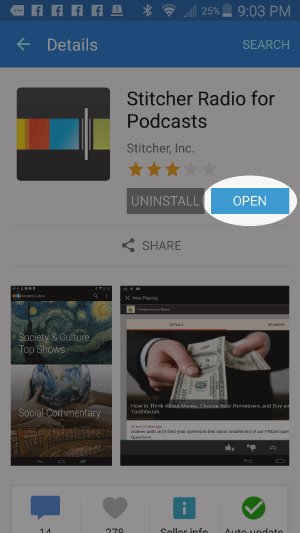
Listen on Stitcher (Android)
Install the Stitcher App
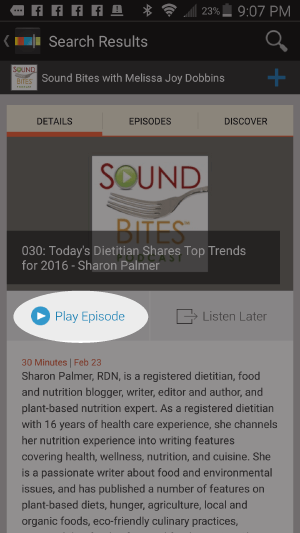
1. Search for “sound bites with melissa joy dobbins” 2. Choose Play Current Episode or Add to Playlist
Choose “Play Episode”
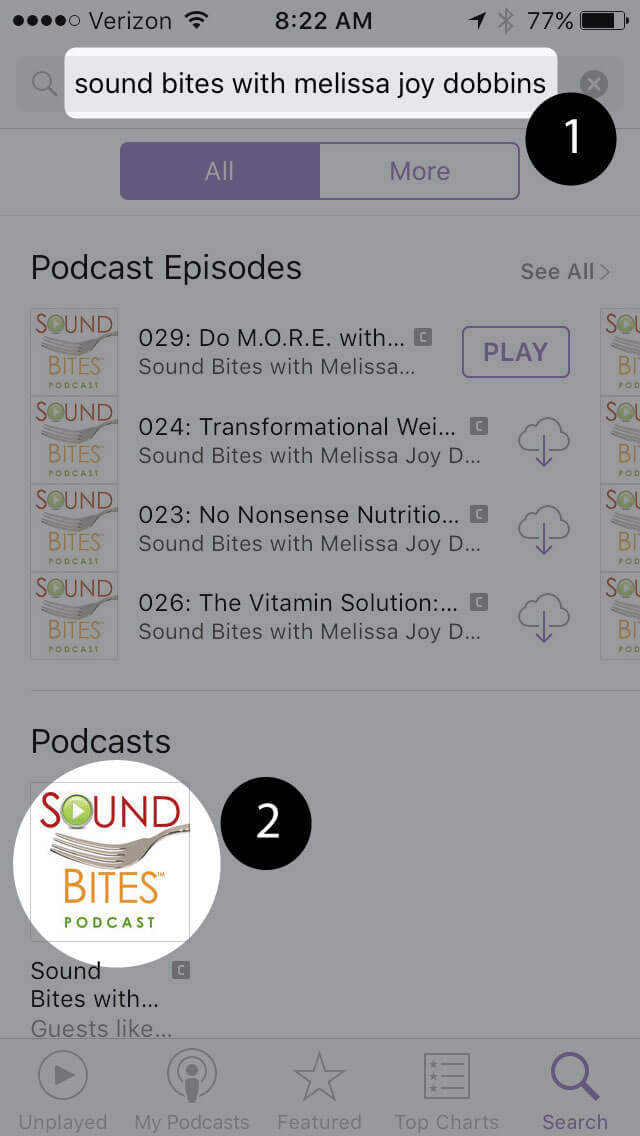
Subscribe & Review on iPhone
Open the “Podcast” app on your iPhone
Search for “Sound bites with melissa joy dobbins”
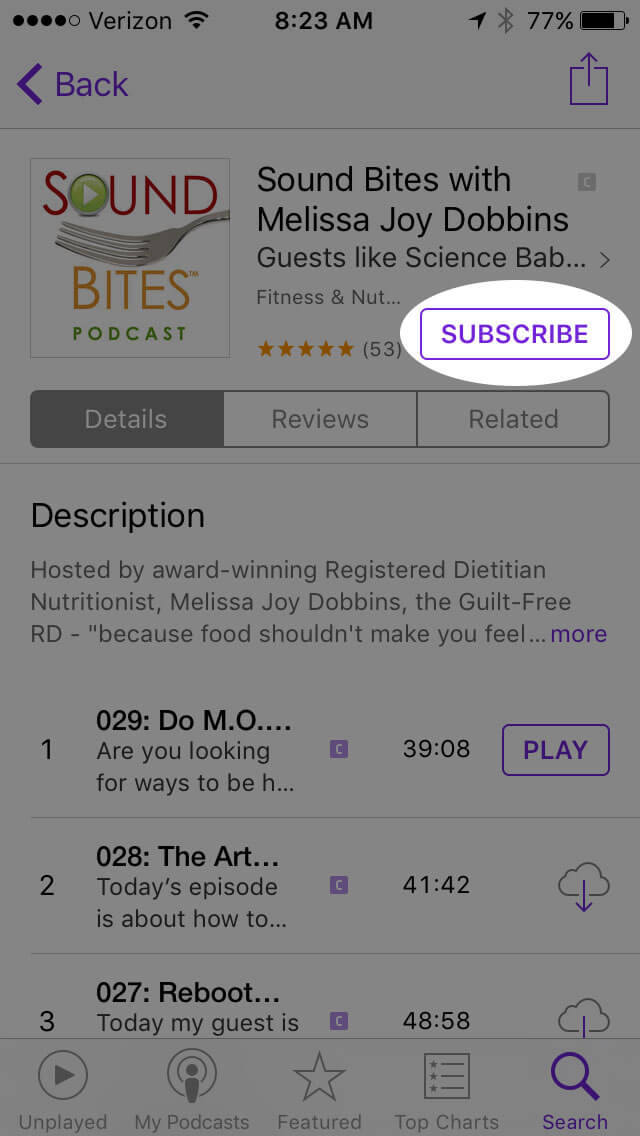
Open the podcast and click “Subscribe” and your done!
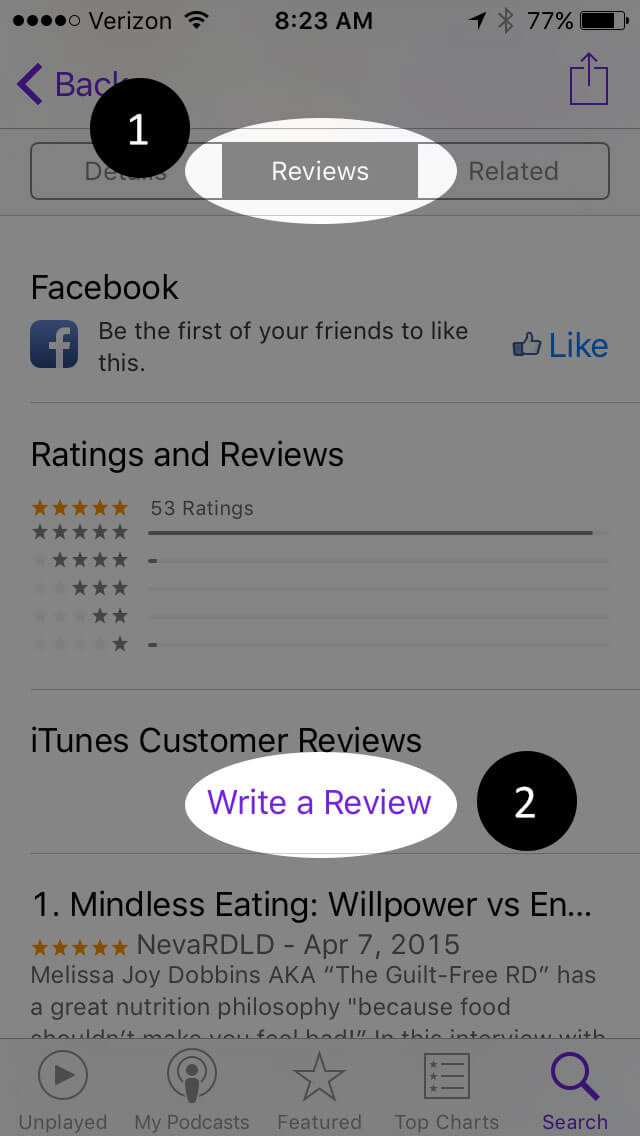
Write a Review
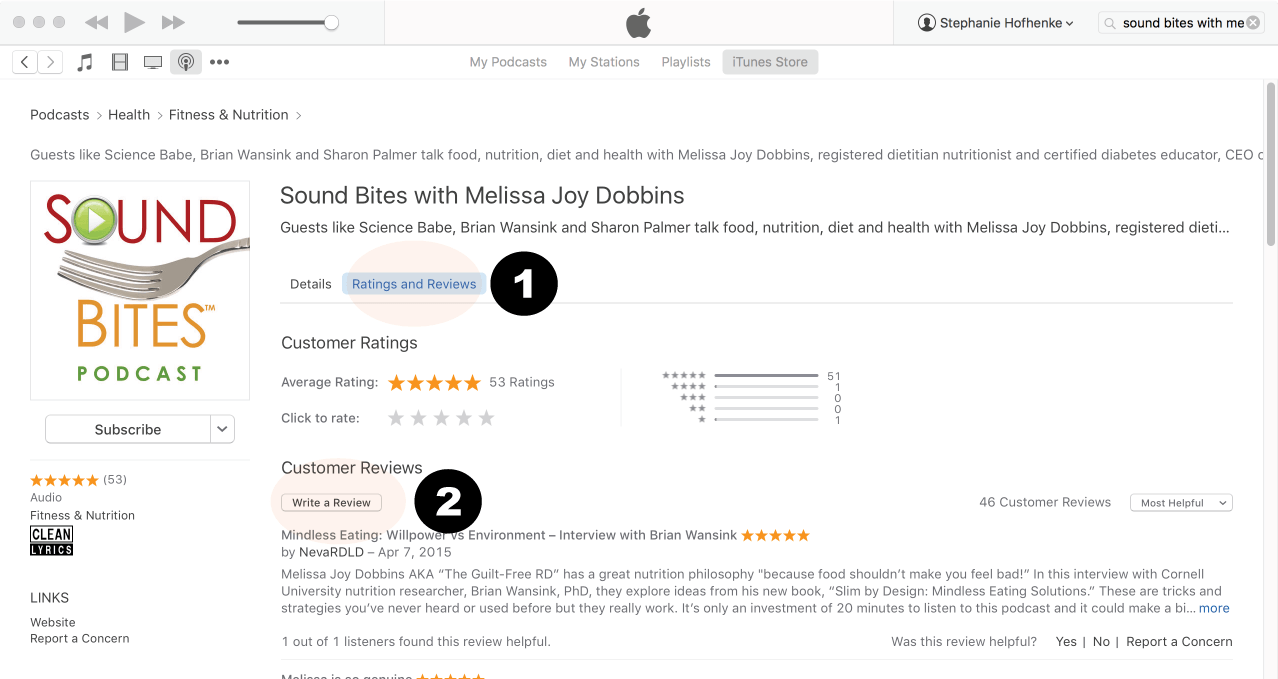
Click “Reviews”, then “Write a Review”.
Subscribe via RSS Feed
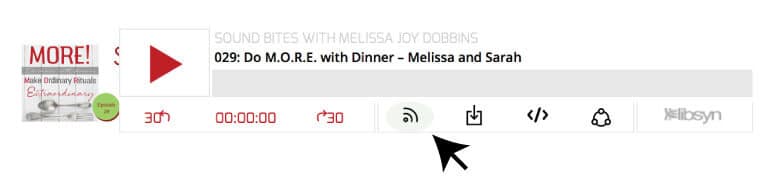
Navigate to any podcast player . Click on the RSS feed icon.
Click on the RSS feed icon.
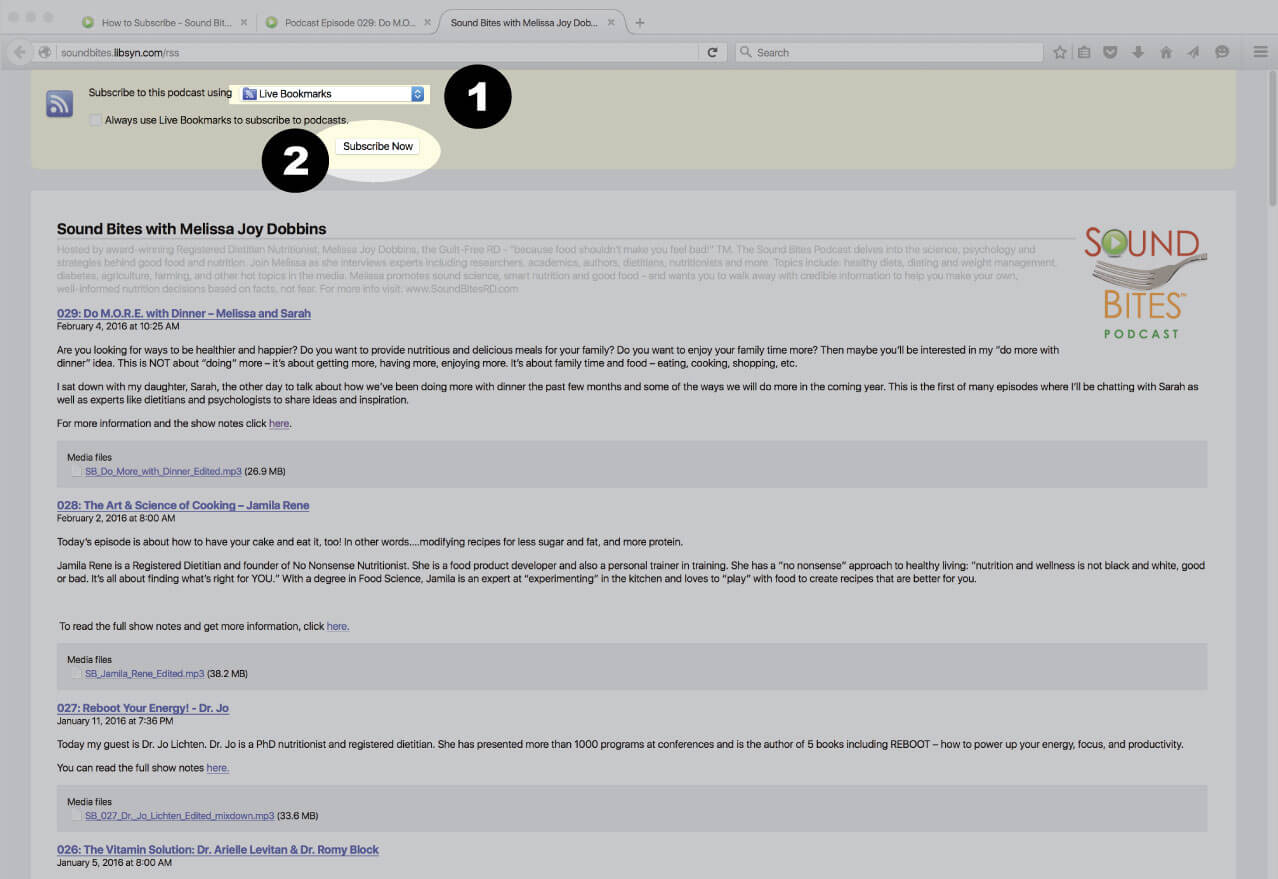
Click on RSS Feed
Choose which application you would like to use to receive the RSS feed
Click “Subscribe Now”
Confirm settings and subscribe.
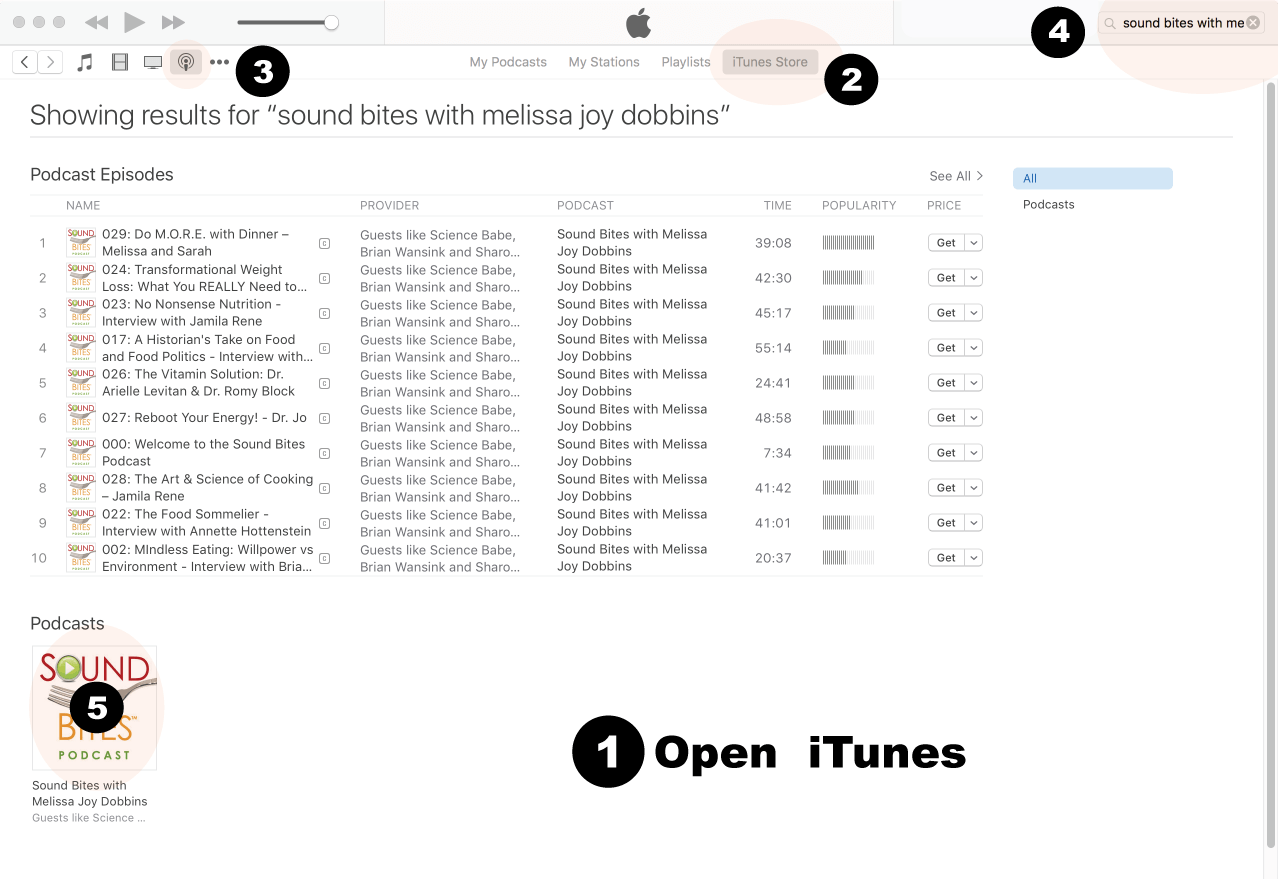
How to Review in iTunes
Open iTunes desktop application
Click iTunes Store
Click on Podcasts
Search for “Sound bites with Melissa Joy Dobbins”
Click on podcast image
Search for Sound Bites podcast in iTunes
Click Ratings & Reivews
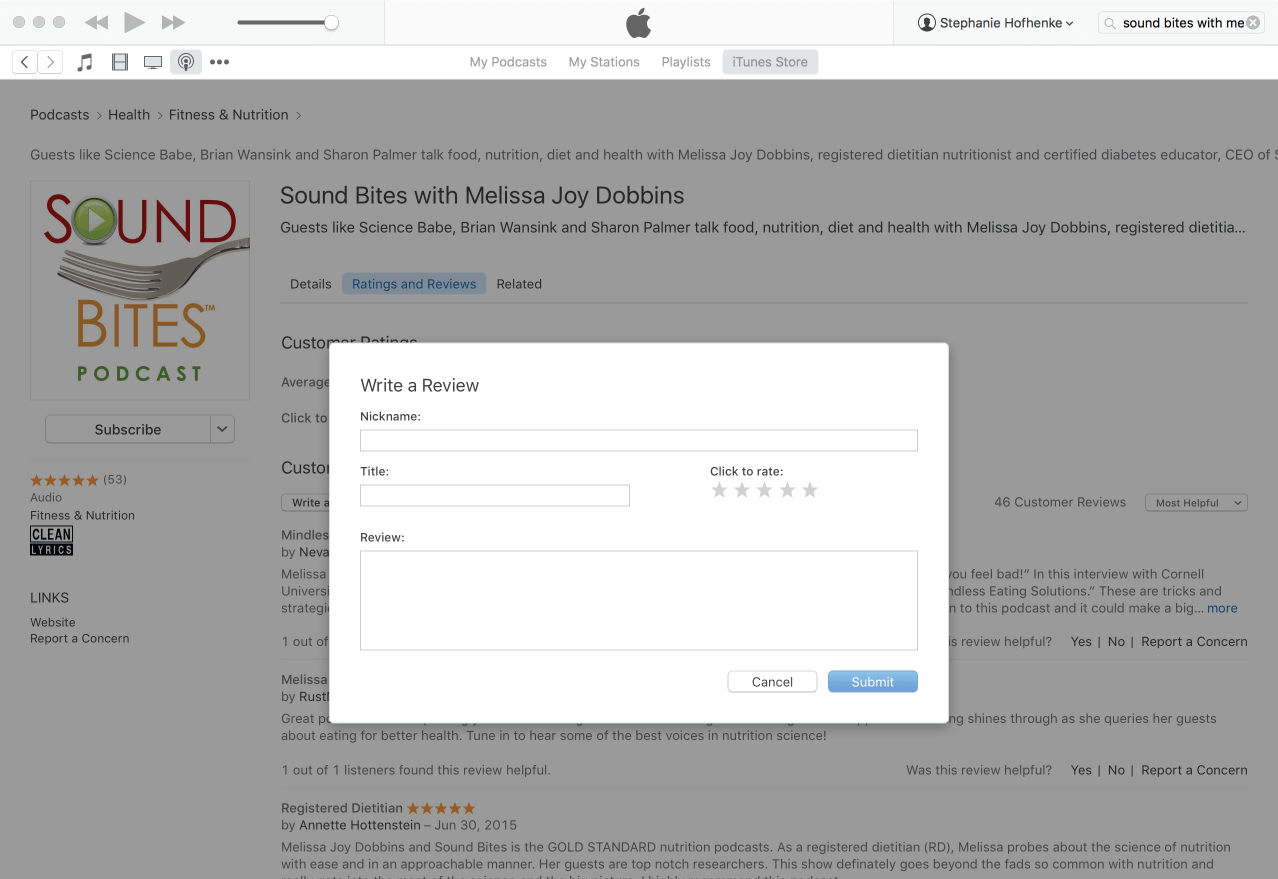
Click Write a Review
View reviews and write your own review.
Write your review…. Thank you!
Write your review!
How to subscribe via iTunes
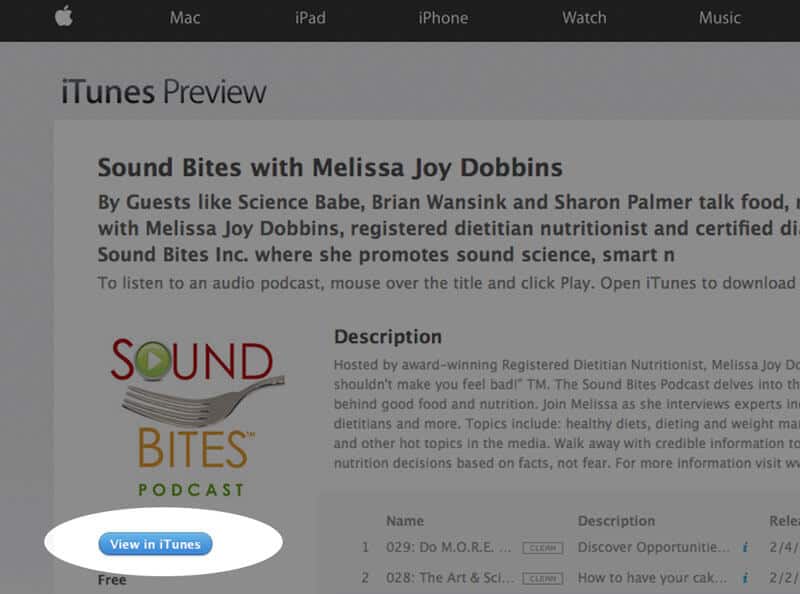
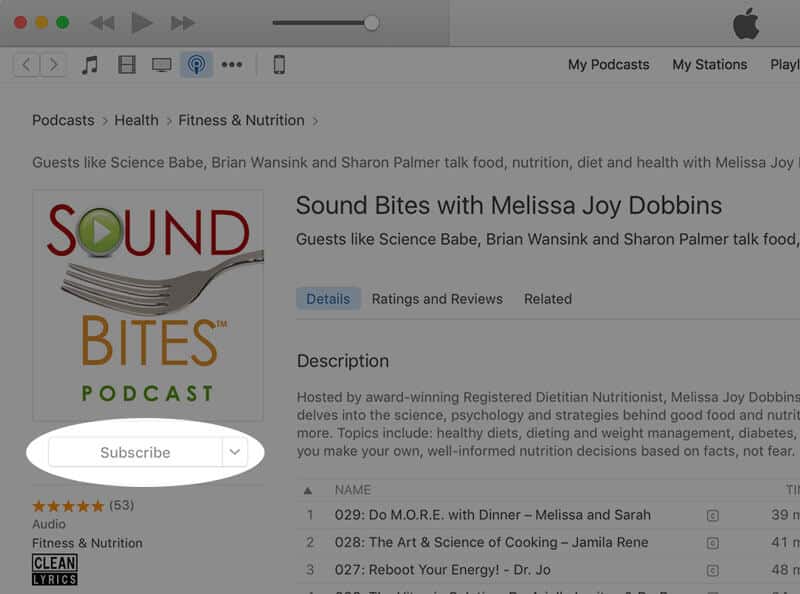
Click here to view the Sound Bites Podcastin iTunes, then click the blue “View in iTunes” button. This will open your iTunes application directly to Sound Bites Podcast. Click the “Subscribe” button, and your done!