Celebrating over 1 Million Downloads and 50,000 Free CEUs on the Sound Bites® Podcast | NEW: Get 1 years’ worth of CEUs with the new 15-CEU Podcast Course
This podcast episode is a collaboration between Sound Bites® and Beef. It’s What’s for Dinner, a contractor to the Beef Checkoff®. As a compensated member of the Beef Expert Bureau, on behalf of the Beef Checkoff®, my role is to share the science and support for beef’s role in a healthy diet. As always, opinions are my own. We thank Beef. It’s What’s for Dinner, a contractor to the Beef Checkoff® for their support of the podcast.
An Update on Diabetes, Heart Health & Lean Beef and a Discussion about the Strengths & Limitations of Nutrition Research
I believe that most people, including healthcare professionals, underestimate the potential benefits of lifestyle changes on health. Dietary changes that have relatively small effects on risk factors for cardiometabolic diseases can have important benefits if maintained over long periods.”
New Research published in the Journal of Nutrition
Nearly half of all American adults are living with some form of cardiovascular disease and 10 percent of Americans have type 2 diabetes, making it more important than ever that people have accurate, science-based nutrition advice to support a healthy diet.[1],[2]
Relatively few studies have directly assessed the influence of specific foods, including red meat and beef, or dietary patterns on insulin sensitivity. Most recommendations have been based on observational studies, which do not illustrate cause and effect for these foods.
New research, published in Journal of Nutrition, shows that adding 5.3 ounces of lean, unprocessed beef, which is several times the U.S. average daily consumption, to a healthy diet daily as a replacement for carbohydrates does not increase risk factors for heart disease or diabetes.
This research shows that individuals have flexibility to include up to about 6 ounces of lean unprocessed beef in daily healthy diets without increasing risk factors for heart disease or diabetes. On average, Americans consume about 1.25 ounces of fresh lean beef a day.[3],[4] This new research adds to the growing body of scientific evidence demonstrating that lean beef can be part of higher-protein, heart-healthy diet.[5],[6] This research was funded by The Beef Checkoff.
Like saving for retirement, it pays to start early and be consistent. A dietary change that modestly lowers LDL cholesterol and keeps it low for decades is a much better strategy than waiting until there are significant plaques in the arteries and then taking a medication to produce a larger reduction in the cholesterol level.”
Limitations of Observational Evidence: Implications for Evidence-Based Dietary Recommendations
Data from randomized controlled trials (RCTs) provide the strongest evidence for establishing relations between exposures, including dietary exposures, and health outcomes. However, not all diet and health outcome relations can be practically or ethically evaluated by using RCTs; therefore, many dietary recommendations are supported by evidence primarily from observational data, particularly those from prospective cohort studies. Although such evidence is of critical importance, limitations are often underappreciated by nutrition scientists and policymakers.
Tune in to this Sound Bites® podcast episode to learn about the details of this new research study as well as an in-depth discussion about the strengths and limitations of different types of nutrition research including randomized controlled trials, observational studies and industry funded research.
Kevin C Maki, PhD, CLS, FNLA, FTOS, FACN
Kevin C Maki, PhD, is the Founder and Chief Scientist for Midwest Biomedical Research (Chicago, Illinois) and MB Clinical Research (Boca Raton, Florida). He specializes in the design and conduct of clinical studies in human nutrition, metabolism and chronic disease risk factor management. Dr Maki also holds an Adjunct Faculty position teaching Biostatistics and Applied Epidemiology at DePaul University. He is a Fellow of the National Lipid Association, The Obesity Society and the American College of Nutrition, as well as a certified Clinical Lipid Specialist and Vice President of the Board of Governors for the Accreditation Council for Clinical Lipidology.
Dr. Maki has participated in more than 300 clinical trials and observational studies as an investigator, consultant or statistician, and published more than 250 scientific papers, books and book chapters. He earned a PhD in Epidemiology from the University of Illinois at Chicago’s School of Public Health, and an MS in Preventive and Rehabilitative Cardiovascular Health from Benedictine University.
Virani SS, et al. Heart Disease and Stroke Statistics—2020 Update: A Report From the American Heart Association. Circulation 2020;141:e139–e596.
Centers for Disease Control and Prevention (CDC). National Diabetes Statistics Report, 2020. Atlanta, GA: Centers for Disease Control and Prevention, US Department of Health and Human Services; 2020.
U.S. Department of Health and Human Services and U.S. Department of Agriculture. 2015–2020 Dietary Guidelines for Americans. 8th Edition. December 2015. Available at http://health.gov/dietaryguidelines/2015/guidelines/
What We Eat in America, NHANES 2009-2010 (WWEIA FPED 2009-2010), individuals 2 years and over (excluding breast-fed children), day 1 dietary intake data, weighted. Food Patterns Equivalents Database (FPED) 2009-2010.
Sayer RD, et al. Equivalent reductions in body weight during the Beef WISE Study: beef’s role in weight improvement, satisfaction and energy. Obes Sci Pract 2017;3:298-310.
Hill AM, et al. Type and amount of dietary protein in the treatment of metabolic syndrome: a randomized controlled trial. Am J Clin Nutr 2015;102:757-70.
Listen to select Sound Bites Podcasts and earn free CEU credits approved by the Commission on Dietetic Registration (CDR) for registered dietitian nutritionists and dietetic technicians, registered. Get started!
Get Melissa’s Sound Science Toolkit here!
Partnerships:
Sound Bites is partnering with the Association of Diabetes Care and Education Specialists (formerly the American Association of Diabetes Educators)! Stay tuned for updates on the podcast, blog and newsletter!
Sound Bites is partnering with the International Food Information Council! Stay tuned for updates on the podcast, blog and newsletter!
I just listened to the podcast
An Update on Diabetes, Heart Health & Lean Beef and a Discussion about the Strengths & Limitations of Nutrition Research
How do I access the CEU quiz, reflection and certificate for registered dietitians?
Sign up for my monthly newsletter and episode eblasts so you never miss an update!
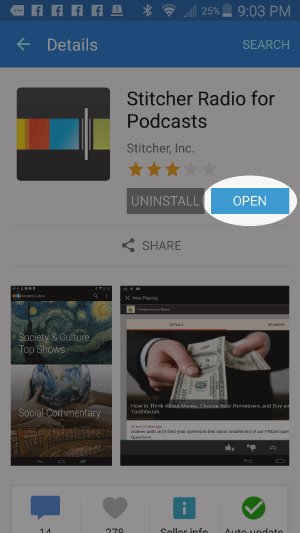
Listen on Stitcher (Android)
Install the Stitcher App
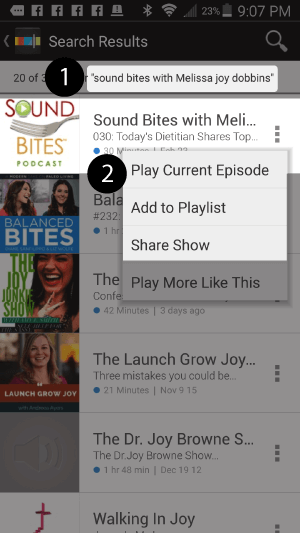
1. Search for “sound bites with melissa joy dobbins” 2. Choose Play Current Episode or Add to Playlist
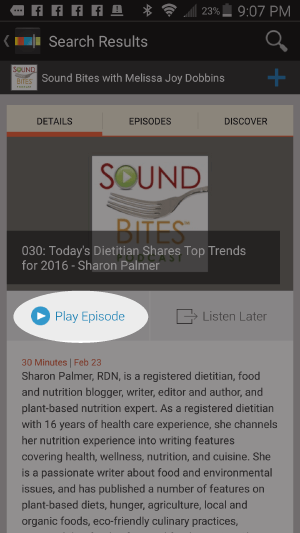
Choose “Play Episode”
Subscribe & Review on iPhone
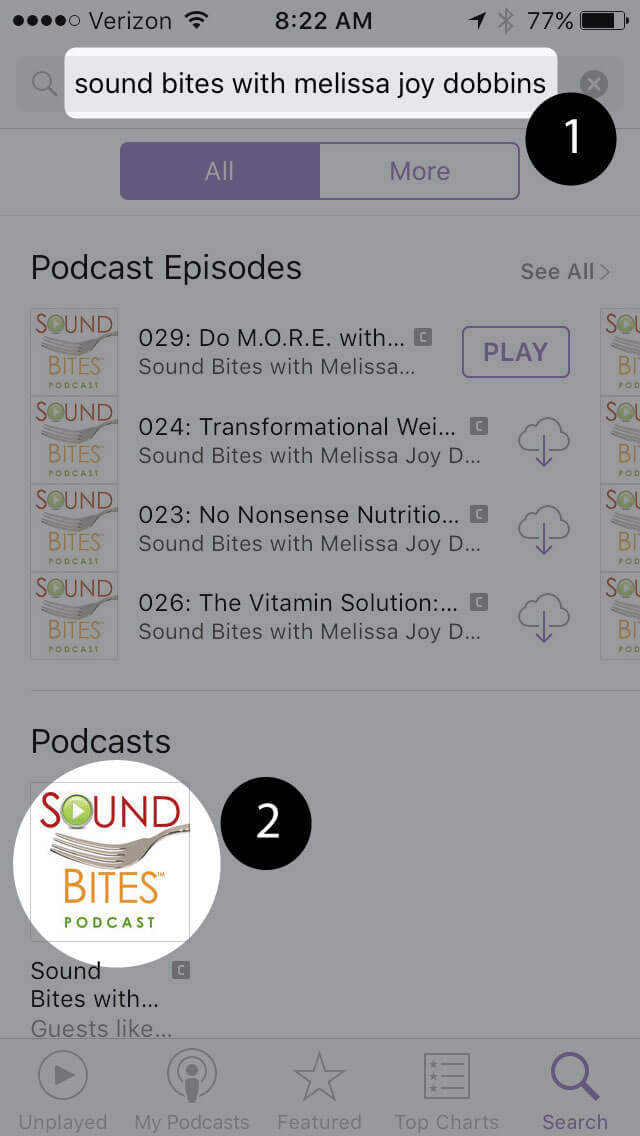
Open the “Podcast” app on your iPhone
Search for “Sound bites with melissa joy dobbins”
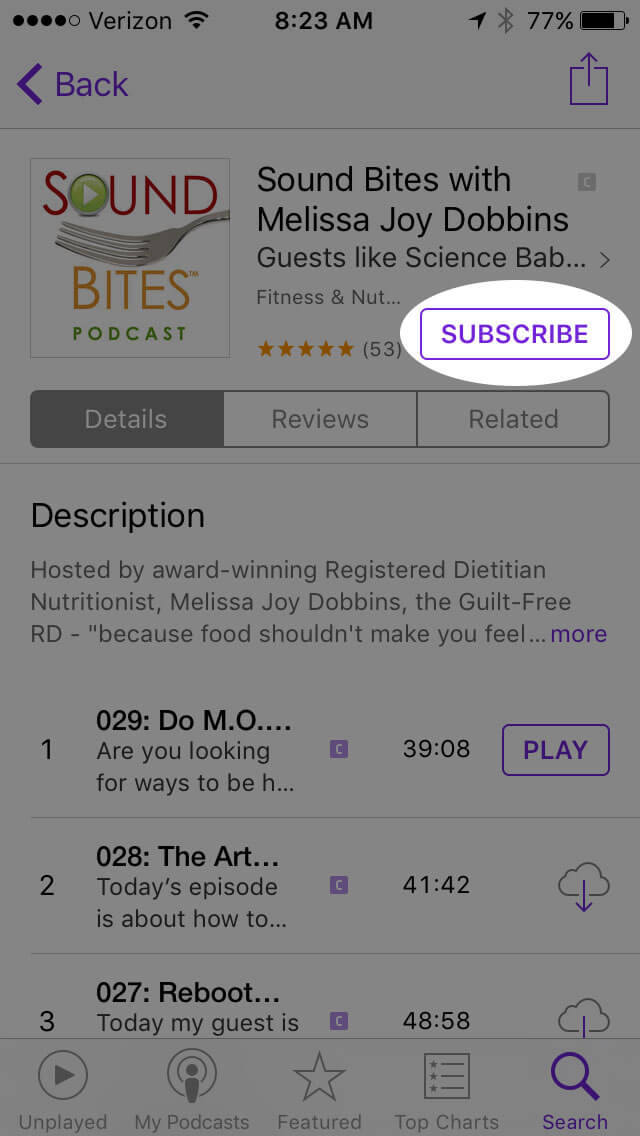
Open the podcast and click “Subscribe” and your done!
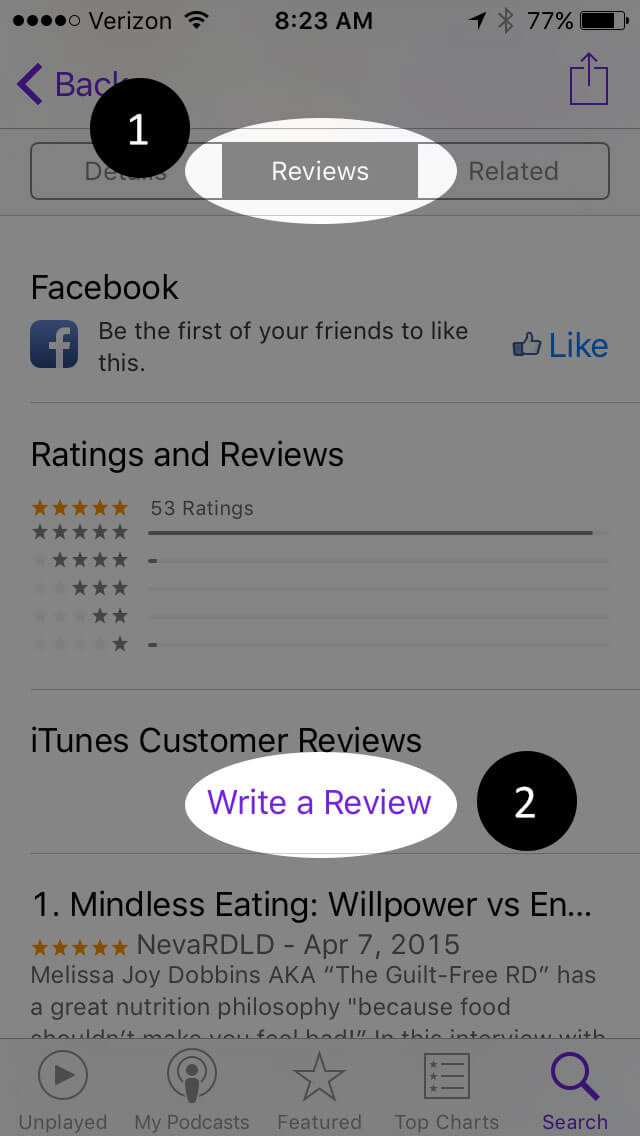
Write a Review
Click “Reviews”, then “Write a Review”.
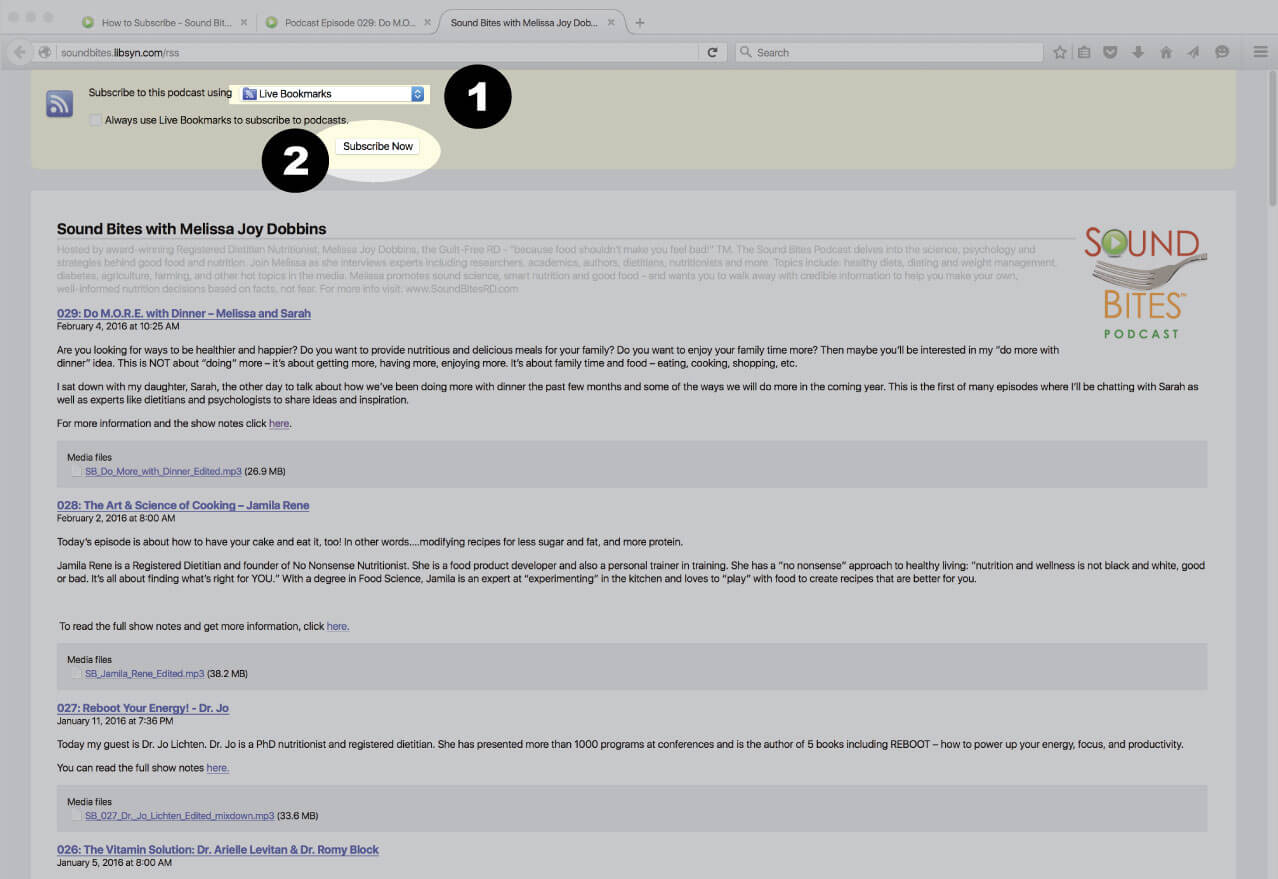
Subscribe via RSS Feed
Navigate to any podcast player . Click on the RSS feed icon.
Click on the RSS feed icon.
Click on RSS Feed
Choose which application you would like to use to receive the RSS feed
Click “Subscribe Now”
Confirm settings and subscribe.
How to Review in iTunes
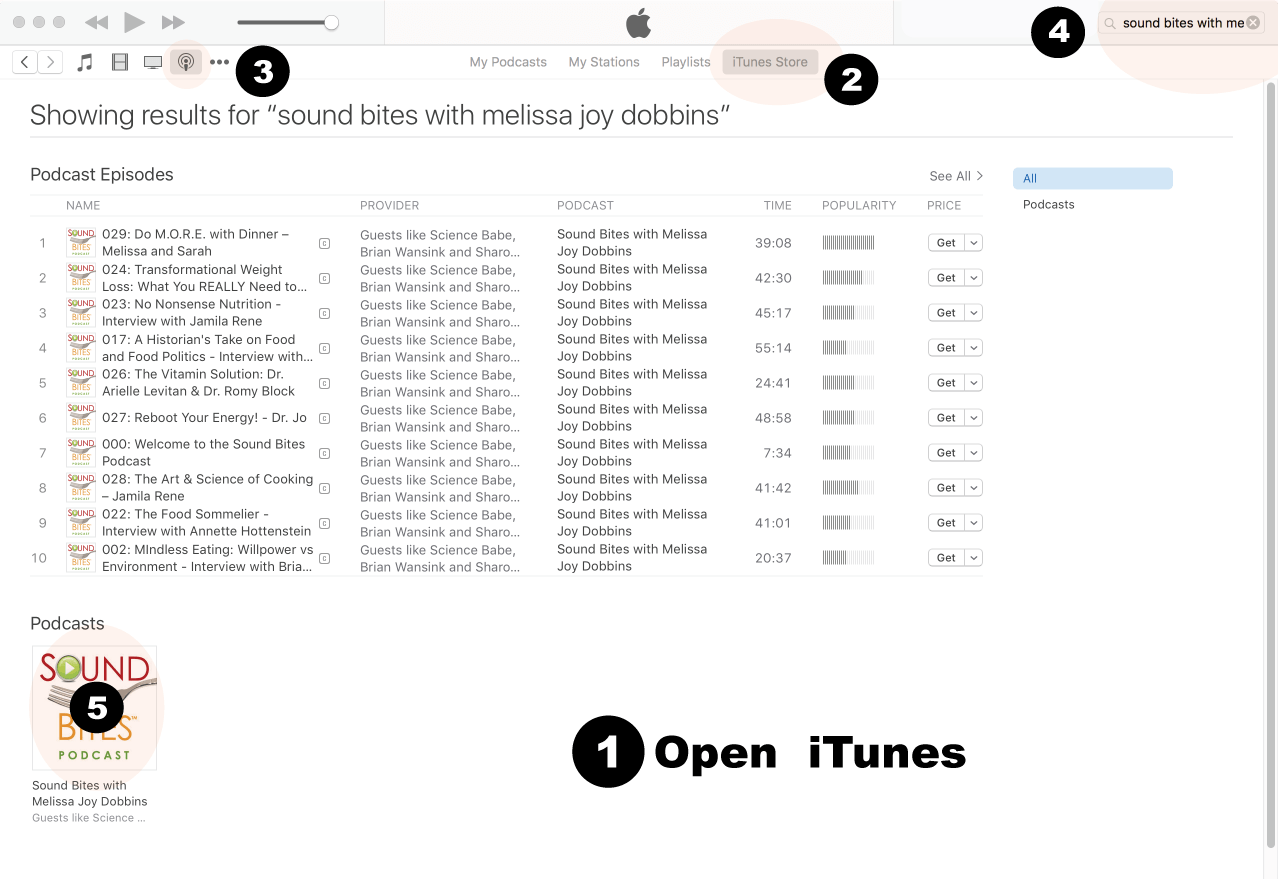
Open iTunes desktop application
Click iTunes Store
Click on Podcasts
Search for “Sound bites with Melissa Joy Dobbins”
Click on podcast image
Search for Sound Bites podcast in iTunes
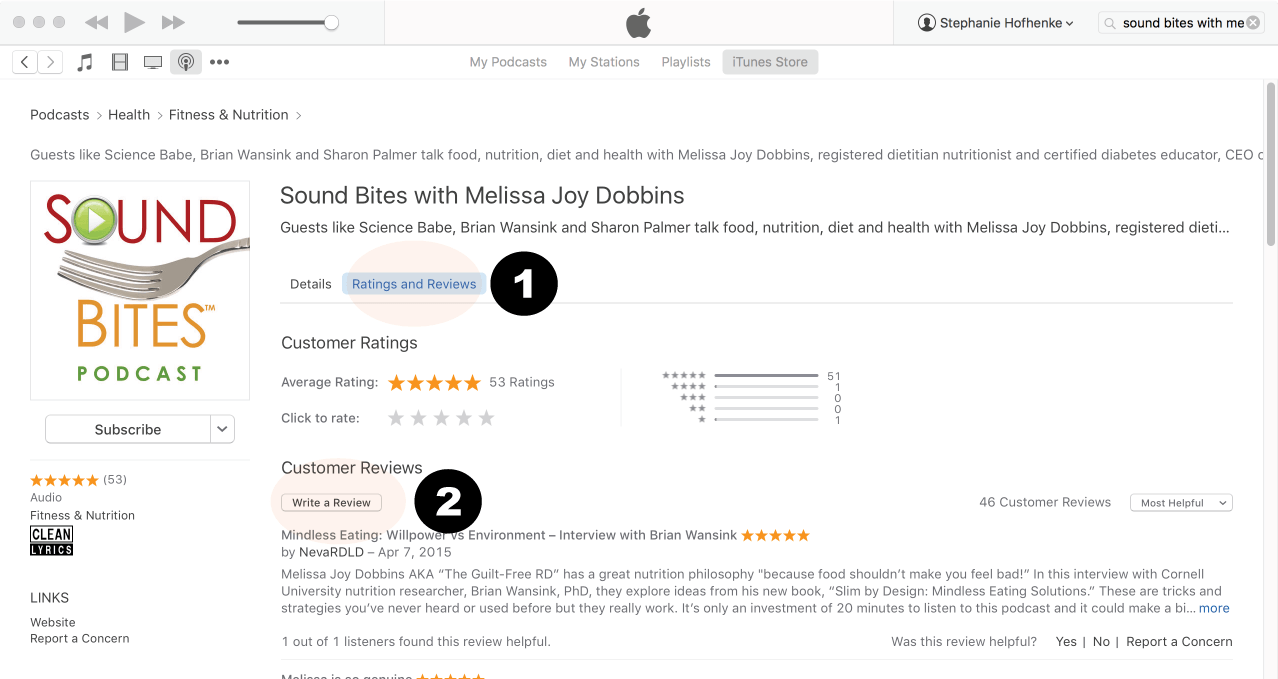
Click Ratings & Reivews
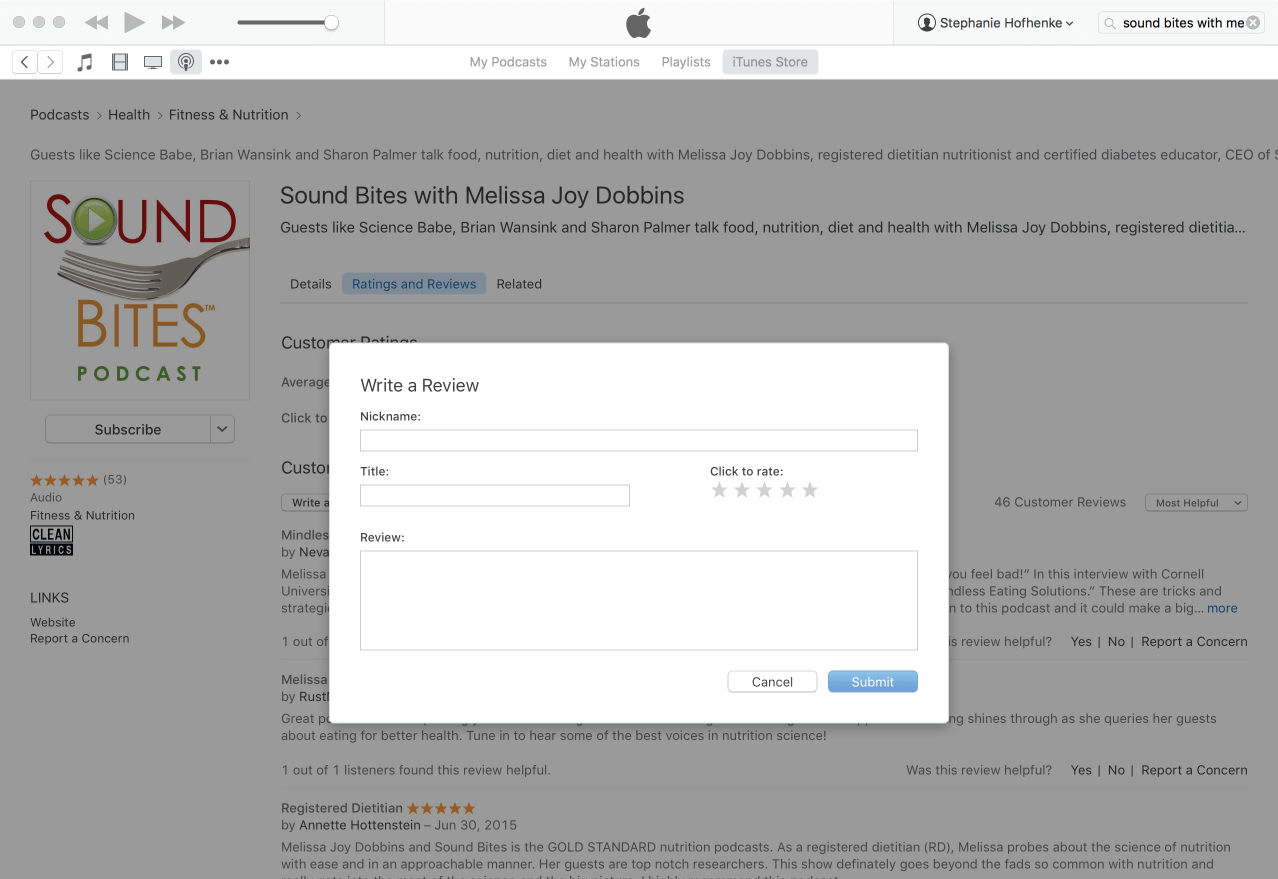
Click Write a Review
View reviews and write your own review.
Write your review…. Thank you!
Write your review!
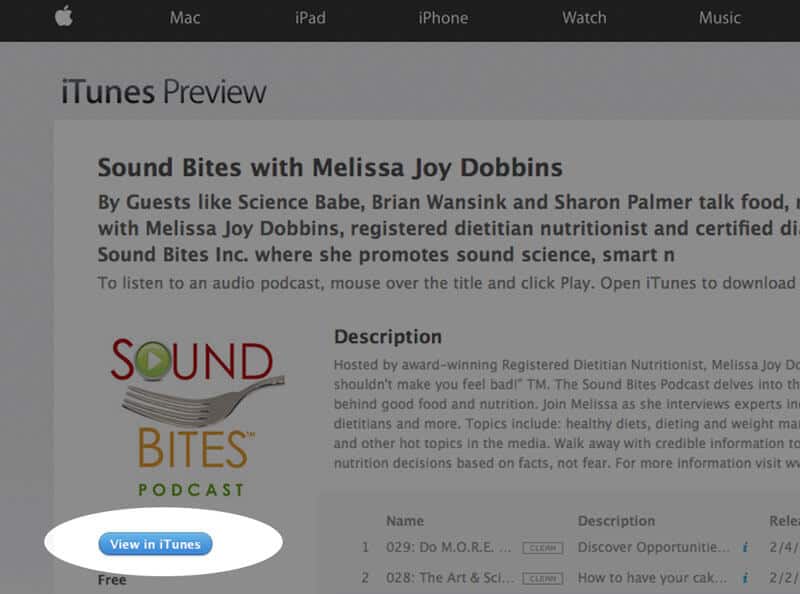
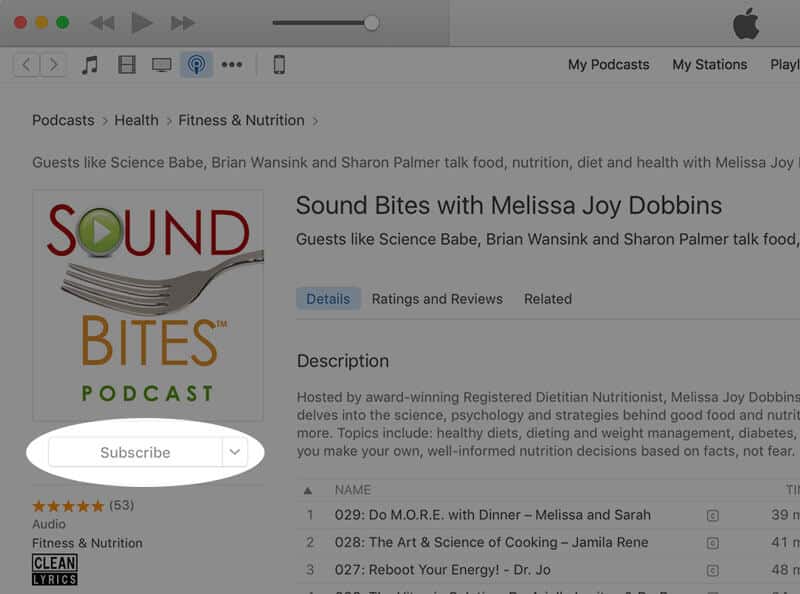
How to subscribe via iTunes
Click here to view the Sound Bites Podcastin iTunes, then click the blue “View in iTunes” button. This will open your iTunes application directly to Sound Bites Podcast. Click the “Subscribe” button, and your done!















I just listened to the podcast
An Update on Diabetes, Heart Health & Lean Beef and a Discussion about the Strengths & Limitations of Nutrition Research
How do I access the CEU quiz, reflection and certificate for registered dietitians?
I have the same question!
Thanks for asking about the CEU course. I believe there was a broken link that is now fixed. You can access the activity from the link above in these shownotes or here: https://soundbitesrd.com/sound-bites-podcast-free-ceus-episode-154/
How do I access the CEU quiz, reflection and certificate for registered dietitians?
Thanks for asking about the CEU course. I believe there was a broken link that is now fixed. You can access the activity from the link above in these shownotes or here: https://soundbitesrd.com/sound-bites-podcast-free-ceus-episode-154/
How do I access the CEU quiz, reflection and certificate for registered dietitians?
Thanks for asking about the CEU course. I believe there was a broken link that is now fixed. You can access the activity from the link above in these shownotes or here: https://soundbitesrd.com/sound-bites-podcast-free-ceus-episode-154/